Looking Back
Merkinch Month, 31 days, 46 bird species, 21 plants and flowers, 9 insects, two types of seal, dolphins, a whale, otters, rabbits, deer and two shipwrecks all from a small reserve on the outskirts of a city. This has only been possible because of a dedicated group of volunteers, who took an area of derelict land, cleared years of rubbish and dumping, and turned it into a place for nature and for people.
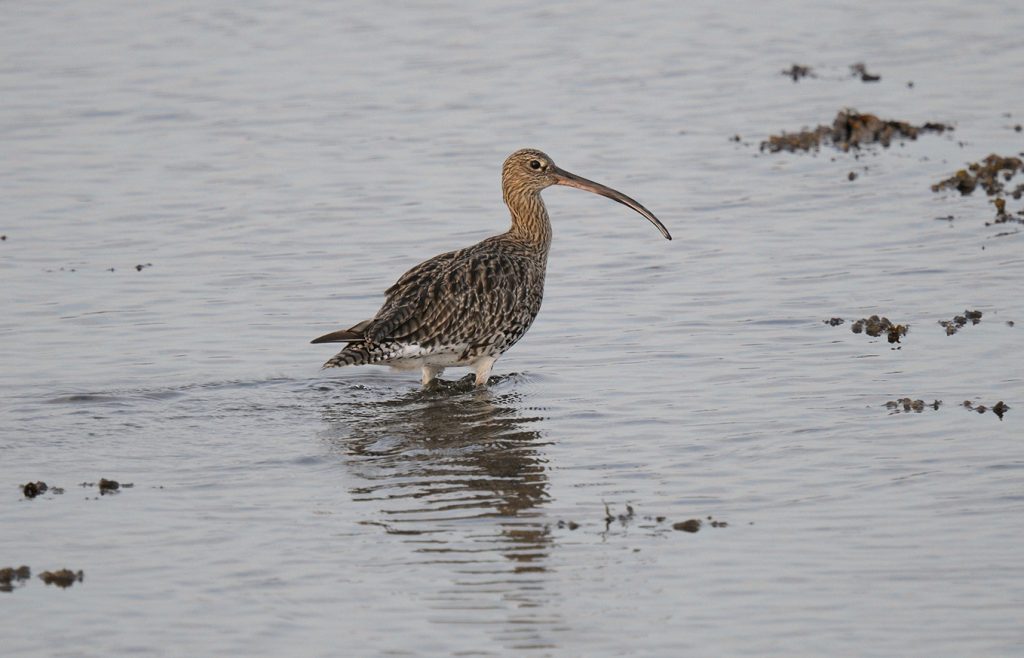
Eurasian Curlew – Numenius arquata, Merkinch (photograph)
If you were to visit the Merkinch Reserve and see and come into contact with the entries in this month long feature, you would have met animals both resident and who had travelled hundreds or even thousands of miles to be there. You would have touched the inspiration for and foundation of two of the world’s great creation stories, one of them the oldest recognised. You would have stood in an area filled with many of the resources for medicine in past eras, a place which is a source of healing, and you would have been presented with ideas and beliefs, which may at first seem misguided today but which if you stop and think about them do sometimes have a possible basis. So even if the reasons and the knowledge were not available in the past, the conclusions and the practice might not have been so misjudged. You will have found that each creature has its own story, its own place and its own way of getting by and carrying on, just like we all have to, and that many of these stories intersect sometimes with one paying the ultimate price that day.
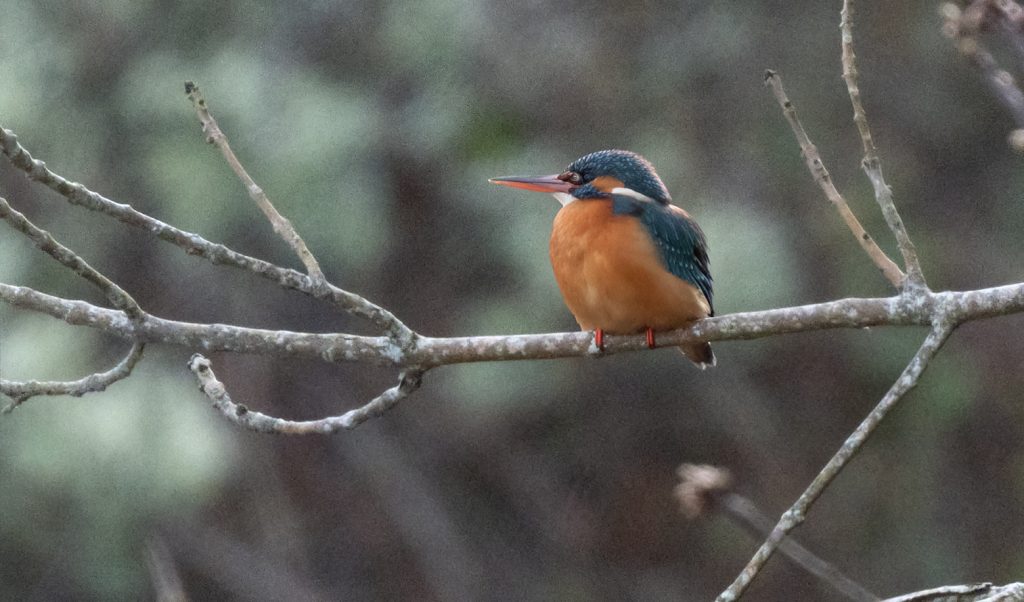
River Kingfisher – Alcedo atthis, Merkinch (photograph)
You will have only seen a part of the archive from which this feature has been drawn and which is constantly being added to by new visits to the reserve. The stories not yet used deserve their place and so the entries from this month-long feature are to be incorporated into the ‘Features’ and ‘Insights’ sections on this web site to which the unused and new material will be added.
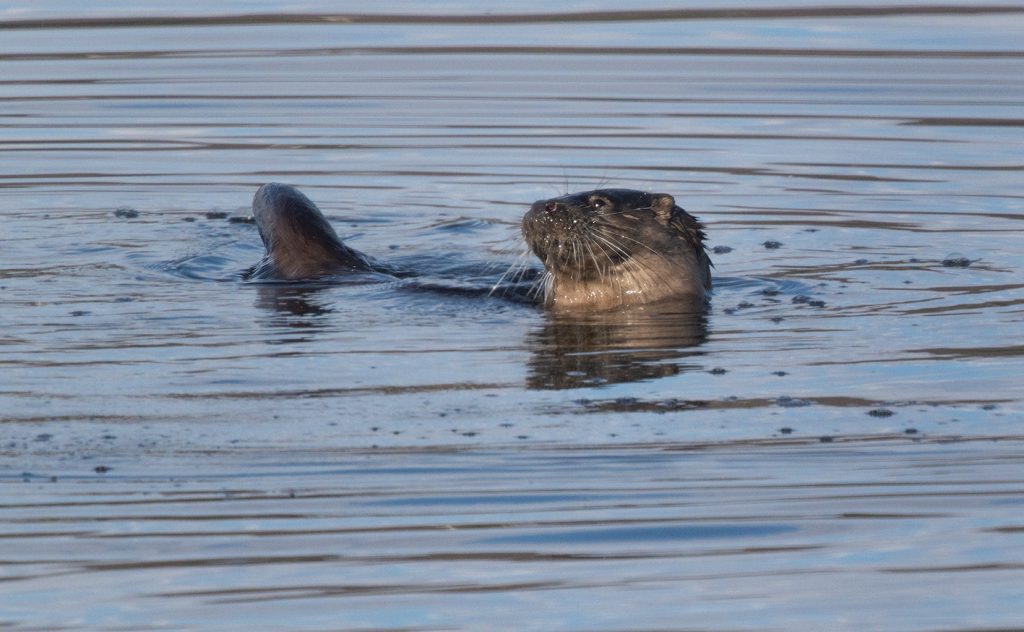
European Otter – Lutra lutra, Merkinch (photograph)
You will also have shared the material, which has been used by Merkinch Primary School for their own exploration of the reserve this month, both in visits and in a large artwork at the school based on the photographs in this feature which the pupils made working with members of the community and the ranger responsible for the reserve. Merkinch Primary has been added to the list of Cùra Story Guardians and the children involved have all had the invitation to link themselves as Cùra Earth Guardians if they want to. From that, Cùra is now associated with Inverness through natural history, people, science and culture and even if there are no badgers on the reserve, Cùra has a real connection with the city.
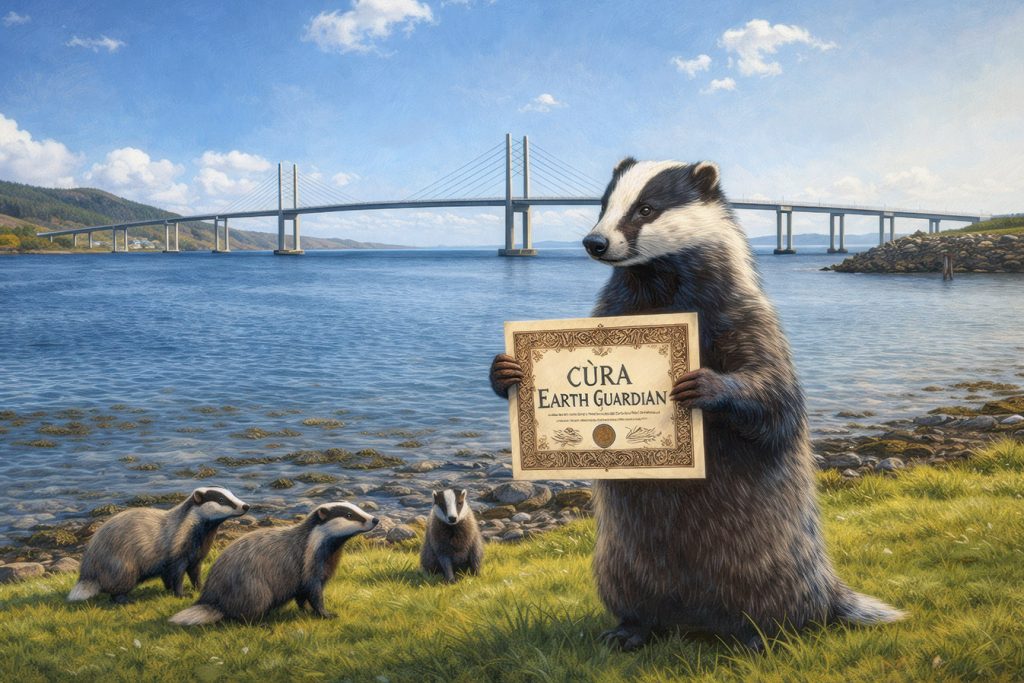
Cùra Earth and Story Guardians
Most importantly you will have shared a place that was brought back to be in a state to be for people and give to them every day which is something the reserve has been doing for all the years since it was established.
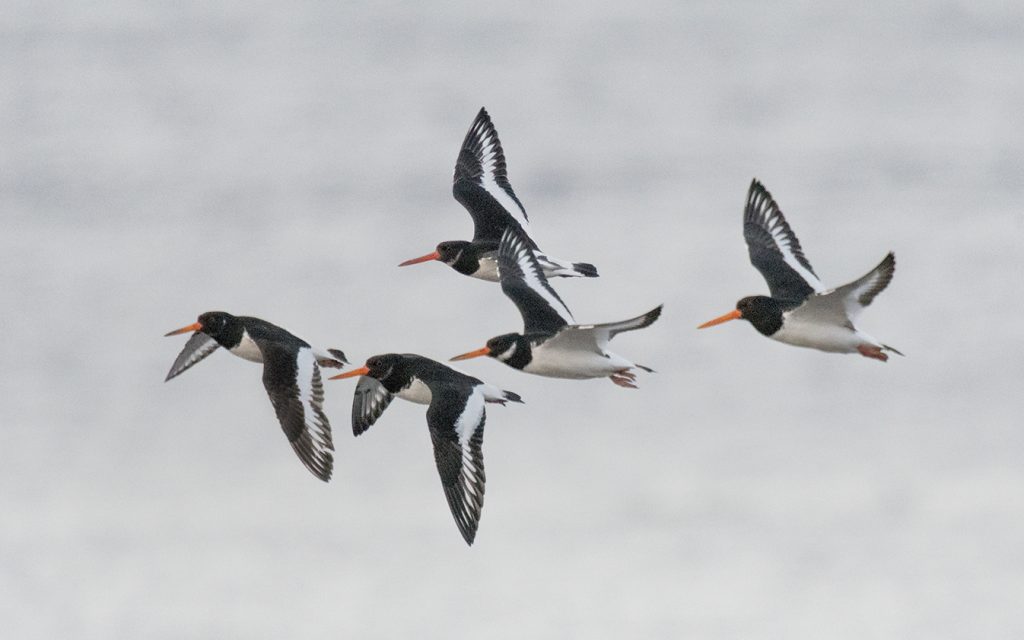
Eurasian Oystercatchers – Haematopus ostralegus, Merkinch (photograph)
Merkinch Month, May 2026
Words Nick Sidle or authors as credited. Photographs and illustrations Nick Sidle

Merkinch Local Nature Reserve (photograph – click on image for enlarged view)
Welcome to the first Cùra special feature, a full month dedicated to a single nature reserve, Merkinch in Inverness. For years from 1800, Merkinch itself was increasingly a place of small industry and the land, which the reserve occupies, was unused and polluted marsh, not an auspicious start for a nature reserve and perhaps even less so by now being on the edge of Inverness, the city it has become. Merkinch however has been an immense success, a combination of biodiversity and conservation and amenity to the local area and visitors, enjoyed by people and wildlife. The work is constant and the ranger, volunteers and management have built and maintained a natural oasis. Merkinch month on Cùra celebrates the results of their efforts and the habitats they have created. The adjacent Carnac Point has been included although it is technically not part of the reserve. It is impossible to separate the habitats and it is managed under a lease by the reserve team.
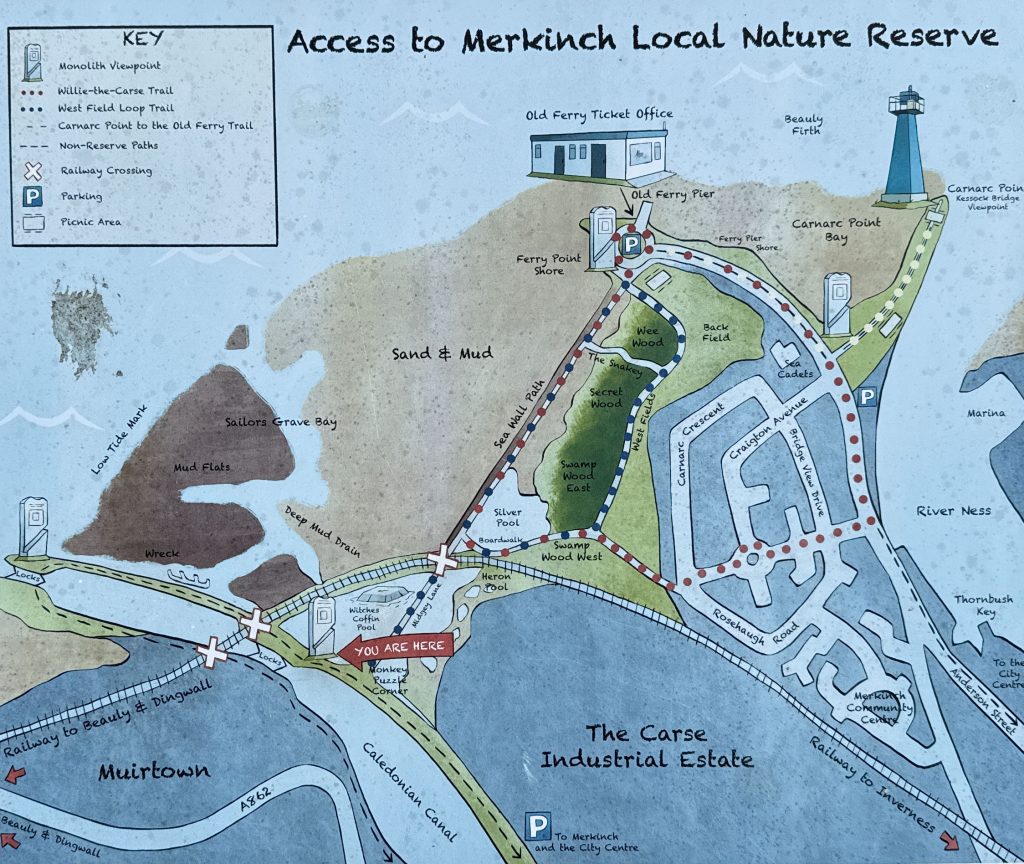
Map, Merkinch Local Nature Reserve. reproduced courtesy of the reserve
As well as the LNR itself, this window on Merkinch as a wildlife haven includes the easternmost stretch of the Caledonian Canal where it joins the sea, which runs adjacent to the reserve boundary. The canal paths are used by many visitors and the animals and birds make no distinction, so the canal is very much part of home for the resident wildlife and the experience for visiting people. All of which means that the success in the habitat and enjoyment of the amenity also owes much to the work of Scottish Canals and their team.
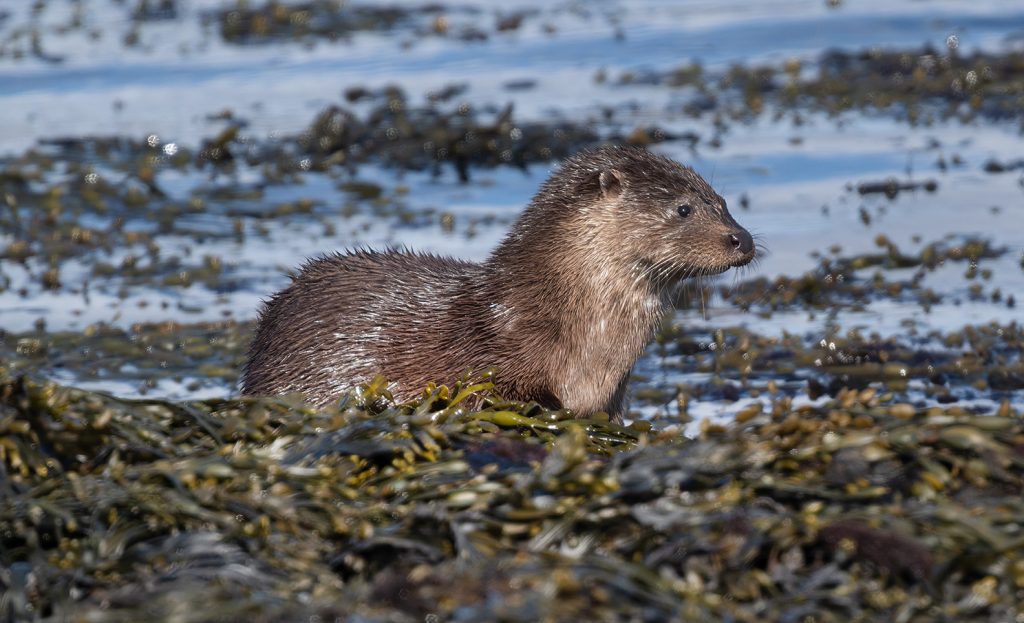
For the full collection of images from Merkinch on Cùra see the Merkinch LNR album
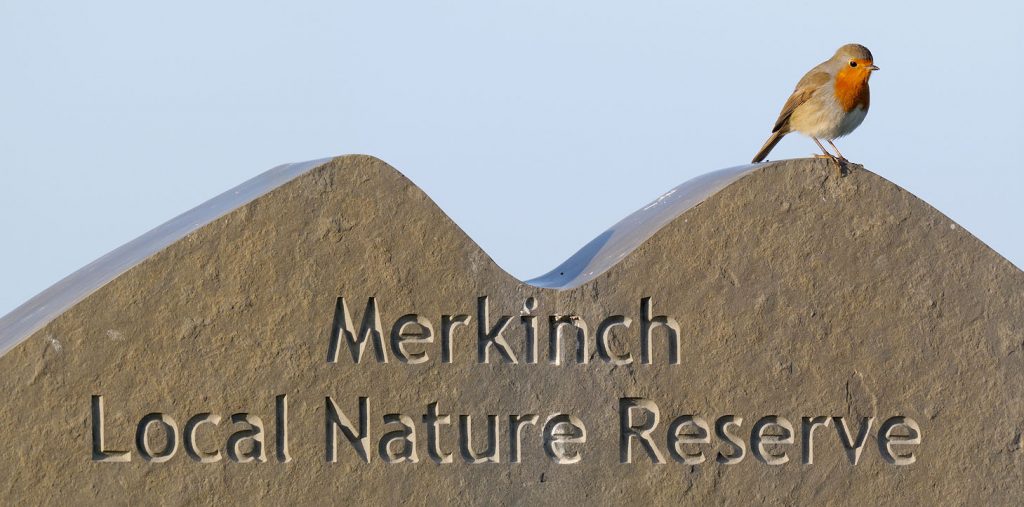
European Robin, Erithacus rubecula (photograph)
“Cùra Guardian is about stories as well as the science and that is going to apply in this case to the Merkinch Nature Reserve. Stories tell us how we can live with nature. We are a part of nature and somehow we seem to have forgotten that.
Nick Sidle’s nature photographs are brilliant and will do much to help publicise Merkinch Nature Reserve to anyone who hasn’t yet visited. I’ve been very happy to support the work of Heartstone, and this latest in a whole series of excellent projects.”
Cllr Chris Ballance, Depute Leader Inverness and Area
“I am delighted to have had the opportunity to engage with Cùra Guardian’s Merkinch Month. The Local Nature Reserve is a real treasure, and visitors who are there regularly, like myself, have the delight of seeing redshanks, otters, curlews, herons and more sharing the wonderful coastal environment with us humans. The Cùra/ Heartstone message of respect and harmony with the natural world has never been more important. This is a brilliant project and Sitakumari, Nick Sidle and the team are to be congratulated.”
Dr Michael Gregson, Councillor for Inverness Central
“The 50th designated LNR in Scotland is in its 19th year. Merkinch Local Nature Reserve is very much a hidden gem in the Highlands. It brings together abundant wildlife and a place where people can come and hopefully relax.”
Ali Locke, Chair Merkinch LNR
“I am delighted to see this focus on the Merkinch reserve. It is highly valued by all those who know about it and I welcome this opportunity to increase the number of people who do know about it, both locals and visitors from further afield. It is a delightful sanctuary in the heart of Inverness where wildlife thrives in close proximity to both industry and residents. The photographs published here not only highlight the huge range of plants and creatures that you can see, it also helps those less knowledgeable to identify what they are seeing (and I include myself in this group, so thanks from me personally)”
Councillor Michael Cameron
I have been invited to take part in ‘Merkinch month’ here at Cura Guardian, so I better introduce myself. My name is PC Katie Johnstone and I am a community beats officer dedicated to the west side of Inverness. I have been a police officer for 15 years, and a community officer for the last 4 years. The heart of my role is to listen to the community, be involved where I can in community events, coming together to tackle any community issues, or just be out patrolling. I am grateful to have a beautiful area that is Merkinch Nature Reserve within the beat, which I patrol by foot and on a bike. I regularly see people looking for wildlife, walking their dogs, out for family walks, or cycling within the nature reserve. I am committed to assisting in the preservation of the reserve as best I can.
PC Katie Johnstone, Community Beats Inverness
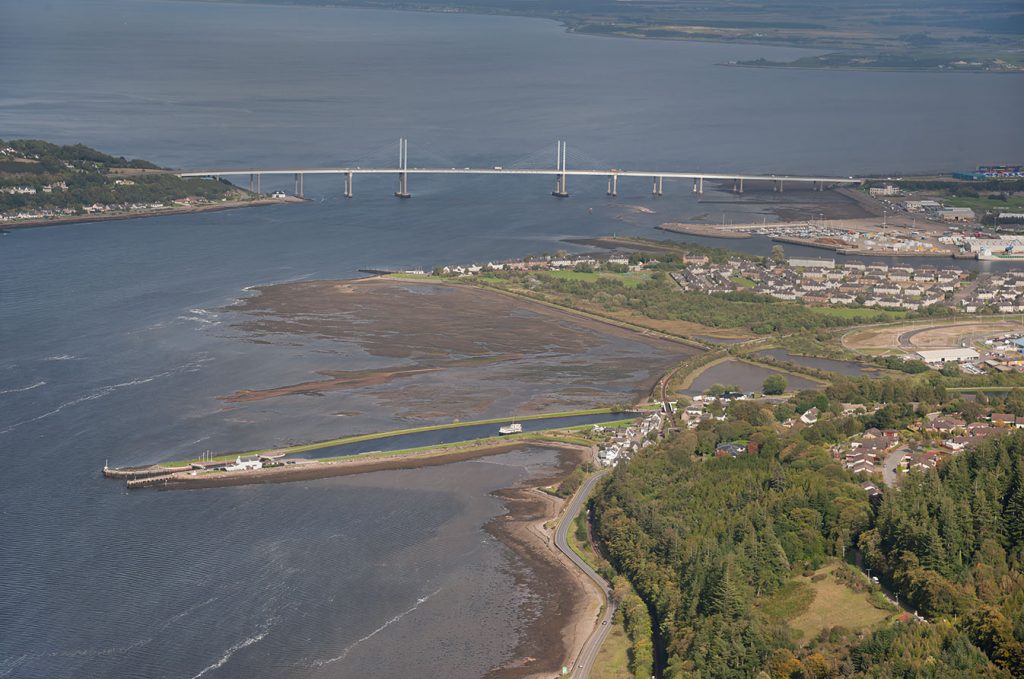
Merkinch Local Nature Reserve (photograph)
“Scottish Canals is pleased to support Merkinch Month and the opportunity it provides to celebrate the natural environment and how it links with the local community, its people and its connections to the Caledonian Canal. The canal has long been part of Merkinch’s heritage and everyday life, and we value the strong relationships we have with local residents, community groups and partners. We look forward to continuing to work together to ensure the canal remains a safe, welcoming and positive place for everyone to enjoy and an important habitat for a wide range of species.”
Craig Cummings, Operations Manager, Caledonian Canal
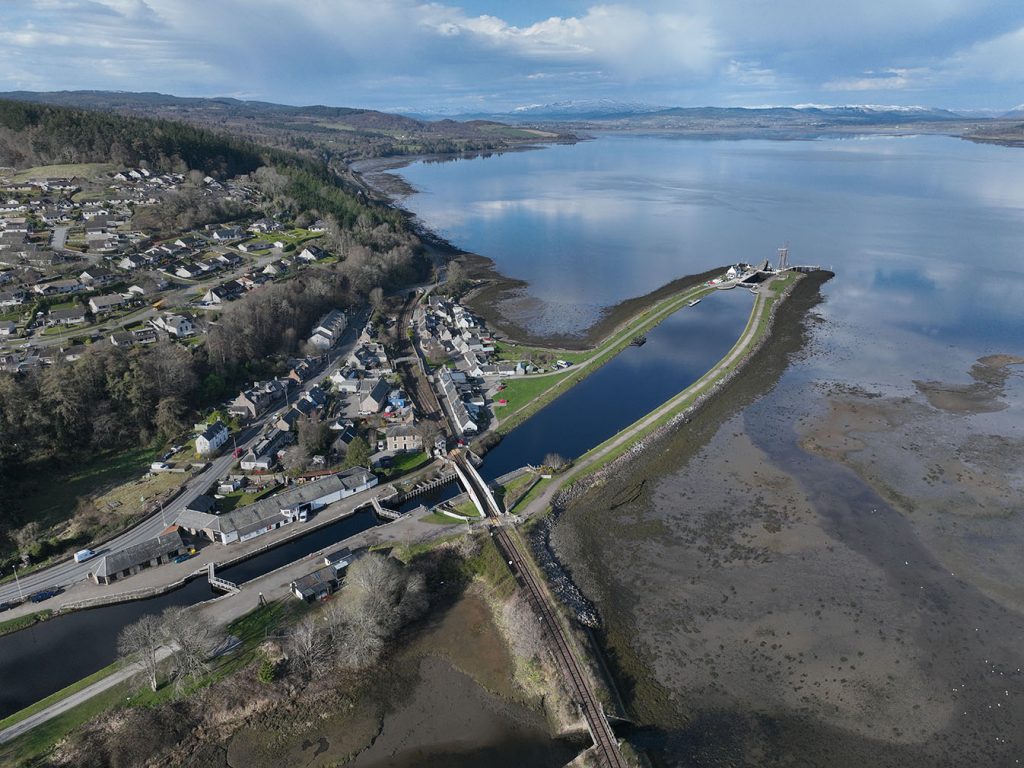
Eastern end of the Caledonian Canal adjacent to the Merkinch Reserve (photograph)
“It is fantastic news that Cura Guardian is shining a spotlight on Merkinch Local Nature Reserve. Remarkably, despite being less than two kilometres from Inverness city centre, this exceptional reserve is still not as widely recognised as it deserves to be. This initiative brilliantly highlights the extraordinary richness of wildlife and habitats found within such a compact area. Cura’s work is creating powerful connections with nature on a global scale, while also inspiring people to discover and value the incredible natural environment right on their doorstep. Nick Sidle’s photographs are stunning and bring this landscape and it’s huge variety of creatures into focus. I’m looking forward to visiting the site with the Cura Guardian Team and Merkinch Primary school in the coming weeks.”
John Orr, High Life Highland Countryside Ranger, Inverness Area
Encounters from the reserve
You will not see all of these animals and birds on every visit, in fact it may take years. These images have been built up from many visits, almost since the reserve opened but all the photographs are from Merkinch, Carnac Point or the adjacent Caledonian Canal. What those visits do say though, is that it is very rare to be on the reserve and see almost nothing. It is an animal and especially bird hotspot and every arrival prompts the question “what today”?
Nick Sidle
Day 31
European Otter
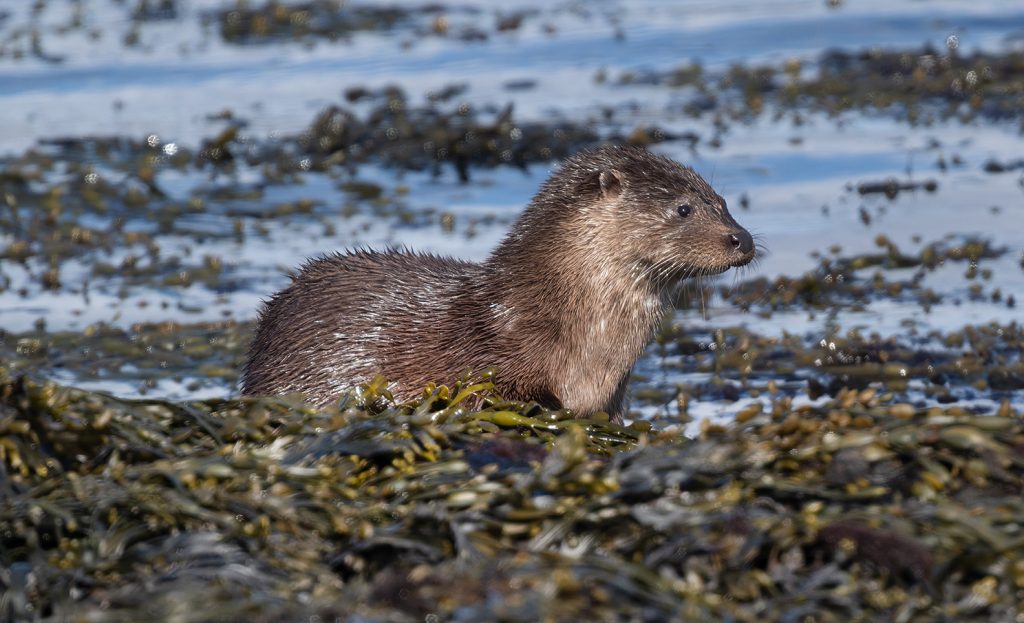
European Otter – Lutra lutra, Carnac Point, Merkinch (photograph)
In the 1970’s, the otter population in Scotland was at a low and still falling. Many factors combined to put the otter under pressure but the most serious was pollution by organic pesticides and polychlorinated biphenyls, which were in the water and so affected an animal that spent so much of its time in freshwater or the sea and which were concentrated upwards through the food chain, again disproportionately affecting a predator such as the otter.
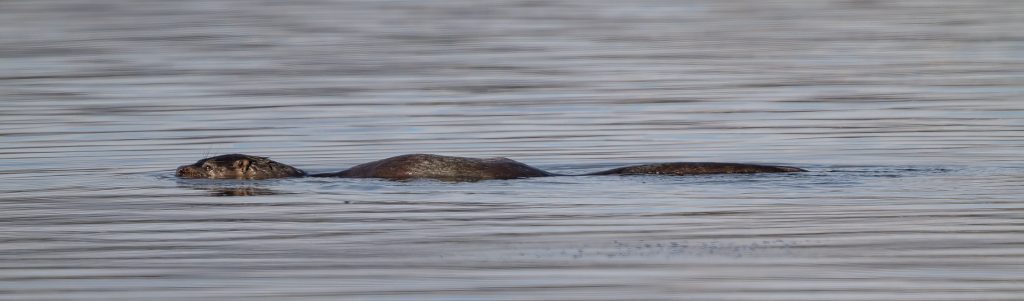
European Otter – Lutra lutra, Merkinch (photograph)
Now, there are pollution controls and there is a substantial recovery in otter numbers, but they are still a shy and elusive animal and easily disturbed.
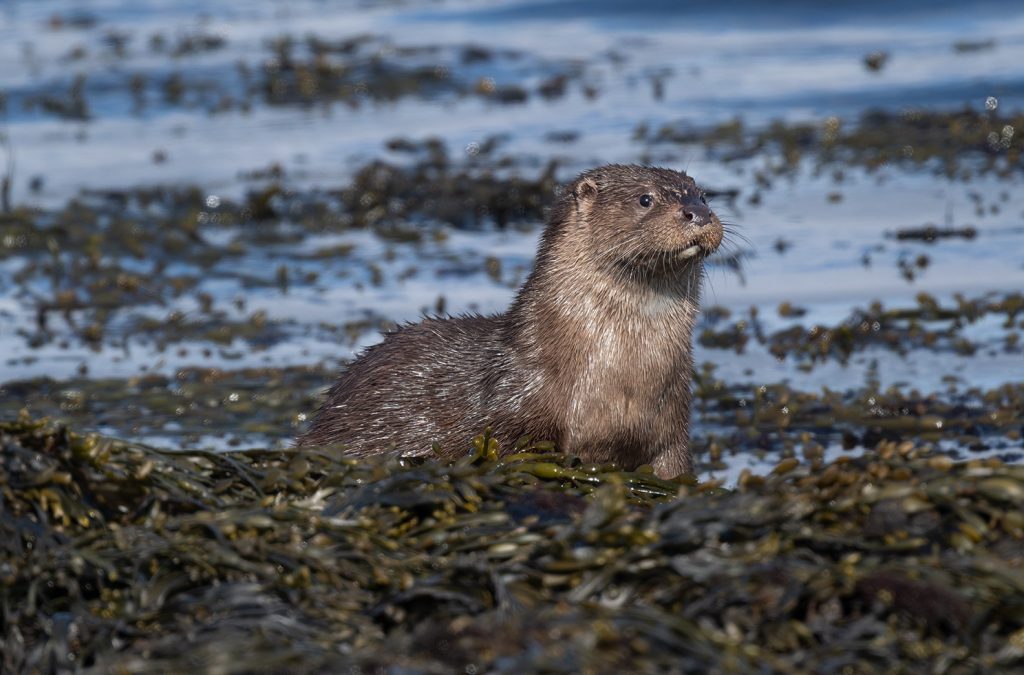
European Otter – Lutra lutra, Carnac Point, Merkinch (photograph)
In Scottish folklore, there are tales of Otter Kings who would grant almost any wish in return for freedom if captured. Several times larger than a normal otter and sometimes described as having dog-like characteristics, they would be accompanied by seven black otters and they were considered dangerous.
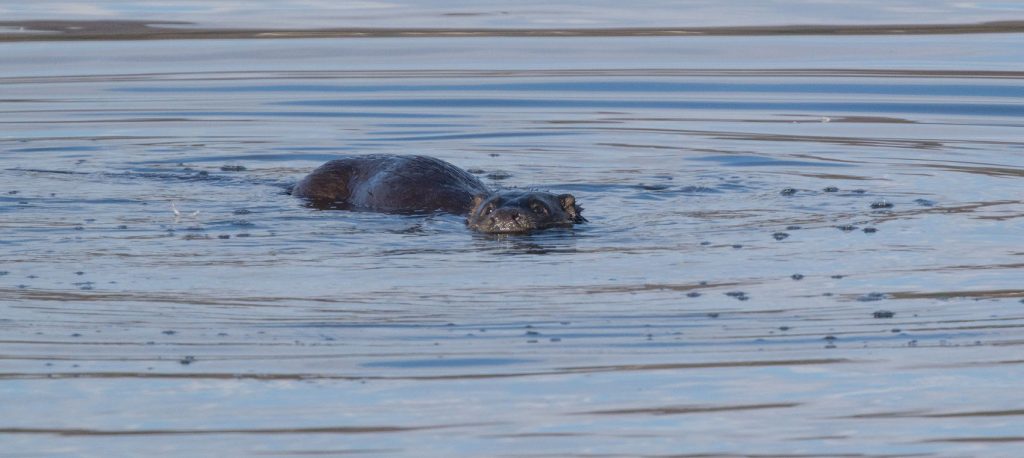
European Otter – Lutra lutra, Merkinch (photograph)
Their fur however was said to have protective properties and it is believed that many Jacobite soldiers carried a piece of what they believed were small pieces of the pelts of King Otters to shield them at the Battle of Culloden in 1746. Generally, though, in Celtic traditions otters are seen as friends to and supportive of people.
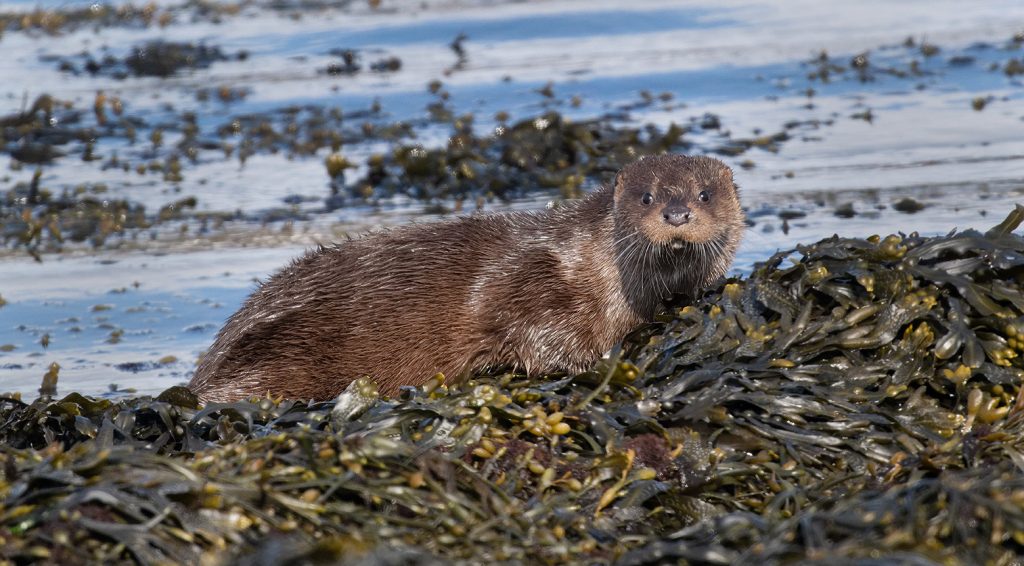
European Otter – Lutra lutra, Carnac Point, Merkinch (photograph)
Day 30
Goosander
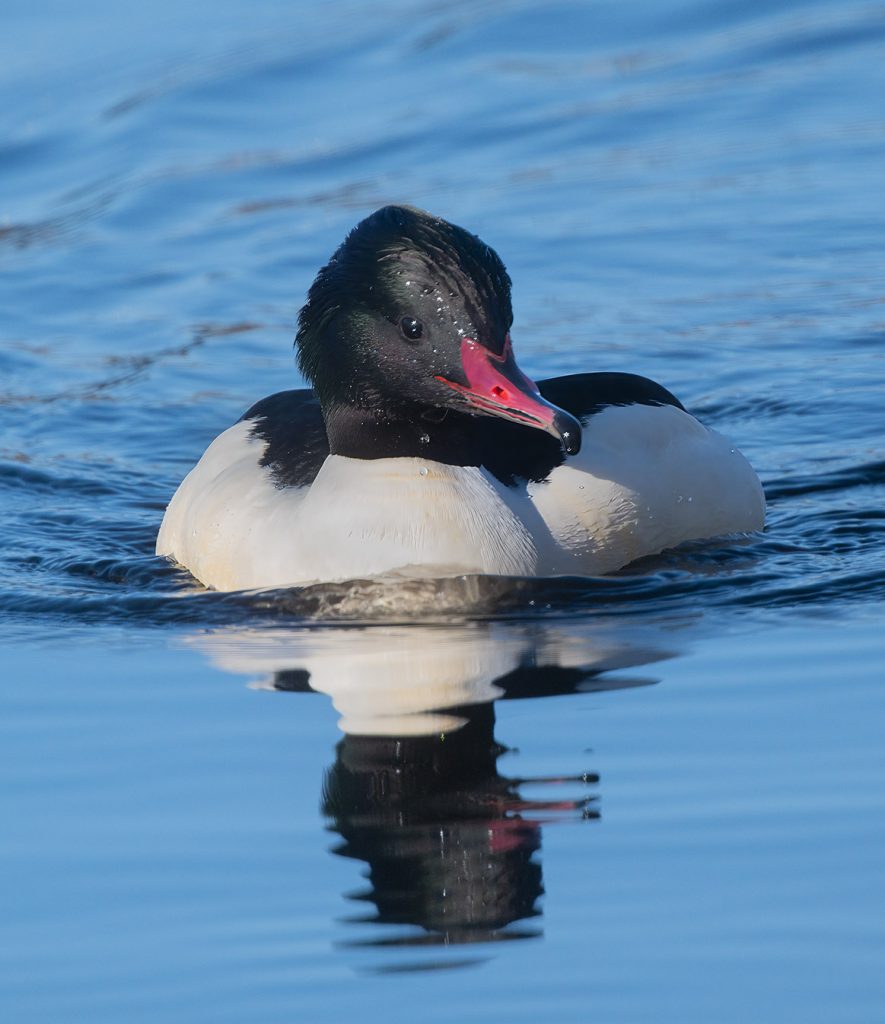
Male Goosander – Mergus merganser, Caledonian Canal, Clachnaharry (photograph)
A resident breeding population swelled by much larger numbers as winter migrants. A very large diving duck with a preference for freshwater, which stays underwater for long periods, one to two minutes, and mostly eats fish which has brought it into conflict with people over the years. Their take of young fish, which have been released as part of a fishery programme, can be considerable, with the threat to commercial interests being raised by the bird’s preference for salmon and trout. To aid in the capture of fish, their bill has a serrated edge increasing grip giving the term ‘sawbill’, which they share with the related Mergansers.
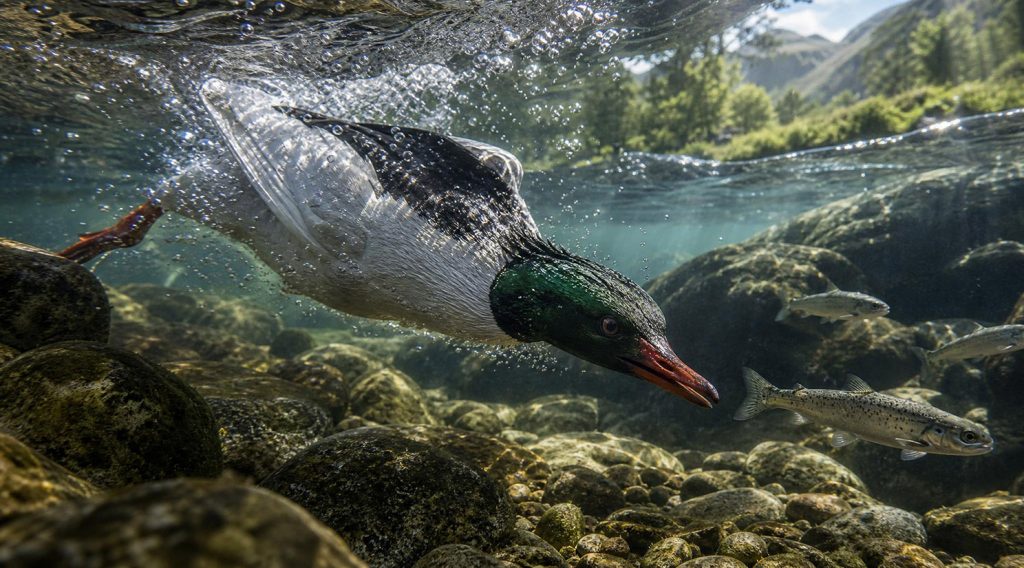
Male Goosander – Mergus merganser, hunting young salmon (illustration)
In 1871 literally only one or two breeding pairs were known in Scotland, and these were the first recorded, an absence largely as a result of persecution related to fishing interests. Now there are an estimated 2,500 to 3,000. The birds are still under threat however, and one problem is that there is still no conclusive insight on the Goosander’s effect on salmon fisheries. Undoubtedly, they take young Salmon but what final influence this has on a population is not definitely known, salmon breeding strategies in the wild allow for large numerical losses to be expected. Any given one incident may not lower the final population if that is a level that was going to be reached by one means or another. Also, even in areas where there are no Goosanders, Salmon numbers are falling because of other environmental influences making any definite conclusion more difficult.
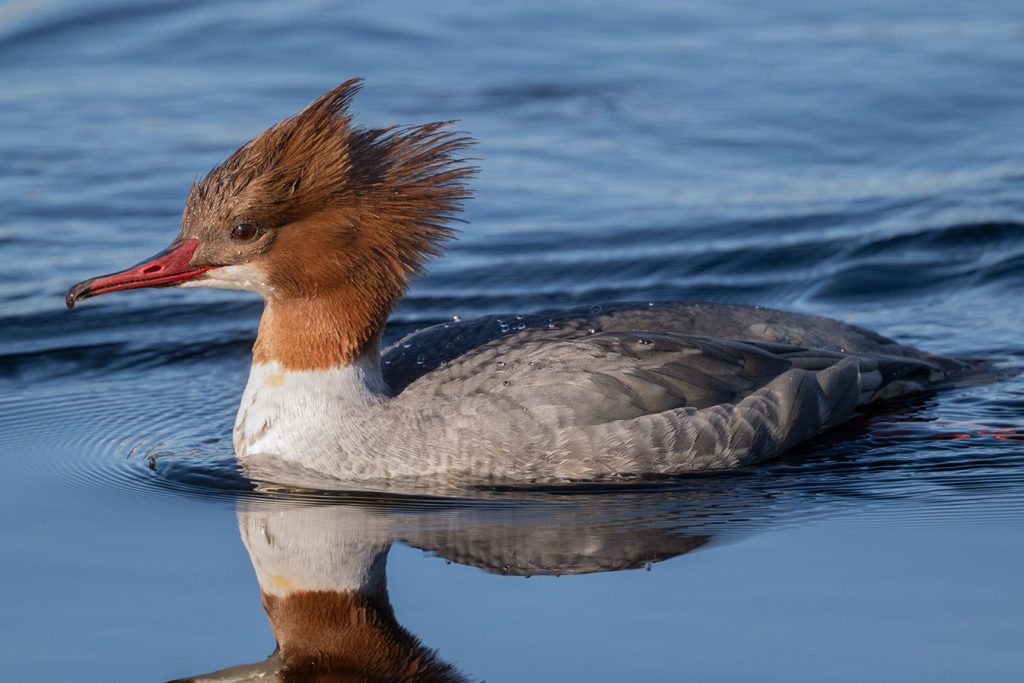
Female Goosander – Mergus merganser, Caledonian Canal, Clachnaharry (photograph)
Goosanders for a long time were at the centre of a mystery, after mating and during the late summer males would almost entirely disappear from Scotland and the UK. It was only comparatively recently that it was discovered that the males move to Scandinavia, mostly Norway, in their thousands to moult the probability being that the location and concentration of numbers increases their safety whilst the replacement of feathers takes place during which they cannot fly. Nesting is in hollow trees and the females lead the ducklings from the nest when it is time by getting them to jump down to the ground below, which can be a significant drop but they are so light and cushioned by downy feathers that they do not get hurt.
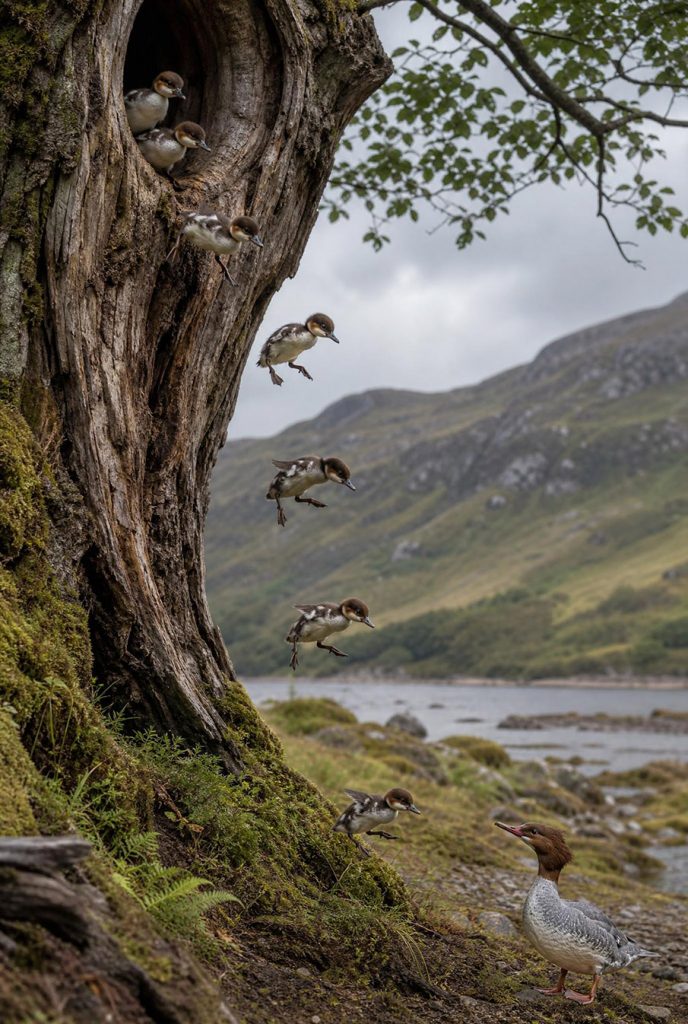
Female Goosander and ducklings – Mergus merganser (illustration)
Lesser Celandine
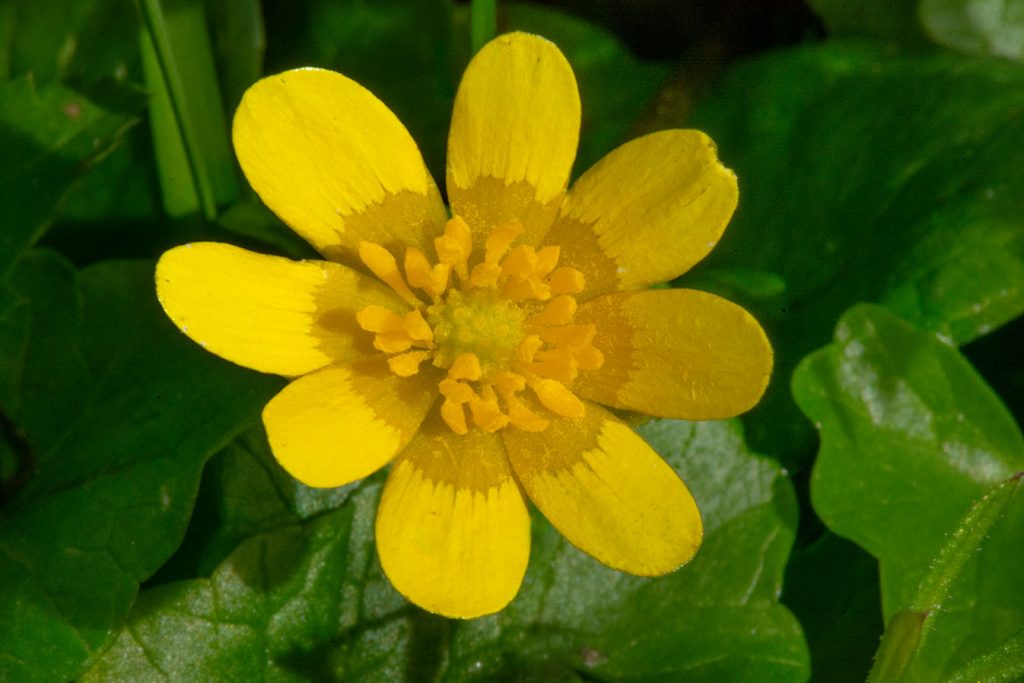
Lesser Celandine – Ficaria verna, Merkinch (photograph)
One of the earliest spring flowers, the Lesser Celandine has been used for various purposes, mostly based on the idea that its own appearance will tell you its value and properties, not a view which seems to have much validity now. This is known as ‘The Doctrine of Signatures’ and however flawed, that does not mean all uses based on it are false. The appearance of the plant’s tubers nominated it as the basis for an ointment to treat warts, callouses and other external skin growths. A properly prepared ointment of Lesser Celandine will blister normal skin and will shrink growths of, or related to, skin. In Scotland, because its roots resembled cow’s udders Lesser Celandine was hung in cowsheds to stimulate milk production, it was also supposed to deter faeries from interference with the dairy and its yellow colour made it a treatment for jaundice. These probably do not have a real basis in an effect. What is real though is that the flowers are very light sensitive, only opening in the hours of sunshine and closing before it rains or as clouds gather making them a natural weather station that was used by farmers to predict conditions.
Carrion Crow
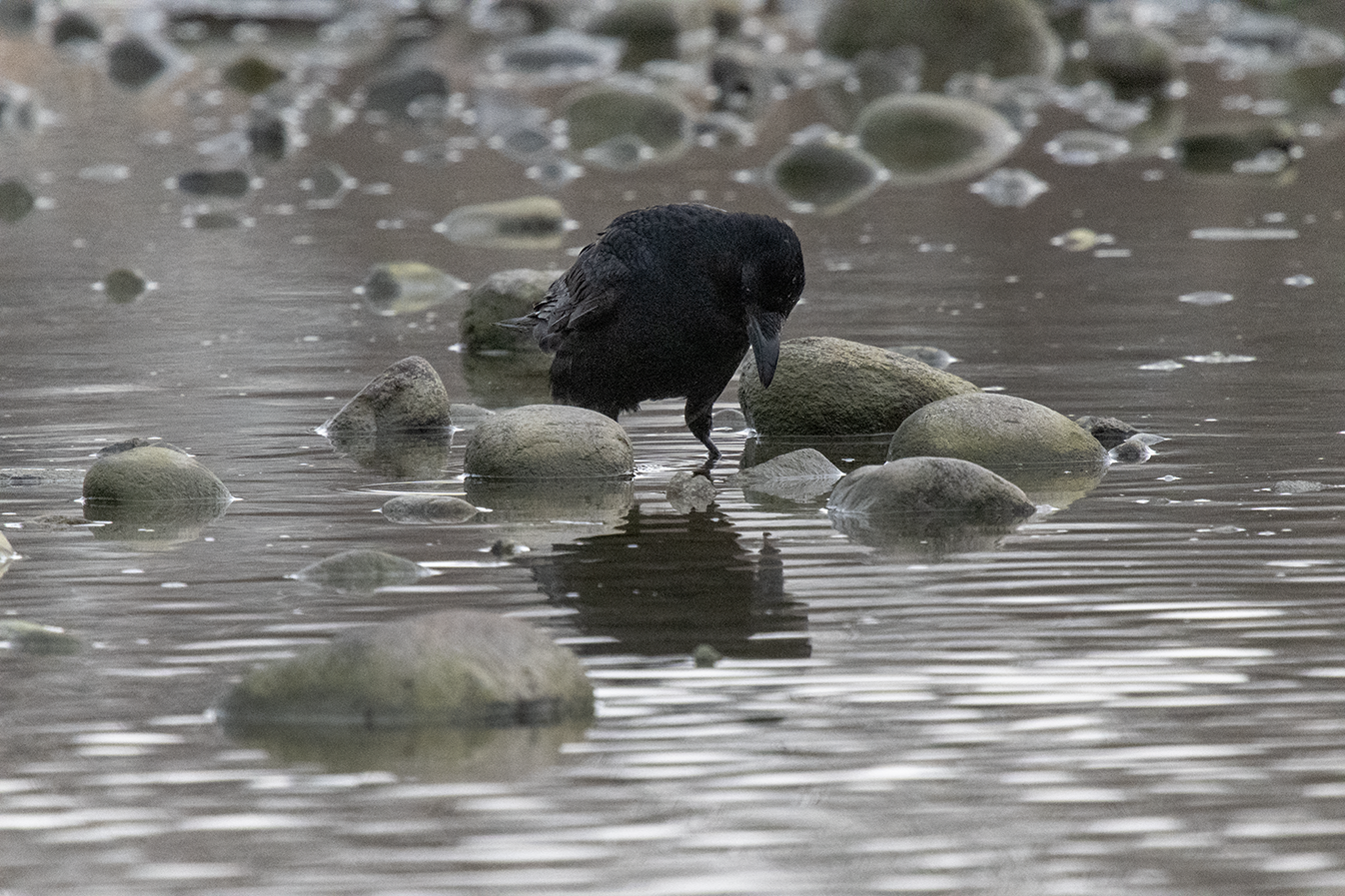
Carrion Crow – Corvus corone, Merkinch (photograph)
Carrion Crows are often portrayed as intelligent birds of mystery and slightly threatening. Given that they forage for decaying flesh and were notable for their presence on battlefields after the fighting to feed on the fallen, it is not surprising that they have a negative side to their image.
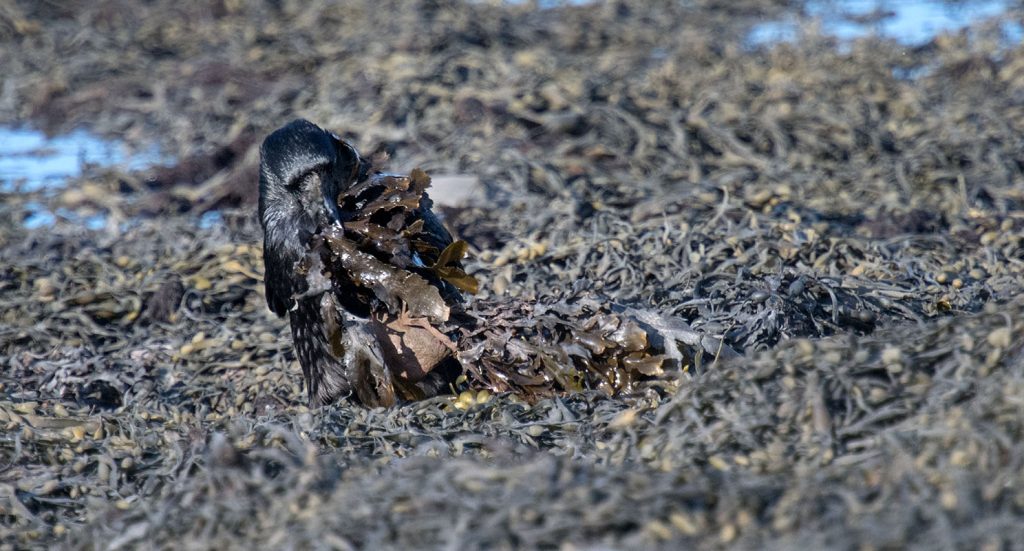
Carrion Crow – Corvus corone, Merkinch, foraging in seaweed (photograph)
Despite this, the Anglo-Saxons regarded them as soul-guides but throughout Scotland and England, a single crow perched on a roof was seen as an omen of a death in the household, a threat that could be negated by bowing respectfully to the bird.
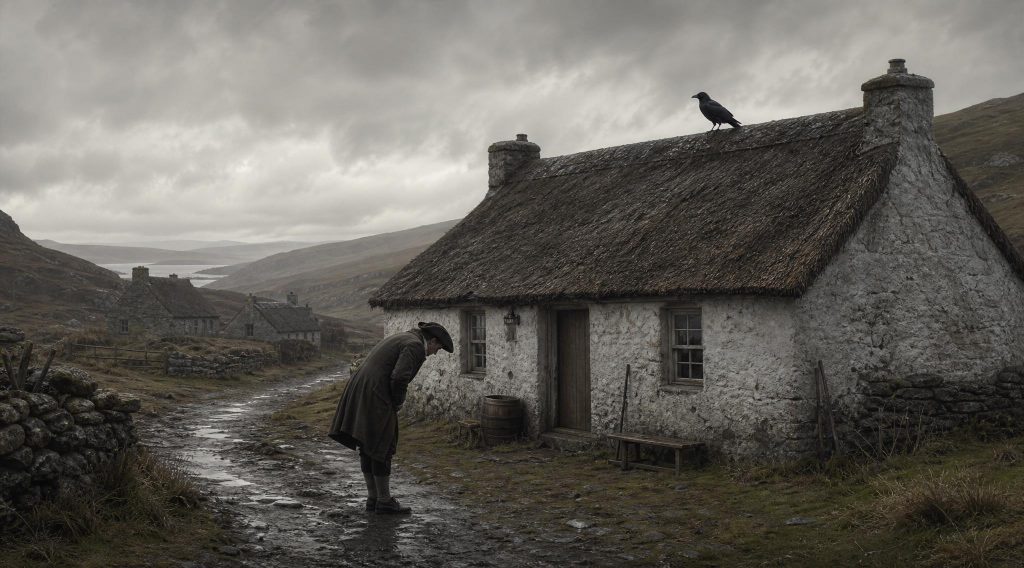
Illustration
Their darker side also meant they were known as witches’ familiars and had strong ties to the occult.
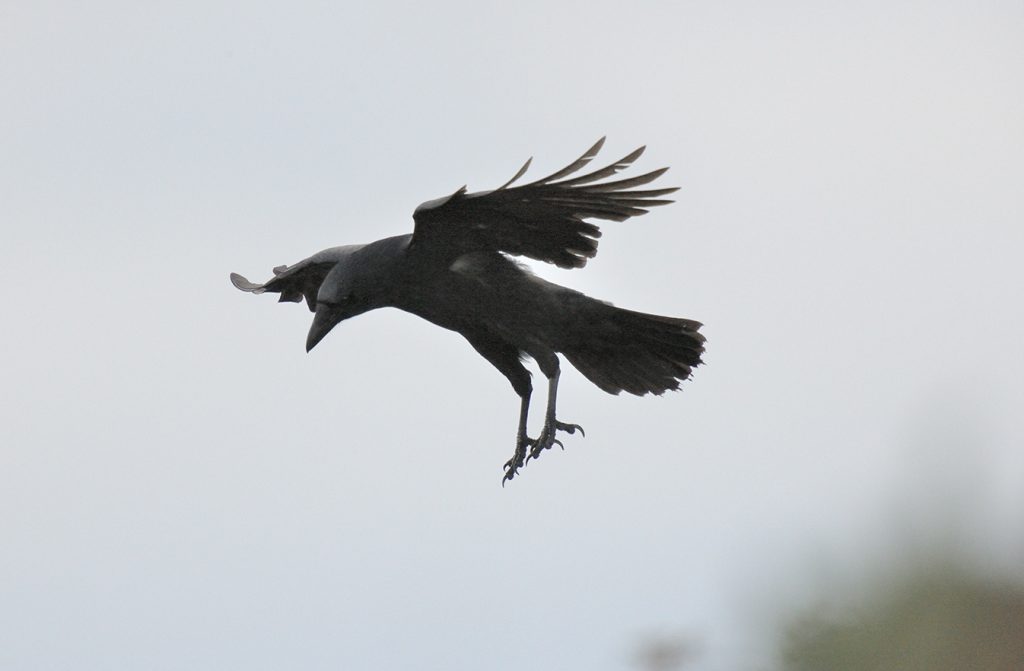
Carrion Crow – Corvus corone, Merkinch (photograph)
That one of the collective nouns for crows is ‘a murder of crows’ completes the picture.
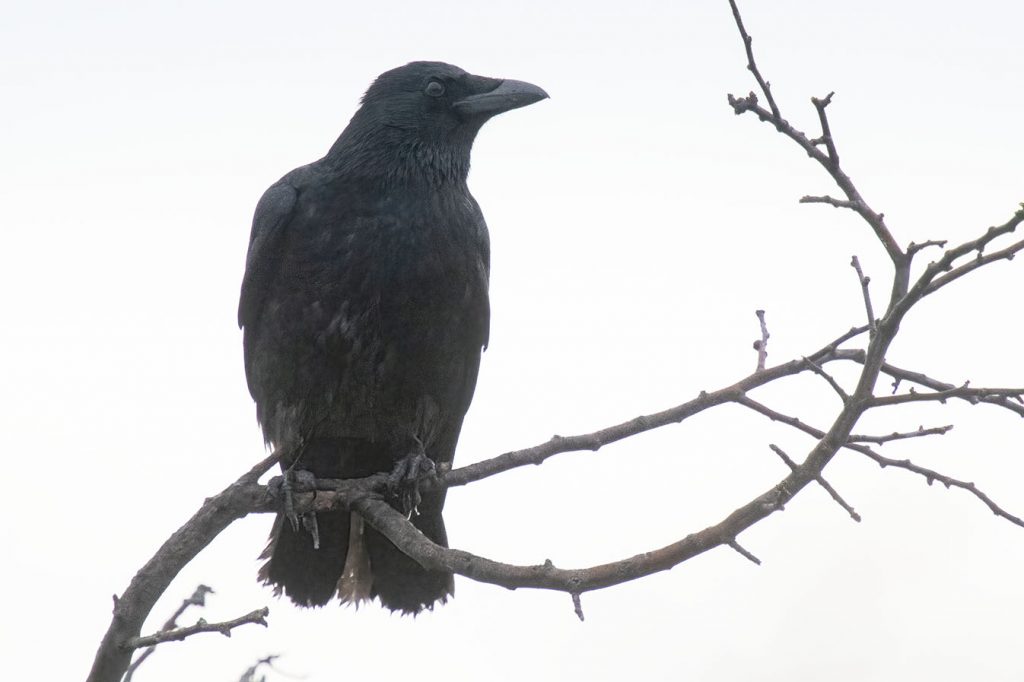
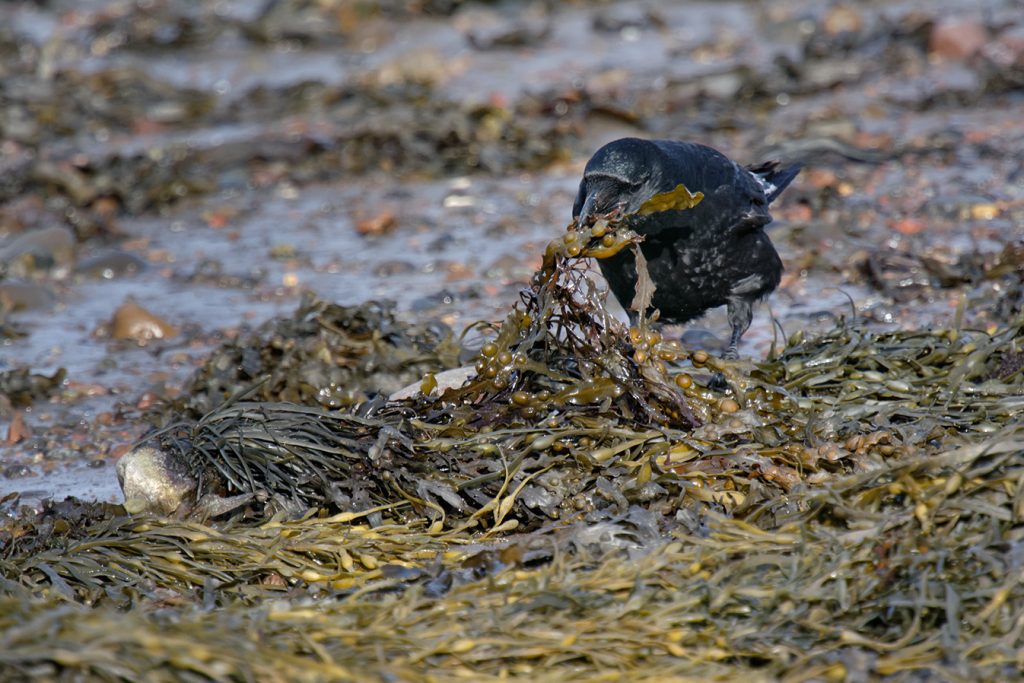
Carrion Crows – Corvus corone, Merkinch (photographs)
European Starling
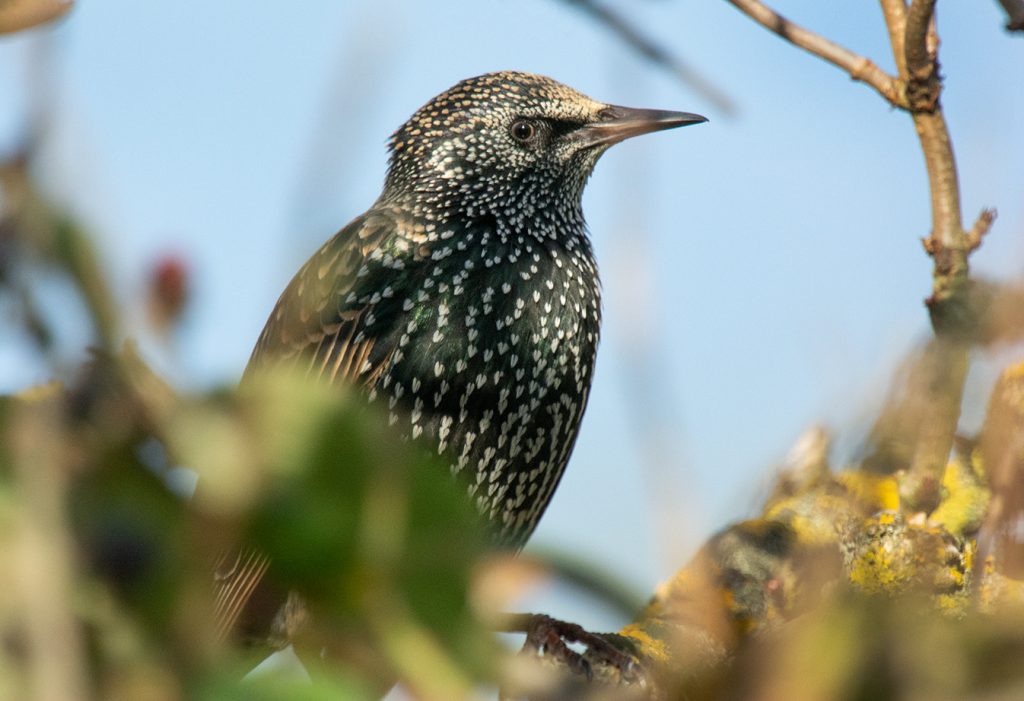
European Starling – Sturnus vulgaris, Merkinch (photograph)
Resident and a significant winter migrant, known in some locations for their large, coordinated flocks flying at dusk before roosting. Both the Celts and the Romans believed in reading patterns in these flights as messages from the gods. Featuring in early epic tales as messengers, these ideas were based on the Starling’s skills as a mimic that can be trained. In Scandinavia, they are welcomed as a sign that spring has arrived as they return from migrating to winter settings including Scotland. In Scotland and the rest of Britain, the number of Starlings is in decline.
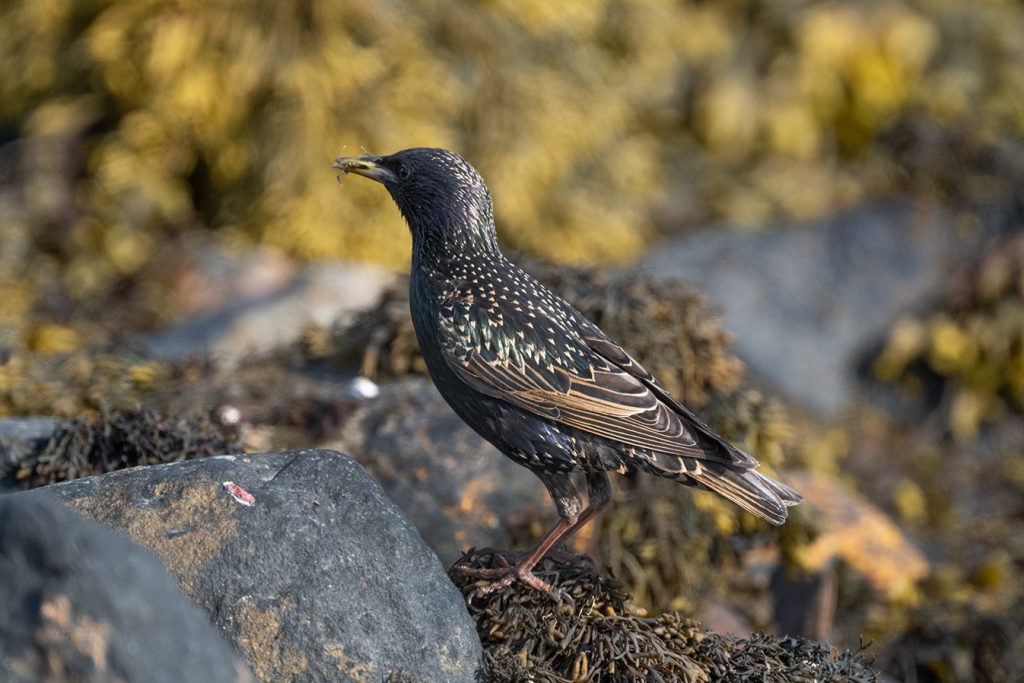
European Starling – Sturnus vulgaris, Merkinch (photograph)
Day 29
Common Gull
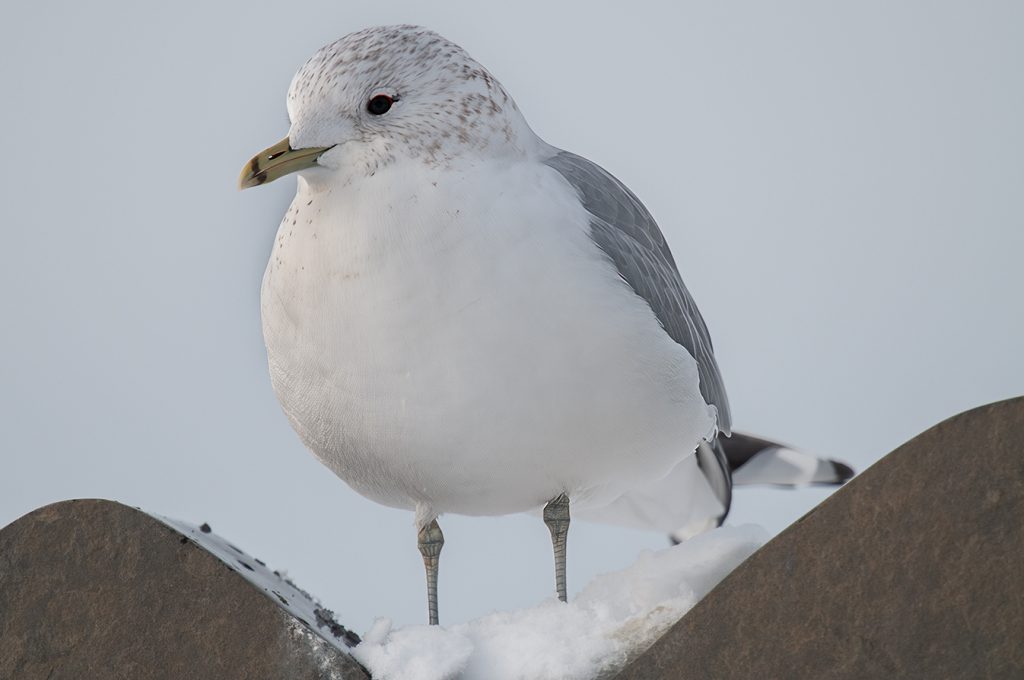
Common Gull – Larus canus, Merkinch (photograph)
Seen in summer but with a huge population increase in winter with birds arriving from Iceland, Scandinavia and northern Europe. The name raises a question, even in northern Scotland where numbers are highest, this is not the most numerous, most seen of gulls.
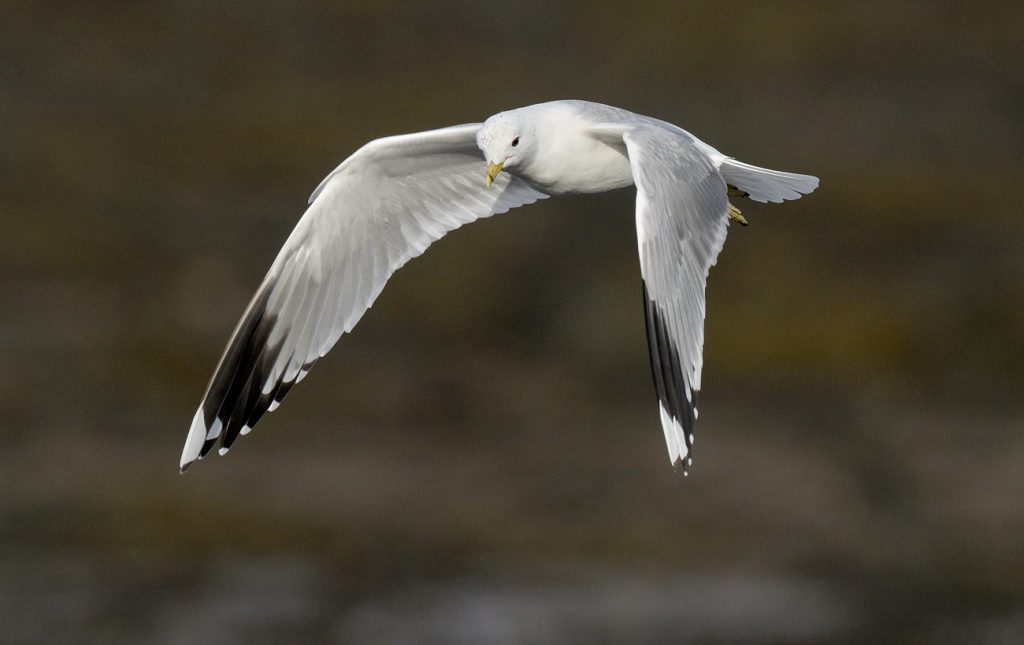
Common Gull – Larus canus, Merkinch (photograph)
It is believed that the name ‘Common’ refers to an older application of the word to denote a lack of the exceptional, which is not fair since they are a very attractive bird. It has also been said that ‘Common’ came from them nesting on Common Land, poor often damp grazing. Also known as the Sea Mew and Sea Maw in Scotland
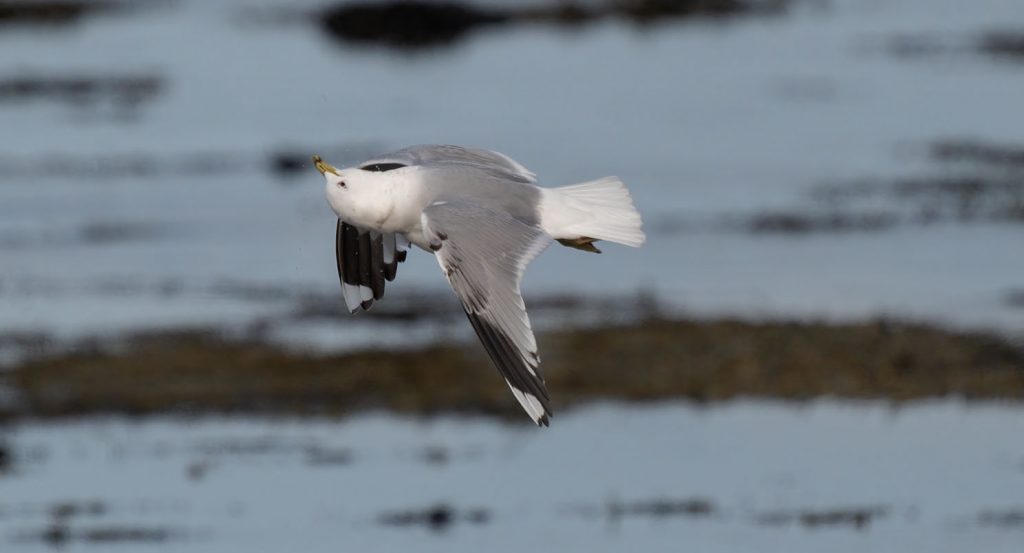
Common Gull – Larus canus, Merkinch (photograph)
Chaffinch
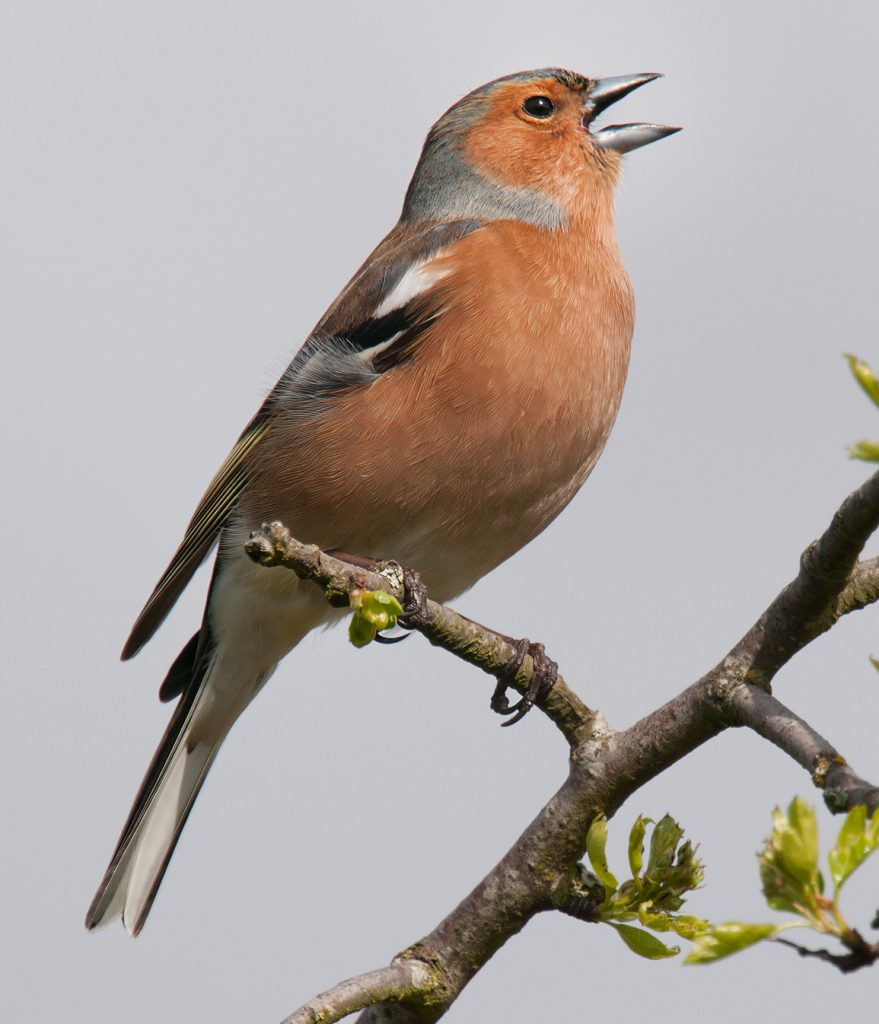
Chaffinch – Fringilla coelebs, Merkinch (photograph)
A very common resident bird with numbers raised in winter by migrants from northern Europe. The Chaffinch has a very long association with people and perhaps because of this familiarity, there is less mythology than many other birds, perhaps you don’t see magic in the everyday, perhaps you should. At least contact made them be regarded positively as a sign of luck, spring and renewal.
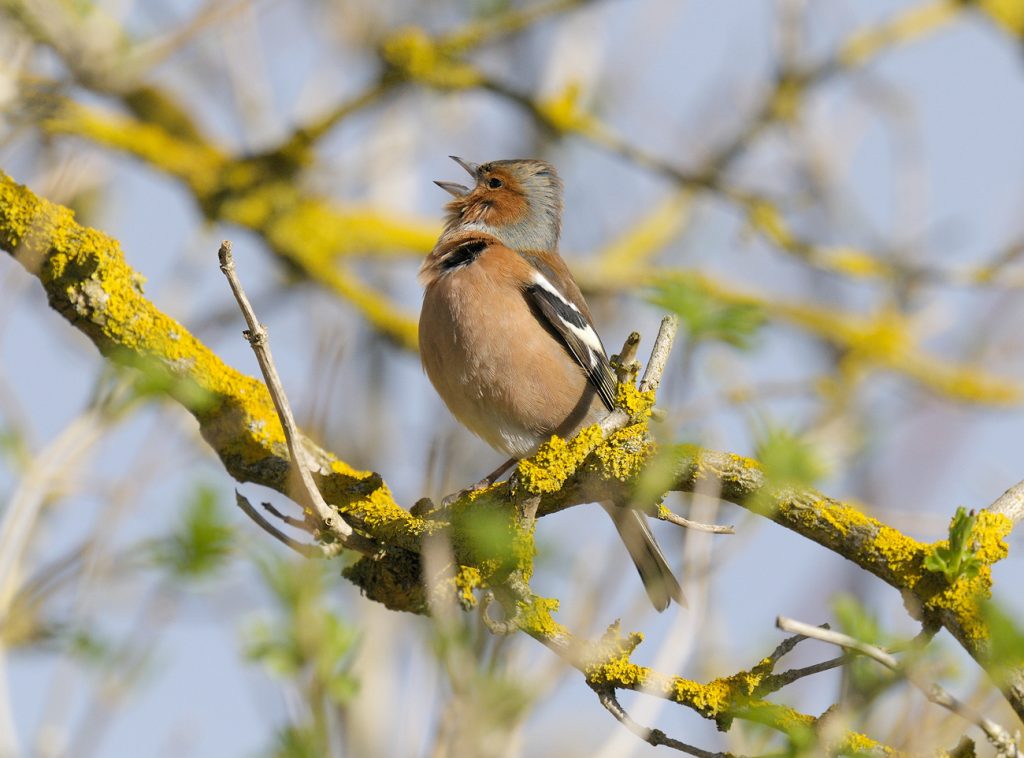
Chaffinch – Fringilla coelebs, Merkinch (photograph)
White Hawthorn
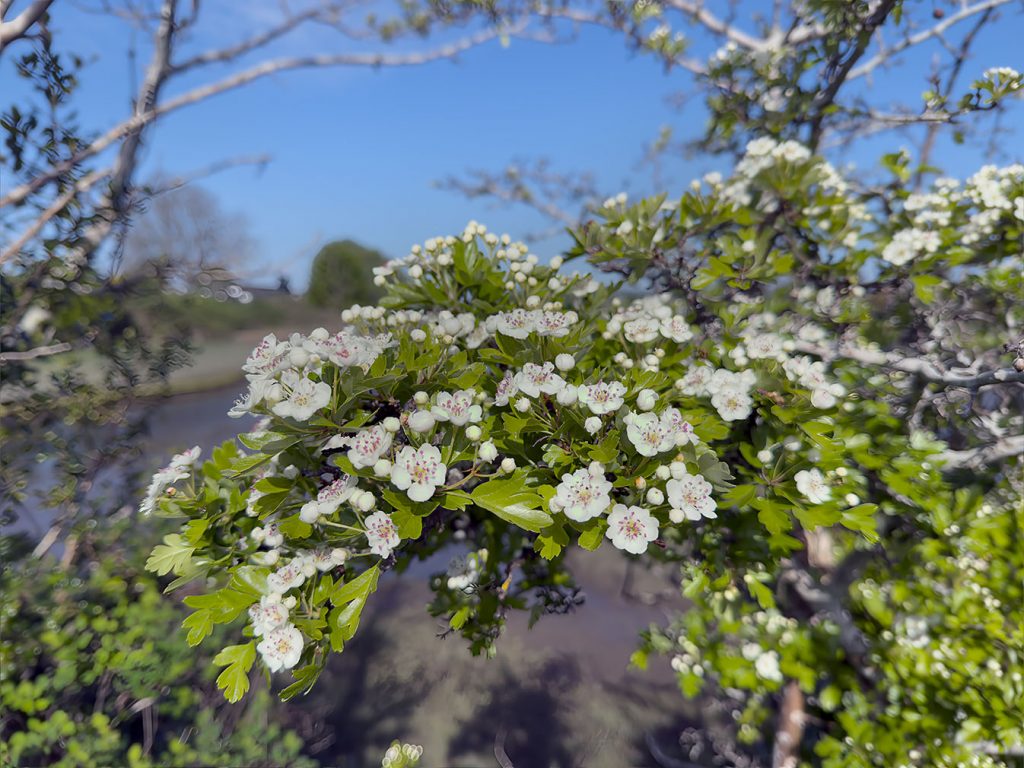
White Hawthorn – Crataegus monogyna, Merkinch (photograph)
A widely distributed shrub which can become a small tree. Flowers in May, hence the old name ‘May-tree’, also known as Haw-berry in Scotland. Dense growth and thorns have meant it has been used as hedging for centuries. Apart from growing a physical barrier, Hawthorn has had many other uses and meanings. In pre-Christian times, it was sacred and found in groves which were places of worship and at the grave sites of the most important people. This sacred regard is thought to be the basis of the much later tradition that it carries ill fortune to bring Hawthorn flowers into a house since it is wrong to use Hawthorn for virtually any purpose. Alternatively, another explanation has been suggested that the scent of Hawthorn blossom resembles the smell of plague or decomposing corpses, not something to have in a house. This is not totally fanciful since whilst there is no known link between Hawthorn and infection risk, Hawthorn blossoms contain trimethylamine which is also released by rotting flesh.
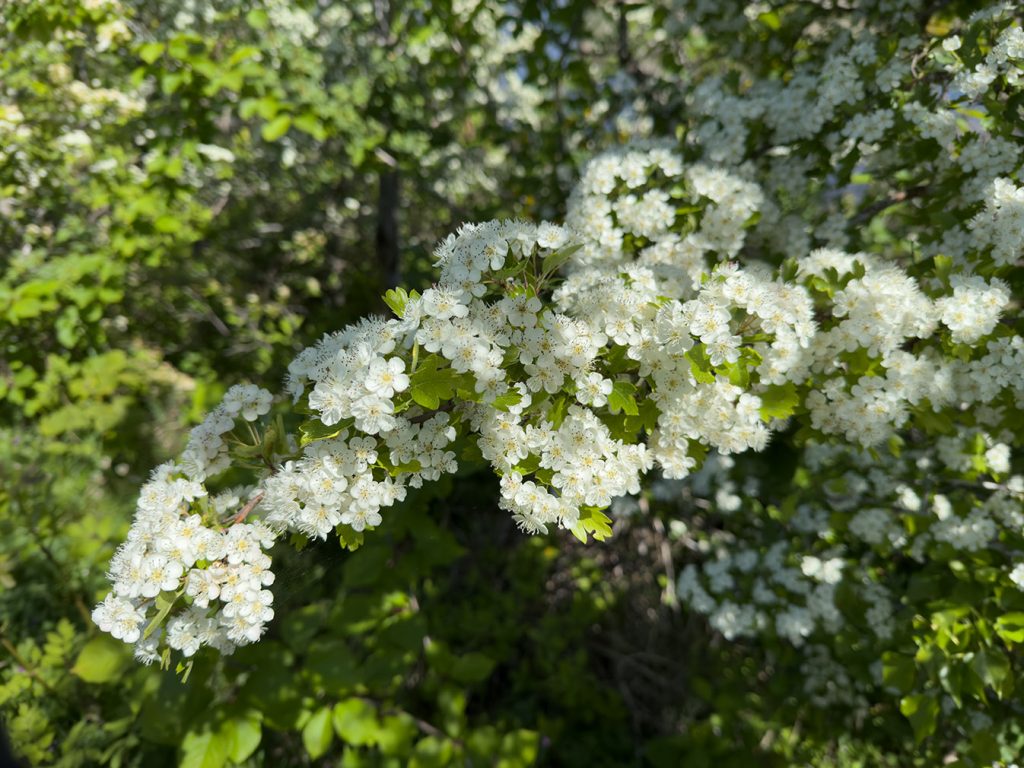
White Hawthorn – Crataegus monogyna, Merkinch (photograph)
Despite any taboo, Hawthorn has been used for dyes, wine making and woodwork as well as a cure for sore throats and high blood pressure. Caution should still be observed, go to sleep under one and you might be kidnapped by faeries and taken to the otherworld. It is also the classic wood witches were supposed to use for their broomsticks. Remembering the persecution and prejudice behind the trials of innocent women accused of witchcraft perhaps if you were a woman at risk of the accusation, having Hawthorn growing at your house might have been an additional risk.
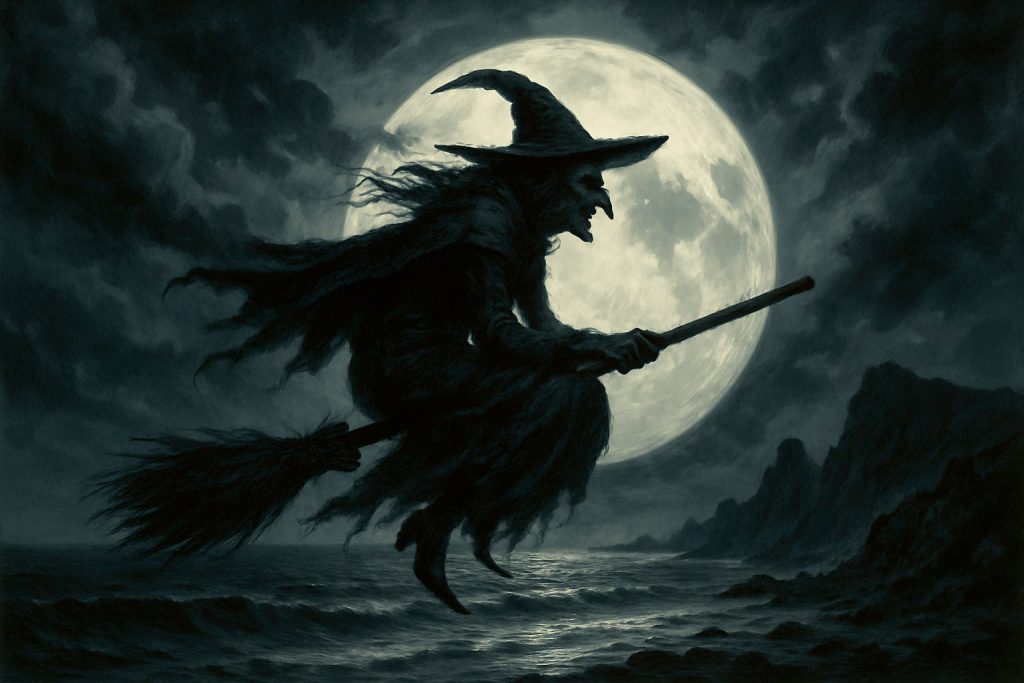
The traditional view from less tolerant times (illustration)
Day 28
Northern Wren
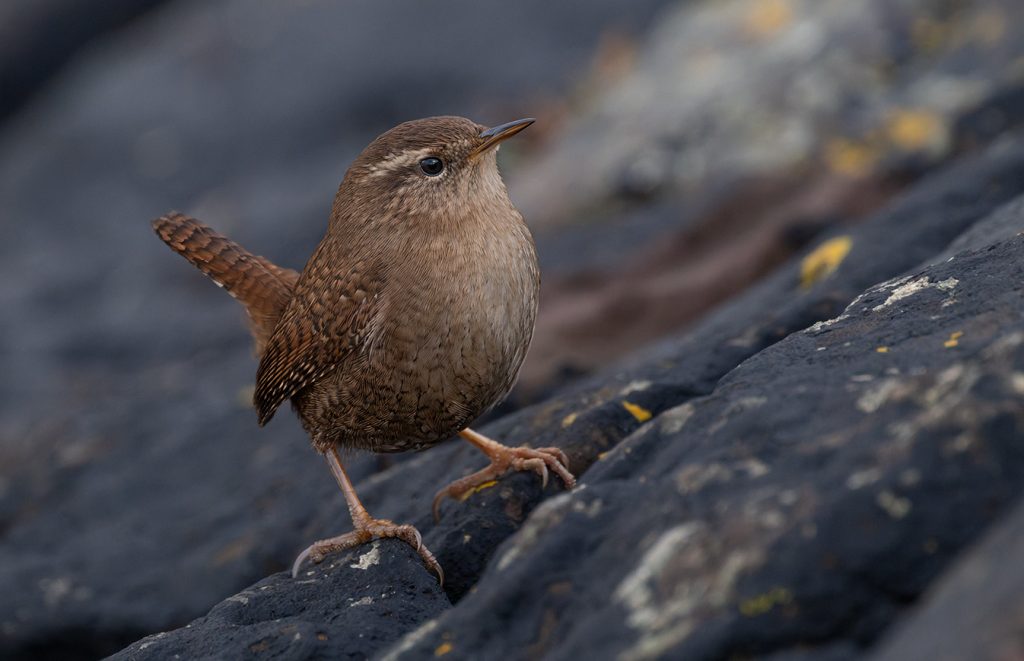
Northern Wren – Troglodytes troglodytes, Merkinch (photograph)
One of Europe’s smallest birds and, in Scotland and the UK, far more common than its sightings suggest.
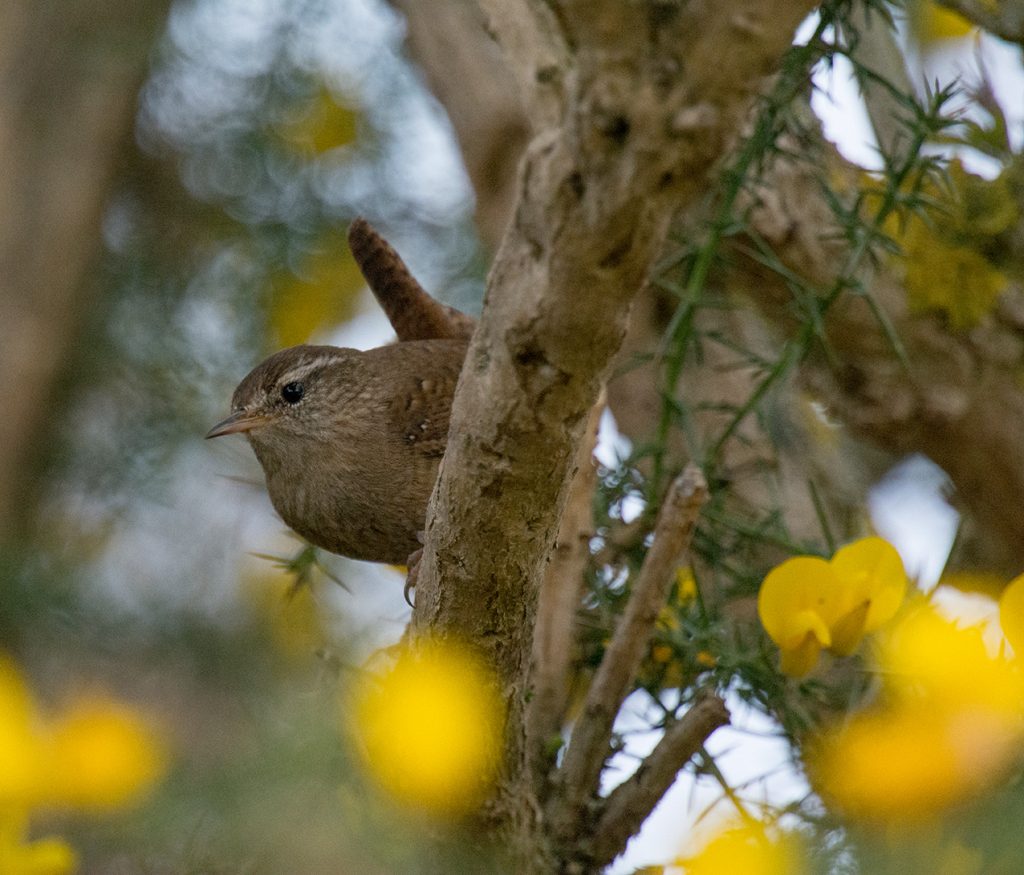
Northern Wren – Troglodytes troglodytes, Merkinch (photograph)
Subject of several and sometimes contradictory beliefs. In Scotland often known as ‘Our Lady’s Hen’ referencing that the Wren brought moss as bedding for the newly born Jesus in Bethlehem.
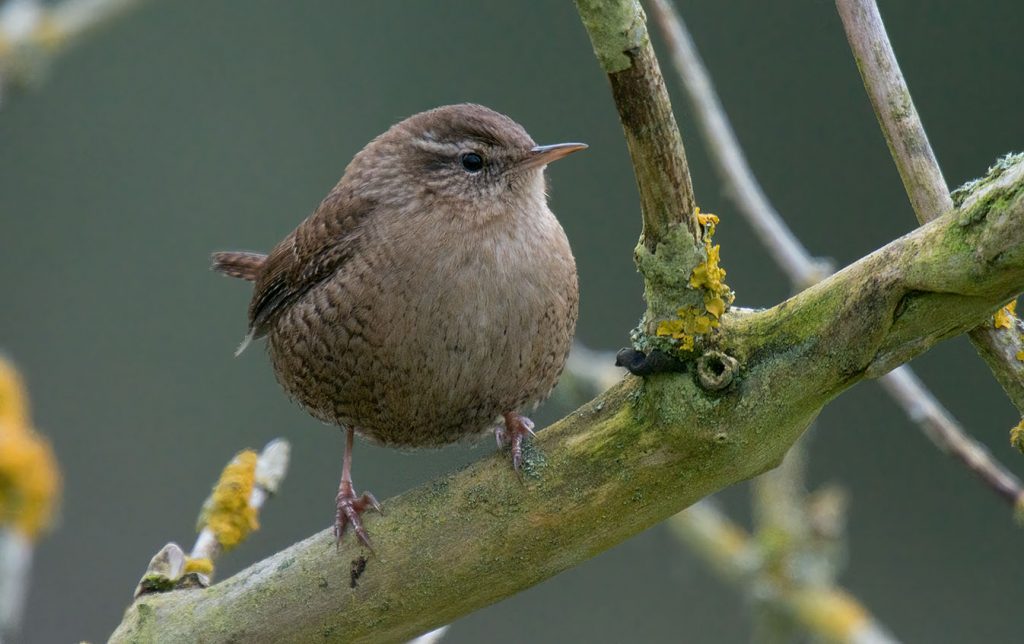
Northern Wren – Troglodytes troglodytes, Merkinch (photograph)
Already though a bird used by Druids in divination and then subject to hunting persecution because of its connection with the death of Saint Stephen, who Wrens are accused of betraying, and on whose day Wrens were stoned to death. It has been suggested that this was a Christian attempt to supress pagan ideas.
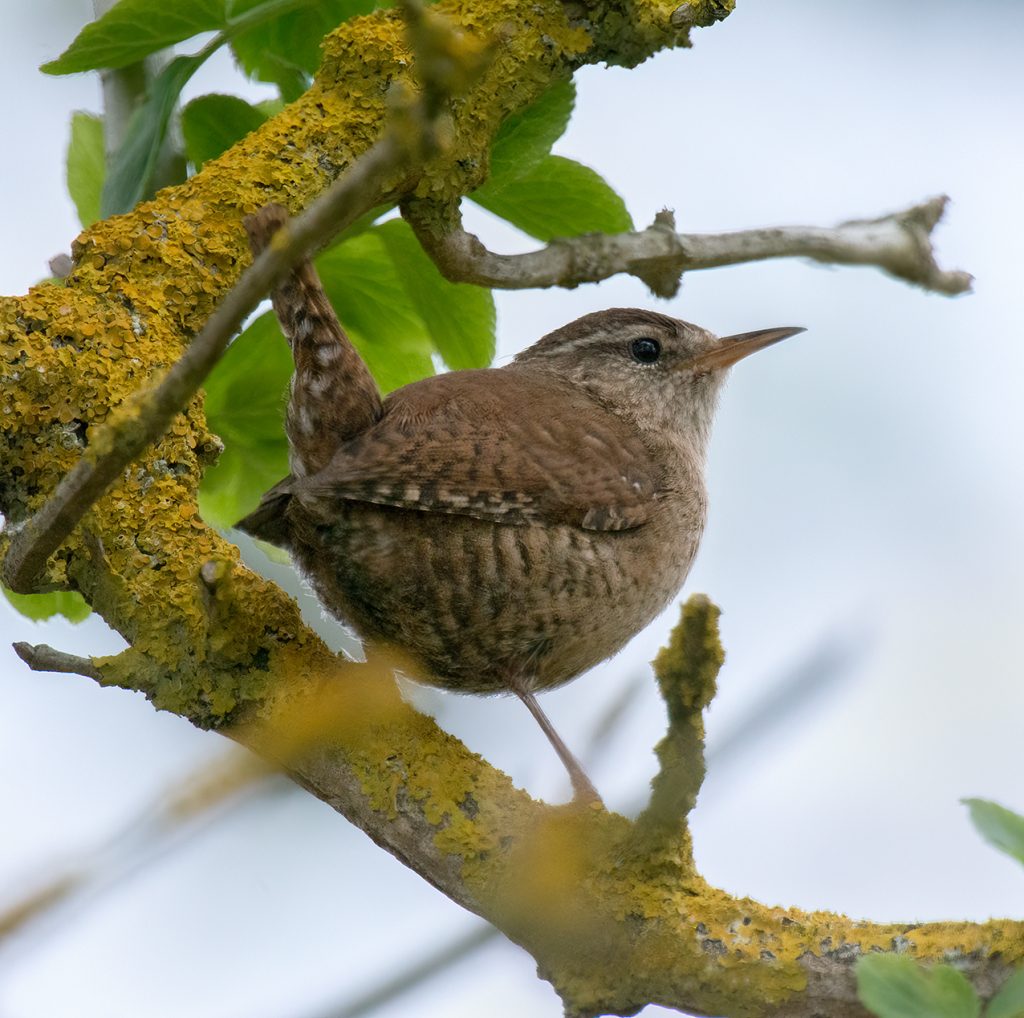
Northern Wren – Troglodytes troglodytes, Merkinch (photograph)
Also thought of as the king of birds for having tricked an eagle in a contest to fly highest, as the bringer of fire from the sun to earth for people to use and whose feathers could be carried as a protective charm.
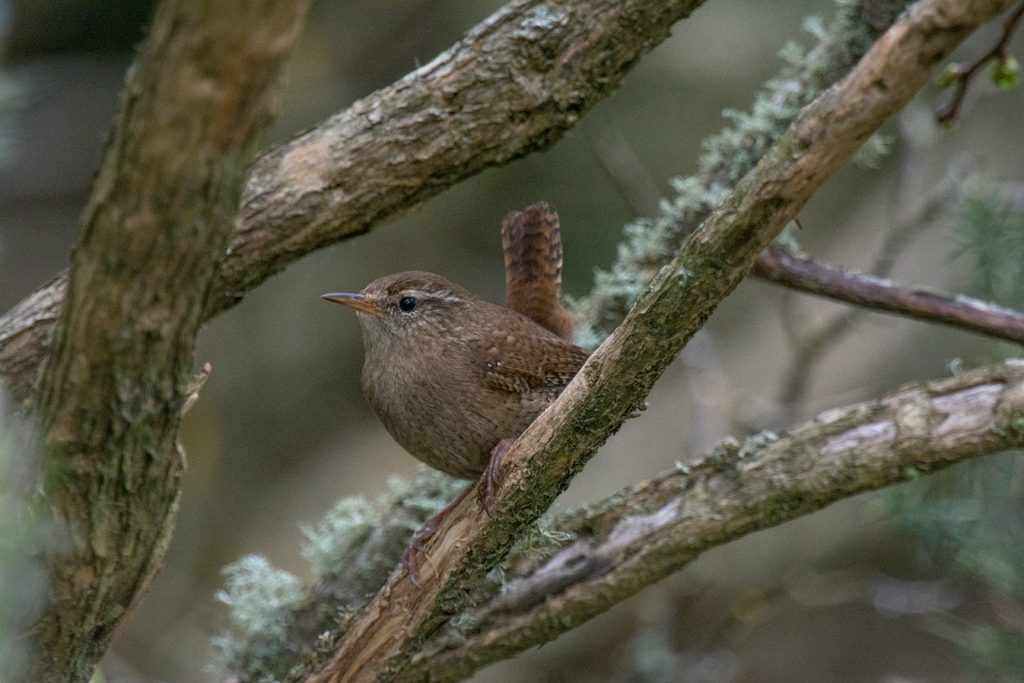
Northern Wren – Troglodytes troglodytes, Merkinch (photograph)
Wood Pigeon
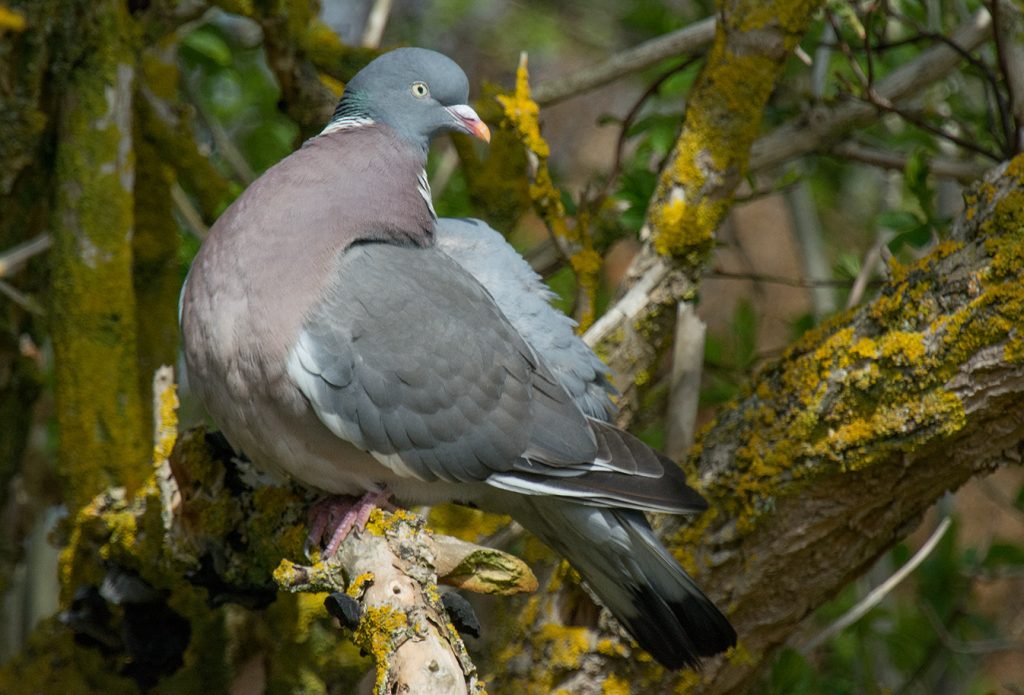
Wood Pigeon – Columba palumbus, Merkinch (photograph)
A very widespread resident and a migrant in the UK. Usually seen as a symbol of peace and tranquillity, they have also been regarded as a portent of death if they called persistently round a particular house. Pieces of a Wood Pigeon were used in Scotland to treat Adder bites by applying them to the site.
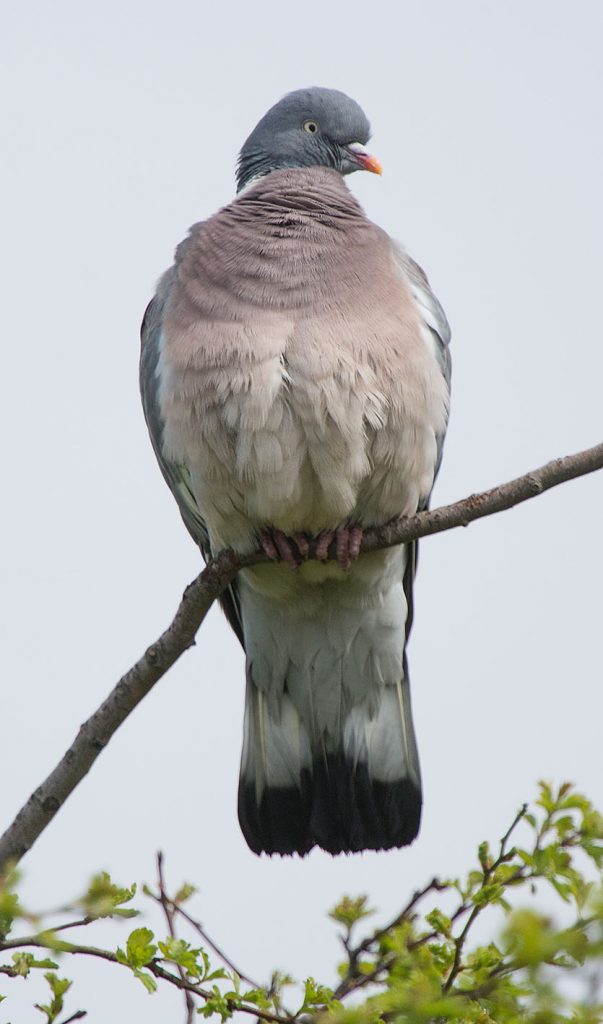
Wood Pigeon – Columba palumbus, Merkinch (photograph)
House Sparrow
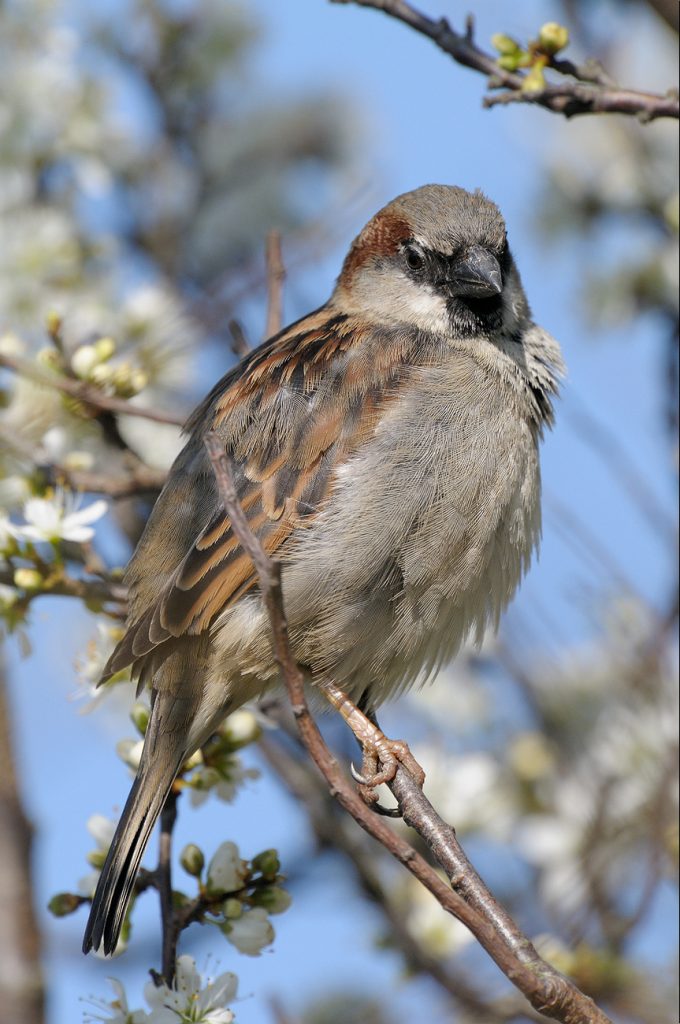
House Sparrow – Passer domesticus, Merkinch (photograph)
For a long time thought of as the most common of UK birds, the numbers of House Sparrows is now significantly decreased and they have been lost from some areas, notably the central part of North Scotland.
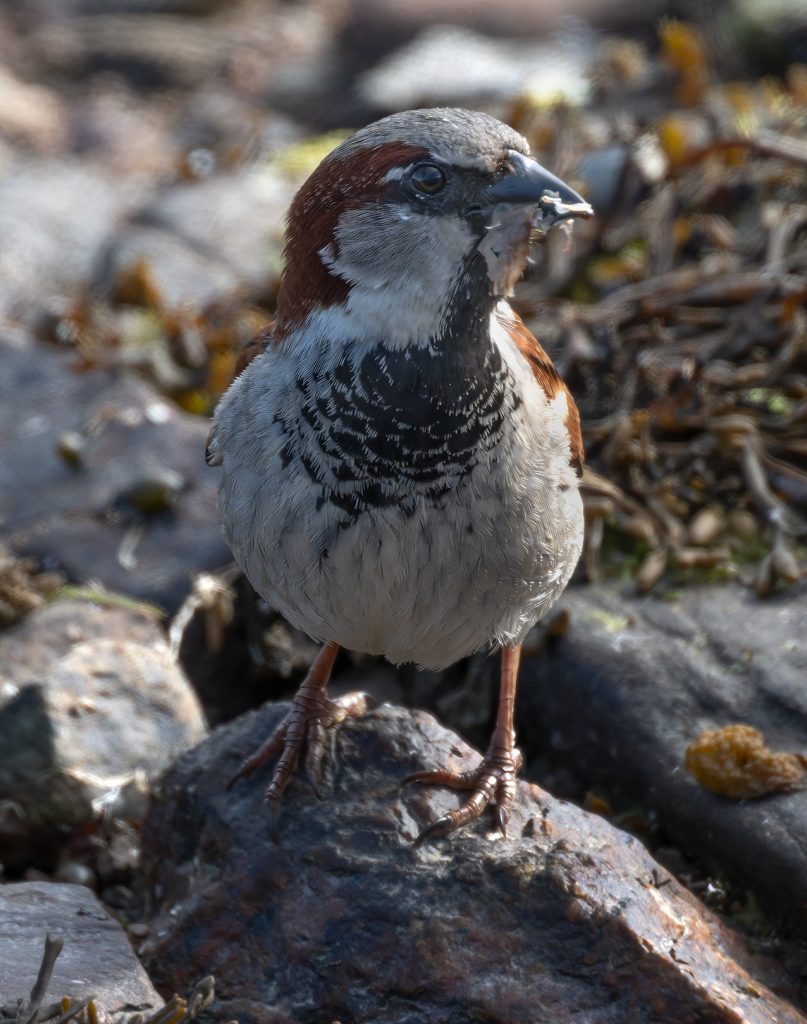
House Sparrow – Passer domesticus, Merkinch (photograph)
Said to be cursed for giving Jesus away in the Garden of Gethsemane and contributing to his torment on the cross, the suggestion is that they have had their legs bound invisibly meaning that they can only hop. Despite this, Sparrows are cited in the New Testament as an example of God’s care in his watching over such a humble bird.
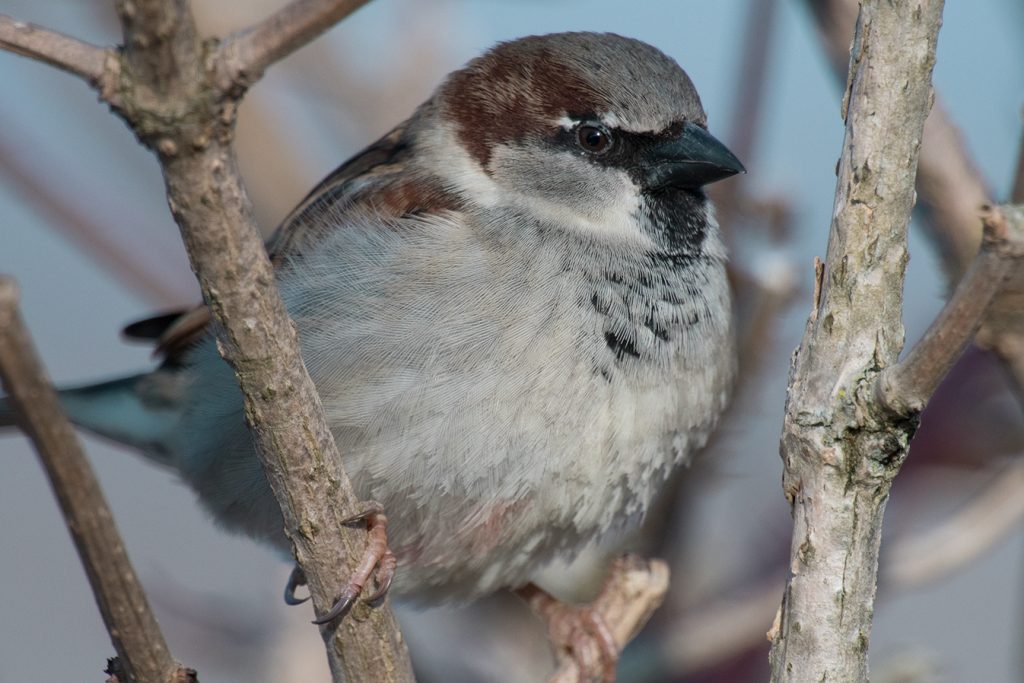
House Sparrow – Passer domesticus, Merkinch (photograph)
Lonely promontory
Standing out from the strand
Little white house
The only shelter
Gates locked fast
To hold out the sea
Whipping winds
Strike solid stones
Timbers creak
Beneath ancient piers
Rain ripples
Across salty sprays
Clachnaharry
Stands alone in the sea
Daniel Musenga-Grant
Well, I was born and brought up here. The thing I remember is late at night or early in the morning, the deer would wander down the front road and the field and back out again.
I’ve seen a heron coming across the water. There are so many different animals out there but a lot of them are gone now. When people come down now, the nature we see is not as much as it was…
Morag
Day 27
Tufted Duck
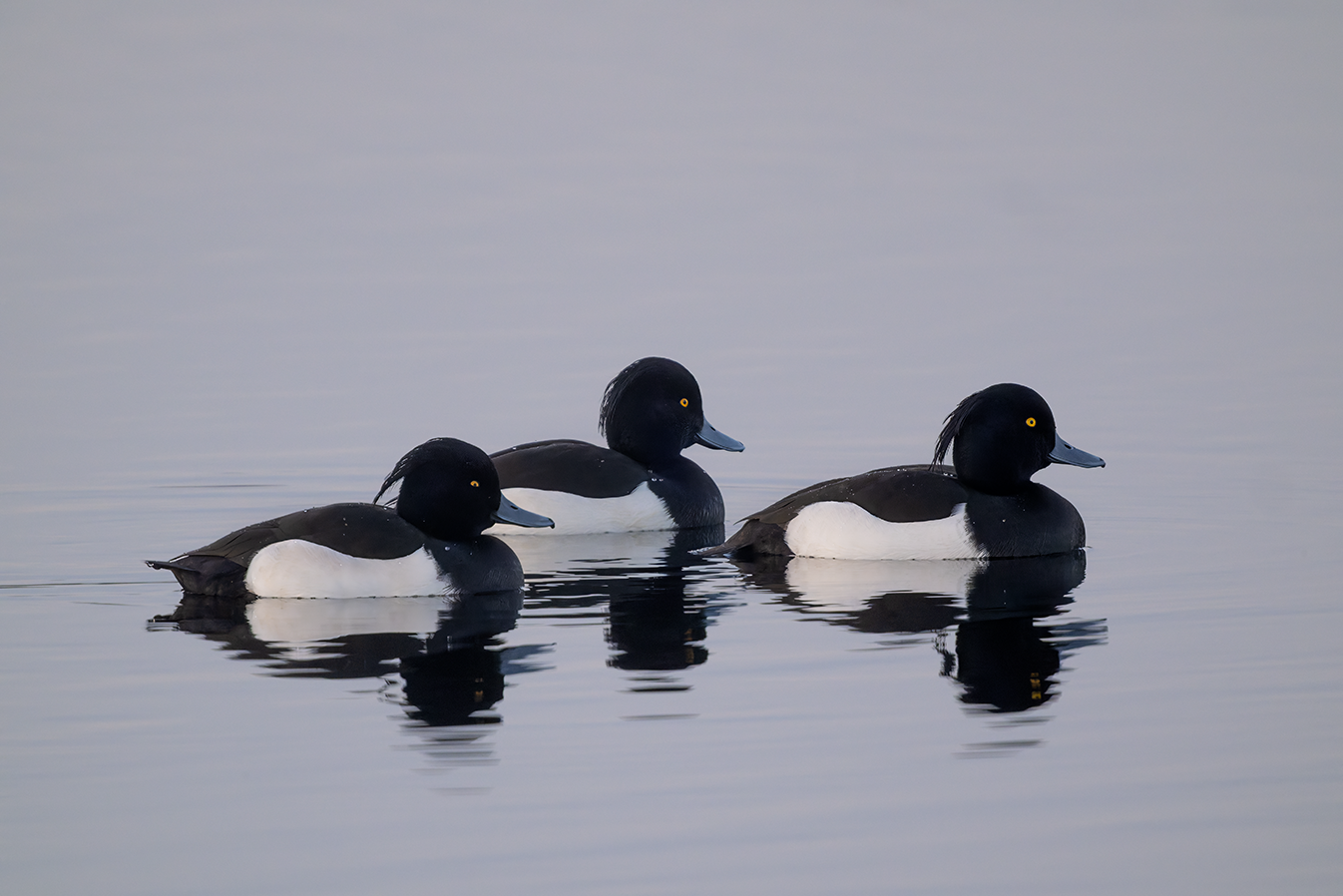
Tufted Ducks – Aythya fuligula, Caledonian Canal, Clachnaharry (photograph)
Resident breeding population with numbers greatly increased by winter migrants, also known as the Magpie Diver and is a freshwater wildfowl. The Tufted Duck is at the centre of the Finnish creation myth. The duck was the only creature on the primordial earth and flew above the dark, empty and endless ocean. The only being in that ocean was the mother goddess, who raised her knee above the waters where it was taken for a tuft of earth and grass by the Tufted Duck, who laid six golden and one iron egg on it taking it to be a nesting site. The Tufted Duck incubated the eggs which became so hot that the goddess flinched and moved her knee. The eggs fell into the ocean and cracked possibly because they were so hot. The pieces of shell and the yolk became the earth, sky, sun, moon and stars. The lower halves of the shells formed the earth, the upper halves the sky. The yolks gave birth to the sun and the whites the moon. The rest and remaining fragments and speckled shells were the genesis of the stars and space.
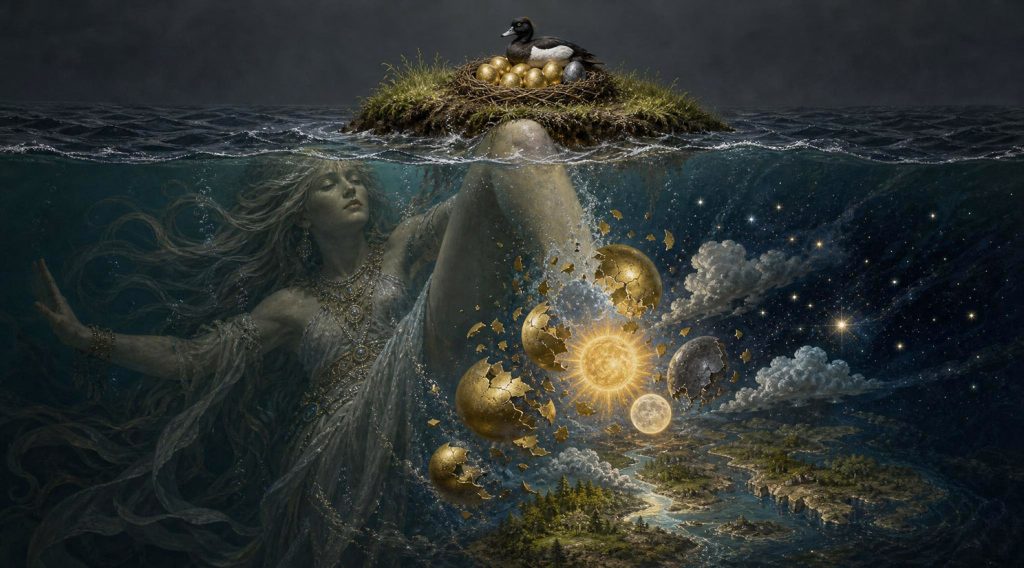
Tufted Duck with mother goddess (illustration)
All this creation was shaped and moulded by the mother goddess, Ilmatar, with her hands. The dark yolk of the iron egg formed thunderclouds.
Hooded Crow
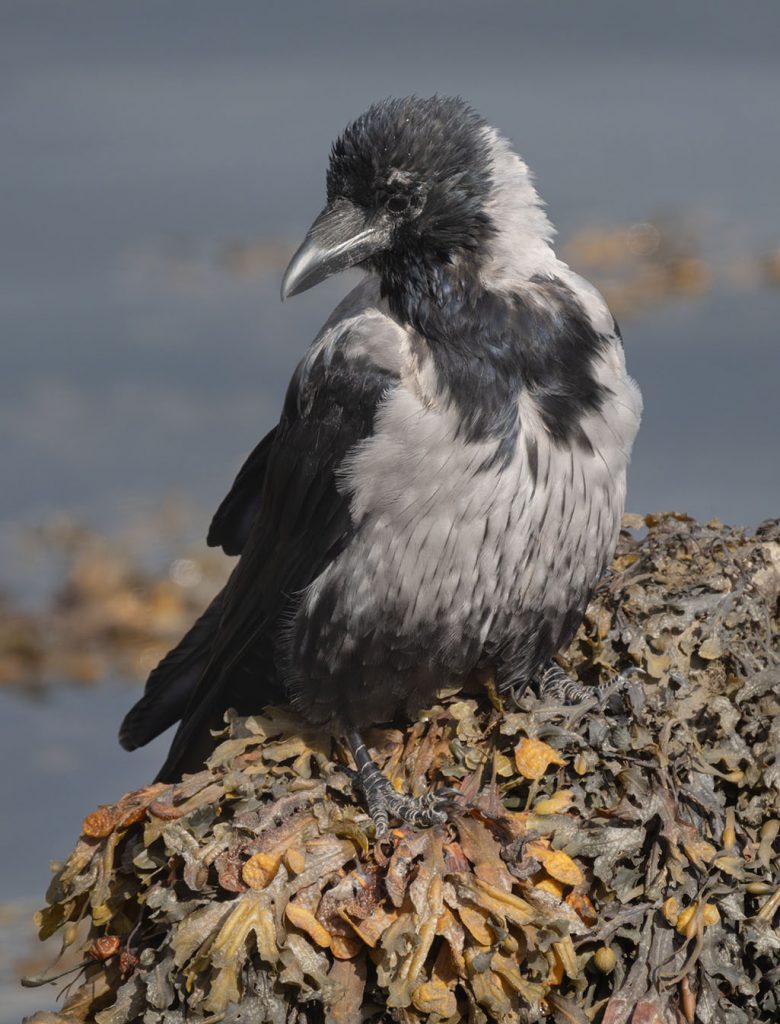
Hooded Crow – Corvus cornix, Merkinch (photograph)
Striking member of the crow family and a close relative of the Carrion Crow, so close that it has been classified as a sub-species. Although this is periodically reviewed, it is not the current accepted approach. The two are also so close that some interbreeding takes place producing hybrids where the lighter plumage of the Hooded Crow is only faintly visible. In Britain, the Hooded Crow is mostly found in Scotland and Ireland. As with Carrion Crows and Ravens, the Hooded Crow is said to be a warning of death. It is thought this connection is based on the genuine ability of crows to detect carrion at long range by smell. In Irish Celtic legend the Hooded Crow was seen as the animal incarnation of Badb Catha, ‘battle crow’, who flew over armies on the battlefield spreading fear and foretelling slaughter.
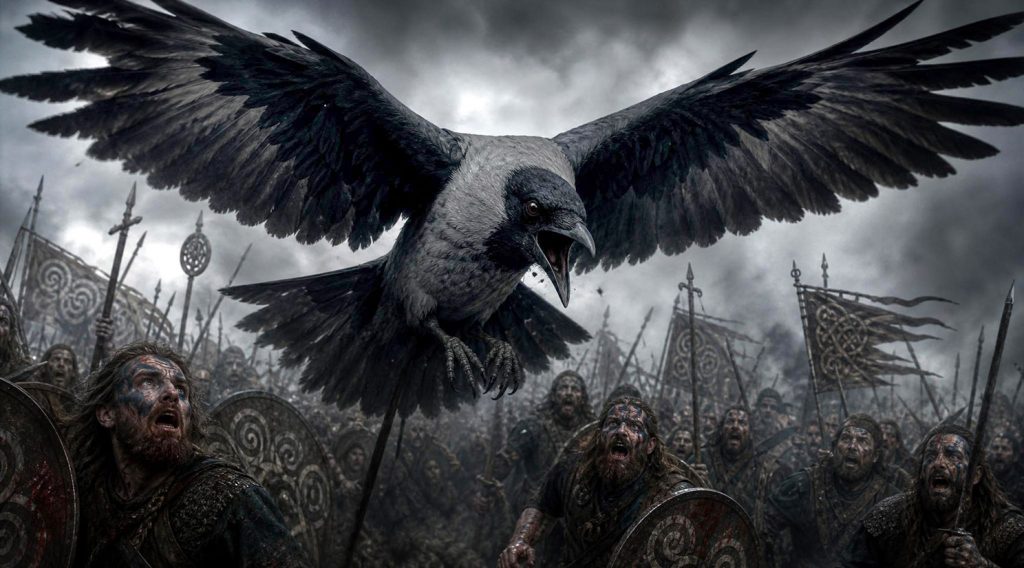
Badb Catha as a Hooded Crow, the ‘Battle Crow’ (illustration)
The Hooded Crow was also a form adopted by the goddess The Morrigan who appeared over heroes hovering as a Hooded Crow.
Great Black-backed Gull
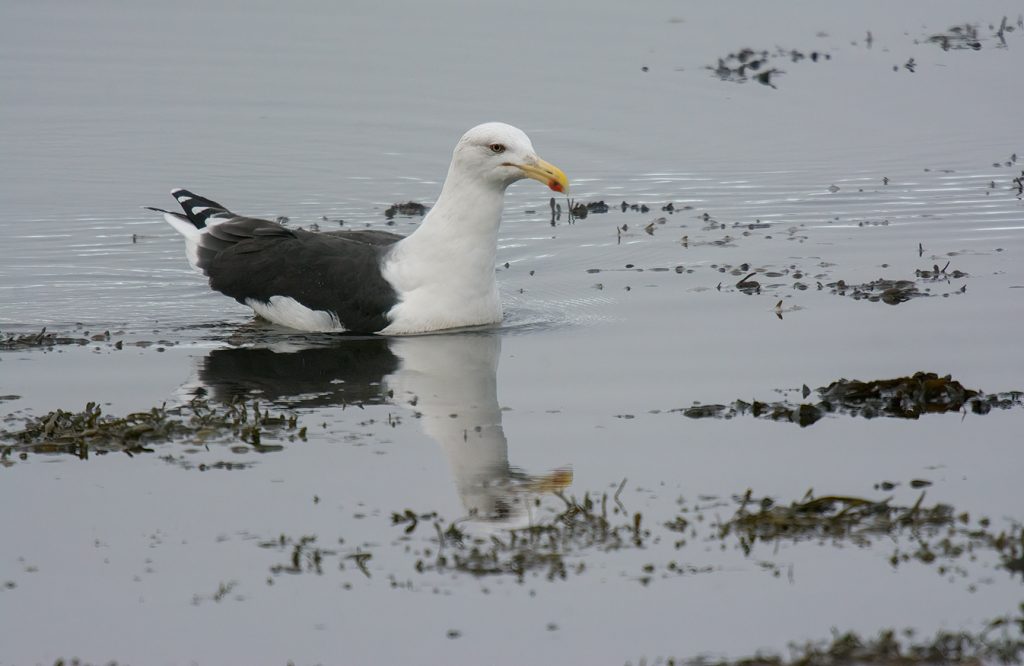
Great Black-backed Gull – Larus marines, Merkinch (photograph)
The largest gull worldwide and the most aggressive gull predator, there is a resident breeding population with their numbers boosted by migrants from Northern Europe and Iceland in winter. Described as the king of gulls and a merciless tyrant to smaller birds, they were associated along with other gulls as carrying the souls of those lost at sea. This view was only reinforced by the Great Black-backed Gull being mostly solitary unlike the flocks of other gull species.
“To start with, there was myself, a lassie Donna, and one Nikki. We entered a challenge in 1991 and chose to do a clean up for the car park here. We were told we wouldn’t get much and by the time Dell and everybody else was finished, we had filled, I think it was 150 black bags. The car park that we have here, we didn’t have that to start with, so all we did was paint white rocks and stick them in the spaces. We painted the mural on our wall. We did that in 70 mile an hour winds under a tarpaulin with our artist Tracy. We chose to do the dolphins jumping under the bridge, which is absolutely beautiful, because you can walk out here at any time and see the dolphins normally and any other sort of wildlife that you wish to see including the odd seal that comes down, which is really nice, and if you follow the river up, you actually get otters in the water. I actually had to do a double take one time to realise it was what I was seeing! So, it’s just beautiful. It’s just the tranquillity of it. that you’re actually in a city, but you can come somewhere that’s just peaceful and quiet, it’s brilliant. I’ve been here all my life. I was born here. I’ve been brought up in the Merkinch area and always lived here. It’s just amazing. The Reserve is very important especially for kids. They all helped with the cleanups and things like that and then came and planted flowers. It’s just an absolutely amazing place, especially if you can get the kids involved. We’ve actually planted trees down there as well. So if you get the kids there, and if you show them what they’re growing, it gives them the incentive not to break something”.
Sara Kane
Day 26
Caledonian Canal Wrecks
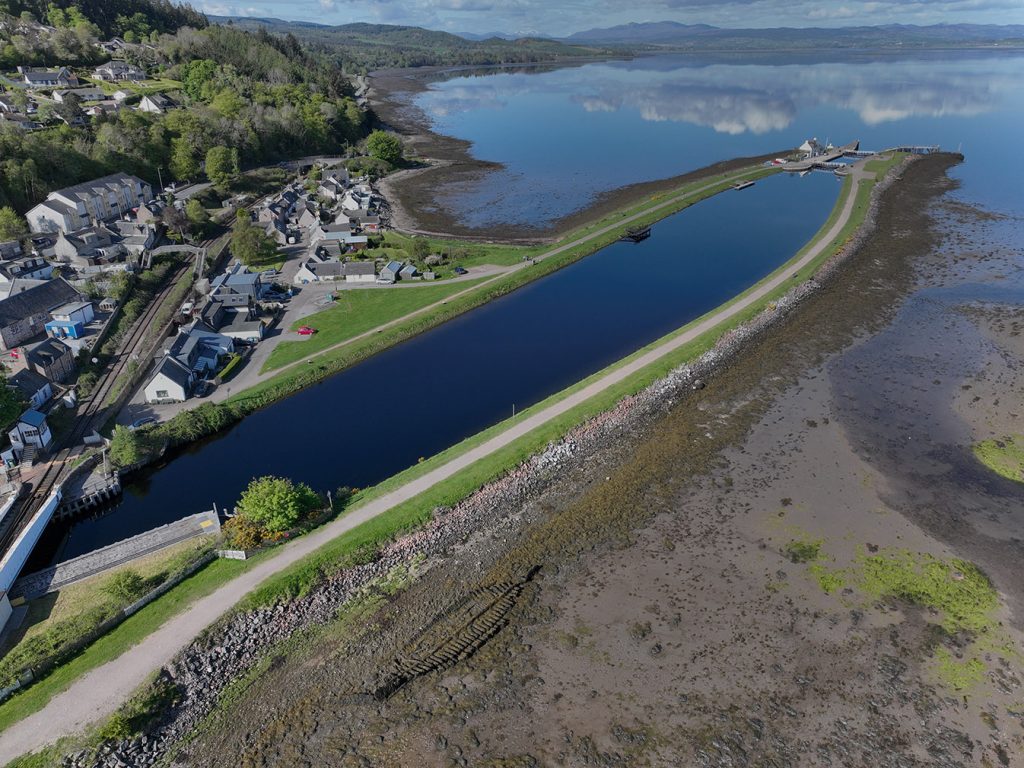
Eastern end of the Caledonian Canal with sea lock where accident happened (photograph)
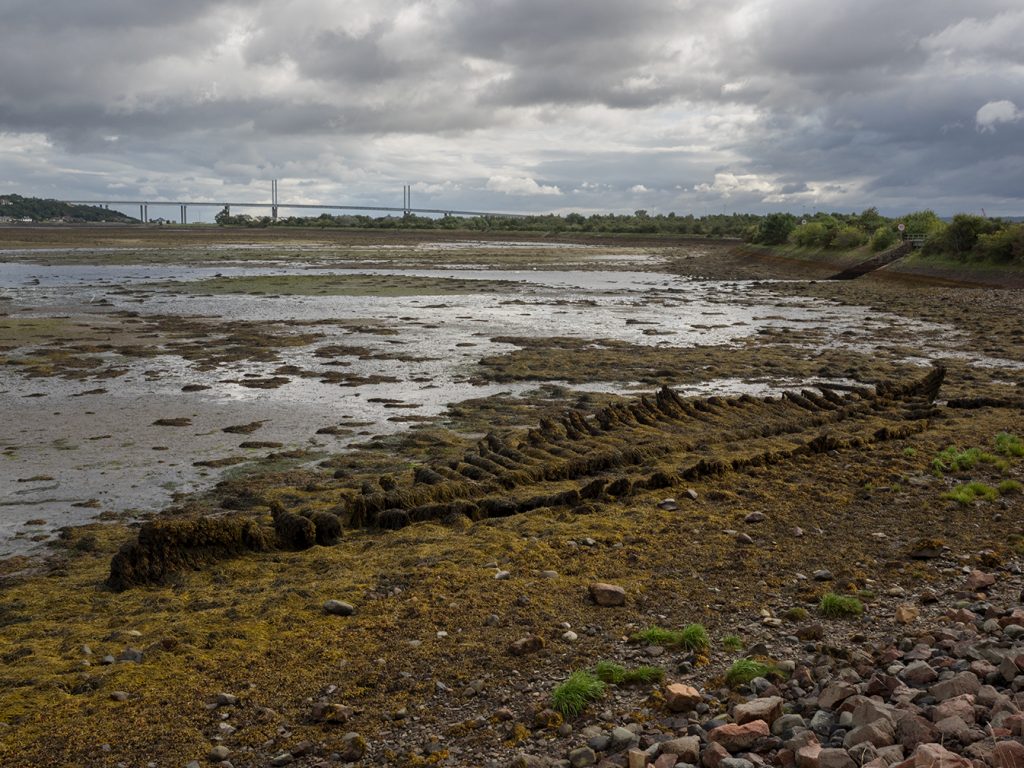
Remains of one of the wrecks, Merkinch (photograph)
Back in the very early days of Merkinch local Nature Reserve we became intrigued by the remains of a ship wreck just over the railway. We put out several appeals via social media and local press to see if anyone could identify the wreck but to no avail! We did have a few folks in there late 70s and early 80s who remembered playing on in it as kids! At one point we thought it could be “HMS Briton” a Royal Naval training ship that used to be moored in the Muirtown Basin, but on measuring the keel and the construction of the Wreck it didn’t match up.(We subsequently found out that HMS Briton was towed to Dundee where it was eventually broken up). So very much a dead end at this point until one day I was sent a Drone picture which showed the outline of another ship seaward of the existing wreck!
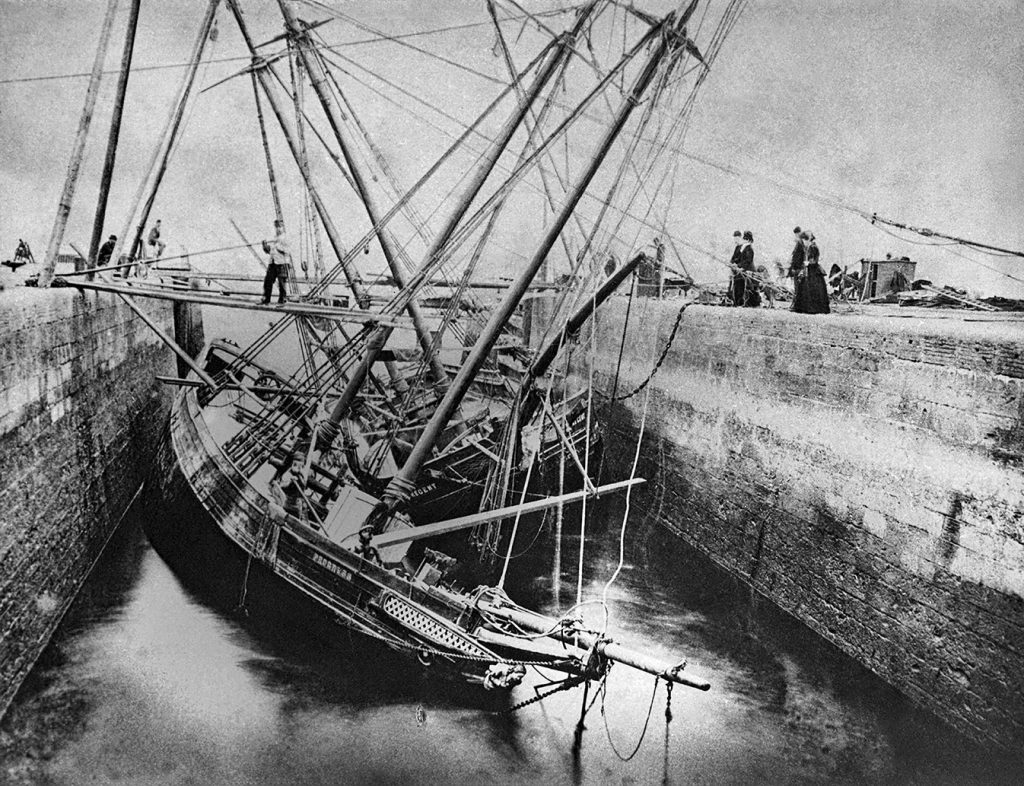
Wreckage of the two schooners 1881. Joseph Cook Collection, Am Baile / Inverness Museum & Art Gallery (photograph)
This revelation changed everything we now had two shipwrecks! After a bit of digging we found out that these Wrecks were, in all probability, “Regent” and “Progress”. On 2 April 1881, two schooners became jammed together when entering the sea-lock at Clachnaharry. They became wrecked as the tide receded and soon sank. “Regent” was carrying coal from Warkworth, in Northumberland, to Inverness while “Progress” was taking potatoes from Cromarty to Cardiff. Three weeks later they were raised and beached about 50 yards west of the original entrance to the canal where they remained. The remains we see today are only there because of the protection of the seaward vessel! Unfortunately we don’t know which one is which!
Ali Locke
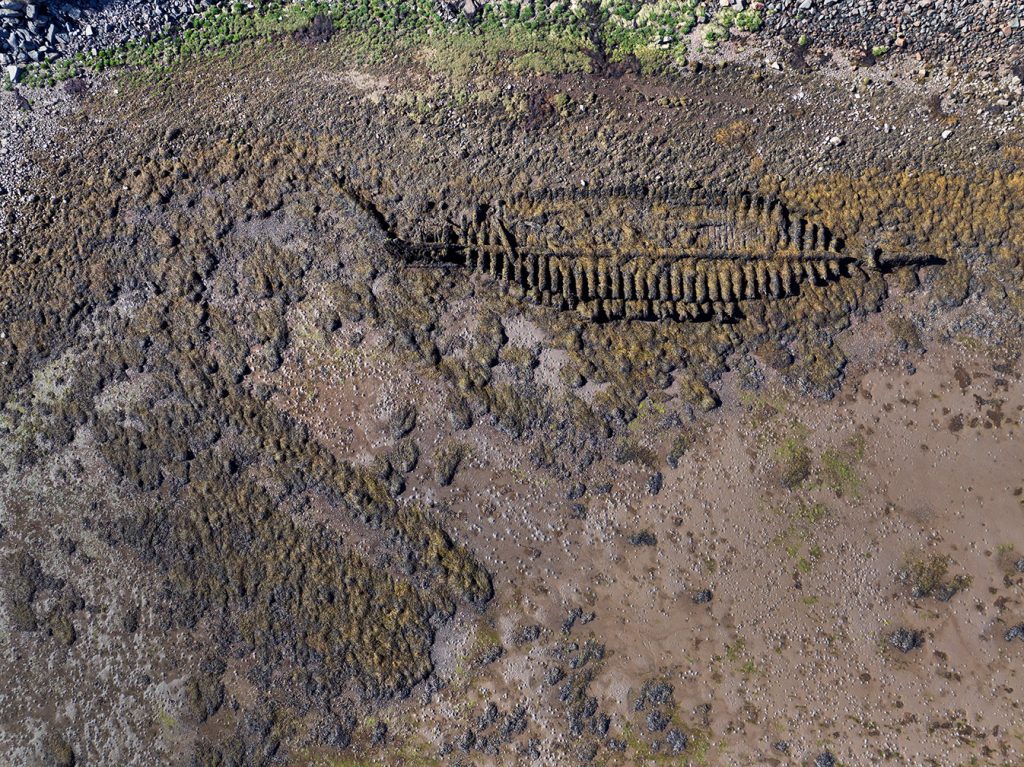
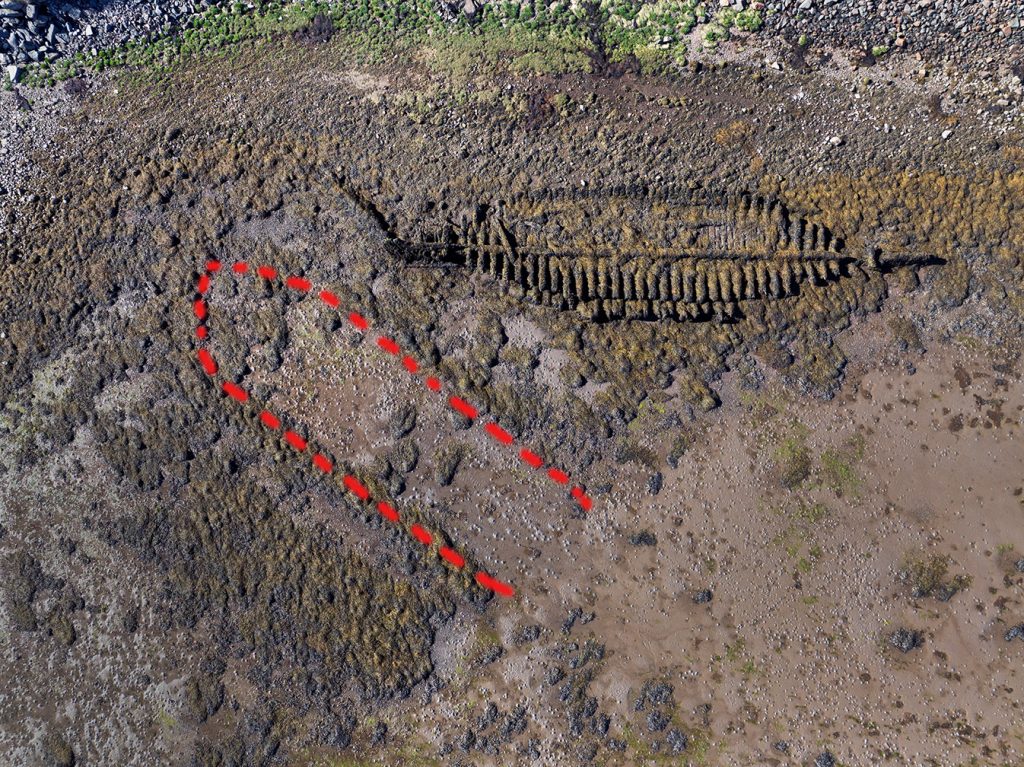
Aerial view of the wrecks today with the second almost obscured by sand and debris and broken up over the years (photographs)
Eurasian Blackbird
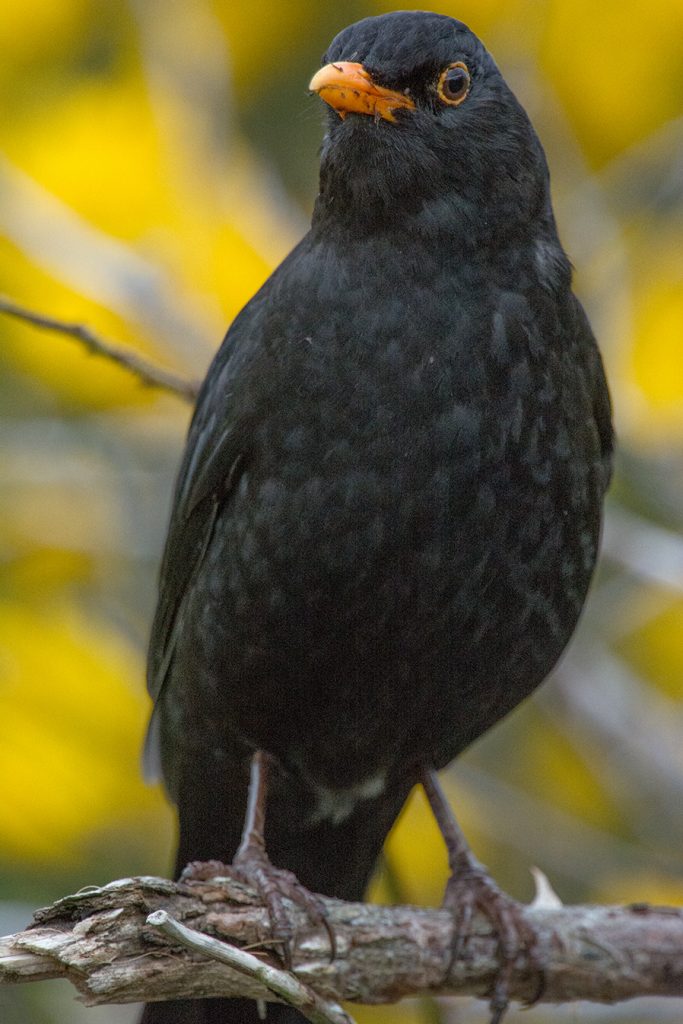
Eurasian Blackbird – Turdus merula, Carnarc Point, Merkinch (photograph)
Also known as the ‘Blackie’ in Scotland, a numerous and widespread UK and Scottish resident with additional birds arriving Northern Europe as migrants in winter. One Scottish story is that the Blackbird was all white but then sheltered from a storm in a warm chimney and was black from then on.
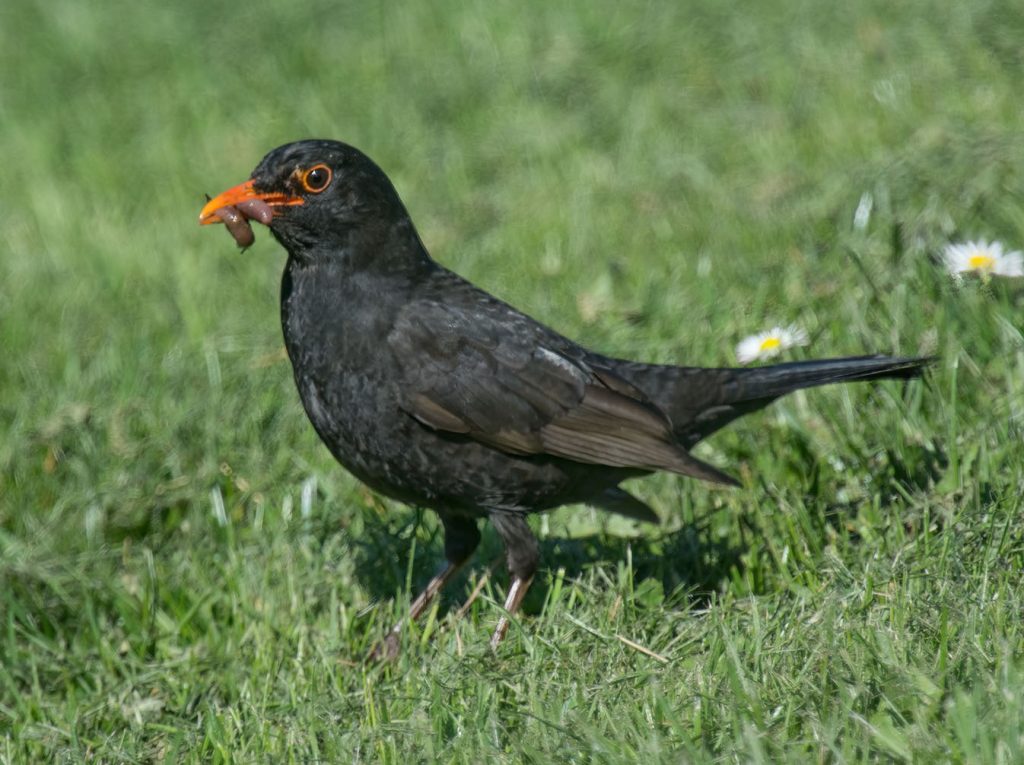
Eurasian Blackbird – Turdus merula, Merkinch (photograph)
Tend to fare better than many birds in harsh winters probably because of their varied diet. To the Celts there were the three oldest animals on earth, a trinity, the Blackbird, the Trout and the Stag representing the air, water and earth elements.
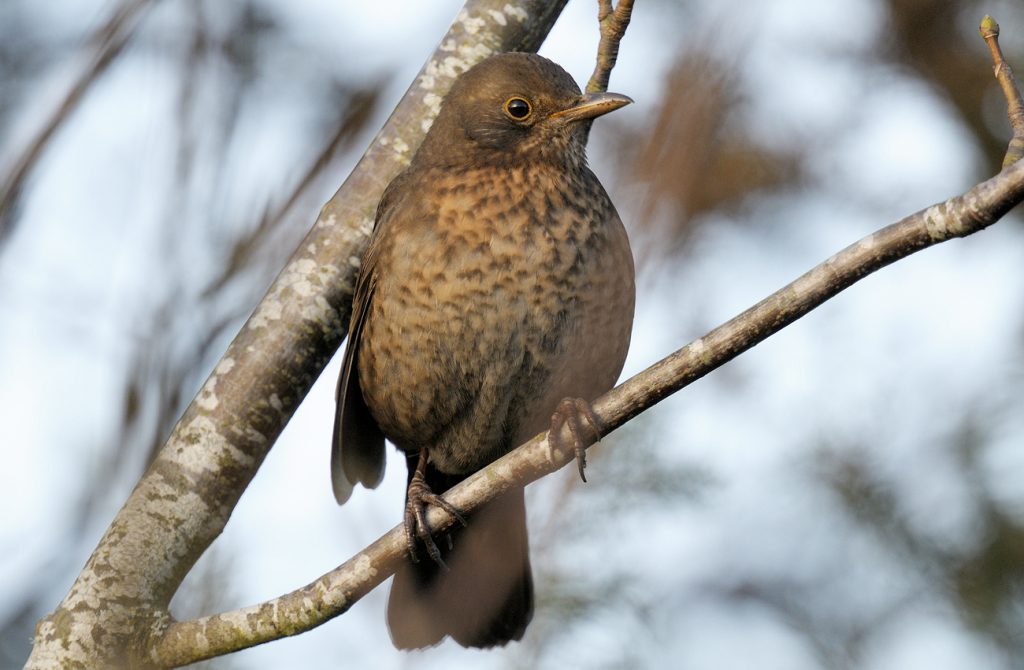
Female Eurasian Blackbird – Turdus merula, Merkinch (photograph)
Long-tailed Duck
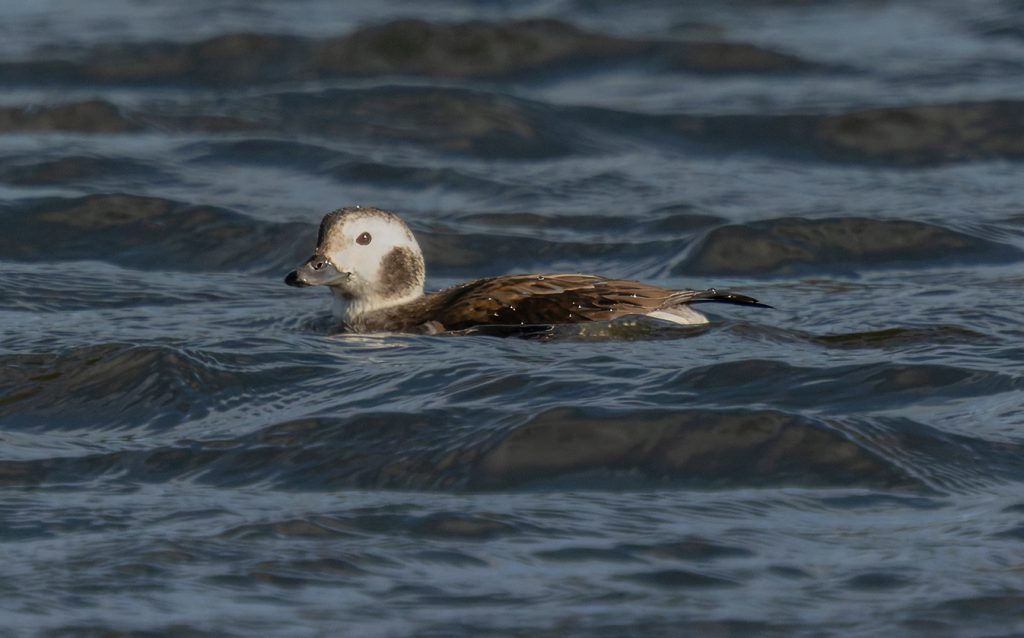
Long-tailed Duck – Clangula hyemalis, Merkinch (photograph)
A sea duck and a scarce winter visitor with the majority of those in the UK being in Scotland. Tend to be localised and consistent year by year suggesting they have fairly specific habitat requirements. Only the male has a long tail but both male and female have exceptional diving abilities reaching down to 20m and staying submerged for up to a minute. That they are winter visitors in Britain of course give them an opposite meaning where they have come from. To the Inuit and other indigenous peoples of the far North, the return of the Long-tailed Ducks in the spring marks the end of winter and their arrival is celebrated.
“I grew up close to the nature reserve, but I also now live at the back of the nature reserve, so I have the nature reserve when I come out of the back door, and then I have the street when I go out at the front, so it’s two worlds, and one place. You can go out to the calmness, which is great for the mind, as we say. I see everything with and through the nature reserve. I was born here and I’ve grown up with it as well.
It’s got a lot of memories, childhood memories right up to my adulthood. It’s just having two worlds on your doorstep, two different worlds in one place. The nature reserve is my calm, that’s my relaxation. So I obviously have a wild garden at the back, a very big garden, calming for my anxieties. I go to the back garden very often. I think nature and the Reserve is actually really important. There is so much to see. I walk it quite often and it is a beautiful place. I love it. I’ll live here for all my days”.
Kelly Ann MacKenzie
Day 25
Black-headed Gull
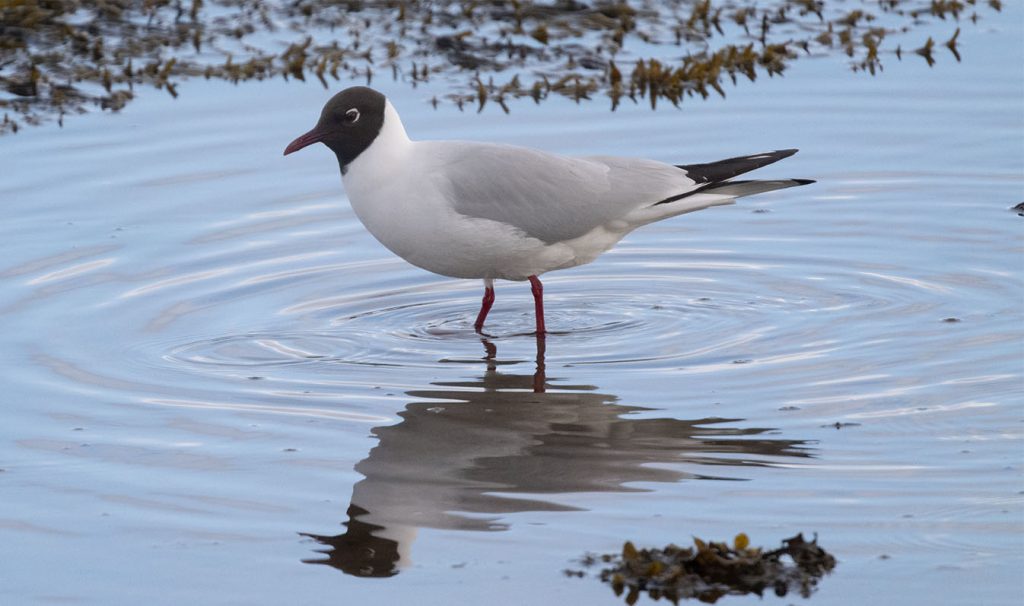
Black-headed Gull – Larus ridibundus, Merkinch (photograph)
Despite the name, the Black-headed gull only has a black head (which is actually a dark brown, an issue avoided in one of the Scottish names used, the Brown-headed Gull) as an adult during the breeding cycle from January to July. Juveniles and adults at other times may have a small dark marking behind the eye but will not have the ‘black’ head. Resident numbers are swelled by winter migrants from Scandinavia and Northern Europe. Unusual for a gull in catching insects in flight and when they are doing this, perform rapidly varying acrobatic turns.
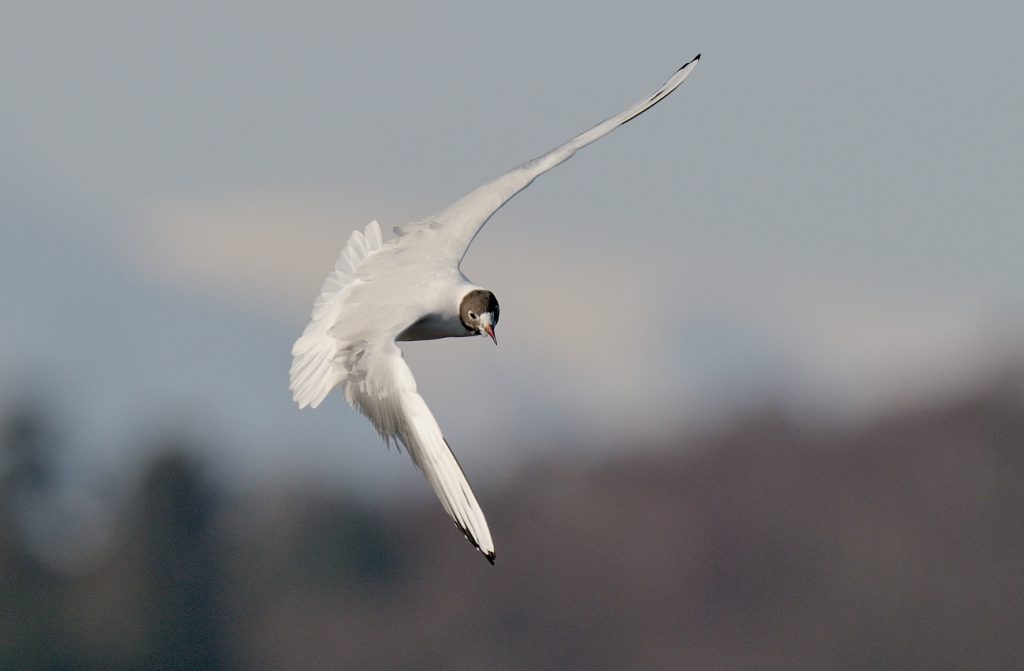
Black-headed Gull – Larus ridibundus, Merkinch (photograph)
It is a gull well established inland and not just on the coast. In the Cairngorms, there was a belief that the gull carried the souls of good people and the fading dark head into autumn and winter represented their fading sin. Another virtuous association is found in the Dutch mythology of Black-headed Gulls only acquiring their dark feathers through the heroic act of flying through the smoke and fire of a blazing lighthouse to guide the keepers to safety.
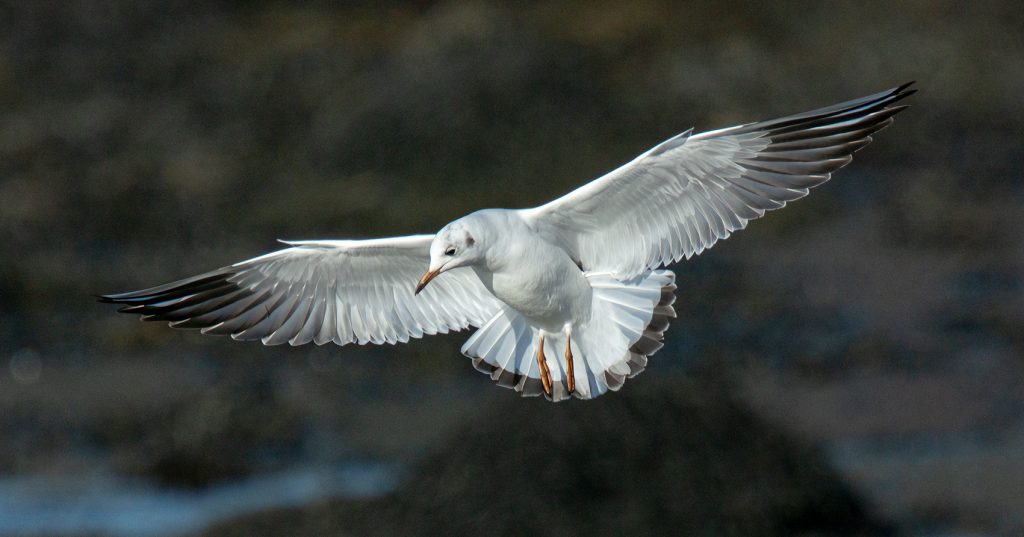
Black-headed Gull – Larus ridibundus, Merkinch (photograph)
Gorse
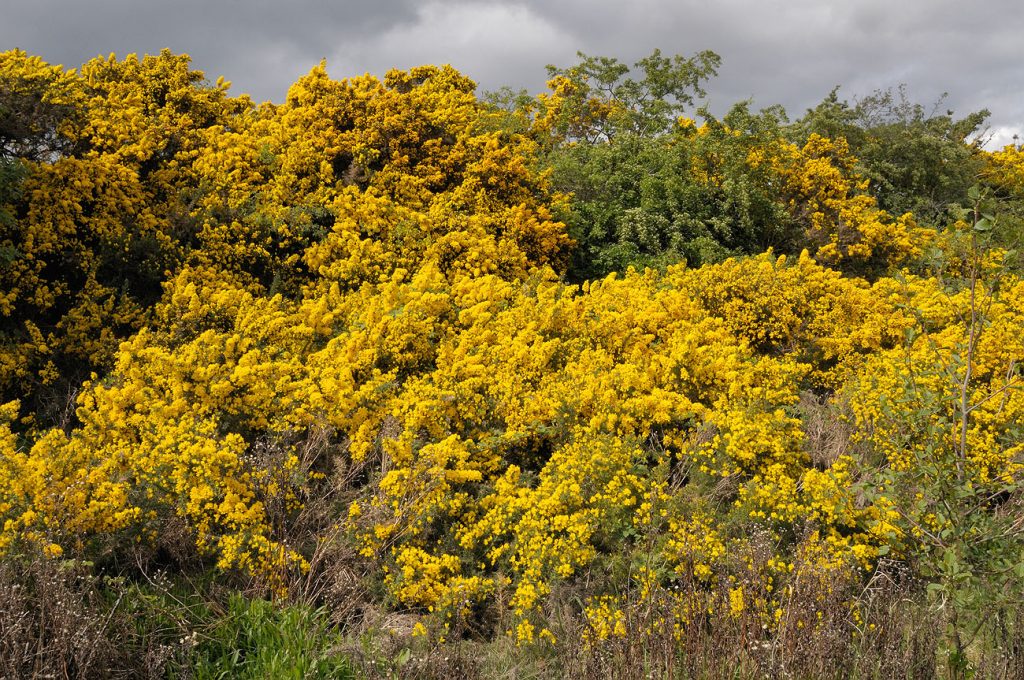
Gorse – Ulex europaeus, Merkinch (photograph)
A very successful native species, Gorse is now labelled in some countries where it was introduced as a problematic invasive plant. Gorse has had a variety of uses including livestock feed, medicinal, chimney brushes, silt filter in Roman mining and fuel for bakers’ ovens as well as a yellow dye in colouring tartan fabric in the Highlands and Easter eggs in Moray. In Celtic and Scottish traditions, a sprig of gorse was included in a bride’s bouquet to ensure a passionate marriage that would be blessed with children.
Eurasian Siskin

Eurasian Siskin – Carduelis spins, Merkinch (photograph)
A substantial resident Scottish breeding population is swelled by a large number of migrants arriving for the winter from Northern Europe. Believed in German and Swiss folklore to have the power of invisibility and for their nests through guarding a magic stone in them. This probably arises from Siskins choosing to nest in remote dense conifer forests making actual nests difficult to find, although the birds will be heard all around.
“I’ve lived in the city all my life. I was here when the ferry was operational. There were two different boats – the Rosehaugh and Eilean Dubh. Before the Reserve was in place, there was a lot of rubbish and old cars, and the people didn’t seem to care about it. Now, it’s lovely. I used to see deer at the back, from my kitchen window, and at the front, there’s dolphins in the water, so I’m very lucky. I have lived in my house for about 40 years now. I like looking at the trees in the nature reserve, and the plants. I don’t go for walks as much as I used to. I take a bag with me and pick up the rubbish. I think people do care about it now, yes. It took time for that”.
Jill
Day 24
Redwing
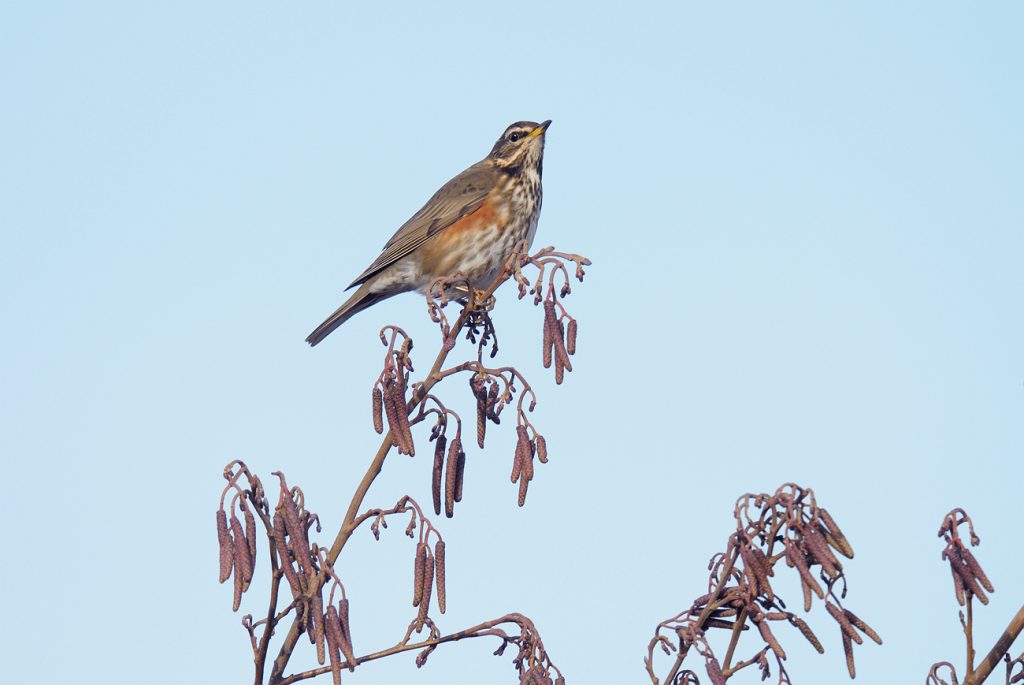
Redwing – Turdus iliacus, Merkinch (photograph)
With a very small breeding population resident in Scotland estimated at 5-12 pairs Redwing numbers are boosted hugely in winter by migrants from Eastern Europe. The migrants are known to travel at night as well as by day and the rushing sound made by flocks over the North Sea and English Channel was believed by fishermen to be a promise of good fishing. Although not investigated or scientifically established, there could be truth in the association. It is possible that conditions which made larger fish catches likely were also the ones favoured by Redwings for their over water flights, especially at night.
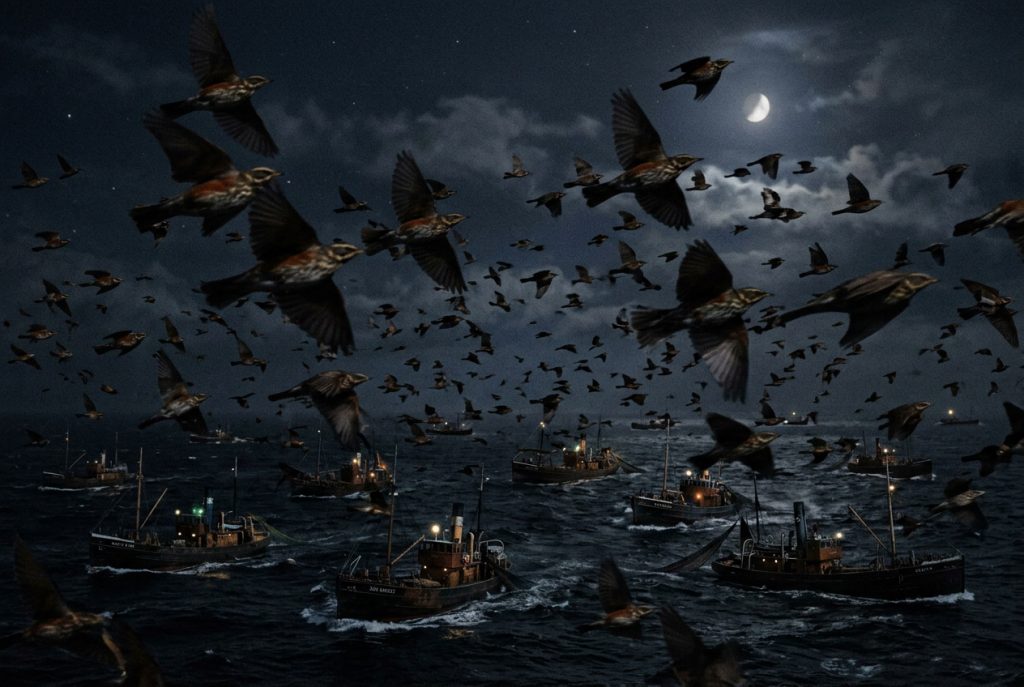
Redwing – Turdus iliacus, migrating over the North Sea at night (illustration)
Speckled Wood Butterfly
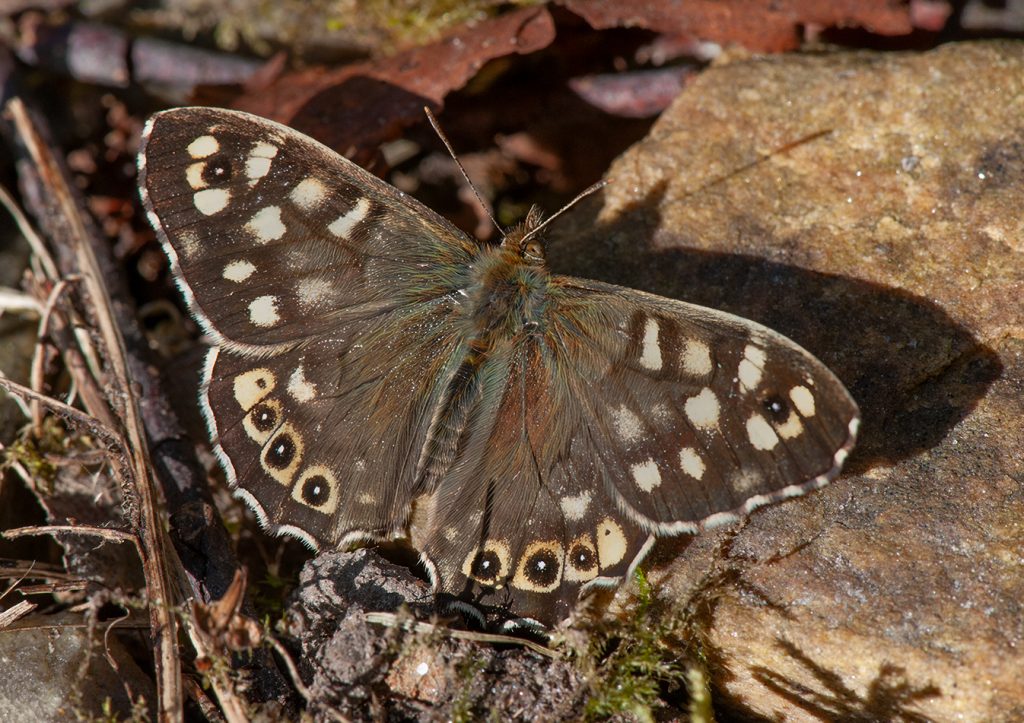
Speckled Wood Butterfly – Pararge aegeria, Merkinch (photograph)
A butterfly that has spread North in Britain very significantly in the last 100 years, it is represented in Scotland by what some regard as a separate sub species, the Scottish Speckled Wood. The males are fiercely territorial defending a patch of sunlight in woodland. They will try to drive off any intruder and not just other butterflies. They are also prepared to take on any animal, including birds which might actually put them at risk and, it is said, they will also try and drive off people who stray onto their patch. That this behaviour is rarely noticed might be because it is rare or might be it is rarely that they make any sort of impression on their target that is remembered.
Rock Pipit
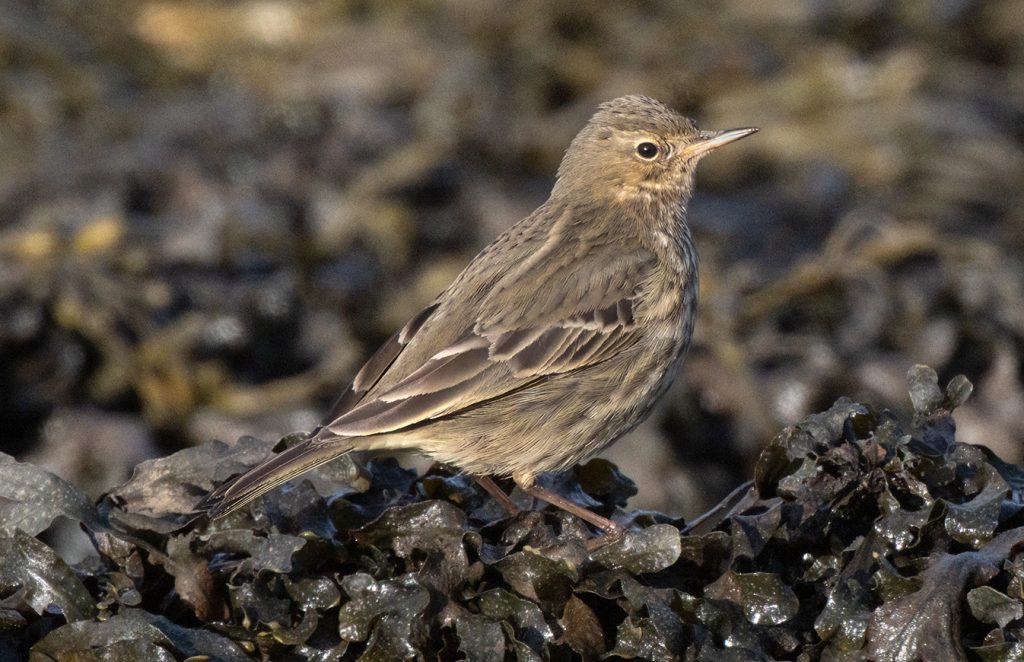
Rock Pipit – Anthus petrosus, Merkinch (photograph)
A coastal bird the Rock Pipit is seen throughout the year in the UK but in winter is found more on sand or shingle adjacent to the sea. The resident population is boosted in winter by migrants from Scandinavia. Also known as the Rock or Sea Lintie in Scotland.
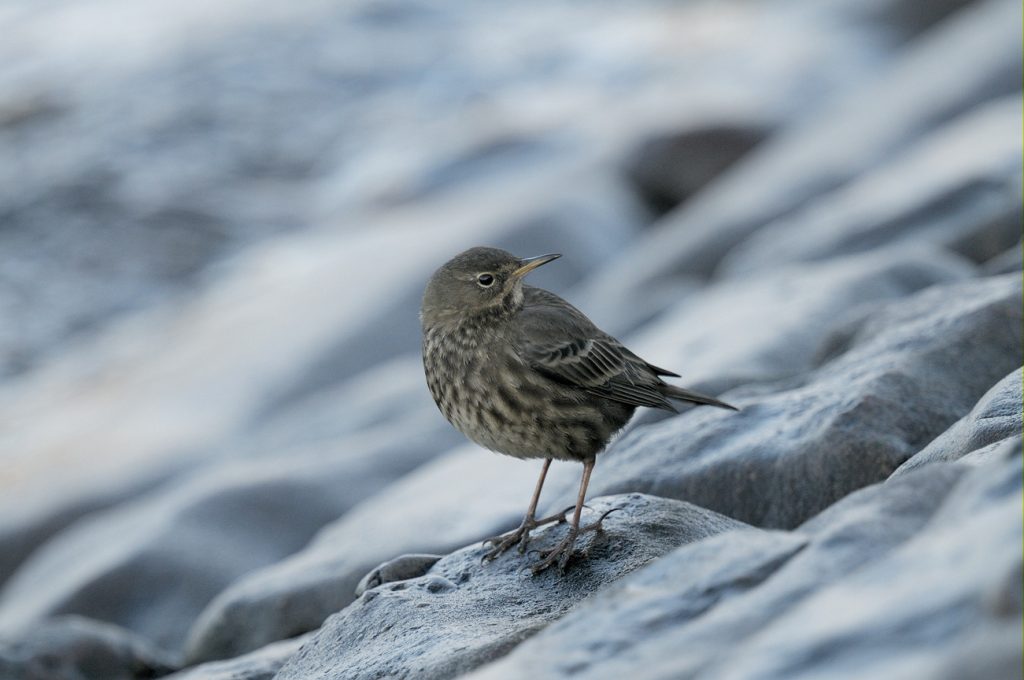
Rock Pipit – Anthus petrosus, Merkinch (photograph)
Pearl: “The Reserve is a good thing. I’ve been brought up down here. We looked down on the ferry itself. It was just part of life. It was a big loss when it went”.
Liz: “I’m on the Merkinch Community Council. We do a lot of very different things, and my main objective, really, at the moment, is the ticket office, because it does an awful lot for the community and the Reserve. We support the big swim and the nature reserve. We’re one of the main helpers here. I would like to see the ticket office modernised and younger people be part of this because Dell, myself, Pearl and Morag, we’re all getting on in years. There’s not many people now that are interested. And until such time, as we get, the support, the ticket office is going to end up being a wreck. This is a very important part of Merkinch. The kids from the school come, visitors come on buses, people from all over the world. I’m sure you’ve seen the memorial book in particular. Dell’s life’s ambition is to see the ticket office carry on”.
It’s a story in its own right. We used to go across the ferry when we were kids, because it was a great treat. If you were good, we’d get across to the fair, if you were out for a picnic on a Sunday, we all piled on the ferry, and went across. It was a great treat, because in those days, we didn’t have much, but we appreciated every single thing we had. It seems like this is a milestone in our journey and our life, that should be appreciated. We’ll appreciate it more if it can be brought up to standard, you know, because it’s just a gem in the community. A lot of people don’t appreciate how much it means to a lot of people”.
Pearl and Liz
Day 23
Ruddy Turnstone
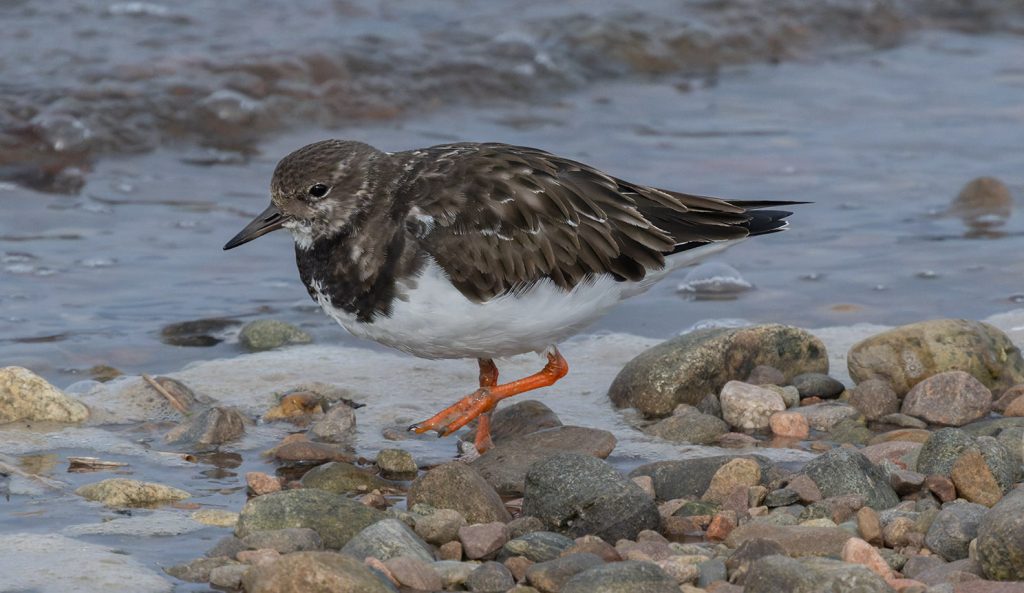
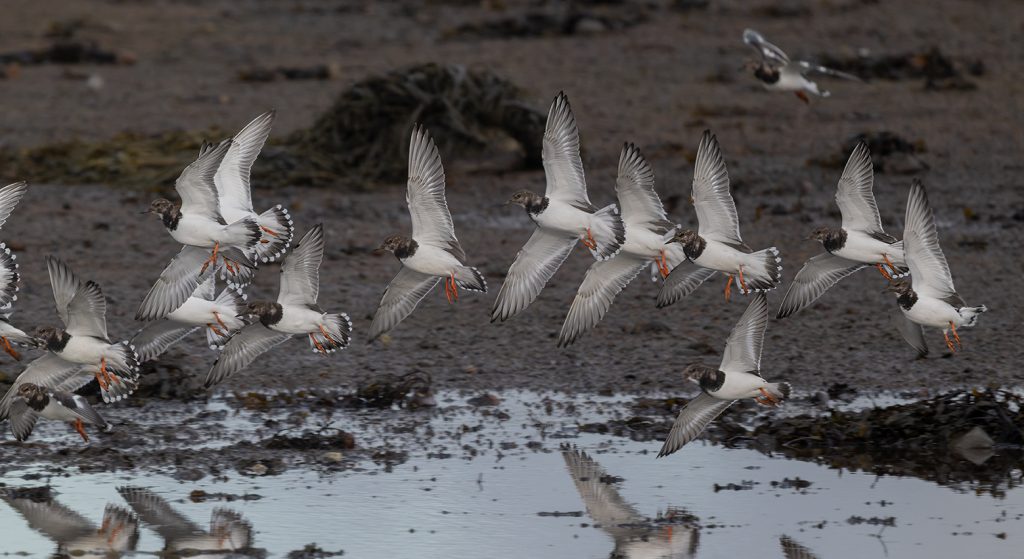
Ruddy Turnstone – Arenaria interpres, Merkinch (photographs)
Almost all waders favour mud or sandy shores, Turnstones, as their name suggests, forage in more rocky conditions by literally using their beaks to tun over stones to reveal invertebrates, they also turn over fronds of seaweed. Larger rocks and weed fronds may be moved by several birds acting together.
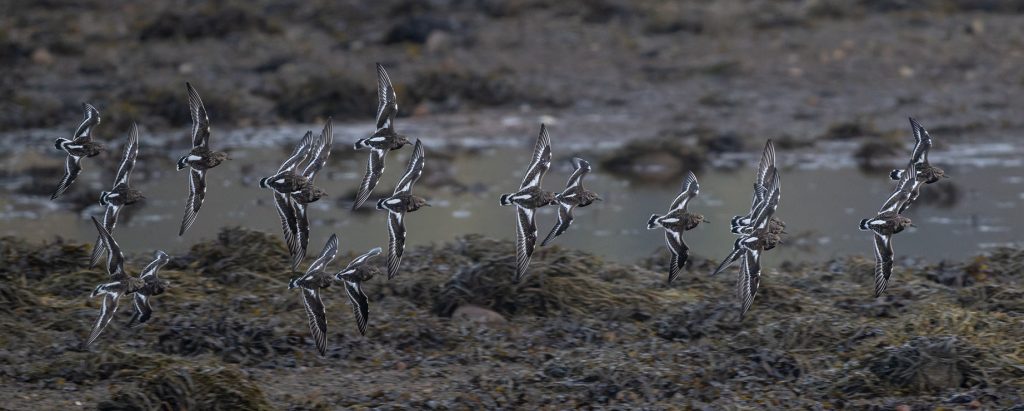
Ruddy Turnstone – Arenaria interpres, Merkinch (photograph)
Their near perfect adaptation and techniques for their methods of finding food made Native Americans conclude that their unique bills were a direct gift from the Creator to equip them for their place in the natural world. The Scottish population are winter migrants arriving in the late autumn.
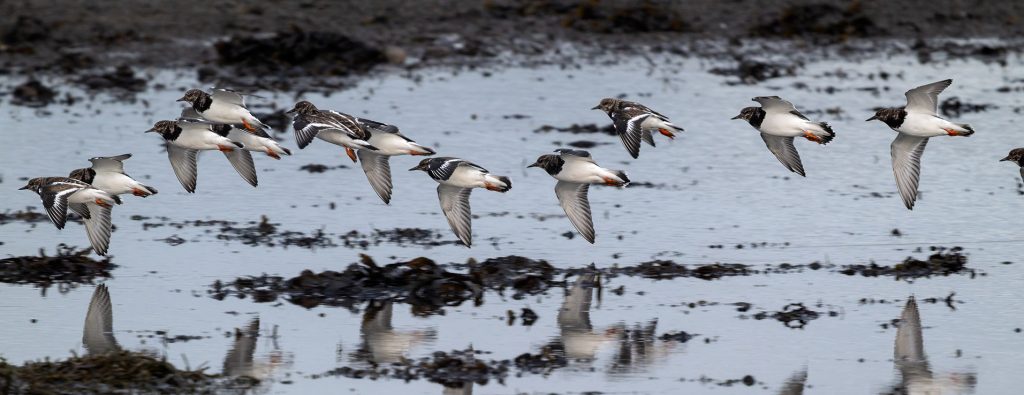
Ruddy Turnstone – Arenaria interpres, Merkinch (photograph)
Dunnock
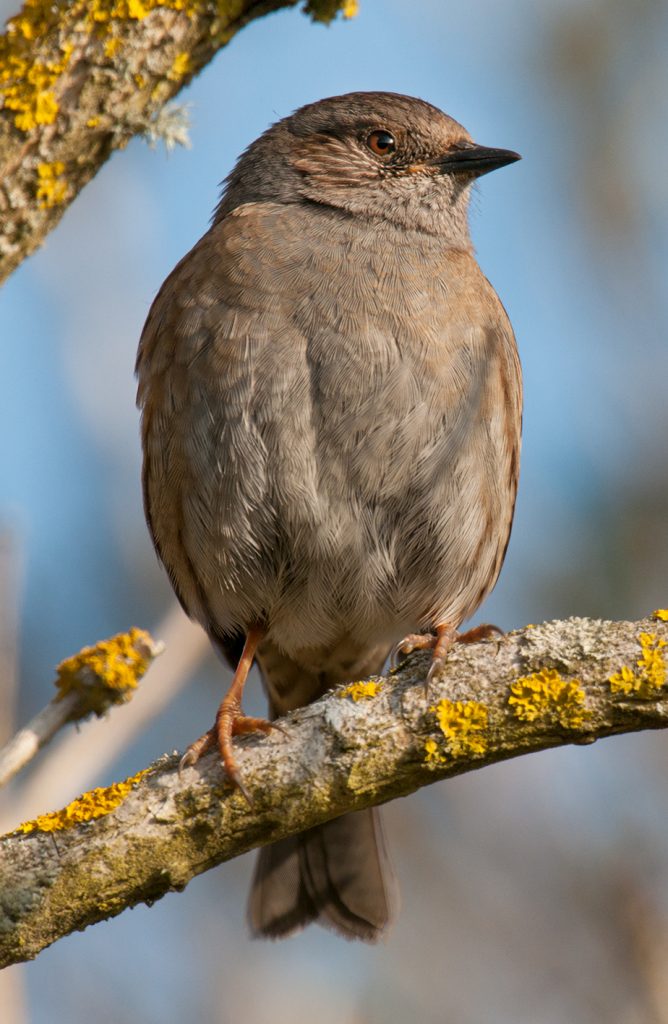
Dunnock – Prunella modularis, Merkinch (photograph)
Known for a long time as the Hedge Sparrow, the Dunnock has been noted for its domestic arrangements. Pairs are the exception Dunnock often form a three for the summer, this can be one male and two females but is usually one female and two males. Both males will defend the territory and help feed the chicks, since they will not be sure whose they are, but both males will be bitter rivals.
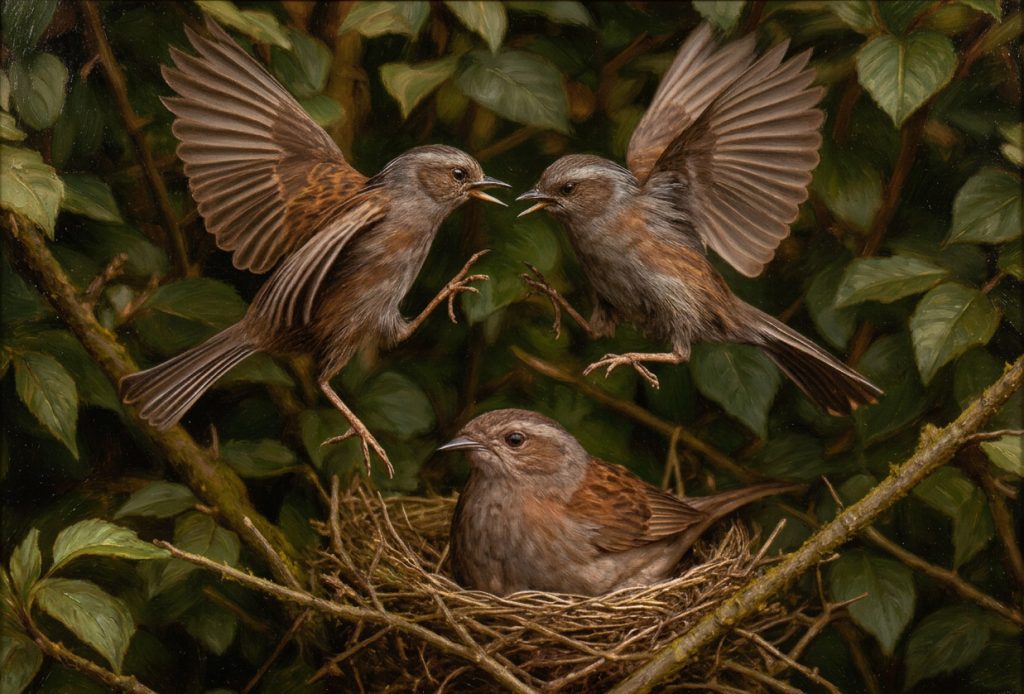
Dunnock – Prunella modularis, one female, two males (illustration)
Victorian writers praised the Dunnock for its morality, presumably building on observations of attendance and attention from male to female whilst failing to realise that more than one male was being observed. Their domestic arrangements may leave them vulnerable diverting attention to their own tensions, since the Dunnock has the dubious distinction of being the most frequent nest targeted by a Cuckoo and having their own eggs replaced by the larger bird’s.
Shelduck
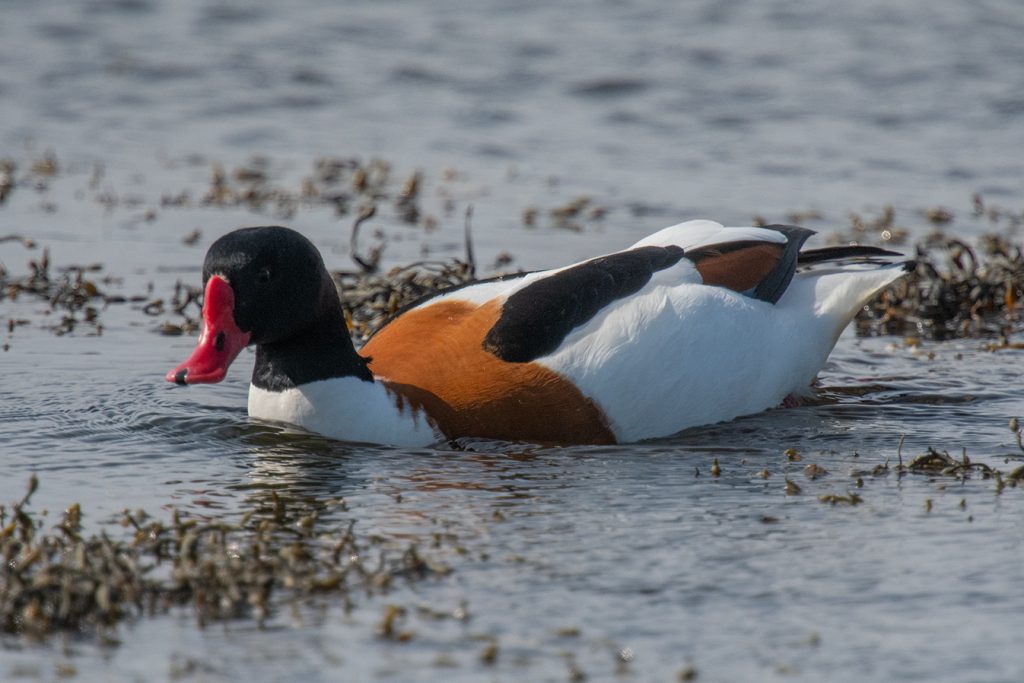
Shelduck – Tadorna tadorna, Merkinch (photograph)
Larger than most ducks, Shelduck on average do not actually weigh much more, they just have bigger bodies. Nesting in burrows, frequently taking over rabbit holes, Shelduck often hatch their young some distance from water. Observations exist of ducklings being lead on six mile treks to the sea when they leave the nest.
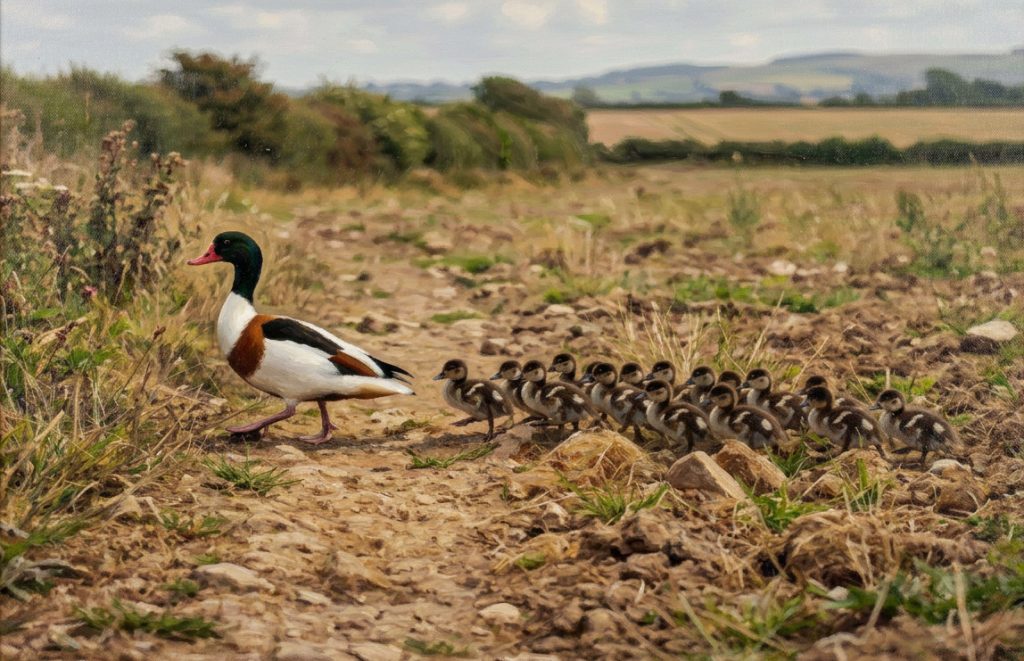
Shelduck brood – Tadorna tadorna (illustration)
Shelduck females sometimes lay their eggs in another bird’s nest. If a female, which is ready to lay does not have or has lost her own nest, then the site of another birds with eggs in it may prompt her to lay. Since Shelduck have broods of ten to fifteen young, this can mean a nest with thirty eggs, thirty-two has been recorded. The original owner of the nest will accept the extra eggs and incubate them to hatching and take over care of as a very large brood. Shelduck are a resident breeding population in Scotland whose numbers are raised by winter migrants. The resident birds however do move to Germany once the breeding season is over to moult, returning in the autumn.
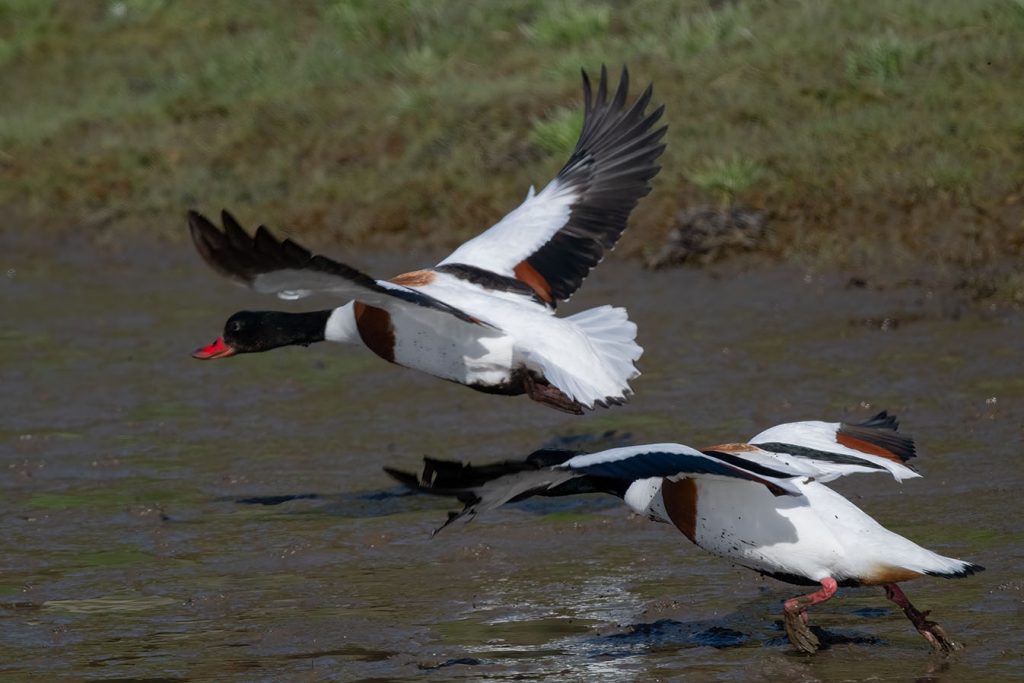
Shelduck – Tadorna tadorna, Merkinch (photograph)
“My connection with the Reserve is that I own a historic building, a Coastguard station called Tangle Towers. It’s got quite a history. I think it dates back to the mid 1800s. It was used as a Coastguard station for quite a number of years. Then it was taken over in the First World War as a lookout station, then it went into private ownership and fell on bad times and was a bit sorry for itself. It is a holiday home, currently, but I love old historic buildings, and I love renovating them, and I bought it about 10 years ago, and completely renovated it. When I moved in, it was a mess. Yes. It was a wreck, and it needed stripping back to the stone walls, and the whole thing was rebuilt from that. We have kept the original and enhanced some of the original features.
I became aware of the Reserve area through Martin’s uncle, Charlie, who was a customer of mine. I used to visit them regularly on a Saturday and listen to the stories of the area, and was fascinated by that. That’s how I became aware of Tangle Tower, It is a lovely area with the wildlife. It’s like a sort of a lung to the city. it needs to be supported and cherished and loved for what it is. When we purchased the property, the people were so welcoming and friendly and looked after us. Come down and experience it for yourself. It was a community coming together that made the nature itself visible here”.
Steve
Day 22
Humpback Whale
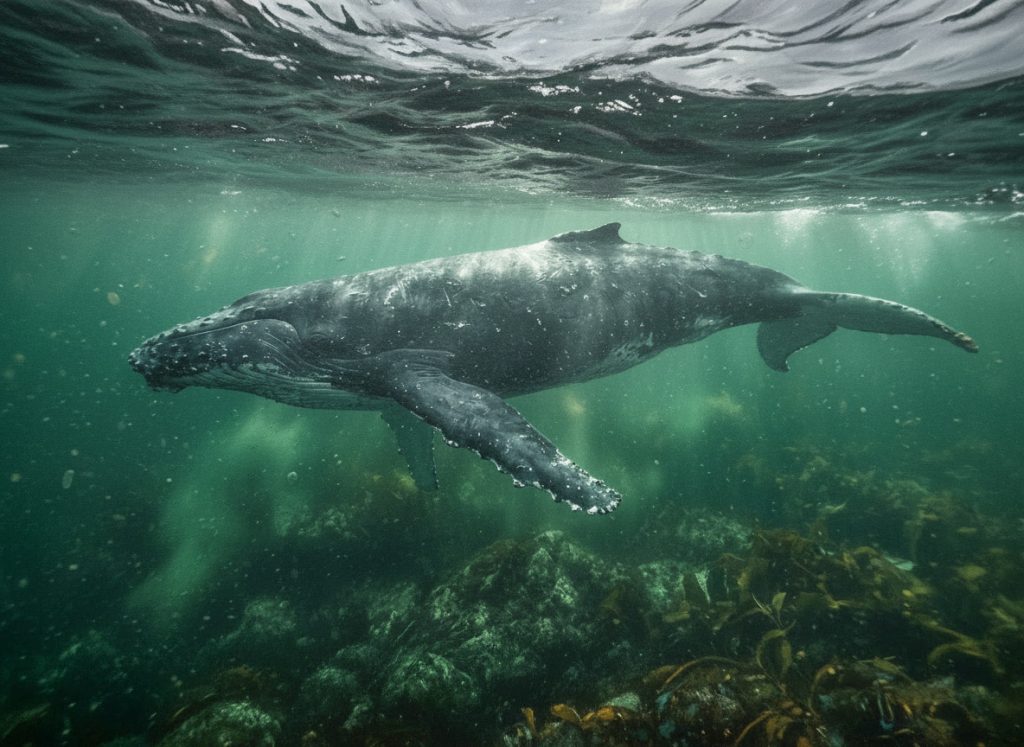
Humpback Whale – Megaptera novaeangliae, Scottish seas (illustration)
A rare visitor to Scottish waters, a Humpback Whale was reported first in the Moray Firth at Chanonry Point and then in the Beauly Firth across from the Merkinch reserve. Not the first encounter ever but a very notable sighting. Humpback whales grow up to 62’ (19m) in length, and weigh 40-50 tons, they are very big animals. The visitor today did not perform one of the famous breeching leaps out of the water the whales are known for but, given their size, the depth of the Beauly Firth probably isn’t enough for the landing to be safe, even if the whale had wanted to. Around Scotland, Humpbacks are usually seen singly.
Humpback Whales are known for their very complex and haunting vocalisations heard during the breeding season. Across the world, they have been seen as ocean gods, guardians, protectors and creators, although for a long time, it was they who needed protection as human pressures through hunting threatened their survival. They feature in the Kumulipo, the Hawaiian creation chant and the Humpback represents Kanaloa, God of healing and the sea. In Native Australian culture, Humpbacks are seen as creation ancestors who helped shape the land and ocean.

Humpback Whale – Megaptera novaeangliae, Scottish seas (illustration)
Friday
Two hours starting early on the Reserve, just some of the encounters today.
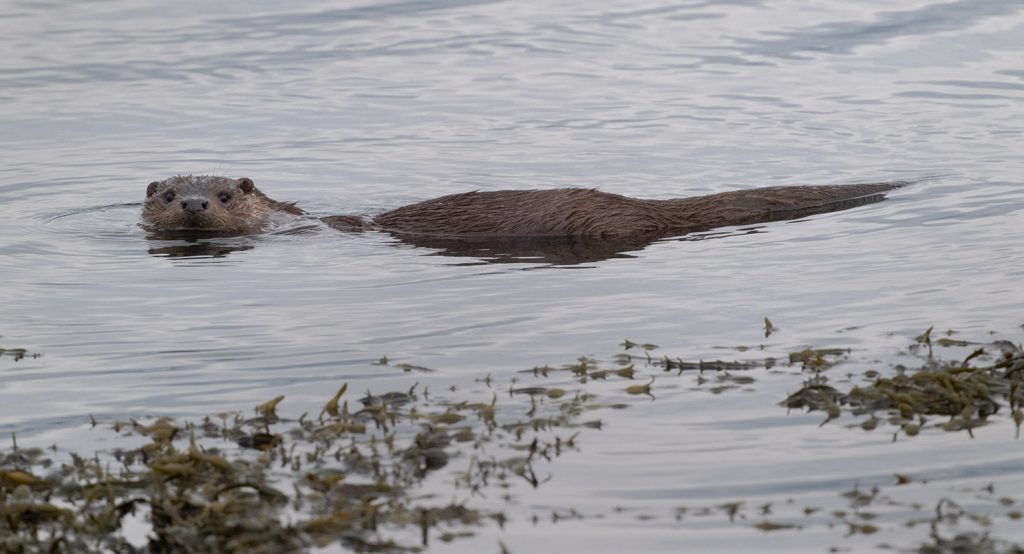
European Otter – Lutra lutra, Merkinch (photograph)
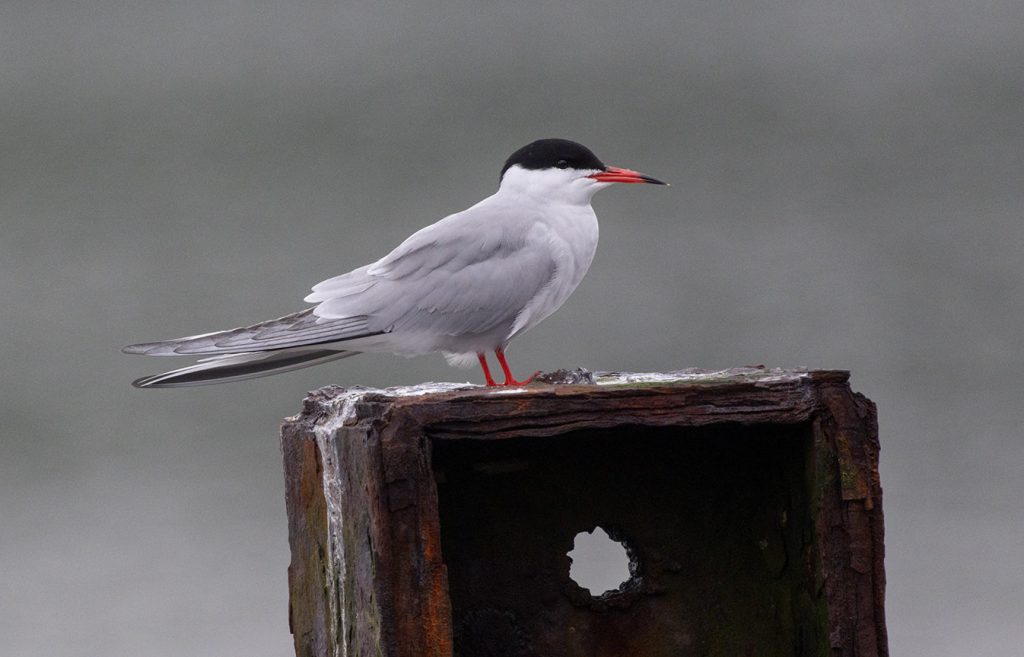
Common Tern – Sterna hirundo, Merkinch (photograph)
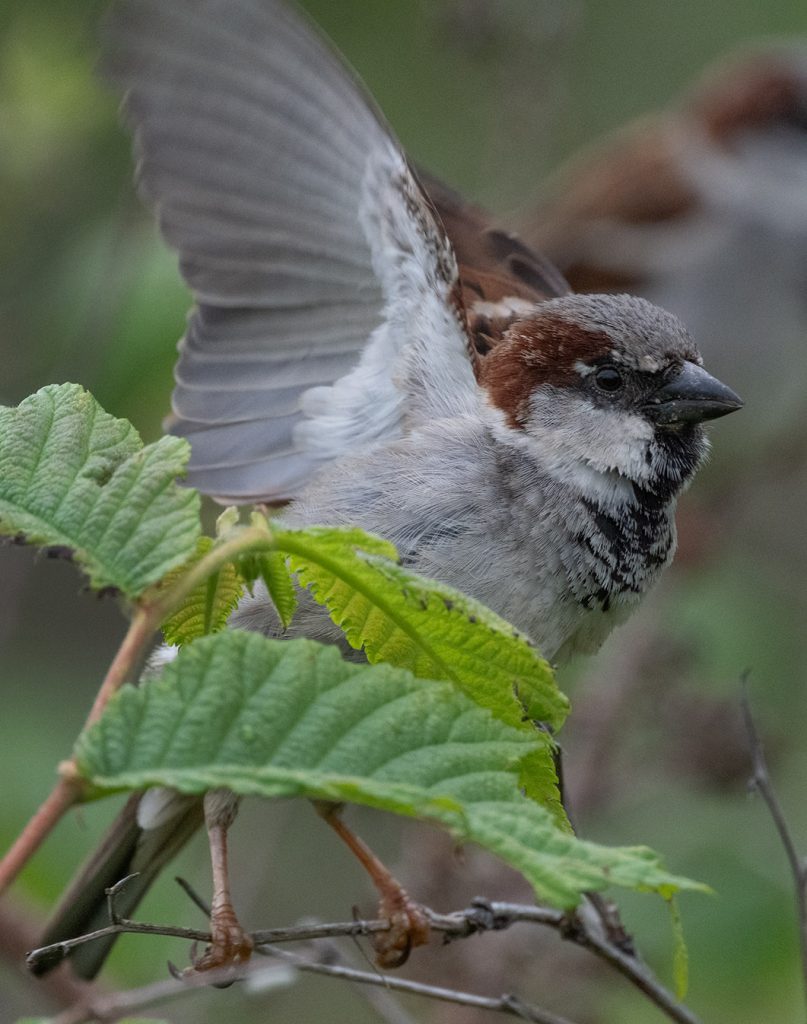
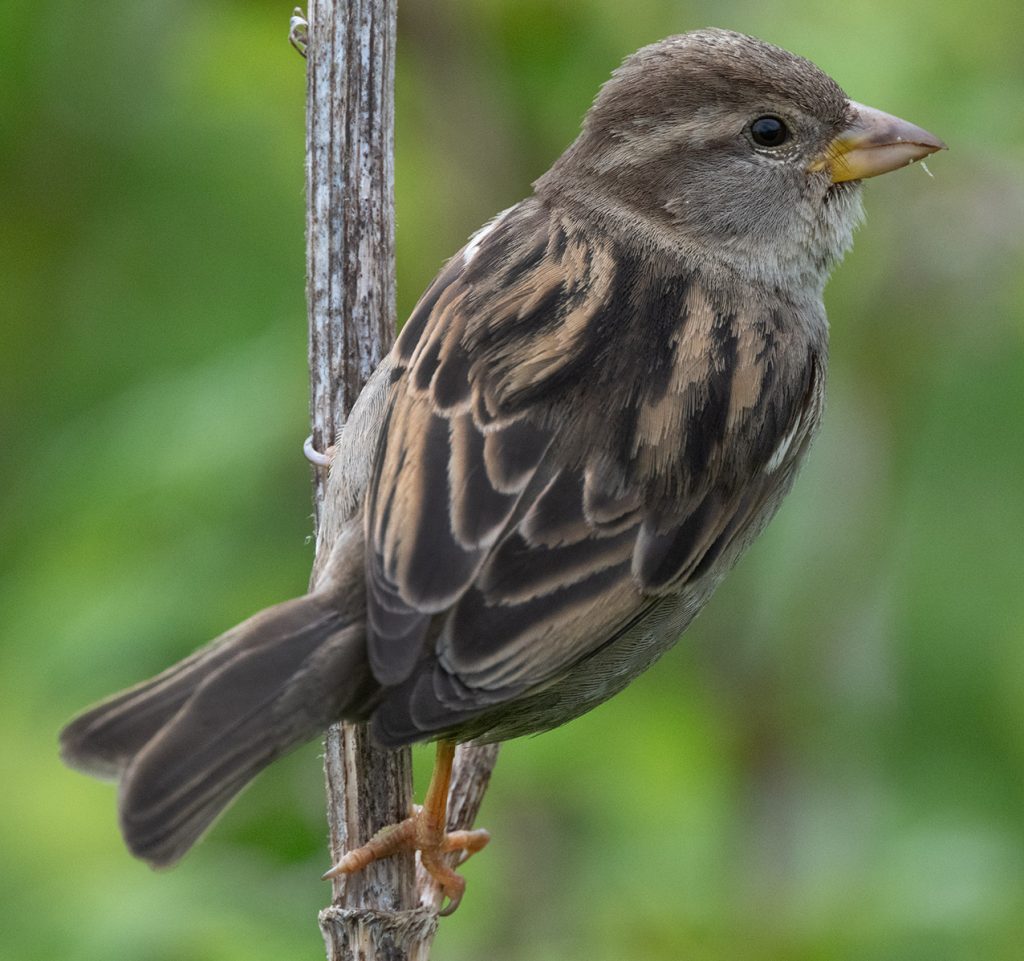
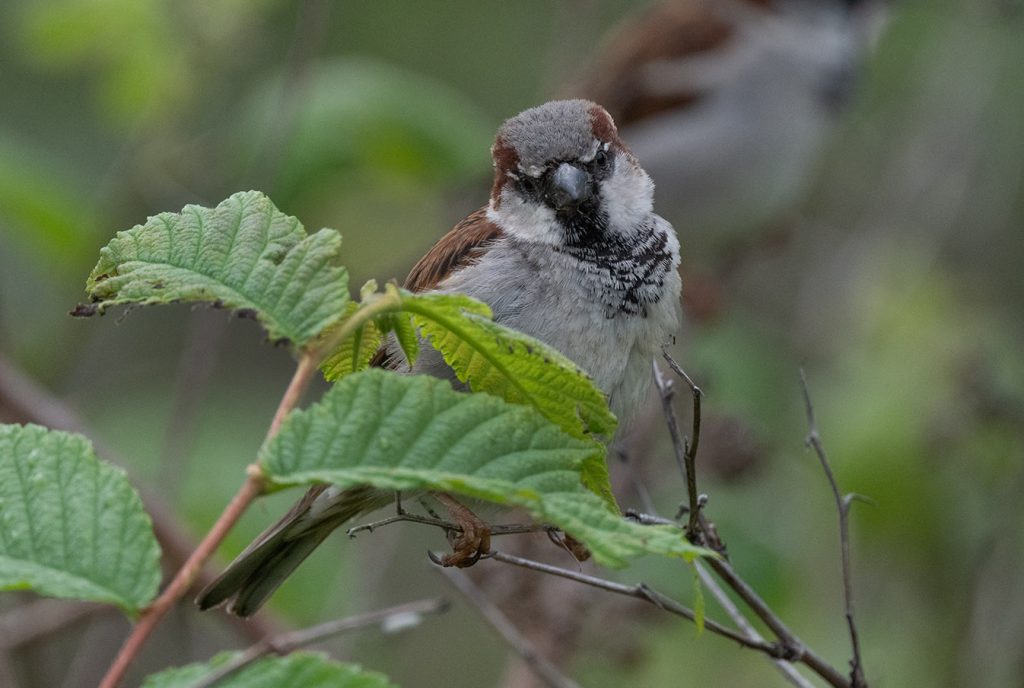
House Sparrows – Passer domesticus, Merkinch (photographs)
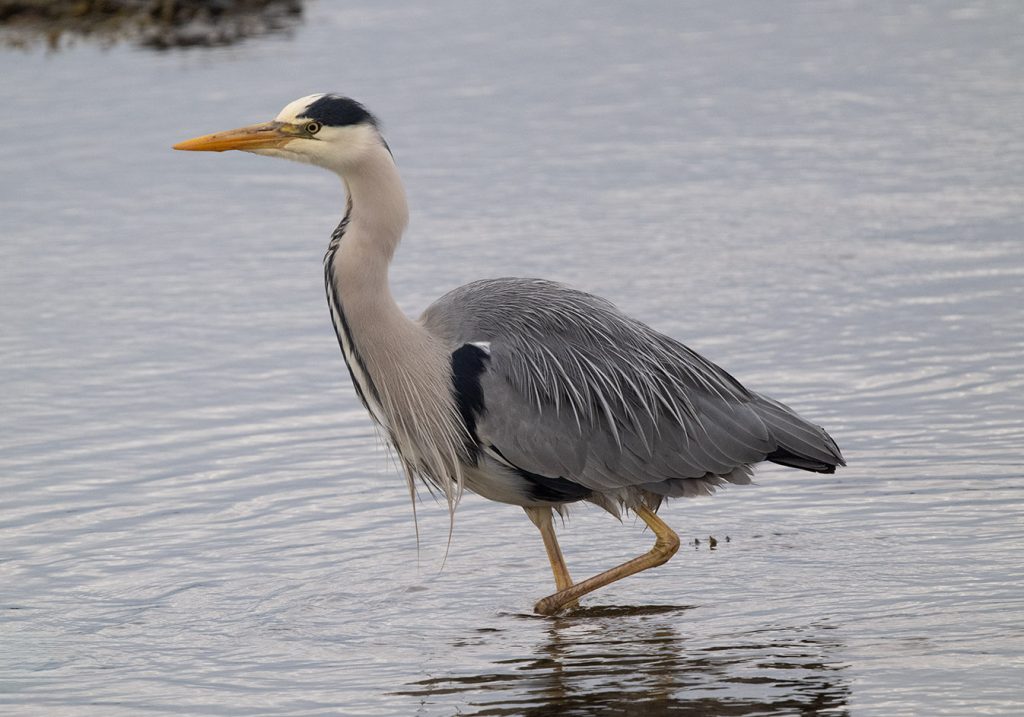

Grey Herons – Ardea cinerea, Merkinch (photographs)
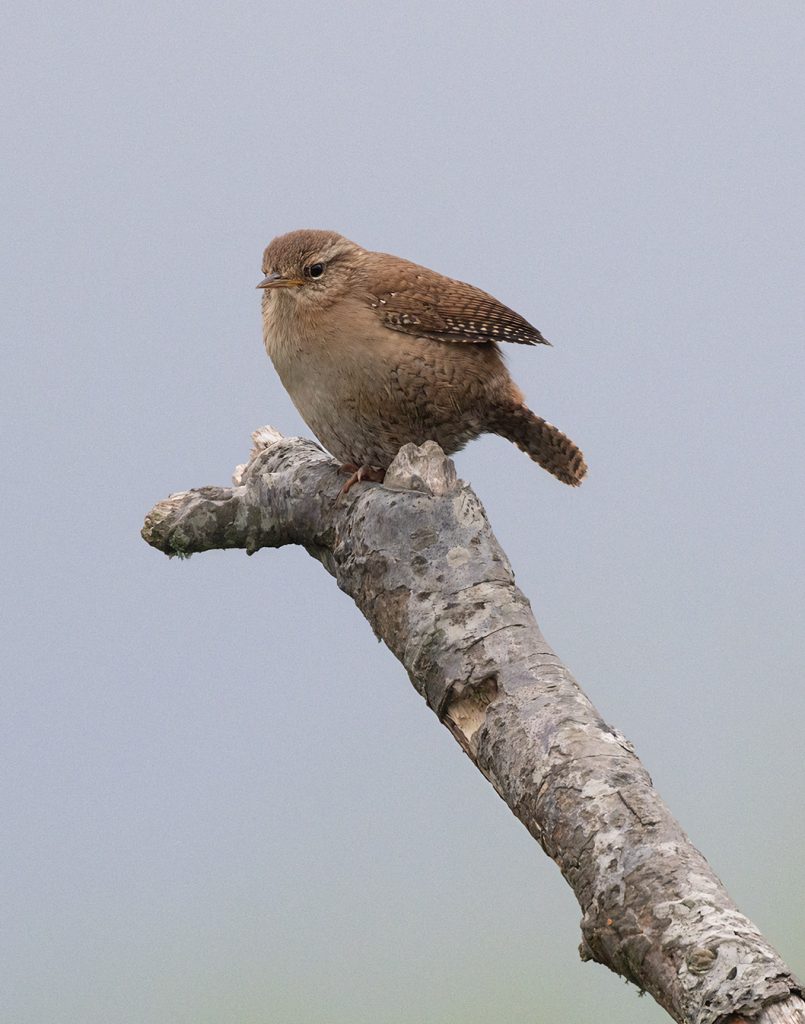
Northern Wren – Troglodytes troglodytes , Merkinch (photograph)
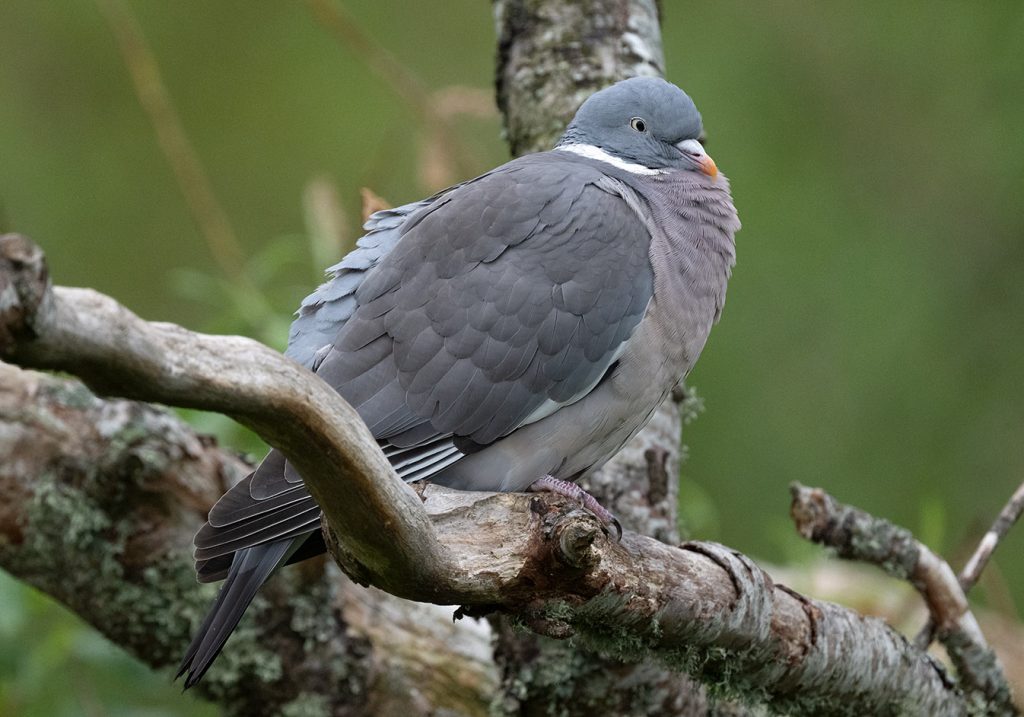
Wood Pigeon – Columba palumbus , Merkinch (photograph)
“My family had been here since 1946. So, I was born and brought up here. I’ve seen that field when it was a dumping ground for cars and all sorts of things. I’m not old enough to remember the horses. This place is special to me partly because I’m from around here, but also, it is unique. There are not many cities that have this on their doorstep. It’s a jewel in the crown, really. People should be envious of us, living here. I enjoy staying here and that’s important.”
Martin Pieroccini
Day 21
European Robin
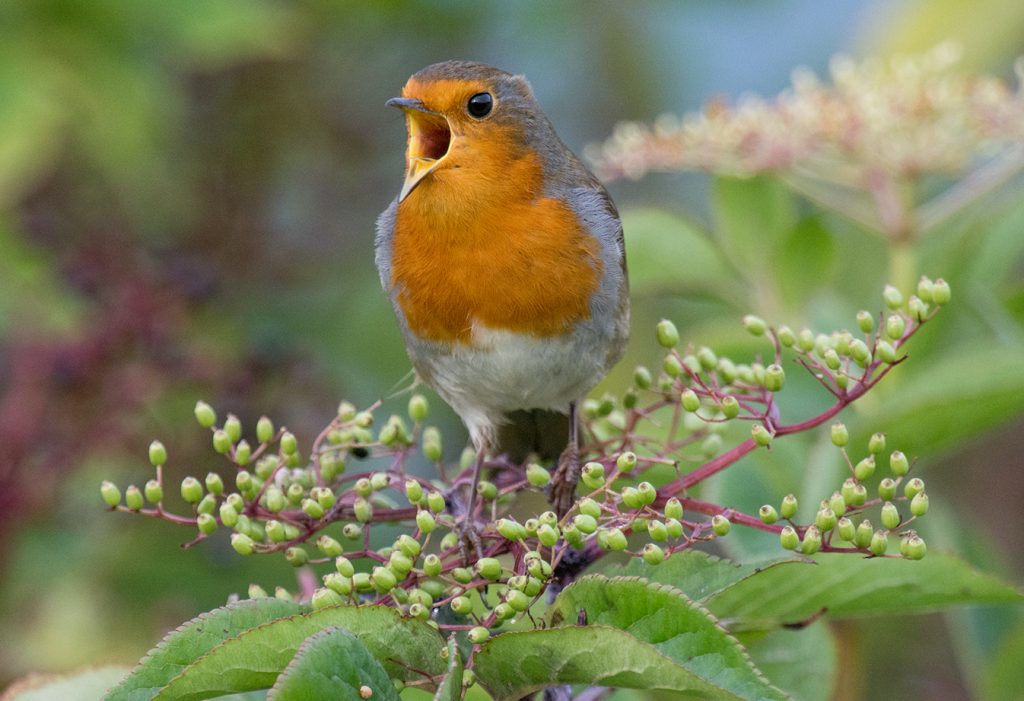
European Robin – Erithacus rubecula, Merkinch (photograph)
A species of forest or woodland edge, the Robin is instantly recognised by its bright red chest plumage from which most of the name variations linked to the bird also come, including the Anglo-Saxon Rudduc, related to ruddy. Robins have a positive image and most beliefs are that to harm one will bring misfortune. This included in Medieval Scotland the expectation that anyone who killed a Robin would see the milk from their cows stained with blood. The Robin is credited in some tellings with having worked with the Wren to bring fire to people, the Robin carrying the flame for the last part of the journey and burning his breast in the process and, in others with having helped Christ on the cross from which their red feathers came from a drop of his blood. More directly, there is a tradition that the Robin has a drop of God’s blood in its veins. In Scotland, a visit from a Robin was seen as a visit by a loved one who had died.
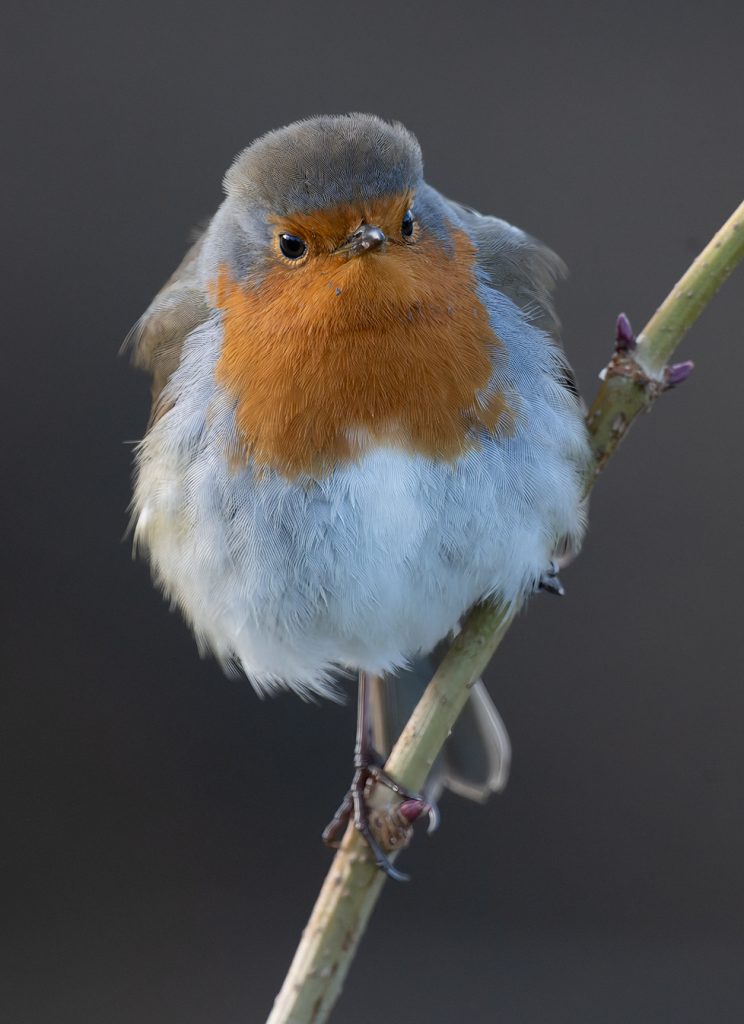
European Robin – Erithacus rubecula, Merkinch (photograph)
NatureScot
Merkinch Local Nature Reserve provides an excellent opportunity for locals to explore and experience nature on their doorstep. From the distinctive call of the oystercatcher to bottling harbour seals, a flash of an otter to smaller species like red admiral butterflies, the reserve provides many wonderful ways for people to connect with nature, with all the many benefits that provides. Nature havens like Merkinch play an important role in helping us tackle the biodiversity and climate crises locally, and the work that residents are doing to look after and improve this part of Inverness is just fantastic. Merkinch Month on Cùra Guardian is helping everyone in Merkinch and beyond to discover the species, culture and history of this special place.
Lynne Clark, Operations Officer, Central Highland
Tansy
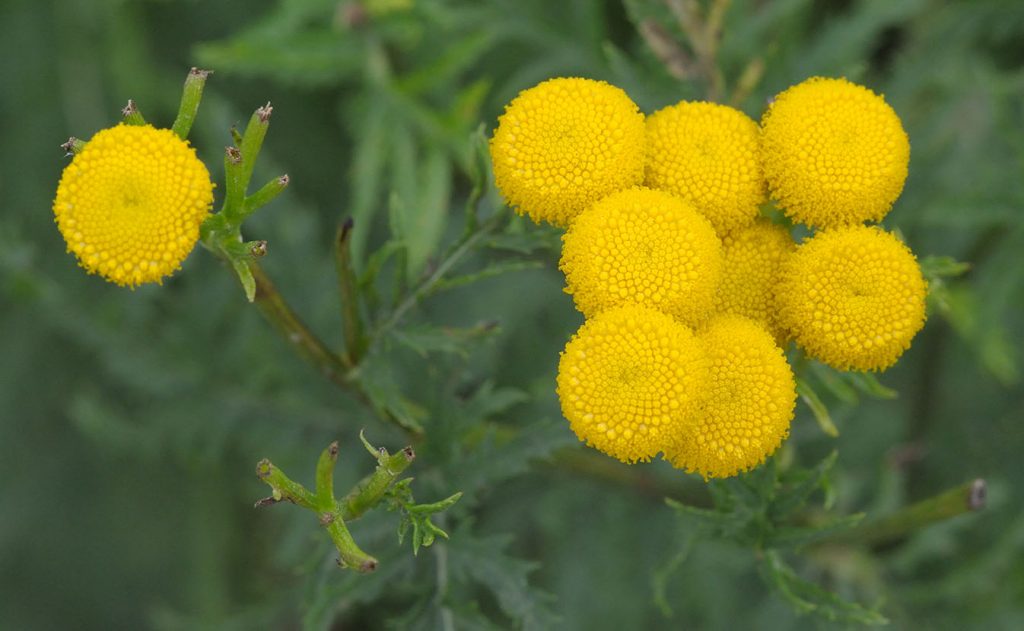
Tansy – Tanacetum vulgare, Caledonian Canal, Clachnaharry (photograph)
The suggestion is that the name Tansy derives from the Greek ‘Athanaton’ meaning immortal and is connected through the mythology of Zeus giving Ganymede a magic elixir infused with Tansy to give him eternal life. Whether this association with immortality arises from how long Tansy lasts as flowers, or its use in the preservation of dead bodies is not clear. Tansy has also been used in the treatment of a variety of conditions, placed in footwear to prevent the threat of the rising miasma from marshy ground and by monks as a flavouring for Tansy cakes at Easter. More basically, it was used in cooking at Easter to counter the believed worm infestations that the old diets for Lent could lead to. As a herb, it is bitter, potentially toxic, and bad news for parasites. Flies don’t like it much either which, is why it was used as an insect repellent, especially in Elizabethan times. The toxicity is genuine, Tansy contains thujone, a neurotoxic ketone, which in overdose especially from a preparation as a concentrated oil can be fatal.
European Greenfinch
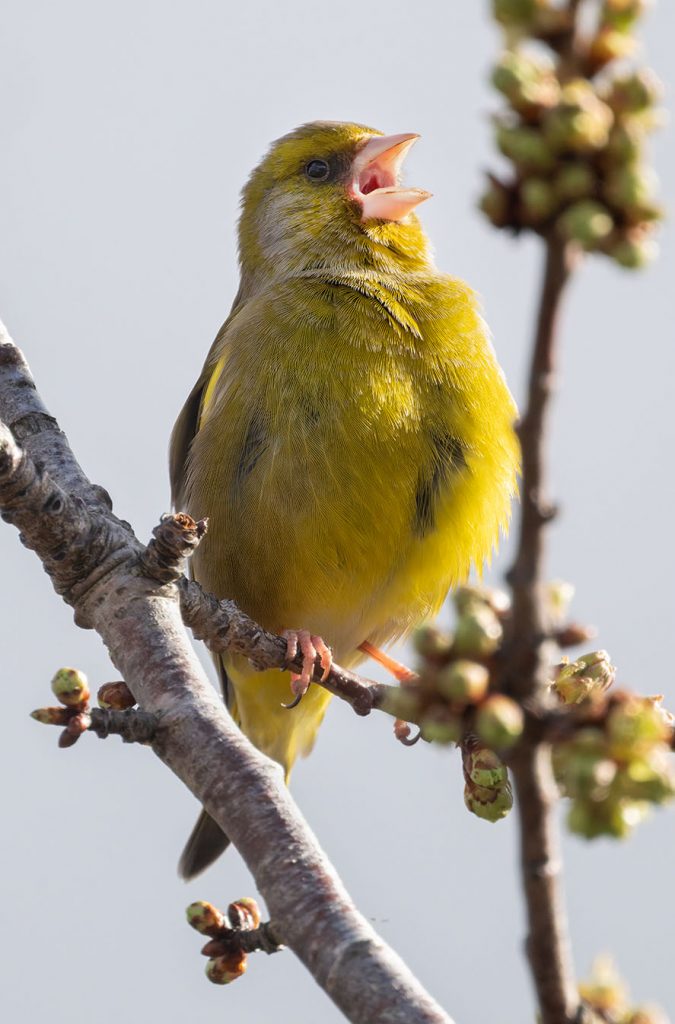
European Greenfinch – Carduelis chloris, Merkinch (photograph)
A large thick set finch, the Greenfinch is under threat from Trichomonosis infection, a single celled parasite. Populations have fallen by 60% and the Greenfinch has been placed on the conservation red list. Greenfinches tend to stay in a territory with a radius of five kilometres making the area 80 square kilometres. The Greenfinch is seen as a harbinger of spring, when its visibility increases as it sings in display from high perches in trees. A number of Greenfinches together in the same place are known as a charm, as are similar gatherings of other finches.
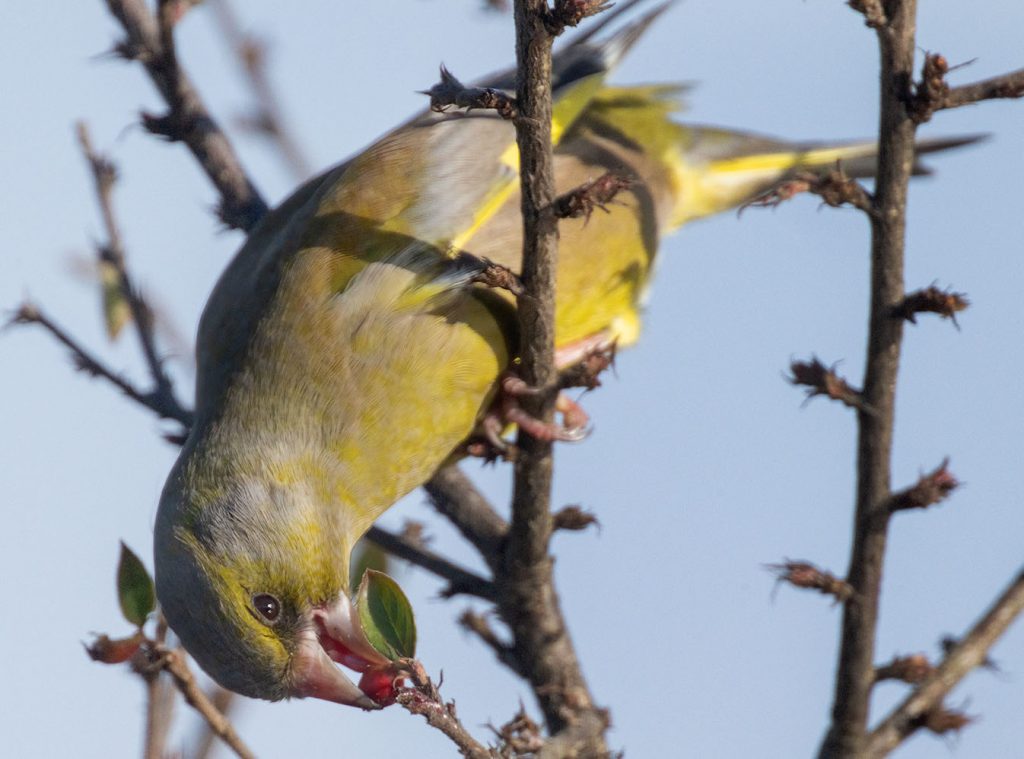
European Greenfinch – Carduelis chloris, Merkinch (photograph)
Day 20
Grey Heron
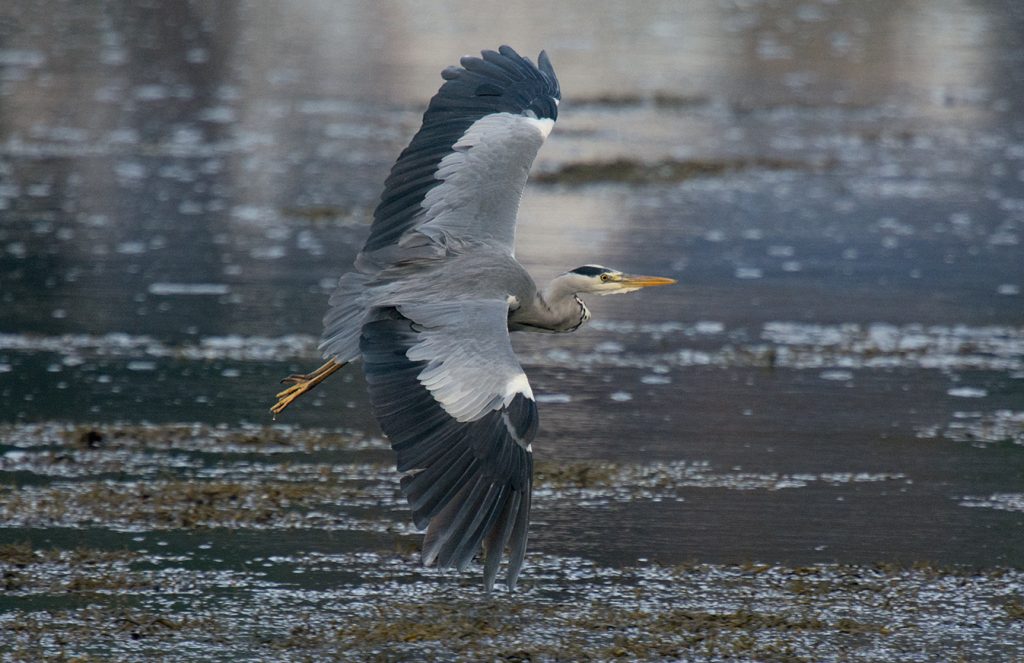
Grey Heron – Ardea cinerea, Merkinch (photograph)
A large bird capable of moving silently and carefully so as not to alert prey, the Grey Heron is found in freshwater and marine habitats feeding primarily on fish but also hunting crustaceans, reptiles, amphibians and small birds and mammals.

Grey Heron – Ardea cinerea (illustration)
Numbers drop in very hard winters but recover extremely quickly, they are a resilient population.
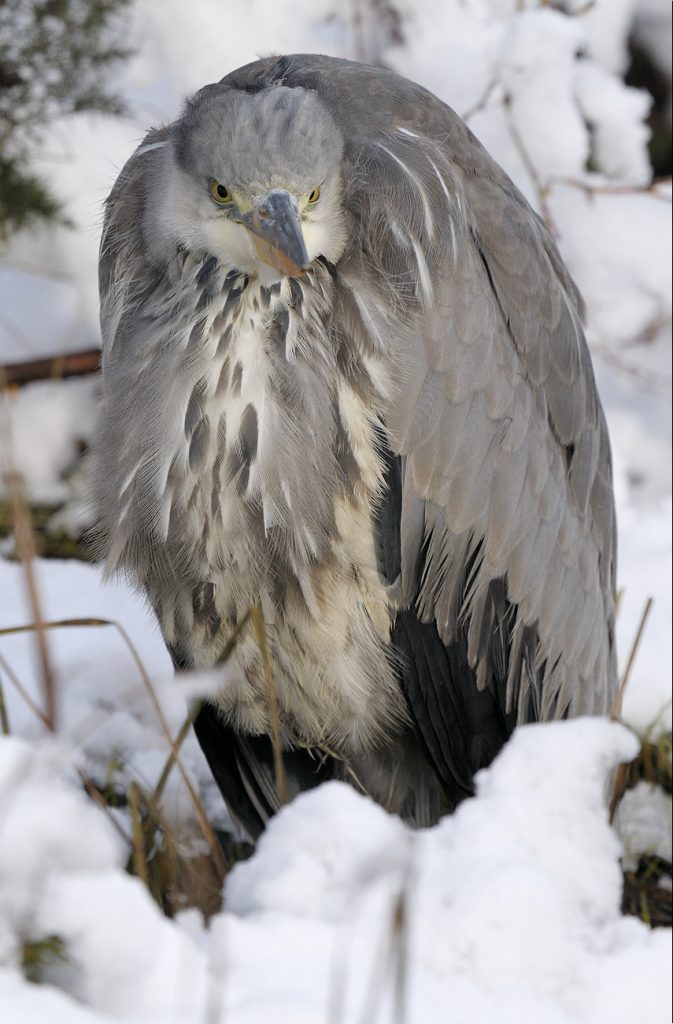
Grey Heron – Ardea cinerea, Merkinch (photograph)
The Grey Heron today is a protected bird by law. In the distant past it was subject to royal prerogative being the property of the Crown with severe penalties for anyone who killed one without permission or by using the most effective but banned methods such as the crossbow. What this has meant is that today herons are not eaten, in older history they were only eaten by the nobility and in between they did find themselves onto the dinner table more generally. This and a desire to limit heron numbers to protect fisheries did lead to their being hunted including through falconry which was also employed as a sport by nobles. Especially successful were Peregrines, a surprising outcome given the size difference between the two birds. Grey Herons are typically 1m long and weigh around 2kg. Peregrines are 50cm long and weigh around 1kg.
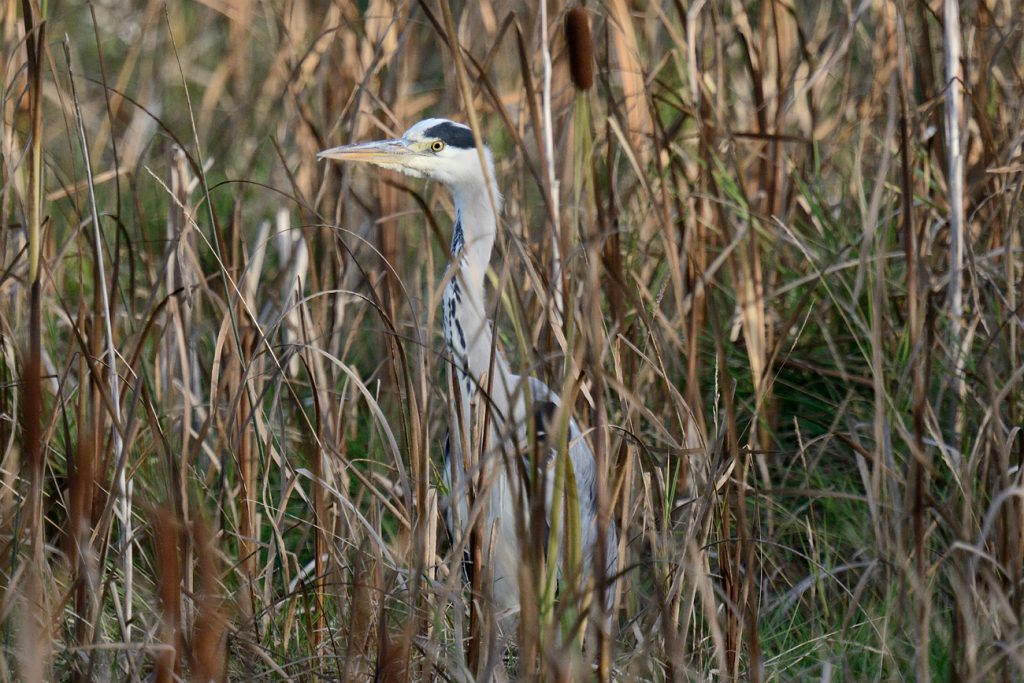
Grey Heron – Ardea cinerea, Merkinch (photograph)
There are beliefs that Herons have a particular connection with the moon. In Angus in Scotland this even extended to expecting that herons would wax and wane with the moon being heavier when the moon is full. More generally in Scotland Grey Herons have been seen as symbols of the Otherworld and guardians of the space between land and water. They also appear in faerie law.
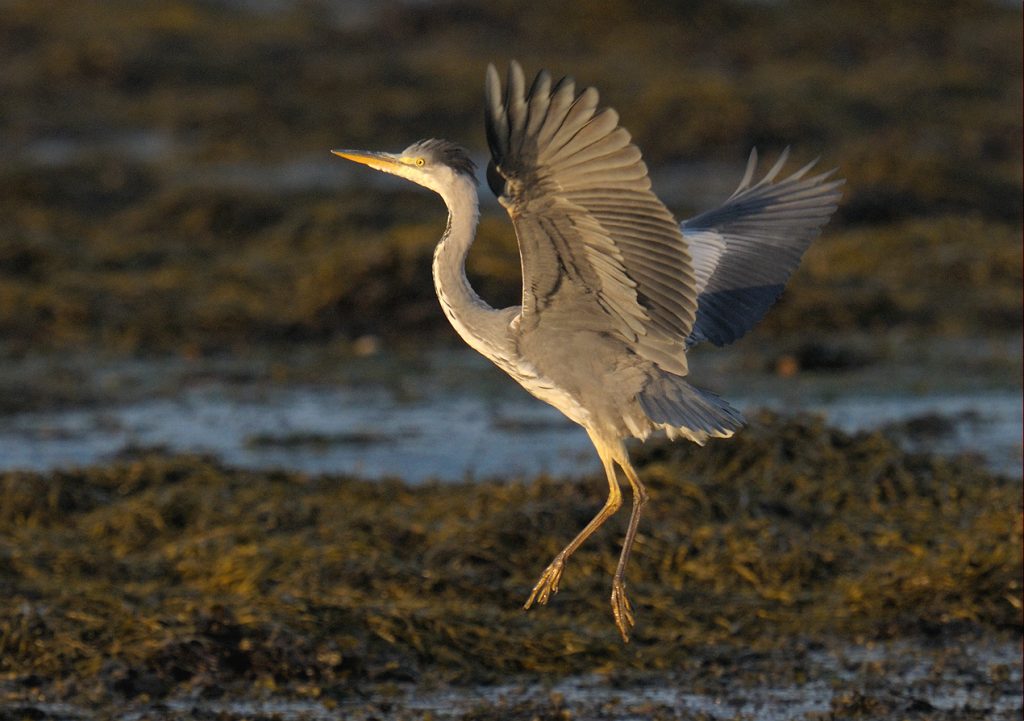
Grey Heron – Ardea cinerea, Merkinch (photograph)
Prominent on herons are the thick feathers on the neck, these have been identified as fulfilling vital survival functions. Insulation and warmth are important for a bird that spends long periods almost motionless, often in cold conditions. The chest and neck feathers of a heron are classified as ‘powder down’ plumage which means that the feathers are never shed by moulting. Instead, they grow continuously but eventually break down into a fine powder that the heron distributes to all its feathers through preening. The powder cleans off fish slime and oils and mud.
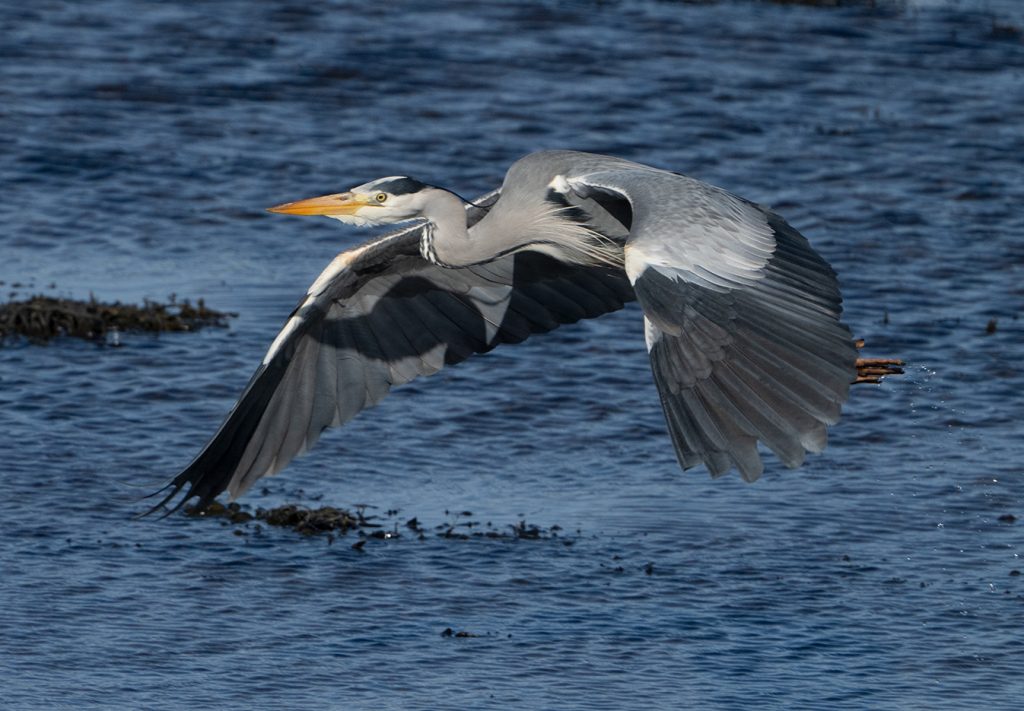
Grey Heron – Ardea cinerea, Merkinch (photograph)
This is not just for comfort, the removal of these deposits is necessary to maintain waterproofing on which the heron depends. As with almost all bird feathers the neck feathers of a heron are thought to reinforce visual display but break up the outline and help camouflage when the bird is hunting as well.
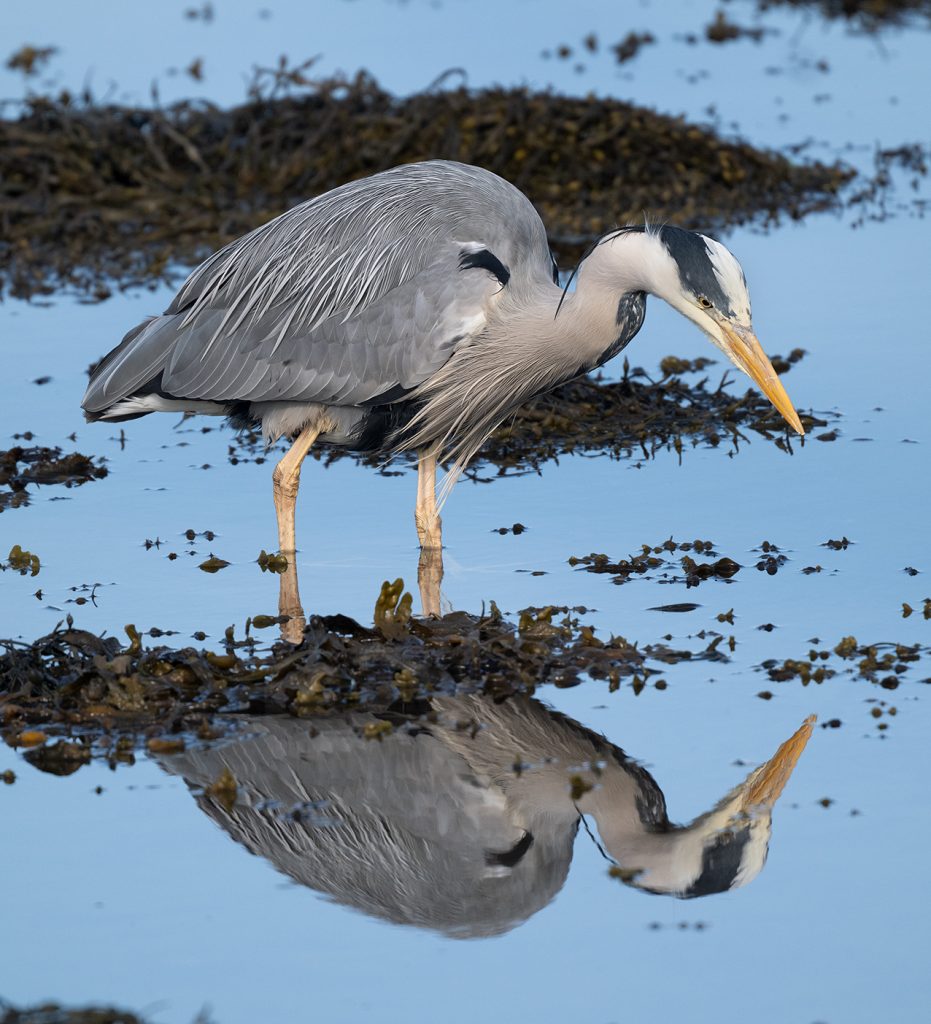
Grey Heron – Ardea cinerea, Merkinch (photograph)
Buff-tailed Bumblebee
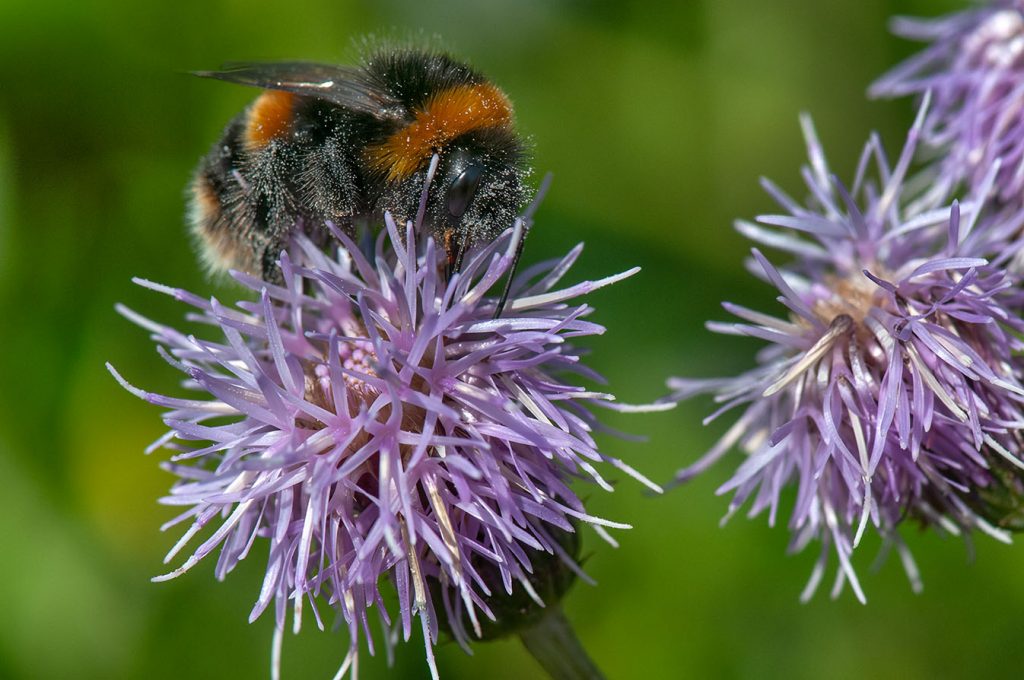
Buff-tailed Bumblebee – Bombus terrestris (photograph)
One of the larger Bumblebees and, in recent years, increasing in its range North in Scotland which is attributed to rising average temperatures and the changing climate. Still seen flying later in Scotland than England.
Bees are essential to people through their role as pollinators. They are almost always a central part of any ecosystem they are found in so they are of enormous environmental significance in the natural world as well as in agriculture. Overall numbers are falling and that is of real concern.
Day 20 of ‘Merkinch Month’ on Cùra Guardian – 20th May 2026. The 20th of May has been made ‘World Bee Day’ to raise awareness and bring attention to the very real issues in conserving bees worldwide.
European Rabbit
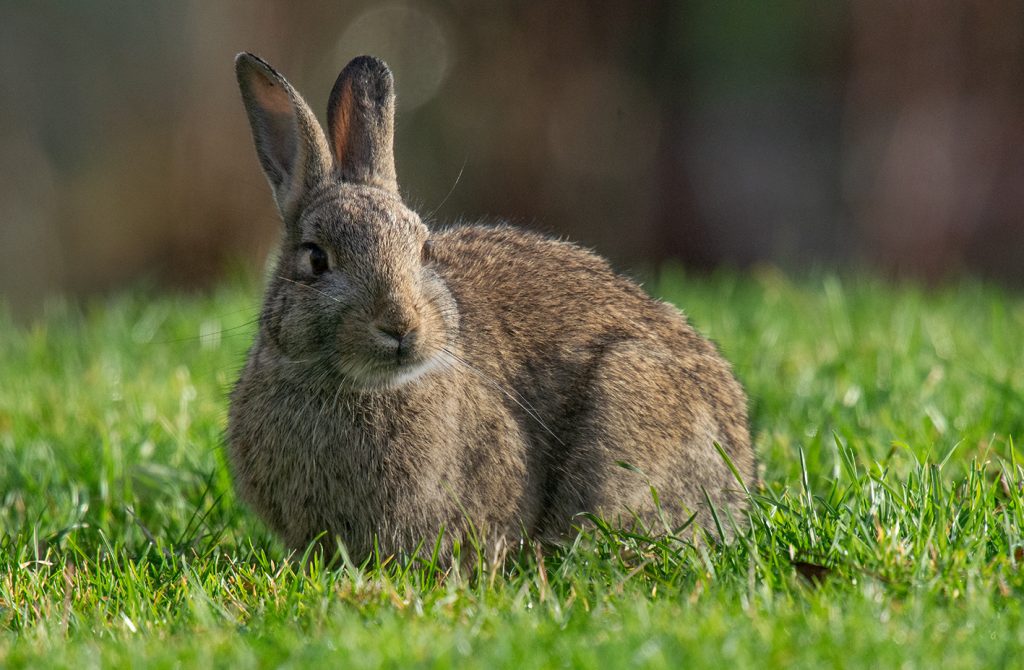
European Rabbit – Oryctolagus cuniculus, Merkinch (photograph)
Populations of rabbits in any one place and over wide areas vary through the years because of disease, weather and disturbance by people. At the present time rabbits are sighted less at Merkinch than previously but there have been times when they were seen fairly regularly. An introduced species in Britain, probably by the Normans, they very rapidly became established in the landscape and into folklore only shortly afterwards. Their place in culture and literature developed from there. In Scotland they became incorporated into existing narratives around hares, for example they were cited as animals used by shape shifting witches as a disguise. Scotland does have a claim to fame in the life of the rabbit with people in modern times. The term ‘Bunny’ comes from the Scots ‘Bun’ used historically in Scotland for rabbits and squirrels.
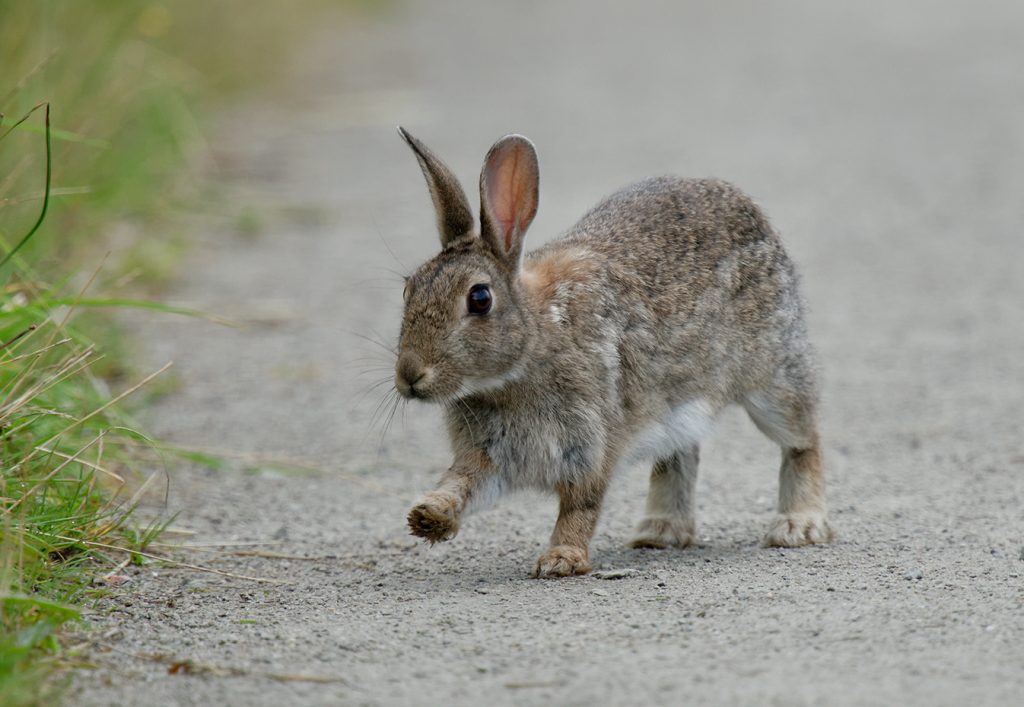
European Rabbit – Oryctolagus cuniculus, Merkinch (photograph)
Day 19
Red-throated Diver
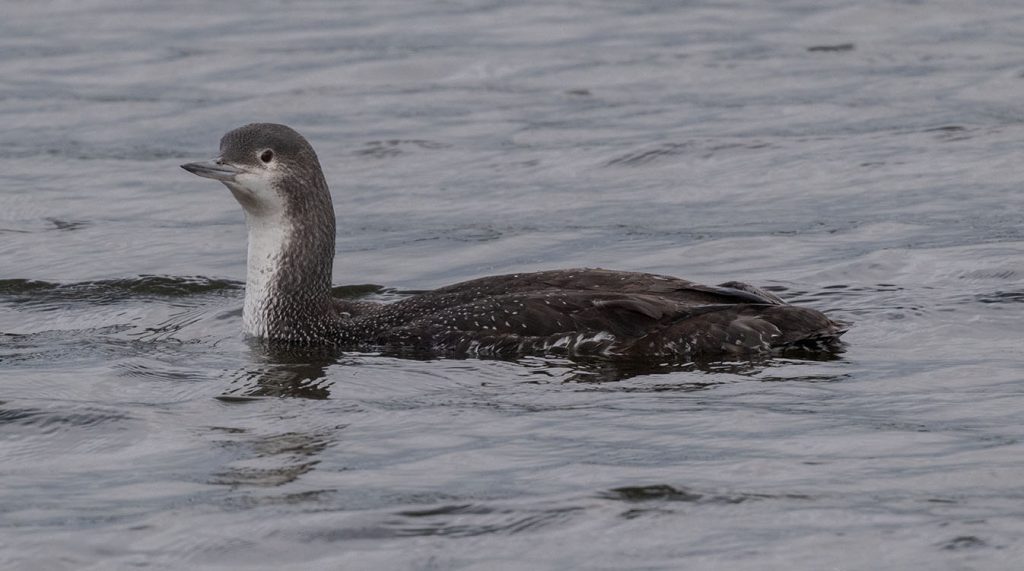
Red-throated Diver – Gavis stellata, Merkinch (photograph)
Nesting on freshwater pools and small lochs, Red-throated Divers are seen on the sea when feeding, diving for small fish and invertebrates and staying underwater for long periods (up to three minutes), only surfacing some distance from the start of the dive. Apart from the small resident breeding population, a large number of Red-throated Divers arrive in Scotland in the winter from Northern Europe. The most northerly in range of the Diver species, their courtship display is a race across the water, part submerged, but with the head and neck raised and pointed forwards resembling a serpent and earning the name ‘the snake ceremony’. Red-throated divers are said to predict rain with their calls and an alternative name for them is ‘the Rain Goose’. They have also featured in creation stories as helping the formation of the world by diving down and bringing up mud. The Earth-Diver creation stories are the oldest in the world and contain variations on a primal ocean covering all, where a Red-throated Diver dives down deep and retrieves mud which expands to form the land. These stories are shared by Native American, Indigenous Arctic and Scandinavian peoples. Frequently the Diver is asked to retrieve the mud by a great shaman hovering over the water. The Red-throated Diver gives the mud to the shaman who scatters it on the surface of the primeval sea where it dries, solidifies, and forms continents.
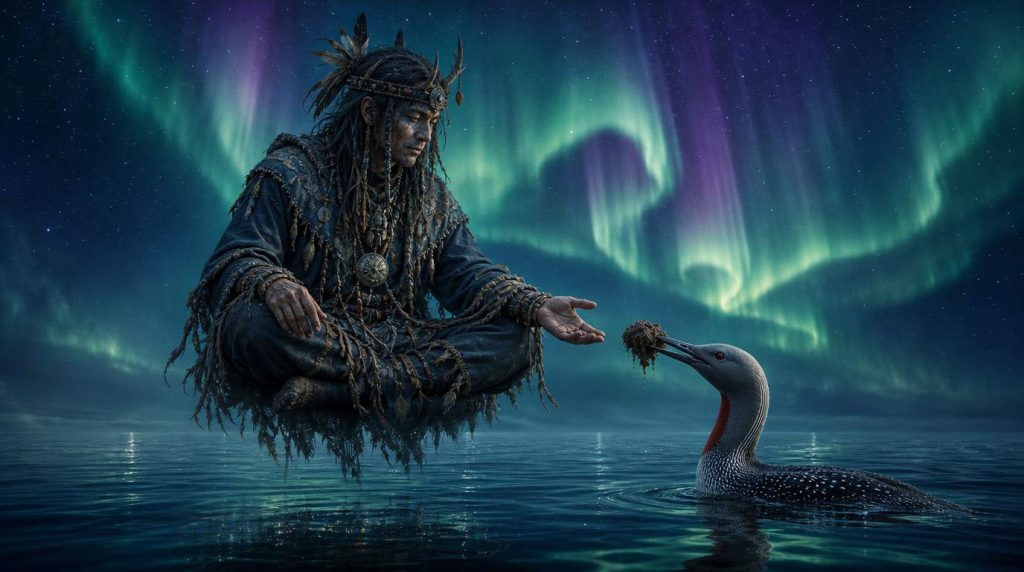
Illustration
Shaman with Red-throated Diver (illustration)
Elder
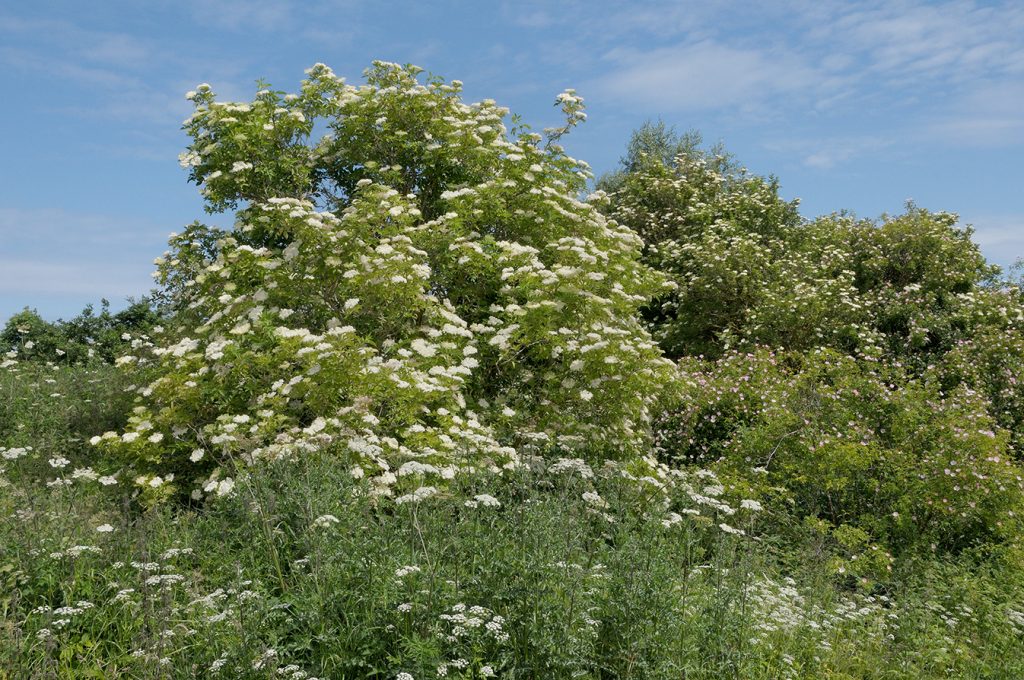
Elder – Sambucas nigra, Merkinch (photograph)
Growing as a shrub or small tree, Elder has had an ambiguous relationship with people. Sometimes venerated, sometimes despised, it has fallen in and out of fashion and favour. It has been ascribed almost opposite powers at times, burn it and you will see the devil, plant it outside a house and the devil will be kept at bay. In Scotland, a Rowan was often planted at the front of the house and an Elder at the rear, both assigned to protection from evil. The proscription against burning may have arisen from the plant anatomy of Elder, the wood is hollow with a pith which when burned spits and creates a screaming noise. In Medieval times in Christian worship, it was simultaneously identified as the tree on which Judas hanged himself and the tree from which the cross was made. It was because of its use in the cross that it was said to have crooked and weakened branches that can barely support themselves. It is thought that ascribing these negative connections to Elder was intended to supress pagan beliefs. Hearse drivers in Scotland often had riding crops with an Elder wood handle in the belief that it would keep dark spirits away. It was considered unlucky to cut Elder and yet it was widely used in furniture, especially as decorative inlays, so it was alright to have it in the house so long as you forgot how it got there. On a more physical level, Elder leaves in summer have a pungent smell and have been used to keep flies away from people, horses and livestock. The berries are used in cooking and making drinks, wine and even fritters and Elder has over the years been found in remedies for a very wide range of illness. The berries, bark and leaves have all been used to make dyes, especially for the manufacture of Harris Tweed. There have also been taboos against sleeping under an Elder with fears that the scent of the flowers could cause trances and transport you to the underworld.
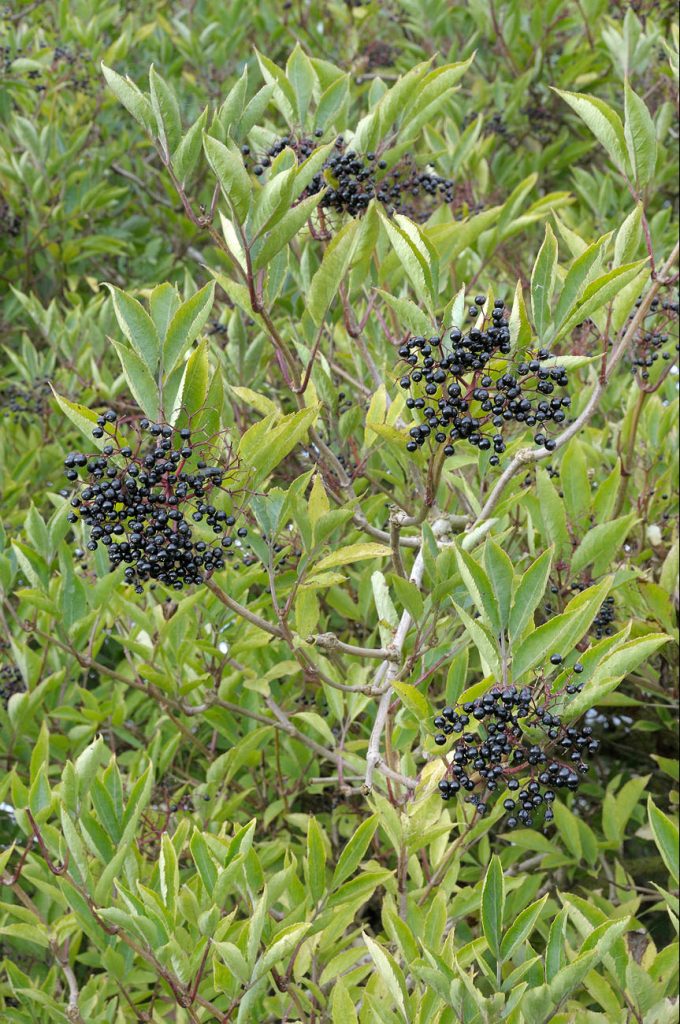
Elder Berries- Sambucas nigra, Merkinch (photograph)
Although from a modern standpoint some of these beliefs seem extreme, it needs to be remembered that there are some chemical properties of Elder that might just make them worth considering. Every part of the Elder contains a cyanogenic glycoside capable of releasing Cyanide compounds, mostly Hydrogen Cyanide. Burning the wood or even sleeping under the flowers in a setting of limited ventilation could expose someone to toxins quite capable of inducing nausea, vomiting, confusion and fainting.
Elder wood was believed to be used by faeries to make musical instruments. People have done the same, removing the pith leaves a hollow pipe of wood that is easily polished.
Barn Swallow
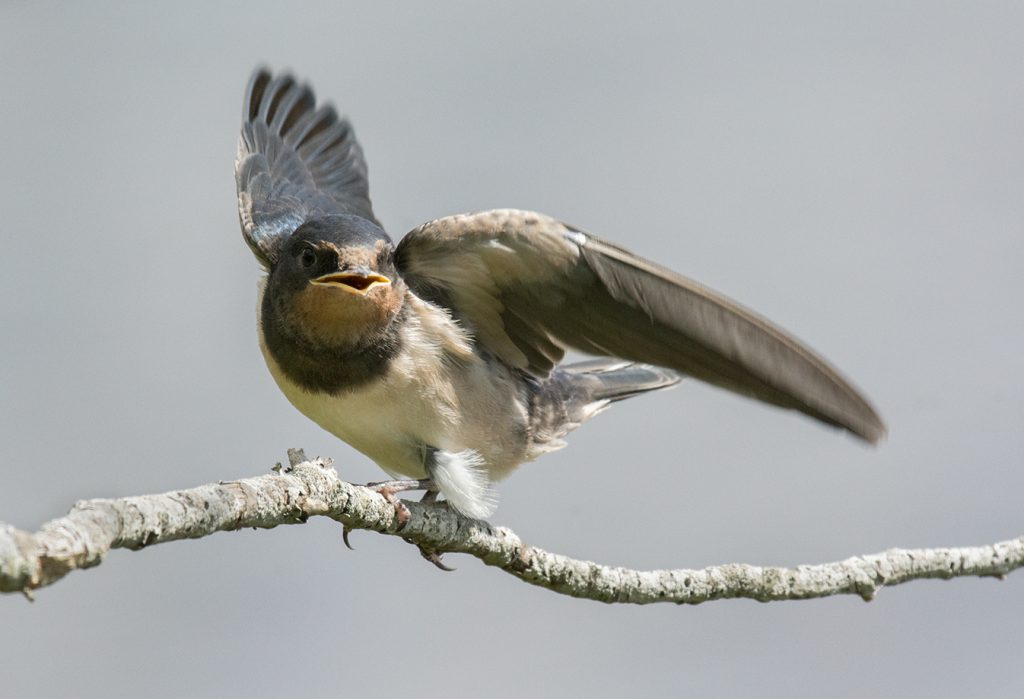
Barn Swallow – Hirundo rustica, Merkinch (photograph)
Famous as a summer visitor arriving in spring from far to the South, including Africa, staying to nest in the summer and then forming up in flocks for the return journey in the autumn. Feeds by catching insects in flight.
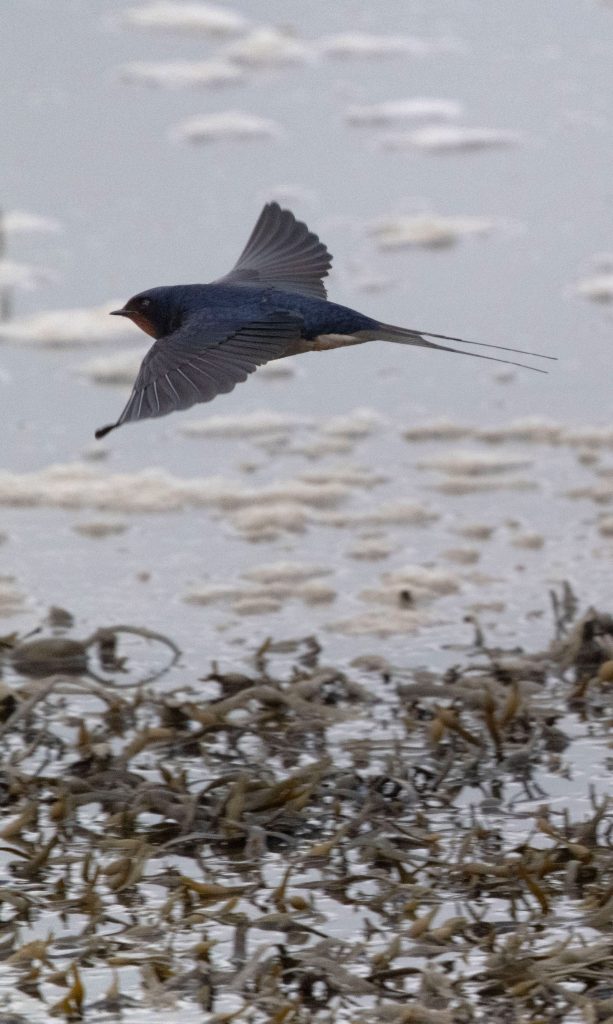
Barn Swallow – Hirundo rustica, Merkinch (photograph)
The Swallow was said to have introduced Adam and Eve by carrying a lock of his hair to her and so founded the human race, even if there were soon complications. Because of this they were allowed to share the dwellings of men and have always done so.
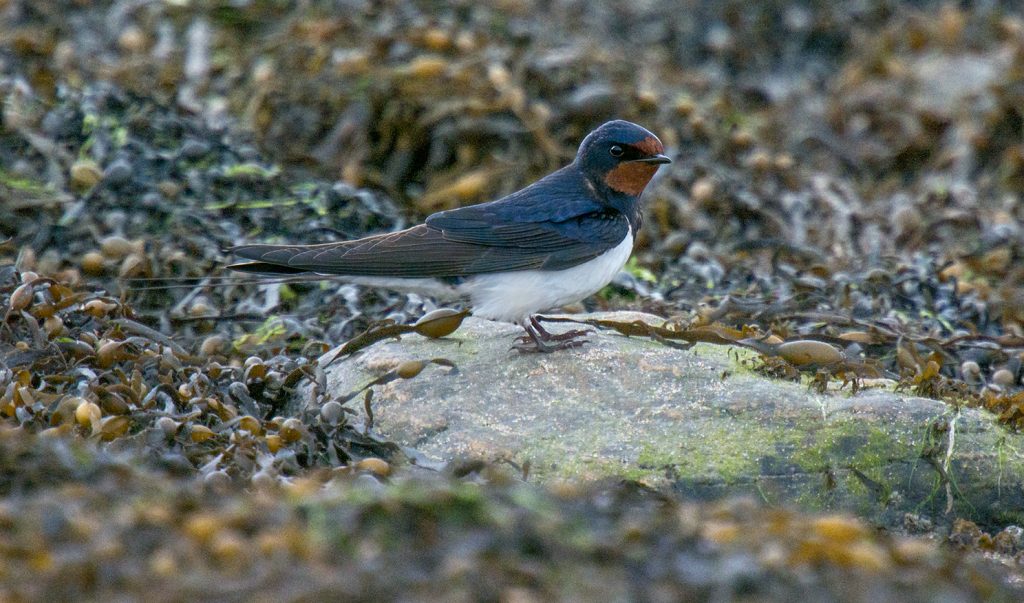
Barn Swallow – Hirundo rustica, Merkinch (photograph)
The Swallow is associated with the Greater Celandine, which is also known as the Swallow-wort. Until migration was understood, it was believed that swallows hibernated at the bottom of ponds, the story was based on observation. Flocks of Swallows formed up round pools in the autumn, could even be seen skimming the surface catching insects and then they suddenly disappeared, it had to be into the water. There were stories of Swallows travelling South from earlier centuries but these were mostly dismissed for the pond hibernation theory.
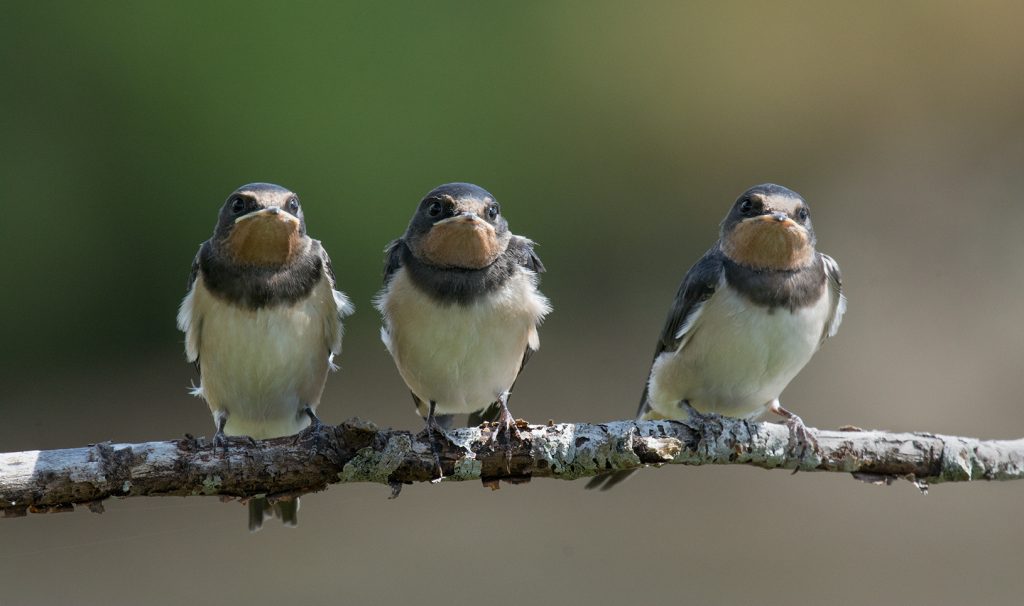
Barn Swallows – Hirundo rustica. Newly fledged chicks waiting to be fed, Merkinch (photograph)
Day 18
Redshank
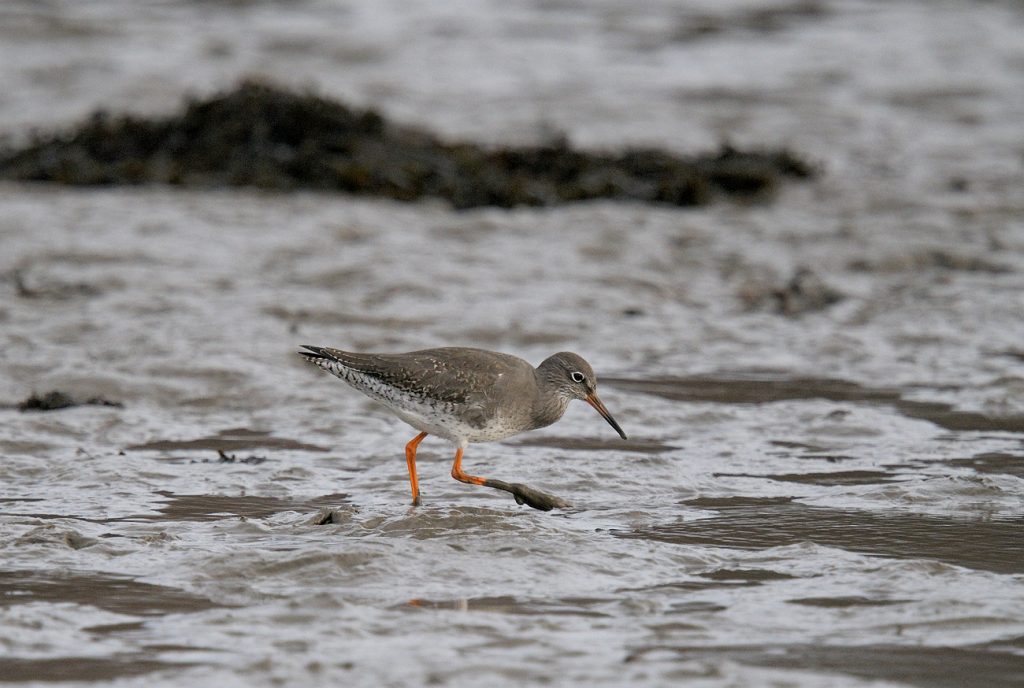
Redshank – Tringa tetanus, Merkinch (photograph)
Typically seen in groups on the shoreline, Redshank tend not to mix with other waders as they almost patrol the mud and sand readily taking off as a flock and calling repeatedly if disturbed or there is danger. Alternative names for them reflect this presence and behaviour including ‘Sentinel’ and ‘Warden-of-the-Marshes’.
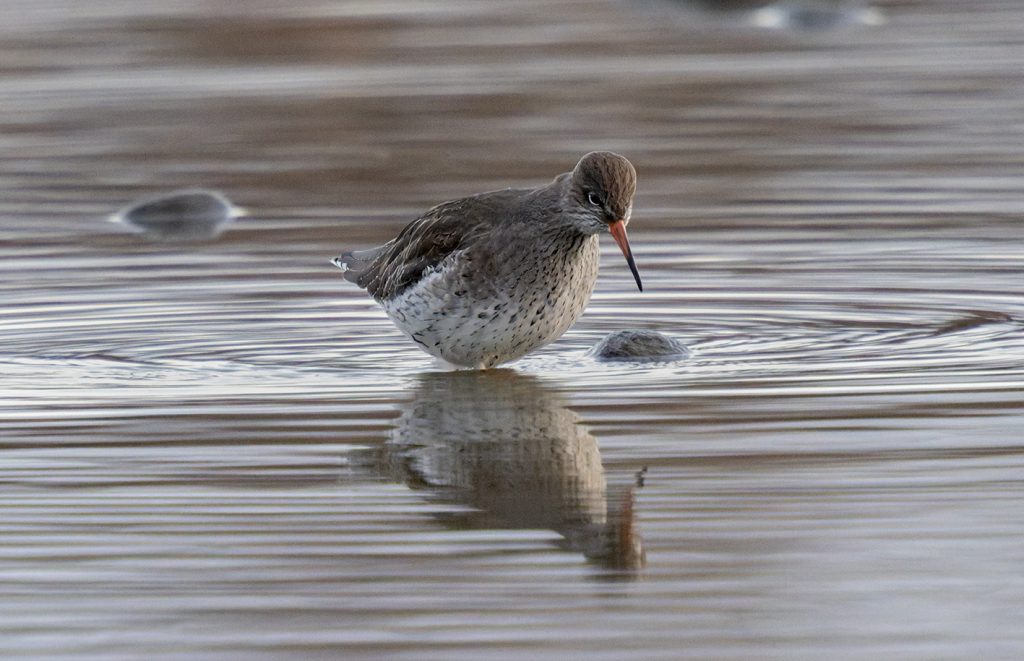
Redshank – Tringa tetanus, Merkinch (Photograph)
Meadow Vetchling
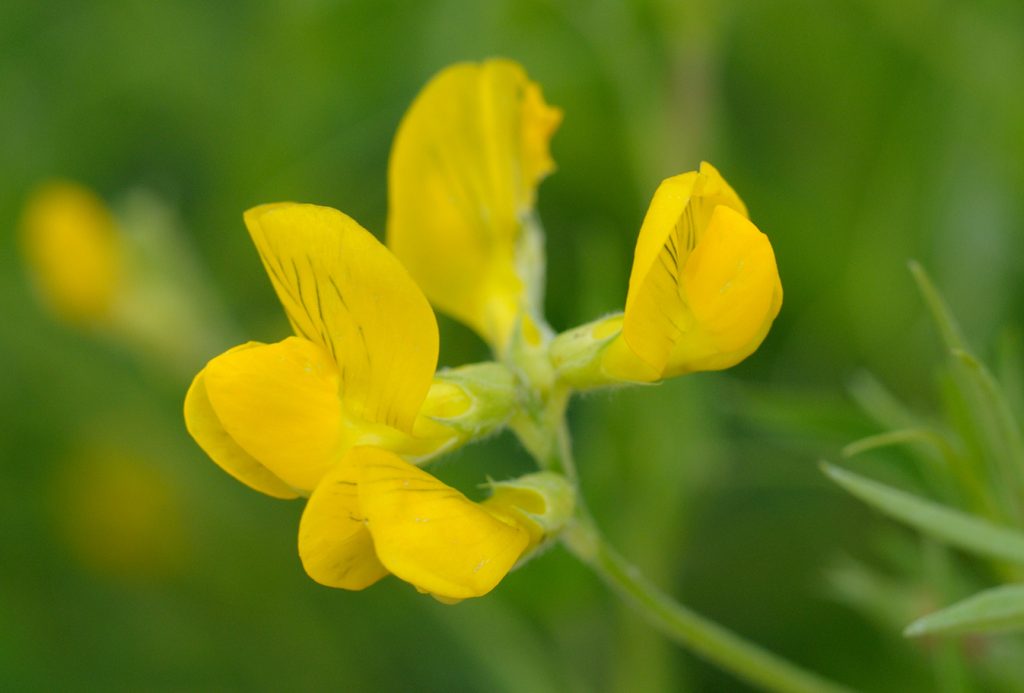
Meadow Vetchling – Lathyrus pratensis, Merkinch (photograph)
Widely distributed in Scotland and once used as a cough medicine, Meadow Vetchling is native in Europe and Asia but has since been introduced to North America .
Northern Wheatear
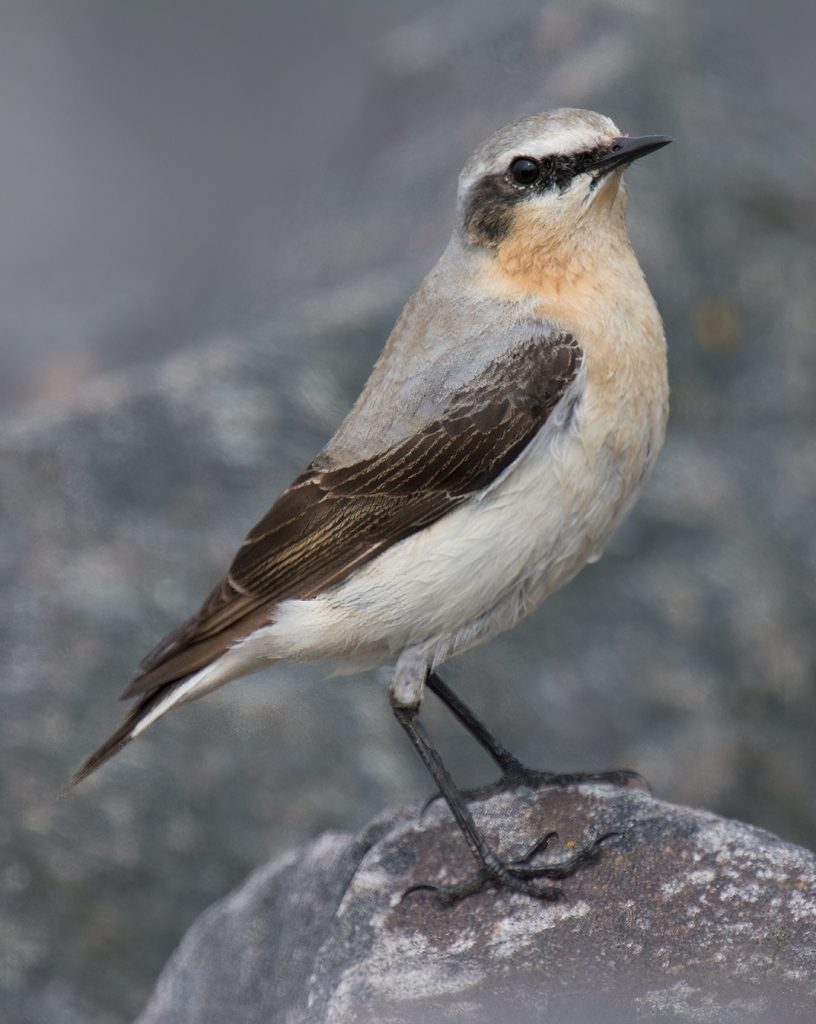
Northern Wheatear – Oenanthe oenanthe, Merkinch (photograph)
Arrives as a migrant from Africa in the spring, challenging the Cuckoo to be the first to be heard to signal the end of winter. Considered in past times in Scotland to be unlucky with connections to the devil. Toads were even supposed to hatch their eggs. Before migration was understood, the belief was that they pass the winter in hibernation underground. That there are accounts of such hibernating birds being found is worrying.
Day 17
Grey Seal
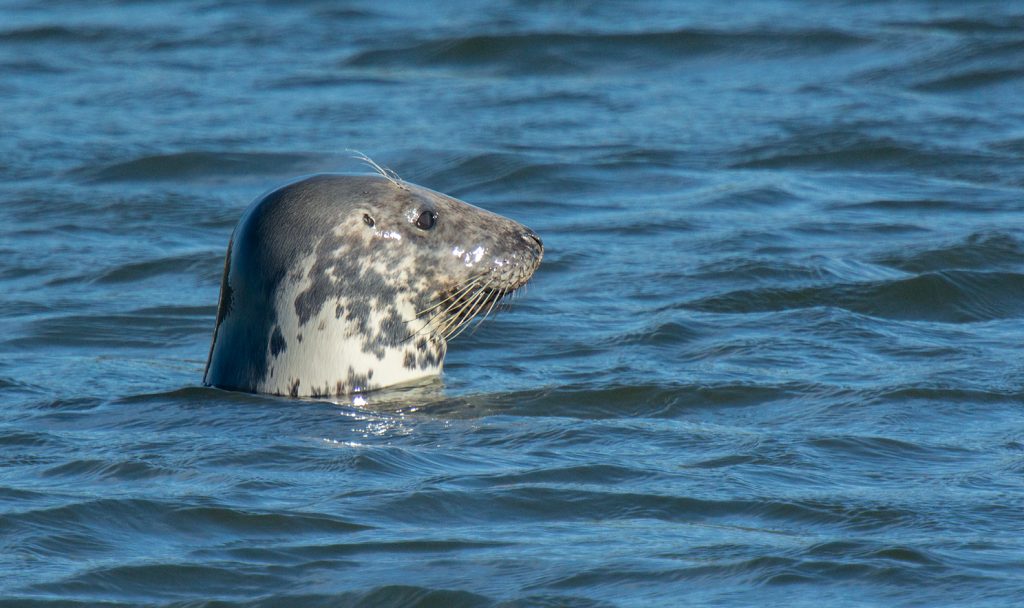
Grey Seal – Halichoerus grrypus, Merkinch (photograph)
Larger than the Harbour Seal, Grey Seals tend to be solitary in the water but are found in groups on the shore when they are out of the sea. The seals in the Eastern Atlantic are larger than those on the coast of North America in the West. It has been suggested that they should be regarded as separate subspecies. Scotland and the UK has an important responsibility in Grey Seal conservation. They are one of the rare seals in the world and the UK has an estimated 40% of the global population and 95% of the European population. Scotland is their largest stronghold in the UK, of the estimated 57,000 pups born each year in the UK 50,000 are in Scotland. Grey Seals in Scotland and the Hebrides are those most associated with the beliefs around Selkies, the main element of which is that a seal, often but not exclusively a female, can take off their skin to go onto the land as a person but needs to recover it and put it back on to return to the sea.
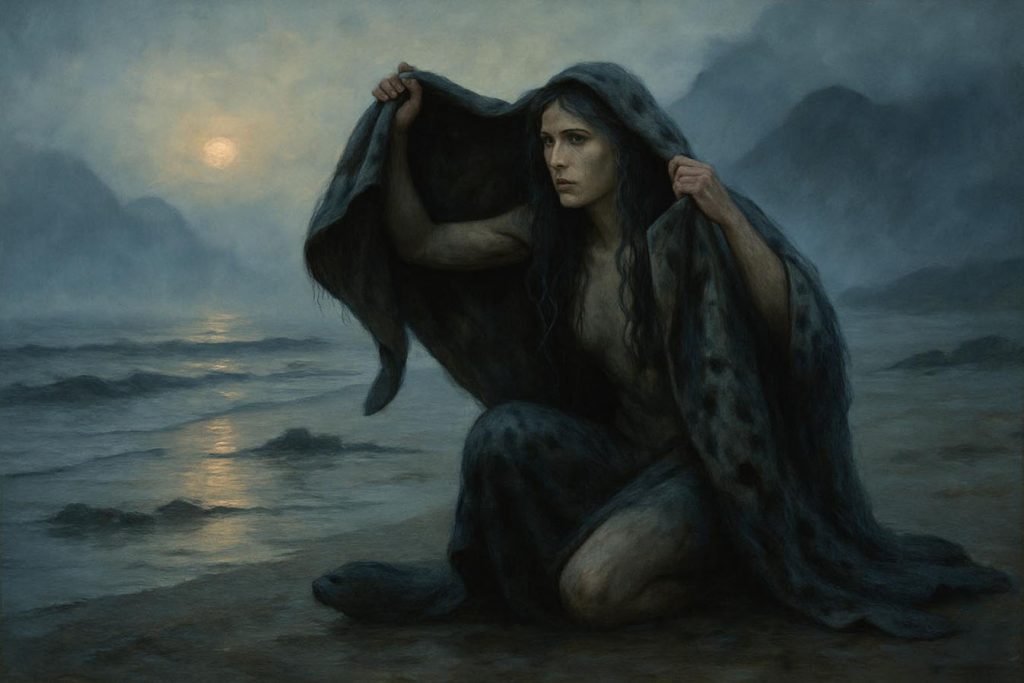
Selkie returning to her seal skin and preparing to go back out to sea (illustration)
In some stories, a person finds and hides their seal skin coercing them to stay on land and possibly marry but they always want to return to the sea and if they find their skin inevitably do, even if it means abandoning children they have had and genuinely love.
Little Egret
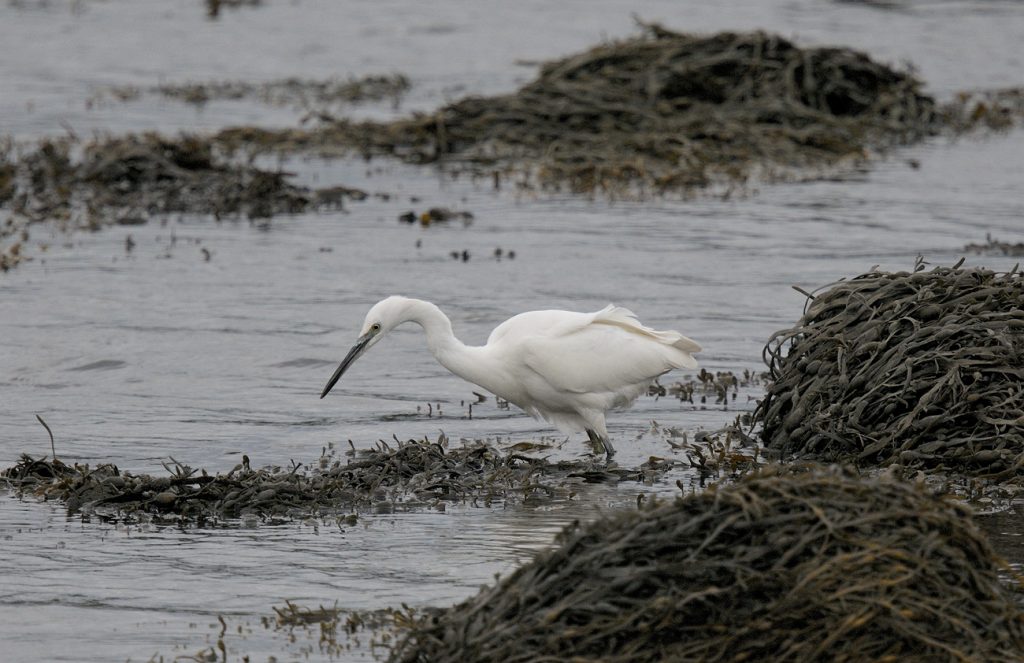
Little Egret – Egretta garzetta, Merkinch (photograph)
A small heron which breeds in Asia, Africa and Southern Europe and which, as a migrant, is seen in locations beyond these areas, including Australia and Southern Africa. A well known perfectly straightforward species with no great complications in science or ornithology and a perfectly straightforward bird that really shouldn’t be in Scotland, let alone Merkinch in the Highlands.
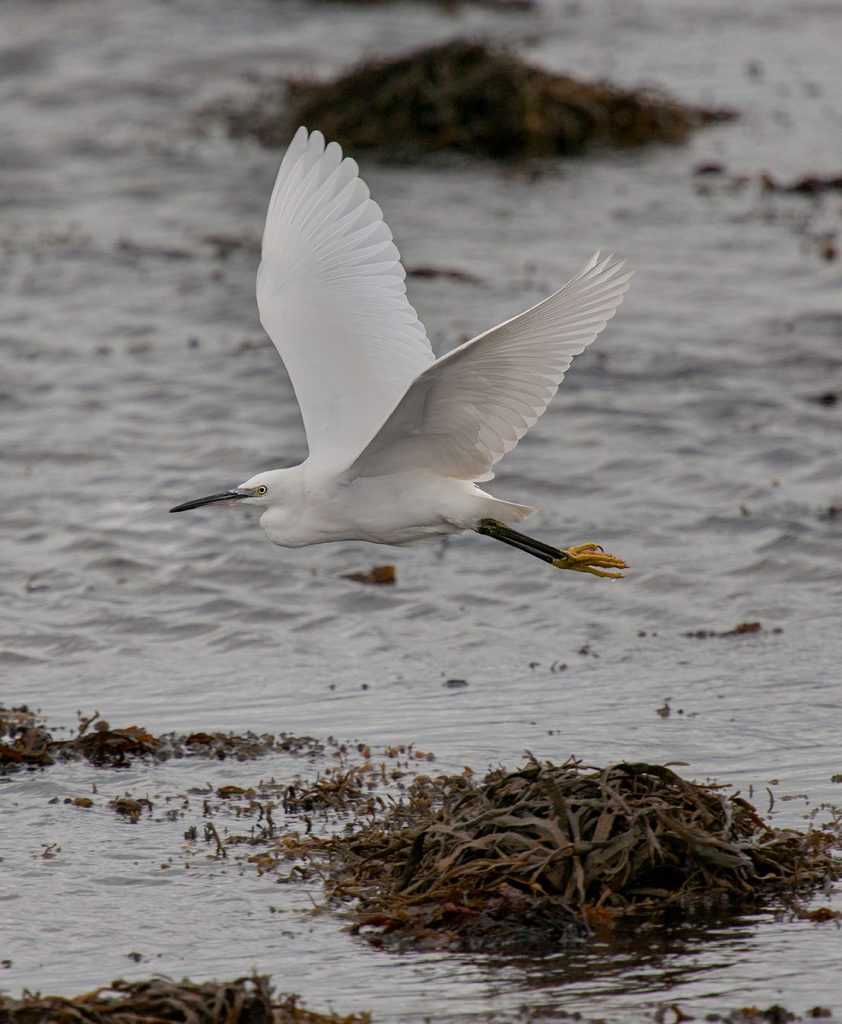
Little Egret – Egretta garzetta, Merkinch (photograph)
Since 2000, the range of the Little Egret has increased. Rising winter temperatures and greater legal protections have expanded its distribution North, including to Southern England where there is now a very small breeding population. The Little Egret is however not recognised as a Scottish species and this one in Merkinch is a rare sighting of a bird that has strayed off course.
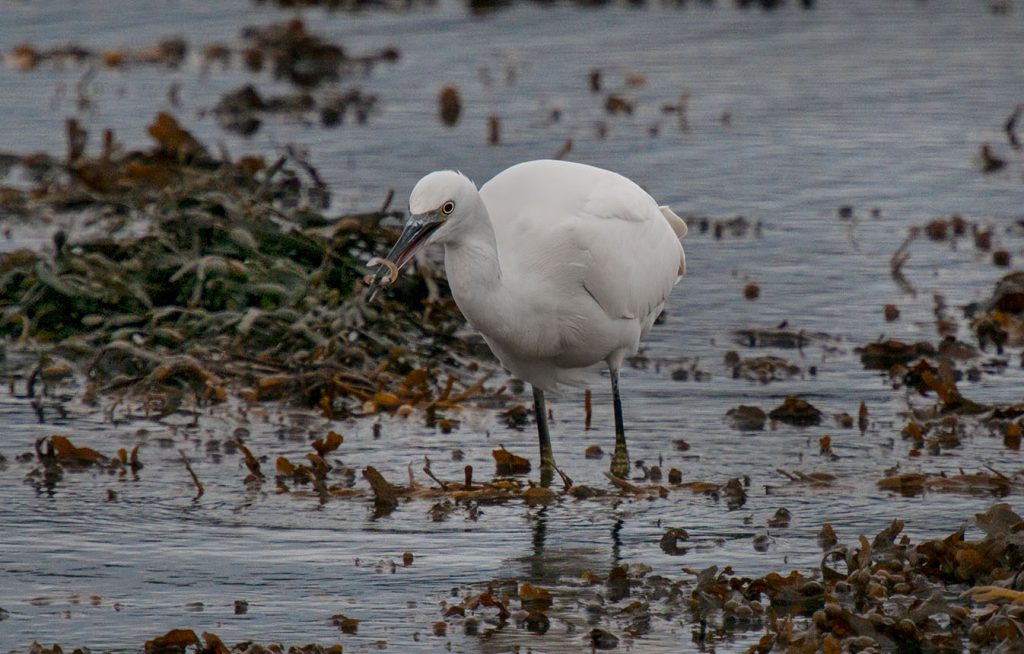
Little Egret – Egretta garzetta, Merkinch (photograph)
Sightings however are not unknown, the first Little Egret recorded in Scotland was in 1954 and they have become more frequent since then but remain very few. Over half of records come from May and June and fall sharply in October when any birds there are move South. This individual was seen in Merkinch in October 2010.
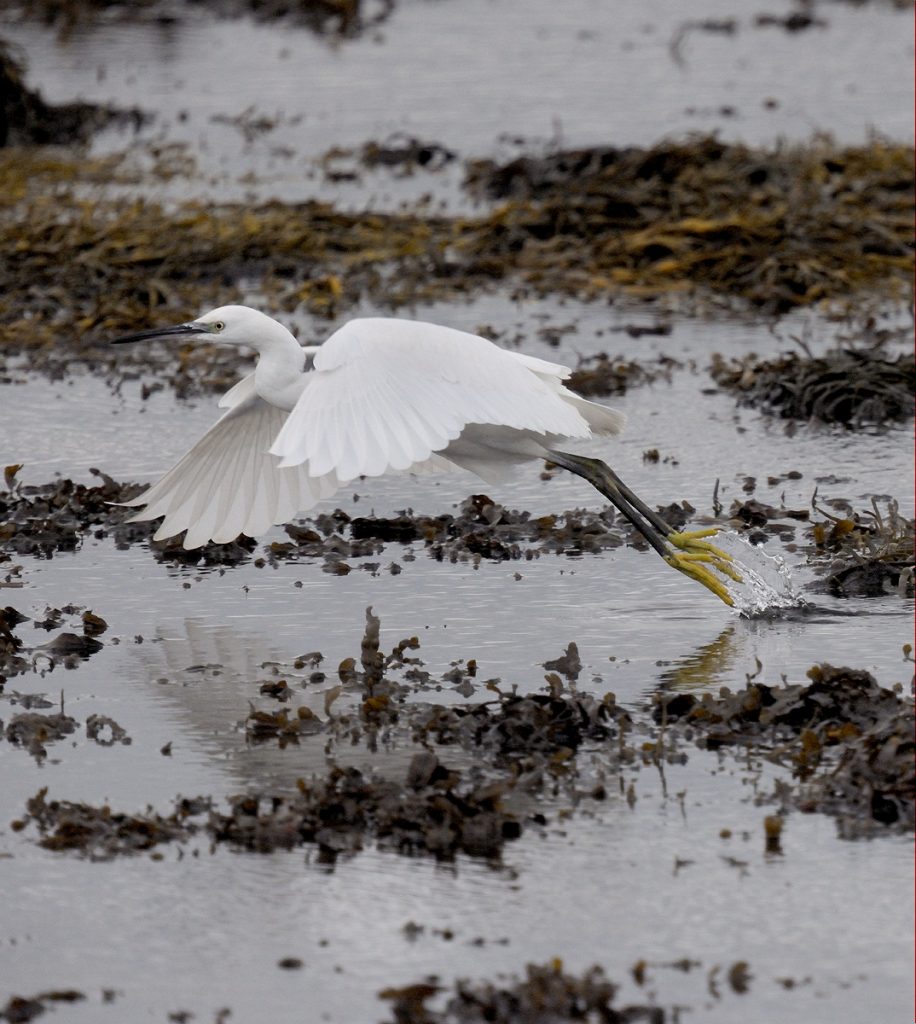
Little Egret – Egretta garzetta, Merkinch (photograph)
Red Admiral
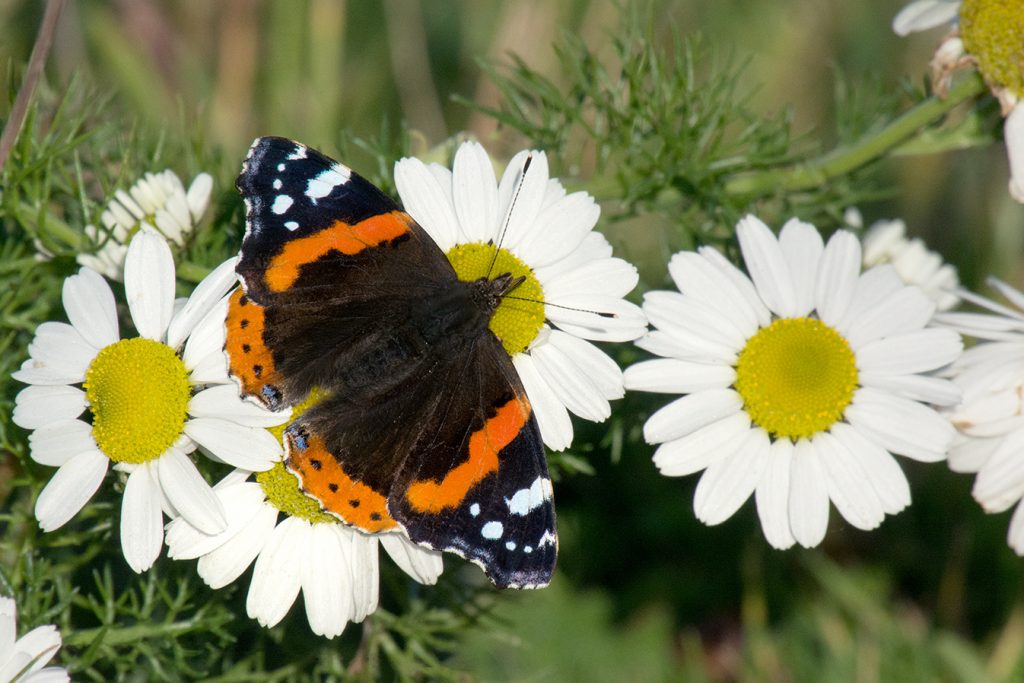
Red Admiral – Vanessa atalanta, Merkinch, November (photograph)
The Red Admiral Butterfly is essentially a summer visitor to the British Isles migrating from North Africa and Southern Europe each year. Typically, arrivals are from May and the return journey begins in September, in exceptional years these dates may be earlier or later, something that is being seen more often with changes in climate. Appearances of Red Admirals in moth traps set at night during the migration periods suggest that at least some of the journey is made in the dark. As average temperatures have risen, there is now a small resident UK population of Red Admirals that does not migrate but hibernates in the colder weeks.
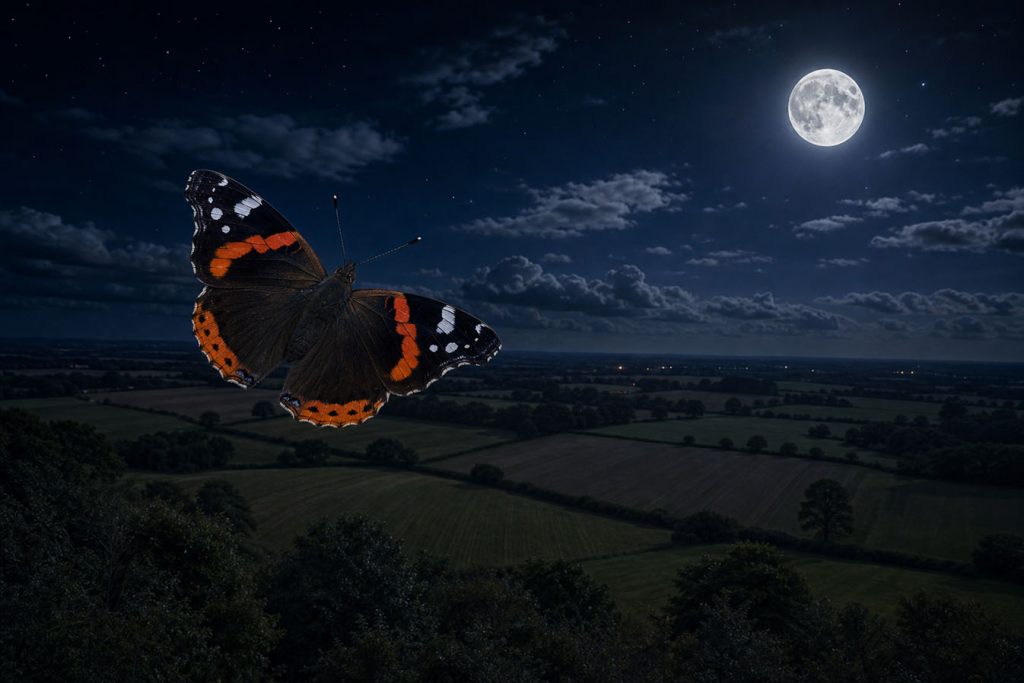
Red Admiral – Vanessa atalanta, migrating at night (illustration)
Then there is also the question of why a butterfly is called an admiral. There are various explanations linked to admiralty flags coming into use at the time the name was adopted, to a corruption of a name that began as the ‘Red Admirable’ but this does not seem very likely, to a corruption of ‘Red Alderman’ because their robes tend to have the same colours. It could have been more dramatic. In France, the butterfly is Le Vulcain linking it with Vulcan, who amongst the gods in mythology is connected with fire, volcanos, forges and metalwork.

Vulcan at his forge making weapons for the gods (illustration)
In art and beliefs, Christian cultural references in the past often make this butterfly a representation of sin and evil because of its colours and there was a time when the Red Admiral was hunted in North England and the Scottish Borders as a witch and, more widely in Scotland, was seen as a warning of malicious magic.
Day 16
Greenshank
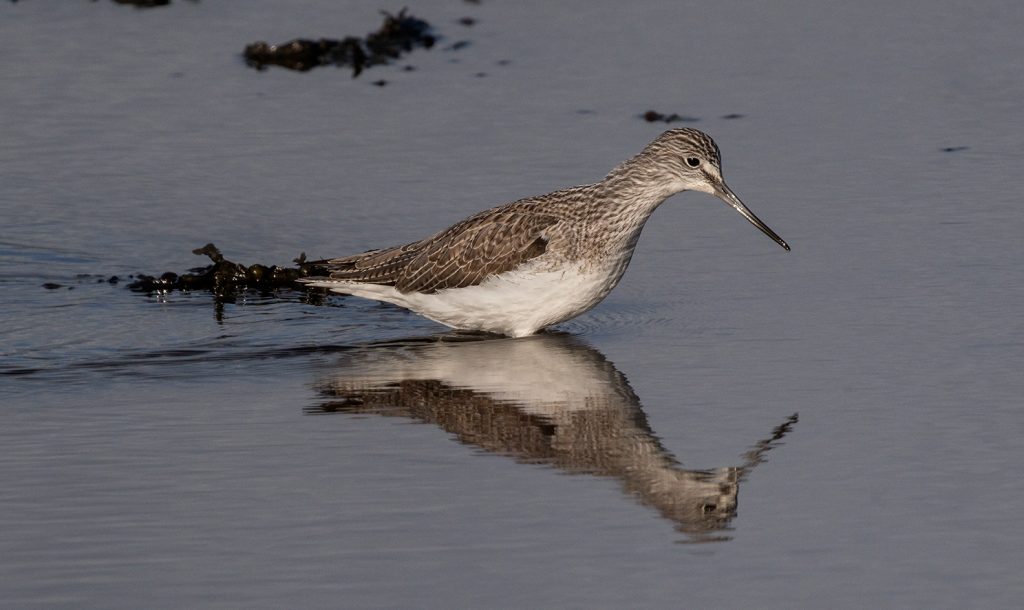
Greenshank – Tringa nebularia, Merkinch (photograph)
One of the larger waders in Scotland and, by comparison to other species, not frequently seen, the Greenshank population has elements that both remain in Scotland all year, especially those in the South, or fully migrate even as far as South Africa in Winter. Their nests are extremely difficult to find, which made them a much-prized trophy in the days of egg collecting which did genuinely threaten the Greenshank population. Now the Greenshank is protected by law and disturbing a nest would be a significant offence. The bill of the Greenshank is slightly turned up which distinguishes it from other waders and is the opposite of the Curlew.
Cuckoo Flower
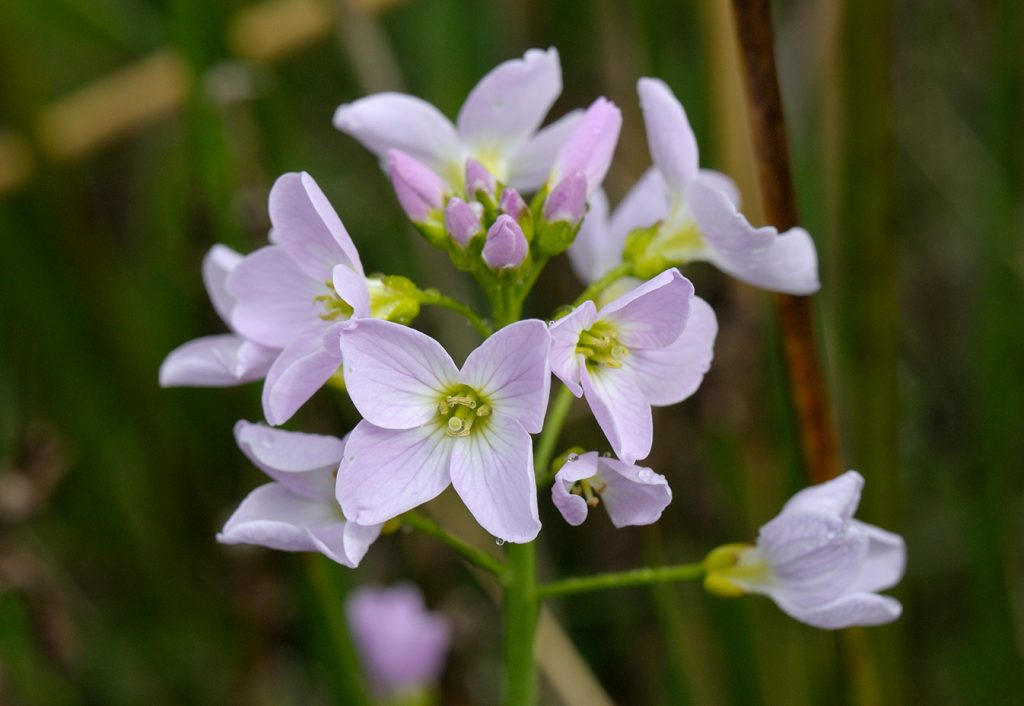
Cuckoo Flower – Cardamine pratensis, Merkinch (photograph)
Named for coming into flower at the same time as the return of the bird in spring and with studies showing that in most years the coincidence of the two is extremely close, one or two days difference at most, this suggests that the actual time each year is affected by the same factors for both the bird and the plant. The Cuckoo Flower (or Cuckooflower) has been used in the past to treat various conditions including fever and scurvy, the leaves have a genuinely high vitamin C content. It has also been used for asthma, skin infections and digestive problems. An alternative name in Scotland is ‘Carsons’ because it is frequently found on marshy ground, ‘carse’.
Throughout Europe, there is a general agreement in lore that picking Cuckoo Flowers and bringing them into a house is wrong and a bad idea. Encapsulated in a name in England, ‘Pick-folly’, and associated with general bad luck, the consequences more specifically are said to be anything from precipitating thunderstorms to raising the chances of snakebite, especially Adders. It can be speculated that there could be something in this in that the Adder and the flower can occur in the same places and in spring, Adders would be more sluggish and slower to get out of the way of someone approaching, their normal response, raising your chance of being bitten if you reached down to take the flower.
Blue Tit
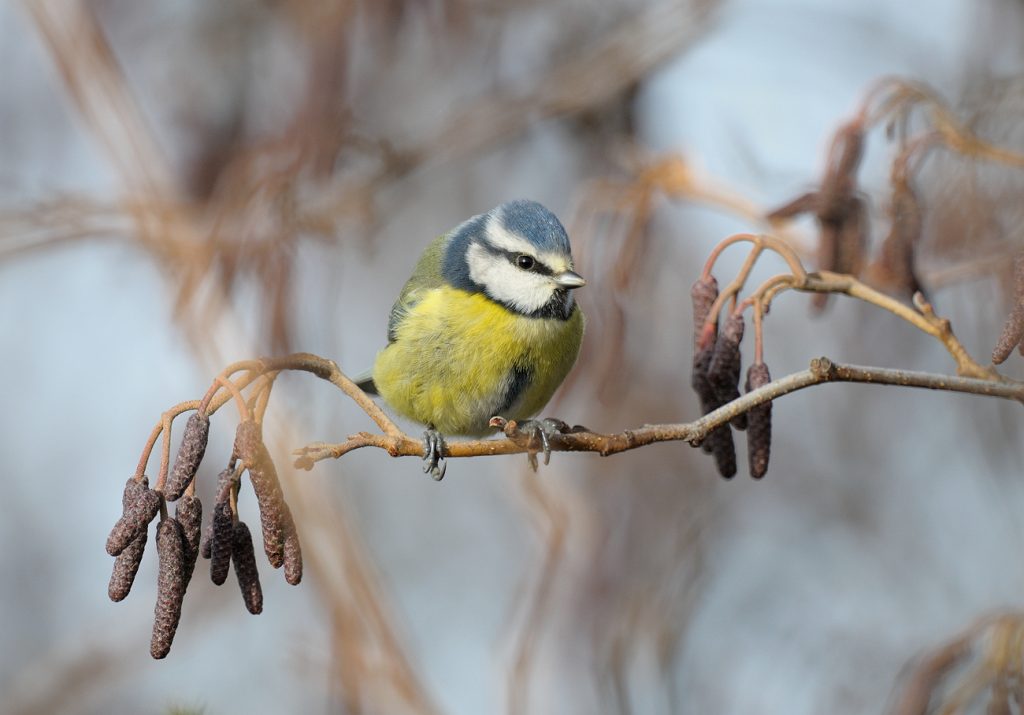
Blue Tit – Parus caeruleus, Merkinch (photograph)
Also called the Blue Bonnet or Blue Cap in Scotland, the Blue Tit is most successful when nesting in or close to significant numbers of trees. This is since the chicks need a large scale supply of caterpillars, which is a real challenge for the parents to supply. One observational study recorded a pair of Blue Tits providing 1,500 meals a day to their brood of chicks. The adult birds feed on a variety of seeds and insects throughout the year and are regular visitors at garden feeders where nuts are added to their diet. From the 1920’s Blue Tits also gave away something of how they learn. They became known for pecking through the foil caps on milk bottles left in doorstep deliveries to take the cream at the top. First reported in Southampton in 1921, the behaviour became established in South East and North East England, being widespread by the 1940’s and continuing until milk was not sold that way any more but failed to materialise on any scale in other parts of Britain, including Scotland. The conclusion was that a discovery by one bird was observed and repeated by others but stayed within a population who had contact with each other.
Because of its obvious intelligence, adaptability and generally extrovert and positive character, not surprisingly in Europe the Blue Tit is almost universally seen as positive and a symbol of happiness, resilience and hope, especially in adverse times, so there have been many periods in history when they have been needed, even or especially now.
Day 15
Eurasian Sparrowhawk
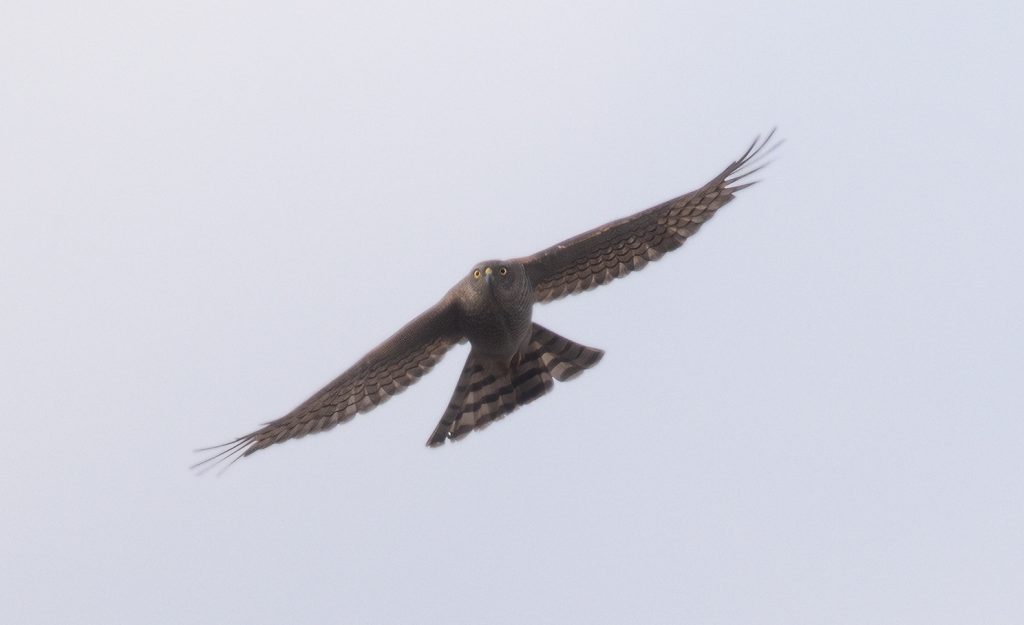
Eurasian Sparrowhawk – Accipter nisus, over Merkinch Reserve, Inverness (photograph)
The Sparrowhawk is a hunter of small birds, often along the edges of forests or smaller groups of trees, they are also now seen hunting in some suburban areas with gardens. Although they are very effective hunters of small and songbirds, when Sparrowhawk numbers declined sharply in the 1950’s and 1960’s through persecution and pesticide pollution, there was no parallel rise in small bird populations, suggesting that, however good they are at what they do, Sparrowhawk predation on small birds is sustainable.
The cultural beliefs round Sparrowhawks are founded in its behaviour. It is no surprise that it is linked to the Celtic Goddess of battle, Morrigan, or more generally to the warrior spirit given its tenacity and fierce actions despite a relatively small size. They have also been thought to command the wind. Aboriginal stories from Western Australia have the Sparrowhawk joining forces with a Pigeon to act as a lookout to steal fire from the moon and bring it earth for people to nurture and use. These stories refer to the Australian relative of the birds seen in Europe, the Collard Sparrowhawk. An ornithological connection is that there is some similarity in the markings of Sparrowhawks and Cuckoos with the suggestion that it benefits the Cuckoo to be mis identified as the hawk, further increasing its intimidation when it arrives at a nest of a smaller bird. This possibly functional similarity was developed into a belief in parts of England that the Cuckoo turned into a Sparrowhawk in winter, explaining the Cuckoos absence at a time when migration was not fully understood.
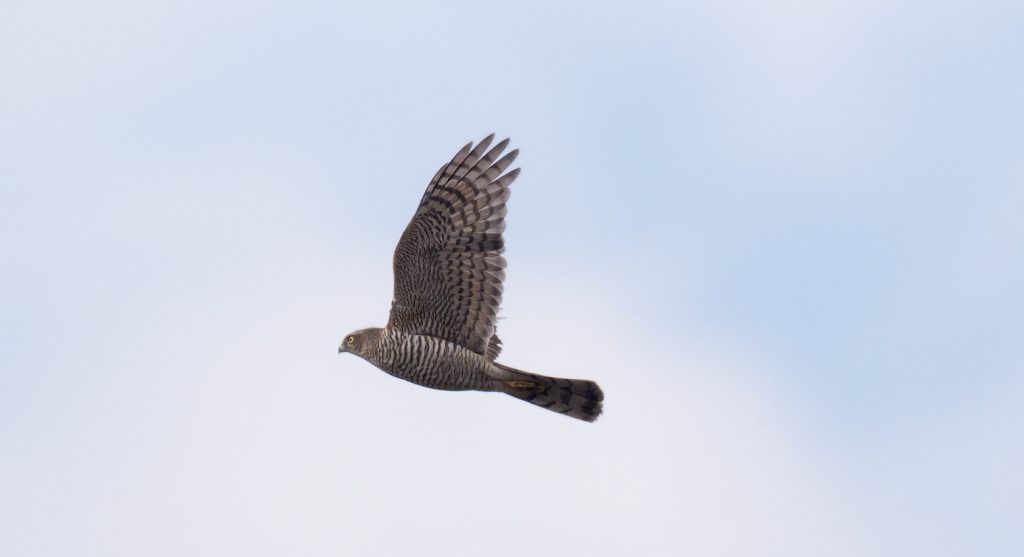
Eurasian Sparrowhawk – Accipter nisus, over Merkinch Reserve, Inverness (photograph)
Green-veined White Butterfly
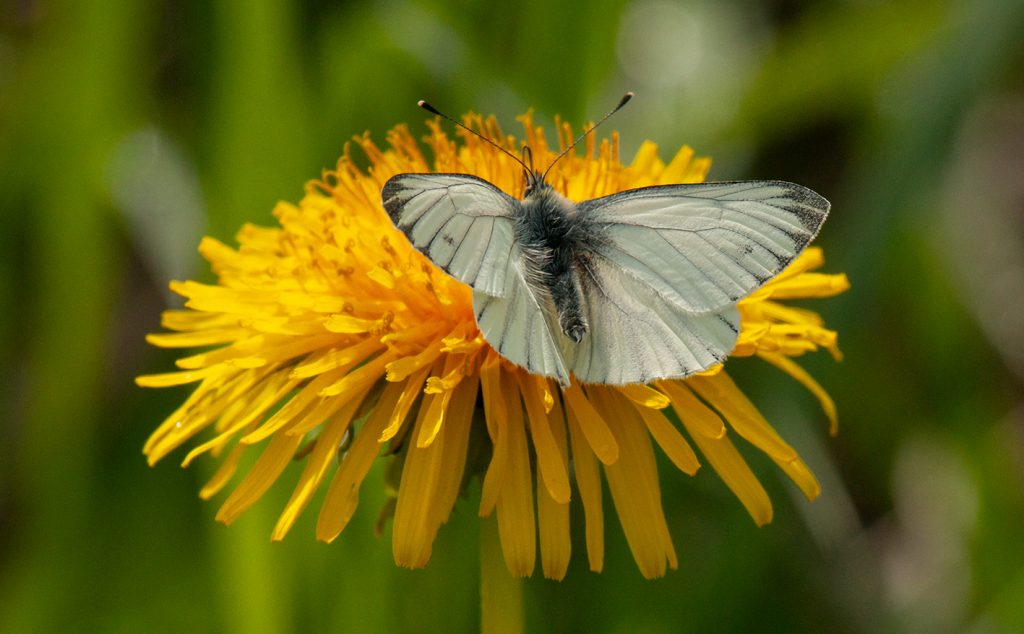
Green-veined White Butterfly – Pieris napi, Merkinch (photograph)
The Green-veined White is a common butterfly found throughout the British Isles except perhaps it isn’t. Sometimes referred to as the Green-veined White group, this is because it has been proposed that there are separate sub species, including a Scottish form. The differences, apart from tendencies in the appearance of the usual markings, come down to scent scales (androconial scales) on the wings, which are not visible to the naked eye, and whether the proposed sub species are separate for breeding, a requirement if they are to be recognised. The question has not been definitively answered. There is folklore stating that seeing a white butterfly early in summer means the season will be rainy. Green-veined Whites are a very resilient and successful species, but their numbers are hit by long dry summers. Exactly at what stage of the year this process begins is not clear, so it is even possible that higher numbers to be seen would be present early in a wetter year.
Moorhen
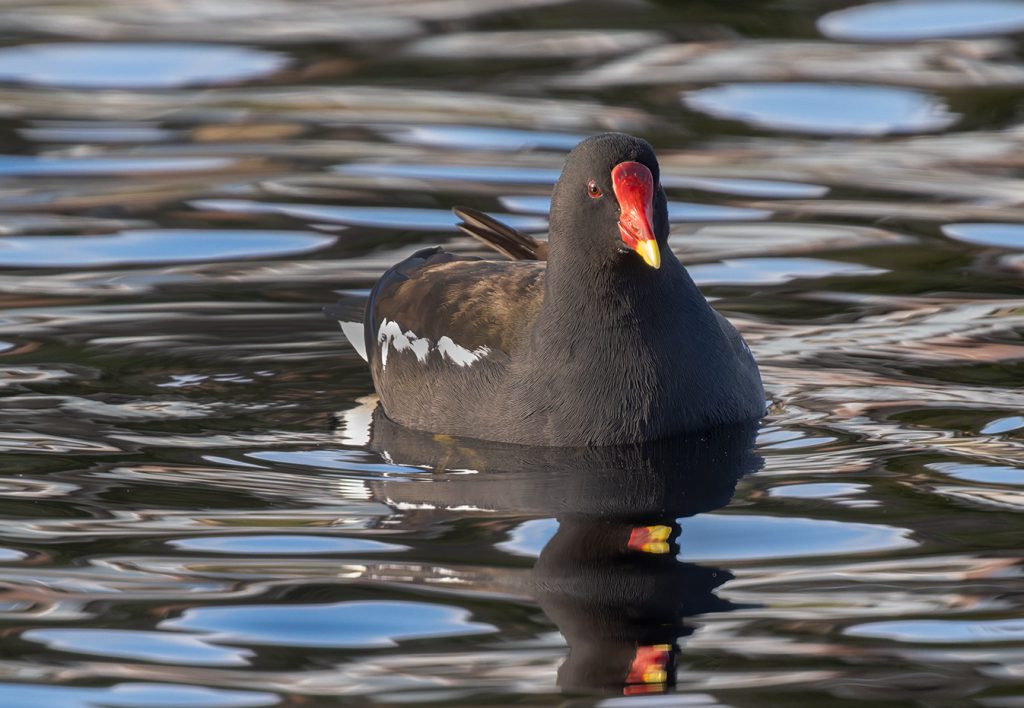
Moorhen – Gallinula chloropus, Caledonian Canal, Clachnaharry, Inverness (photograph)
Definitely associated with wetland, Moorhens are more a bird of marsh conditions and small ponds with cover rather than being seen out on large areas of open water, although they may well be at their banks and edges. As a result, they are often present in larger numbers than is realised. The name ‘Moorhen’ is based on the older use of the term ‘moor’ meaning marsh rather than the modern application of high open land, so they are actually being called ‘Marsh Hens’ which is very appropriate. Marsh Hen has actually been an alternative name in use in Scotland. It is not common in the Highlands but is well represented elsewhere. They are known as a slightly wary and nervous species, readily disappearing into cover or diving underwater for up to a minute if anxious. When they dive, they can even hold on to weeds to keep themselves submerged.
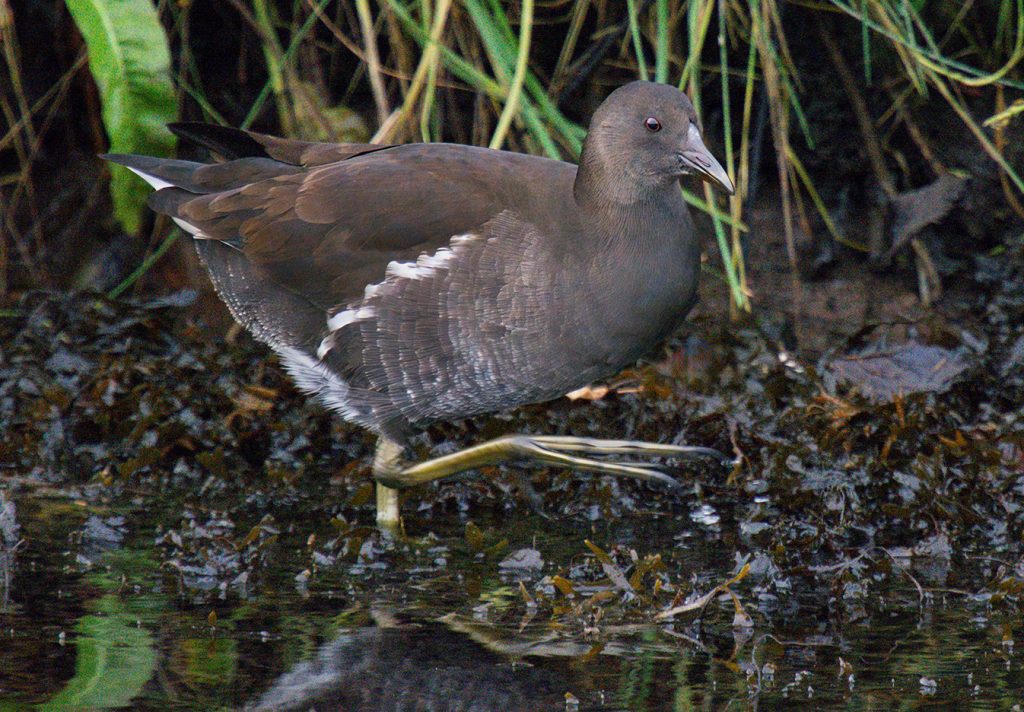
Juvenile Moorhen – Gallinula chloropus, Merkinch (photograph)
In Hawaii, Moorhens are thought to have brought fire to people which is why their forehead is red, they stole fire from the God Maui and were branded on the forehead in retribution. The Hawaiian species, known as the Alae Uula or the Hawaiian Common Gallinule is a very close relative to the European birds and has very similar markings. The Common Gallinule, was only recognised as a separate species to the Moorhens of Scotland and Europe in 2011. The hidden shy behaviour of Moorhens has also lead to them to be linked to water spirits.
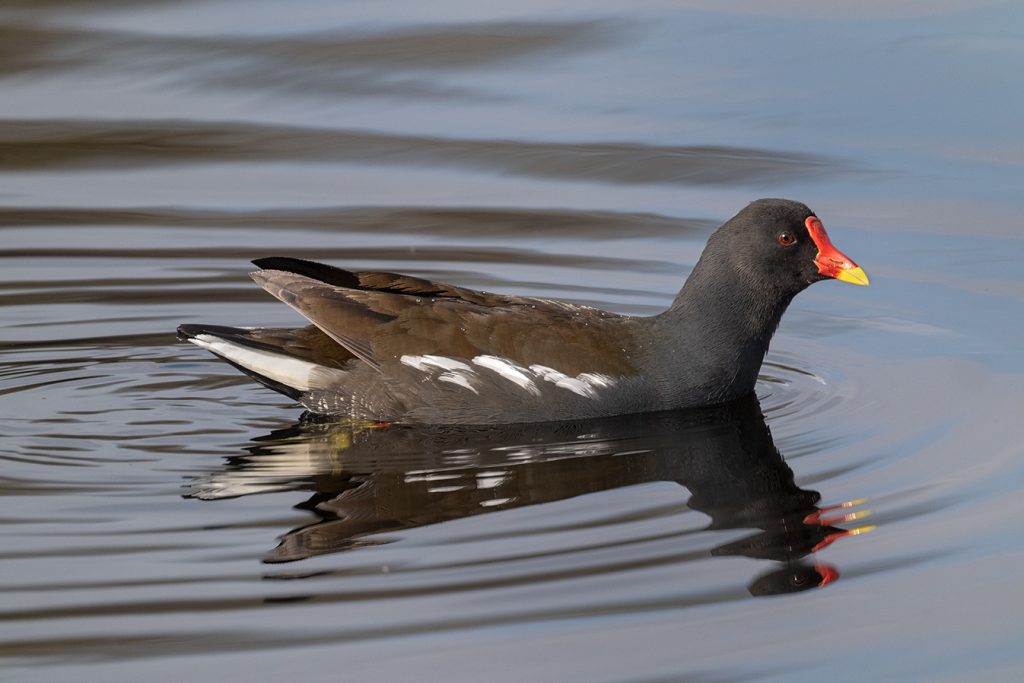
Moorhen – Gallinula chloropus, Caledonian Canal, Clachnaharry, Inverness (photograph)
Day 14
Eurasian Bullfinch
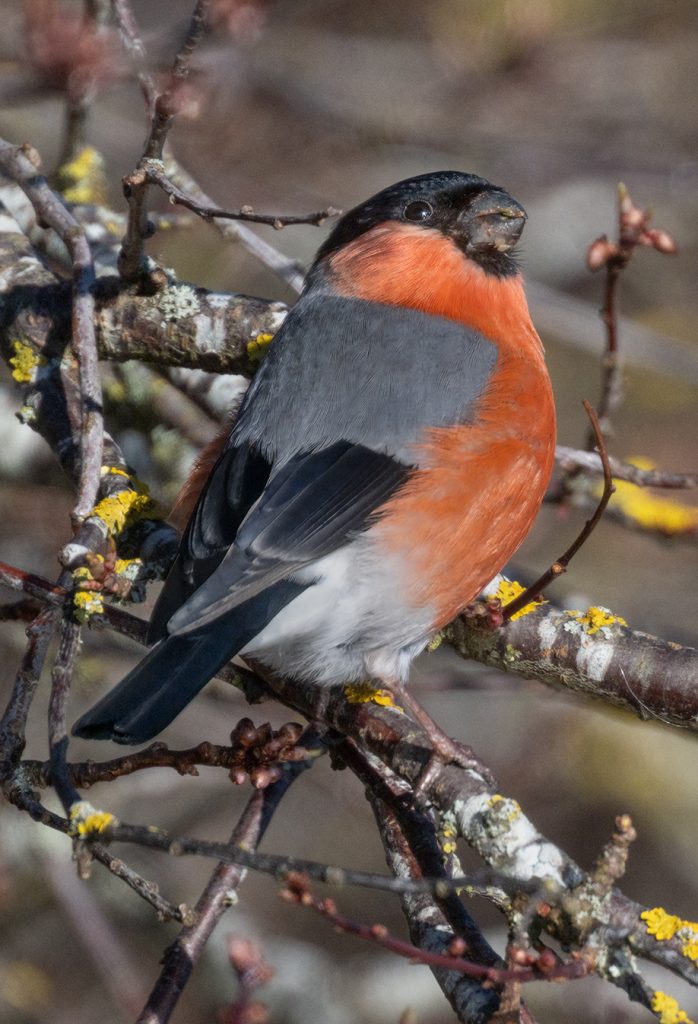
Male Eurasian Bullfinch – Pyrrhula pyrrhula, Merkinch (photograph)
Resident and in Scotland at the Northern edge of its range in Europe, feeding on soft buds and shoots more than seeds, and known for foraging in pairs or family groups it is, despite its bright colours, often overlooked due to its shy behaviour and tendency to keep out of sight in foliage. Their Gaelic name, Deargan-coille, which translates as ‘Red stain of the woods’, reflects this. Their consumption of buds has meant them being regarded as a pest in fruit growing areas with at times significant persecution. It has however been shown that a pear tree for example, can loose half or more of its buds without affecting the final crop of fruit.
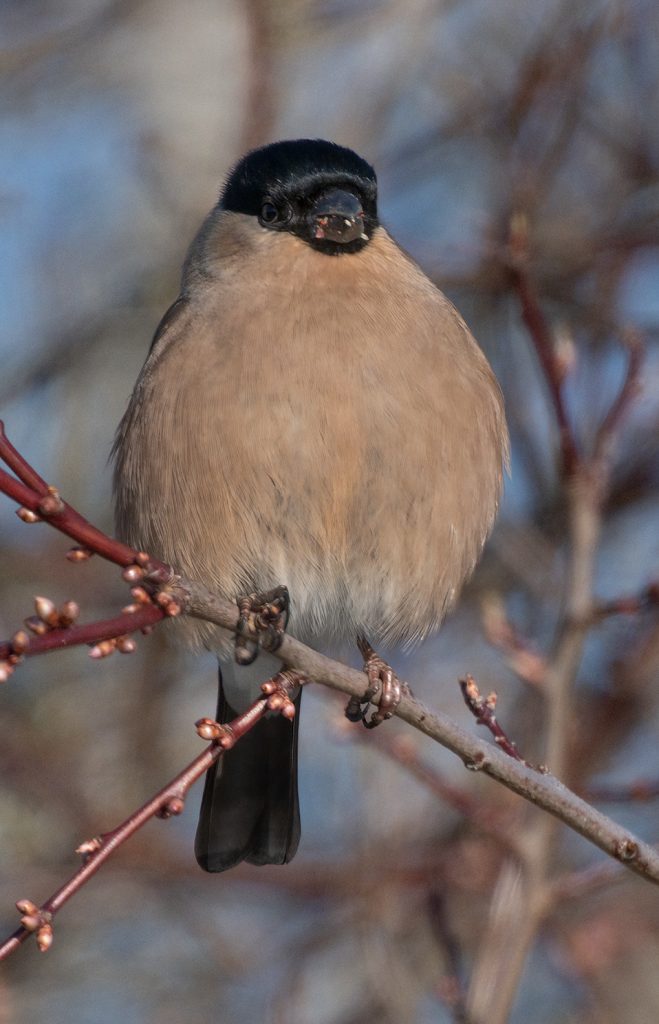
Female Eurasian Bullfinch – Pyrrhula pyrrhula, Merkinch (photograph)
Hedge Bindweed
Widely distributed especially around the coasts of Scotland, the Hedge Bindweed is an indigenous plant but which may have become established over much larger areas with the coming of the railways by using the tracks as corridors to colonise and spread rapidly. Railway lines provide unshaded and often disturbed environments which are ideal for bindweed and actual root fragments, which are very persistent, are carried by the trains themselves.
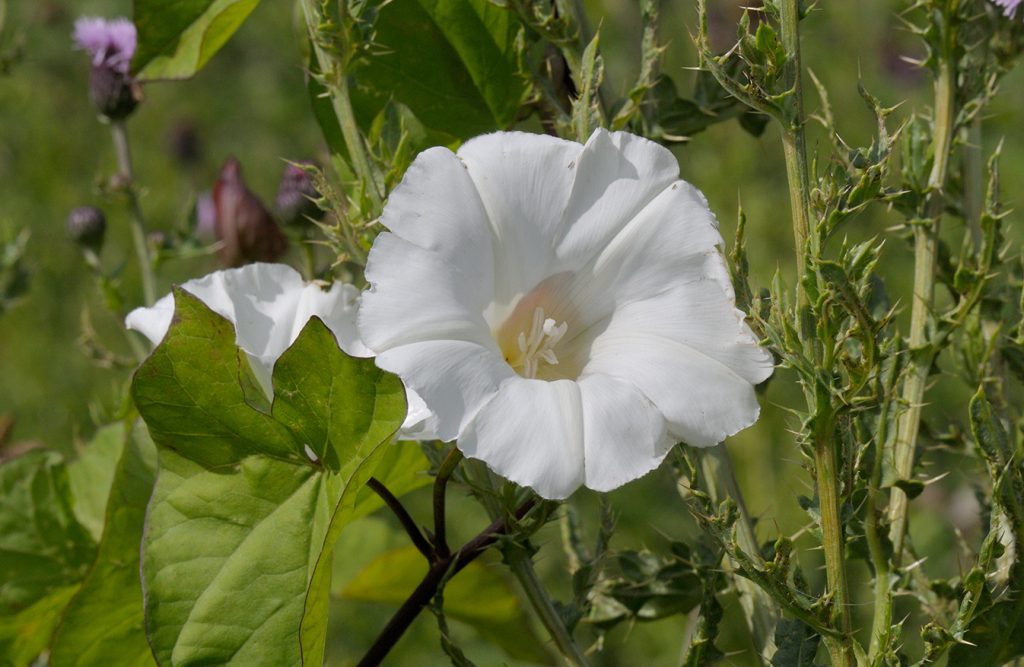
Hedge Bindweed – Calystegia sepium, Merkinch (photograph)
To plants and in the garden, bindweeds are a significant problem. Genuinely capable of smothering plants, shrubs and trees and very difficult to eradicate, bindweed is not welcomed in cultivated environments and has been given names like ‘The Tormentor’. It has however had its uses. Extracts from Hedge Bindweed have been given to treat kidney and digestive ailments. The flowers are eaten by Roma communities in Spain and the stalks have a high content of starch and sugars and are genuinely nutritious. The plant stems have even been used as emergency string.
So where does this leave Hedge Bindweed overall? Not very positively. It is linked to darker forces in magic and binding and is less trusted because it grows counter clockwise – ‘widdershins’. In Scotland, there was a belief that if a young woman picked the flower her boyfriend would die, a connection it has been suggested partly based on the very rapid wilting of bindweed flowers if they are plucked. Bindweed was also not trusted because the flowers open at dawn and close at dusk, the times of transition from dark to light and earlier and later than most flowers.
Mallard
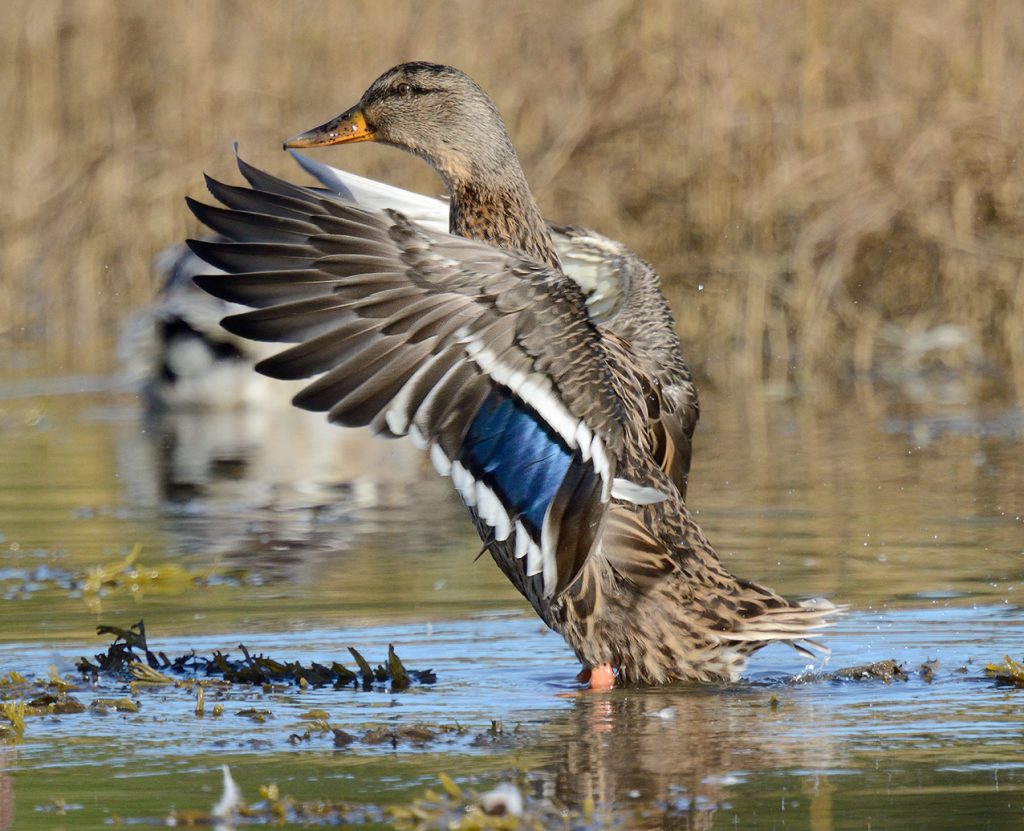
Female Mallard – Anas platyrhynchos, Merkinch (photograph)
One of the most widespread and established wild ducks in the UK and the ancestor of domestic ducks generally. Their blood was referred to in ancient Greece by Pliny as a remedy for poison and witchcraft. In Christian mythology, ducks were credited as having helped Christ by concealing him when pursued. As a result, they were given three joys, the freedom of land, air and water and with this range, even celebrated thunder, resulting in the Gaelic saying which translates as ‘Thou art like a duck expectant of thunder’.
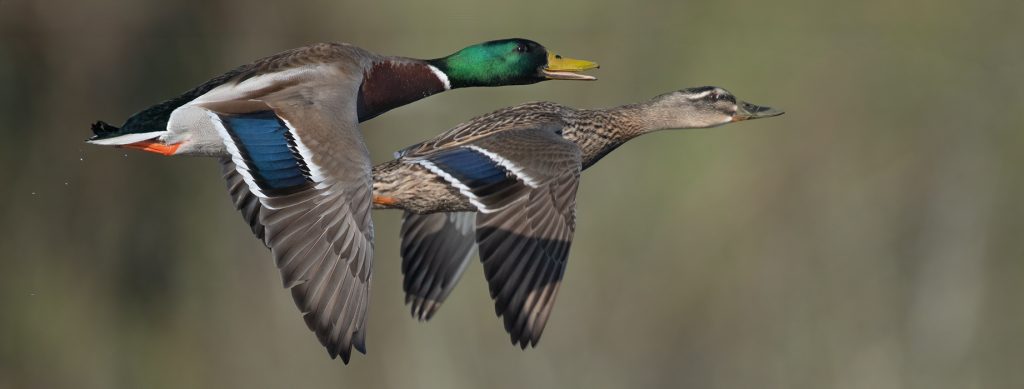
Mallard – Anas platyrhynchos, flying over The Caledonian Canal, Clachnaharry, Inverness (photograph)
Celtic tradition places the Mallard as connecting spiritual worlds and using water as the portal to move between them. Their association is with the goddess Brighid who governs healing, fertility, motherhood, passion and fire as well as serenity and water. A broad portfolio for a goddess and broad connections for the Mallard.
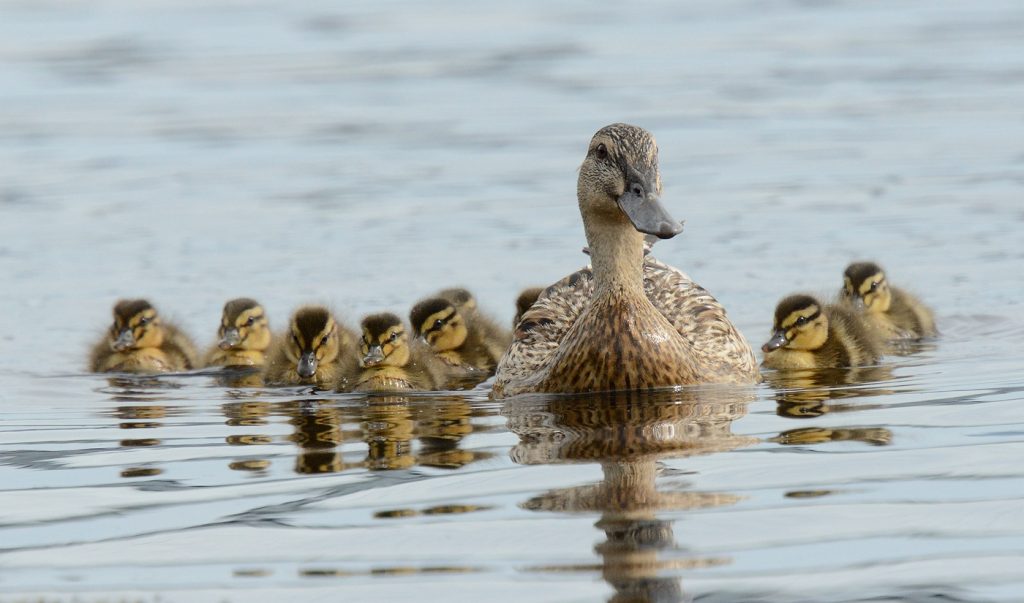
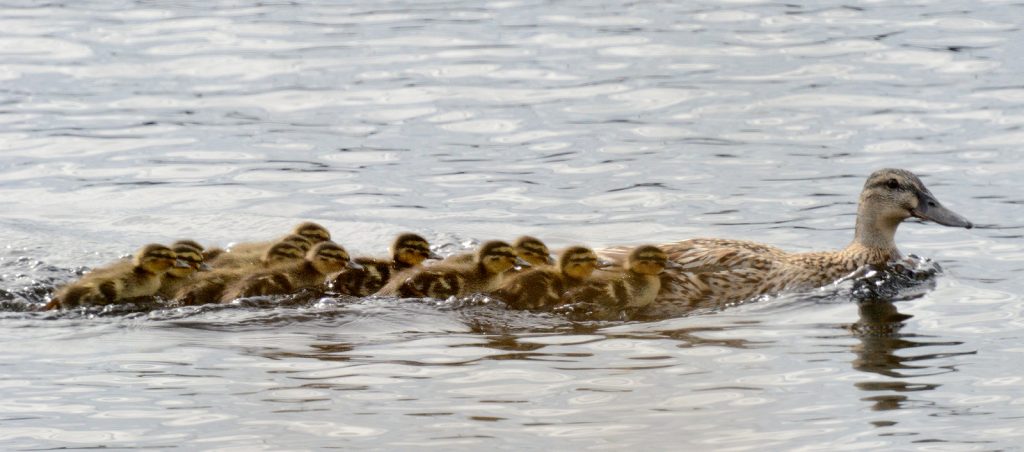
Female Mallard – Anas platyrhynchos, with ducklings. Carnac Point, Merkinch (photographs)
Day 13
Eurasian Wigeon
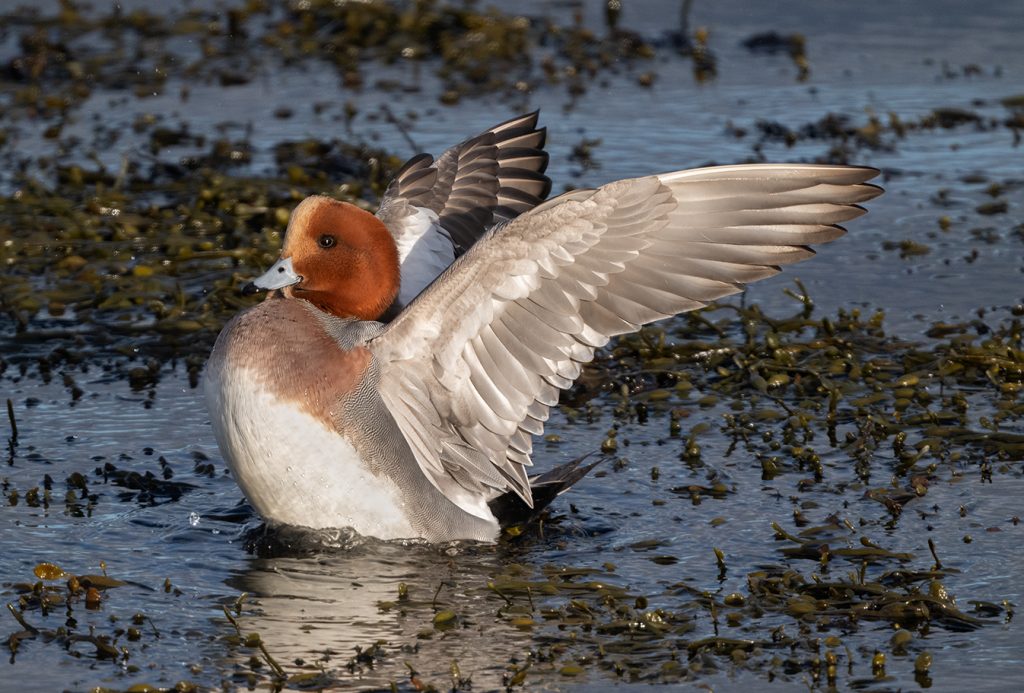
Eurasian Wigeon – Anas Penelope, Merkinch (photograph)
Wigeon have been identified from traces back to the mid Pleistocene, about 1.5 million years ago. They have been recorded as first breeding in Scotland in 1834 in Sutherland. Now they are more concentrated on the North East, with a small number of breeding residents, and there is also a winter migration arrival, which is widely dispersed when the British population is estimated to be half of the total for Western Europe.There is also the very closely related counterpart of the Eurasian Wigeon, the American Wigeon, which is restricted in its range to North and Central America. A few occasionally turn up in Europe, mostly in autumn or winter, lost or blown off course is not certain, probably a mixture of both. A notable event for birdwatchers and scientists, an American Wigeon was seen in Merkinch in November 2016.
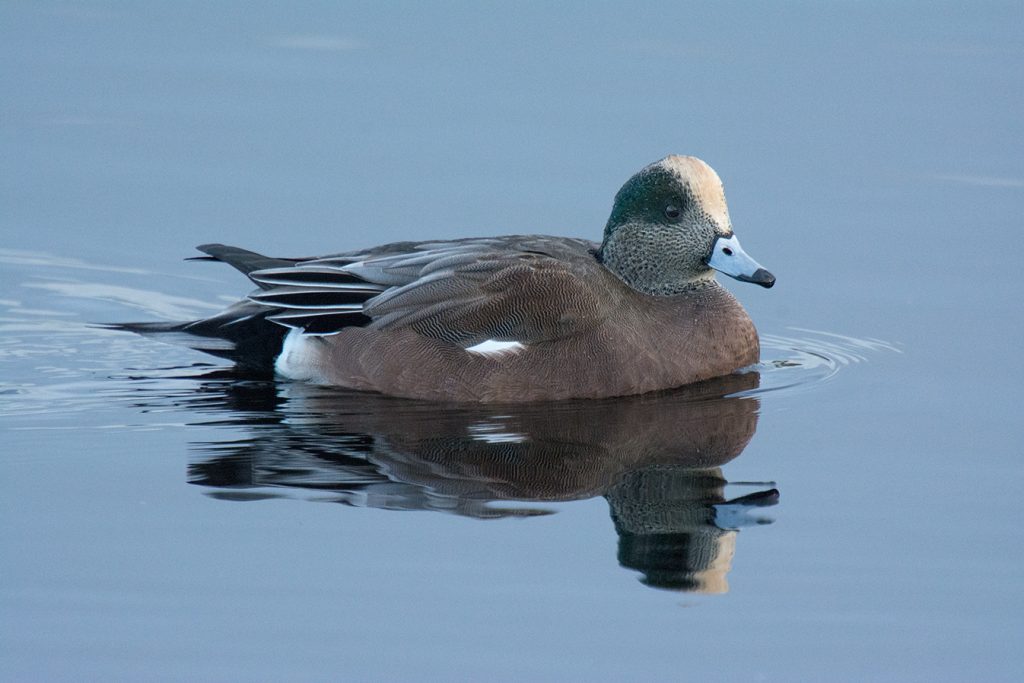
American Wigeon – Anas americana, Caledonian Canal, Clachnaharry, 2016 (photograph)
In both Europe and America, the whistling sound of the calls of Wigeon has made them regarded as warnings of approaching harsh winter weather. Given that the birds migrate to escape the worst of the cold, this would make sense, colder weather moves in, the birds migrate, their calls are heard where they have arrived, the colder weather moves in after them although mostly it will not be as severe as where they had left. The whistling call has also been regarded as a warning of danger to other ducks but possibly of use to people as well.
An Sgòr Gaoithe

Merkinch Reserve and Beauly Firth (photograph)
Nam shuidh nam aonar
gun guth air a’ ghaoith,
bha mi coimhead a null
cun Sgòr Gaoithe.
`S thàinig e thugam
gur dòcha gun robh
an Sgòr car aonaranach
gun guth air a’ ghaoith
I was sitting alone,
on a windless day,
looking across
to the Windy Ridge.
And it came to me
that maybe
there Ridge was a mite lonely
on a windless day
An Sgòr Gaoithe is the original Gaelic name for what is now called Sgorguie by Invernesians. However, this nomenclature is not a translation to English of the original, but is merely a degradation of the original Gaelic. The correct translation is The Windy Ridge.
I wrote this poem while sitting on a bench on the edge of the Merkinch Nature Reserve
Keith John Scammell
Soapwort
Soapwort – saponaria officinalis, Merkinch (photograph)
Not strictly a native anywhere in Britain, Soapwort originally comes from the Middle East. Exactly how or when it arrived is not recorded but it was a long time ago, so it is listed as an ancient introduction. Not widely distributed in Scotland, Inverness and the surrounding area is one of the places it is found. So, another wildflower with a quaint, eccentric name, except it isn’t. Soapwort contains saponins, now recognised to have a small potential to be toxic, so health and safety has advanced, it would not be widely used now without precautions and careful supervision in preparations, but if you rub the leaves you get a slippery froth and if you boil them a green lather. These genuinely act as a soap removing grease and dirt and have been used for centuries to clean clothes, animals, including sheep and for people to wash with. Even if you do guard against any small risk of toxicity, you would think it had no place in the modern era. Again, this would be wrong, Soapwort is much more gentle than modern soaps and has been used by The National Trust to wash ancient fabrics, including curtains, by the Victoria and Albert Museum on old cloth in their collections, by modern exclusive silk designers and producers and in the care of medieval tapestries. In the Romanian village of Șieu-Odorhei, it was adopted as a soap replacement for those with dry skin conditions because it is more gentle.
Day 12
Roe Deer
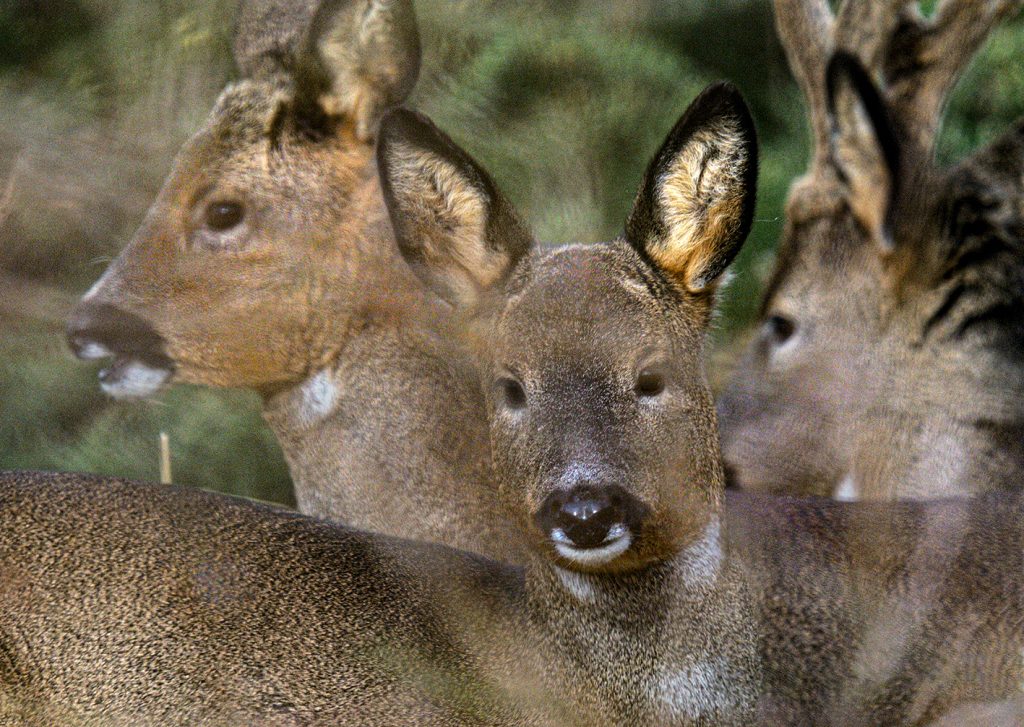
Roe Deer – Capreolus capreolus, Merkinch Nature Reserve (photograph)
In ancient Scottish beliefs, Roe Deer and less frequently, Red Deer are sometimes referred to as the cattle of the faeries and cared for by them. It was also thought that they could be enchanted, with some women capable of transformation into hinds. This supernatural feel to Roe Deer has been enhanced by their behaviour in that usually only single individuals or pairs are seen in the woods as opposed to the larger numbers encountered with Red Deer which also favour more open ground and so are not regarded as being as elusive. In small numbers, Roe Deer assist in the growth and development of woodland and forest, if too numerous they become a real problem for the trees. Hunted almost to extinction in Britain by 1800. they have now recovered to the point where their numbers are causing pressures on the habitat. The extinction of their natural predators, Lynx and Wolves, has meant that active management of Roe Deer numbers is now used in population hotspots where there are severe issues.
South Kessock Ferry Disaster Memorial
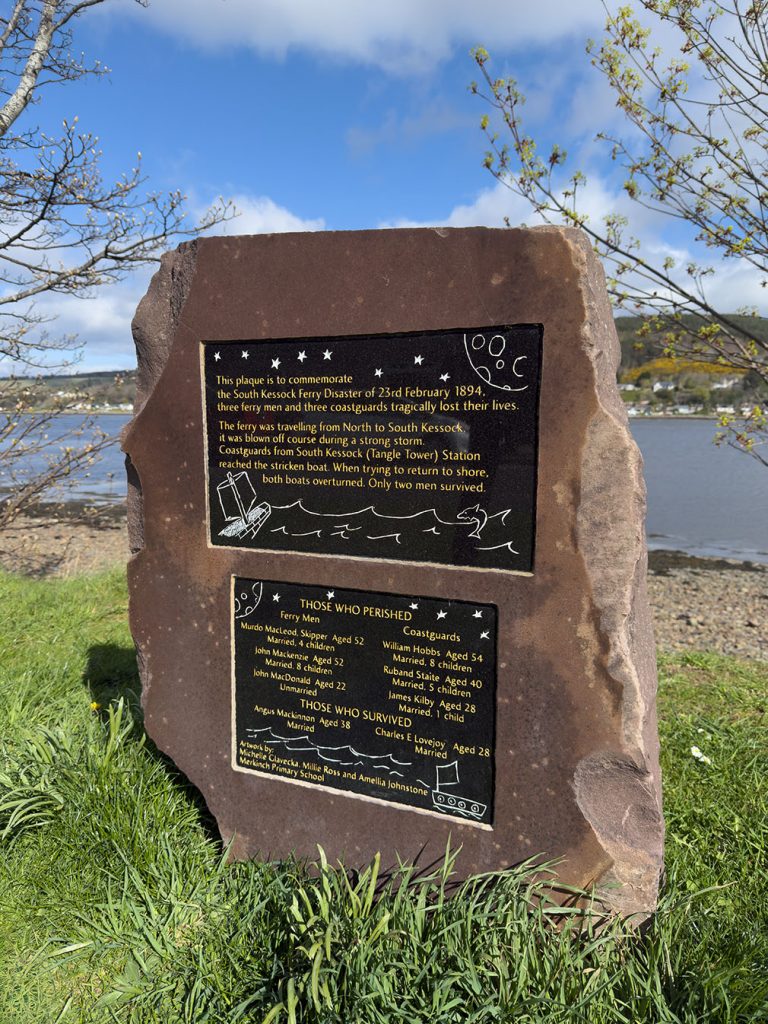
(Photograph)
Snowdrop
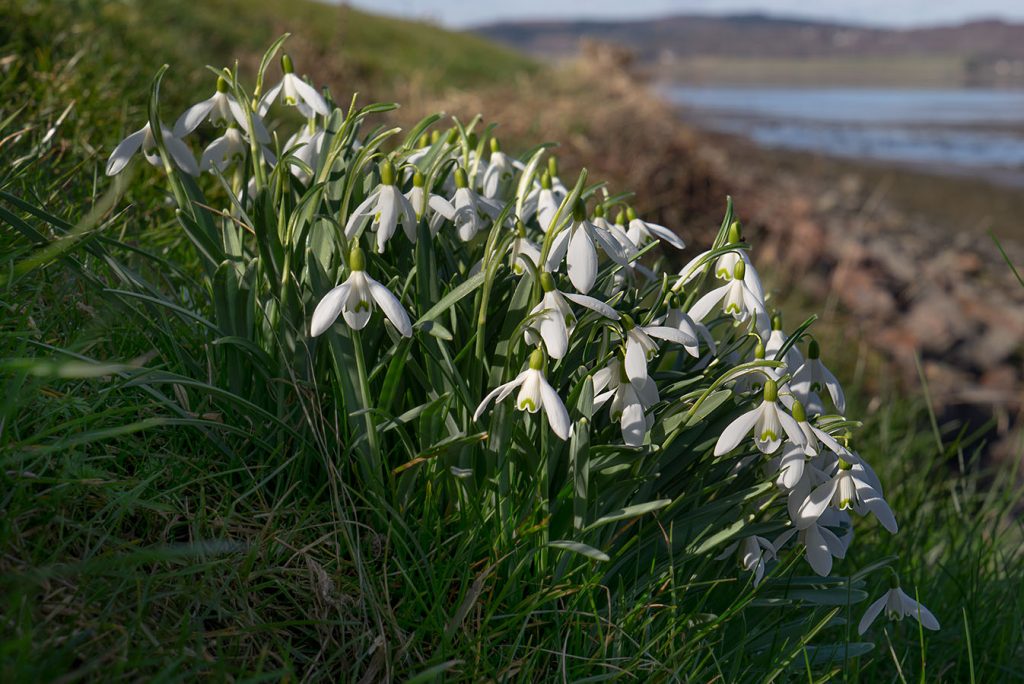
Snowdrop – Galanthus nivalis, Clachnaharry (photograph)
The conventional history is that the Snowdrop is an introduced species brought by monks from Europe in the 1st Century AD. It then remained in cultivated settings till 1770 after which it became established in the wild. Its British distribution, however, at least raises questions about whether it became established much earlier in the wild and was possibly a native species, albeit with a very limited range. The meanings it is given can be confusing. Bringing a single flower into a house is bad since it resembles a shroud but a bunch of Snowdrops is good, unless you keep chickens because their egg laying will be interrupted. Sometimes you just can’t win.
Day 11
Red Kite
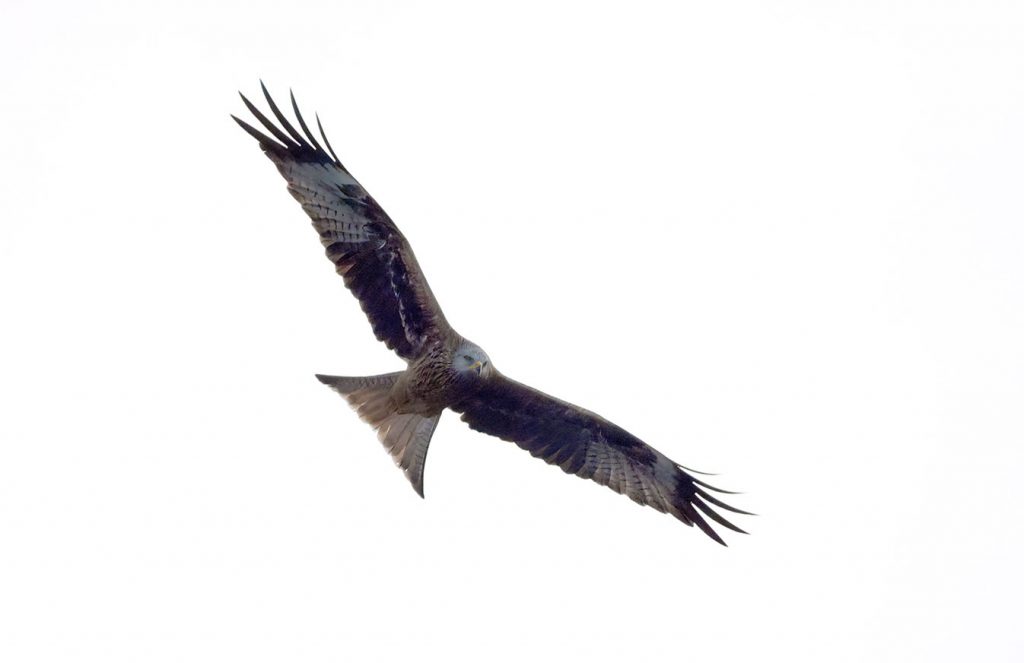
Red Kite – Milvus milvus over Merkinch reserve (photograph)
The Red Kite is a bird of prey that is almost exclusively a scavenger but does sometimes hunt smaller animals with their upper limit being around the size of rabbits. It is large with a wingspan of up to 6 feet, faithful in that they mate for life and the pair return to the same nest each year and, in Scotland and England, for a time extinct, the last birds known being in the 1800’s. Their decline was mostly through persecution by people, they were not respected, cared for or popular. They had been in medieval times when they were valued for their role in clearing waste from the growing cities, so much so that they were protected by Royal Charter. Their fortunes changed in Scotland in1457 when King James II listed them as vermin to be killed on sight, protection continued for longer in England. Improving sanitation and rubbish handling in cities made them less useful and by Victorian times sporting estates, egg collectors and a demand for stuffed birds to display finally sealed the Red Kite’s fate.
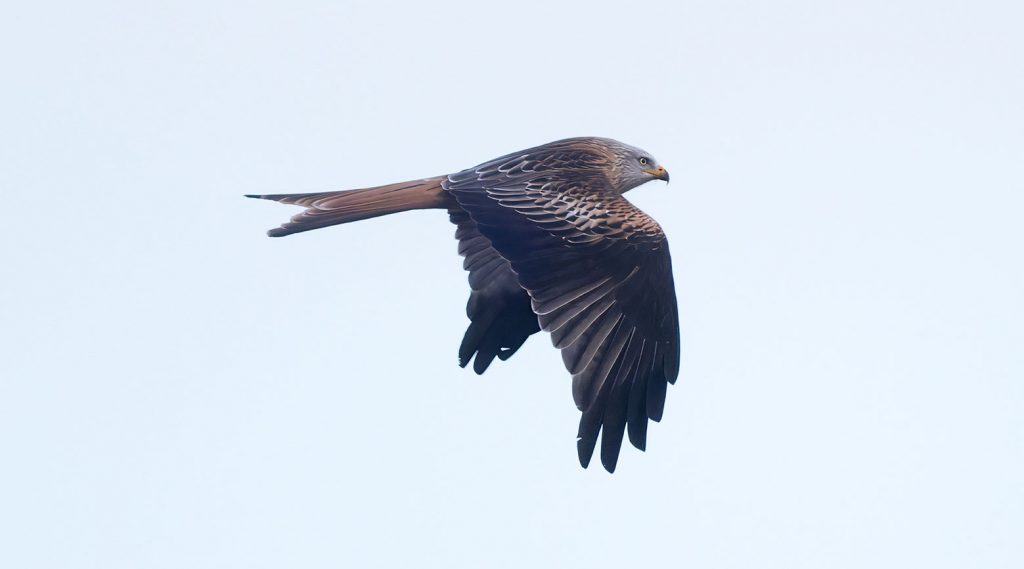
Red Kite – Milvus milvus over Merkinch reserve (photograph)
Their extinction is recorded as 1871 in England and 1879 in Scotland with the last birds in Inverness-shire. In Britain, the only remaining foothold for the Red Kite was Wales but the numbers there fell to twenty at their lowest. Only conservation efforts, wildlife legislation and reintroduction programmes have brought them back to Scotland, including on the Black Isle, starting in 1989 with chicks from Wales and Europe. Although not resident on the reserve, for a consummate master of flight like the Red Kite the distance from The Black Isle is easily covered and they are seen occasionally patrolling over Merkinch.
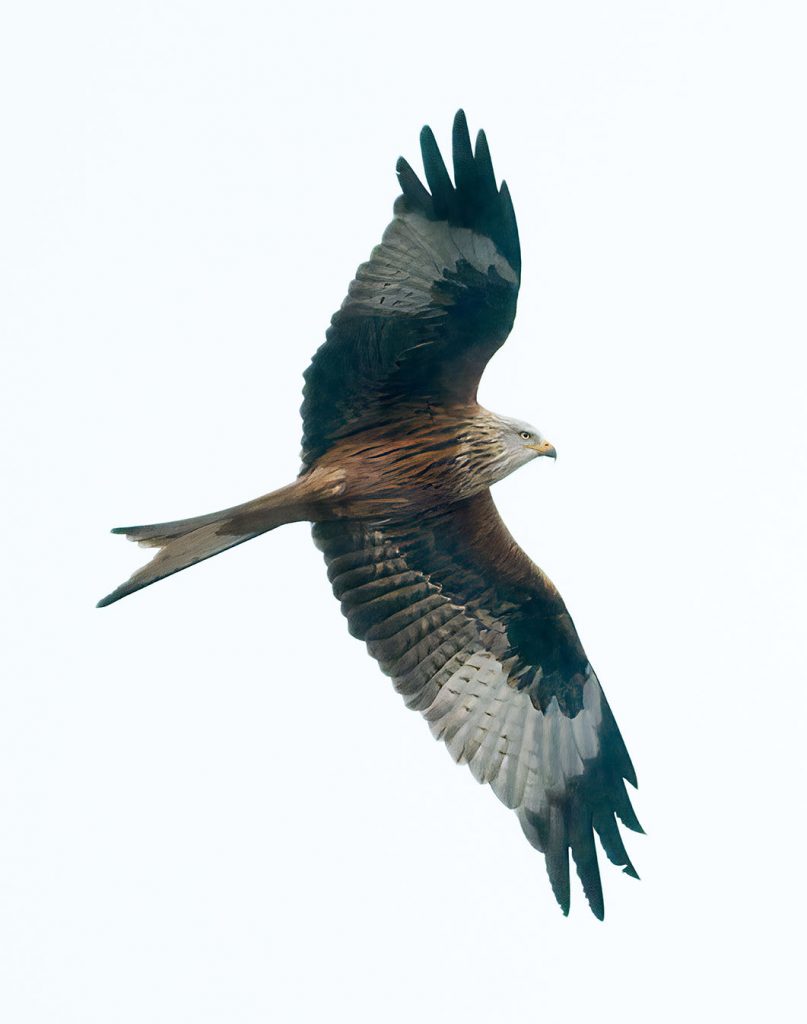
Red Kite – Milvus milvus over Merkinch reserve (photograph)
Pied and White Wagtails
There are two very closely related black, white and grey types of Wagtail in Scotland, the Pied and the White. The Pied Wagtail only breeds in Britain and is darker, especially in adults on the back which is almost black. The White Wagtail is found across Western Europe but essentially only occurs in Scotland as a migrant in Spring and Autumn with only a very few pairs breeding in Britain each year, most of these are in Scotland. The two types were separated by the rising level of the North Sea after the Ice Age and technically are sub species of the overall species Motacilla alba.
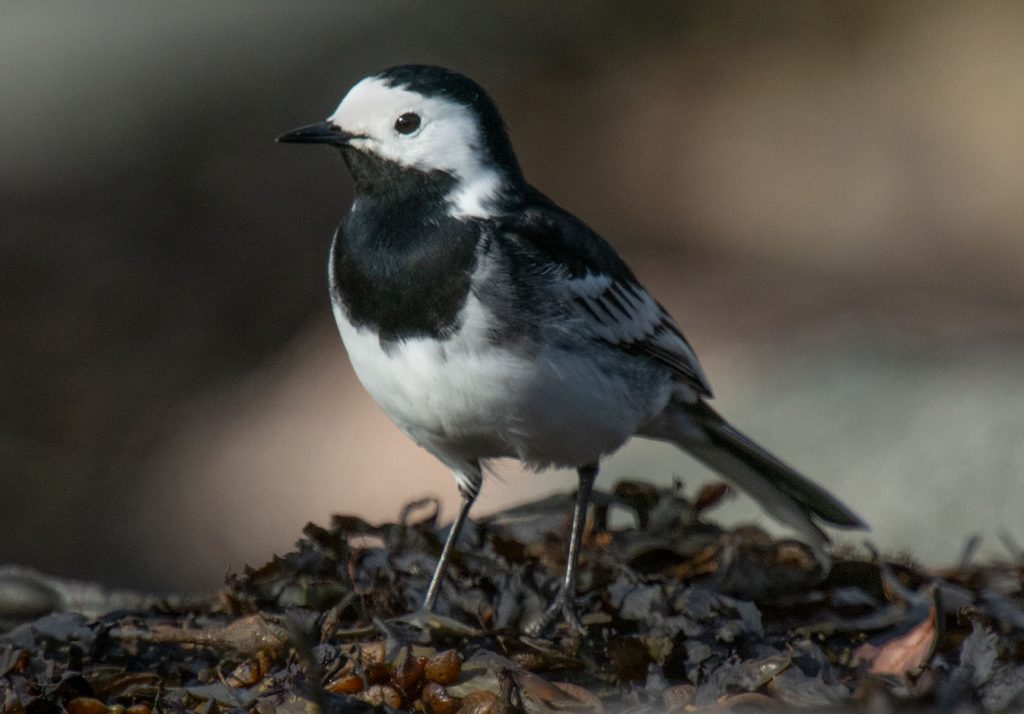
Pied Wagtail – Motacilla alba yarrelli, Merkinch (photograph)
The Pied wagtail is found throughout Scotland and the UK in summer but it is largely absent from the North of Scotland in winter, with Merkinch being an example of the Northern edge of its all-year range. Its arrival as it moves South in the autumn, just when seeds are formed on plants, gave rise to a Scottish alternative name, ‘Seed-lady’. The folklore place of the Pied Wagtail is ambiguous in Britain. It can be seen as bringing harm and has been called ‘The Devil’s Bird’ but can also be viewed as simply a harbinger of a meeting with strangers. On Dartmoor, it was said that no cat would kill a Pied Wagtail suggesting that the bird had supernatural powers to defend itself or, if you think of cats as associated with dark spiritual forces, possibly just an example of professional courtesy. It’s good news bad news for the Wagtails, there is no reason to think they are working for the devil but there is also no reason to believe they are immune to cat predation in Devon.

White wagtail – Motacilla alba alba, Merkinch (photograph)
The White Wagtail when seen on migration has been associated with many of the same stories as the Pied Wagtail. There is also a reference to the White Wagtail as a candidate for the Caladrius of legend, a white bird that could foretell death or absorb the sickness of someone who was ill. It does not seem a very strong candidate from its relatively small size and a plumage that is far from all white as usually described but the connection has been made.
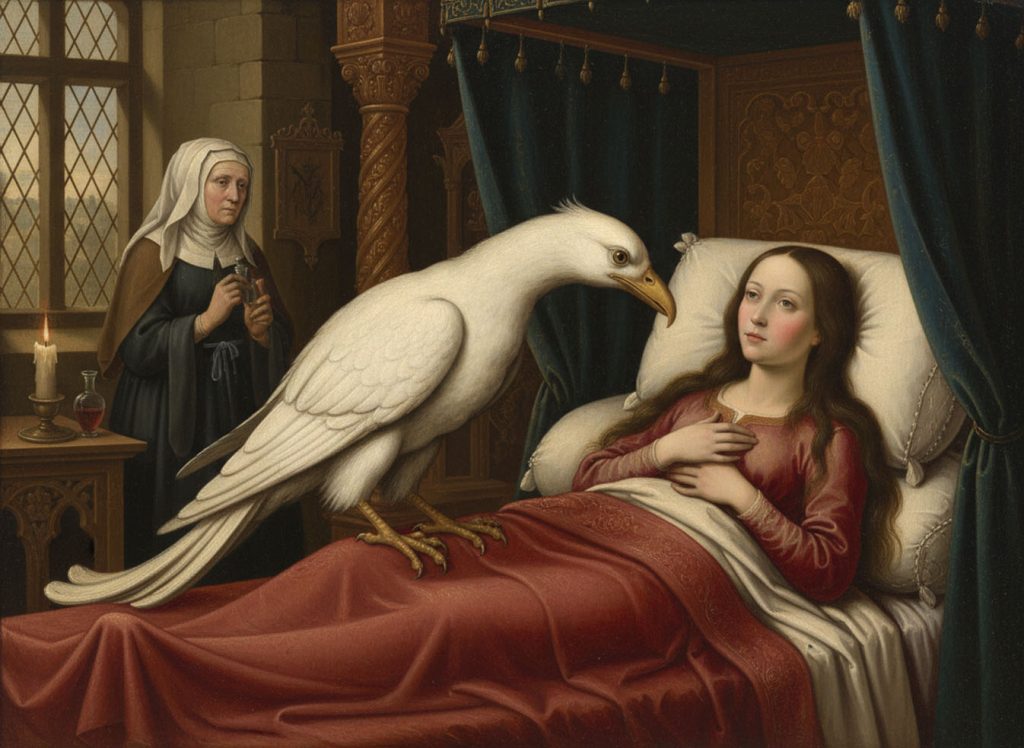
Caladrius at a sickbed, Medieval period (illustration)
Slender Speedwell
Slender Speedwell – Veronica filiformis, Merkinch (photograph)
Not a native plant to Scotland or Britain, the Slender Speedwell was introduced from Turkey as a garden flower in the early 1800’s. It ‘escaped’ from the cultivated settings to become established in the wild especially from the 1920’s onwards. It is a close relative of the truly native species like the Germander Speedwell.
Day 10
Great Cormorant
Great Cormorant – Phalacrocorax carbo, Merkinch (photograph)
Breeding in local settings widely distributed round Scotland’s coasts the Great Cormorant is known for its distinctive way of perching with wings outstretched to dry them or catch warmth from the sun. The Cormorant has a real need to dry its feathers unlike most other birds living in fresh or saltwater habitats its plumage is not waterproof, it really does get wet.
Great Cormorant – Phalacrocorax carbo , drying wings, Merkinch (photographs)
The Cormorant feeds on fish caught underwater with small fish eaten below the surface but larger fish brought up to the surface before being swallowed whole. Seeing this earned the Cormorant the dubious distinction of being a symbol for greed in literature, including Shakespeare, and being identified as a threat to fisheries resulting in persecution. Elizabeth I listed them as vermin in an edict of destruction.
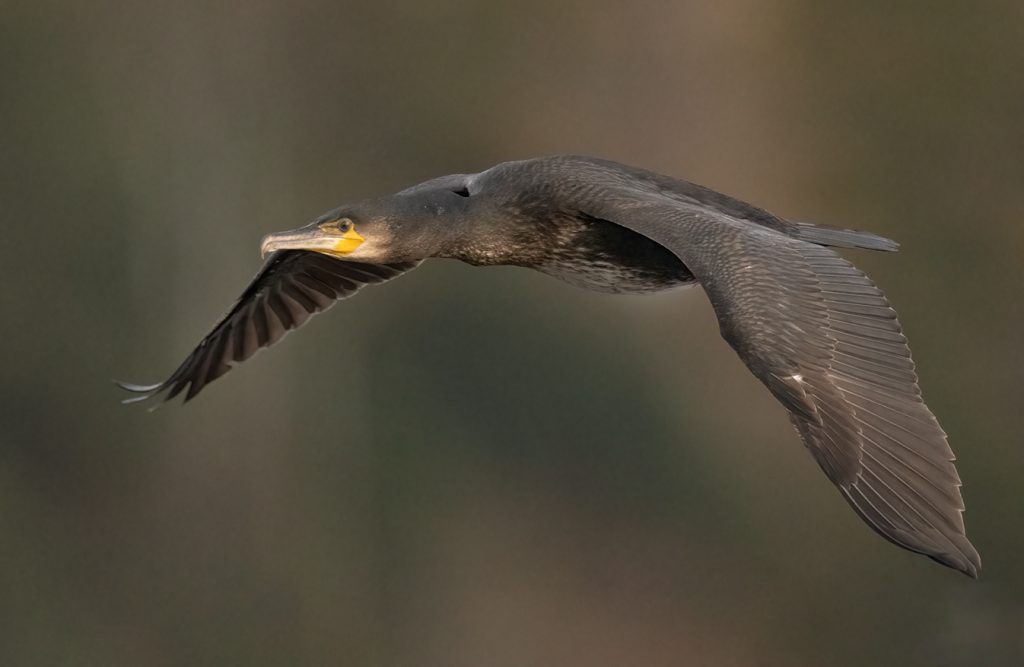
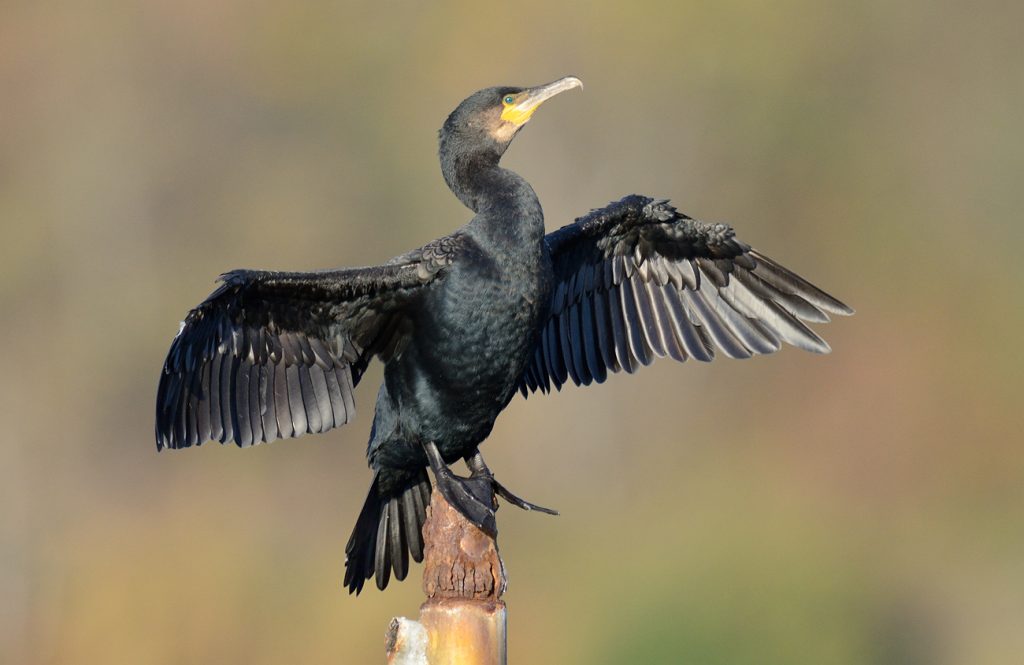
Great Cormorant – Phalacrocorax carbo, Merkinch (photographs)
Their largely black feathers has earned them an association with dark lore and comparisons in this respect with Crows. ‘Sea-crow’ was an alternative name for Cormorants. The term Cormorant itself is thought to arise from Latin ‘corvus’, Raven, or old French ‘corp’, Crow, and ‘marinus’ or ‘marenc’, sea. Even comparing them to crows is a long way short of Milton in Paradise Lost using them as a metaphor for Satan himself. Scottish Cormorants are partly migratory with approximately 10% of birds ringed in Scotland being identified in other countries, including Norway. Whether this started to get away from views like those of Milton is not clear.
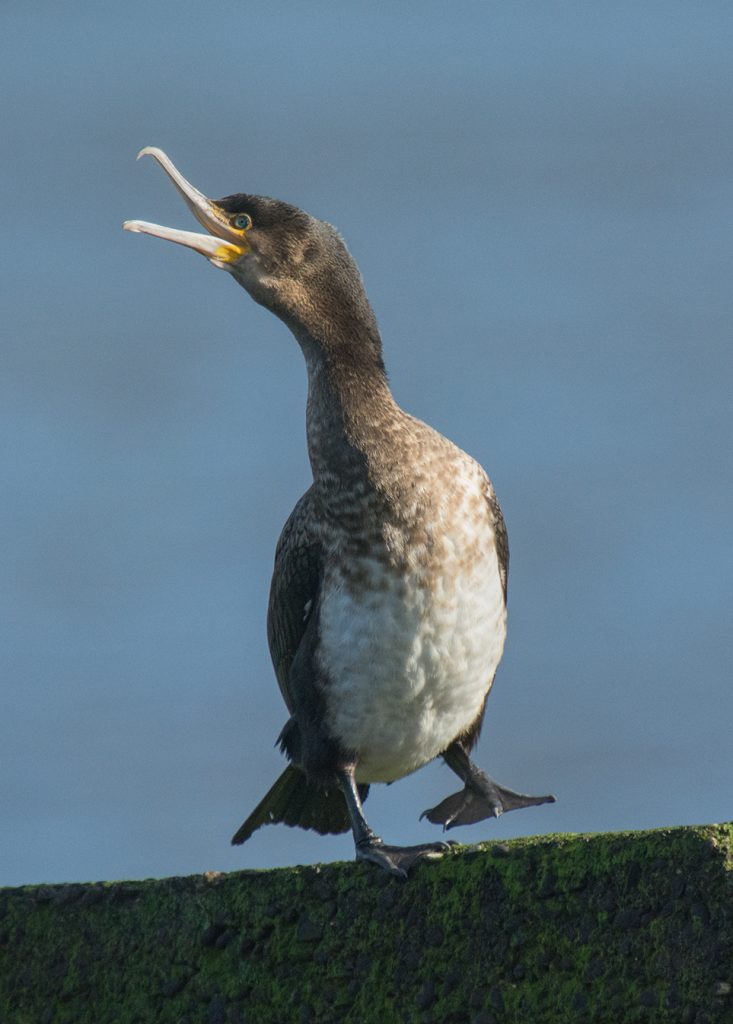
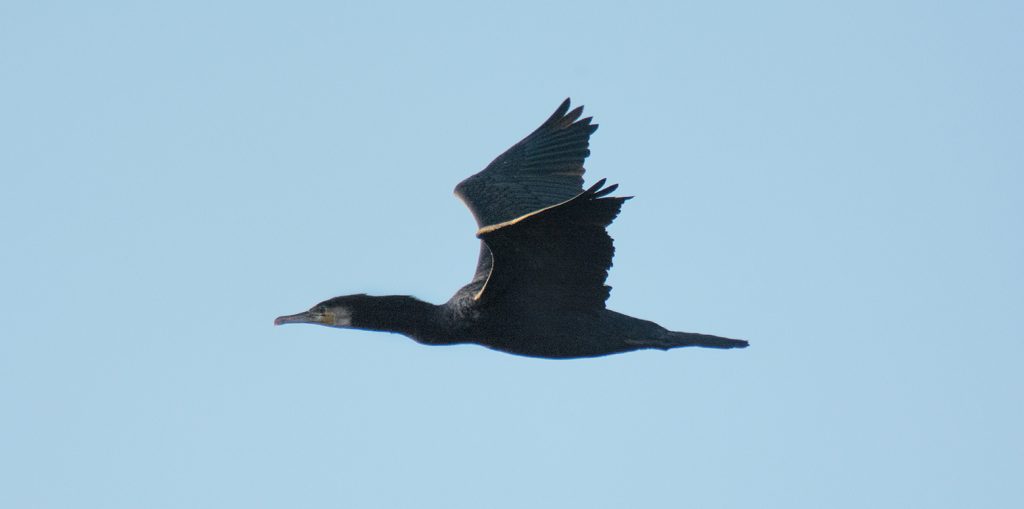
Great Cormorant – Phalacrocorax carbo, Merkinch (photograph)
Flowering Currant
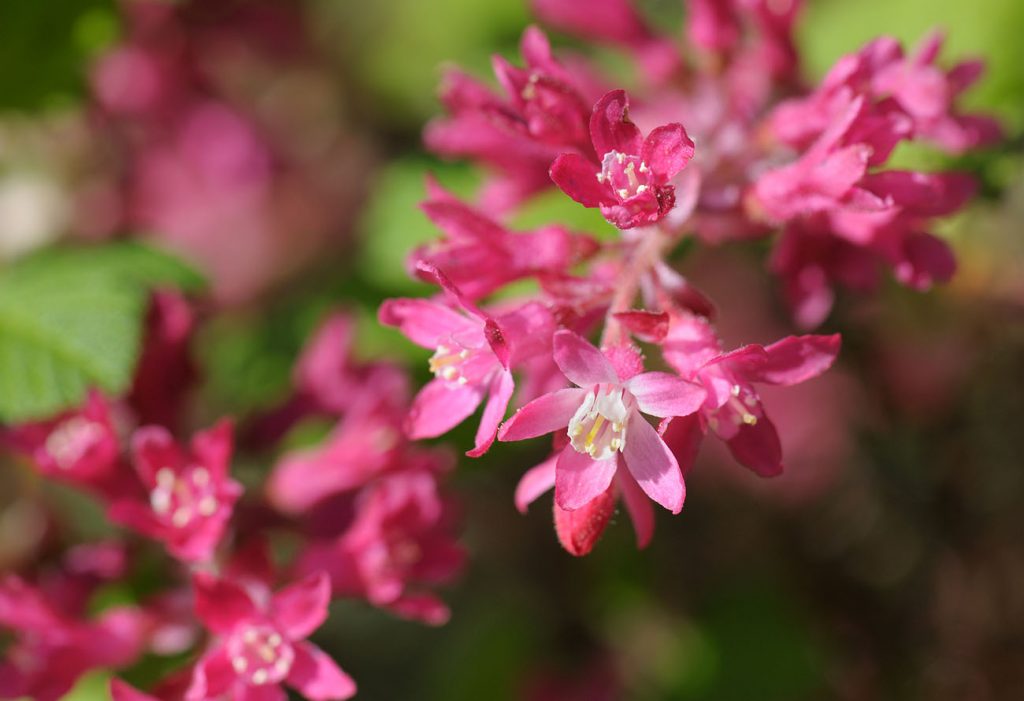
Flowering Currant – Ribes sanguineum, Merkinch (photograph)
Three Currants are found in Scotland, the Red, Black and Flowering. Most are garden escapes or deliberate plantings but the Red form does occur as truly wild specimens, often associated with deciduous woodlands, river banks and damp scrubland. The Flowering Currant was introduced from North America but has subsequently become naturalised and established in the wild. All are excellent early pollen sources for bees and other insects and currants have long been used as fruits and to make drinks, including remedies for sore throats, which was also a use for the Flowering Currant by native Americans. In Scotland and Northern England, there was a specific belief that it was unlucky to bring Flowering Currant into a house, something that was also applied to other early flowering shrubs possibly arising from a common-sense principle of not reducing the first food sources for the bees.
When we were kids, we used to always bring some flowers home – the flowering currant. It’s a lovely little red plant, with a flower. I remember going in to my mum, who said, stop, it’s not lucky. So, she would give me a jam jar, and I was allowed to put it on the window, so it was always outside. You could still look at it but it wasn’t in the house.
Dell
Day 10 – Merkinch Primary School
The cormorant looks like a dinosaur – Mia
The cormorant feels like he’s doing a happy dance in a film – Sonny
Day 9
Saturday, two hours starting early on the Reserve, just some of the encounters today.
Nick Sidle
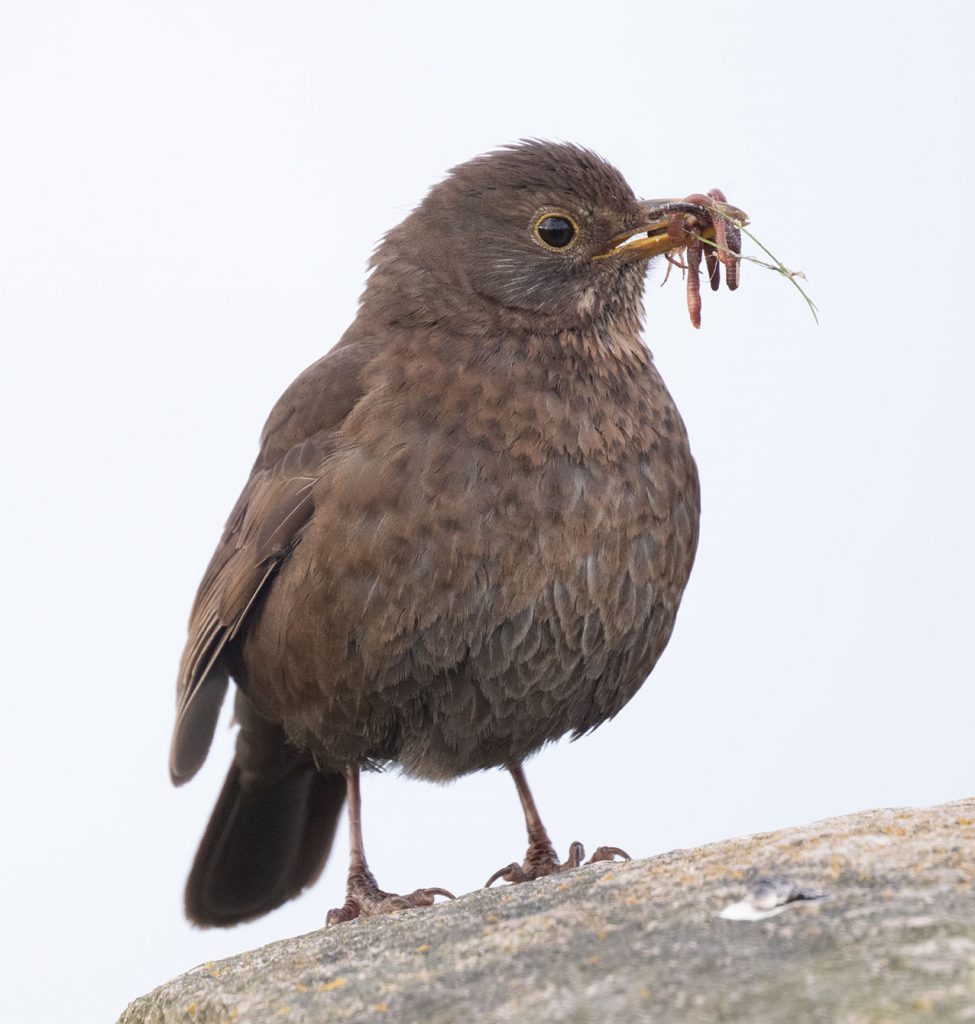
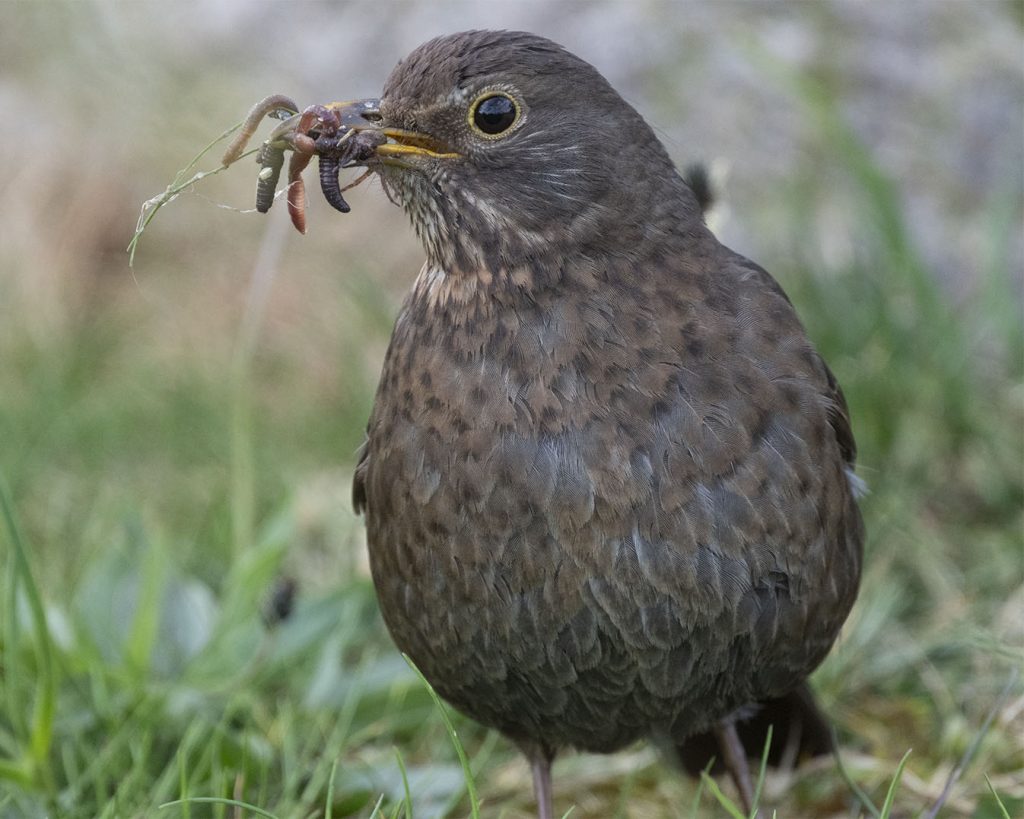
Eurasian Blackbird – Turdus merula, with newly hatched chicks to feed, Carnarc Point, Merkinch (photographs)
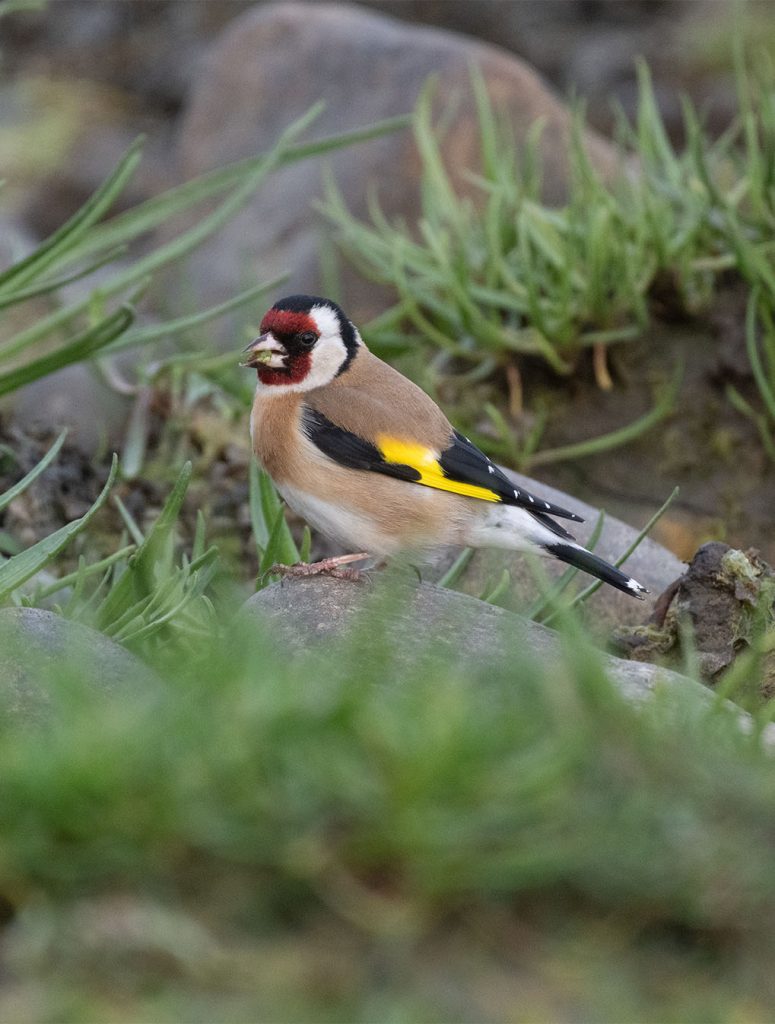
European Goldfinch – Carduelis carduelis, Carnarc Point, Merkinch (photograph)
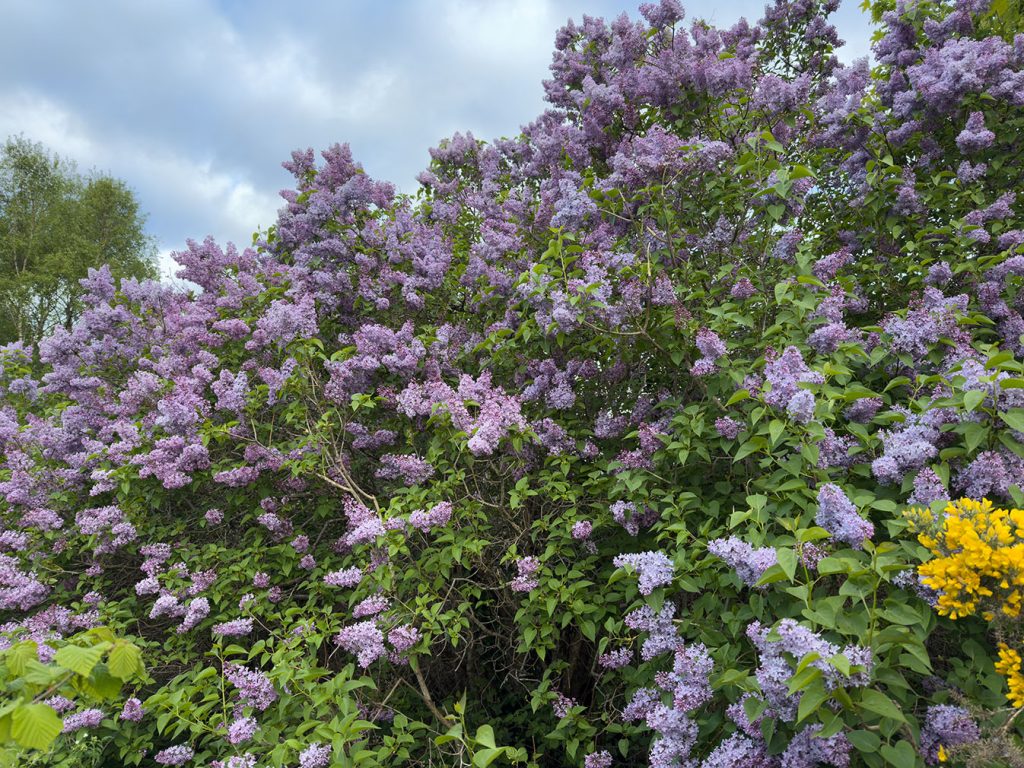
Lilac – Syringa vulgaris, Carnarc Point, Merkinch (photograph)
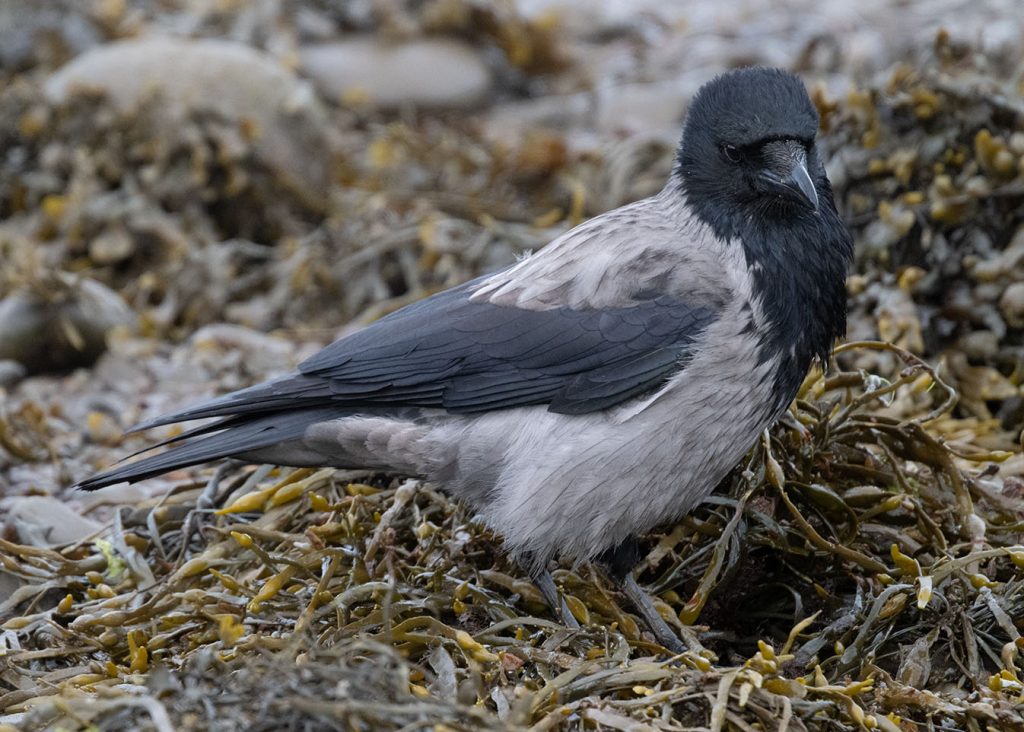
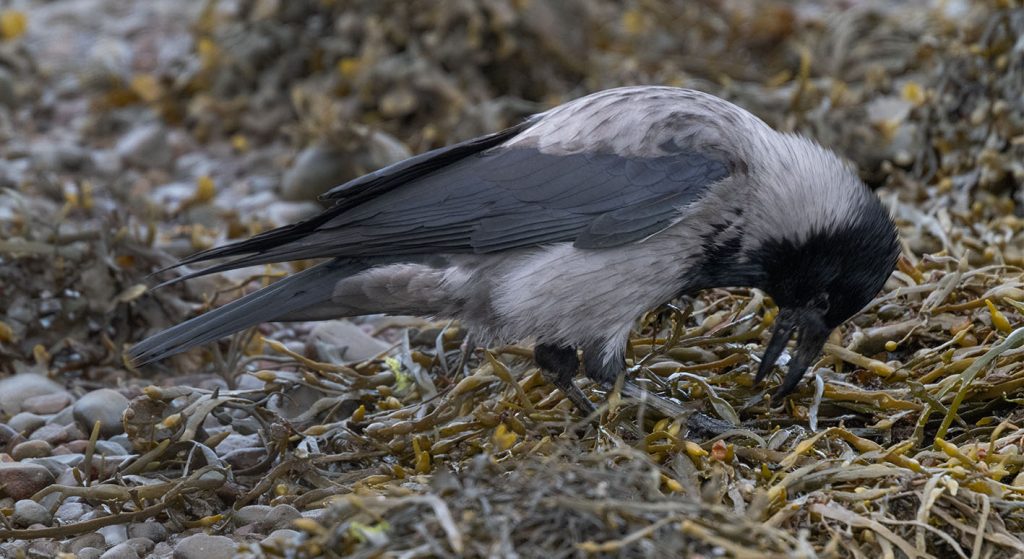
Hooded Crow – Corvus cornix, foraging for food in seaweed, Merkinch (photographs)
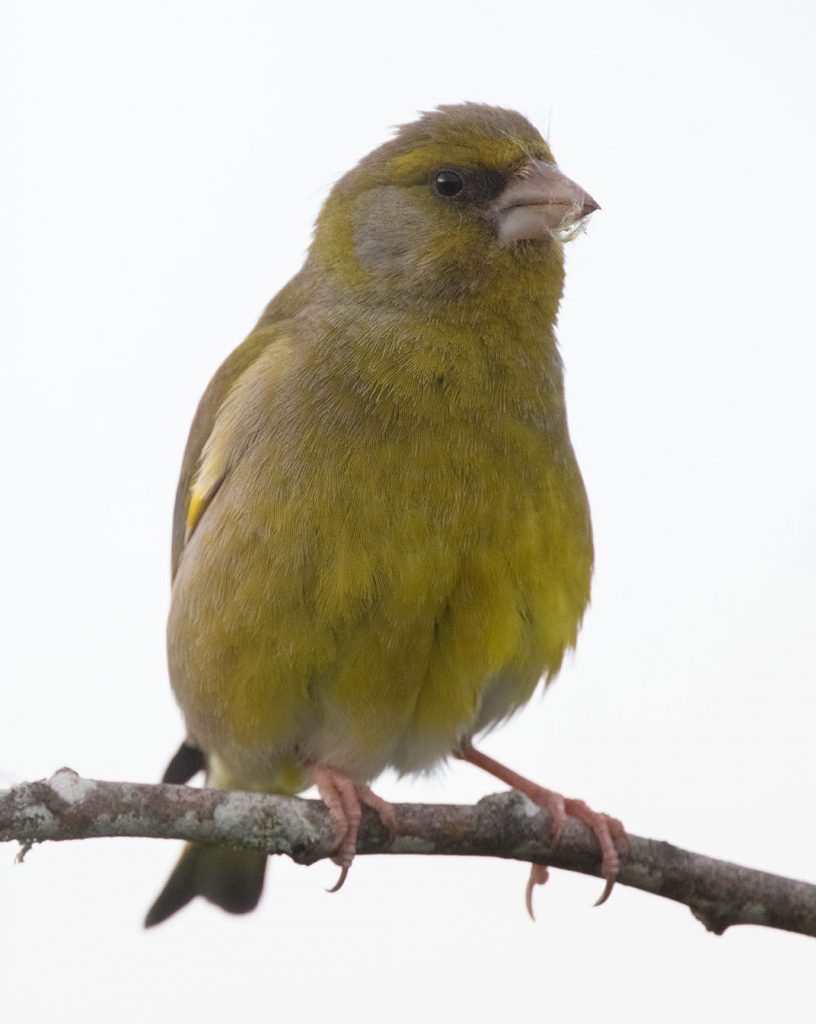
European Greenfinch – Carduelis chloris, Merkinch (photograph)
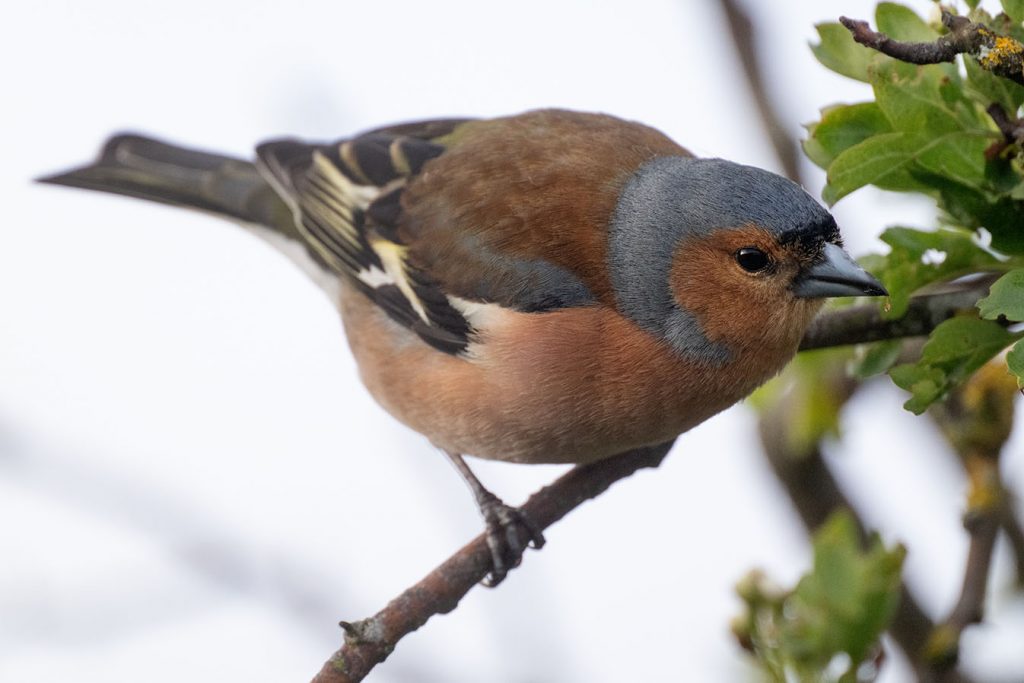
Chaffinch – Fringilla coelebs, Merkinch (photograph)
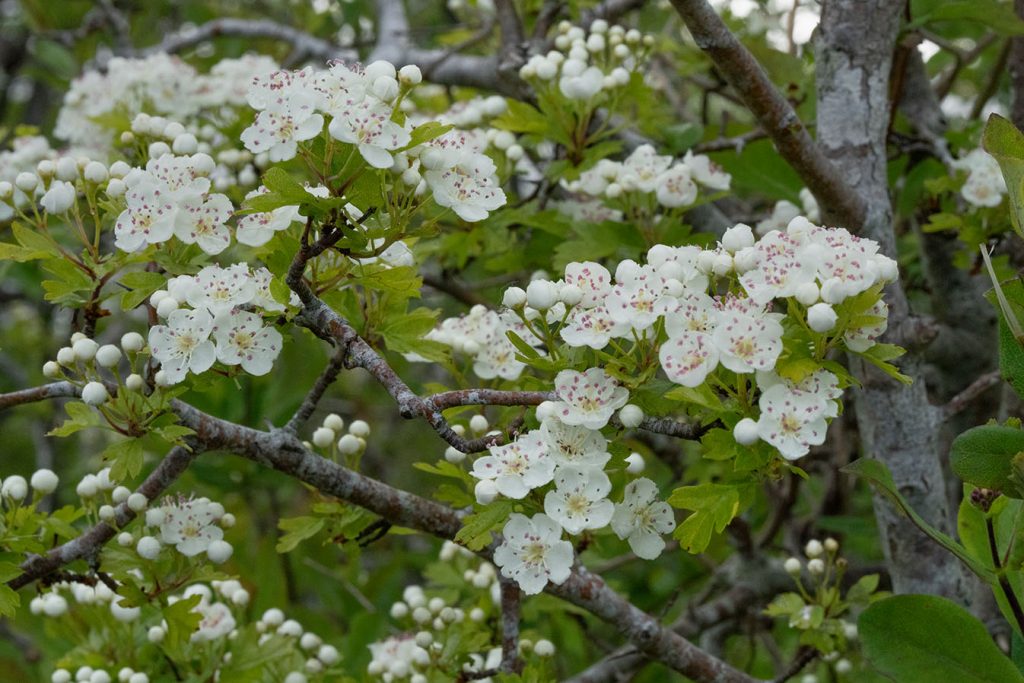
White Hawthorn – Crataegus monogyna, Merkinch (photograph)
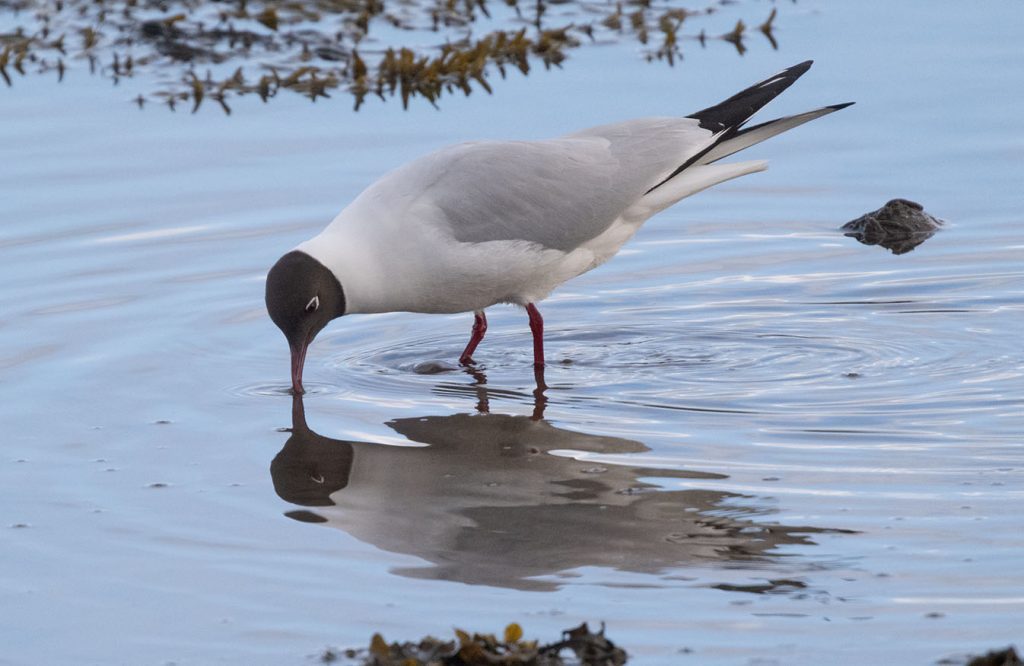
Black-headed Gull – Larus ridibundus, Merkinch (photographs)
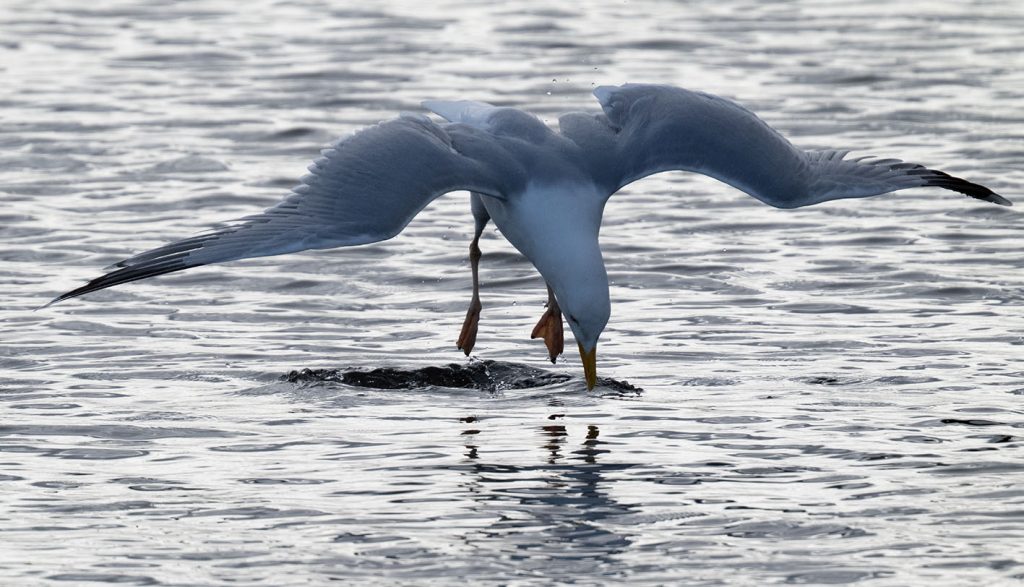
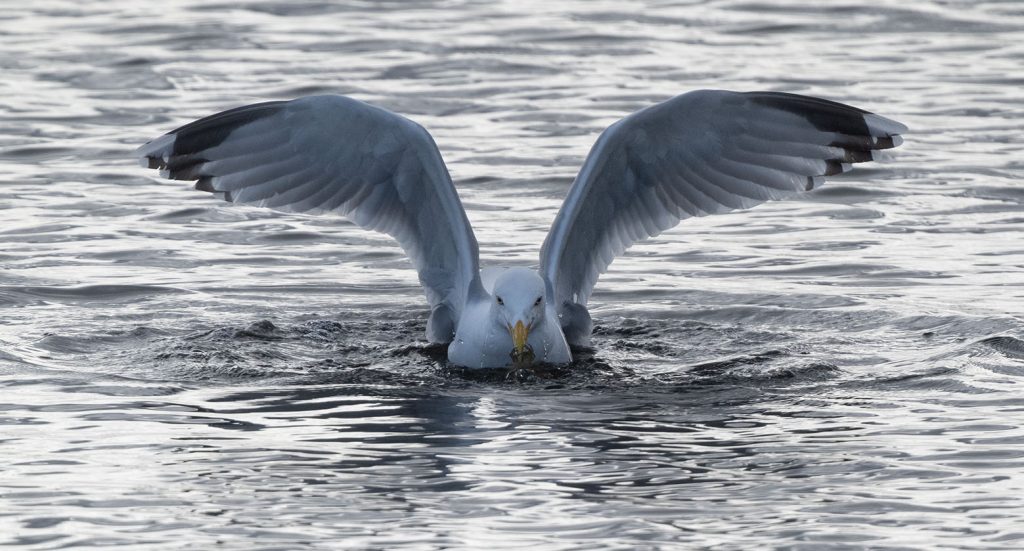
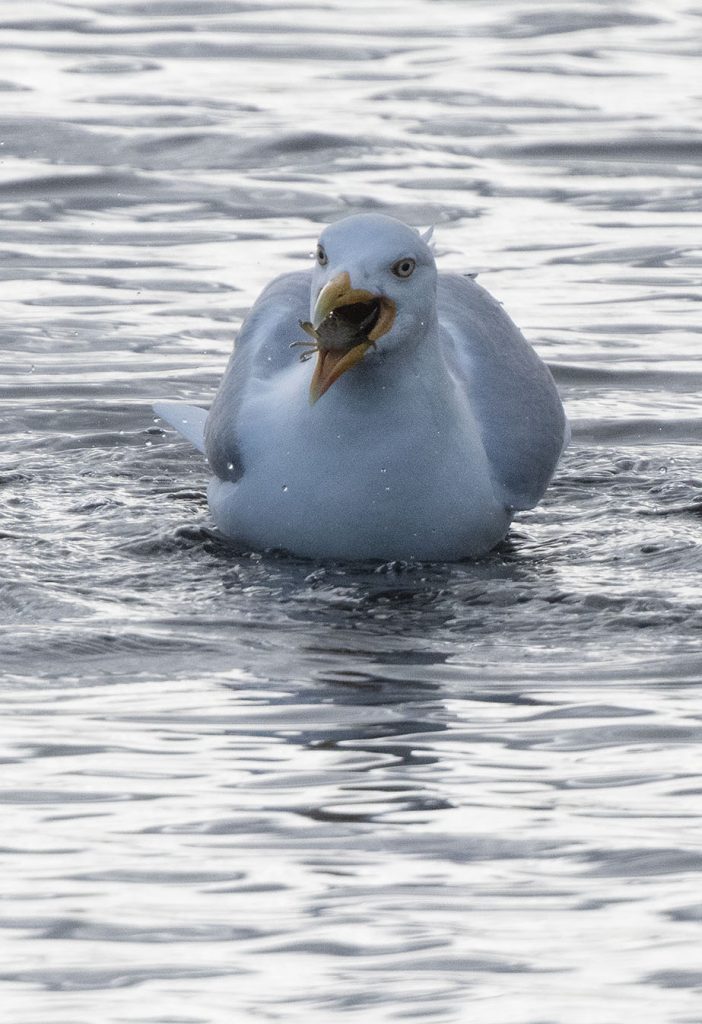
Herring Gull – Larus argentatus catching crabs, Merkinch (photographs)
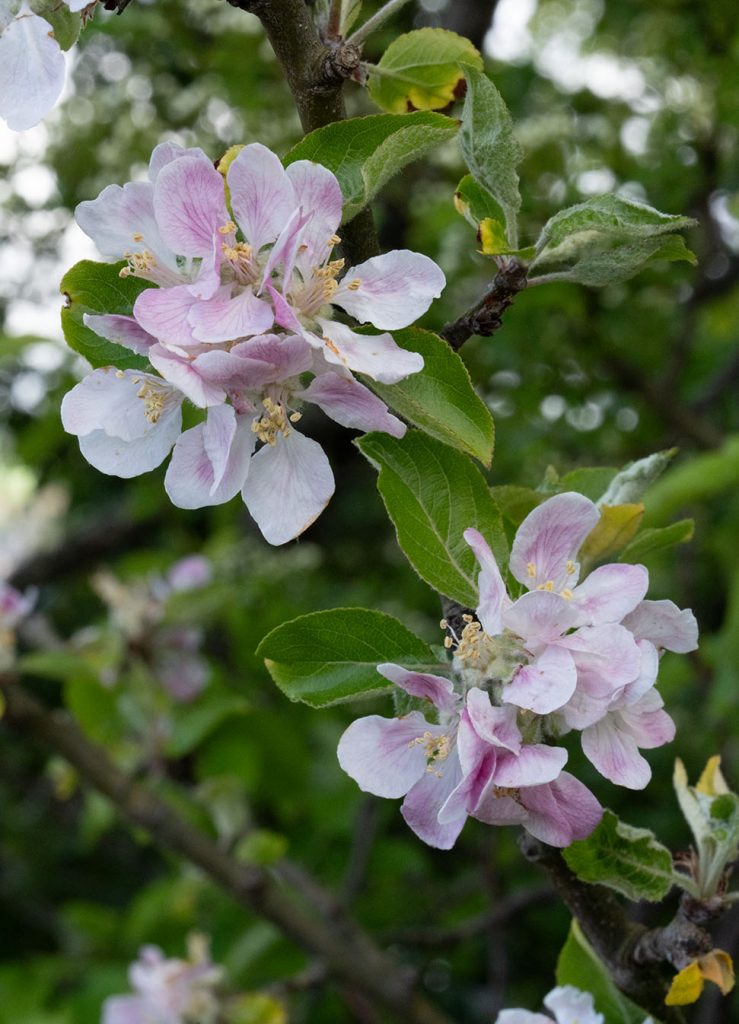
Crab Apple – Malus sylvestris, Merkinch (photograph)
Follow the story of apples as we know them and where Unicorns fit in – see the special feature ‘The Missing Unicorns”

Grey Heron – Ardea cinerea, Merkinch (photograph)
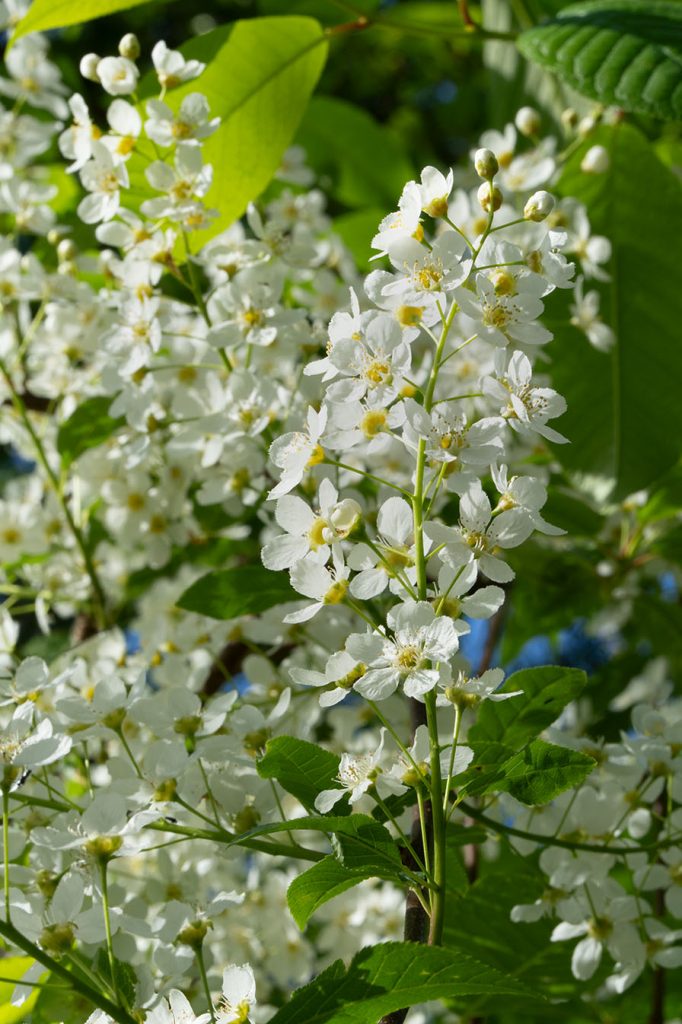
Bird Cherry – Prunus padus, Merkinch (photograph)
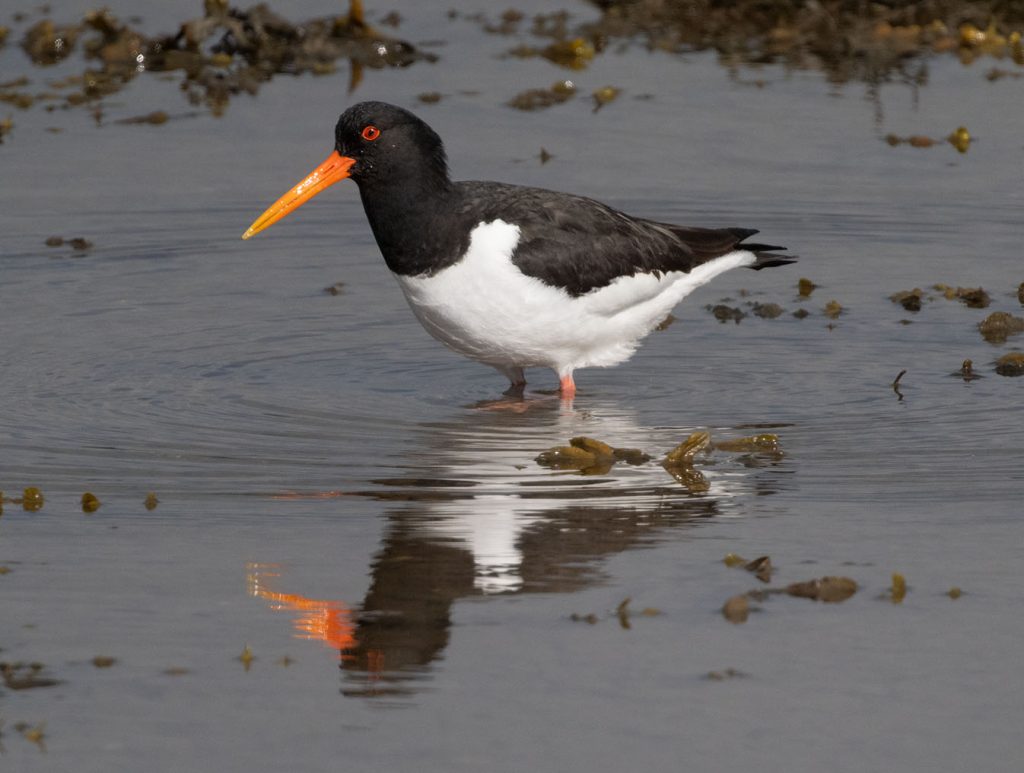
Eurasian Oystercatcher – Haematopus ostralegus , Merkinch (photograph)
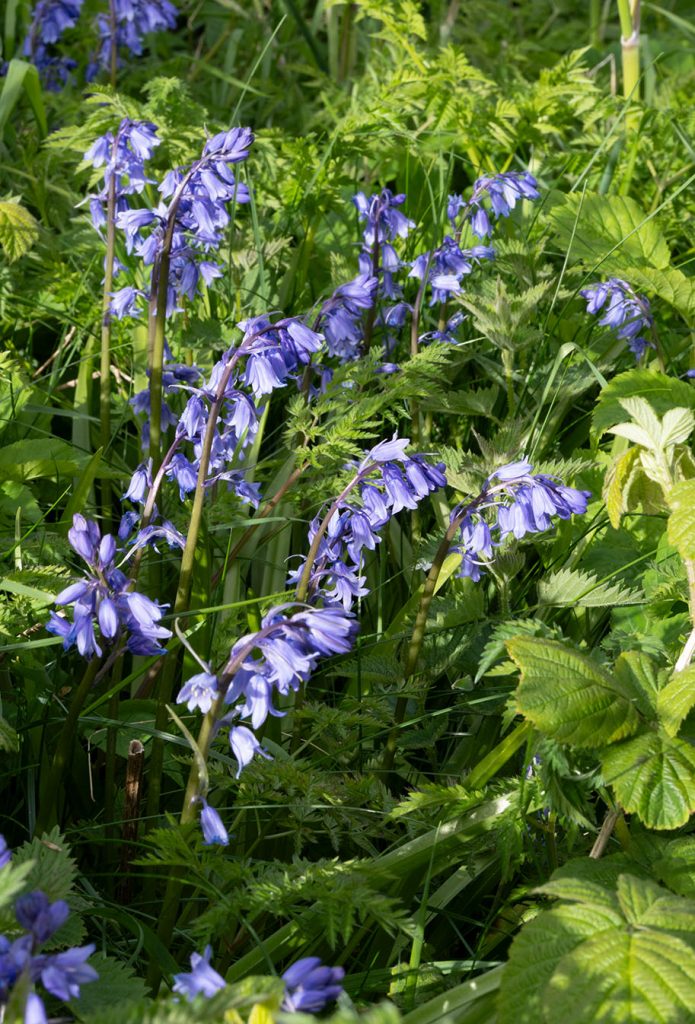
Bluebells – Hyacinthoides non-scripta, Merkinch (photograph)
Day 9 – Merkinch Primary School
We have oystercatchers at Merkinch Primary, they visit our playground after break and lunch time.
The sea gulls nest on the roof of the gym hall. You can see them in the courtyard. At the summer picnic they try to steal our lunch.
Oystercatchers laid eggs on my roof about 2 years ago – Sonny
Bluebells grow in me and my dad’s garden – Luke
I have blossom trees at my house, they’re lovely – Annabelle
When we went on the trip to the nature reserve we saw a heron – Ty
Sometimes there are loads of herons all together near the canal.
The photographer has done a really good job to get the pictures of the sea gull, it’s really hard to do that. – Melody
Will the crab not nip the sea gulls tongue? – Callum
The chaffinch in chubby, I see them in my back garden – Caleb
Day 8
Eurasian Oystercatcher
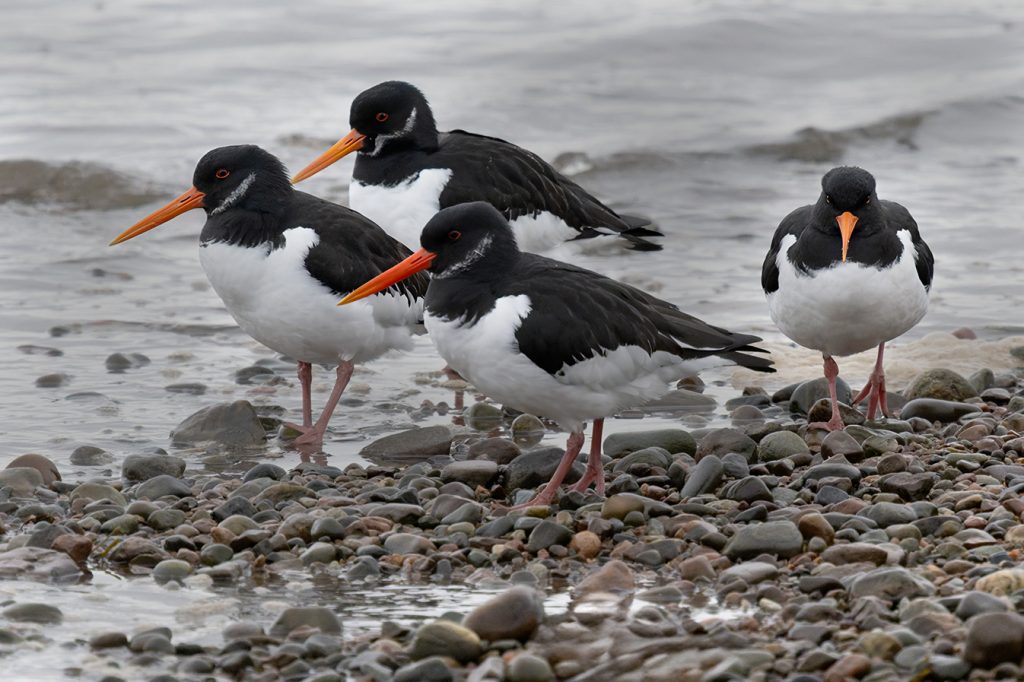
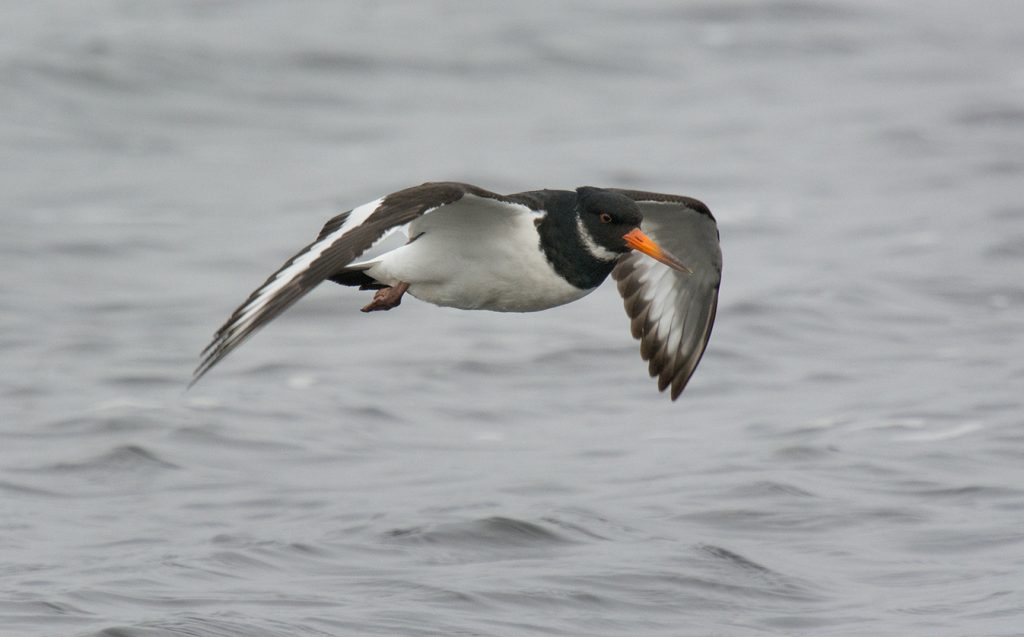
Eurasian Oystercatcher – Haematopus ostralegus, Merkinch (photographs)
The Oystercatcher is a bird with a problematic name. Firstly, no predator catches Oysters, find them possibly, catch, no. There are no underwater scenes of Oysters being furiously pursued across the seabed, running for their lives. They are capable of a very limited movement to aid their distribution by expelling water from their shells but this would definitely not serve in a desperate flight from danger. Secondly, Oystercatchers in Britain don’t even really eat Oysters. Shellfish yes, especially Mussels and Limpets but not Oysters. The name came over from North America in the 1700’s and the Oystercatchers in North America do eat Oysters but even there they form a small part of their diet.
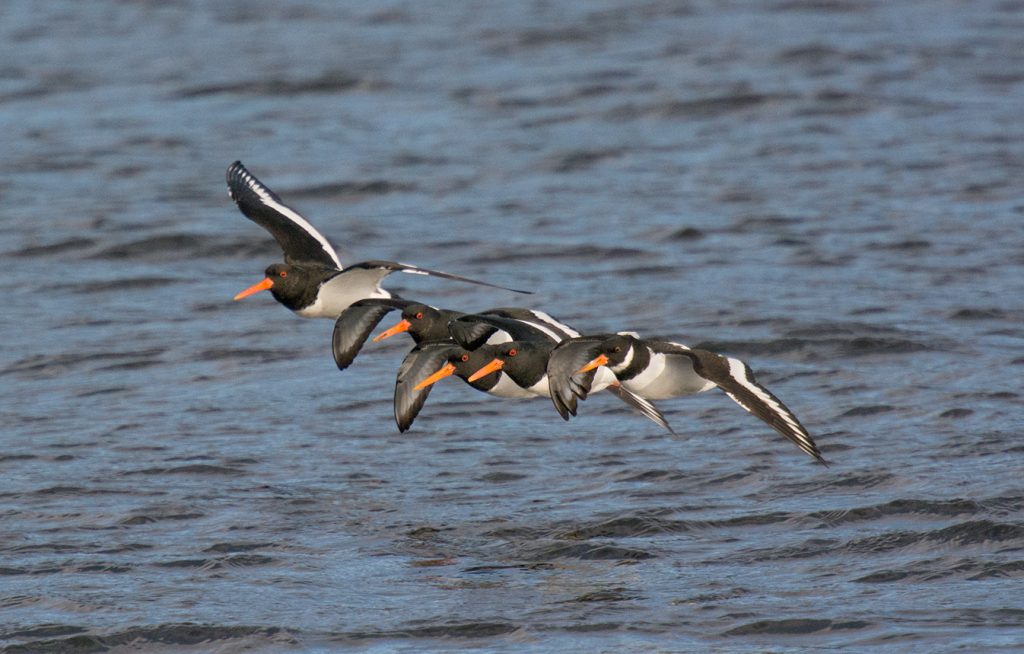
Eurasian Oystercatchers – Haematopus ostralegus, Merkinch (photograph)
Oystercatchers have a history in legend of helping the holy using macroalgae. There is an account that they once hid Jesus from pursuers by covering him with seaweed. The same story appears only with them saving St Bride (St Brigid) in the same way. From these acts, they are seen as a force for good and holy. They appear in Christian legend as protectors and serve in the same role by warning seafarers and fishermen of storms.
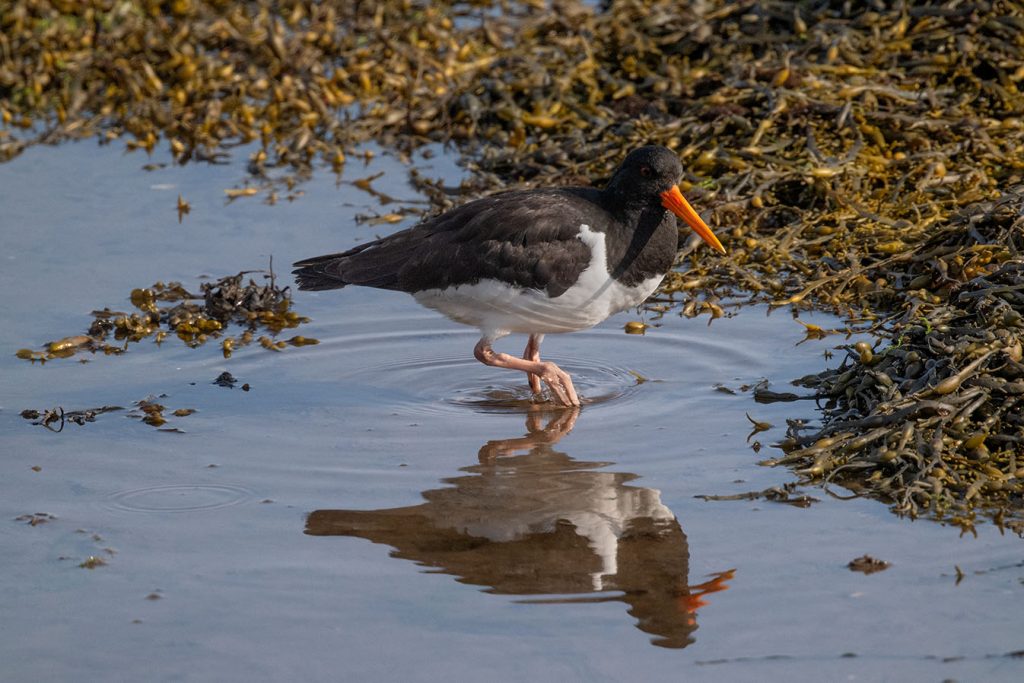
Eurasian Oystercatcher – Haematopus ostralegus, Merkinch (photograph)
At the more day to day level, the Oystercatcher is a strikingly marked wader with an unmissable call that in many locations is a defining presence on the coast. They eat marine worms and shellfish and are long lived. Some sources quote a lifespan of up to 15 years. There are records of even longer lives. An Oystercatcher was trapped and released as part of a scientific study on ‘The Wash’ in Eastern England in 1967. The same bird was trapped and released again in Lincolnshire in 2002 meaning it lived at least 35 years, the longest span for any wader recorded in the UK.
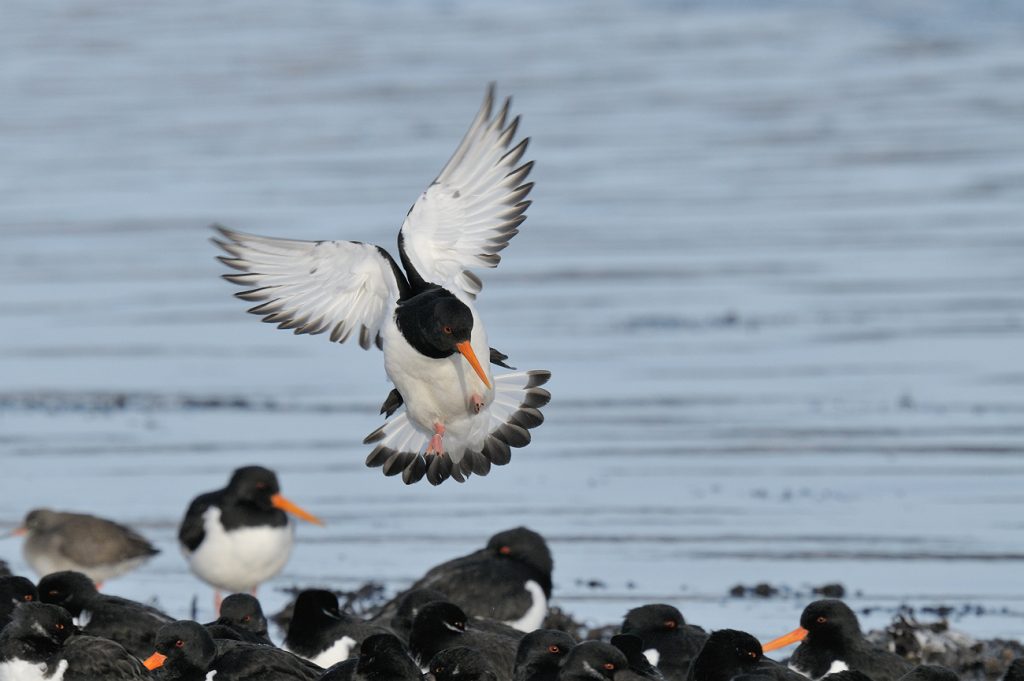
Eurasian Oystercatcher – Haematopus ostralegus, Merkinch (photograph)
Returning to names, the British ‘Mussel Picker’ and ‘Mussel Cracker’ are far more accurate but less poetic. ‘Scolder’, from their call, is also perhaps not capturing the image and feeling people have towards them, with the possible exception of Cockle fishers who have clashed with the presence of the birds, who they feel are depleting the stocks significantly. Another old name, ‘Sea Pie’ does not advocate eating them but is a reference to their pied colouration.
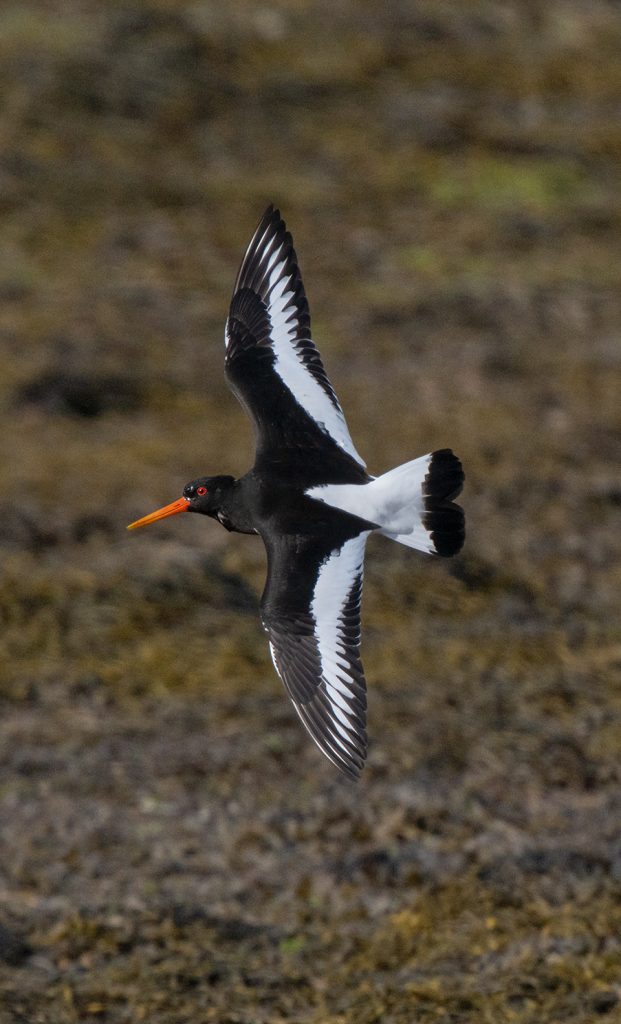
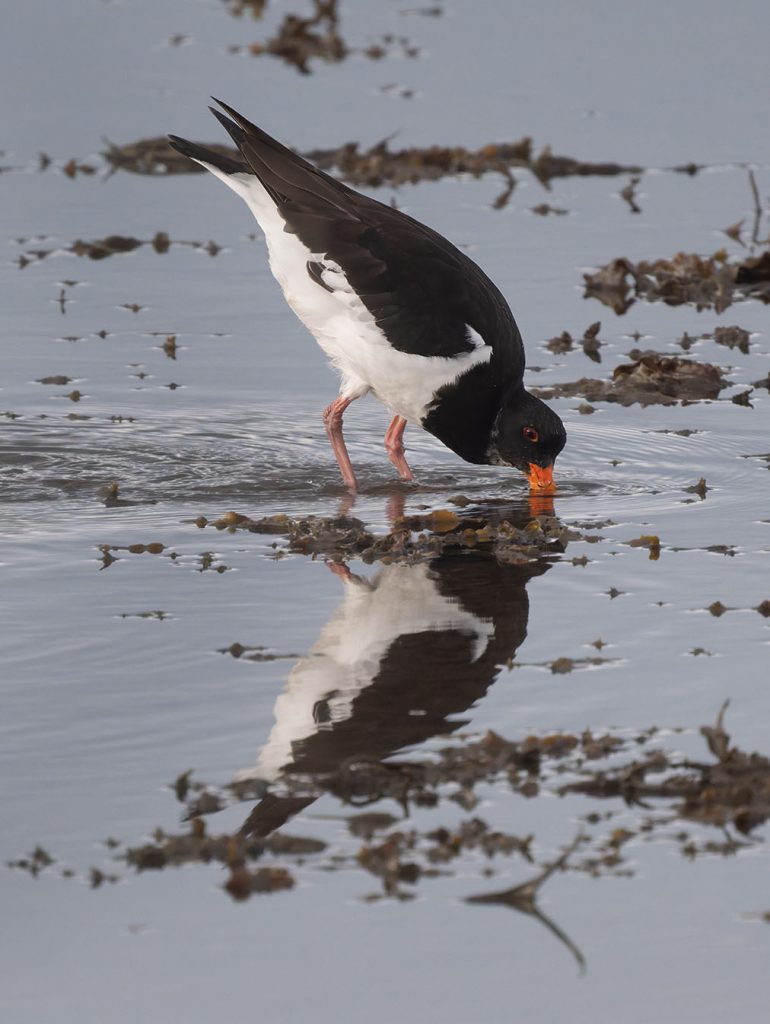
Eurasian Oystercatcher – Haematopus ostralegus, Merkinch (photographs)
Peacock Butterfly
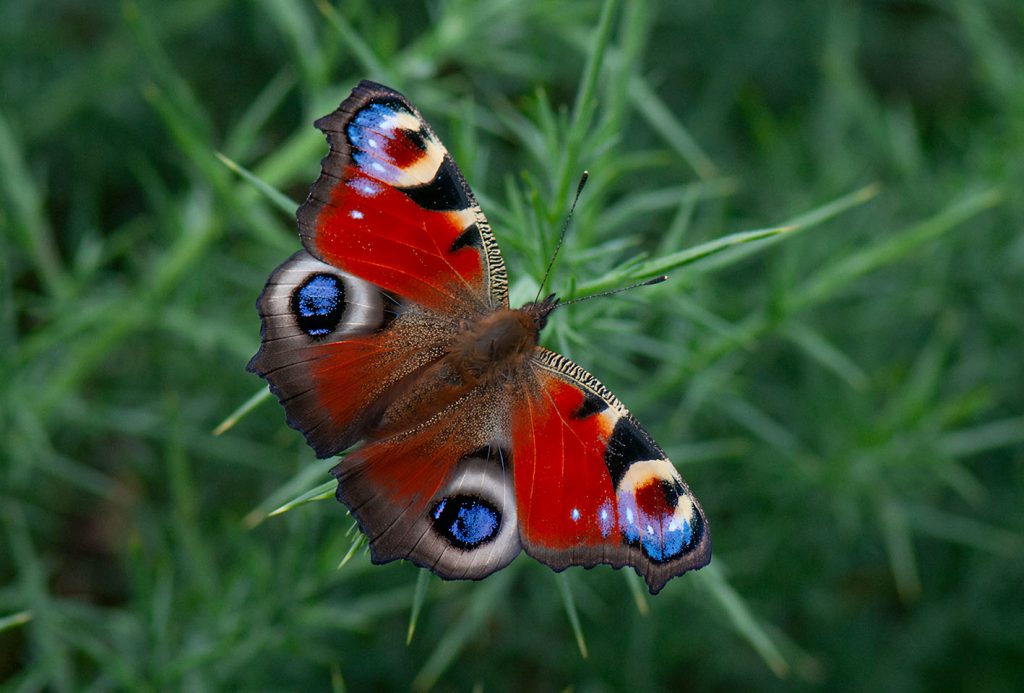
Peacock Butterfly – Inachis io, Merkinch (photograph)
Often simply referred to as ‘The Peacock’, the butterfly is a common resident species in England and Southern Scotland but less so in the North where it only migrates to in the early summer. Eastern Inverness-shire is around the limit of its Northern resident range. The caterpillars feed on Nettles. In the 1600’s and early 1700’s the butterfly was known as ‘The Peacock’s Eye’ from the wing markings. By around 1750, ‘eye’ had been dropped from the name to make it simply The Peacock.
Hedge Mustard
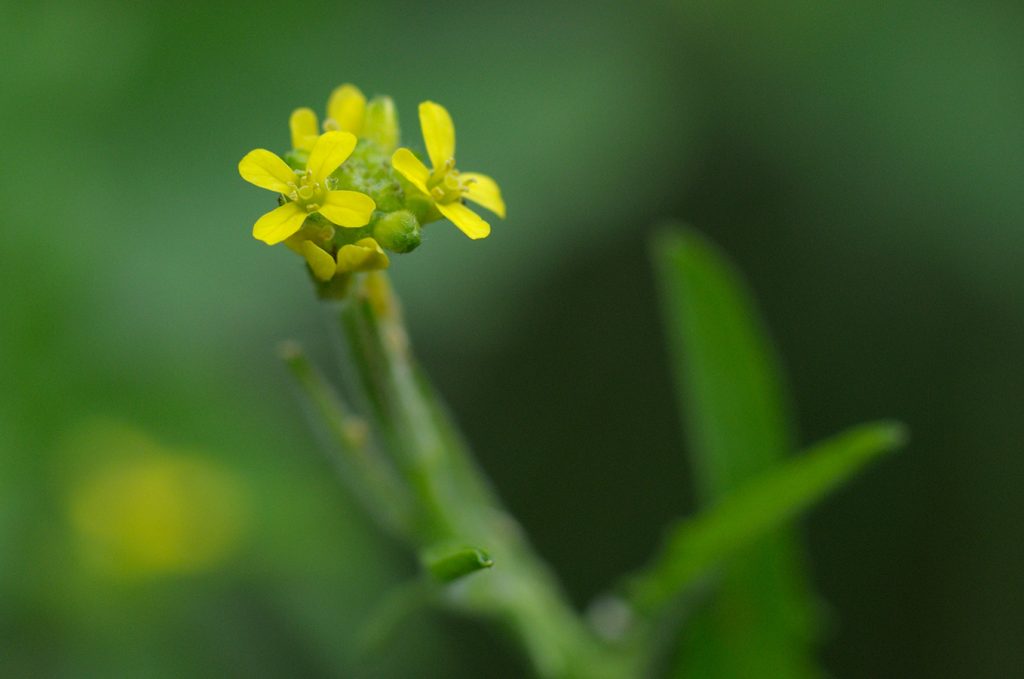
Hedge Mustard – Sisymbrium officinale, Merkinch (photograph)
Hedge Mustard, which is part of the cabbage family has been used as a herbal medicine for rheumatism, jaundice and as a purgative. An alternative name for it is ‘The Barbed-wire Plant’ coming from its rigid, often entangled, stems. Whether its ‘scratchy’ reputation suggested its use for throat conditions is not clear. In France, this even went far enough for Hedge Mustard to be known as ‘Singer’s Plant’ for its positive effects in developing the voice and treating its loss.
Day 8 – Merkinch Community Council
Merkinch Community Council has been involved in Merkinch for nearly 50 years. In the small building which was the ticket office for the ferry before the bridge was built, we have the history of the area right from St Kessock in the 5/6th century. We also have an amazing collection of photos, Including the late Queen when she visited our area. When the Community Council was set up one of the first things we did was put two benches on the shore for folk to sit and watch for the Ferry boat coming in, that was In 1978 . There is still one left there, the other was hit by a council truck when we were working with the BBC Beach Grove Gardens and Action for Children, teenage girls that won first prize along with a group from Edinburgh. The prize was a trip to America, New York and then right on to Washington and the White House. The BBC picked our Girls project to film. They created the picnic area that’s in the Drone picture at the launch with all the children. They also painted the mural on the wall of the building and planted one Hundred and twenty-five trees in the woodlands. I am still in contact with two of the girls.
Over the years, 70’s, 80’s,90’s and in the 20’s the effort is still ongoing, there was a lot of work that Merkinch Community Council have been involved in and an amazing amount of work from Housing, saving the local school from closing and the local Nursery and play areas. We created a Community Woodland in the 90’s, now the Local Nature Reserve. 25 years of Action for Children, the Merkinch Community Centre, and much more, including helping with research on the dolphins (we are all volunteers). We received a medal from the King for all the work we have been involved with and still are. This is just a brief summary of what we have been involved with, to create a better environment, and heighten awareness of what is in our area, which is amazing.
We have had people from all over the world come here and love it. I have a visitors’ book that folk write in from Alaska to Australia, and of course, Inverness, and Merkinch .
Del McClurg, Chair Merkinch Community Council
Day 7
Little Grebe
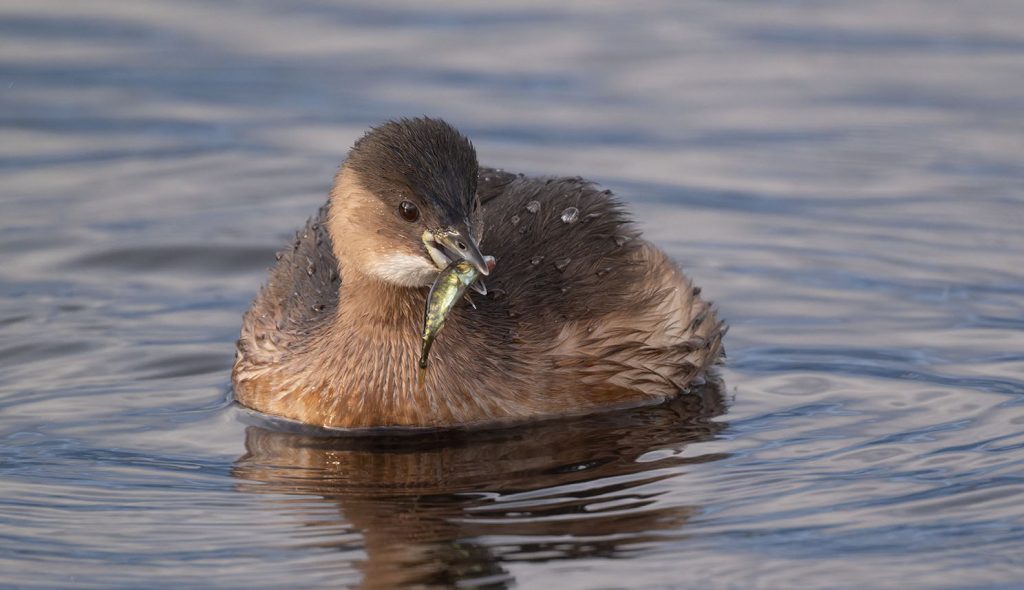
Little Grebe, Tachybaptus ruficollis, Caledonian Canal, Merkinch (photograph)
Found mostly on freshwater but also the shallow sea, Little Grebes feed by diving for small fish, insects and molluscs. At Merkinch, they can be seen on the ponds, on the canal and on the shallow tidal sea area bordering the reserve. They are shy, dive quickly to escape attention and then bob up having swum away underwater. It was this behaviour, which earned them names like ‘water-witch’ and ‘hell diver’ in folklore, a view reinforced by descriptions of the call as sounding like maniacal laughter, they got a negative image which was then built on and reinforced. Their nests are floating structures anchored to vegetation, which look like they would be swept away. When most survived, more accusations of the use of dark magic by the birds followed.
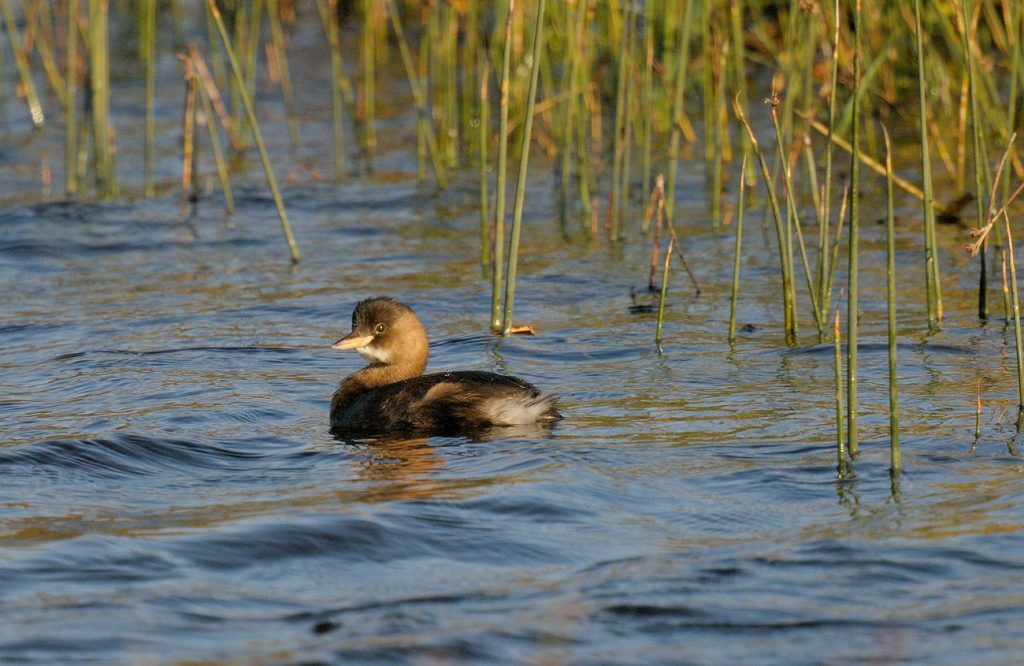
Little Grebe – Tachybaptus ruficollis, Merkinch (photograph)
Little Grebes are seen feeding their chicks feathers and adult birds also sometimes eat feathers themselves. There is a very practical reason for this behaviour. The feathers form a protective lining in the bird’s stomachs offering protection from sharp fish bones and spines on the fins of some of the fish they catch. Little Grebes are not sinister, they have been around for 70 million years and have learned one or two things on the way. The birds seen at Merkinch are residents not migratory, and they are adapted to the landscape and very definitely belong.
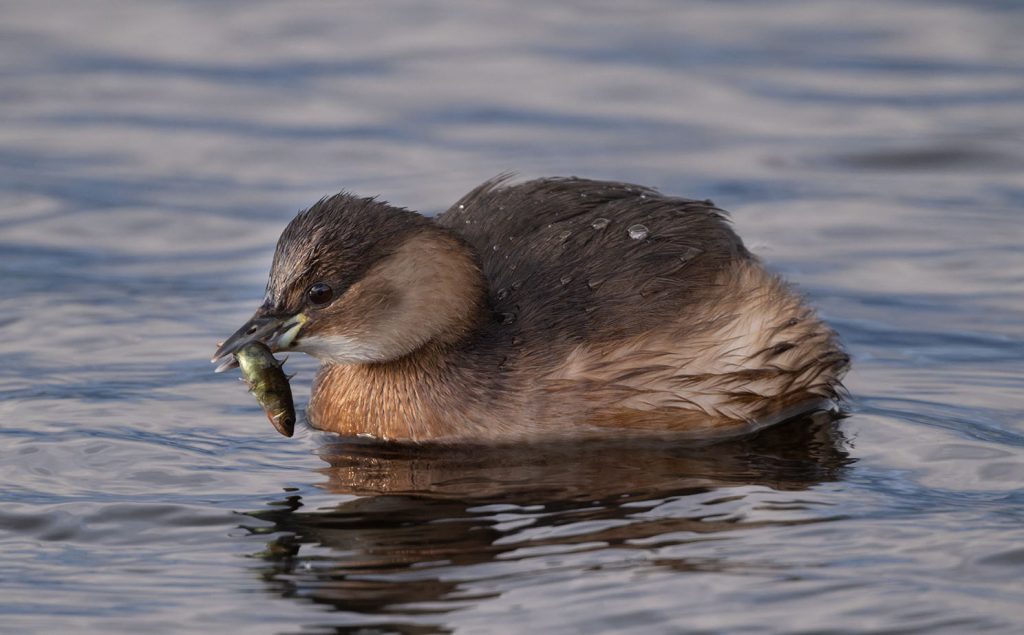
Little Grebe, Tachybaptus ruficollis, Caledonian Canal, Merkinch (photograph)
Sea Pink
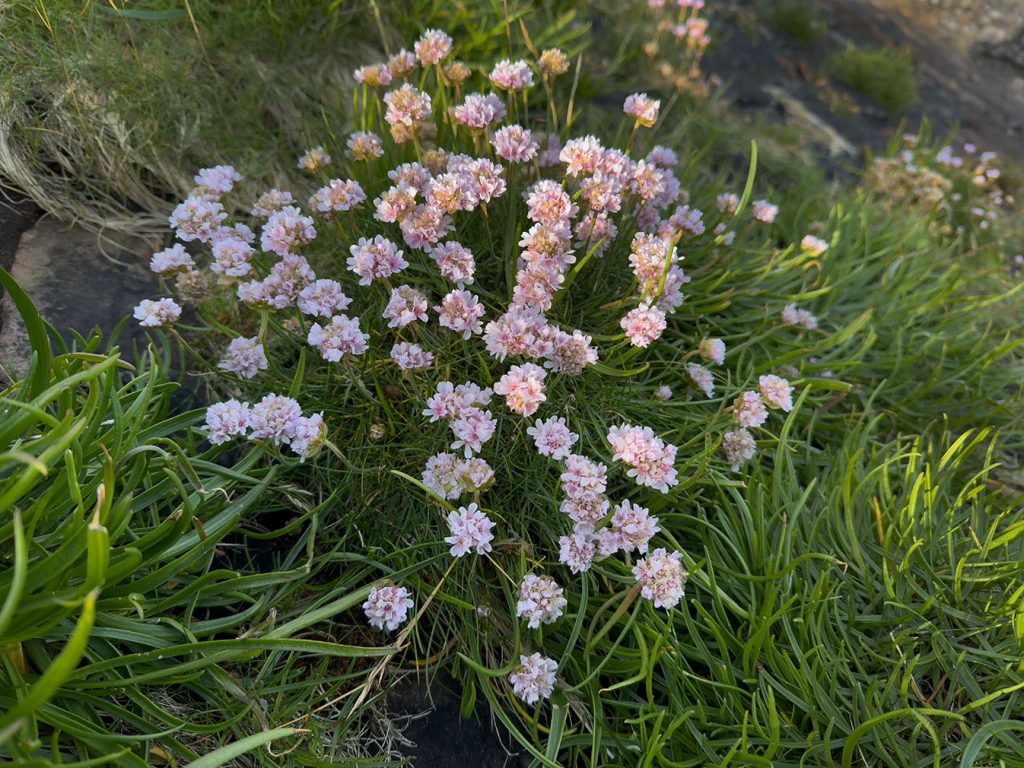
Sea Pink – Armeria maritima, Merkinch (photograph)
Also known as Thrift and by several other names, the Sea Pink is a flower found in the wild coastal areas of much of the Northern Hemisphere. They have a remarkable tolerance for high copper concentrations in soil and a metabolism that is adjusted significantly if atmospheric carbon dioxide is high. It is also favoured by high lead levels in soil, which lead to a belief it could cure lead poisoning. It has been used in herbal treatments for a range of other conditions, including in Scotland in the 1700’s as a cure for Tuberculosis. More prosaically, a treatment made from boiling the whole plant was used by sailors to cure hangovers, possibly a frequently used idea in past times.
Jewel Reed Beetle
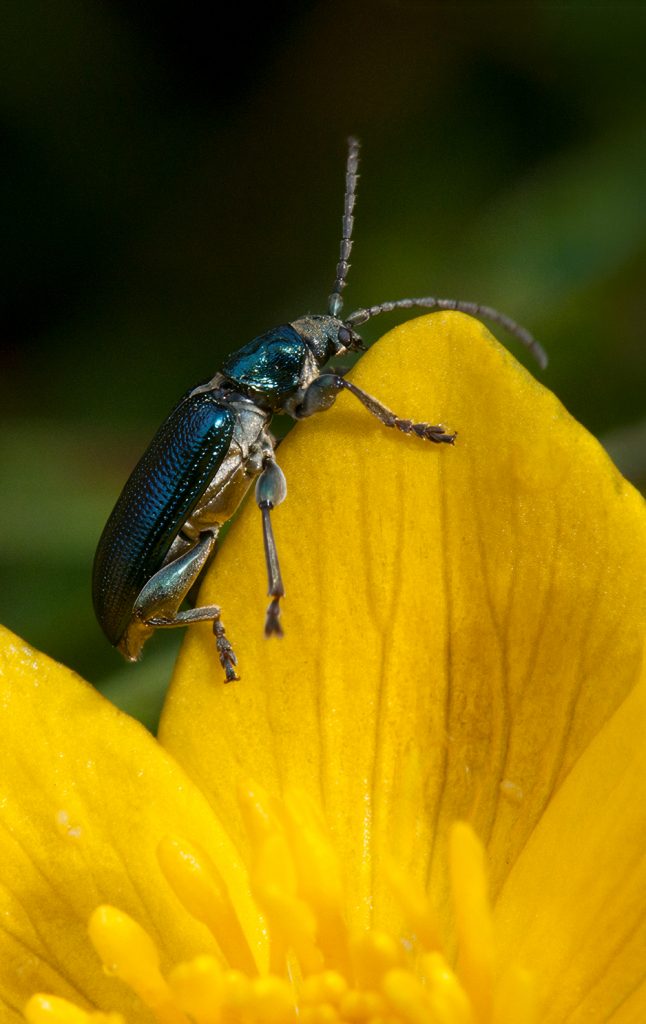
Jewel Reed Beetle – Plateumaris sericea, Merekinch (photograph)
Notable for its very variable colour, the Jewel Reed Beetle is named from the overlap between all the tints found and the striking colours used in jewellery through the ages. It has also been known as the Variable Reed Beetle for the same trait.
Day 6
Harbour Seal
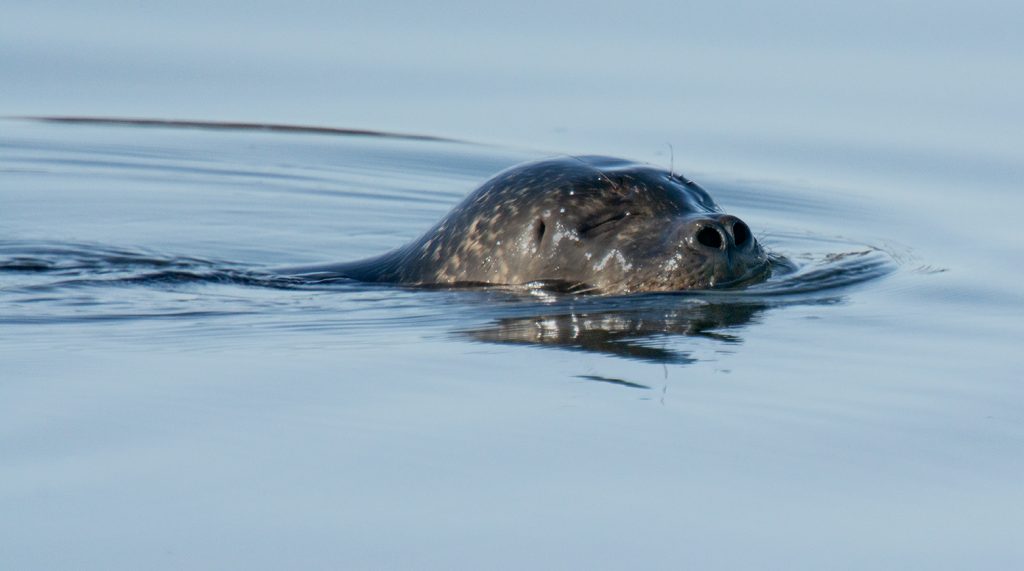
Harbour Seal – Photo vitulina, Merkinch LNR (photograph)
Found around the coasts of Scotland, Harbour Seals are usually seen hauled out of the sea in groups on the rocks and shore. In the sea, they are observed closer to shore than the Larger Grey Seals. They eat a range of food but fish and crustaceans form the majority of their diet.
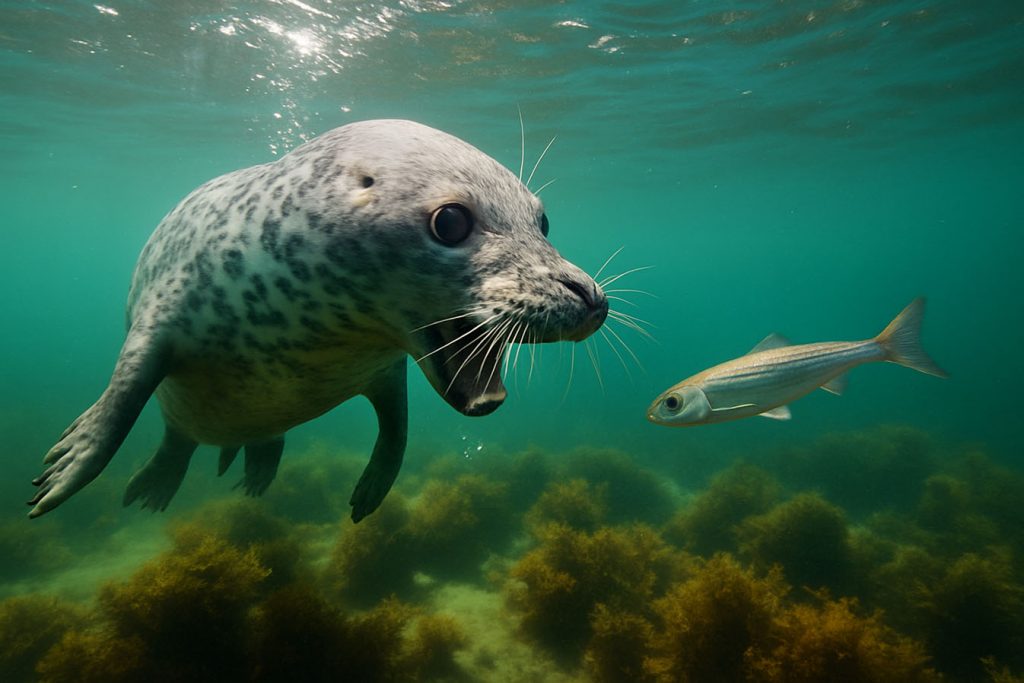
harbour Seal – Photo vitulina, hunting fish (illustration)
Perhaps the main cultural association in Scotland is the lore of the selkies, seals who emerge from the sea, temporarily shed their skins, and walk on land in human form. Seals have also been linked to the souls of the drowned.
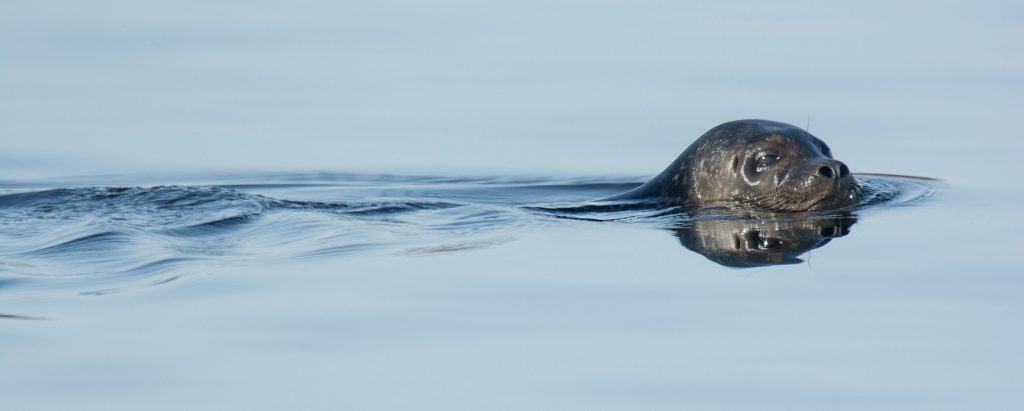
Harbour Seal – Photo vitulina, Merkinch LNR (photograph)
European Honeysuckle
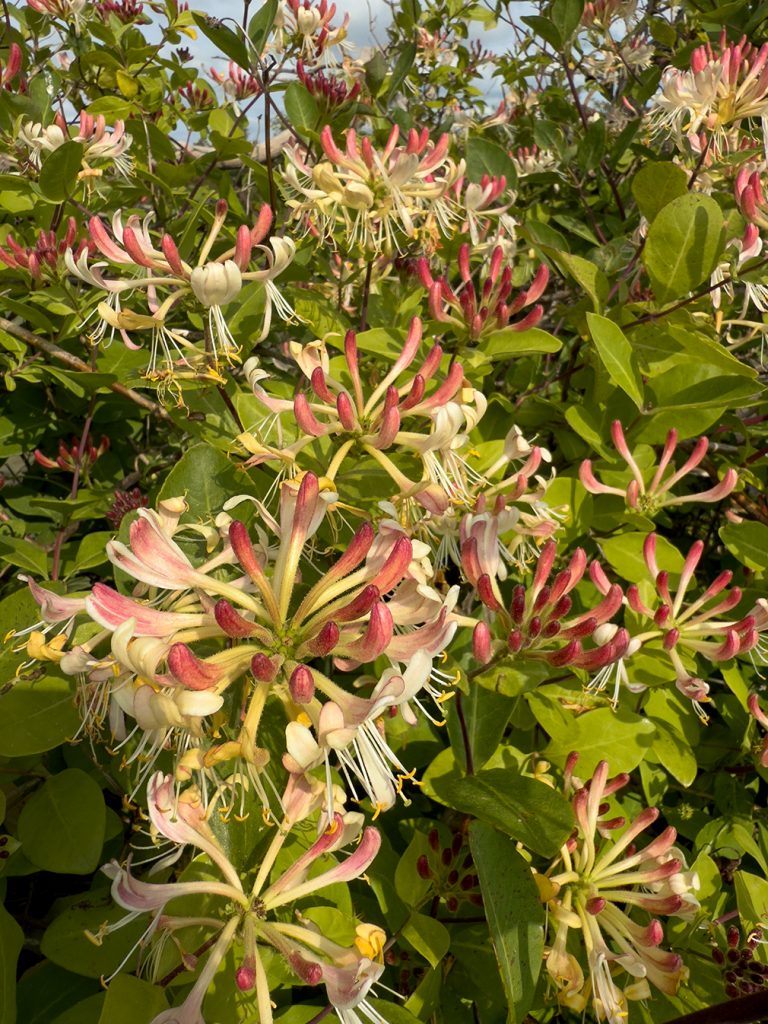
European Honeysuckle – Lonicera periclymenum, Merkinch LNR (photograph)
Seen throughout Scotland, the Honeysuckle is mostly found as a climbing plant twining clockwise around trees and woody shrubs. Its scent is strongest at night to attract pollinating moths. Widely thought of as a positive force in magic, the Honeysuckle was particularly used around May 1st to protect against dark forces appearing in wreaths, especially around barns and livestock. In Moray in the 1700’s, there are records of sick children being passed three times through a wreath of Honeysuckle lowered over their heads to treat them. Honeysuckle growing around the door of a house would protect the family living there and Honeysuckle was also associated with strength of love and in Scotland was used in wedding ceremonies. Honeysuckle flowering near a house was regarded as a sign of a wedding within a year.
European Holly
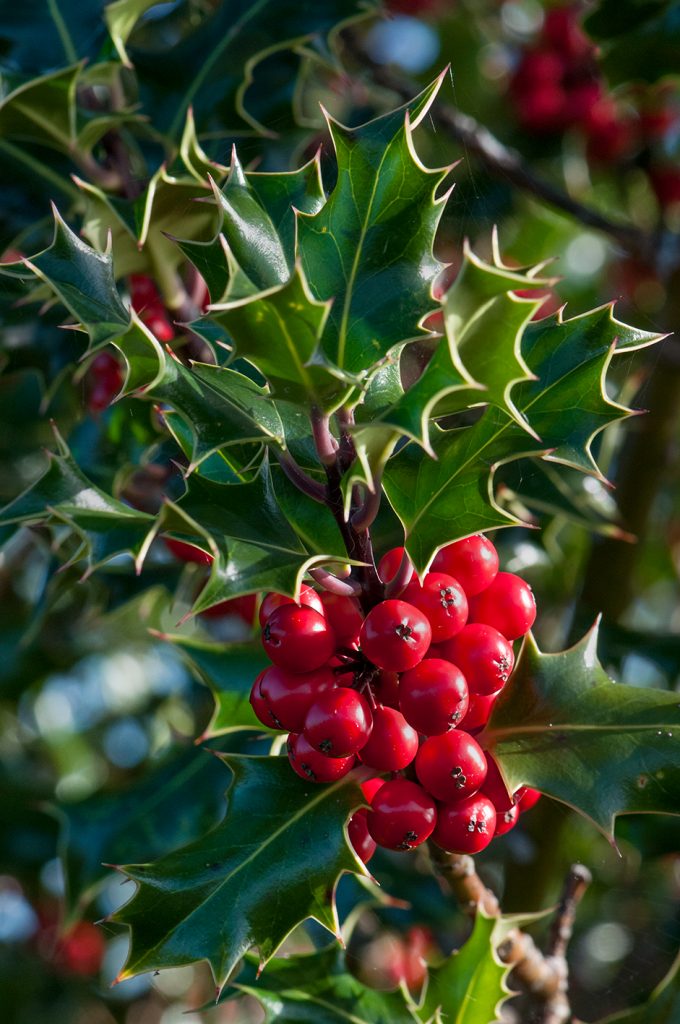
European Holly – Ilex aquifolium, Merekinch LNR (photograph)
An evergreen shrub common throughout Scotland and Britain and in folklore widely believed to protect against witches, faeries and evil forces. Partly because of this, it was regarded in most places as a bad omen to cut down a Holly tree, although paradoxically Holly boughs were widely used as decorations at Hogmanay and also at Christmas marking an incorporation of much of the older folklore and beliefs around Holly into Christian celebrations. Its protective qualities were thought in part to simply come from the sharp points on the leaves making it difficult for evil spirits to pass. This mixture of physical and spiritual strengths also meant that when it came to livestock protection, Holly was often used for hedging making an effective fencing to keep the animals in and a barrier to keep evil out. Holly was also planted in Europe close to houses to protect them from thunder storms and Holly became associated with the thunder gods, Thor and Taranis. There is some scientific basis for this, the sharp points on Holly leaves do actually act as miniature lightning conductors providing at least some protection for the tree and adjacent structures.
Day 5
European Goldeneye
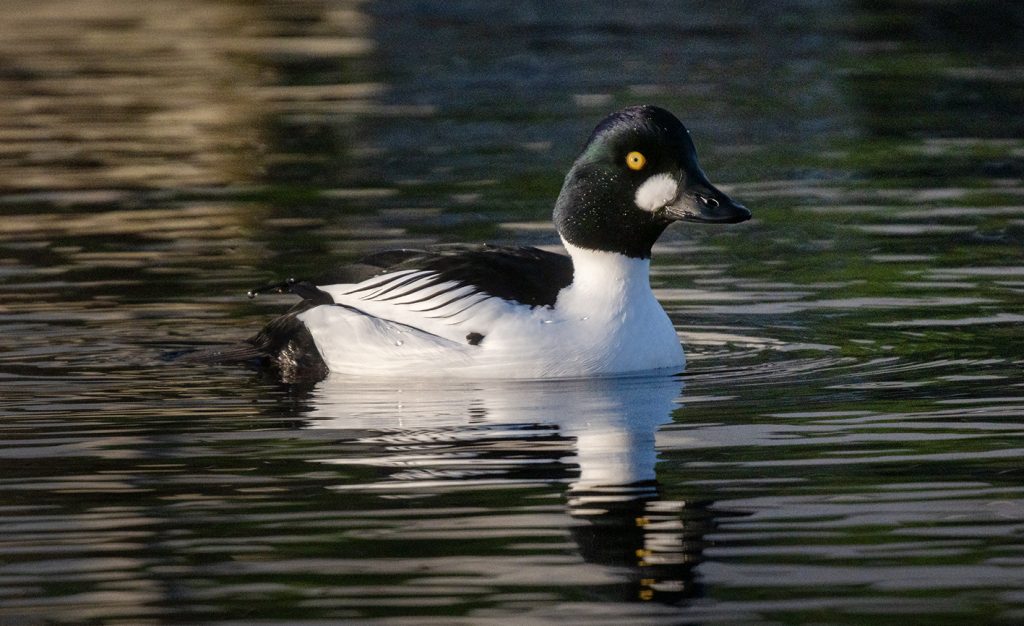
European Goldeneye – Bucephala clangula, Caledonian Canal, Clachnaharry (photograph)
Mostly seen in the UK as a coastal area visitor from Northern Europe in winter, there is also a small inland breeding population estimated at 200 pairs in Highland Scotland. Even as winter migrants, the Goldeneye is not a common British species but an estimated 21,000 reach the UK each winter.

European Goldeneye – Bucephala clangula, catching crabs, Carnac Point (photograph)
Feeds by repeatedly diving from the surface and finding mostly molluscs and crustaceans in winter on the coast and aquatic insects in summer inland when it is breeding.
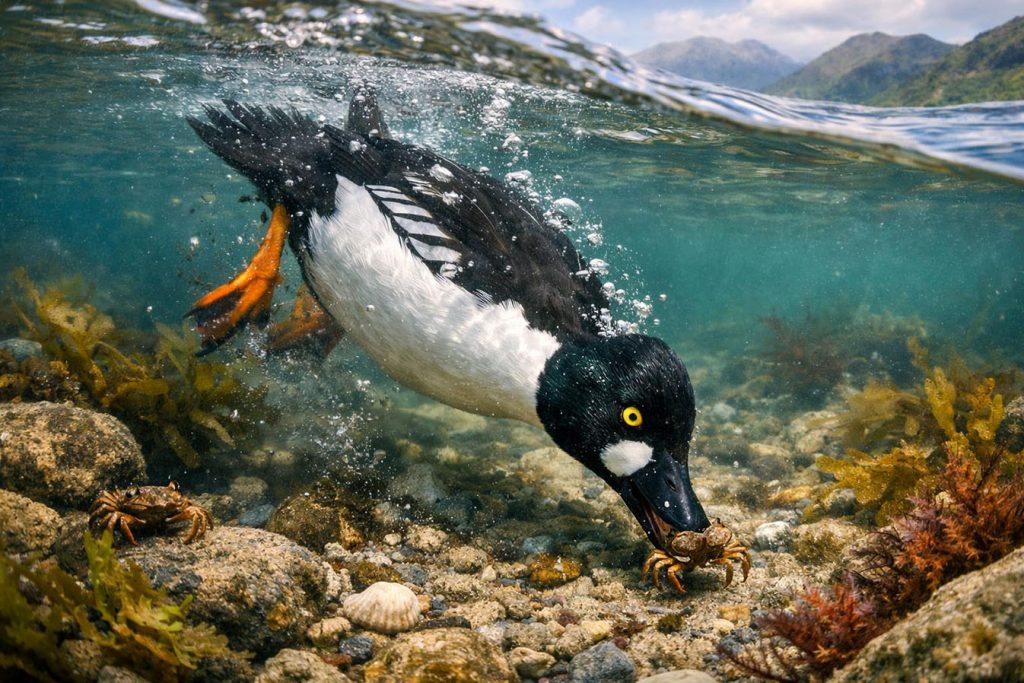
European Goldeneye – Bucephala clangula, foraging for crustaceans (illustration)
For an in depth look at the Goldeneye, see the Cùra special feature ‘More Than Just a Duck’
Painted Lady
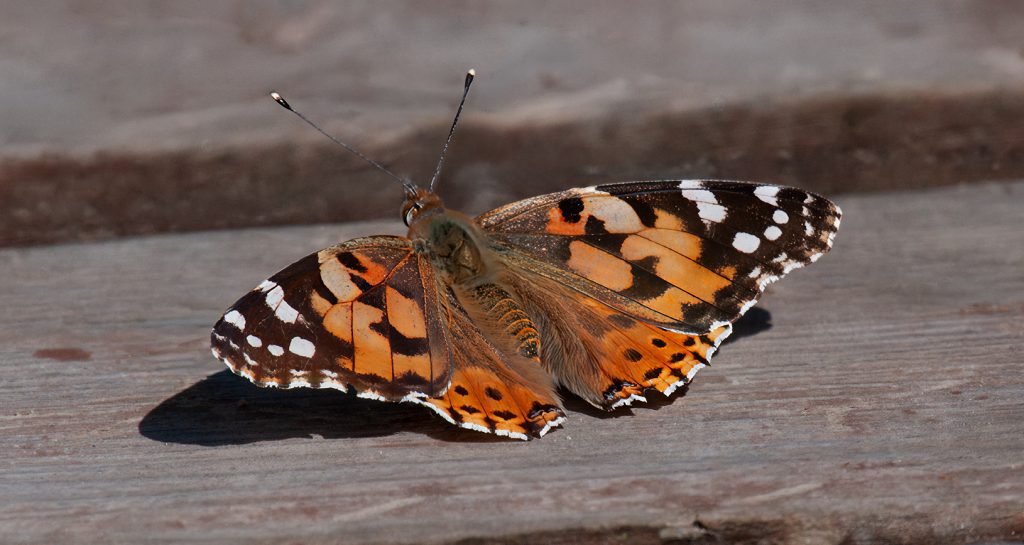
Painted lady – Vanessa cardui, Merkinch (photograph)
The painted lady is not a full time resident Scottish and UK species. It arrives here in the summer having migrated from Morocco, there is no real evidence for the Painted Lady successfully surviving a winter and it certainly does not do so in any significant numbers. The numbers arriving in the summer vary greatly, with occasional exceptional years like 1996 seeing millions successfully make the journey and other years where total records can be very small with 1967 having only 100 recorded individuals. Once in Britain, a warm summer can mean several generations but there are only a few records of a return migration South in the autumn. Recent research however has suggested that there is a very significant southerly movement but that the return occurs at high altitudes, which is why it has not been noted before. This would mean a round trip journey of 9000 miles made over six consecutive generations of butterflies. When they do arrive, they can be seen almost anywhere but are attracted to thistles, which serve as the food plant for the caterpillars and are a source of nectar for the adults. This butterfly was seen sunning itself on the wooden walkway at the Southern end of the Silver Pool at Merkinch. Scotland has always been a known destination for the migration in the UK but sightings are less common than further South, especially the South coast of England where the butterflies arrive having crossed the channel. It is believed that orientation to the sun is the most important navigational tool for the Painted Lady. With this ability, the Painted Lady has become the most widely distributed butterfly species on earth.
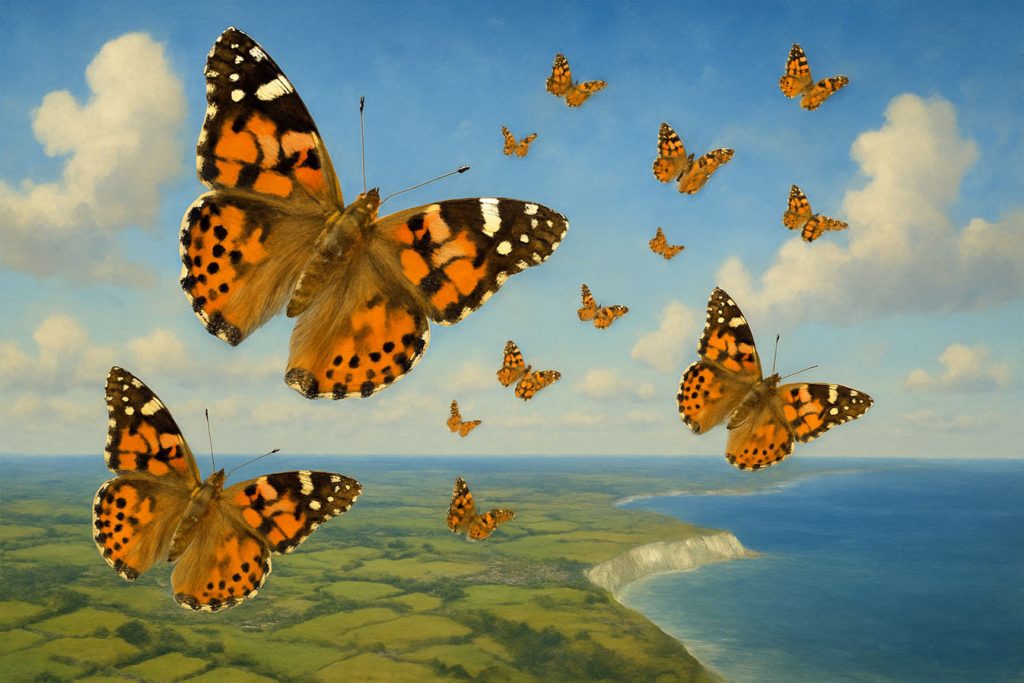
Painted Lady Butterflies – Vanessa cardui, migrating South over South coast of England (illustration)
The name Painted Lady comes from the resemblance of its markings to some cosmetics, especially historically with the use of rouge and white lead and black ‘beauty patches’. There was a short period in England when it was known as The Thistle Butterfly, a name seen long term in the Netherlands and in Spain both themes emerge as it is called Bella Dama o Cardero, The Pretty Lady of the Thistles”.
Day 4
River Kingfisher
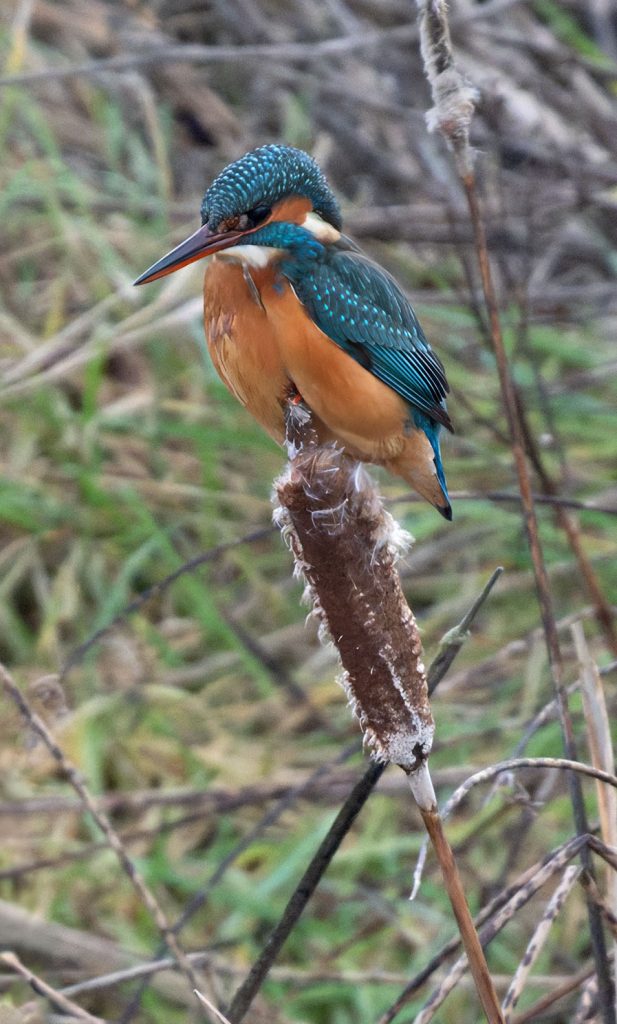
River Kingfisher – Alcedo atthis, Merkinch (photograph)
Seen in Celtic belief as symbolic of freedom, courage and adventure, described as a ‘living jewel’ and in Greek mythology ascribed the power, if seen by two lovers together, to bless them with eternal happiness, the Kingfisher is a small bird with a great deal to live up to. Add to this that they are said to have the ability to calm a stormy sea, are possibly only able to be seen by people who are righteous and, back to Celtic belief, act as messengers between the mortal world and spiritual realms, but since they move between air and water embody tranquillity, balance and patience, an adult kingfisher has very real responsibilities carried by its 6 inch (15cm) body. Perhaps that is why so much of their time can be described as ‘gone fishing’
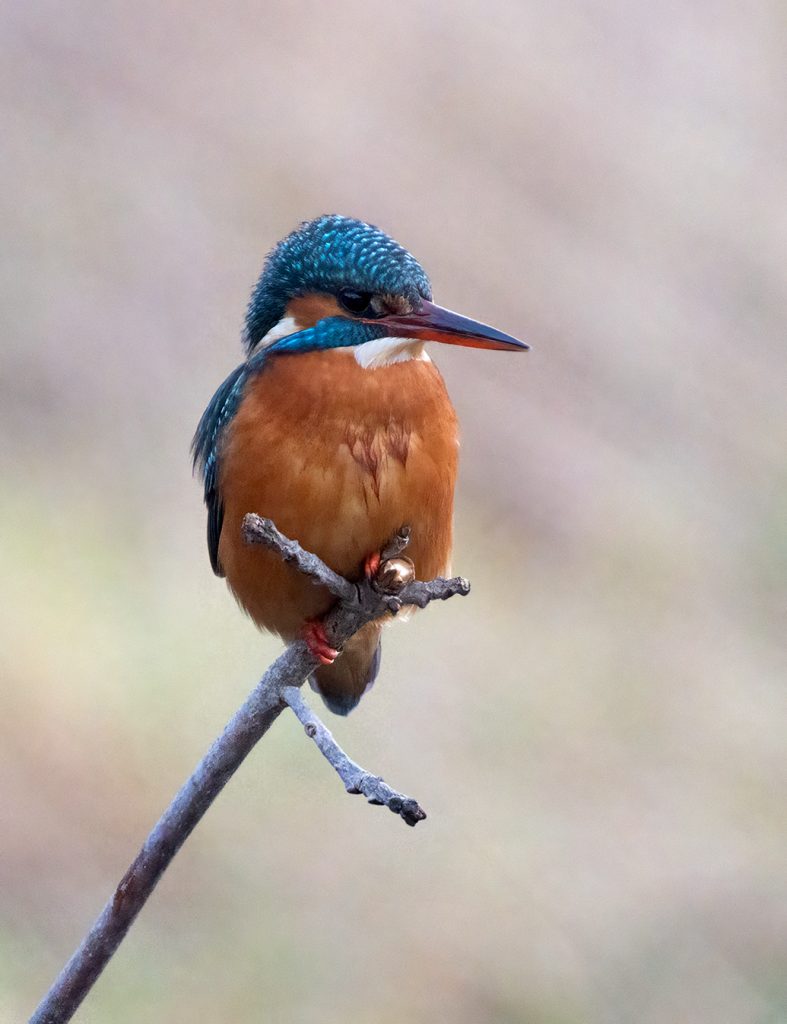
River Kingfisher – Alcedo atthis, Merkinch (photograph)
Nettle-tap Moth
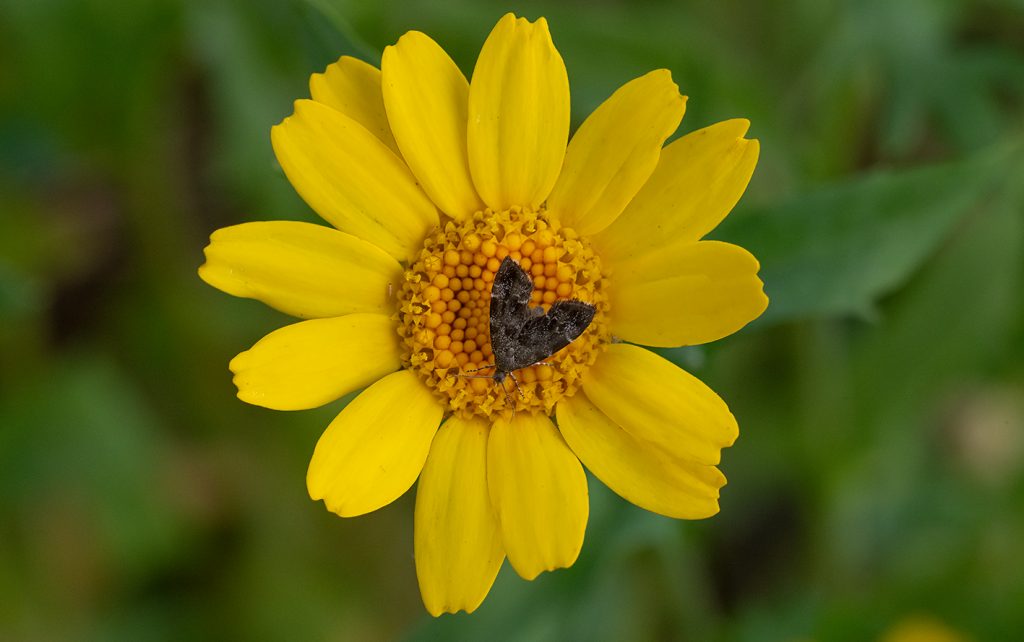
Nettle-tap Moth – Anthophila fabriciana, on Corn Marigold, Merkinch (photograph)
A small daylight flying moth found throughout Scotland and the UK. It is not just Britain or even Europe where the Nettle-tap is seen, the moth is found to the East as far as Japan including China, Afghanistan and Russia and in 2013, was recorded in Canada. The Nettle-tap has stinging nettles as its food plant for the larvae and adults are often seen around nettles during the day. it also comes to rest between flights on nearby flowers. The frequent, highly mobile flights and rapid movements when they first settle on a flower to feed have meant that some descriptions of the Nettle-tap place it in a category of ‘dancers’ amongst the moths and butterflies, giving rise to the ‘tap’ part of the name and making the nettle leaves and flowers its stage. The scientific name, Anthophila fabriciana, translates as ‘Fabricius’s Flower-lover.
Day 4 – Merkinch Primary School
Kingfisher
It’s so cute and amazing – Kacey
They are very cute, amazing, cool and colourful – Harper
They are very beautiful and very, very cute – Serena
Nettle-tap Moth
It has aura – Caleb
It is very black, it is so sick – Victor
Day 3
Bottlenose Dolphin
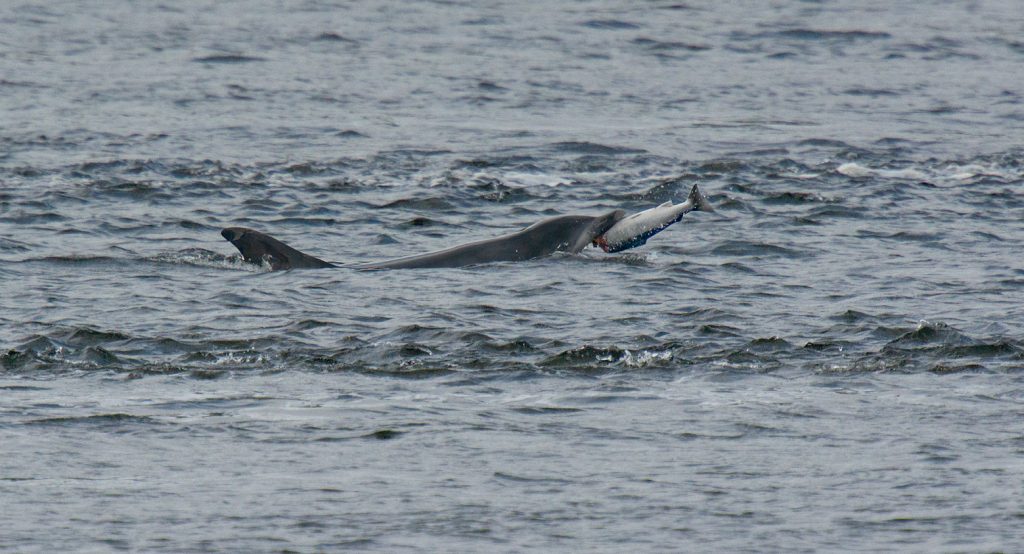
Bottlenose Dolphin – Tursiops truncatus, from Merkinch (photograph)
Not strictly on the reserve but seen from the path along the sea edge at Merkinch, a Bottlenose Dolphin catching Salmon on the rising tide in the deepwater channel in the Beauly Firth. The Moray Firth dolphins are estimated to be a group of 200 centred on the Firth but known to travel widely from it as well. The group are the most Northerly established Bottlenose Dolphin population in the world. They are also sometimes recorded venturing further inland and into the Beauly Firth where they are seen from North Kessock and the Merkinch LNR.
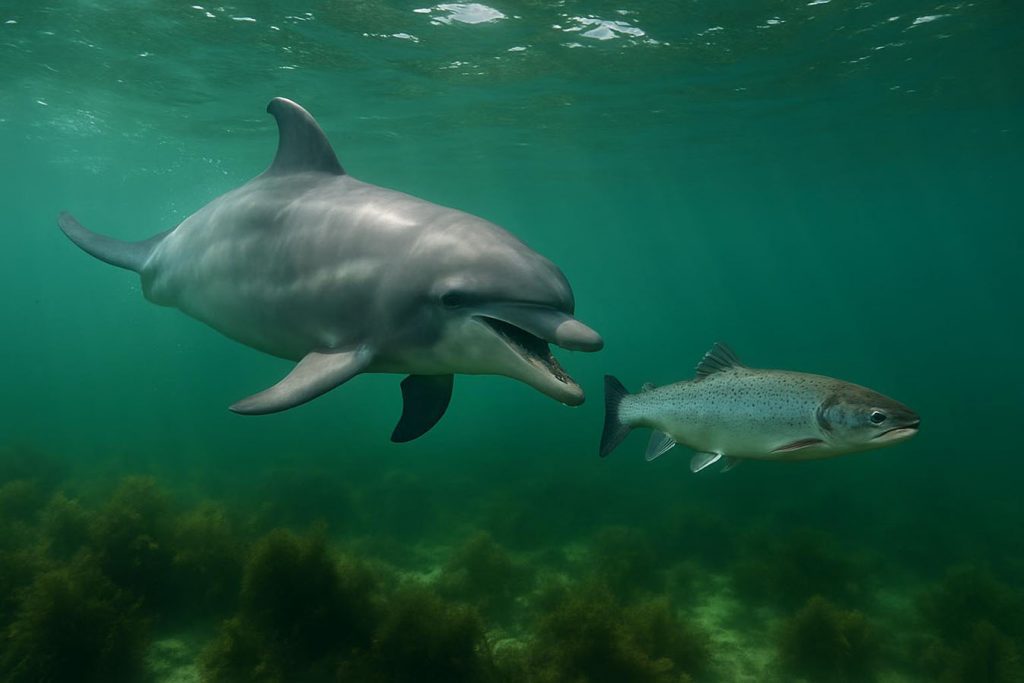
Bottlenose Dolphin – Tursiops truncatus hunting Atlantic Salmon (illustration)
Not just of conservation importance, the Moray Firth dolphins are estimated to bring at least £4 million to the Scottish economy each year through tourism.
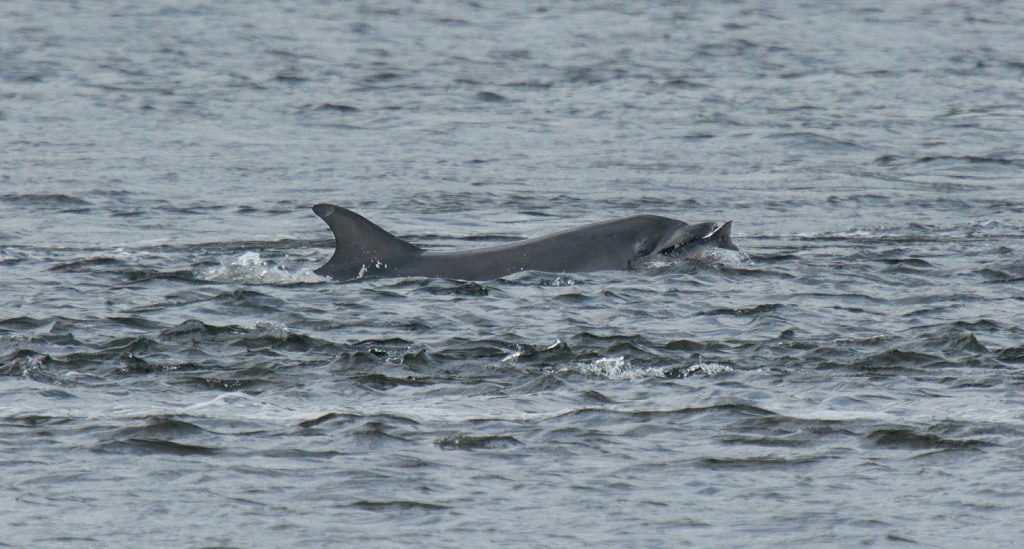
Bottlenose Dolphin – Tursiops truncatus, from Merkinch (photograph)
Bottlenose Dolphins are large, up to 4m long, very acrobatic and fast, and can be aggressive to each other and rival cetaceans, especially the Harbour Porpoise. In Celtic lore, they are generally thought of as positive spirits and some Celtic traditions see them as ‘The Watcher of the Waters’, guardians of the sea and aquatic realms. To seafarers they are seen as good luck and even protectors who could guide ships to safety.
“I’m a resident here, just on the main road from the Nature Reserve. I’ve been here 30 years and the nature reserve had just started. The trees were just starting to grow and we’ve watched other things grow through the nature reserve. It was nice when we first came here but not as nice as it is now. When you come down for a walk, you do see dolphins. I like sitting watching them but they don’t come up here as much as they used to. I actually think it’s because when they were building the marina, when they were cleaning out the harbour, the boats used to come down here and empty their stuff out here. So I think that’s what’s happened with the dolphins. But they do come up, they do come up. I just hope they come again”.
Lorna
One particular and much loved Dolphin that was seen in the Beauly Firth was given the name ‘Kess’. She was first recorded in 1990 and kept returning up to her death in 1998 when her body was found on a Nairn beach. She suffered from scoliosis and kyphosis, meaning that her spine was excessively curved sideways and vertically but appeared to be very active and a high status individual, who also gave birth to four calves two of which survived to adulthood. When she died, sightings in the Beauly Firth dropped sharply and one possibility is that her high status meant she was followed and there was something in the Firth that had appealed to her as a setting.
Story shared by Dell McClurg
Common Carder Bee
The most numerous of the bumblebees and making a surface nest usually amongst dense vegetation, Common Carder Bees have pollen baskets on their hind legs to carry pollen back to the nest. There they build wax pockets at the base, which are filled with pollen as a food source for the larvae as they hatch.
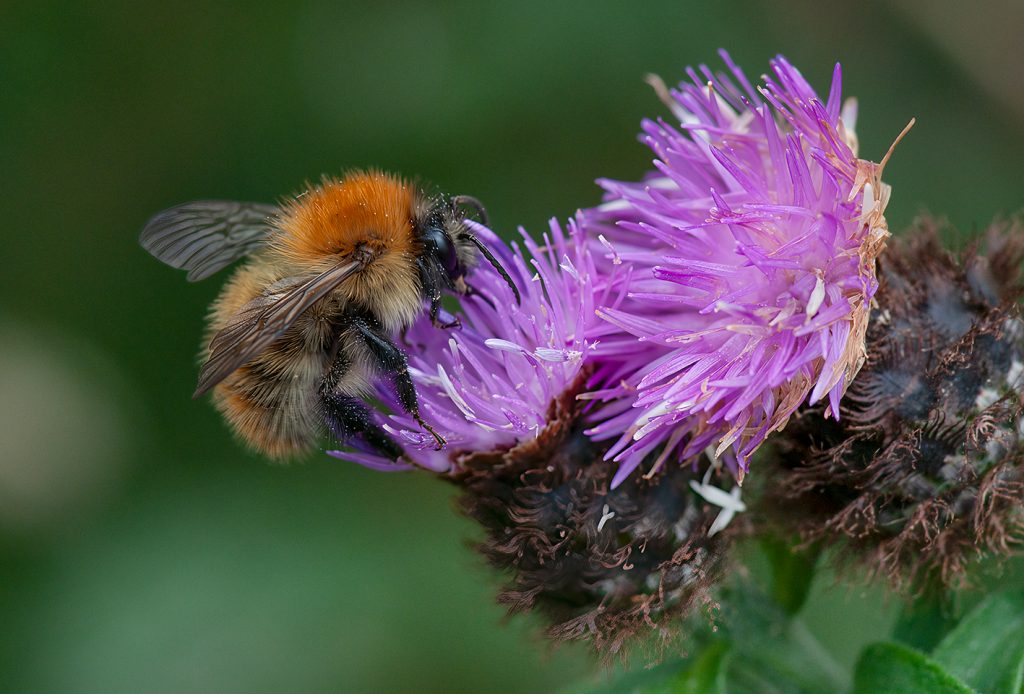
Common Carder Bee – Bombus pascuorum, Merkinch (photograph)
Customs in Scotland identify bees as essentially sacred and important parts of the natural world. Specific customs mostly centre on kept bee hives, which were regarded almost as part of the family, and Scotland shared the belief of ‘telling the bees’ with other parts of Europe in which it was a duty to go to a hive and literally tell the bees about important events, births, marriages, deaths, departures, arrivals affecting the household, their household. If this was not done, then the bees could desert the hive, stop producing honey or die. However, this is regarded today scientifically, modern mental health care would fully recognise the value of verbally telling the story of major life events, there may have been a very real supportive value in the tradition and whist the duty was to a family bee hive you cared for, a story could also be told to wild bees if you wanted to, they would be good listeners.
Day 3 – Merkinch Primary School
The dolphin is so cute eating the fish – Iris
The dolphin is adorable and soooo cute. I would like to swim with them – Tom
Carder Bee – It’s so pretty, cute and fluffy – Hollie
Day 2
Merkinch Month Launch
On Friday, May 1st, ‘Merkinch Month on Cùra’ was launched at Merkinch Nature Reserve with some of the main individuals and organisations who have come together to be part of this project. Merkinch Nature Reserve is a ‘hidden gem’, a nature reserve on the edge of the city of Inverness. What started as marshland and industrial wasteland has become a rich habitat for a wide range of animals and plants, including some of the endangered species in the UK today.
Now, for one month, from May 1st- 31st the Reserve is the focus of a special feature on Cùra Guardian. What makes it so appropriate is the abundance of stories of the natural world connected with it, incorporating the latest environmental science, cultural story and history. Each ‘Merkinch Month’ day opens with a photograph of one of the species found on the Reserve taken by Nick Sidle and some of the facts behind it, then added to with contributions from people who work on or live near the Reserve. Many of Nick’s photographs are posted on Flickr and have just reached a milestone of over 6m views from a global audience. These albums provide the backbone of Cùra Guardian from which the rest follows.
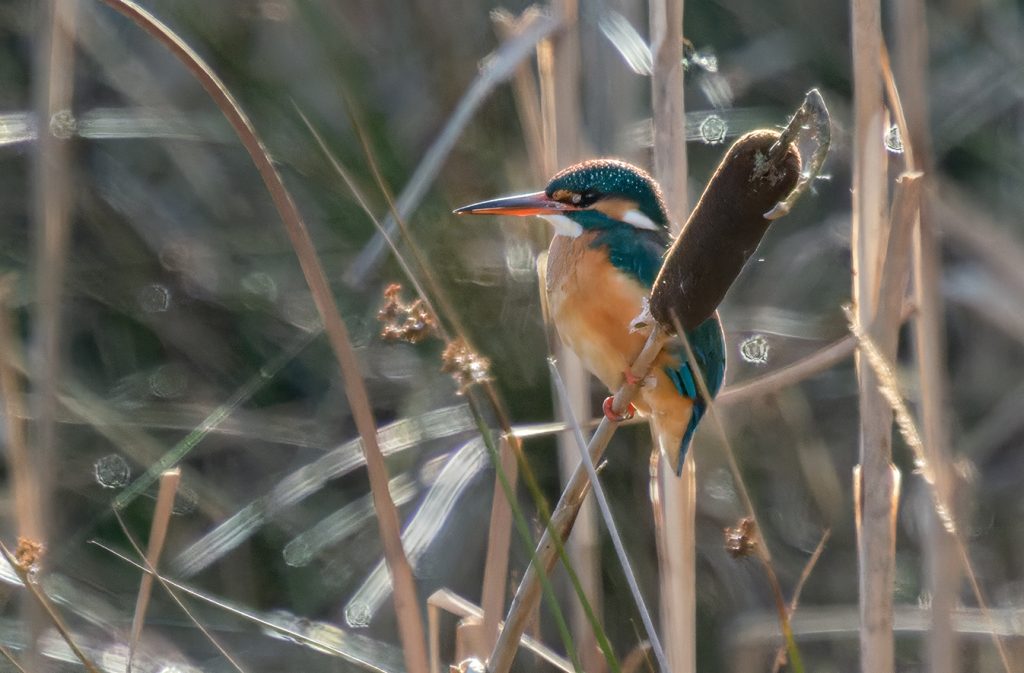
River Kingfisher – Alcedo atthis, Merkinch (photograph)
Just one example of the many connections being made in this project, relates to the Kingfisher. This has become the route to connect with another of Cùra Guardian’s partners, in Kisumu, Kenya. The latest ‘Feature Story’ is on the theme of Lake Victoria, their local lake and the second largest freshwater lake in the world, also home to the Kingfisher but now badly impacted by plastic pollution and climate change (https://curaearth.com/the-tale-of-nam-lolwe/). Despite the difference in size, there are common issues affecting both locations which is helping to forge this unique link building to a special interaction later in the month.
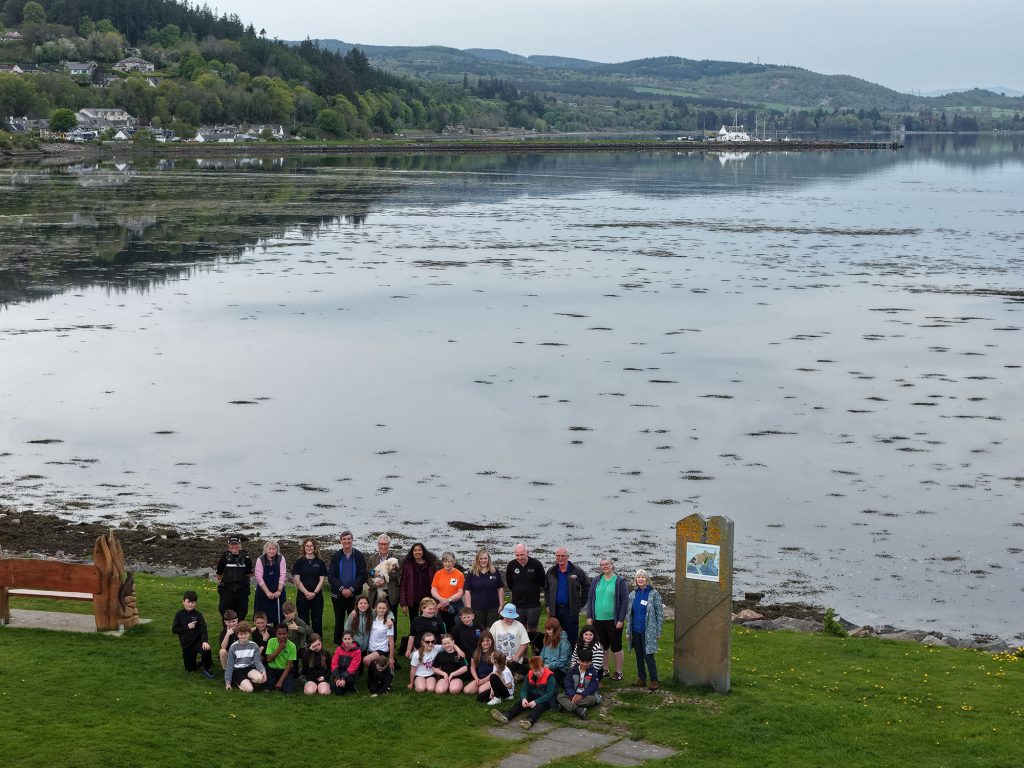
Merkinch Month launch (photograph)
The invited guests on Friday, all supporting the project and pictured here against the splendid backdrop of the Reserve were Cllr Chris Ballance, Cllr Michael Gregson, Merkinch Local Nature Reserve Chair – Ali Locke, Chair of the Community Council and Merkinch Nature Reserve Board Member – Dell McClurg, volunteers who work on the Reserve, Inverness Ranger – John Orr, PC Katie Johnstone – Highland & Islands Community Beats police officer and an important part of the Merkinch community, Caledonian Canal – Rebekah Stevenson, Highlands & Islands Climate Hub – Aisling Phillips. All emphasised the importance of reaching the next generation, and the presence of Corinne MacCallum and the children from Merkinch Primary School completed the photograph perfectly.
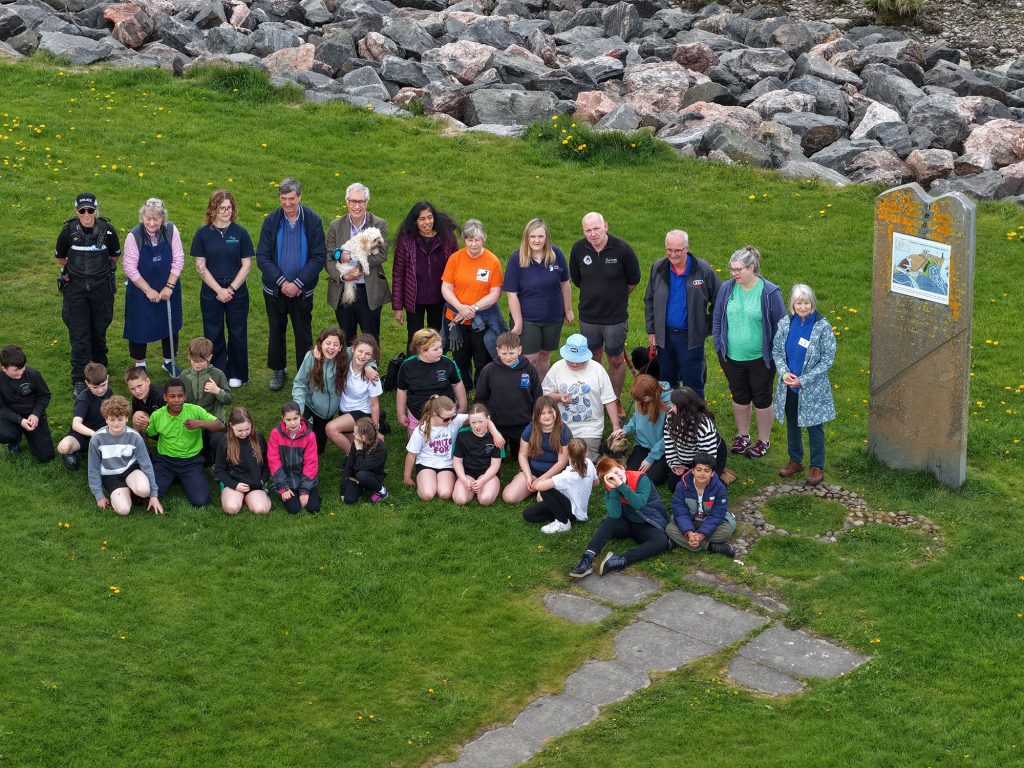
Merkinch Month launch (photograph)
In the run up to the event there was also a demonstration of just how good the wildlife experience at the reserve can be. Nick, our photographer, was there early and had just under an hour to go for a walk with his camera before everyone arrived. These are just a few of the things he saw and photographed in just that hour.
Sitakumari, Director, Heartstone
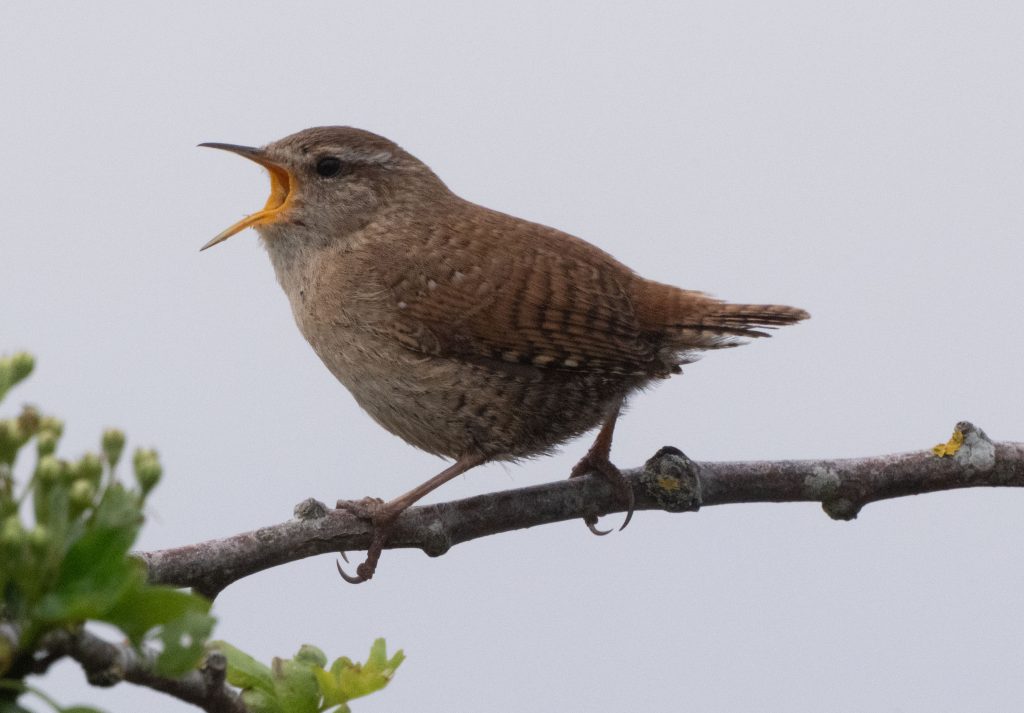
Northern Wren – Troglodytes troglodytes, displaying. Merkinch (photograph)
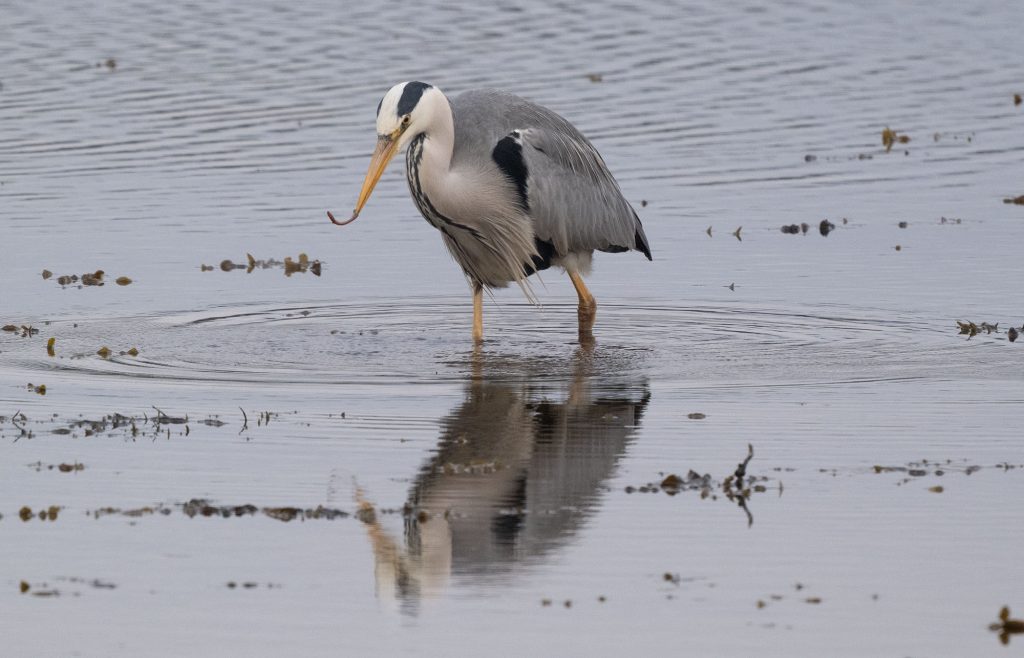
Grey Heron – Ardea cinerea, fishing. Merkinch (photograph)
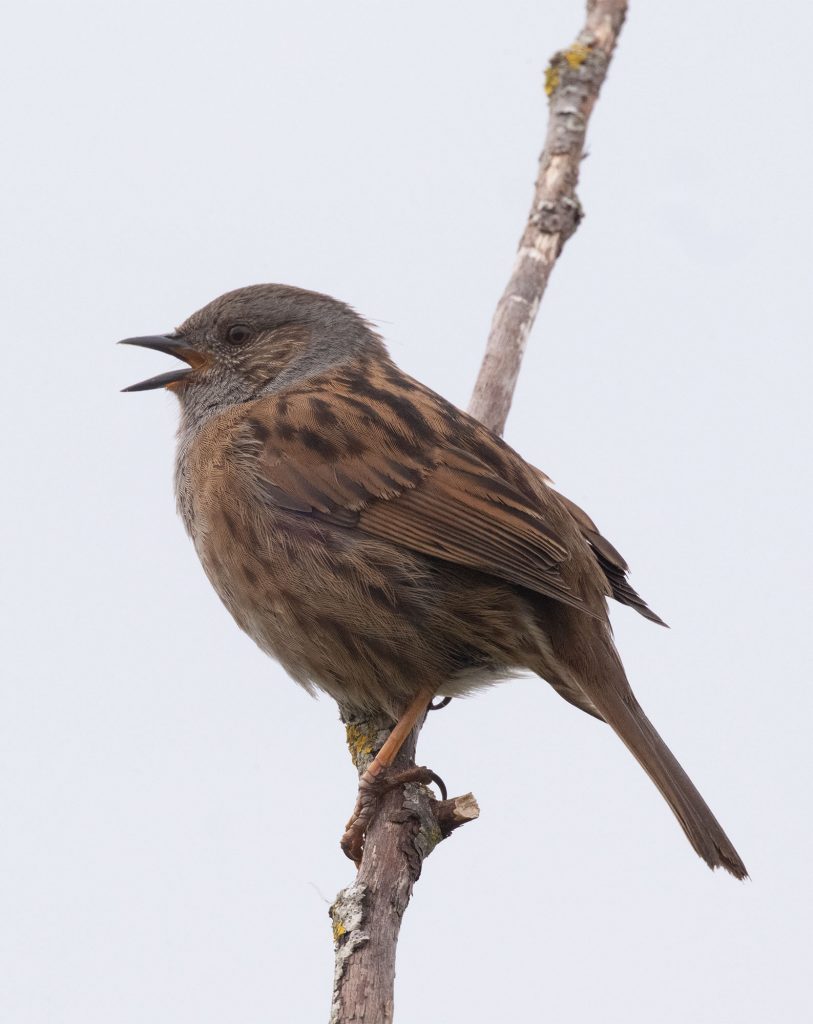
Dunnock – Prunella modularis, displaying. Merkinch (photograph)
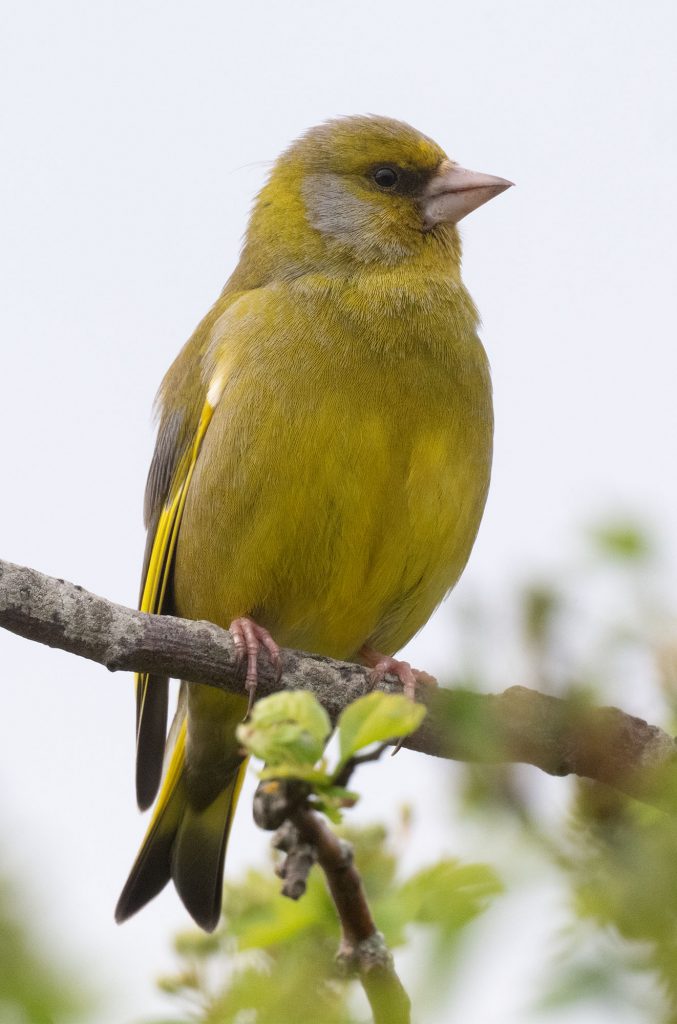
European Greenfinch – Carduelis chloris, Merkinch (photograph)
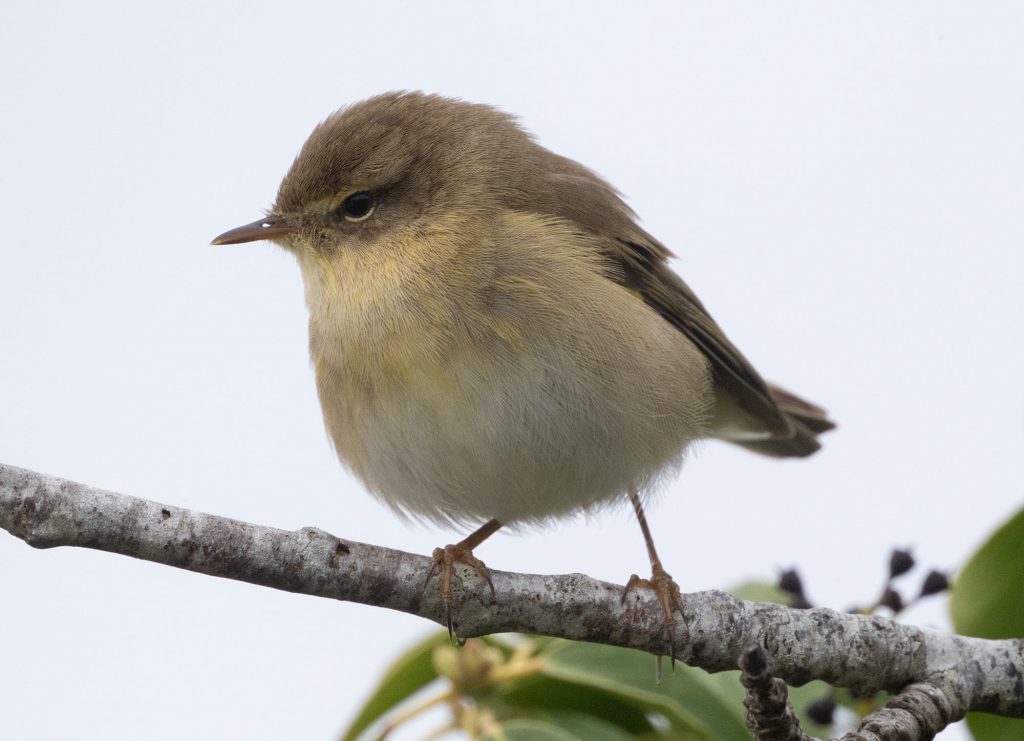
Willow Warbler – Phylloscopus trochilus, Merkinch (photograph)
Day 1
Eurasian Curlew
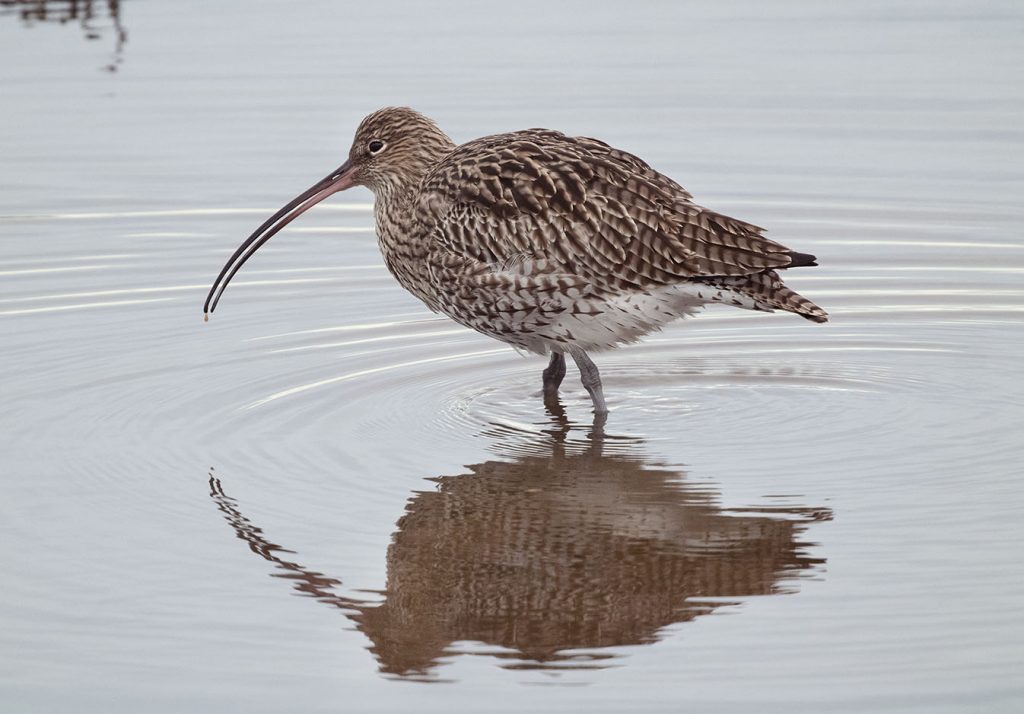
Eurasian Curlew, Numenius arquata, Merkinch (photograph)
Curlew, celebrated in poetry going back well over 1000 years, ‘I take my gladness in the sound of the curlew instead of the laughter of men’, the Curlew has almost been defined and named by its call. Curlew, as a name from its song, definitely dates back to 1340 CE and this is one of the more recent references. The call can be eerie and is often associated with the supernatural and the song of the Curlew has been described as being from something half spirit and half bird. Curlews are thought to be the origin of ‘The Seven Whistlers’, mysterious birds flying at night whose calls from another world predict disaster.

Eurasian Curlew – Numenius arquata, Merkinch (photograph)
It is the Curlew itself however which is under threat, numbers have declined in Scotland more than 60% in just over 20 years.
Sea Aster
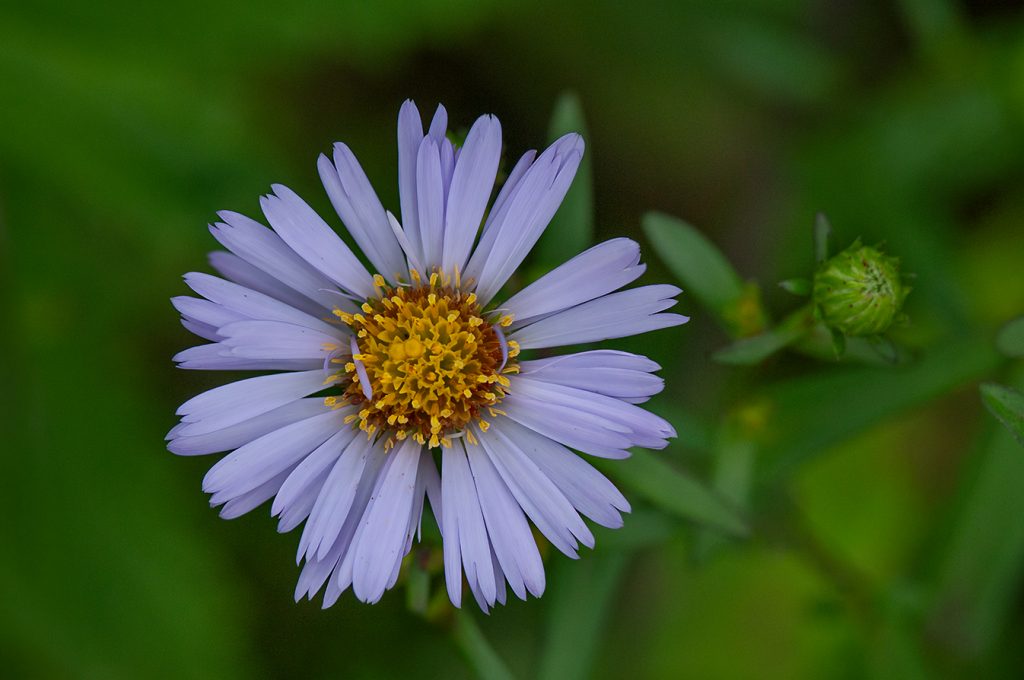
Sea Aster – Tripolium pannonicum, Merkinch (photograph)
The Sea Aster is found in coastal habitats and was once popular in gardens until it was displaced by the introduction of the related Michaelmas Daisy from America in the 1600’s. It was used as a herbal treatment for wounds and an antidote to some poisons as well as having a medicinal use for eye diseases. It is also mentioned as the birthday flower for 1st May making it very appropriate for the first floral encounter in Cùra Merkinch Month. The name Aster comes from the Greek goddess Astraea and the flowers were said to come from her tears which turned to stardust and then made the flowers when it fell to earth.
Day 1 – Merkinch Primary School
The Curlew is a chicken with a trumpet! LOL – Iris
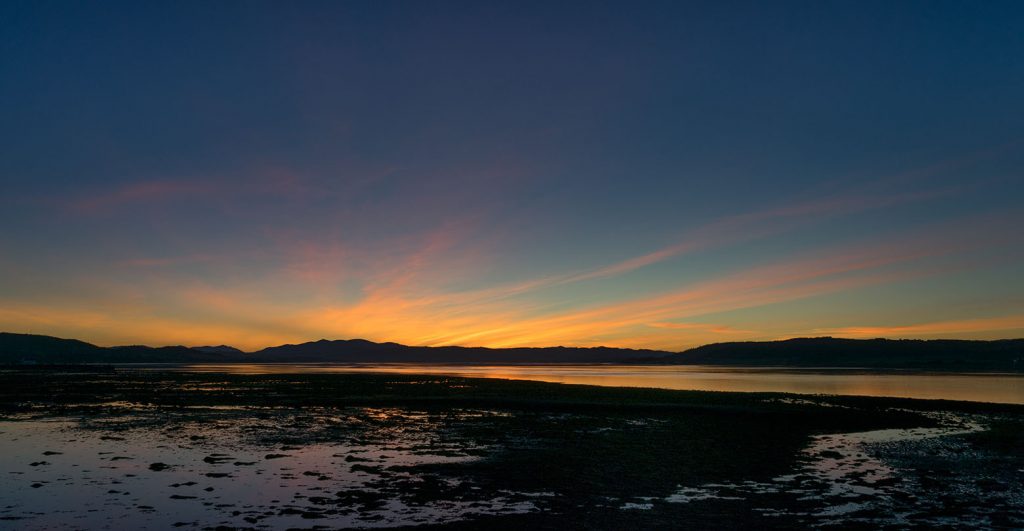
Sunset from Merkinch Nature Reserve (photograph)
Text, Photographs and illustrations ©Nick Sidle or as attributed. All rights reserved