Photographs and illustrations on location Nick Sidle, photographs for reports – the authors
17th September 2026
CÙRA Guardian, The Caledonian Canal
Report by Sitakumari, Director of Heartstone
On Thursday 17th September, the first of five Cùra events opened at Great Glen House, the home of NatureScot in Inverness, which will follow the route of the Caledonian Canal. Inverness marks the eastern entrance to the canal at Merkinch Local Nature Reserve. It runs to Corpach near Fort William in the West, linking the coasts of Highland Scotland and providing a connection for communities, trade and more recently tourism since it was opened in 1822. This event brought people and cultures together with Cùra contributing writers in Australia, Kenya and India taking part and a specially invited audience based in Highland for what turned out to be a very meaningful event centred on the natural environment, itself another connection to the waterway which runs through varied and important habitats of natural beauty, worth and ecological significance.
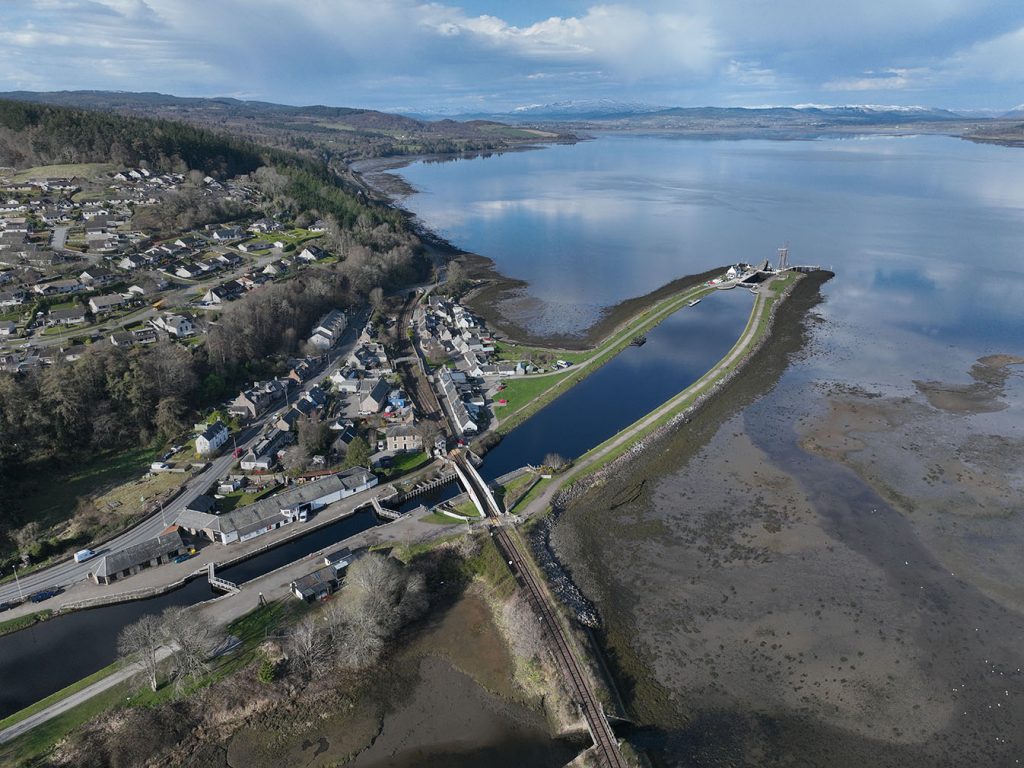
The Eastern end of the Canal at Merkinch, Inverness (photograph)
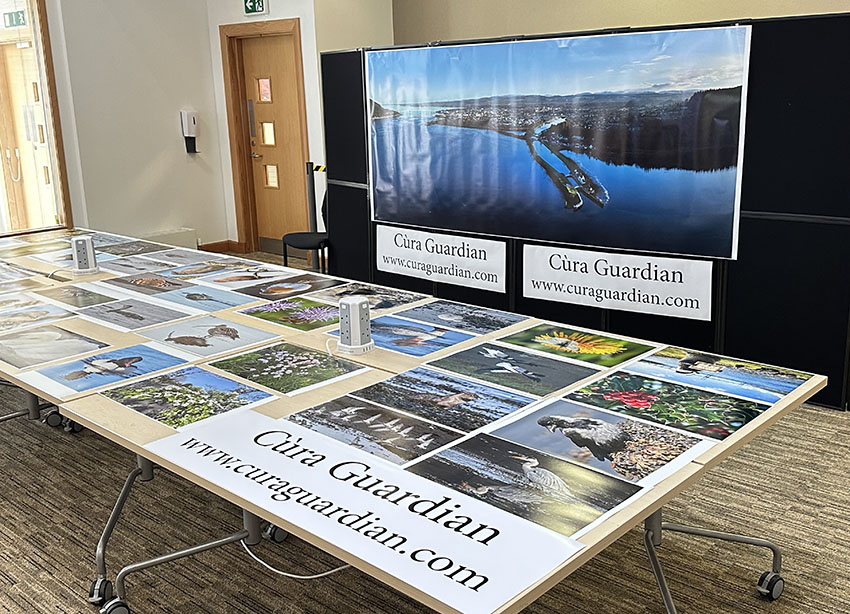
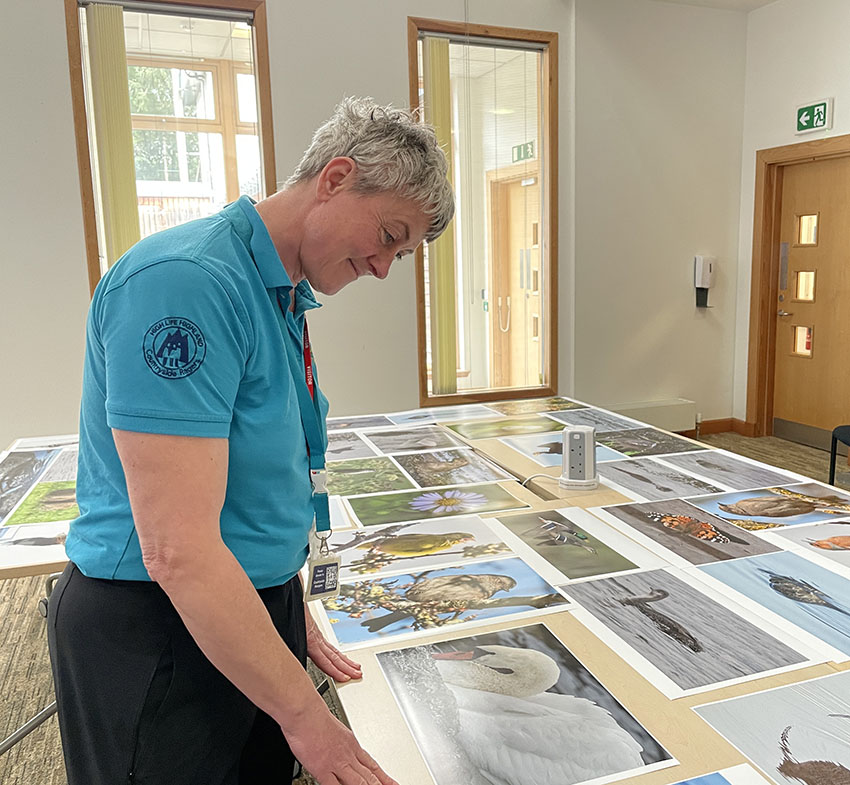
Following a welcome from Lord Clive Soley, a valued Heartstone supporter now resident in the Highlands, Sitakumari, Director of Heartstone, Imogen Furlong, Head of Countryside Services for High Life Highland, Phil Baarda, NatureScot ecologist and Dawn Stewart, Records Manager/historian for Scottish Canals engaged with those assembled overseas. On display were a few Images from the head of the Canal and Merkinch Local Nature Reserve drawn from the Cùra Guardian website, showing the remarkable range of flora and fauna to be found at this location.
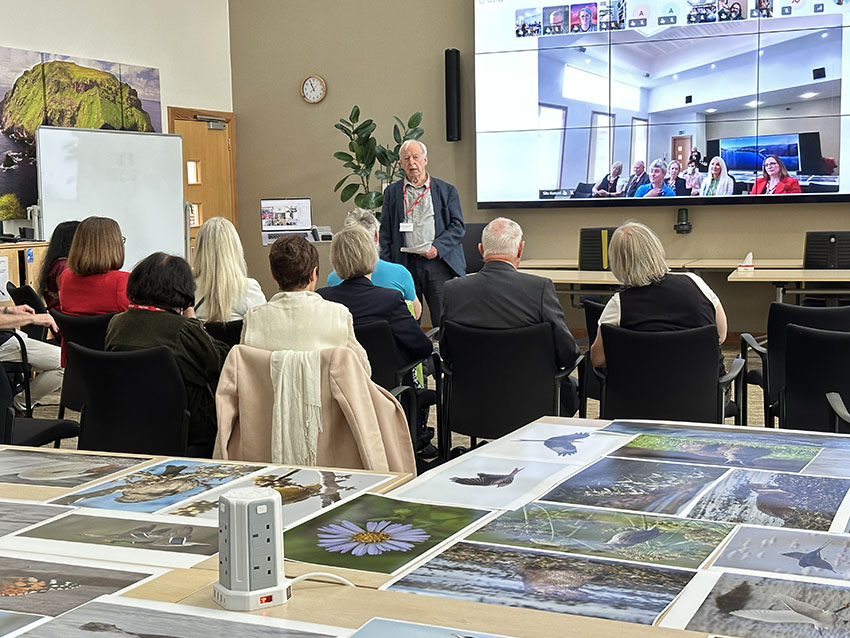
Lord Clive Soley pictured above, opened the event. He said:
‘Welcome to all here and in the wider world, particularly Don Rowlands, Aboriginal Elder and Keeper of the Dreamtime Stories in Queensland Australia, together with other guests in Birdsville on the edge of the Munga Thirrie Desert, where Don is also Ranger-in-Charge.
Stories of our relationship with the natural world have always been important in all cultures and countries. This year of fires, droughts, high temperatures, flooding are reminders of our important relationship with the natural world – we forget it at our peril.
Sitakumari, as part of the Cùra Guardian programme, has brought together many people in this country and the wider world to remind us of our relationship with nature.
It has always been part of our history – here, in Britain, we recall Beatrix Potter, Tarka the Otter, the Jungle Book just to recall a few names from a long list linking humanity with the natural world.
I can’t name all the people who have come together today from around the world to the Caledonian Canal which has played, and still does play, a big part in the nature and history of Scotland.
I do hope your success today will continue to unite people around the world in our determination to promote our all-important relationship with nature.
I wish this project success and pay tribute to all those taking part here and in the wider world.’
Sitakumari, Director of Heartstone, made the following statement:
‘It is usually thought that the Caledonian Canal is a waterway linking the east and west coasts of Highland Scotland. As of today, there is also a very real way in which it now connects to Australia and Kenya as well, and by the end of the programme this gathering is here to launch, will have been extended to other countries as well. Fortunately, all of this is without mass excavation of the landscape of three continents! This is a good thing since environmental awareness and stewardship are at the heart of Cùra Guardian, Heartstone, this event and of course the work of NatureScot, who are hosting us today.’
She then introduced the main contributor for the event, Don Rowlands, OAM (Medal of the Order of Australia), Ranger-in-Charge at Munga-Thirri National Park, also Aboriginal Elder and a ‘Keeper of the Dreamtime Stories’
The connection between Heartstone and Don goes back several years when he met Heartstone photographer, Nick Sidle, during his Great White Shark photoassigment in 2001 which took him to the south eastern tip of Australia from where he embarked on a journey into the Southern Ocean to capture on film the tracking and satellite tagging, for the first time, of a Great White for research purposes. On the way back, this led to a brief period for Nick in Queensland going into the Outback before returning to the UK. This brought the introduction to Don, which has lasted into the present time.
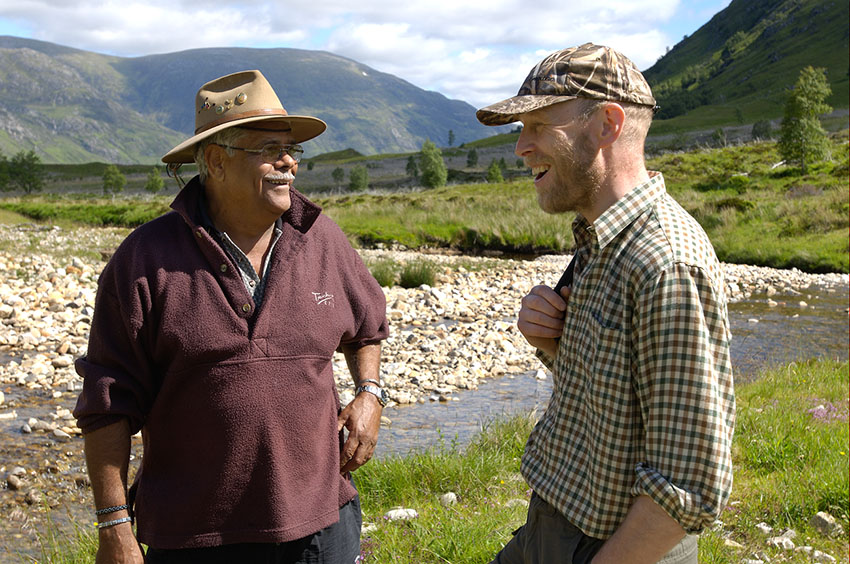
Don was invited to come to Scotland to be part of Heartstone’s ‘Festival of Flight’ photodocumentary exhibition a few years later and joined by NatureScot rangers when he was taken into the Highlands of Scotland for the first time. Even several thousand miles away from his homeland in Australia, Don still demonstrated his remarkable ability to get close to animals.

This event at Great Glen House was staged to be part of the NAIDOC celebrations in Australia, the yearly Australia-wide event that marks the cultures of Aboriginal and Torres Island Strait peoples. Heartstone and Cùra Guardian was honoured to have been invited to participate in the 2026 event following a successful smaller event in 2025. Supported by Diamantineshire Council in Birdsville, and Queensland State, the event brought together members of Don’s own Wangkangurru people, Nita Tilney, Principal at Birdsville State School leading the first Heartstone Story Circle in Australia, Peta Rowlands, the ‘up and coming Elder’ who will follow in the footsteps of Don as the next generation ‘Keeper of Dreamtime Stories’ and other special guests in Birdsville.
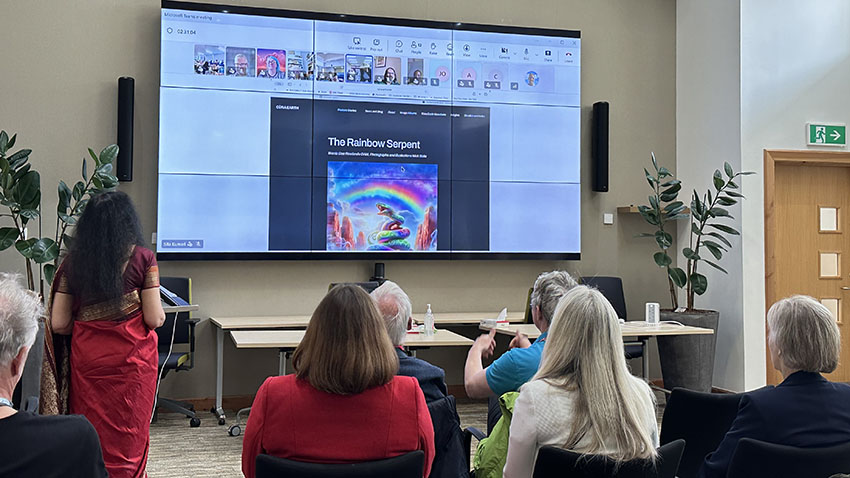
Two of the stories contributed by Don were selected for this event, the Rainbow Serpent (above), the Aboriginal Creation story and the Fish Increase story (below). Sitakumari presented both from the Cùra Guardian website, seen central on the screen. The first speaks of the importance of the role of people as stewards of the natural world, not exploiters, and the role of fire in managing the desert landscape. This approach has now been adopted in the current time by the National Park authorities drawing on Don’s expertise and advice, a powerful demonstration of the role today of these ancient Aboriginal practices. The second story demonstrated how the Aboriginal people managed food stocks in times of drought, moving fish from where they were plentiful to areas of depletion, and in this way successfully found a way of living in the desert landscape. This bears much similarity to modern-day practices in Scotland and other locations, with the concept of ‘rewilding’. Don’s grandfather had a major role to play in this practice and passed on his knowledge to younger generations. Sitakumari asked Don how he felt knowing that now, he was advising government authorities for the National Park on land management practices developed by his ancestors, once totally dismissed. He had a one-word answer – GREAT! He said, it has been a long time coming but at last, things are beginning to change and the wisdom of the people who had found a way to live in harmony with a land which many find inhospitable, is starting to be recognised.
Both stories are on www.curaguardian.com at ‘Feature Stories’ – ‘Oceania’ together with other stories contributed by Don Rowlands.
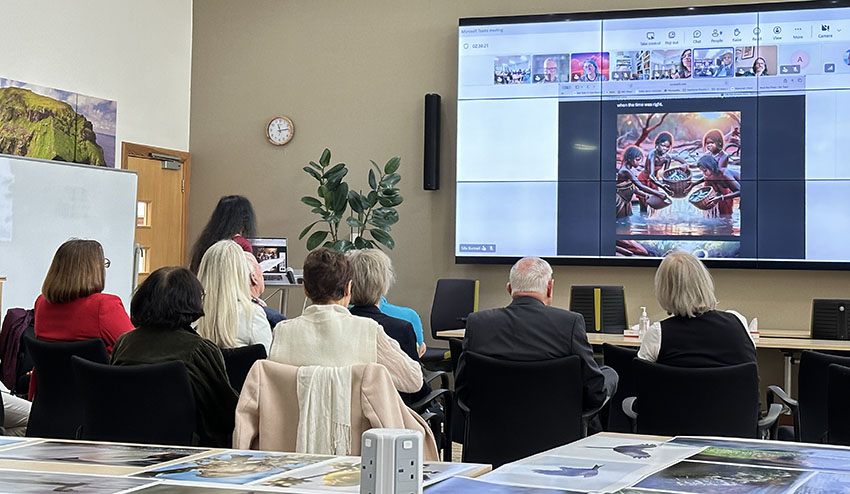
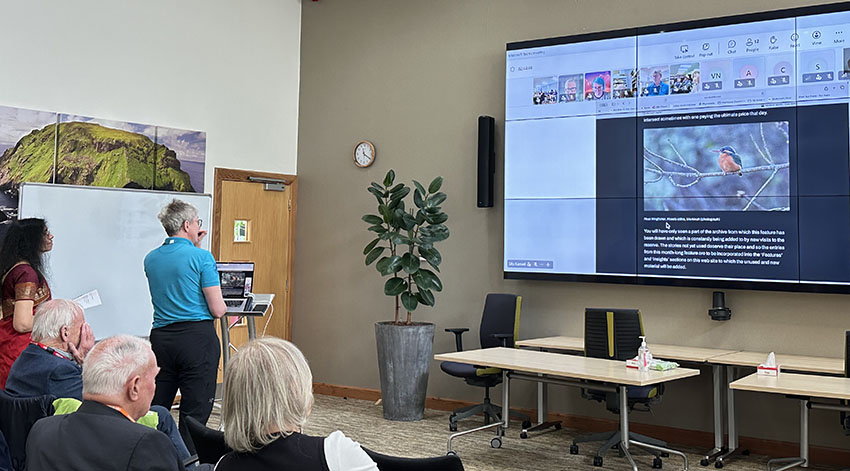
Don was followed by Imogen Furlong, Head of Countryside Services for High Life Highland, which makes her the lead Manager for the Rangers in Highland, an ideal complement to Don. She had chosen an appropriate bird species for her presentation which brought to life for all those assembled, the world of the Merkinch Nature Reserve at the head of the Canal. This was the Kingfisher (image above shows the story webpage on Cùra Guardian at ‘Merkinch Month’), a species also found in Australia and in the two other countries joining this event – India and Kenya. This was a perfect example of connections across continents made through the natural world.
She said:
“The Caledonian Canal has always connected people, places and ideas. Through Cura Guardian, that journey continues as we come together to explore how culture and nature shape our sense of place. Travelling along the canal and spending time in places like Merkinch Local Nature Reserve reminds us that the stories of people and the stories of nature are inseparable. By learning from one another and deepening those connections, we can foster a stronger sense of stewardship for the landscapes, heritage and communities that make the Highlands so special.”
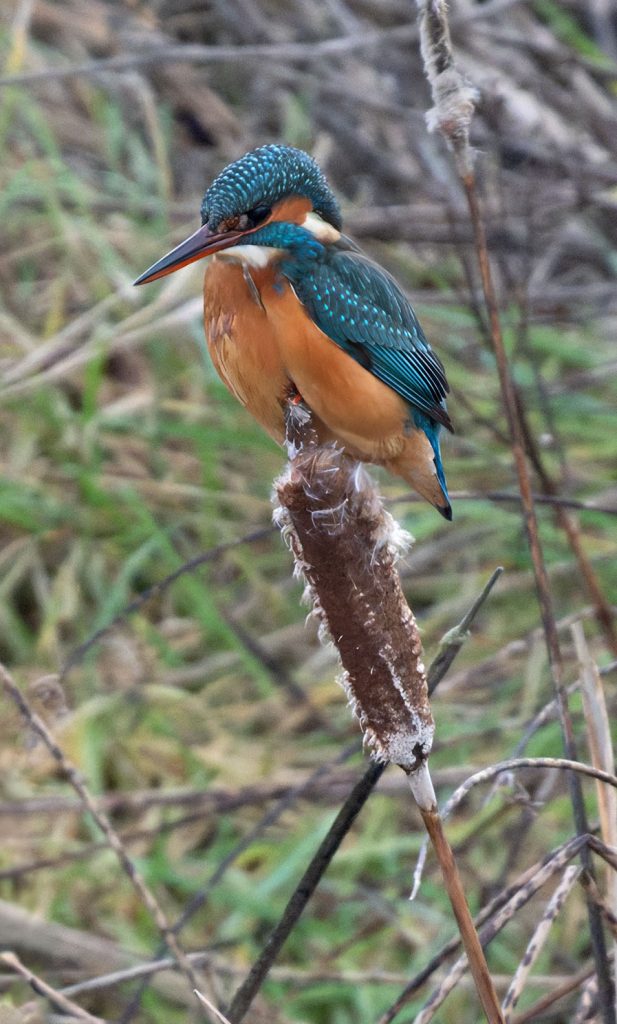
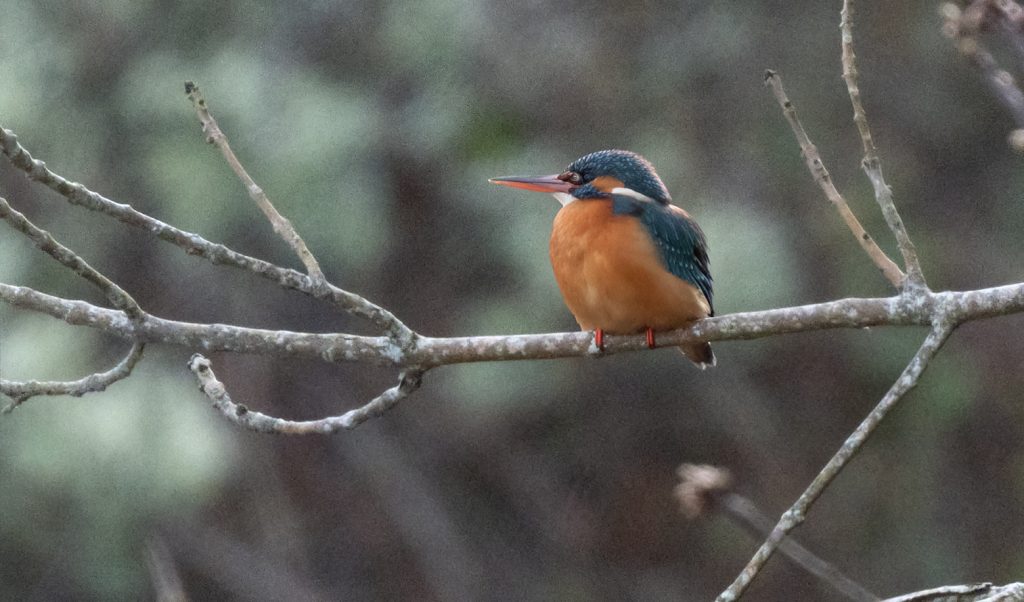
River Kingfisher, Alcedo atthis, Merkinch (photographs)
Imogen talked about the Kingfisher’s distribution, the remarkable speed at which it can dive for fish, and the Australian Kookaburra, a related species. The Kingfisher on this page was pictured at Merkinch Nature Reserve.
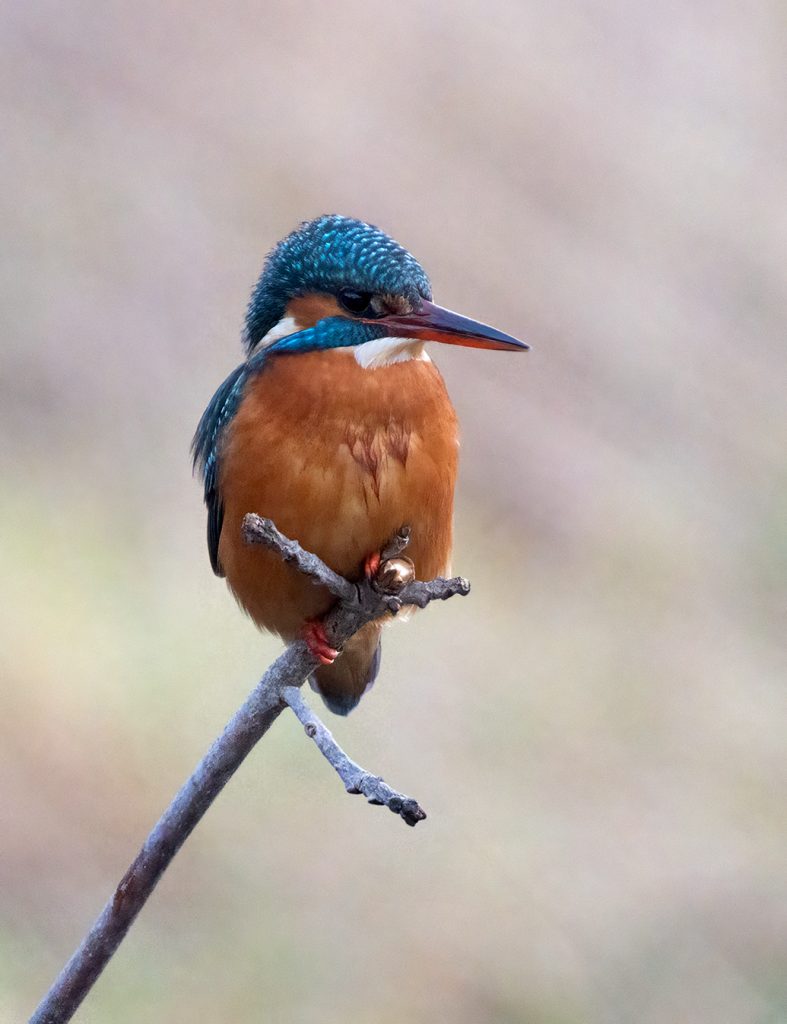
River Kingfisher, Alcedo atthis, Merkinch (photograph)
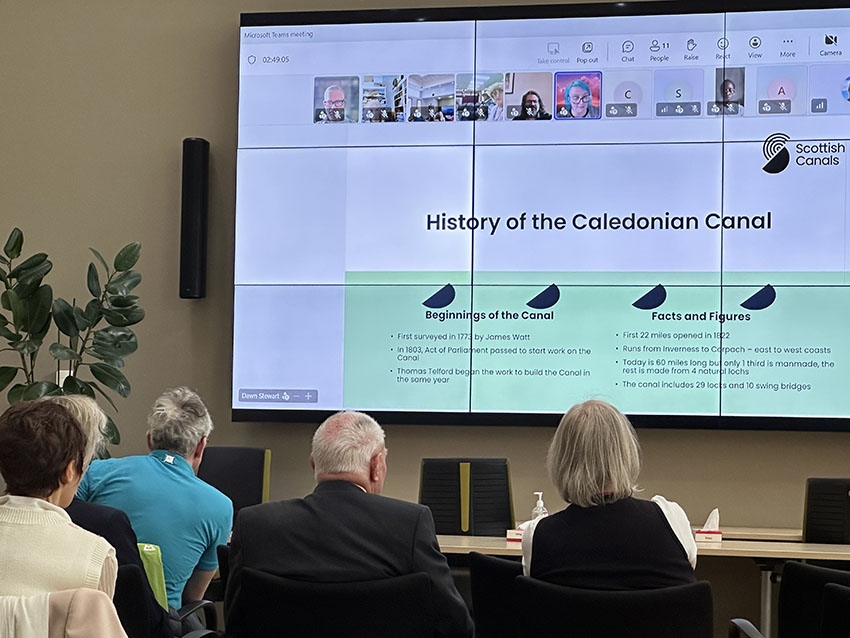
Alongside nature and culture, history is the other component of Cùra Guardian stories, in this instance, the history of the Caledonian Canal, presented by Dawn Stewart historian and Manager of Records for Scottish Canals. The reason for its construction and who built it was particularly important, including the connection with the Scottish Land Clearances in the early 1800’s, another story of displaced people, as well as providing a route to connect east and west Scotland and to encourage tourism.
This period connects closely with two of the characters of ‘The Heartstone Odyssey’, the children’s book at the centre of all Heartstone Story Circles, reaching the younger generation. The first Story Circle is now underway in Birdsville, led by Nita Tilney, Principal at Birdsville State School, who contributed to this event. The journey of ‘Sailvoyage and Lavenderwhiskers’ starts at the head of the Canal in 1822 and therefore cuts across this crucial period. This story will be presented in Event Number 2 and the subsequent events in the coming months.
Craig Cummings, Operations Manager (Deputy Head of Service), Caledonian Canal said:
“For more than 200 years, the Caledonian Canal has connected communities across the Highlands and beyond. This event offers a wonderful opportunity to celebrate that shared heritage, reflect on the stories associated with the canal, and recognise the enduring links between Scotland and Australia that remain important today.”
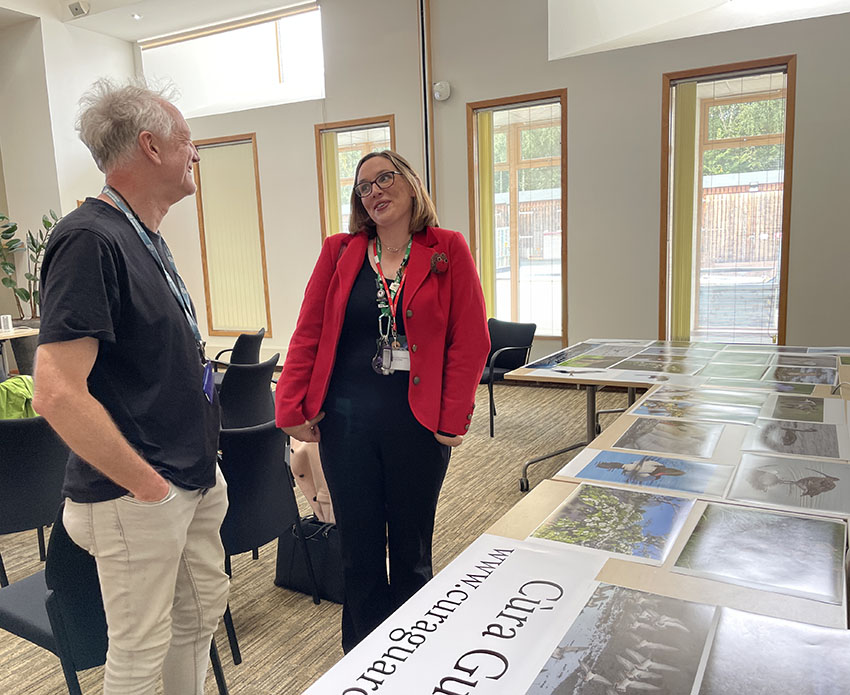
The event took shape at Great Glen House thanks to the involvement of Phil Baarda, ecologist at NatureScot, a long term supporter of Cùra Guardian, who helped get it started with funding from NatureScot several years ago. He is pictured here with Jenny Scotson, Principal Teacher at Lochardil Primary School who are using Cùra Guardian stories in their classroom.
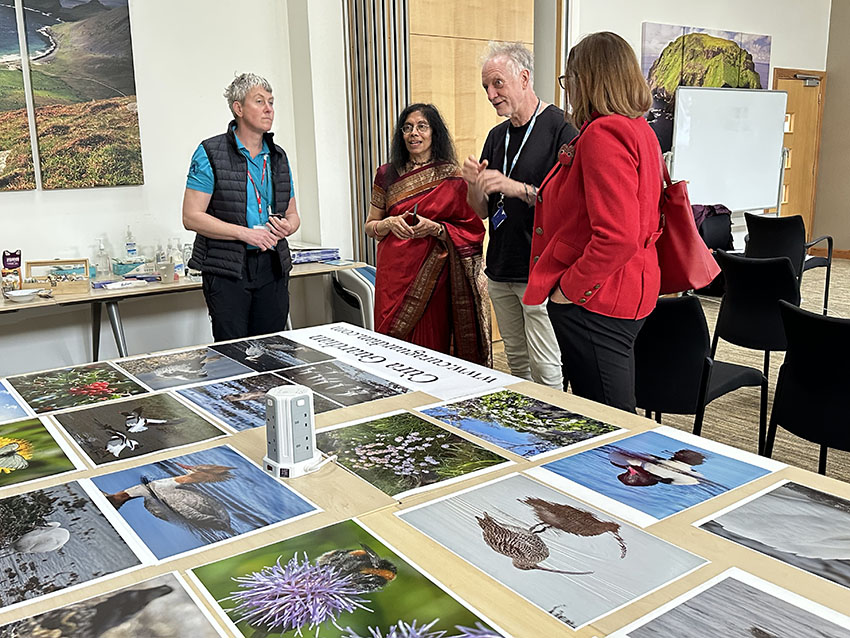
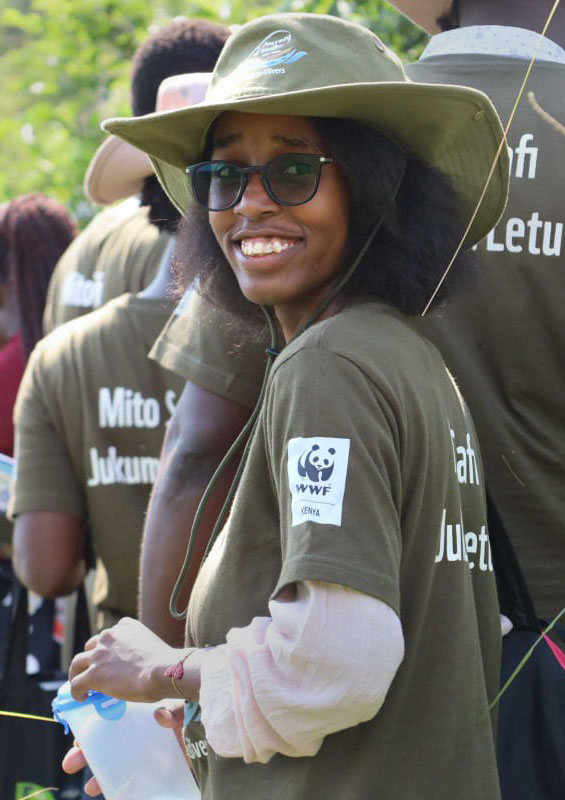
Chelsea Johannes, Director of Kulture Konnect in Kisumu, Kenya, joined together with other Kenyan colleagues, including Alex Nyaoke, Curator of Kisumu National Museum, and Emmanuel Otieno, writer, also of Kulture Konnect. They will be taking centrestage in Event No.2 for ‘Journey Along the Canal’ in Drumnadrochit but joined this event and made a valuable input. Chelsea highlighted both the ‘Living with the Leopard’ and ‘The Tale of Nam Lolwe’ stories they have contributed to Cùra Guardian (under Feature Stories, Africa) and how these stories resonate with what they were hearing from Don in Australia. Following Chelsea and Emmanuel, Alex Nyaoke has now become the latest Cùra Earth Guardian in Kenya.
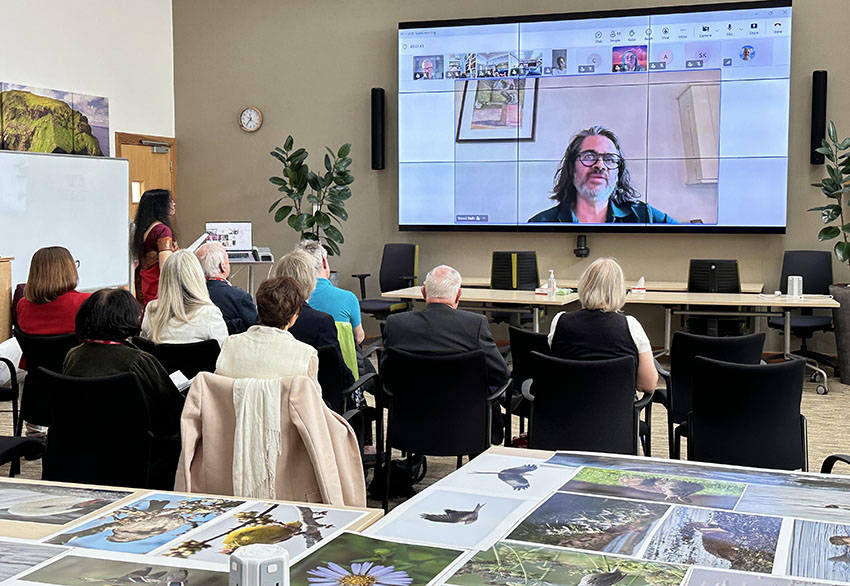
One final contributor to this event was Vasant Nath, screenwriter in Mumbai, India, who presented how involvement in Cùra Guardian has inspired him to take on his own environmental project, alongside his screenwriting role, to look at ways to help rejuvenate ponds in the area he grew up in, Panipat in north India. Vasant will be a story contributor to ‘Cùra Guardian’ in the not too distant future. Vasant commented on how the event had made him aware of the Canal, which he had not known of before, and now definitely on his list of places to visit on his next trip to the UK.
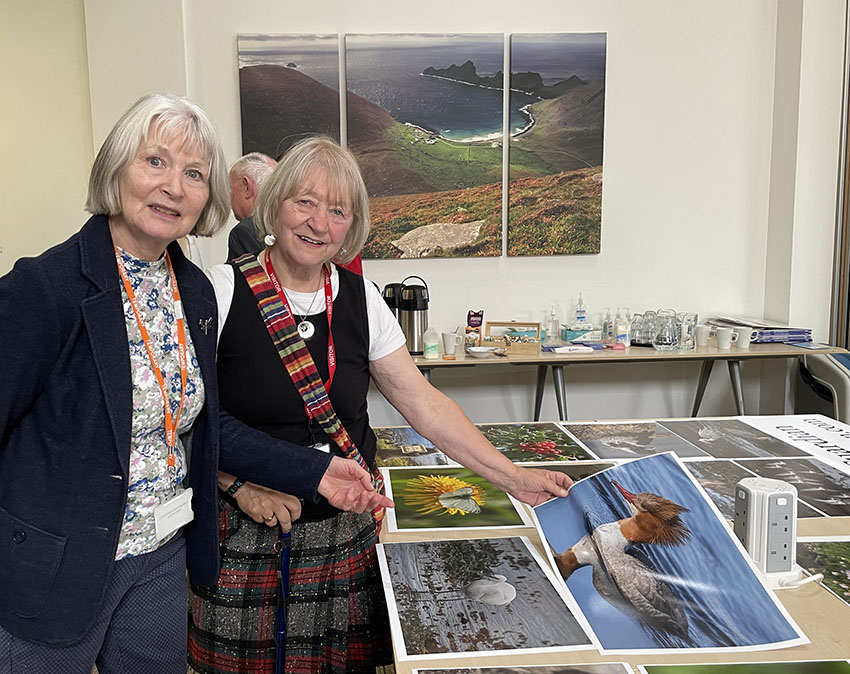
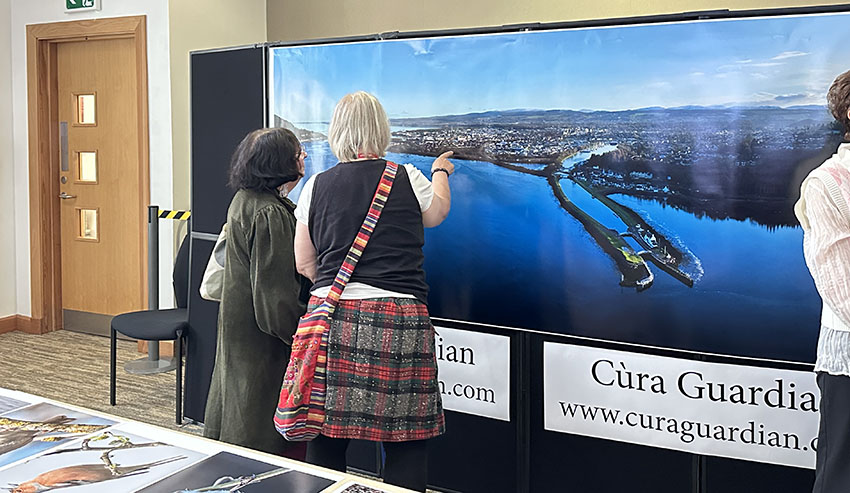
Other special guests at this event included Dell McClurg, pictured here next to Cath Freeman (at left), Heartstone volunteer who supported the event. Dell is the Chair of the Merkinch Community Council and on the Board of Merkinch Local Nature Reserve. She has supported ‘Merkinch Month’ on Cùra Guardian out of which this project, ‘Journey Along the Canal’ and the involvement of the Caledonian Canal as a new partner, has taken shape. She is pictured below sharing her knowledge of Merkinch with one of the other invited guests from Interfaith Scotland, who were also present.
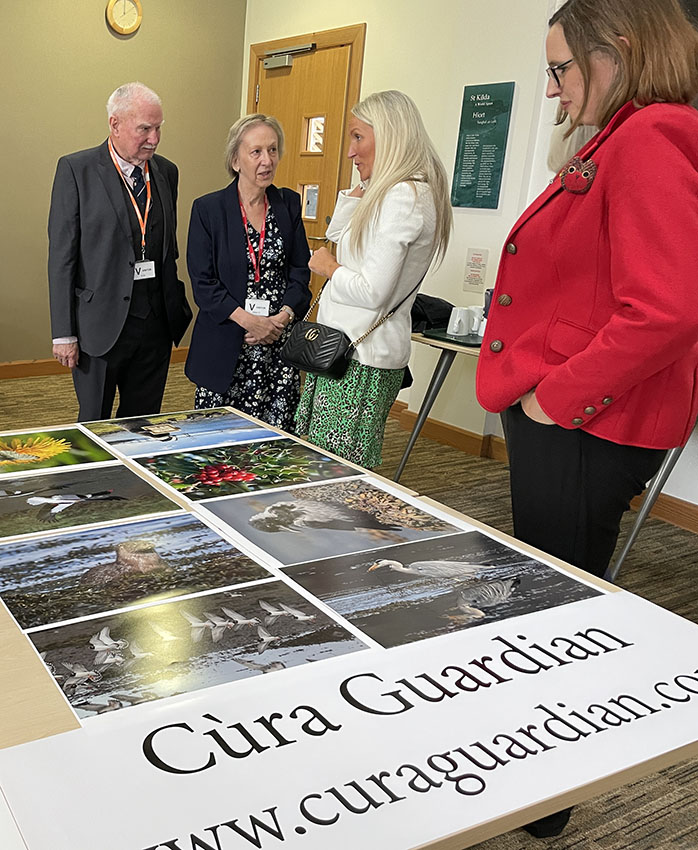
Another important longterm Heartstone friend and supporter, John Niblock is seen at left with Lorraine Niblock in conversation with Headteacher Audrey Kellecher of Lochardil Primary School in Inverness. Looking at the photos on display is Jenny Scotson, teacher at Lochardil. All have played an important role in seeing Heartstone stories, including Cùra Guardian stories, reach children and young people. Audrey’s Story Circle at her school has led to the programme now with Nita Tilney in Birdsville. Lochardil’s Year 6 class joined the event online. John Niblock was responsible for initiating Story Circles across Merseyside whilst he was a police officer covering Toxteth, Liverpool. The success of this initiative led to an invitation to present Heartstone Story Circles at the House of Commons and spread into police authorities across the UK.
So, as a final conclusion, to highlight what this event has demonstrated:
- The Cùra Guardian stories are a successful, engaging route through which to make connections across science, geography, cultures and history and bring people together who would otherwise not meet to recognise common visions;
- It has demonstrated why stories from the past and from other cultures should not be dismissed as of just passing interest, reminiscent of a bygone age and forgotten peoples, but contain valuable foundations for all of us today as we grapple with the serious issues of climate change, loss of biodiversity and other questions that threaten the natural world and society today;
- That story is one of the best routes to engage with children and young people, the next generation, who are crucial for any long-term progress and solutions to all aspects of natural world protection, appreciation and management.
Next stop on the ‘Journey Along the Canal’ will be Drumnadrochit in October, for Event Number 2, with our Kenyan Cùra Guardian friends taking centre stage!

Merkinch Local Nature Reserve (photograph)
‘Often there’s a certain spark that ignites a young person’s interest with the natural world which could be through a teacher, or a tv programme, but how does that enthusiasm continue through teenage years into adulthood? Where can it be nurtured – by all within a community or across society in general. How can the individual become part of the wider mainstream to effect positive change to the climate emergency and biodiversity crisis? We might be getting better at raising awareness, but we also need to continue nurture and magnify peoples’ enthusiasm. This is Cùra Guardian and what this event was all about.’
Phil Baarda, Ecologist, NatureScot
Our grateful thanks for the support of the following in the staging of this first event for ‘Journey Along the Canal’:
Lord Clive Soley
NatureScot
Caledonian Canal
High Life Highland
Specific thanks to:
Phil Baarda of NatureScot, and Cathryn Hill-Freeman
And in Australia:
Don Rowlands, OAM, the Elders and other representatives of the Wangkangurru people, Nita Tilney and Peta Rowlands who helped make this event, linking Birdsville in Outback Australia with Inverness in Scotland, possible.
9th February 2026
New Contributor
Welcome to a new contributor to Cùra Guardian, Hana Shono in Japan and her timely story ‘Sakura, Not to Be Taken for Granted’


Digital illustration
7th February 2026
‘Insights’
Cùra ‘Insights’ pages restructured. Consistent with the ‘Features’ listings ‘Insights’ are now organised by continent
Includes new sections ‘Balkan Lore’

Photograph
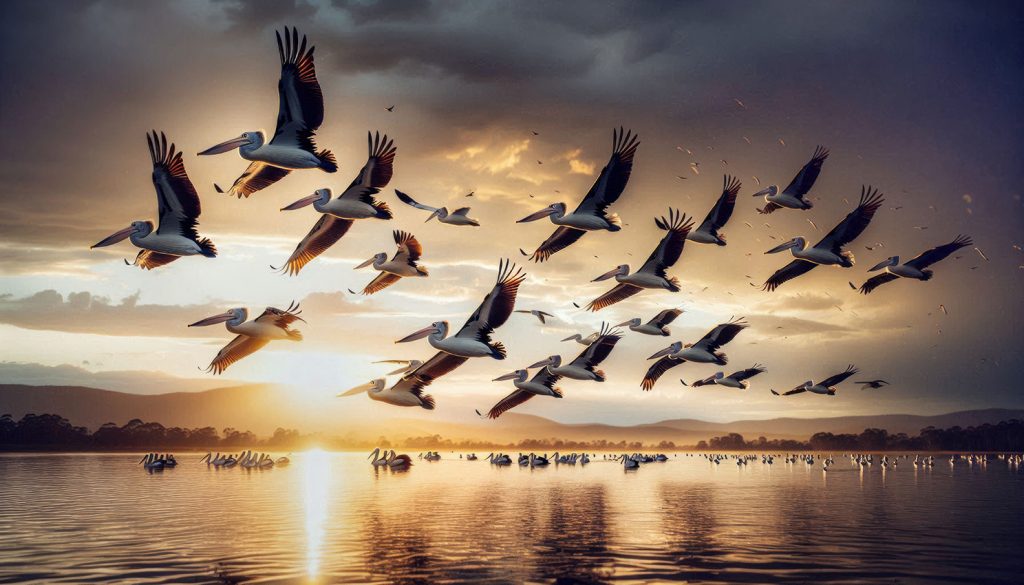
Digital illustration
6th February 2026
Cherry Blossom Festival Cancelled
Civic authorities cancel the cherry blossom festival near Mount Fuji in Japan because of unthinking, disrespectful and abusive behaviour by tourists.
The Guardian – Japan cherry blossom festival cancelled because of unruly tourist ‘crisis’

Digital illustration – developed to represent some of the issues reported, it is not a documentary photographic record of events
4th February 2026
Cùra Index
Cùra now has an index which also brings together culture and science. The starting point is the Classical Elements system which spans continents but after that entries are from more modern scientific concepts

- Creation Stories
Earth – Land animals and plants, flightless birds, flightless insects and arachnids
- Mammals
- Reptiles
- Insects and Arachnids
- Trees and Plants
- Fungi
Air – Birds, flying insects, flying mammals
- Birds
- Flying Insects
Fire – Volcanic life, astronomy and prehistory
- Astronomy
- Prehistory
Water – Marine and freshwater fish, aquatic life, amphibians and marine mammals
- Fish
- Mammals
- Invertebrates
- Places
- Plants
- Amphibians
Aether – Global Themes
- Climate Change
- Global Management
- Biology
- The Indigenous World
- Contributors
- Cultural Perspectives
2nd February 2026
New Contributor
Welcome to a new contributor to Cùra Guardian, Chelsea Johanes of Kulture Konnect in Kenya and her feature ‘Living With the Leopard’
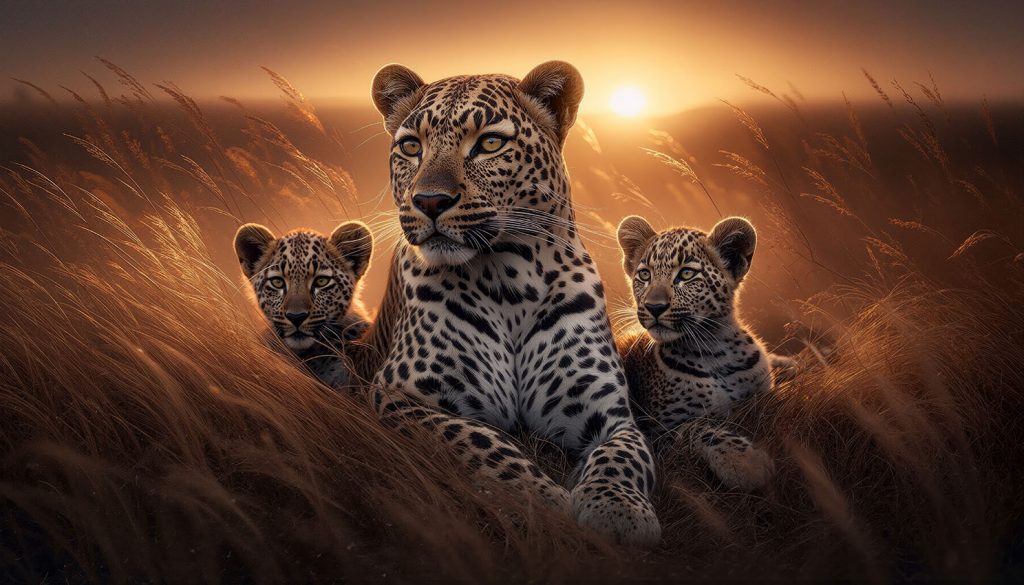
Digital illustration
19th January 2026
Northern Lights
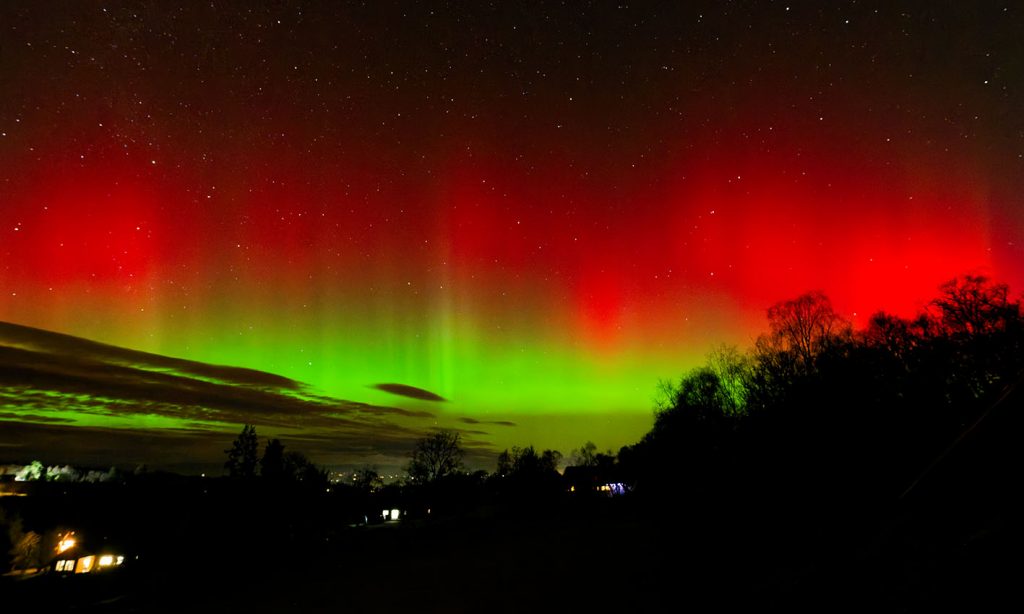
Aurora Borealis, Glen Convinth, Highland Scotland (photograph)
Following the most intense solar storms in twenty years very intense Aurora Borealis (Northern Lights) have been seen over North Scotland
29th October 2025
Hurricane Melissa
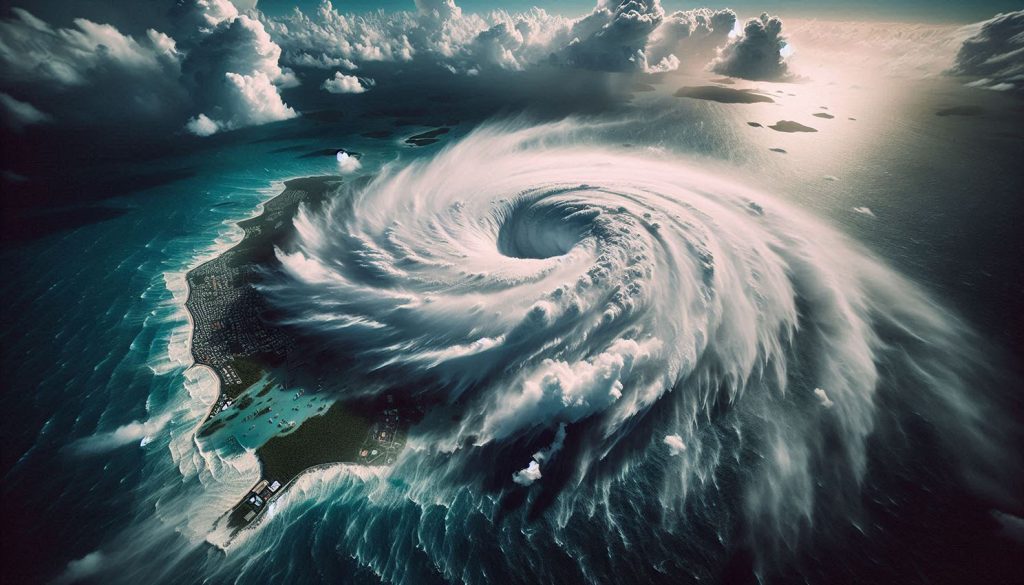
Digital illustration
Hurricane Melissa still threatens the Caribbean having caused extreme damage in Jamaica already with wind speeds there of 185mph, the highest ever recorded and amongst the highest records for any storm anywhere. Tragically, there has been some loss of life although fortunately, through the work of the authorities, not many deaths have been reported although inevitably and tragically this number must rise as communications are restored. Disruption and damage however is extremely severe and the island will need the help of the international community to recover, as well as drawing on its own resources and the strength of its people.
One question being asked is whether the damage from Melissa is linked to climate change. The answer is, as always, not that simple. Meteorological records clearly show shifting climate across the world and in general a rise in average temperatures, the prediction from this is for an increase in severe weather events. The IPCC (Intergovernmental Panel on Climate Change) at the UN has suggested however that the number of tropical storms has actually slightly decreased but the severity of those that happen is now significantly greater, with higher wind speeds and larger amounts of rainfall. This might be expected since Hurricanes draw their energy from the sea and sea temperatures are confirmed to be higher now, including around Jamaica. Models also suggested that with changing climate, hurricanes might move more slowly giving them longer to absorb energy from the warmer seas. Hurricane Melissa was noted for advancing at only 1-2mph, a notably slow speed for a tropical storm
Weather and Climate Extreme Events in a Changing Climate
Human-caused Ocean Warming has Intensified Recent Hurricanes
As well as the effects on people hurricanes can also have severe impacts on wildlife. Information on what has happened in Jamaica is yet to be reported, rightly the focus is on people, but it is possible that animals and habitats have suffered. Birds can of course move but only so far and with a storm the size of Melissa, that may not be far enough. Jamaica is known for its seabirds and the coasts are of course particularly exposed.
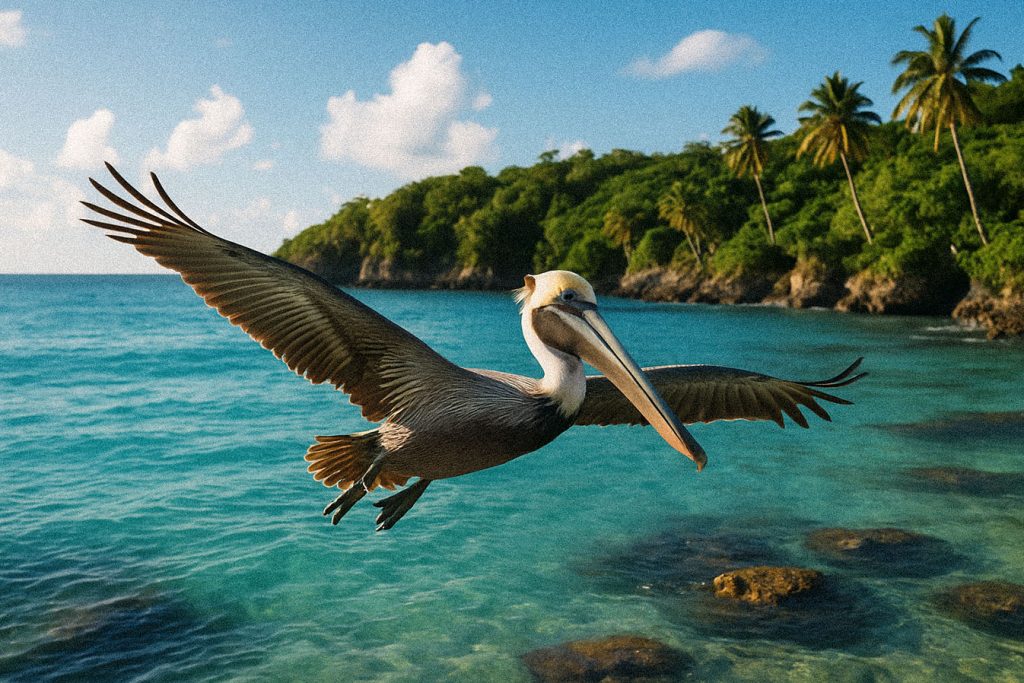
Brown Pelican, Pelecanus occidentalis (digital illustration)
Brown Pelicans have been observed to shelter and take cover when threatened by severe weather
What Do Birds Do in a Hurricane?
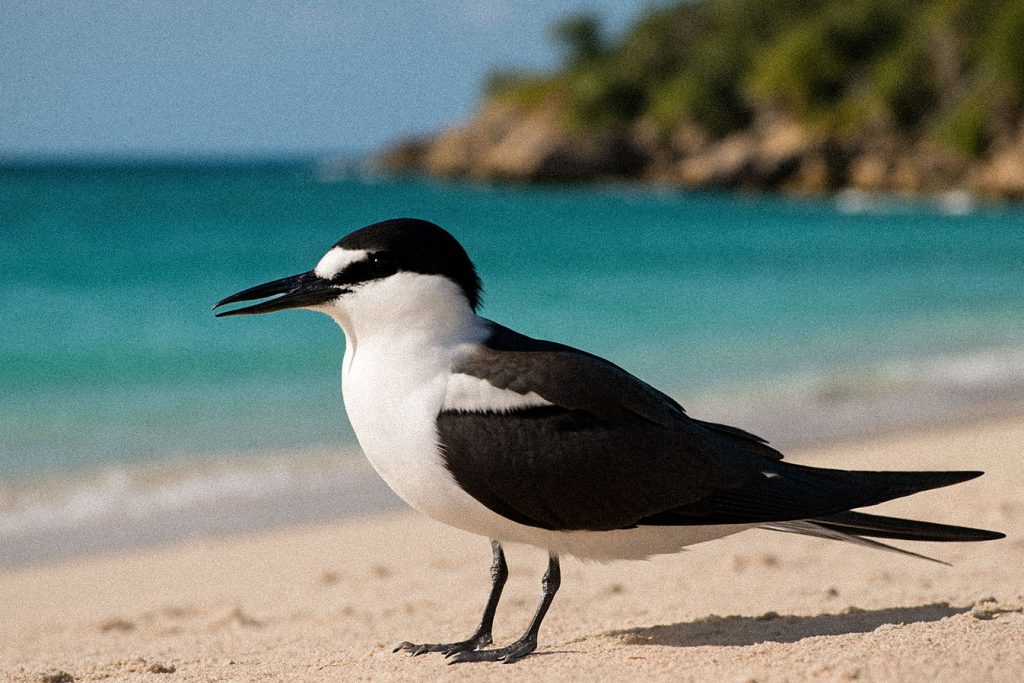
Sooty Tern, Onychoprion fuscatus (digital illustration)
Sooty Terns follow a migration that puts them at risk from hurricanes in the Caribbean and in severe storms fatalities are recorded. It is also only after very strong winds that Sooty Terns are found inland having been literally blown there and away from the coast.
Migratory Seabird Deaths Linked to Hurricanes
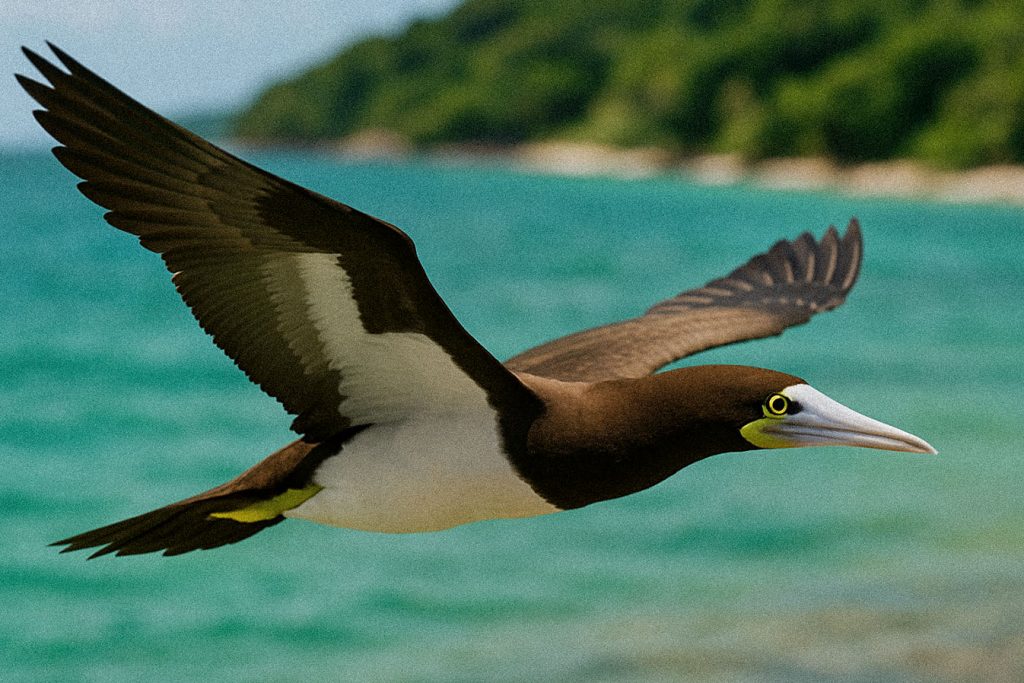
Brown booby, Sula leucogaster (digital illustration)
Brown Boobies may even try and hunt around the edges of a storm but this can come at a huge cost. The species is known for being blown inland by hurricanes a long way from their real habitat. In these sightings they are known as ‘Hurricane Waifs”
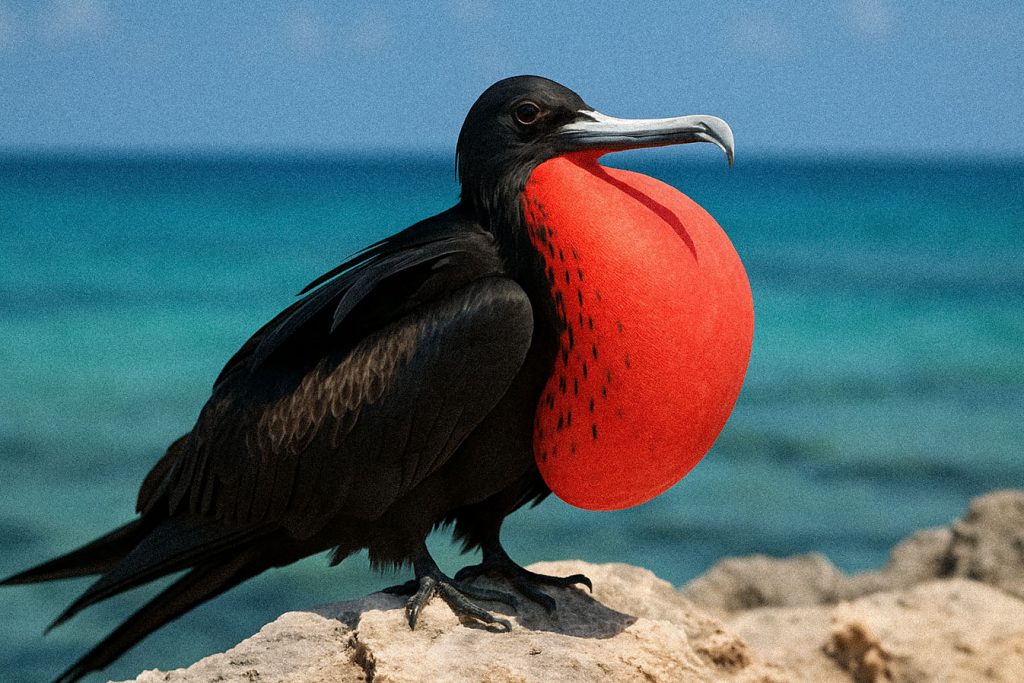
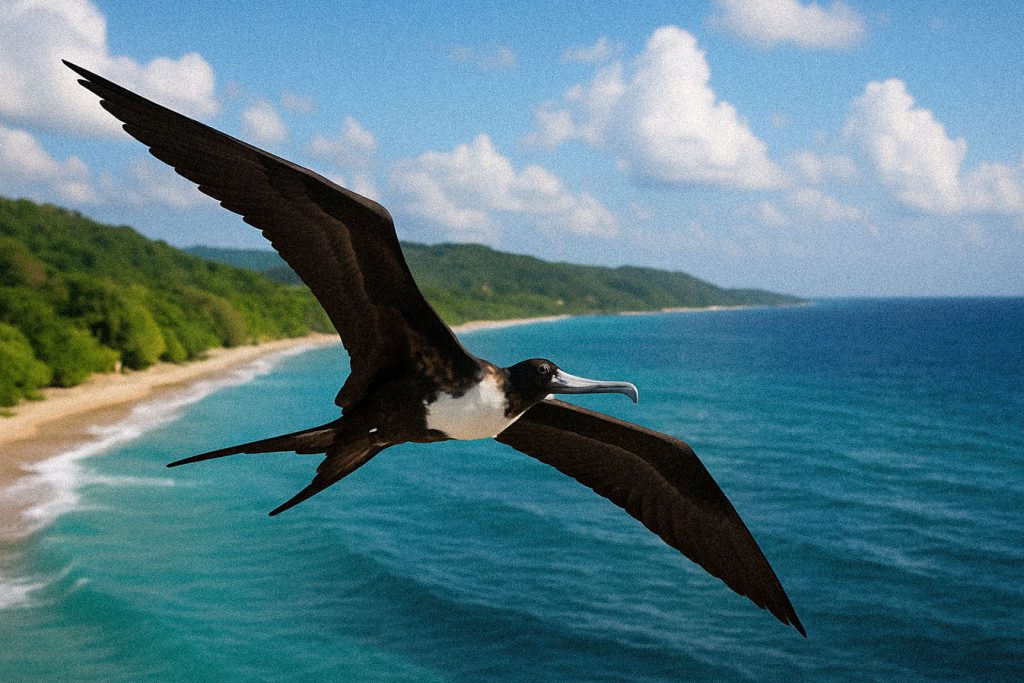
Magnificent Frigate Bird, Fregata magnificens (digital illustrations)
Frigatebirds try and escape a storm by flying to high altitudes to try and get above the disturbance. They have also been recorded trying to stay in the calm ‘eye of the storm’ till the winds ease.

Digital illustration
Inland there are also important wildlife habitats, including rainforest which is the home of the Jamaican Amazon, a parrot only found on the island and nowhere else in the world. Their strategy is to take cover in the forest in any shelter they can find and rely on.
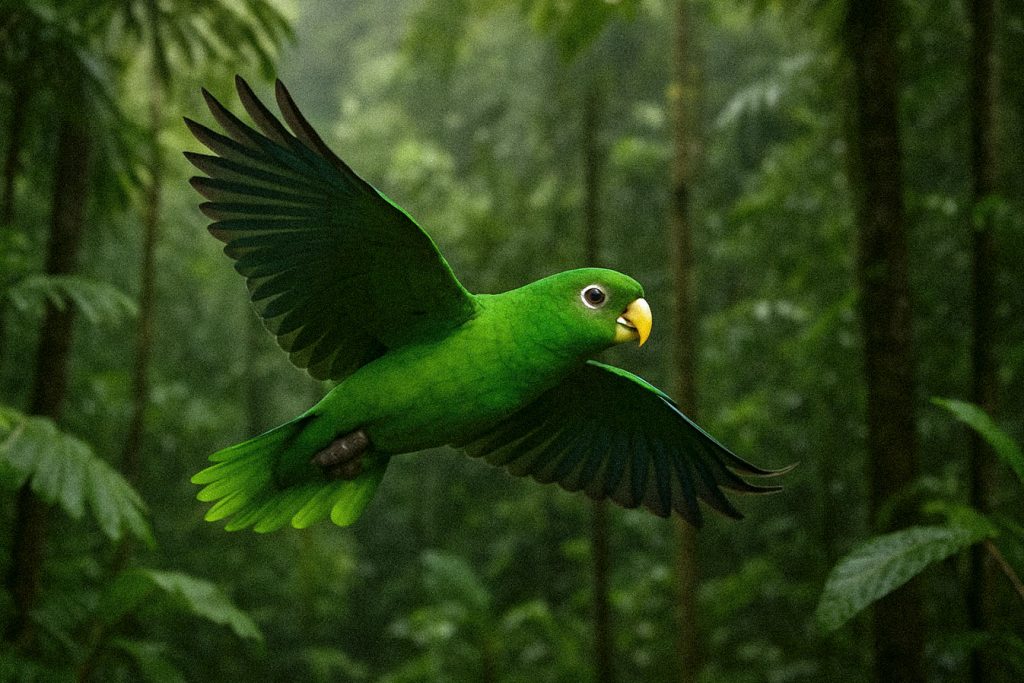
Jamaican Amazon, Amazona collaria (digital illustration)
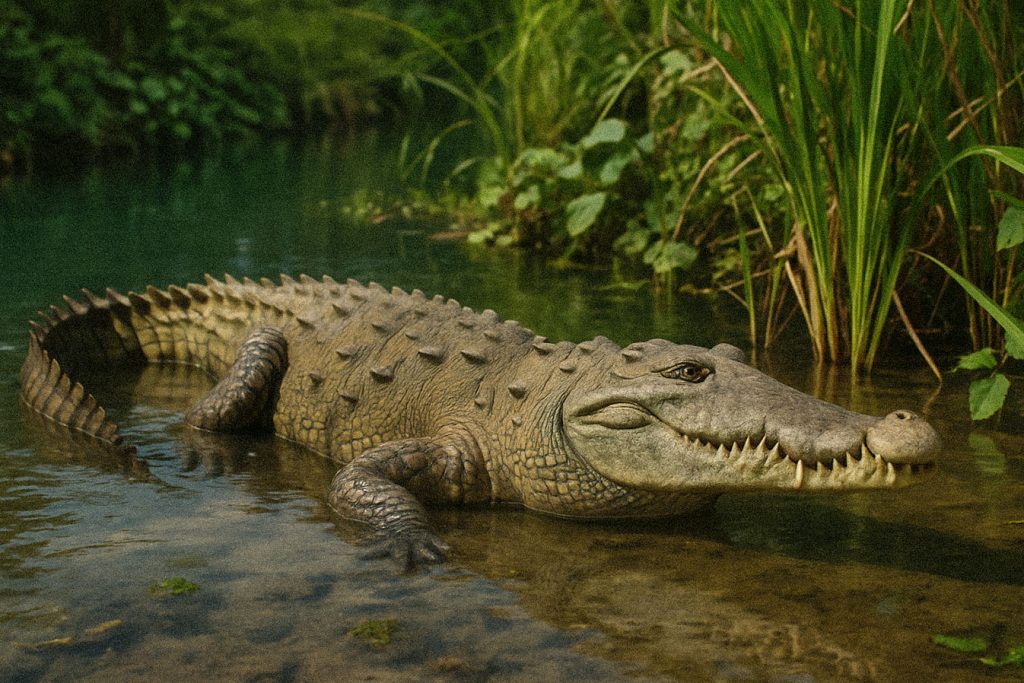
American Crocodile, Crocodylus acutus (digital illustration)
There has also been another unfortunate effect of the storm on local wildlife. Jamaica is home to a population of American Crocodiles, a large but fortunately not very aggressive species. With the flooding and damage, some of these have been displaced into residential neighbourhoods and there is an official warning for people to take care.
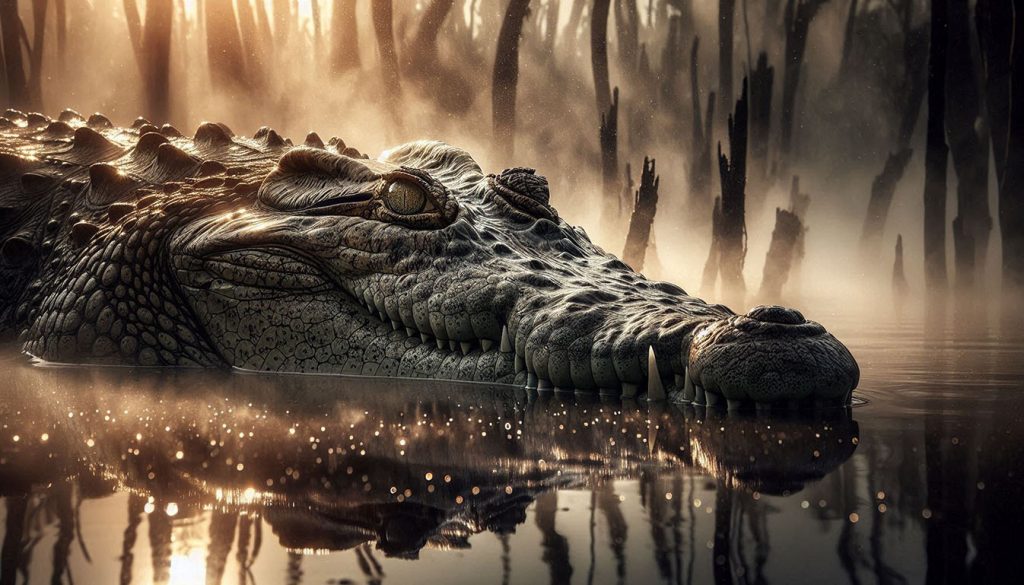
American Crocodile, Crocodylus acutus (digital illustration)
7th October 2025
Storm Amy
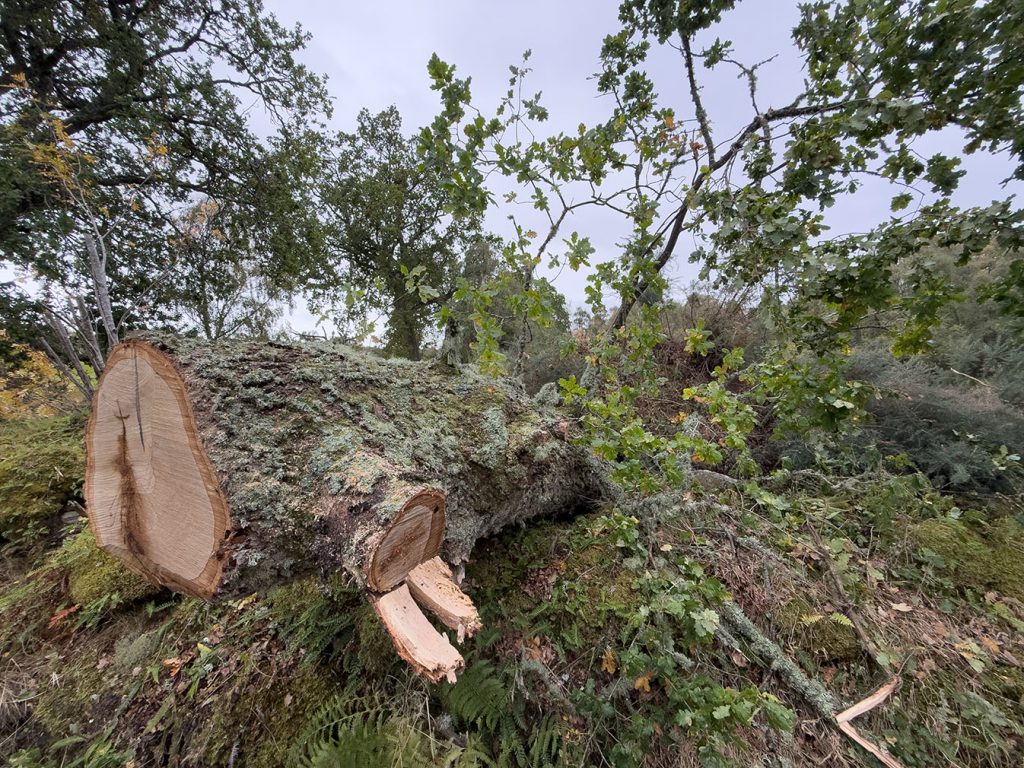
Damage from Storm Amy, Glen Convinth, Highland Scotland (photograph)
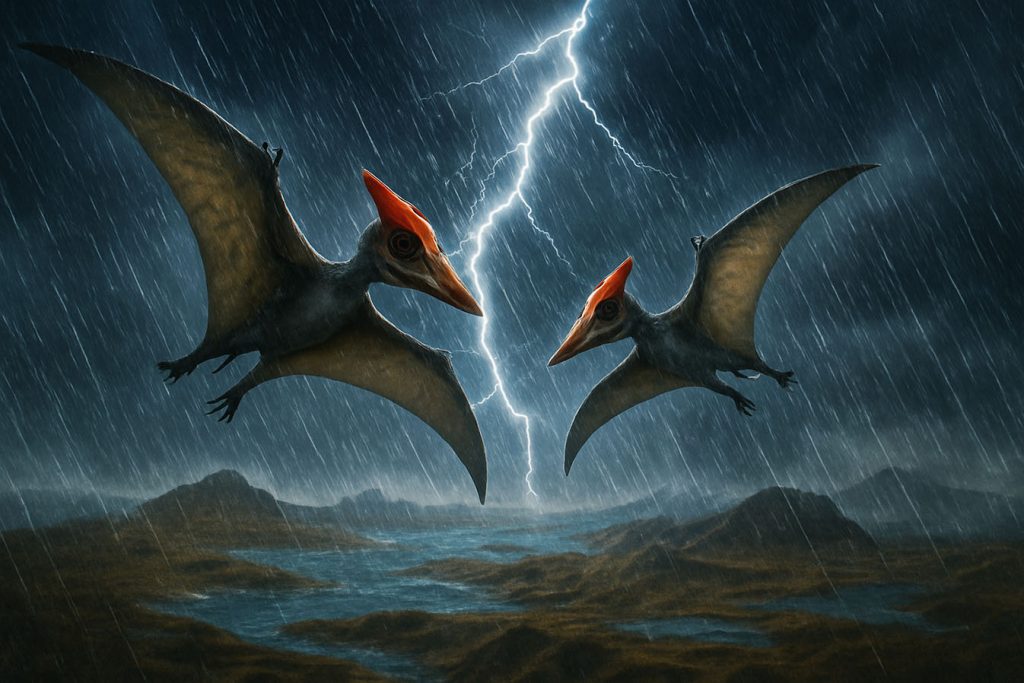
Highland Scotland has just been battered with one of the most severe storms in recent records and one which has come earlier than typically in the year. The tens of thousands of houses without power have now had their electricity supply restored after a very real reminder of just how dependent we all are on staying powered up and staying connected. Being concerned and vulnerable to the weather is nothing new, it’s something we share with Pterosaurs from millions of years ago and they had more to be frightened of than having to do without the internet for 36 hours.
Digital illustration
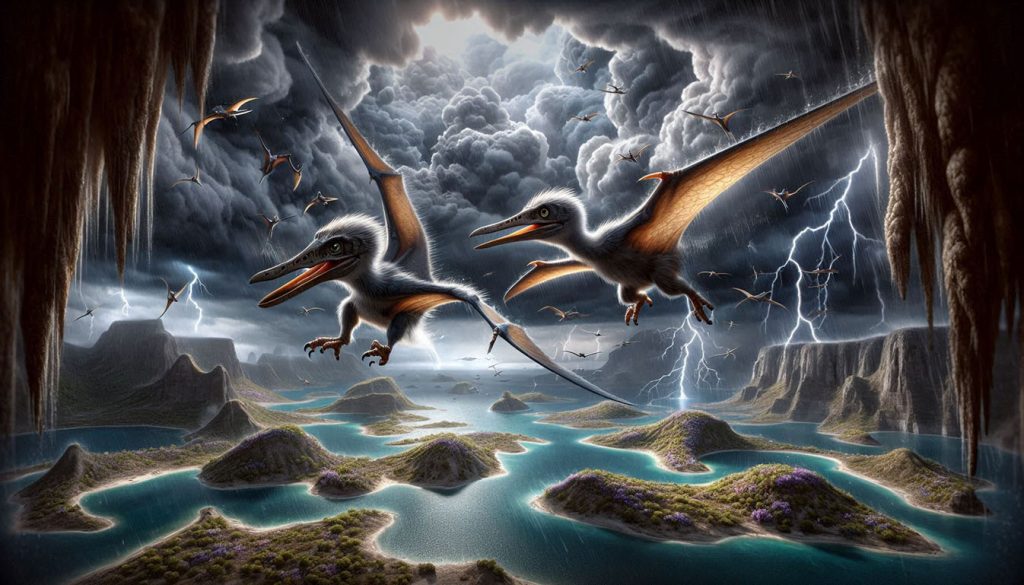
Travel back to around 150 million years ago in what is now part of Southern Germany and archaeologists have for some time excavated fossils, which have confirmed that the area referred to as The Upper Jurassic Solnhofen Archipelago was a population centre for Pterosaurs, the giant flying reptiles from the age of the dinosaurs. It is also believed to be a time of severe weather and extremely intense storms and the flying reptiles, which varied in size but included species with wingspans up to 10 feet (3 metres), would have had to have coped with the conditions just as wildlife has to manage with bad weather today.
So, picture the scene, it is 150,000,000 BCE and a storm is coming. Two Pterosaurs spread their massive four inch (10cm) wings and take off, possibly to fly somewhere for shelter. Yes, these are neonates, they are only just hatched and they are that small, their total wingspans are eight inches (20cm) each and yet it is now believed that they could fly even when they were that young, weeks at most. The flight does not go well, there is no sign of impact trauma but both sustained fractures of the humerus, for humans the upper bone in the arm. This is presumed from the absence of trauma and the similarity to known wind strength fractures in birds and bats to be from the wind forces alone and must then be thought to have fallen in to the sea and drowned, where they sank to become rapidly covered by the mud sediments stirred up by the storm meaning they were very well preserved when their fossils were discovered. There is also reason to think small, almost baby, Pterosaurs will be more intact in the fossil record than adults.
The world and the weather can be a threat, something all living creatures have had to contend with from the dawn of time. We have names for the strongest storms, Pterosaurs probably did not. It is just possible though that if our two ill fated youngsters were together when events began that they looked at each other before they took off, and by sounds, movements or simply shared consciousness, exchanged the thought ‘Oh no, not another one of those’, when they saw the clouds gathering on the horizon.
Digital illustration
21st July 2025
New Feature
Digital illustration
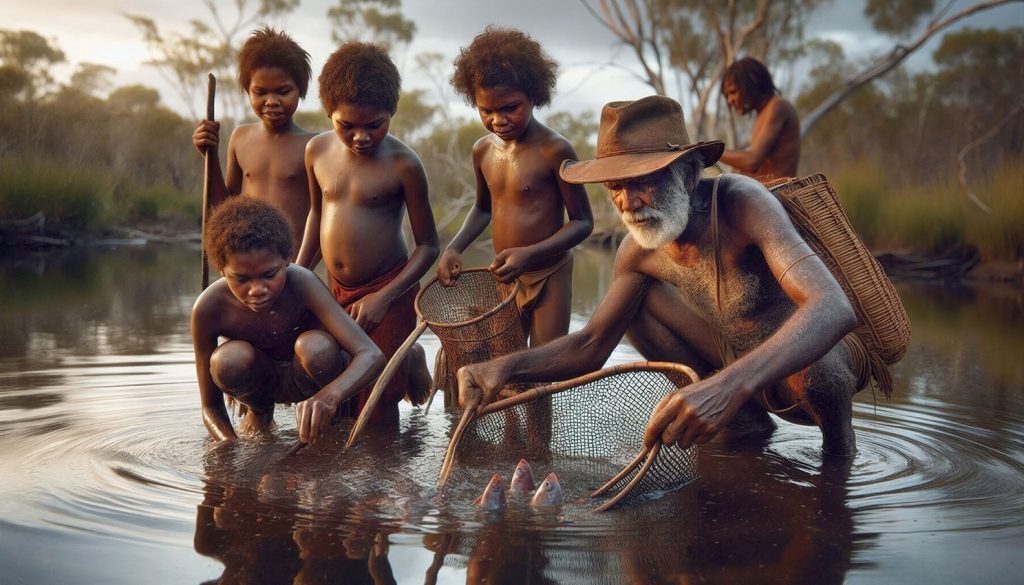
‘The Fish Increase Story’, conservation should mean working with nature
15th April 2025
New Feature

Photograph
‘The Prairie Marmot that Isn’t’, When no-one can get your name right you could be in trouble
Photograph
21st March 2025
New Feature

Digital illustration
‘Spot the Difference’, when decoration and appearance is a matter of efficiency and life and death
23rd February 2025
New Feature

Digital illustration
Globalisation 1802, two cultures meet and the older and more established pays the price
19th February 2025
Don’t tell fish they only have short memories, they may hold it against you for a very long time

Black Sea Bream, Spondyliosoma cantharus (digital illustration)
It has long been said that fish, Goldfish in particular, only have memories measured in seconds, possibly as short as three seconds. There have long been grounds to question this. Some fish form stable pair bonds and the ‘who are you?’ moment after three seconds apart on the reef could be awkward. Research has confirmed far more developed memory functions than a few seconds including in Goldfish, the three second hypothesis has for some time been confirmed as wrong. A recent study raises the need for respect of fish cognitive functions even further. The Max Planck Institute of Animal Behaviour in Southern Germany looking at Sea Bream in the Mediterranean has shown that the fish have a real ability to analyse the dress sense of divers and translate that information into advantageous behaviour:
https://www.ab.mpg.de/660867/news_publication_24151953_transferred
https://royalsocietypublishing.org/doi/10.1098/rsbl.2024.0558
What the study showed was an ability to learn to recognise divers by the colours of their equipment and know from a developed response which one to follow for food. Two divers were in the water and only one went on to feed the fish. If they wore different coloured sets of equipment, for example the fins, then the fish learned which diver to follow. If they wore identical equipment, the fish were unable to choose which to go with. As one of the researchers notes on The Institute web site, ‘Now we know they see us, it’s time for us to see them.’
5th January 2025
Northern Lights

Aurora Borealis, Glen Convinth, Inverness-shire, Highland Scotland (photograph)
A subtle but beautiful display of the Aurora Borealis above Highland Scotland last night and for the technical the disturbance level was reported at 135nT. For the rest of us there was about twenty minutes when there was a shifting pattern of green light on and above the Northern horizon.
3rd January 2025
Venus

Digital illustration
A special event for lovers of the night in the last few days, Venus was especially bright in the sky and close to the new moon.
23rd December 2024
Just in time for Christmas it’s not just people who have problems with alcohol

Digital illustration
If you were in Sweden and found a Moose (European Elk) with its head stuck in a tree being ‘under the influence’ would probably not be the first reason for its predicament you would think of but you could be wrong. This was one of the reports confirming alcohol use and abuse is not just for people in a new review of evidence by a team cantered on The University of Exeter that has shown that many animals ranging from insects to elephants and primates consume alcohol from natural sources and sometimes really suffer the effects.
Trends in Ecology and Evolution – The evolutionary ecology of ethanol
The review notes that the natural alcohol sources of sugar rich fruits and fermenting yeasts have been around since the Cretaceous period which even throws up a vision of a drunk dinosaur and although there is absolutely no evidence to support this even the slightest possibility is terrifying. It’s also possible that evidence could be available. Dinosaur footprints are still being discovered, what if there were a set where it looked like walking in a straight line was too much of a challenge?
Photographs, text and illustrations ©Nick Sidle, event text and photographs ©the authors, all rights reserved