Stop Thief
Photographs and words Nick Sidle

Bohemian Cuckoo Bumblebee, Bombus bohemicus, Glen Convinth, Highland Scotland (photograph)
There is a crime wave sweeping the countryside and a report from the University of Stirling aims to bring it to our attention. The team at Stirling led by Dr Mario Vallejo-Marin, an evolutionary biologist, indict some bees for taking pollen from flowers without acting as effective pollinators in return, which as far as the plant is concerned, is rather the point of the arrangement. It’s a bit like having a meal at a restaurant and leaving without paying – theft. Just like restaurants, plants try and put security measures in place to make sure this doesn’t happen, for example by having structures designed to only allow a bee to reach the pollen after they have provided a cross pollination service in the flower. Bees however have tried to get back to getting a free lunch by finding ways to open up the protective structures, such as by producing the right frequency of buzzing sound, and the study shows that this can mean in some flowers that 80% of visiting bees collected pollen but failed to brush up against the female parts of the flower and so were of very little use to the plant in return.

Garden Bumblebee, Bombus hortorum, Glen Affric, Highland Scotland (photograph)
University of Stirling – Threat posed by pollen thief bees

Blaeberry Bumblebee, Bombus monticola, Glen Convinth, Highland Scotland (photograph)
The system does still work overall, and without bees plants and people would be in a lot of trouble, but this study throws a new light on how it is a much more complex interaction and not always fair in the outcome.

Moss Carder Bee, Bombus muscorum, on Sunflower, Glen Convinth, Highland Scotland (photograph)
All of which of course leaves the crucial question, why? Any sociologist looking at crime in human society will mention the likelihood of getting caught and the consequences if you are as key factors in influencing behaviour and decisions. The bees are however not deviating from social norms, they are simply very efficient and good at the job they do for their own world. Bypassing the flowers reproductive structures means that pollen and nectar can be collected faster and more efficiently. No physical contact with additional parts of the flower and in the plant put simply means less work.
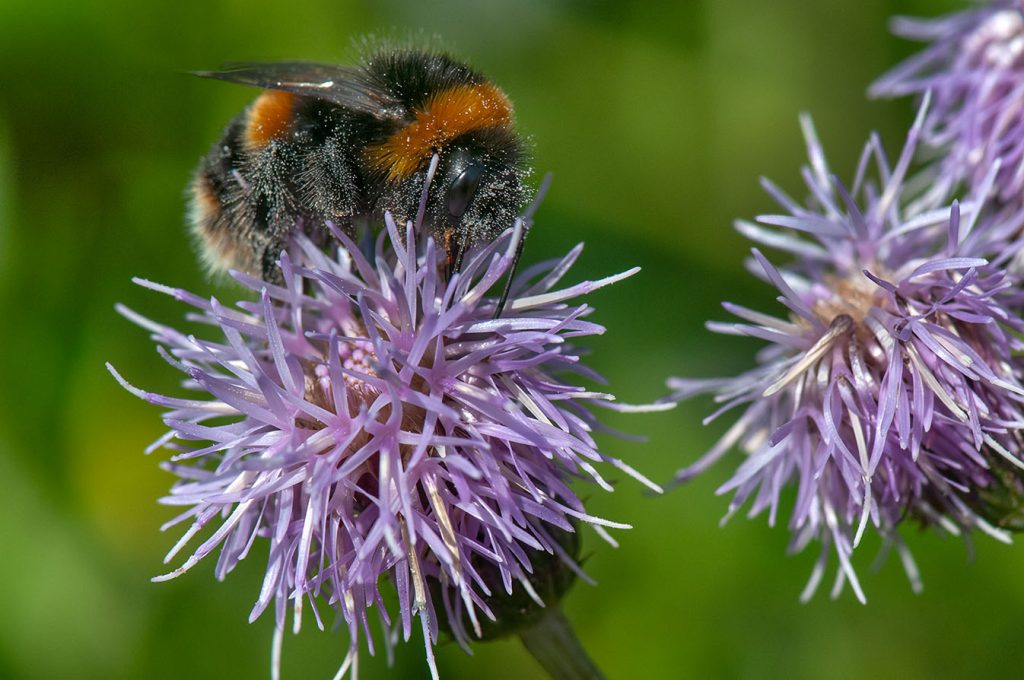
Buff-tailed Bumblebee, Bombus terrestris, Merkinch Local Nature Reserve,
Inverness, Highland Scotland
There is also less work for the bee in not having to carry a pollen load on its body, particularly in flight, where not just weight but also aerodynamic drag is increased. Later, there is less work for the bee in grooming to remove the sticky pollen to reduce the loading in subsequent activity. Ultimately plants need bees and the bees need the plants. A balance has evolved and unless disrupted by external pressures, especially from people, the system works. There may also be other elements we do not as yet understand.

Garden Bumblebee, Bombus hortorum, Leaving Yellow Iris, Glen Convinth, Highland Scotland (photograph)
Photographs and text ©Nick Sidle, all rights reserved