Insights – Flora
Photographs, words and illustrations Nick Sidle
Apple, Crab
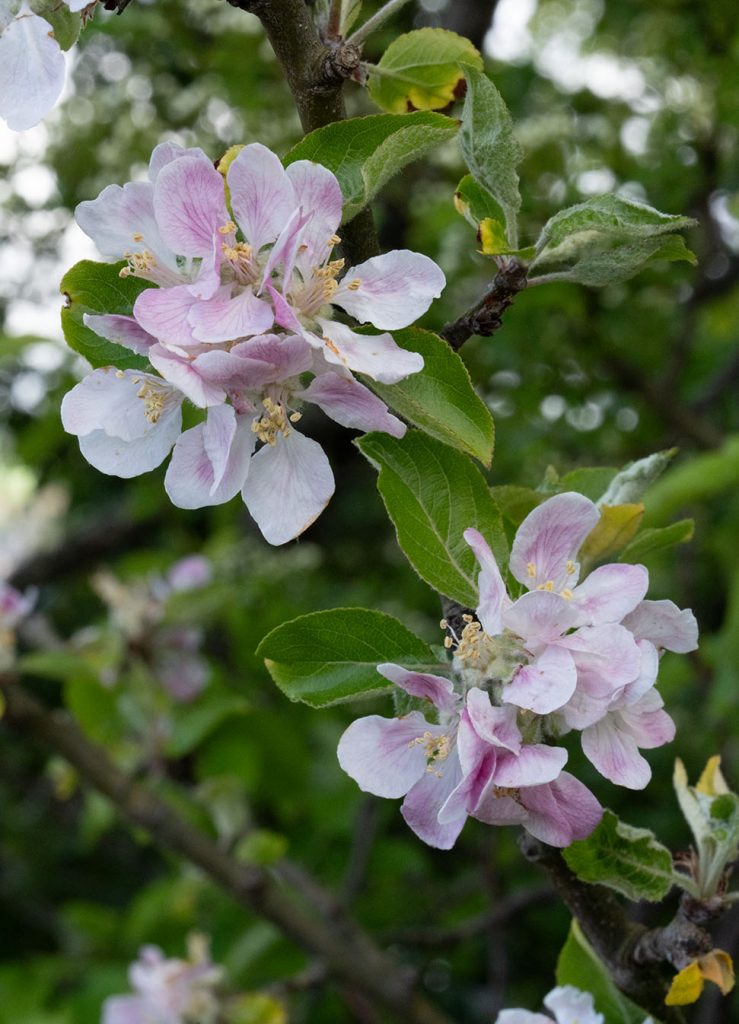
Crab Apple, Malus sylvestris, Merkinch, Inverness (photograph)
For more about the Crab Apple see the special feature ‘The Missing Unicorns’
Aster, Sea
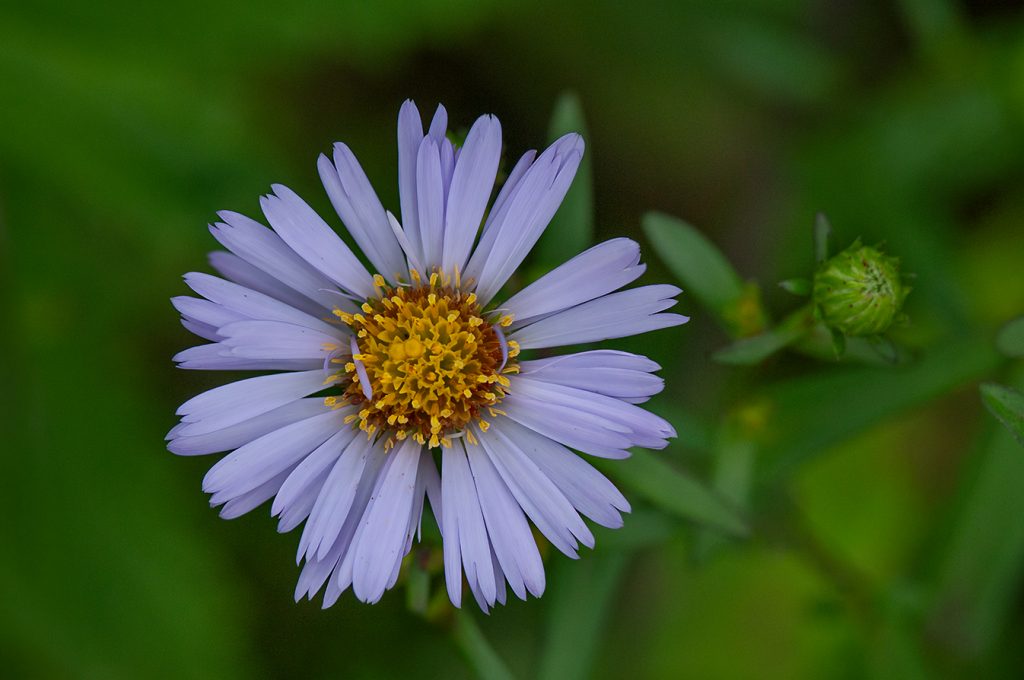
Sea Aster, Tripolium pannonicum, Merkinch, Inverness, Highland Scotland (photograph)
The Sea Aster is found in coastal habitats and was once popular in gardens until it was displaced by the introduction of the related Michaelmas Daisy from America in the 1600’s. It was used as a herbal treatment for wounds and an antidote to some poisons as well as having a medicinal use for eye diseases. It is also mentioned as the birthday flower for 1st May making it very appropriate for the first floral encounter in Cùra Merkinch Month. The name Aster comes from the Greek goddess Astraea and the flowers were said to come from her tears which turned to stardust and then made the flowers when it fell to earth.
Bindweed, Hedge
Widely distributed especially around the coasts of Scotland, the Hedge Bindweed is an indigenous plant but which may have become established over much larger areas with the coming of the railways by using the tracks as corridors to colonise and spread rapidly. Railway lines provide unshaded and often disturbed environments which are ideal for bindweed and actual root fragments, which are very persistent, are carried by the trains themselves.
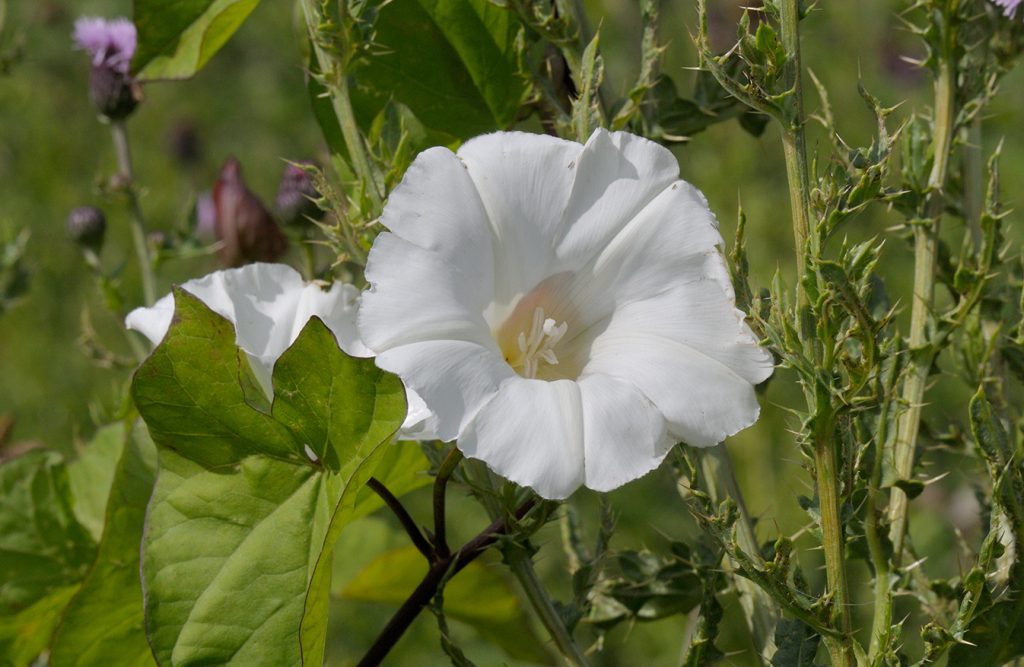
Hedge Bindweed, Calystegia sepium, Merkinch, Inverness (photograph)
To plants and in the garden, bindweeds are a significant problem. Genuinely capable of smothering plants, shrubs and trees and very difficult to eradicate, bindweed is not welcomed in cultivated environments and has been given names like ‘The Tormentor’. It has however had its uses. Extracts from Hedge Bindweed have been given to treat kidney and digestive ailments. The flowers are eaten by Roma communities in Spain and the stalks have a high content of starch and sugars and are genuinely nutritious. The plant stems have even been used as emergency string.
So where does this leave Hedge Bindweed overall? Not very positively. It is linked to darker forces in magic and binding and is less trusted because it grows counter clockwise – ‘widdershins’. In Scotland, there was a belief that if a young woman picked the flower her boyfriend would die, a connection it has been suggested partly based on the very rapid wilting of bindweed flowers if they are plucked. Bindweed was also not trusted because the flowers open at dawn and close at dusk, the times of transition from dark to light and earlier and later than most flowers.
Bird Cherry
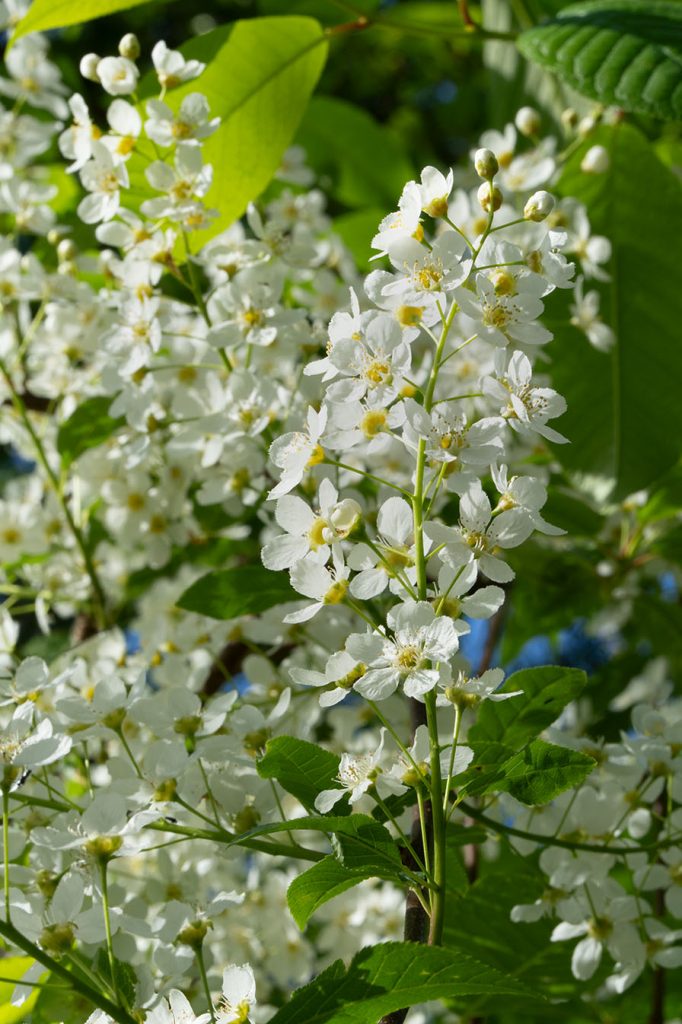
Bird Cherry, Prunus padus, Merkinch, Inverness (photograph)
Bluebell
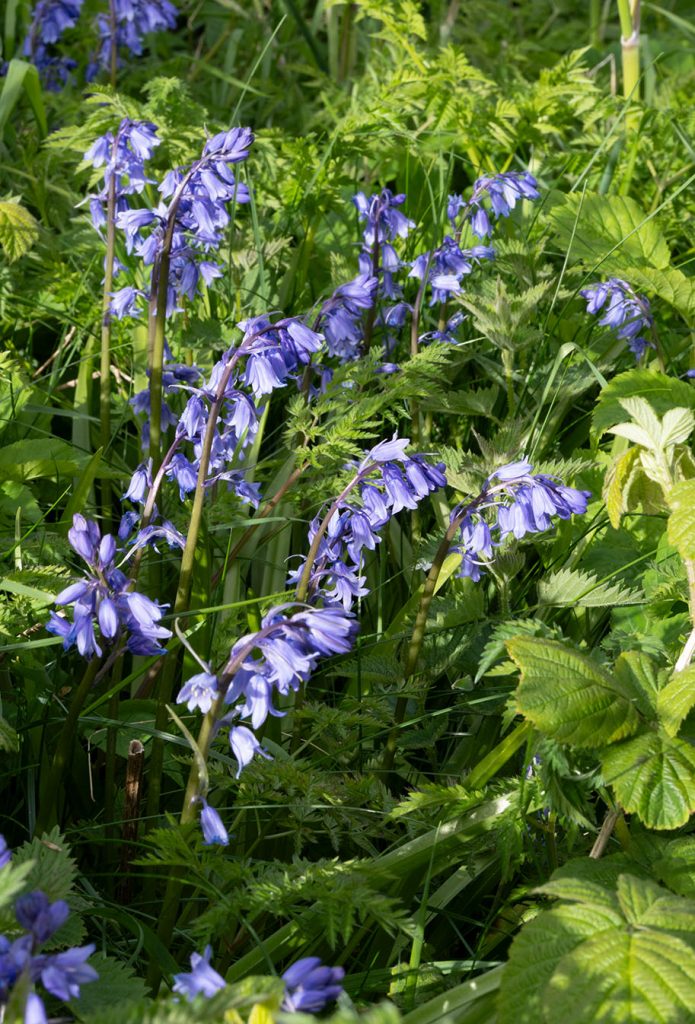
Bluebells, Hyacinthoides non-scripta, Merkinch Local Nature Reserve (photograph)
Celandine, Lesser
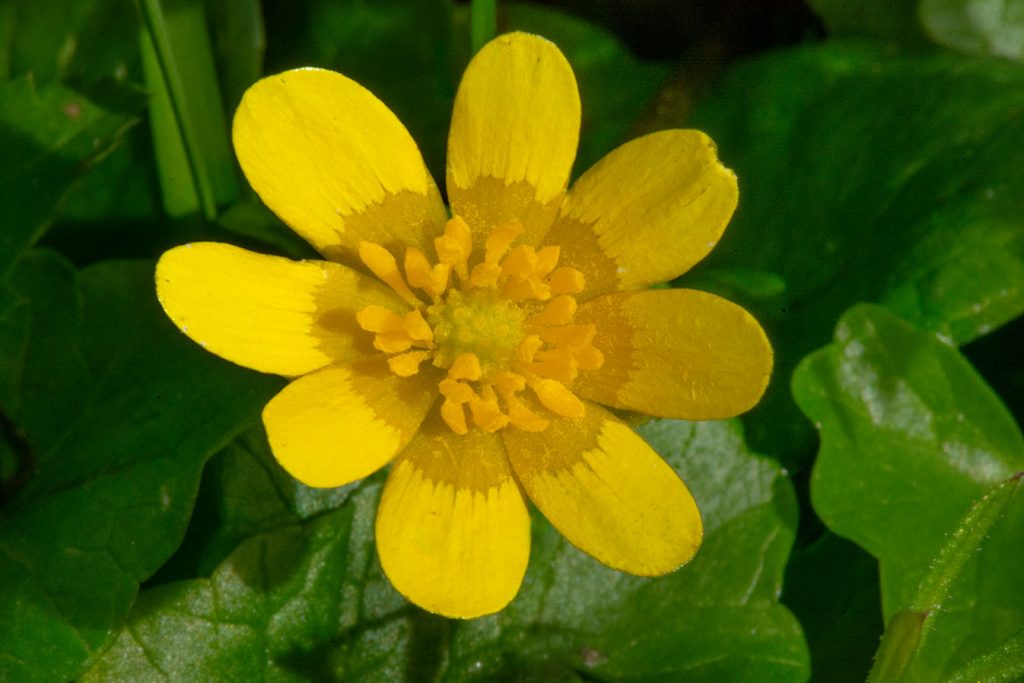
Lesser Celandine, Ficaria verna, Merkinch (photograph)
One of the earliest spring flowers, the Lesser Celandine has been used for various purposes, mostly based on the idea that its own appearance will tell you its value and properties. The appearance of the plant’s tubers nominated it as the basis for an ointment to treat warts, callouses and other external skin growths. A properly prepared ointment of Lesser Celandine will blister normal skin and will shrink growths of, or related to, skin. In Scotland, because its roots resembled cow’s udders Lesser Celandine was hung in cowsheds to stimulate milk production, it was also supposed to deter faeries from interference with the dairy and its yellow colour made it a treatment for jaundice. These probably do not have a real basis in an effect. What is real though is that the flowers are very light sensitive, only opening in the hours of sunshine and closing before it rains or as clouds gather making them a natural weather station that was used by farmers to predict conditions.

Lesser Celandine, Ficaria verna, Fairy Glen, Black Isle, Ross and Cromarty, Highland Scotland (photograph)
Spare a thought for the Lesser Celandine, not because it is a very early spring flowering plant leaving it with the risk of a false start to the season and a return to winter conditions with even snow and ice after it has committed to the new year’s cycle of blossoming and growing, no, spare a thought for the Lesser Celandine because it is one of the extreme examples of expectations from ‘The Doctrine of Signatures’ More prevalent hundreds of years ago and dating from over two thousand years ago, there are still those who support it and what the doctrine proposes is that a resemblance between a plant and a part of human anatomy or a feature of an illness indicates that the plant will be effective in treating it. This was extended later in the middle ages to have a theological basis that God would have wanted to provide a sign for what plants were useful for.
‘The Doctrine of Signatures’ is not accepted by modern day science and medicine and there are real difficulties since many, some would say most, interpretations have been shown to be completely false and some genuinely dangerous. The thing is though that ultimately ‘The Doctrine of Signatures’ will, at least to an extent, be true although probably not very safely or usefully so. If you take plants or plant extracts that are genuinely medically beneficial, and there are many, know the conditions they treat and then look at all aspects of the plant and its lifecycle, trying to find anything that can possibly be associated visually with those conditions you will eventually find some examples. Reject all instances where a signature association was made but the plant gave no benefit as imperfect interpretation and you now inevitably have some positive examples and no failures, it’s just the usefulness and safety issues are still there. The high error rates mean you might be able to convince yourself, with hindsight, of an explanation linked to something you already know works, but still leave that you cannot reliably identify future useful approaches which will have a significant rate of effectiveness. An example of the weaknesses of the doctrine is the Foxglove used to treat heart related illness in folk medicine for centuries and identified by scientific medicine in the 1700’s as a source of one of the most useful drugs to treat heart conditions, digitalis or digoxin, that has saved many, many thousands of lives and is still in use today. Medieval advocates of the doctrine looked at the Foxglove and concluded that since the flowers to them looked like an open mouth it must have value in treating conditions and injuries to the mouth and throat. They even added that the flecked markings in the flowers were parallels to the appearance of inflammation in the throat. Foxgloves never became established to help sore throats and did not become the basis for effectively treating mouth and throat conditions. They completely overlooked that the Foxglove is said to have heart shaped fruit which, from their viewpoint, could just have been important. So, the Foxglove is an example where with hindsight there is some truth in ‘The Doctrine of Signatures’ but which, when it was used practically in advance, failed completely.

Lesser Celandine, Ficaria verna, Merkinch, Inverness, Highland Scotland (photograph)
So why should the Lesser Celandine possibly feel put upon and buried by a burden of expectations. It acquired quite a list of signature associations and jobs for it to do.
The yellow colour of the flowers meant it had to be a treatment for jaundice and liver disease, it isn’t. The tubers of the plant were said to resemble piles and so extracts of the leaves were used to treat haemorrhoids. Since the leaf extracts were applied in buttermilk it is possible that the buttermilk not the Celandine helped a bit. A resemblance between the roots and cow’s udders was talked of in Scotland and Lesser Celandine was hung in cowsheds because it was thought to directly stimulate milk production. Perhaps if the farmers believed it did, and so they were more confident and less worried, then their mood could affect the cows but there is no scientific basis for just hanging up copious bunches of Celandine to directly improve dairy outputs through any common appearance or primary mechanism. It’s best to always keep an open mind, there is always the chance of something like Celandine supresses flies which in large numbers can affect cows but science does have more to offer than the doctrine. At least, it first challenges itself to show there really is an effect and then if there is and there is to be an explanation, this may begin as a hypothesis but that has to be tested, questioned and rigorously shown to be true.
One last thing. Don’t mention that almost all botany textbooks and field guides describe the leaves of the Lesser Celandine as heart shaped, the poor plant probably feels it has enough to do already. And even more so, never draw attention to the mottled appearance of the leaves, there are too many dermatological conditions to think about, or that the flowers are in plant anatomy terms solitary even if, like crowds of people, there are many in the same place. Imagine being made responsible for curing the world of loneliness……
Cow-wheat, Small

Small Cow-wheat, Melampyrum sylvaticum, Abernethy Forest, Cairngorms National Park, Highland Scotland (photograph)
The Small Cow-wheat is a scarce wildflower, far more rare than the Common Cow-wheat and is of conservation concern with the principal pressures being complete loss of habitat or at least its degradation especially by grazing livestock. It is an example of a hemiparasite, a plant that is partially parasitic, normally self sufficient but if conditions become harsh, capable of taking nutrients and water from the roots of other plants including grasses.

Small Cow-wheat, Melampyrum sylvaticum, Abernethy Forest, Cairngorms National Park, Highland Scotland (photograph)
The Cow-wheats take their name from their black wheat like seeds and the reaction to finding them in a farmed crop depended very much on which crop it was. If they are mixed in with grain crops, then their presence in bread makes it turn black when baked. Great efforts have been made to manually remove Cow-wheats and their seeds from cereal crops to minimise this issue, their presence in a crop would mean a lower price for the farmer. There are references to beliefs in the Middle Ages that the small seeds could be converted into wheat but the problems with bread overrode those hopes. They were however seen as an asset in fields where cows were grazed. The cows were observed to relish the Cow-wheats in the grass and there was a widespread belief that including them in the cows diet resulted in significantly higher quality butter made from their milk. These observations apply far more to the Common Cow-wheat, since the Small Cow-wheat is found mostly in woodland and shade with some of the largest populations occurring in woodland by lakes because it is favoured by higher humidity environments.

Small Cow-wheat, Melampyrum sylvaticum, Abernethy Forest, Cairngorms National Park, Highland Scotland (photograph)
The Small Cow-wheat is extinct in England and Wales, extremely rare in Ireland and is only really found in Scotland and even there it is only found infrequently. It is classified as nationally scarce in Britain.
Cuckoo Flower
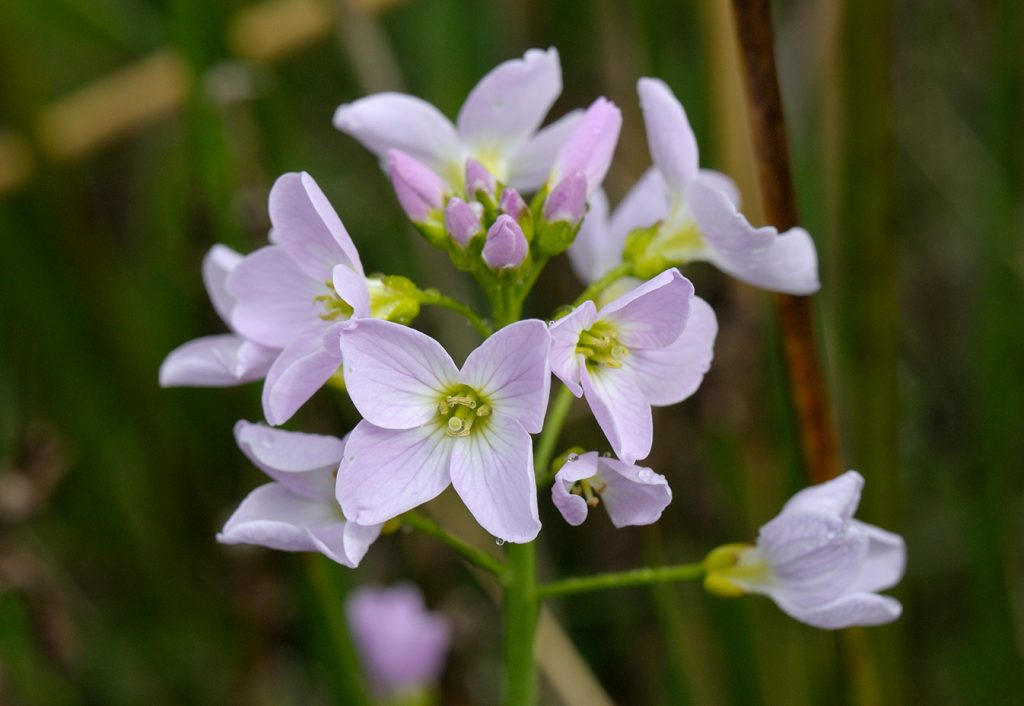
Cuckoo Flower, Cardamine pratensis, Merkinch, Inverness (photograph)
Named for coming into flower at the same time as the return of the bird in spring and with studies showing that in most years the coincidence of the two is extremely close, one or two days difference at most, this suggests that the actual time each year is affected by the same factors for both the bird and the plant. The Cuckoo Flower (or Cuckooflower) has been used in the past to treat various conditions including fever and scurvy, the leaves have a genuinely high vitamin C content. It has also been used for asthma, skin infections and digestive problems. An alternative name in Scotland is ‘Carsons’ because it is frequently found on marshy ground, ‘carse’.
Throughout Europe, there is a general agreement in lore that picking Cuckoo Flowers and bringing them into a house is wrong and a bad idea. Encapsulated in a name in England, ‘Pick-folly’, and associated with general bad luck, the consequences more specifically are said to be anything from precipitating thunderstorms to raising the chances of snakebite, especially Adders. It can be speculated that there could be something in this in that the Adder and the flower can occur in the same places and in spring, Adders would be more sluggish and slower to get out of the way of someone approaching, their normal response, raising your chance of being bitten if you reached down to take the flower.
Currant, Flowering
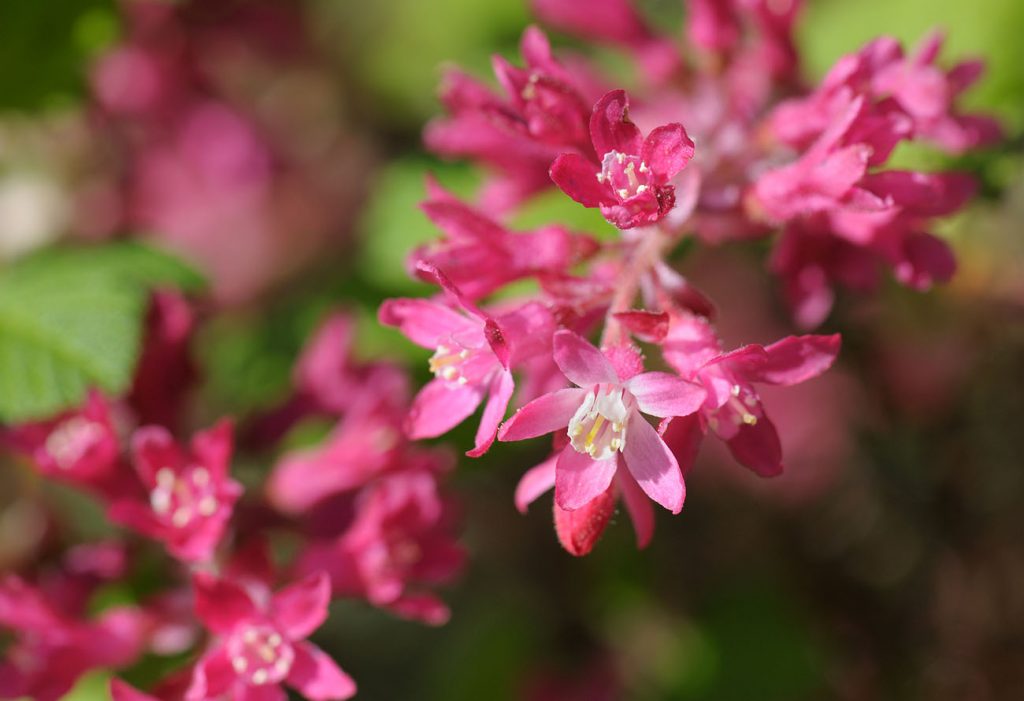
Flowering Currant, Ribes sanguine, Merkinch LNR, Inverness (photograph)
Three Currants are found in Scotland, the Red, Black and Flowering. Most are garden escapes or deliberate plantings but the Red form does occur as truly wild specimens, often associated with deciduous woodlands, river banks and damp scrubland. The Flowering Currant was introduced from North America but has subsequently become naturalised and established in the wild. All are excellent early pollen sources for bees and other insects and currants have long been used as fruits and to make drinks, including remedies for sore throats, which was also a use for the Flowering Currant by native Americans. In Scotland and Northern England, there was a specific belief that it was unlucky to bring Flowering Currant into a house, something that was also applied to other early flowering shrubs possibly arising from a common-sense principle of not reducing the first food sources for the bees.
Elder
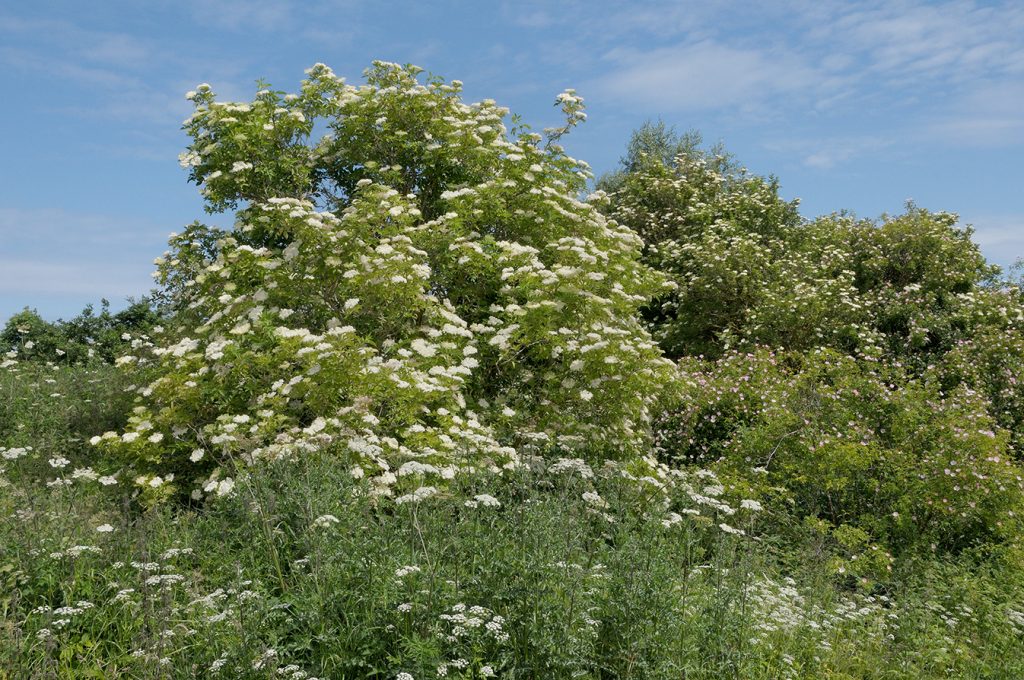
Elder, Sambucas nigra, Merkinch (photograph)
Growing as a shrub or small tree, Elder has had an ambiguous relationship with people. Sometimes venerated, sometimes despised, it has fallen in and out of fashion and favour. It has been ascribed almost opposite powers at times, burn it and you will see the devil, plant it outside a house and the devil will be kept at bay. In Scotland, a Rowan was often planted at the front of the house and an Elder at the rear, both assigned to protection from evil. The proscription against burning may have arisen from the plant anatomy of Elder, the wood is hollow with a pith which when burned spits and creates a screaming noise. In Medieval times in Christian worship, it was simultaneously identified as the tree on which Judas hanged himself and the tree from which the cross was made. It was because of its use in the cross that it was said to have crooked and weakened branches that can barely support themselves. It is thought that ascribing these negative connections to Elder was intended to supress pagan beliefs. Hearse drivers in Scotland often had riding crops with an Elder wood handle in the belief that it would keep dark spirits away. It was considered unlucky to cut Elder and yet it was widely used in furniture, especially as decorative inlays, so it was alright to have it in the house so long as you forgot how it got there. On a more physical level, Elder leaves in summer have a pungent smell and have been used to keep flies away from people, horses and livestock. The berries are used in cooking and making drinks, wine and even fritters and Elder has over the years been found in remedies for a very wide range of illness. The berries, bark and leaves have all been used to make dyes, especially for the manufacture of Harris Tweed. There have also been taboos against sleeping under an Elder with fears that the scent of the flowers could cause trances and transport you to the underworld.
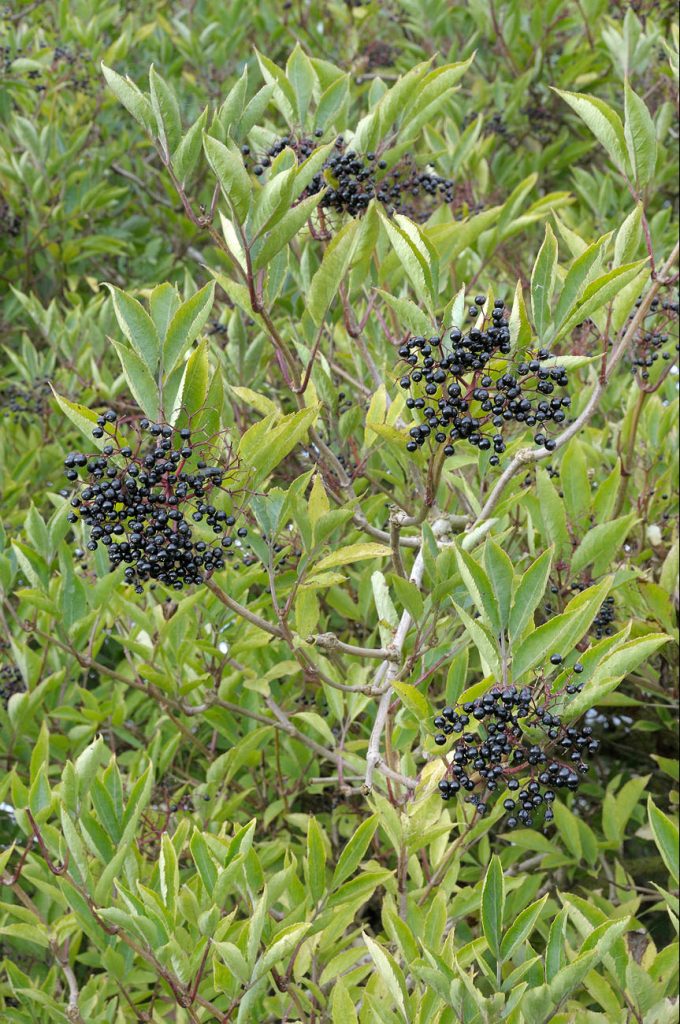
Elder Berrie, Sambucas nigra, Merkinch (photograph)
Although from a modern standpoint some of these beliefs seem extreme, it needs to be remembered that there are some chemical properties of Elder that might just make them worth considering. Every part of the Elder contains a cyanogenic glycoside capable of releasing Cyanide compounds, mostly Hydrogen Cyanide. Burning the wood or even sleeping under the flowers in a setting of limited ventilation could expose someone to toxins quite capable of inducing nausea, vomiting, confusion and fainting.
Elder wood was believed to be used by faeries to make musical instruments. People have done the same, removing the pith leaves a hollow pipe of wood that is easily polished.
Gorse
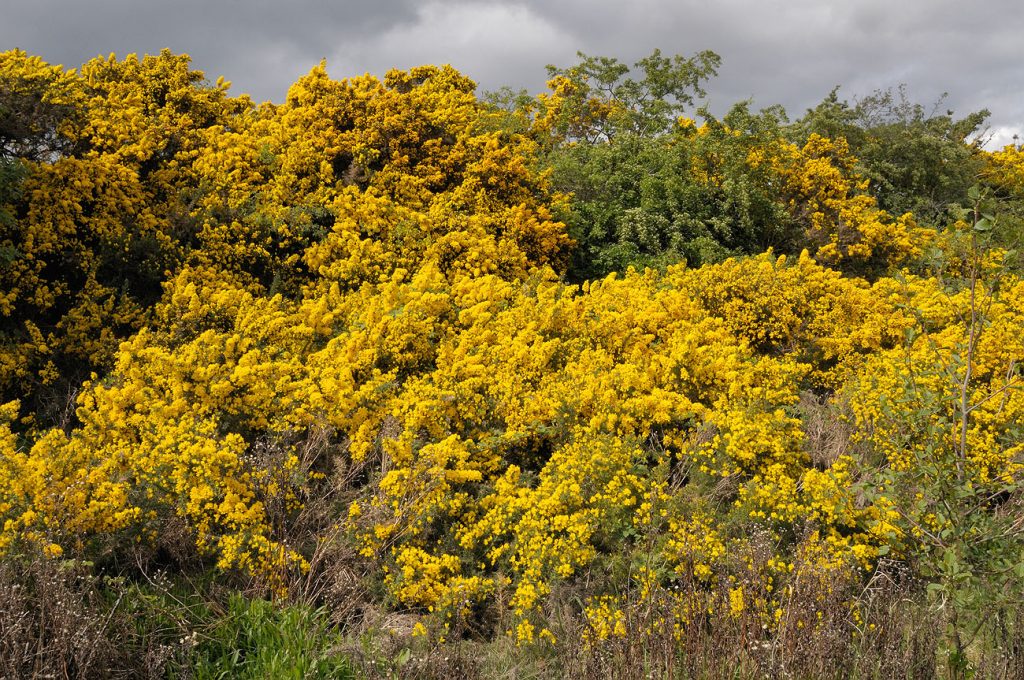
Gorse, Ulex europaeus, Merkinch Local Nature Reserve, Inverness (photograph)
A very successful native species, Gorse is now labelled in some countries where it was introduced as a problematic invasive plant. Gorse has had a variety of uses including livestock feed, medicinal, chimney brushes, silt filter in Roman mining and fuel for bakers’ ovens as well as a yellow dye in colouring tartan fabric in the Highlands and Easter eggs in Moray. In Celtic and Scottish traditions, a sprig of gorse was included in a bride’s bouquet to ensure a passionate marriage that would be blessed with children.
Hawthorn, White
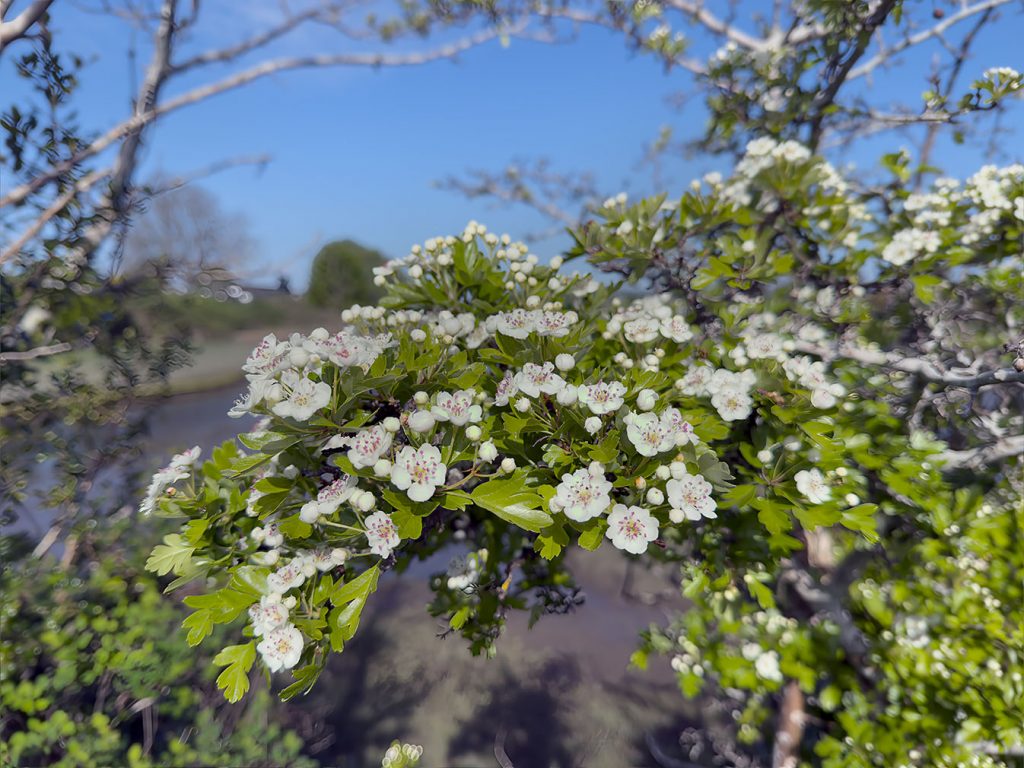
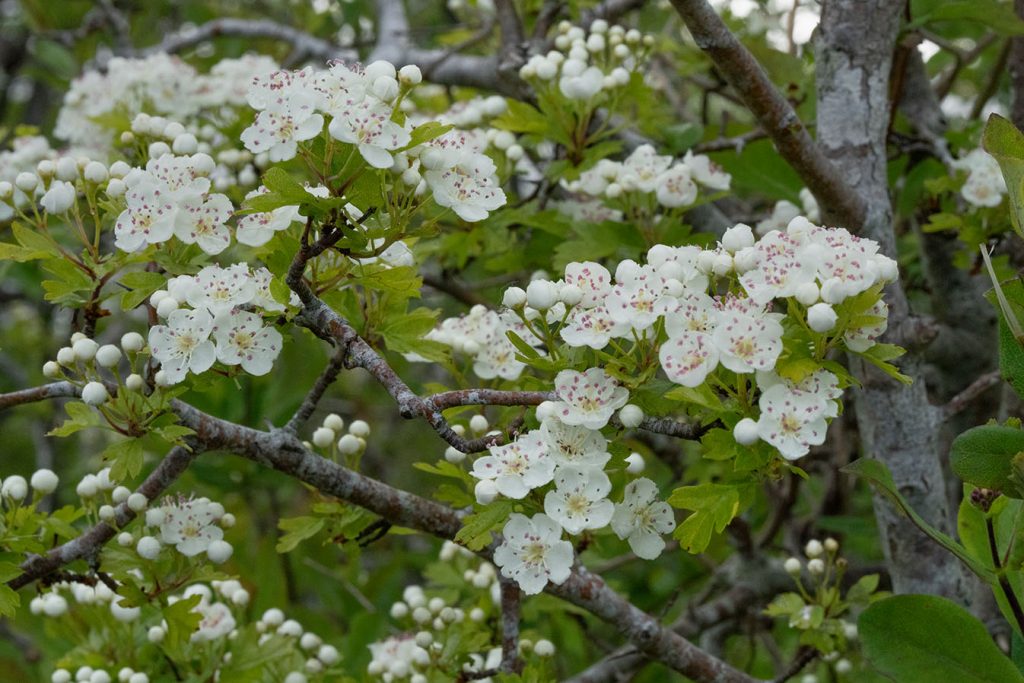
White Hawthorn, Crataegus monogyna, Merkinch Local Nature Reserve, Inverness (photographs)
A widely distributed shrub which can become a small tree. Flowers in May, hence the old name ‘May-tree’, also known as Haw-berry in Scotland. Dense growth and thorns have meant it has been used as hedging for centuries. Apart from growing a physical barrier, Hawthorn has had many other uses and meanings. In pre-Christian times, it was sacred and found in groves which were places of worship and at the grave sites of the most important people. This sacred regard is thought to be the basis of the much later tradition that it carries ill fortune to bring Hawthorn flowers into a house since it is wrong to use Hawthorn for virtually any purpose. Alternatively, another explanation has been suggested that the scent of Hawthorn blossom resembles the smell of plague or decomposing corpses, not something to have in a house. This is not totally fanciful since whilst there is no known link between Hawthorn and infection risk, Hawthorn blossoms contain trimethylamine which is also released by rotting flesh.
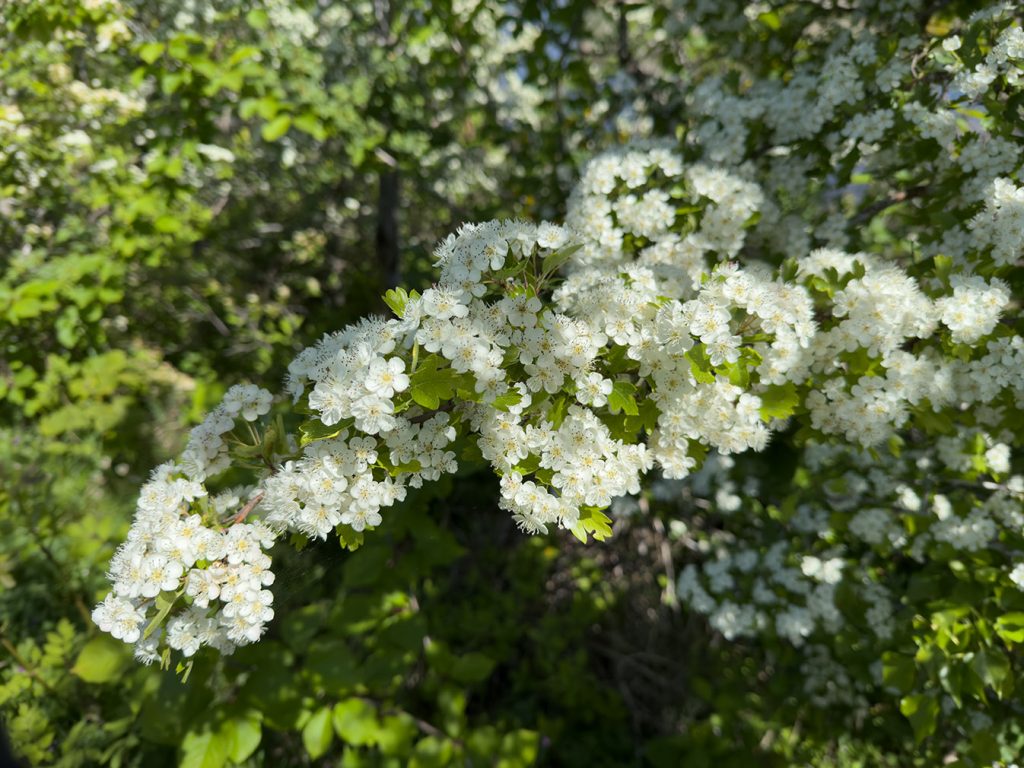
White Hawthorn, Crataegus monogyna, Merkinch, Inverness (photograph)
Despite any taboo, Hawthorn has been used for dyes, wine making and woodwork as well as a cure for sore throats and high blood pressure. Caution should still be observed, go to sleep under one and you might be kidnapped by faeries and taken to the otherworld. It is also the classic wood witches were supposed to use for their broomsticks. Remembering the persecution and prejudice behind the trials of innocent women accused of witchcraft perhaps if you were a woman at risk of the accusation, having Hawthorn growing at your house might have been an additional risk.

The traditional view from less tolerant times (digital illustration)
Holly, European
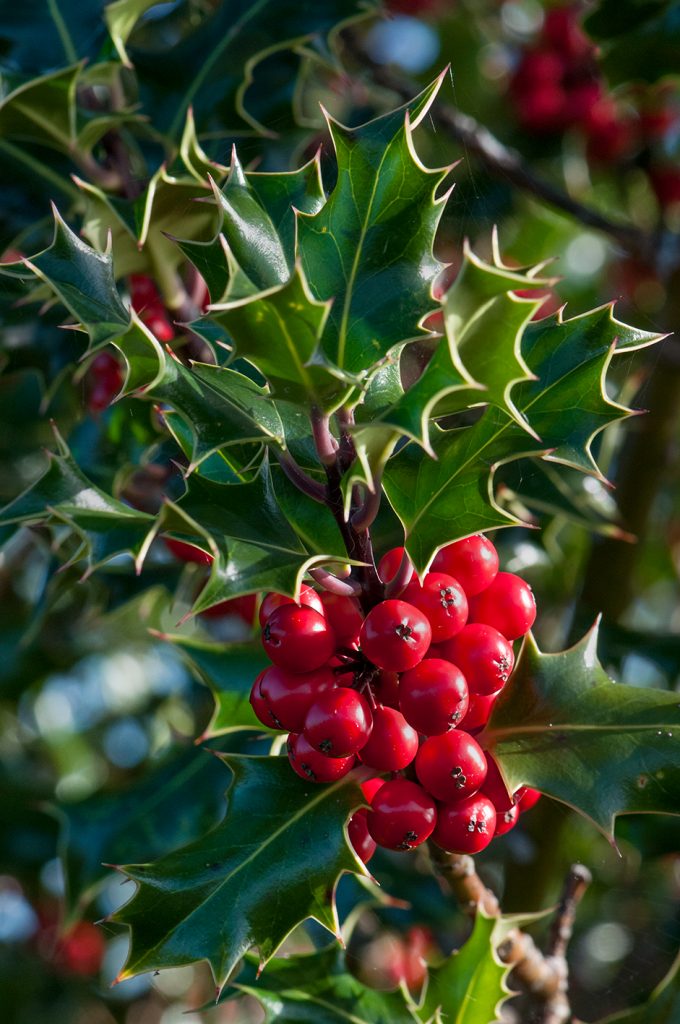
European Holly, Ilex aquifotlium, Merkinch LNR, Inverness (photograph)
An evergreen shrub common throughout Scotland and Britain and in folklore widely believed to protect against witches, faeries and evil forces. Partly because of this, it was regarded in most places as a bad omen to cut down a Holly tree, although paradoxically Holly boughs were widely used as decorations at Hogmanay and also at Christmas marking an incorporation of much of the older folklore and beliefs around Holly into Christian celebrations. Its protective qualities were thought in part to simply come from the sharp points on the leaves making it difficult for evil spirits to pass. This mixture of physical and spiritual strengths also meant that when it came to livestock protection, Holly was often used for hedging making an effective fencing to keep the animals in and a barrier to keep evil out. Holly was also planted in Europe close to houses to protect them from thunder storms and Holly became associated with the thunder gods, Thor and Taranis. There is some scientific basis for this, the sharp points on Holly leaves do actually act as miniature lightning conductors providing at least some protection for the tree and adjacent structures.
Honeysuckle, European
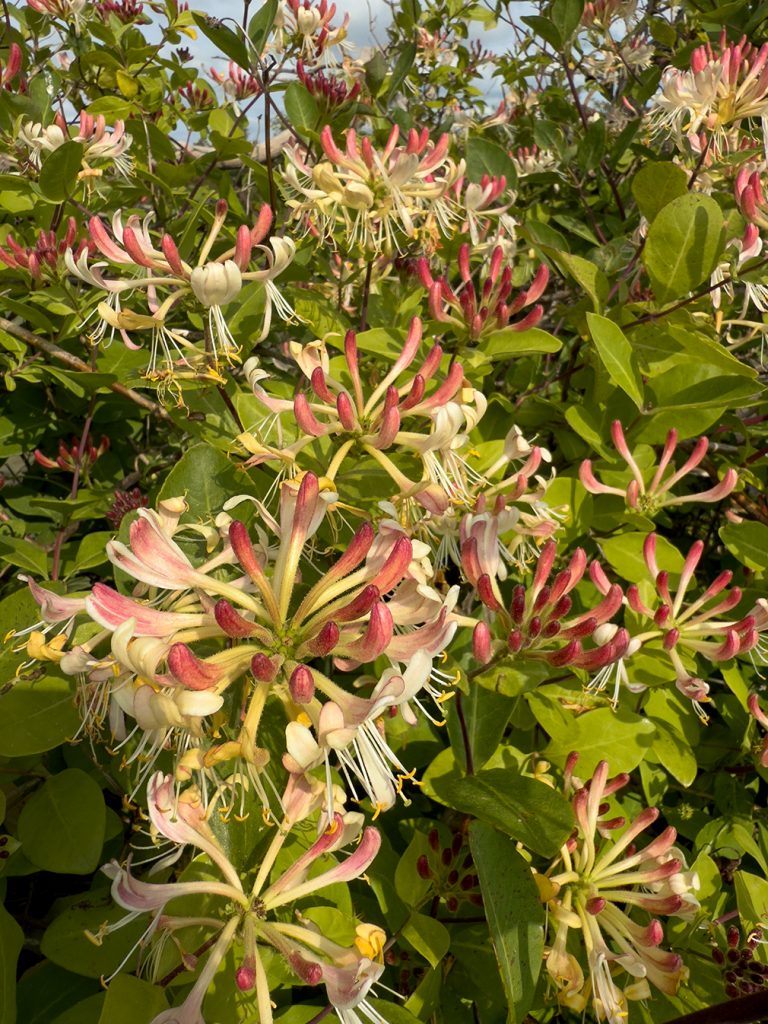
European Honeysuckle, Lonicera periclymenum, Merkinch LNR, Inverness
Seen throughout Scotland, the Honeysuckle is mostly found as a climbing plant twining clockwise around trees and woody shrubs. Its scent is strongest at night to attract pollinating moths. Widely thought of as a positive force in magic, the Honeysuckle was particularly used around May 1st to protect against dark forces appearing in wreaths, especially around barns and livestock. In Moray in the 1700’s, there are records of sick children being passed three times through a wreath of Honeysuckle lowered over their heads to treat them. Honeysuckle growing around the door of a house would protect the family living there and Honeysuckle was also associated with strength of love and in Scotland was used in wedding ceremonies. Honeysuckle flowering near a house was regarded as a sign of a wedding within a year.
Juniper

Common Juniper, Juniperus communis (digital illustration)
Previously much more widespread in Highland Scotland and referenced in Gaelic placenames, Juniper and Juniper berries have for centuries found a place in kitchens and distilleries especially of gin, places of healing where the berries are used for gastric illnesses or to stimulate labour in childbirth and places of ceremonies where the aromatic smoke Juniper produces is seen as ritually purifying. Juniper actually gives off very limited amounts of visible smoke when burned, which has meant using the wood for fuel is noted with illicit alcohol stills where the operators are trying not to attract attention. Dispersed into the air as an oil-based vapour, Juniper extracts may be effective in limiting airborne infections and were used in European hospitals in the first part of the 20th century. Medicine is now looking to the Juniper for possible new treatments for cancer and Parkinson’s disease.

Common Juniper, Juniperus communis (digital illustration)
Cited as one of the first shrubs to recolonise the land after the ice ages in Britain, the Juniper has a long history in Scotland going back over 12,000 years. It actually needs open land, it cannot grow well in shade, and the conditions helped it and it probably worked in an ecosystem held in balance by the mammoths in the same way that elephants are the architects of African grasslands today. In decline now, it needs help through conservation to ensure its future. Perhaps it has earned it, in The Highlands there is a tradition of burning Juniper on New Year’s morning in both the house and byre to purify the home, the buildings, the people and the animals. As such, it was felt to be the giver of security for hundreds of years and it could have earned a small gift of security in return. Juniper trees in Britain can live to 200 years old and they deserve the chance of a full long life. It’s a chance that would be supported by all Mistle Thrushes. They are so drawn to the berries that they treat a Juniper tree like a territory and try to defend it against all rivals. In return, the thrushes help spread the seeds laying the foundation for future generations of their descendants and the Junipers they will contest for ownership.

Juniper Berries, Juniperus communis (digital illustration)
Lilac
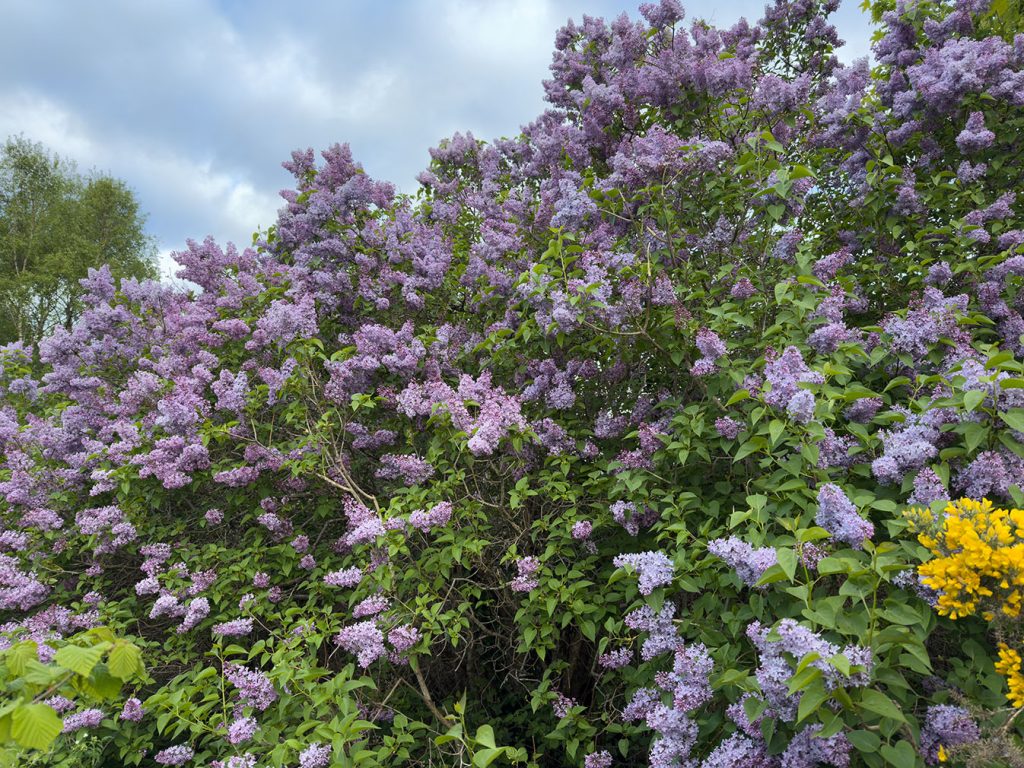
Lilac, Syringa vulgaris, Carnarc Point, Merkinch, Inverness (photograph)
Mustard, Hedge

Hedge Mustard, Sisymbrium officinale, Merkinch, Inverness, Highland Scotland (photograph)
Hedge Mustard which is part of the cabbage family has been used as a herbal medicine for rheumatism, jaundice and as a purgative. An alternative name for it is ‘The Barbed-wire Plant coming from its rigid, often entangled, stems. Whether its ‘scratchy’ reputation suggested its use for throat conditions is not clear. In France this even went far enough for Hedge Mustard to be known as ‘Singer’s Plant’ for its positive effects in developing the voice and treating its loss.
Pink, Sea
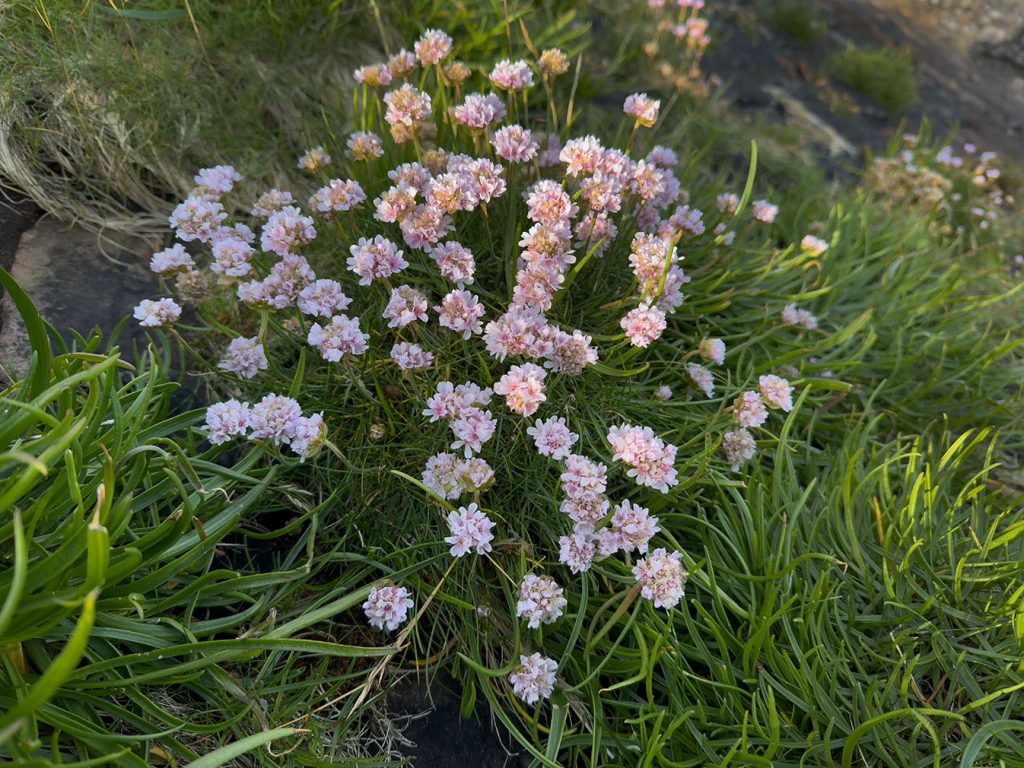
Sea Pink, Armeria maritima, Merkinch LNR, Inverness (photograph)
Also known as Thrift and by several other names, the Sea Pink is a flower found in the wild coastal areas of much of the Northern Hemisphere. They have a remarkable tolerance for high copper concentrations in soil and a metabolism that is adjusted significantly if atmospheric carbon dioxide is high. It is also favoured by high lead levels in soil, which lead to a belief it could cure lead poisoning. It has been used in herbal treatments for a range of other conditions, including in Scotland in the 1700’s as a cure for Tuberculosis. More prosaically, a treatment made from boiling the whole plant was used by sailors to cure hangovers, possibly a frequently used idea in past times.
Snowdrop
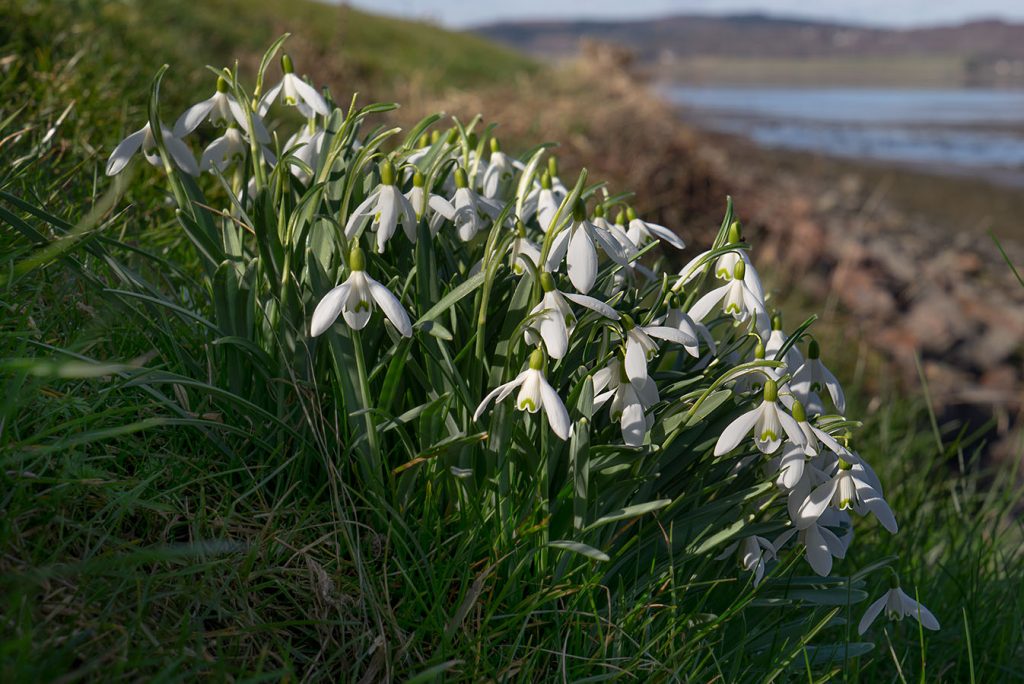
Snowdrop, Galanthus nivalis, Clachnaharry, Inverness (photograph)
The conventional history is that the Snowdrop is an introduced species brought by monks from Europe in the 1st Century AD. It then remained in cultivated settings till 1770 after which it became established in the wild. Its British distribution, however, at least raises questions about whether it became established much earlier in the wild and was possibly a native species, albeit with a very limited range. The meanings it is given can be confusing. Bringing a single flower into a house is bad since it resembles a shroud but a bunch of Snowdrops is good, unless you keep chickens because their egg laying will be interrupted. Sometimes you just can’t win.
Soapwort
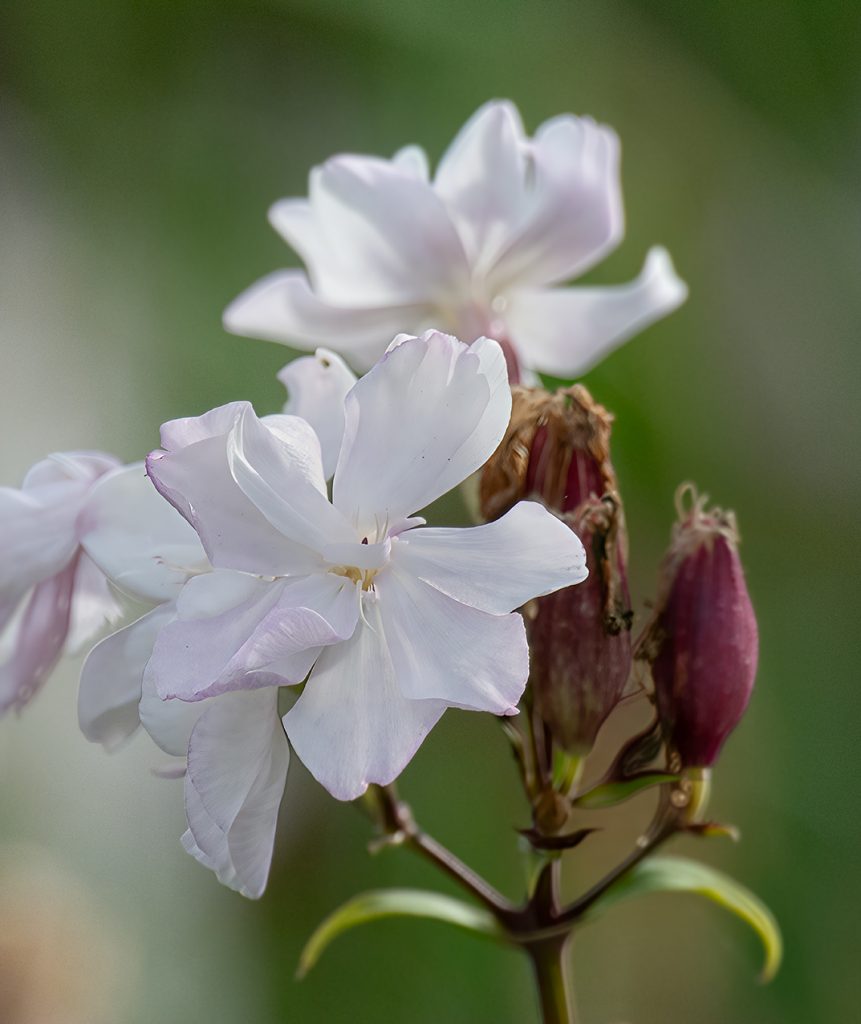
Soapwort, Saponaria officinalis, Merkinch Local Nature Reserve, Inverness (photograph)
Not strictly a native anywhere in Britain, Soapwort originally comes from the Middle East. Exactly how or when it arrived is not recorded but it was a long time ago, so it is listed as an ancient introduction. Not widely distributed in Scotland, Inverness and the surrounding area is one of the places it is found. So, another wildflower with a quant, eccentric name, except it isn’t. Soapwort contains saponins, now recognised to have a small potential to be toxic, so health and safety has advanced, it would not be widely used now without precautions and careful supervision in preparations, but if you rub the leaves you get a slippery froth and if you boil them a green lather. These genuinely act as a soap removing grease and dirt and have been used for centuries to clean clothes, animals, including sheep and for people to wash with. Even if you do guard against any small risk of toxicity, you would think it had no place in the modern era. Again, this would be wrong, Soapwort is much more gentle than modern soaps and has been used by The National Trust to wash ancient fabrics, including curtains, by the Victoria and Albert Museum on old cloth in their collections, by modern exclusive silk designers and producers and in the care of medieval tapestries. In the Romanian village of Șieu-Odorhei, it was adopted as a soap replacement for those with dry skin conditions because it is more gentle.
Speedwell, Slender
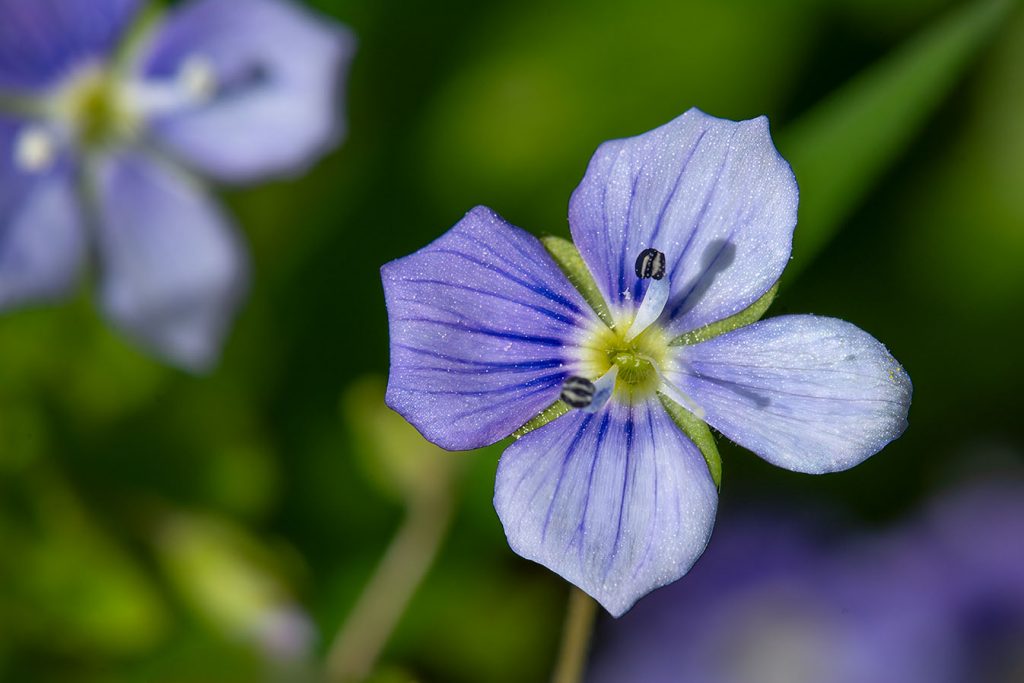
Slender Speedwell, Veronica filiformis, Merkinch Local Nature Reserve, Inverness (photograph)
Not a native plant to Scotland or Britain, the Slender Speedwell was introduced from Turkey as a garden flower in the early 1800’s. It ‘escaped’ from the cultivated settings to become established in the wild especially from the 1920’s onwards. It is a close relative of the truly native species like the Germander Speedwell.
Tansy
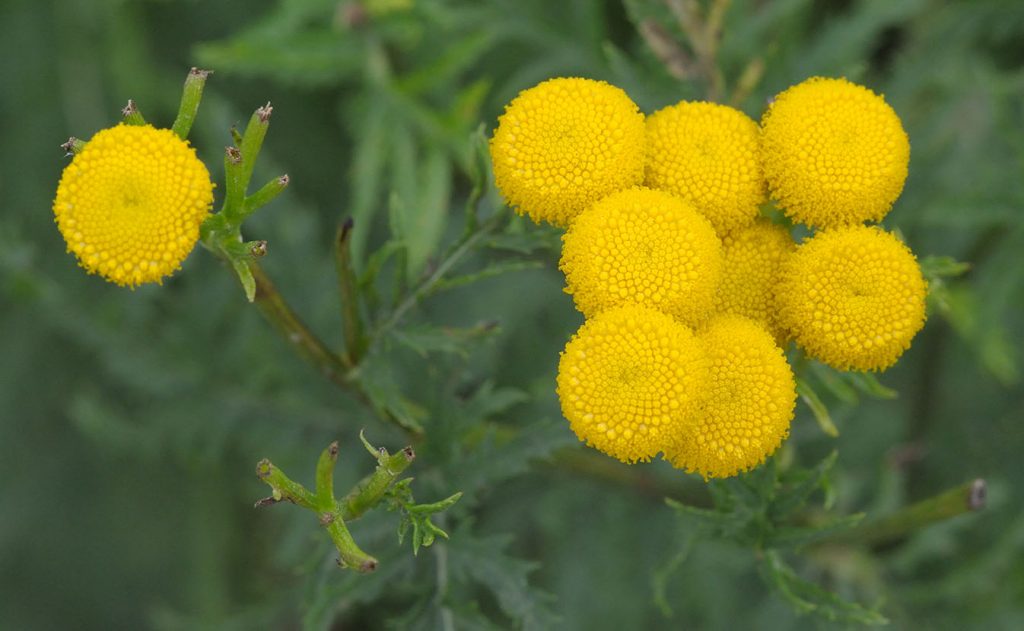
Tansy, Tanacetum vulgare, Clachnaharry, Inverness (photograph)
The suggestion is that the name Tansy derives from the Greek ‘Athanaton’ meaning immortal and is connected through the mythology of Zeus giving Ganymede a magic elixir infused with Tansy to give him eternal life. Whether this association with immortality arises from how long Tansy lasts as flowers, or its use in the preservation of dead bodies is not clear. Tansy has also been used in the treatment of a variety of conditions, placed in footwear to prevent the threat of the rising miasma from marshy ground and by monks as a flavouring for Tansy cakes at Easter. More basically, it was used in cooking at Easter to counter the believed worm infestations that the old diets for Lent could lead to. As a herb, it is bitter, potentially toxic, and bad news for parasites. Flies don’t like it much either which, is why it was used as an insect repellent, especially in Elizabethan times. The toxicity is genuine, Tansy contains thujone, a neurotoxic ketone, which in overdose especially from a preparation as a concentrated oil can be fatal.
Vetchling, Meadow
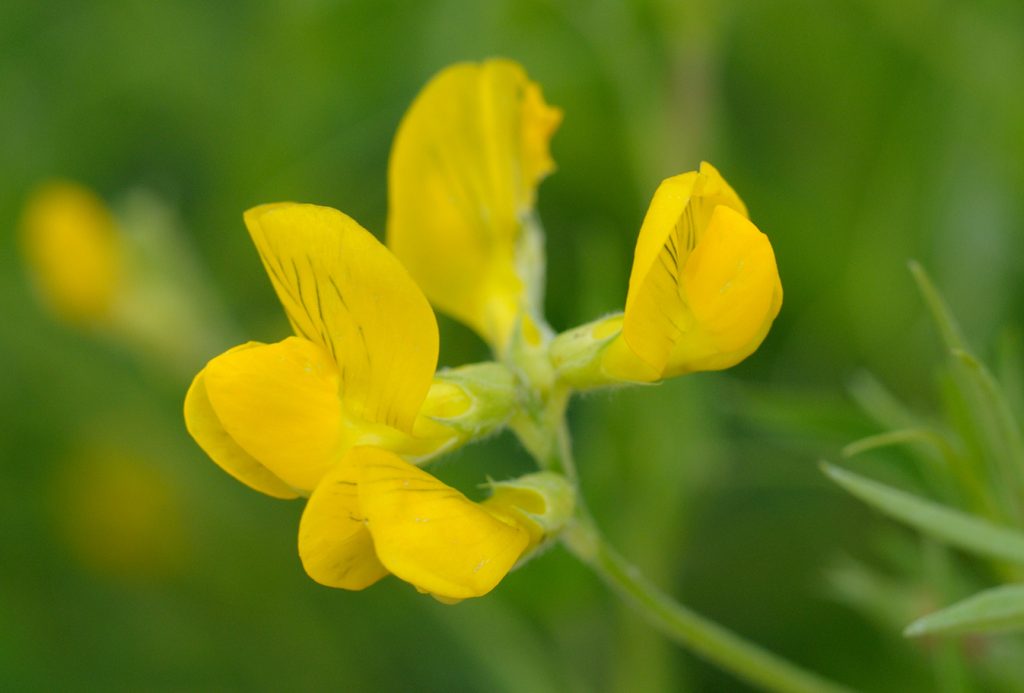
Meadow Vetchling, Lathyrus pratensis, Merkinch (photograph)
Widely distributed in Scotland and once used as a cough medicine, Meadow Vetchling is native in Europe and Asia but has since been introduced to North America .
Photographs, illustrations and words ©Nick Sidle, all rights reserved