Insights Seas and Oceans
Photographs, words and illustrations Nick Sidle
Dolphin, Bottlenose

Bottlenose Dolphin, Tursiops truncatus, Moray Firth, Scotland (photograph)
Each dolphin has their own name as a whistle sound. They sleep one side of their brain and then the other, not both at once. Across the world associated with play and fun right from the Dreamtime stories of native Australia onwards and they have larger brains than people. Perhaps they and fun have been underestimated.
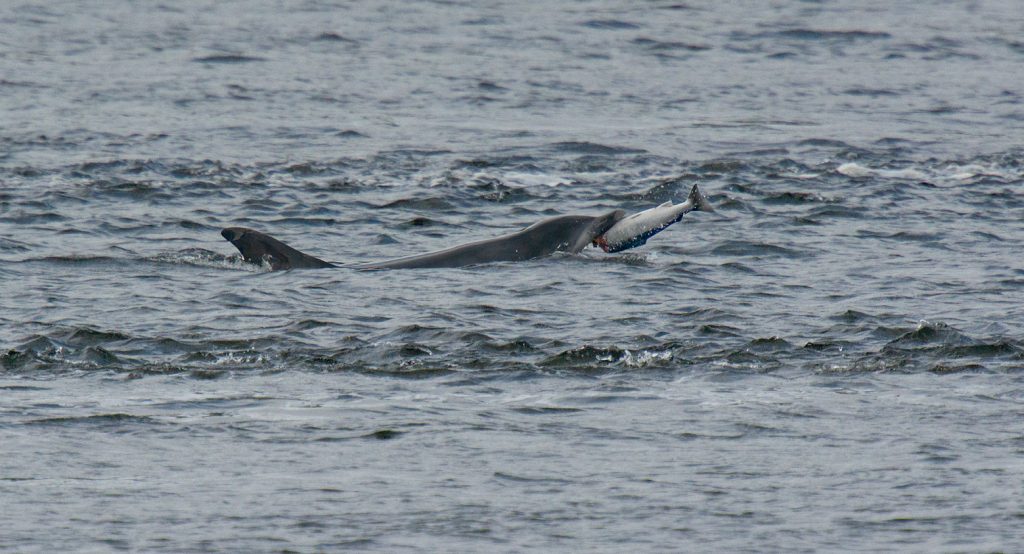
Bottlenose Dolphin, Tursiops truncatus, Beauly Firth (photograph)
Bottlenose Dolphin catching Salmon on the rising tide in the deepwater channel in the Beauly Firth. The Moray Firth dolphins are estimated to be a group of 200 centred on the Firth but known to travel widely from it as well. The group are the most Northerly established Bottlenose Dolphin population in the world. They are also sometimes recorded venturing further inland and into the Beauly Firth where they are seen from North Kessock and the Merkinch LNR.
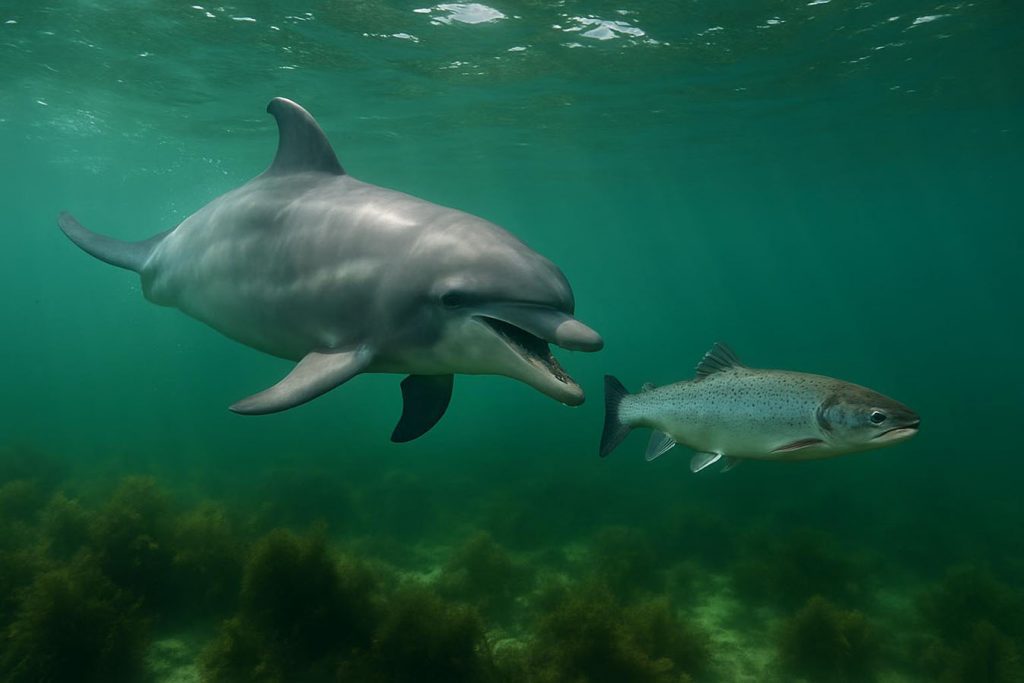
Bottlenose Dolphin – Tursiops truncatus, hunting Atlantic Salmon (digital illustration)
Not just of conservation importance, the Moray Firth dolphins are estimated to bring at least £4 million to the Scottish economy each year through tourism.
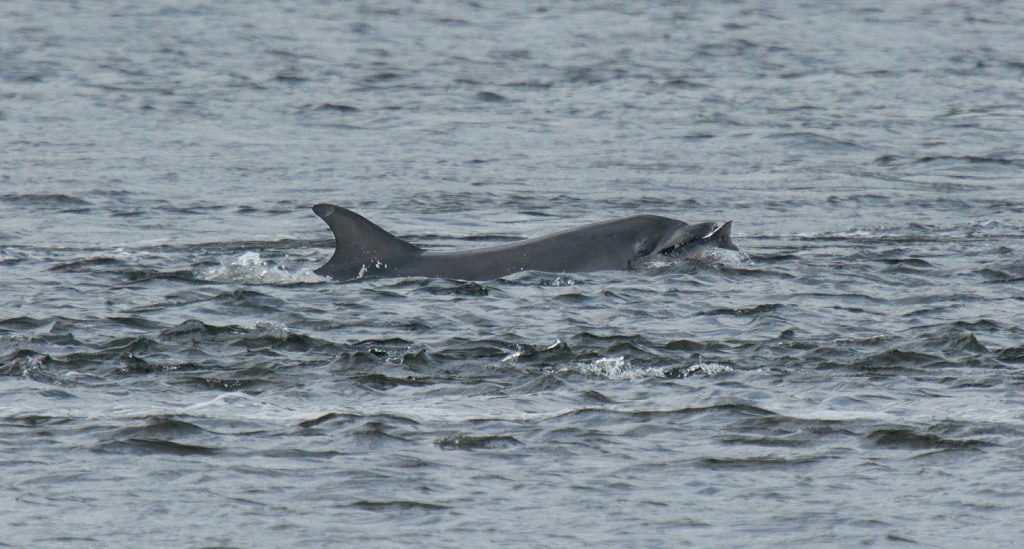
Bottlenose Dolphin, Tursiops truncatus, Beauly Firth (photograph)
Bottlenose Dolphins are large, up to 4m long, very acrobatic and fast, and can be aggressive to each other and rival cetaceans, especially the Harbour Porpoise. In Celtic lore, they are generally thought of as positive spirits and some Celtic traditions see them as ‘The Watcher of the Waters’, guardians of the sea and aquatic realms. To seafarers they are seen as good luck and even protectors who could guide ships to safety.
Eelgrass, Common

Common Eelgrass, Zostera marina (digital illustration)
Eelgrass is not a seaweed, it is a flowering plant which grows underwater down to a depth of about 10m. They need to be shallow enough to get good amounts of sunlight to carry out photosynthesis just like grasses on land. The plants can be closely spaced on the sandy or muddy areas of seabed they favour and forming dense seagrass meadows. Where Eelgrass grows it provides a very valuable habitat for small fish, crustaceans and other animals, they are an important ecosystem. They are also a food source for birds such as geese especially in the winter. Their plant credentials extend to having flowers and a Rhizome root system. Even if eelgrass dies and breaks off from its roots, it can be the basis for a new habitat if it is washed up on the shoreline where it can be colonised by insects and invertebrates. Eelgrasses in Scotland are a protected area plant but are threatened by pollution, coastal developments and invasive species.
Kelp Forests

Forest Kelp, Laminaria hyperborea (photograph)
Kelp is one of the predominant large seaweeds around the coasts of Scotland and Britain. There is more than one species, but the main type is Forest Kelp, Laminaria hyperborea, however Kelp forests, the term used to describe large areas of Kelp, are made up of all the varieties. Even though Kelp is relatively common, the Kelp forests are a unique, valuable and threatened habitat. Concentrations of many species live in the forests making them a very highly biodiverse ecosystem and any disturbance brings a high environmental cost. Estimates put the number of species found on and around the kelp to be in the hundreds and larger animals, fish, birds otters and seals all of which are of conservation concern themselves, all benefit from the Kelp resident or supported animals. Each Kelp plant has at the base of the stalk a ‘holdfast’ that anchors the kelp to the bottom. The Kelp can then grow up to 10 feet in height and it is the multiple plants that make up a forest, just like trees on land. One of the main threats to Kelp is commercial dredging, extracts from the seaweed are used in the cosmetics, textile and food processing industries. Apart from the ecosystem and biodiversity risks, Kelp forests also serve to dissipate wave energy in storms helping to protect the coastline and act as carbon stores and so mitigate climate change to a degree. Kelp emerged approximately 15 million years ago but now contributes to the future of the earth. It is found in water temperatures of 6 to 14°C and grows rapidly in the summer, although it does die back in the winter as well.

Forest Kelp, Laminaria hyperborea (photograph)
There is a suggestion that Kelp forests are such a productive ecosystem that they shaped human history around the Pacific Rim. Early peoples spread out from Northeast Asia to the Americas and were helped substantially by the nearshore Kelp habitats providing some shelter and abundant food. A great deal of human experience and some human history has been made by Kelp forests, even though they are mostly ‘out of sight’. For their future and for peoples futures, they must not be ‘out of mind’.
Seal, Grey
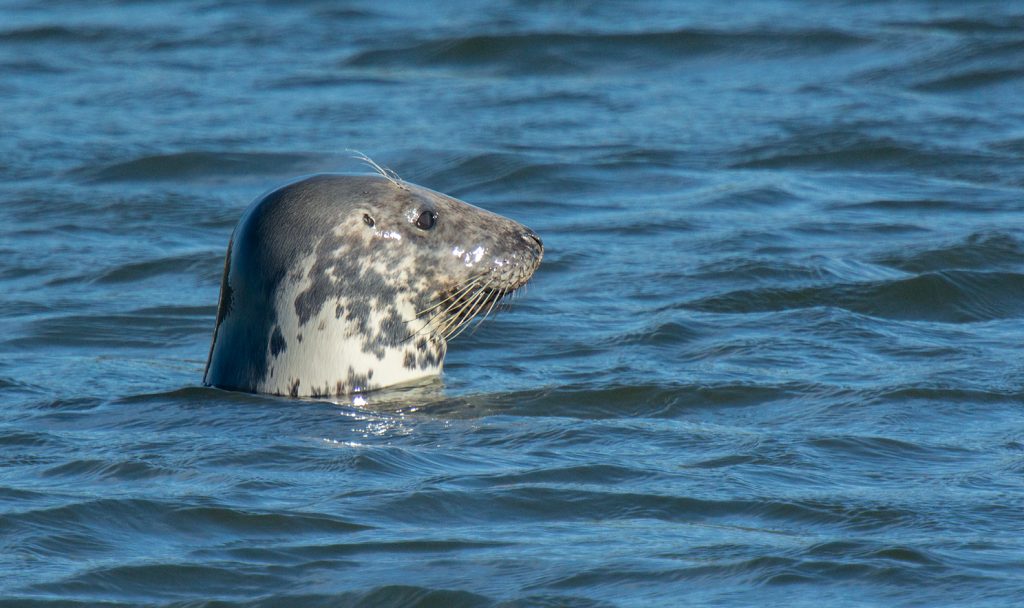
Grey Seal, Halichoerus grypus, Merkinch, Inverness (photograph)
Larger than the Harbour Seal, Grey Seals tend to be solitary in the water but are found in groups on the shore when they are out of the sea. The seals in the Eastern Atlantic are larger than those on the coast of North America in the West. It has been suggested that they should be regarded as separate subspecies. Scotland and the UK has an important responsibility in Grey Seal conservation. They are one of the rare seals in the world and the UK has an estimated 40% of the global population and 95% of the European population. Scotland is their largest stronghold in the UK, of the estimated 57,000 pups born each year in the UK 50,000 are in Scotland. Grey Seals in Scotland and the Hebrides are those most associated with the beliefs around Selkies, the main element of which is that a seal, often but not exclusively a female, can take off their skin to go onto the land as a person but needs to recover it and put it back on to return to the sea.
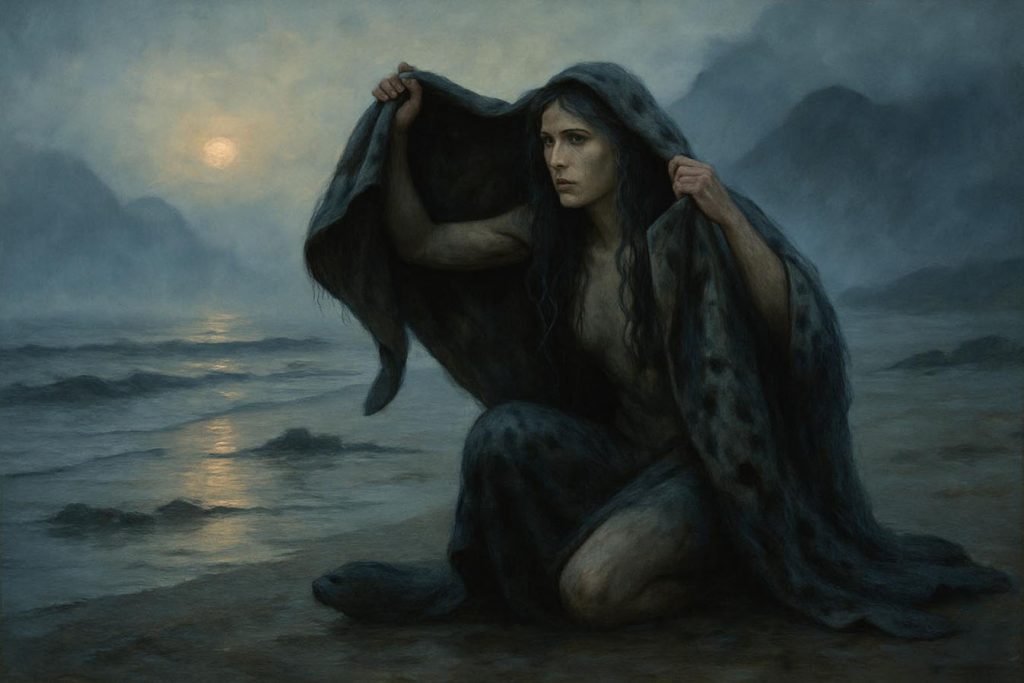
Selkie returning to her seal skin and preparing to go back out to sea (digital illustration)
In some stories, a person finds and hides their seal skin coercing them to stay on land and possibly marry but they always want to return to the sea and if they find their skin inevitably do, even if it means abandoning children they have had and genuinely love.
Seal, Harbour
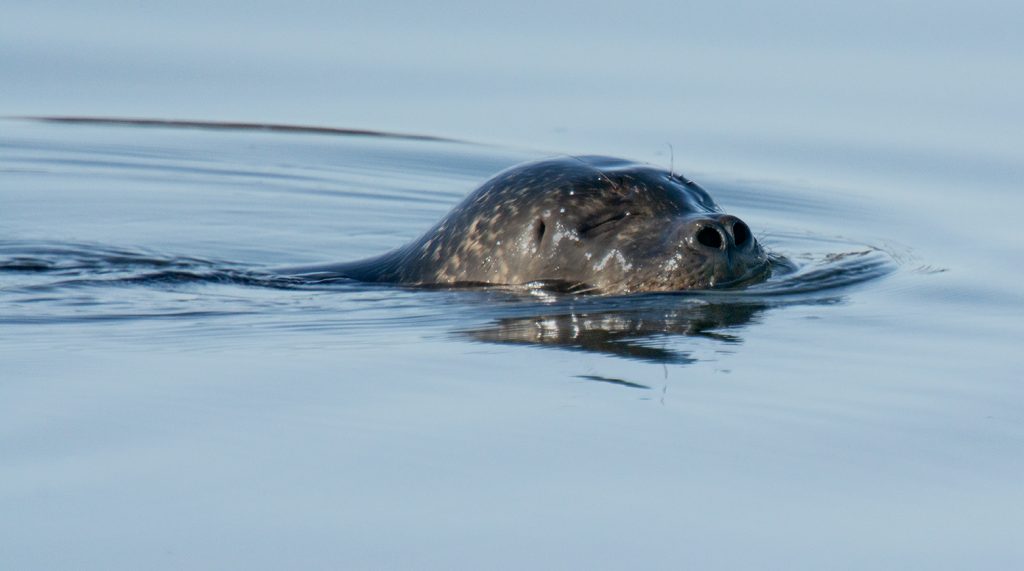
Harbour Seal, Phoca vitulina, Merkinch LNR, Inverness (photograph)
Found around the coasts of Scotland, Harbour Seals are usually seen hauled out of the sea in groups on the rocks and shore. In the sea, they are observed closer to shore than the Larger Grey Seals. They eat a range of food but fish and crustaceans form the majority of their diet.
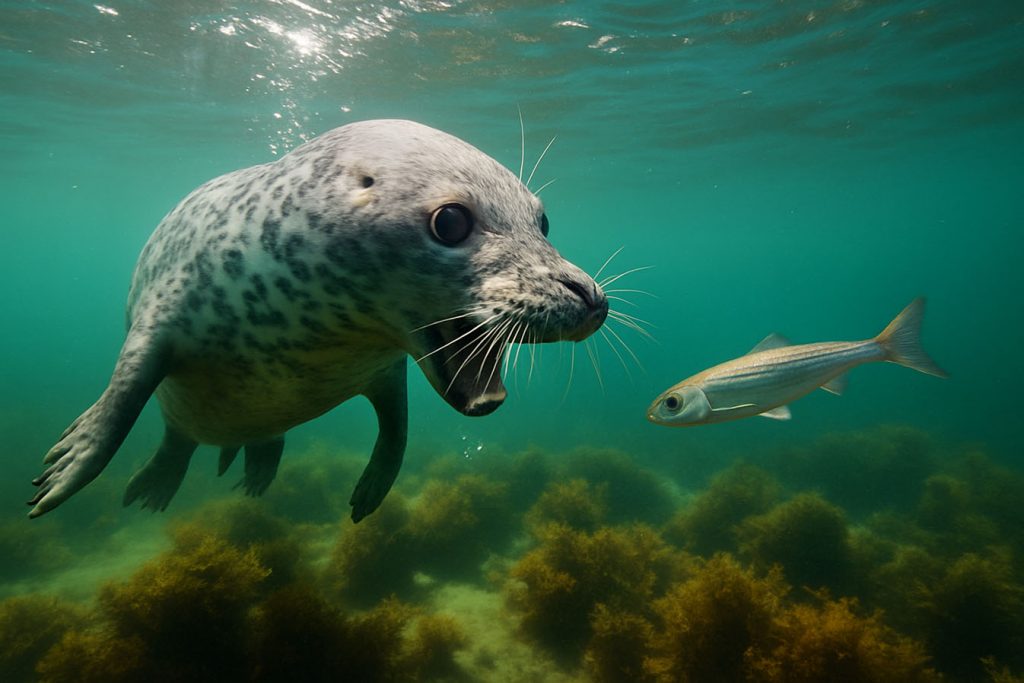
Harbour Seal, Phoca vitulina hunting fish (digital illustration)
Perhaps the main cultural association in Scotland is the lore of the selkies, seals who emerge from the sea, temporarily shed their skins, and walk on land in human form. Seals have also been linked to the souls of the drowned.
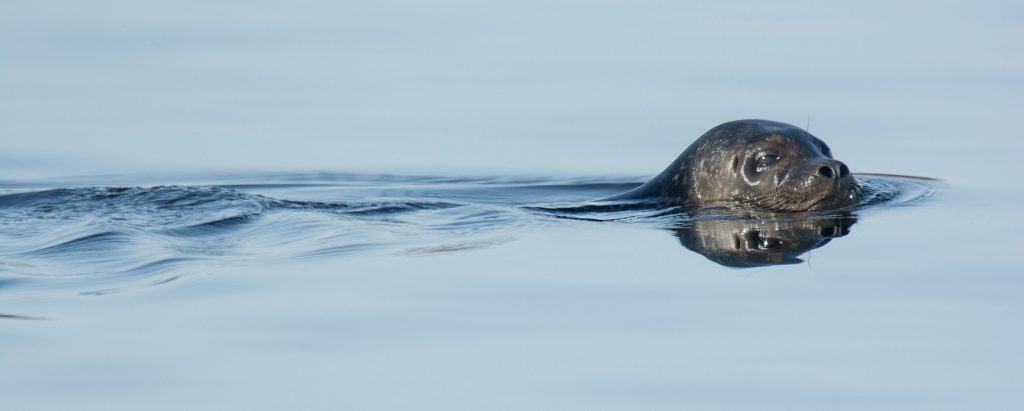
Harbour Seal, Phoca vitulina, Merkinch LNR, Inverness (photograph)
Whale, Humpback
Humpback Whale, Megaptera novaeangliae, Scottish seas (digital illustration)
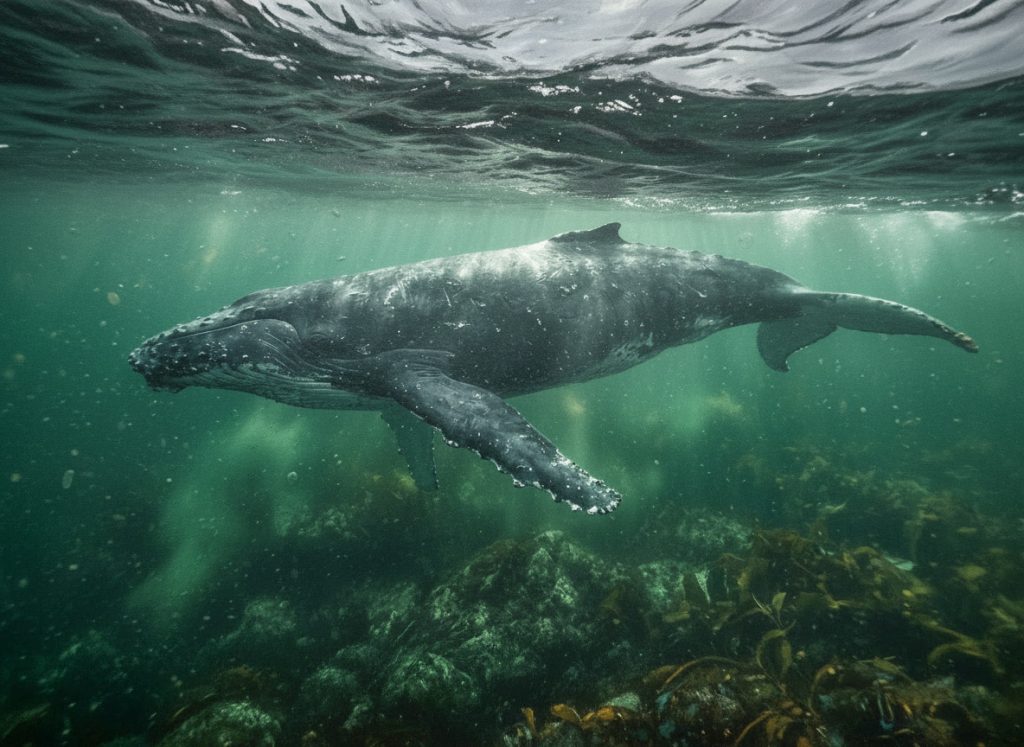
A rare visitor to Scottish waters, a Humpback Whale was reported first in the Moray Firth at Chanonry Point and then in the Beauly Firth on 22nd May 2026. Not the first encounter ever but a very notable sighting. Humpback whales grow up to 62’ (19m) in length, and weigh 40-50 tons, they are very big animals. The visitor did not perform one of the famous breeching leaps out of the water the whales are known for but, given their size, the depth of the Beauly Firth probably isn’t enough for the landing to be safe, even if the whale had wanted to. Around Scotland, Humpbacks are usually seen singly.
Humpback Whales are known for their very complex and haunting vocalisations heard during the breeding season. Across the world, they have been seen as ocean gods, guardians, protectors and creators, although for a long time, it was they who needed protection as human pressures through hunting threatened their survival. They feature in the Kumulipo, the Hawaiian creation chant and the Humpback represents Kanaloa, God of healing and the sea. In Native Australian culture, Humpbacks are seen as creation ancestors who helped shape the land and ocean.

Humpback Whale, Megaptera novaeangliae, Scottish seas (digital illustration)
Whale, Northern Minke

Northern Minke Whale, Balaenoptera acutorostrata, North of Portsoy, Banffshire, Scotland (photograph)
Smallest of the true baleen whales the Minke could be sensitive about size except they are still up to 35 feet (11m) so small is relative. So is their security, numbers have recovered but all marine mammals are under pressure. In Highland the Minke have their own species champion, Cllr Trish Robertson, so at least someone makes sure they are not forgotten and get a real chance to live the full fifty years they are thought to have.
Photographs, text and illustrations ©Nick Sidle, all rights reserved