Sakura, Not to Be Taken for Granted
Words Hana Shono, Illustrations Nick Sidle
With great turmoil across the world, it is critical that we – now, more than ever – remain connected with our natural heritage and culture. Indeed, there is often a very good lesson to be learned from fairytales, folklore and mythology.
For now, let us turn our attention to the Cherry Blossoms, or Sakura, in Japan. You may have travelled during Sakura season to see them or you may have even come across them in your own country. I myself came across them during my studies at St Andrews in Scotland!
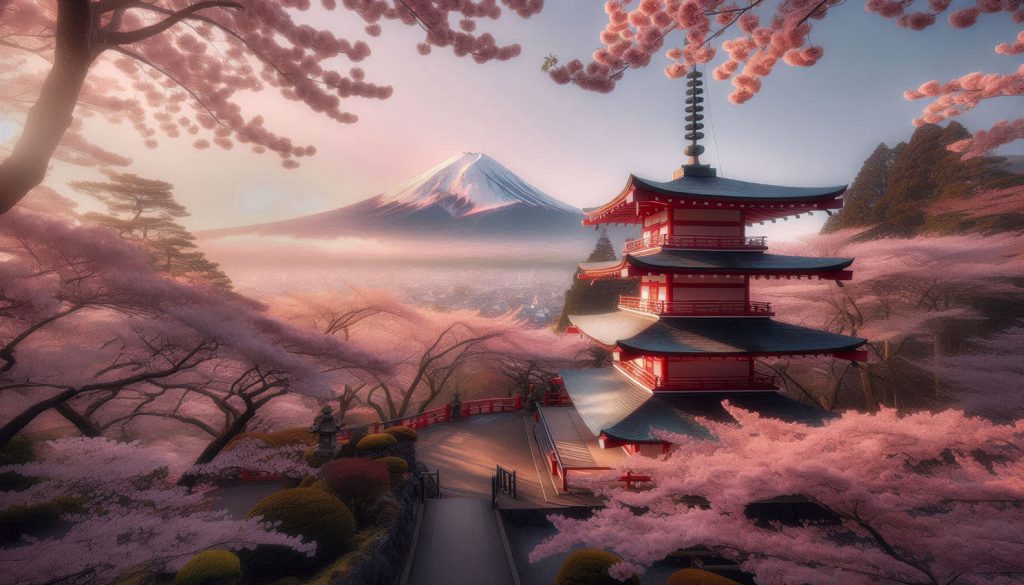
Digital illustration
Sakura are treasured and cultivated in Japan for their beauty and symbolism. Many festivals and traditions are typically centred around Shinto or Buddhist religious beliefs. The Shinto religion emphasises a connection to nature and ancestors, where the gods (‘kami’) are said to inhabit all things. All things, therefore, are to be respected.
It is from this belief that Sakura trees have special significance. The blooming of the trees marks the arrival of spring, promising new life, hope and vitality. It is the beginning of new things. As a result, the academic year in Japan is marked by the appearance of the Sakura and new employees are typically hired by businesses at around this time. Truly, a new beginning.
Sakura flowers also symbolise the fleeting nature of life and impermanence. With their short blooming span of 1-2 weeks, they are a reminder that life should not be taken for granted.

Digital illustration
To contemplate the Sakura’s symbolism and to celebrate their arrival, people take part in ‘hanami’, which directly translates to mean ‘flower viewing’, although it is now more commonly known to mean only sakura viewing. Such an activity inspires hope both in people’s personal lives but also their work or academic lives. It is a wonderful way to bring people together, united in their viewing of the sakura and celebration of new beginnings. It is a time to just take a breath and enjoy the beauty of the sakura.
To better understand the tradition of hanami and its cultural significance, please see below a woodcut painting by Utagawa Hiroshige, a famous Japanese woodblock painter. The painting is of a hanami viewing party at what is now known as Asukayama Park in Kita, Tokyo. While the exact date of the painting is unknown, experts believe it was created between the years of 1832-34.
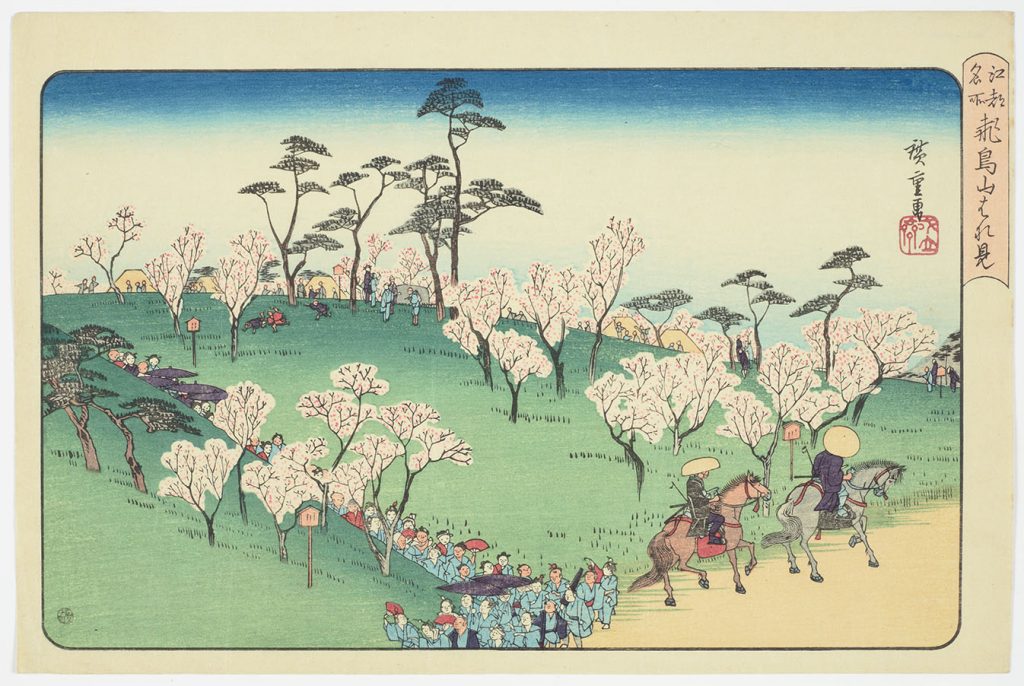
Woodcut, Utagawa Hiroshige
Text ©Hana Shono, photographs and Illustrations ©Nick Sidle, all rights reserved, Woodcut by Utagawa Hiroshige