Insights – Birds
Photographs and words Nick Sidle
Blackbird, Eurasian
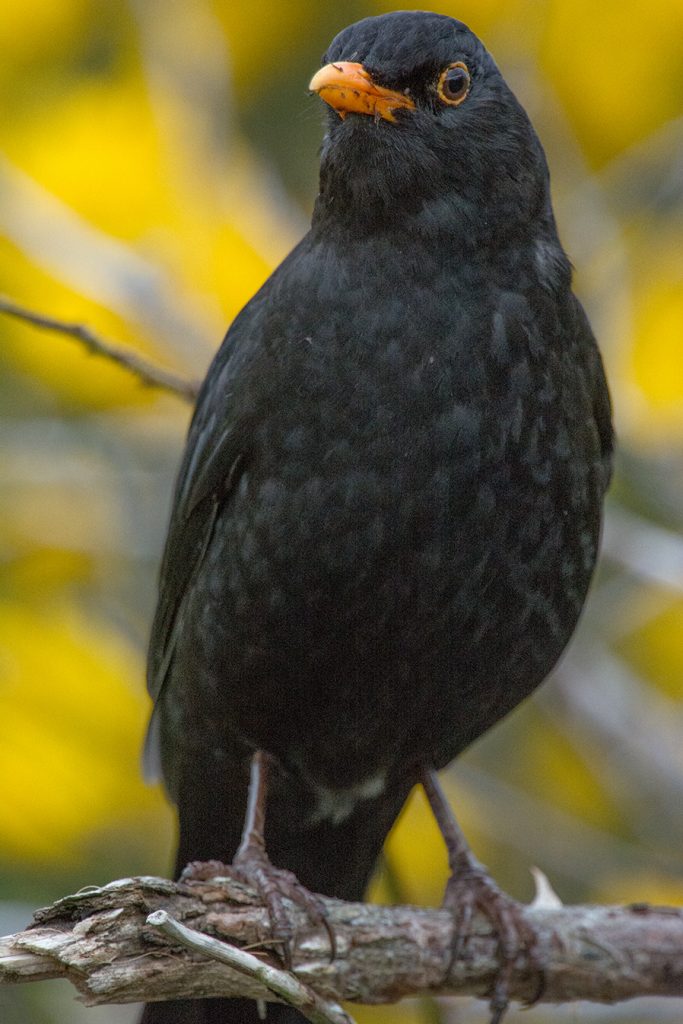
Eurasian Blackbird, Turdus merula, Carnarc Point, Merkinch (photograph)
Also known as the ‘Blackie’ in Scotland, a numerous and widespread UK and Scottish resident with additional birds arriving Northern Europe as migrants in winter. One Scottish story is that the Blackbird was all white but then sheltered from a storm in a warm chimney and was black from then on.
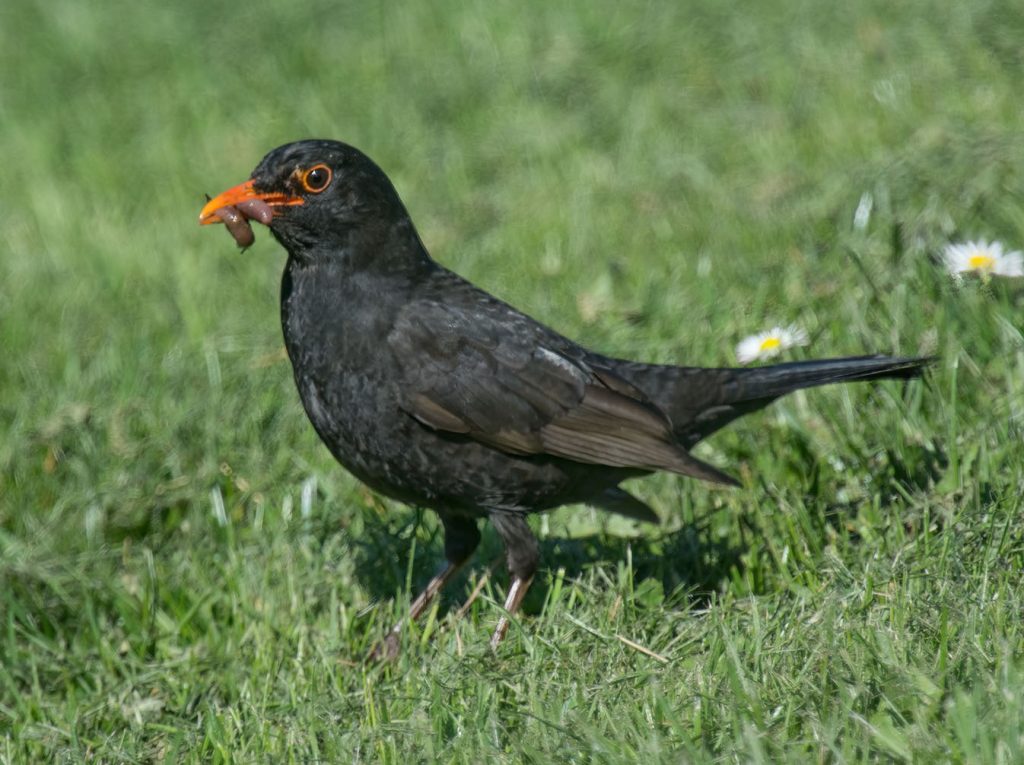
Eurasian Blackbird, Turdus merula, Merkinch (photograph)
Tend to fare better than many birds in harsh winters probably because of their varied diet. To the Celts there were the three oldest animals on earth, a trinity, the Blackbird, the Trout and the Stag representing the air, water and earth elements.
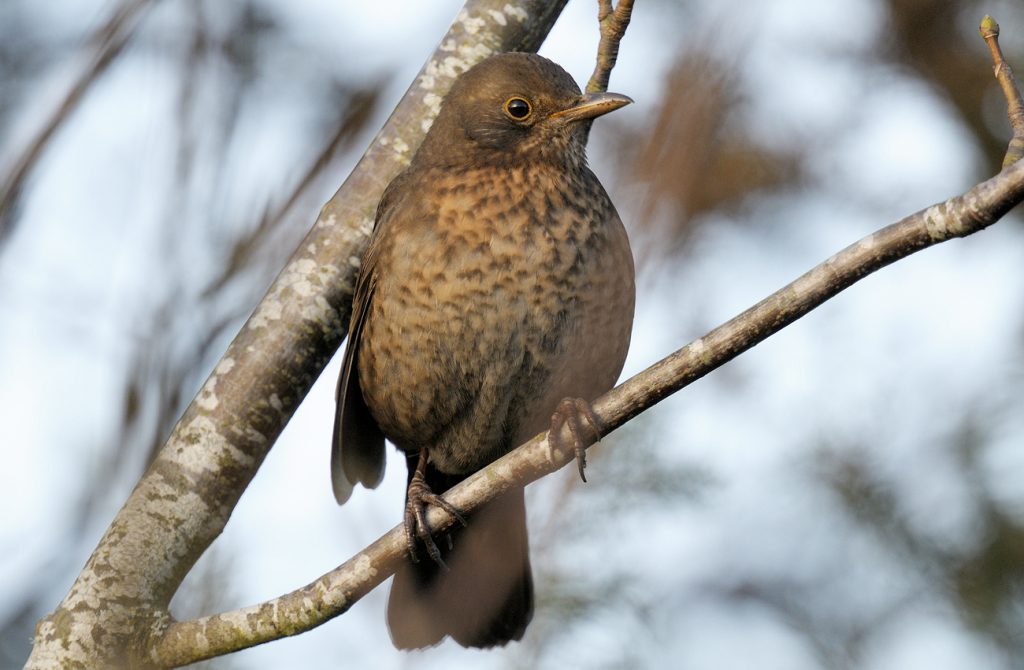
Female Eurasian Blackbird, Turdus merula, Merkinch (photograph)
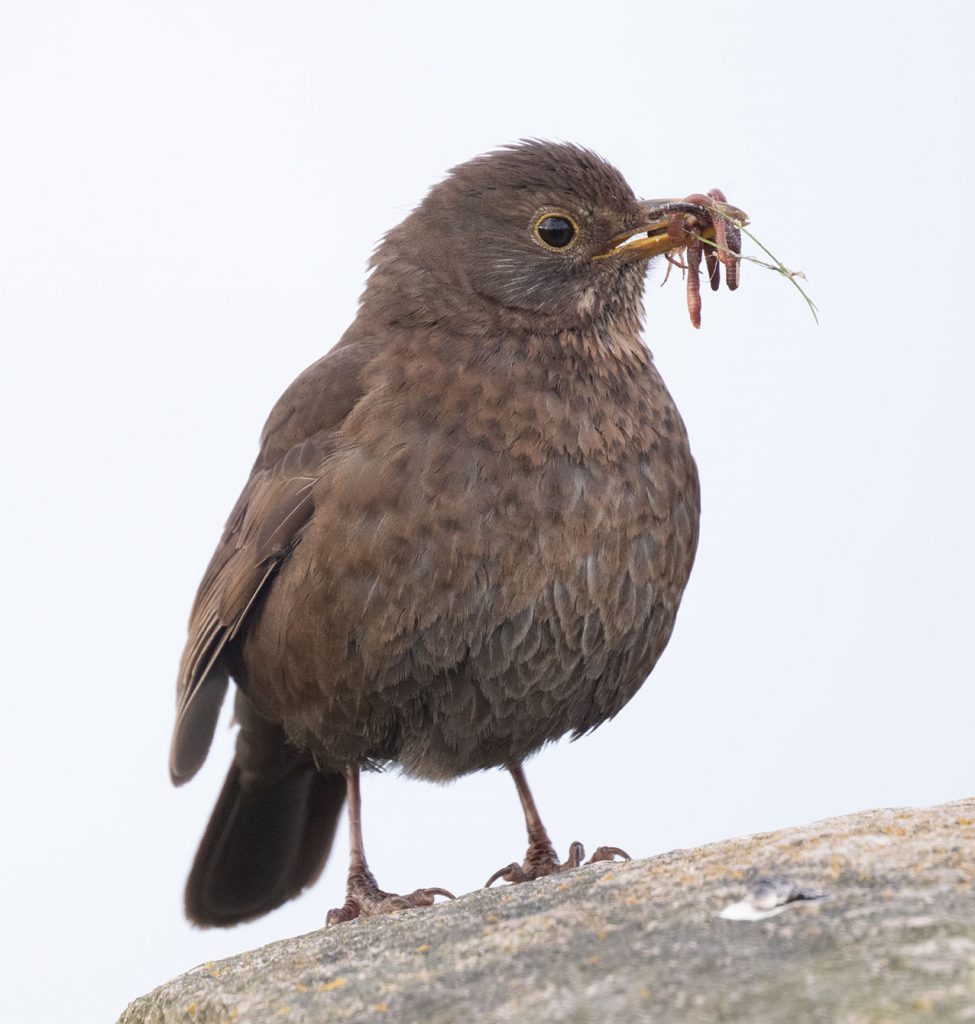
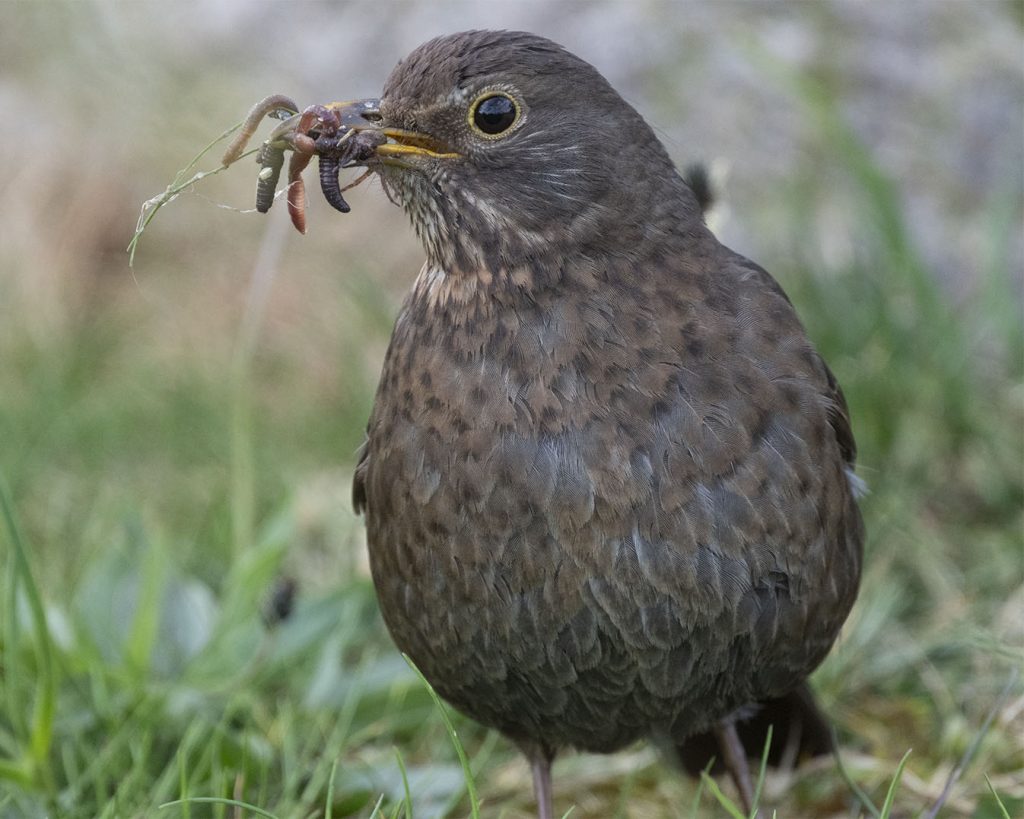
Eurasian Blackbird, Turdus merula with newly hatched chicks to feed, Carnarc Point, Merkinch, Inverness (photographs)
Bullfinch, Eurasian
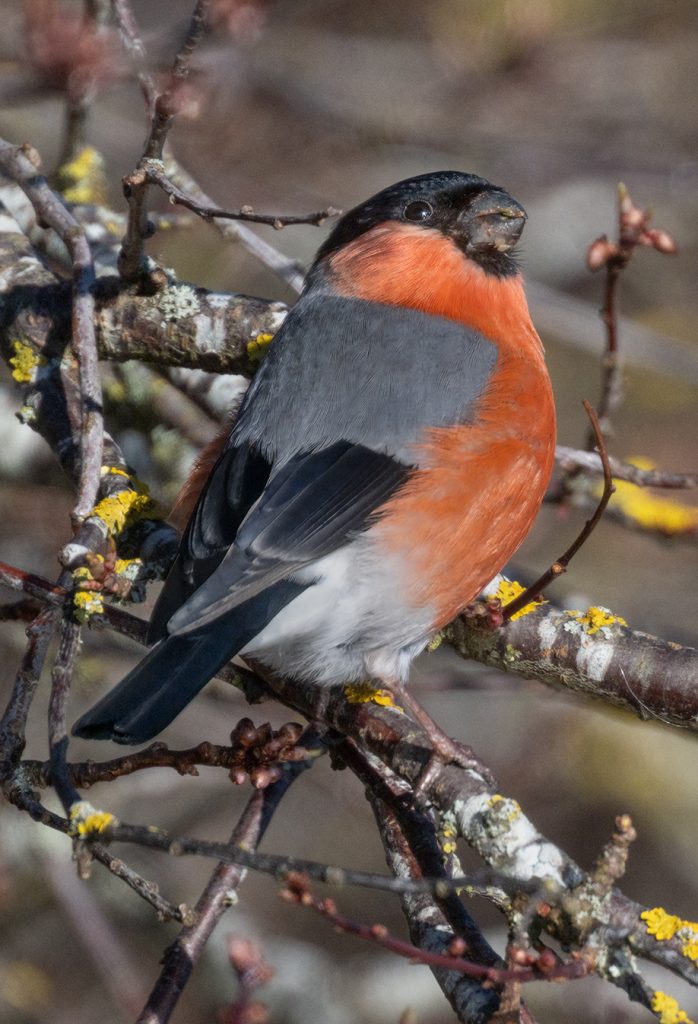
Male Eurasian Bullfinch, Pyrrhula pyrrhula, Merkinch, Inverness (photograph)
Resident and in Scotland at the Northern edge of its range in Europe, feeding on soft buds and shoots more than seeds, and known for foraging in pairs or family groups it is, despite its bright colours, often overlooked due to its shy behaviour and tendency to keep out of sight in foliage. Their Gaelic name, Deargan-coille, which translates as ‘Red stain of the woods’, reflects this. Their consumption of buds has meant them being regarded as a pest in fruit growing areas with at times significant persecution. It has however been shown that a pear tree for example, can loose half or more of its buds without affecting the final crop of fruit.
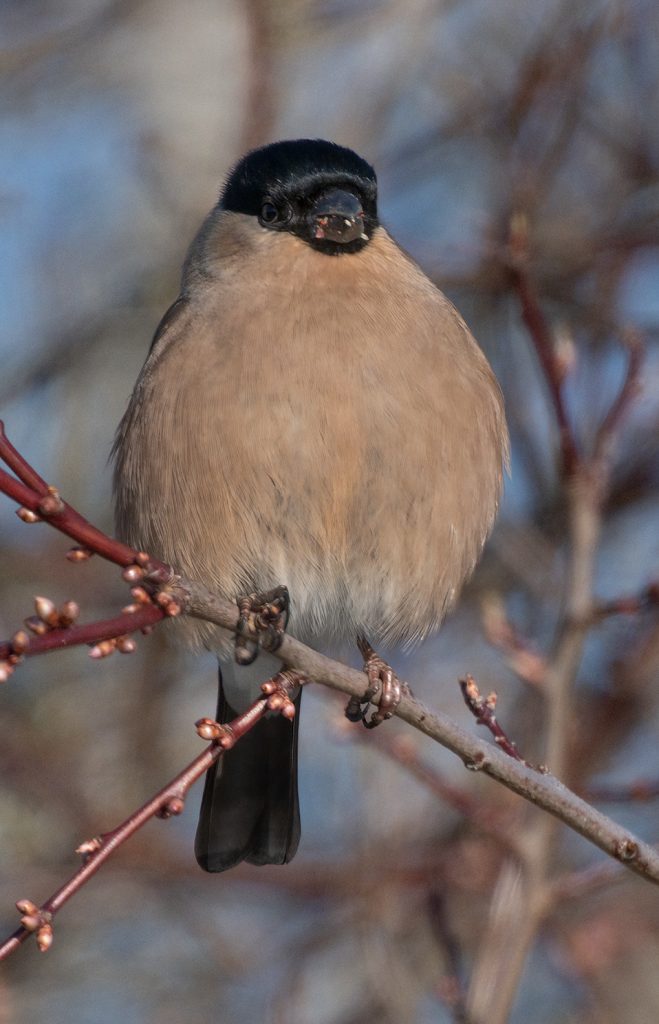
Female Eurasian Bullfinch, Pyrrhula pyrrhula, Merkinch, Inverness (photograph)
Buzzard, Eurasian
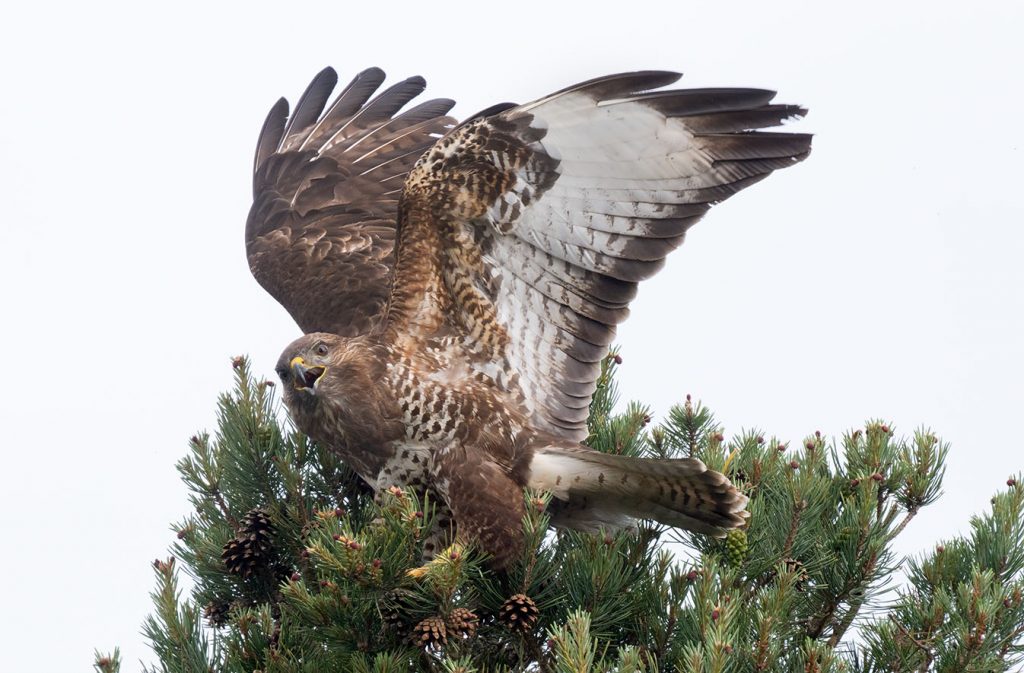
Eurasian Buzzard, Buteo buteo, Battan Forest, Glen Convinth, Inverness-shire (photograph)
Known as a scavenger Buzzards are also active and very effective hunters of a variety of animals and birds as well, even frogs are taken. In Scotland they are relatively common and the numbers are increasing.
Capercaillie, Western

Western Capercaillie, Tetrao urogalluys, Cairngorms National Park, Highland Scotland (photograph)
2023 – first rise in numbers in eight years. Still critically endangered in Scotland but 19 more males seen at lek displaying sites this year.
Capercaillie Emergency Plan 2025-2030
Capercaillie matter to Scotland and there are still only 542 estimated to be in the country. Good news is still not good enough.
Chaffinch
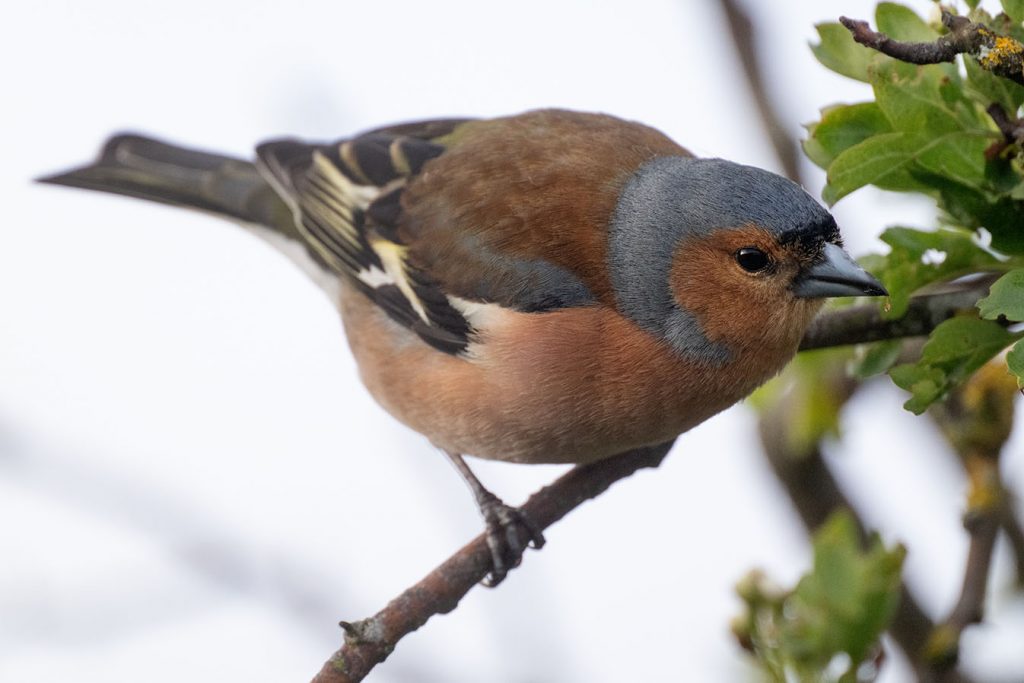
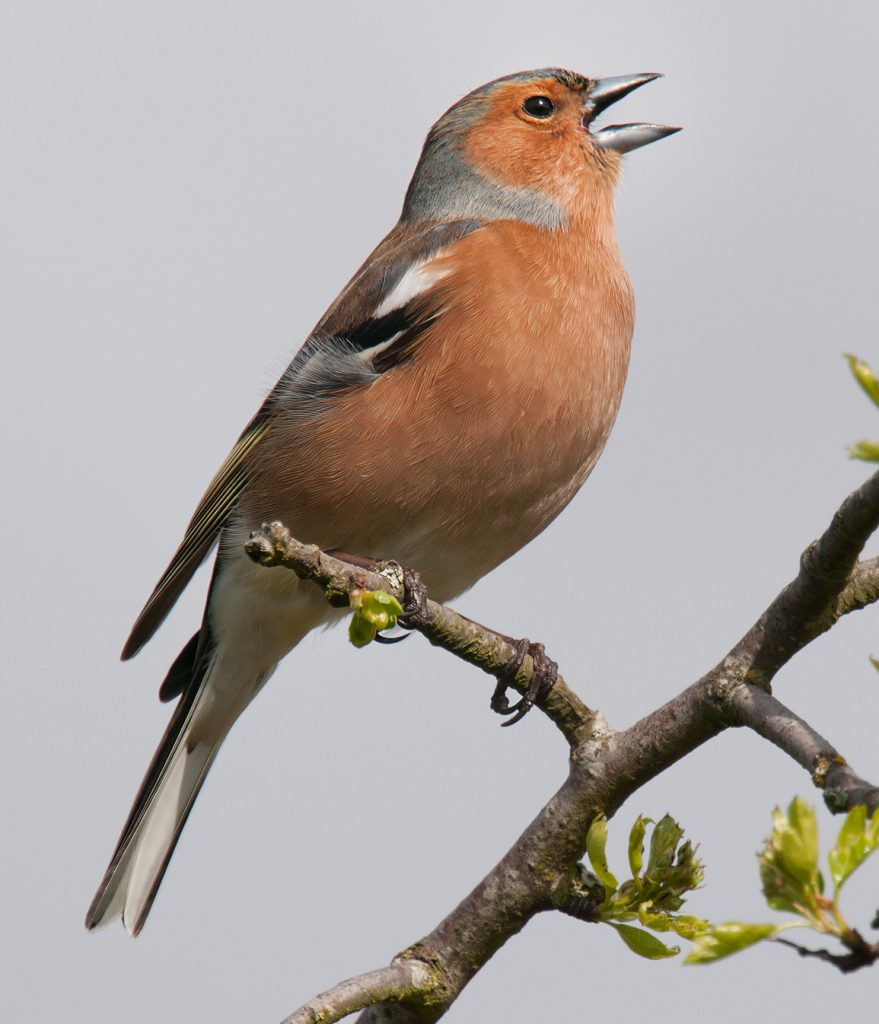
Chaffinches, Fringilla coelebs, Merkinch Local Nature Reserve, Inverness (photographs)
A very common resident bird with numbers raised in winter by migrants from northern Europe. The Chaffinch has a very long association with people and perhaps because of this familiarity, there is less mythology than many other birds, perhaps you don’t see magic in the everyday, perhaps you should. At least contact made them be regarded positively as a sign of luck, spring and renewal.
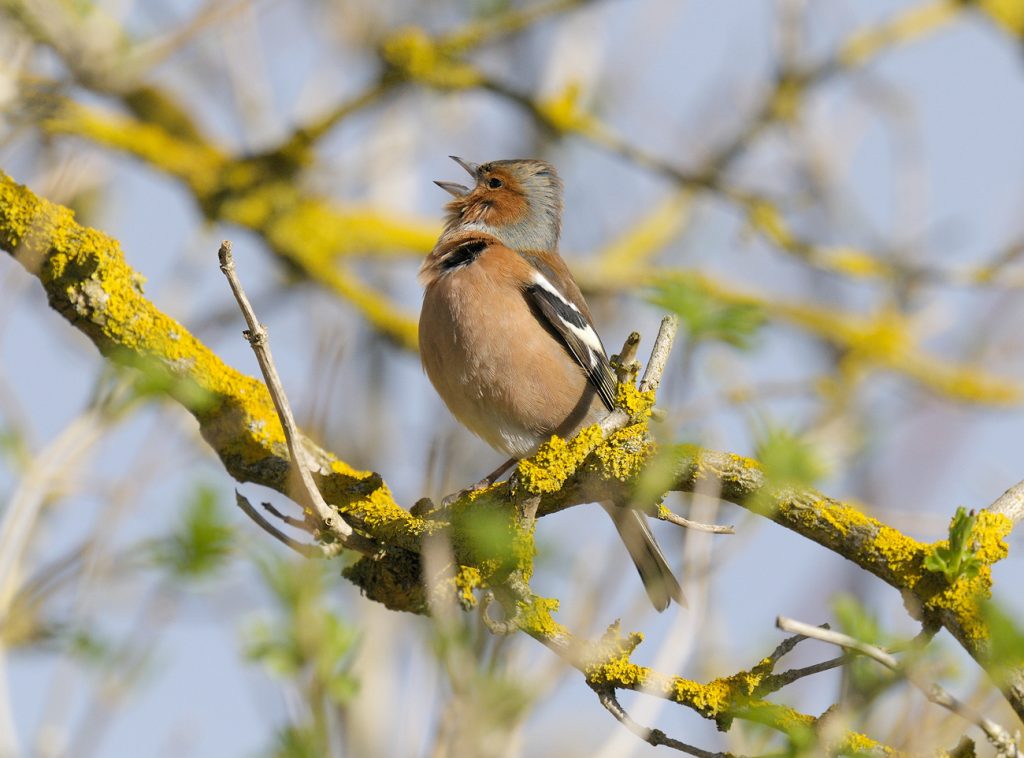
Chaffinch, Fringilla coelebs, Merkinch Local Nature Reserve, Inverness (photograph)
Cormorant, Great
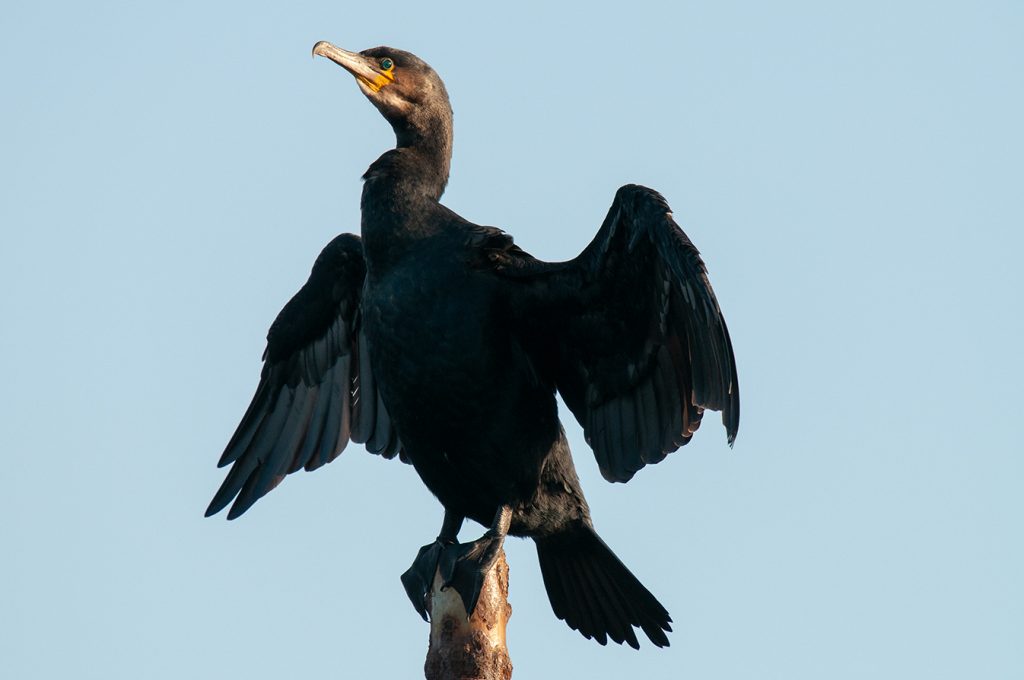
Great Cormorant, Phalacrocorax carbo, Merkinch Nature Reserve, Inverness (photograph)
Breeding in local settings widely distributed round Scotland’s coasts the Great Cormorant is known for its distinctive way of perching with wings outstretched to dry them or catch warmth from the sun. The Cormorant has a real need to dry its feathers unlike most other birds living in fresh or saltwater habitats its plumage is not waterproof, it really does get wet.
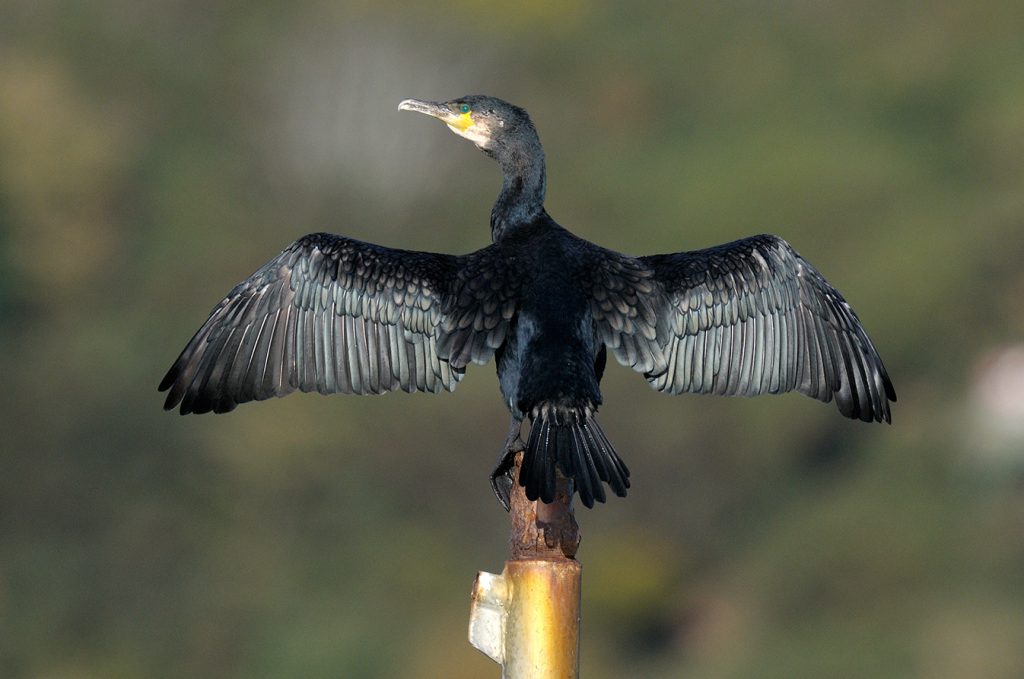
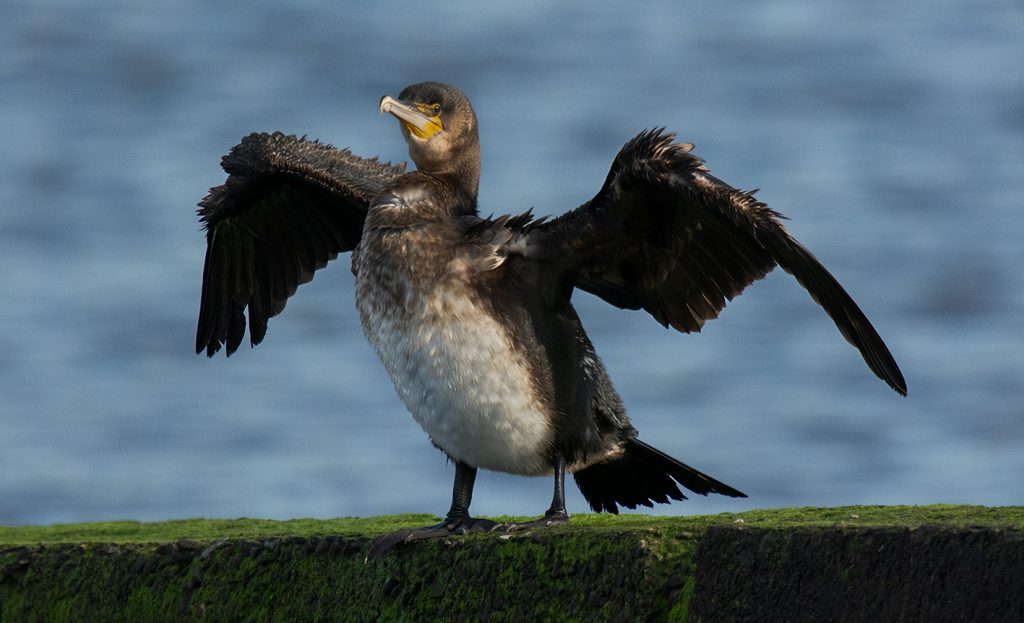
Great Cormorant, Phalacrocorax carbo, Merkinch Local Nature Reserve, Inverness (photographs)
The Cormorant feeds on fish caught underwater with small fish eaten below the surface but larger fish brought up to the surface before being swallowed whole. Seeing this earned the Cormorant the dubious distinction of being a symbol for greed in literature, including Shakespeare, and being identified as a threat to fisheries resulting in persecution. Elizabeth I listed them as vermin in an edict of destruction.
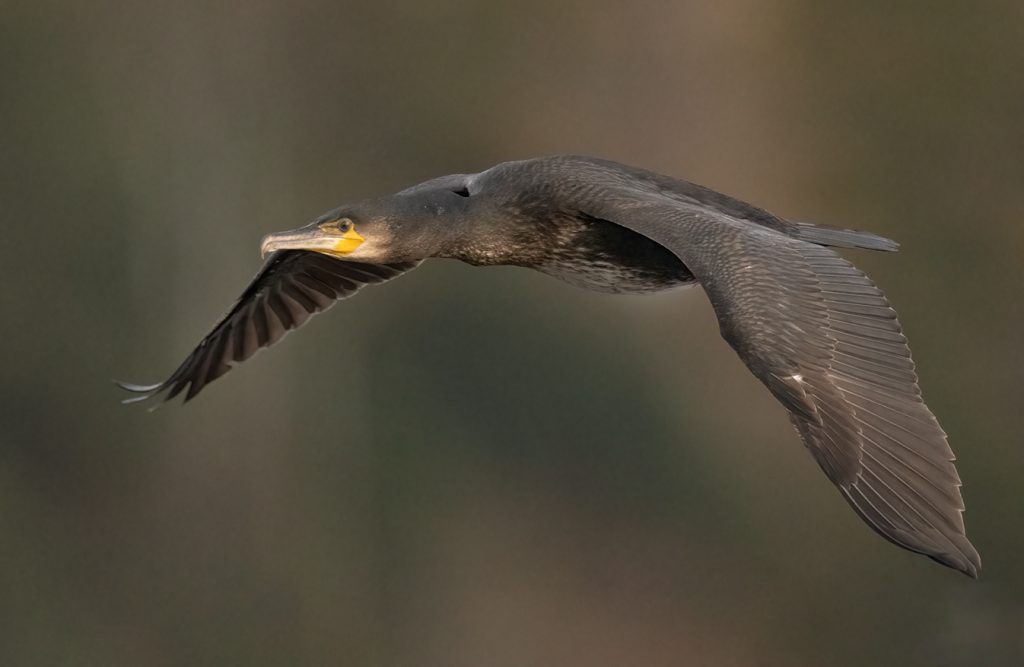
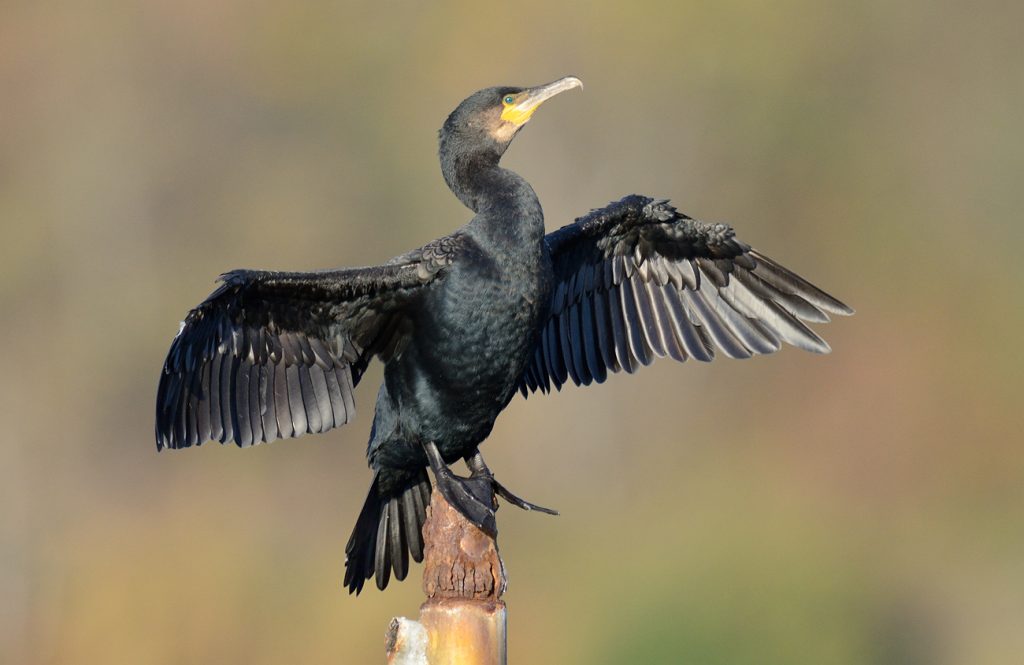
Great Cormorant, Phalacrocorax carbo, Merkinch Local Nature Reserve, Inverness (photographs)
Their largely black feathers has earned them an association with dark lore and comparisons in this respect with Crows. ‘Sea-crow’ was an alternative name for Cormorants. The term Cormorant itself is thought to arise from Latin ‘corvus’, Raven, or old French ‘corp’, Crow, and ‘marinus’ or ‘marenc’, sea. Even comparing them to crows is a long way short of Milton in Paradise Lost using them as a metaphor for Satan himself. Scottish Cormorants are partly migratory with approximately 10% of birds ringed in Scotland being identified in other countries, including Norway. Whether this started to get away from views like those of Milton is not clear.
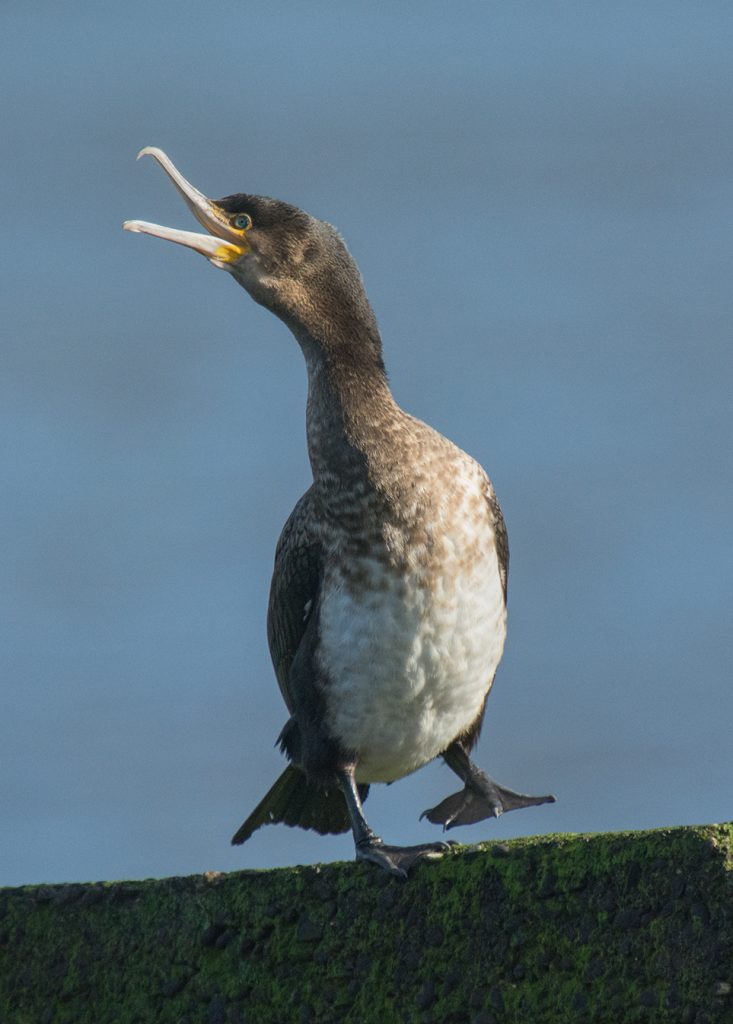
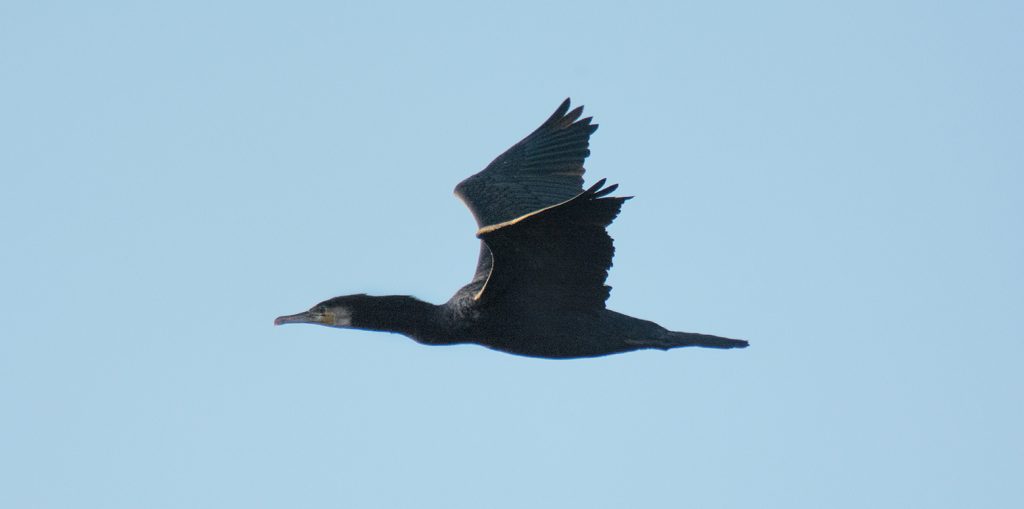
Great Cormorant, Phalacrocorax carbo, Merkinch Local Nature Reserve, Inverness (photographs)
Crossbill, Red

Red Crossbill, Loxia curvirostra, Battan Forest, Inverness-shire, Highland Scotland (photograph)
Red Crossbill. Natural history records that their unique curved bill is to extract seeds from pine cones. Folklore says that Crossbills tried to remove the nails from the feet of Jesus at the crucifixion and that their beaks were distorted by the supreme effort earning them the alternative name of ‘Christbird’. Added to this is the belief that the red plumage of the males stems from Christ’s blood. They have also been believed to cure medical conditions including gout, infections and rheumatism and any ill health, underpin financial strength for an entire family and get in the way of lightning. After that, they can ward off fire, alert a household to smoke, and care for a mother during childbirth. Water from a dish they have drunk from was thought to cure epilepsy and some believed that after death, the body of a Crossbill will not decay. Crossbills were seen as so useful that they were kept, taken from the wild in numbers that threatened their population. In the UK, they were the subject of an early conservation law passed in 1926 which imposed a fine for taking their eggs. As medical helpers though they are gender specific. If the upper bill curves to the right they are healers of men, if it curves to the left they are healers of women. So, spare a thought for any newly hatched Crossbill chicks in the spring. There they are thinking that using that beak to get at pine seeds is going to be difficult enough. How do you think they feel when they find out all the other things they have to do?
Crow, Carrion
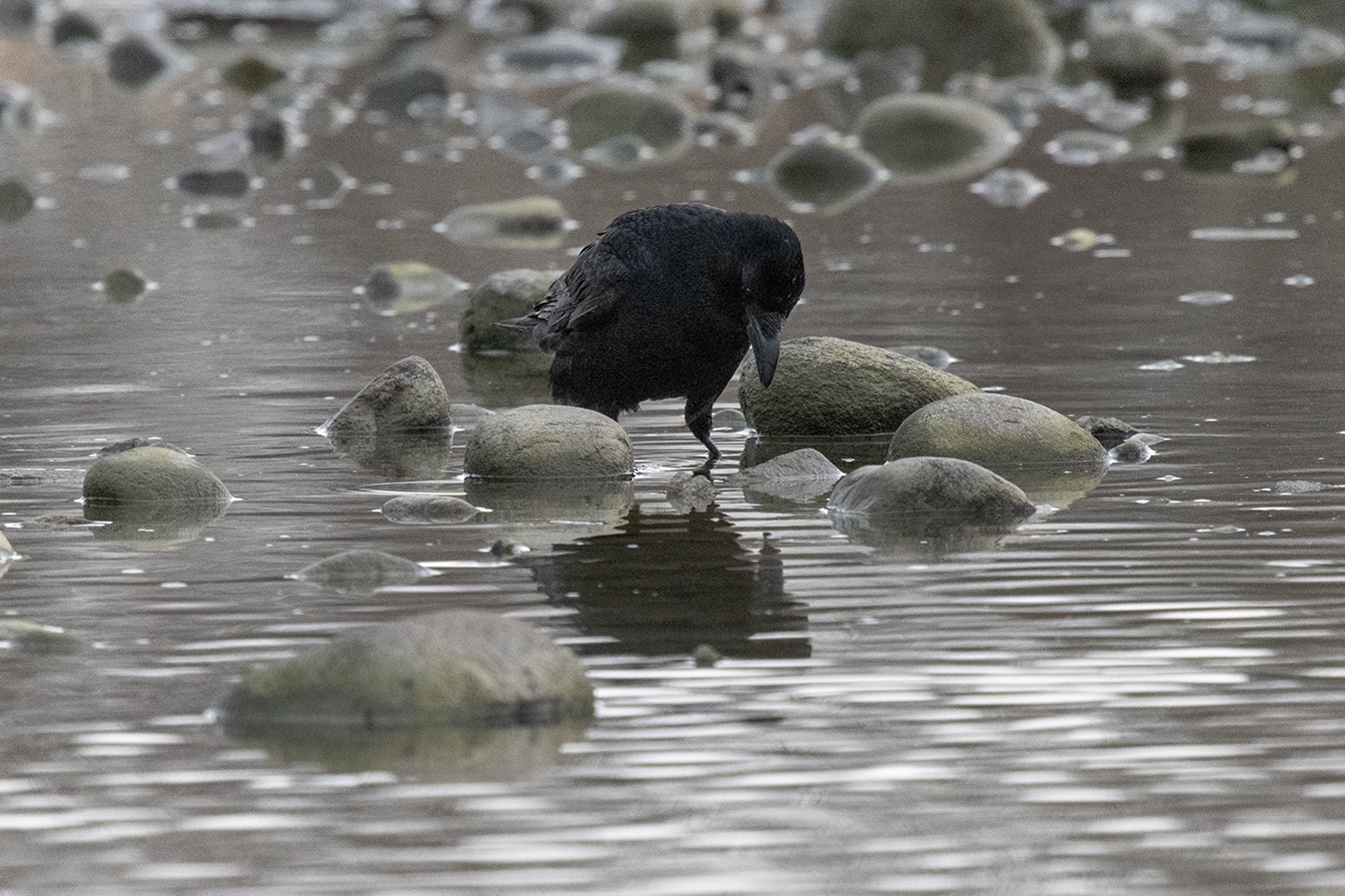
Carrion Crow, Corvus corone, Merkinch (photograph)
Carrion Crows are often portrayed as intelligent birds of mystery and slightly threatening. Given that they forage for decaying flesh and were notable for their presence on battlefields after the fighting to feed on the fallen, it is not surprising that they have a negative side to their image.
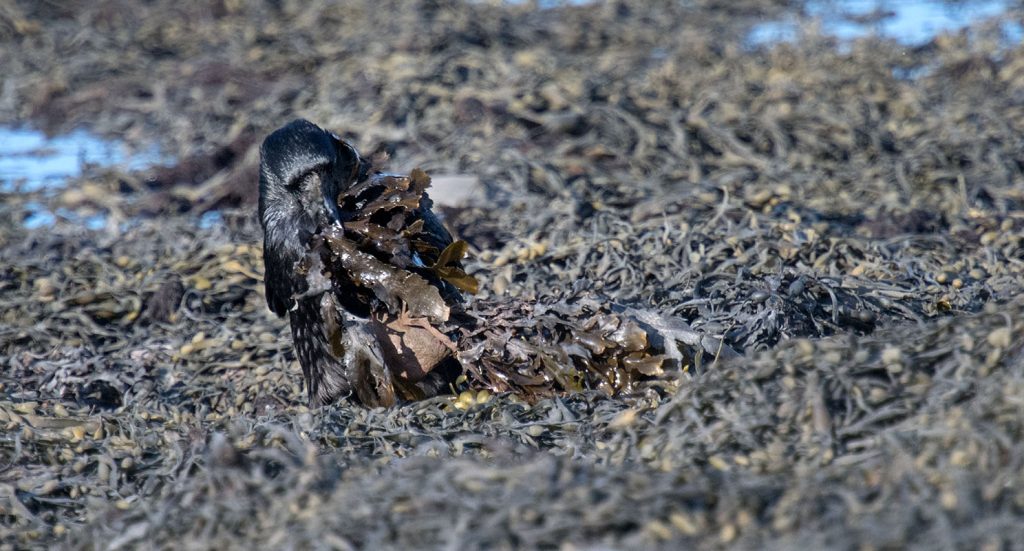
Carrion Crow, Corvus corone, Merkinch, foraging in seaweed (photograph)
Despite this, the Anglo-Saxons regarded them as soul-guides but throughout Scotland and England, a single crow perched on a roof was seen as an omen of a death in the household, a threat that could be negated by bowing respectfully to the bird.
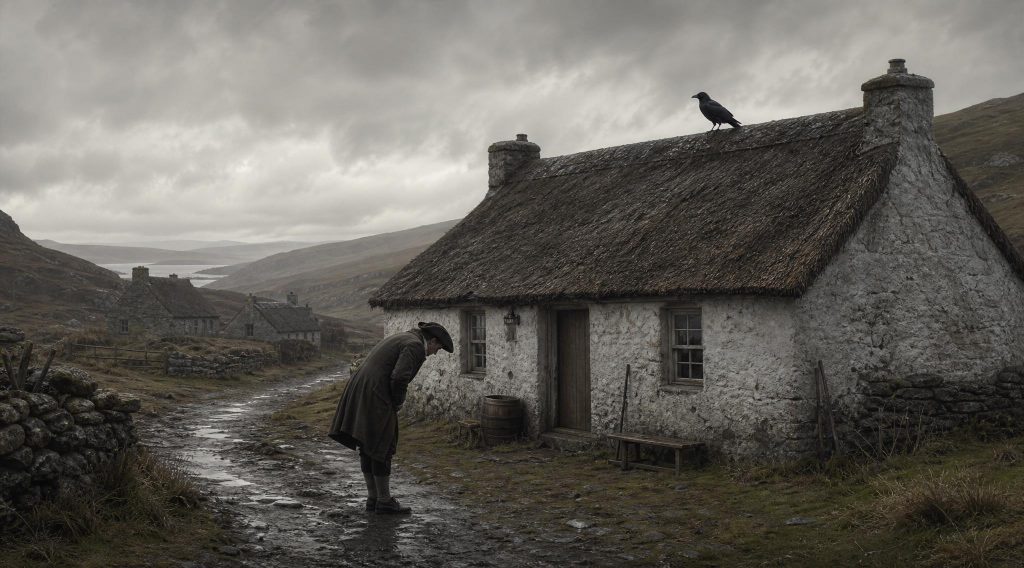
Digital illustration
Their darker side also meant they were known as witches’ familiars and had strong ties to the occult.
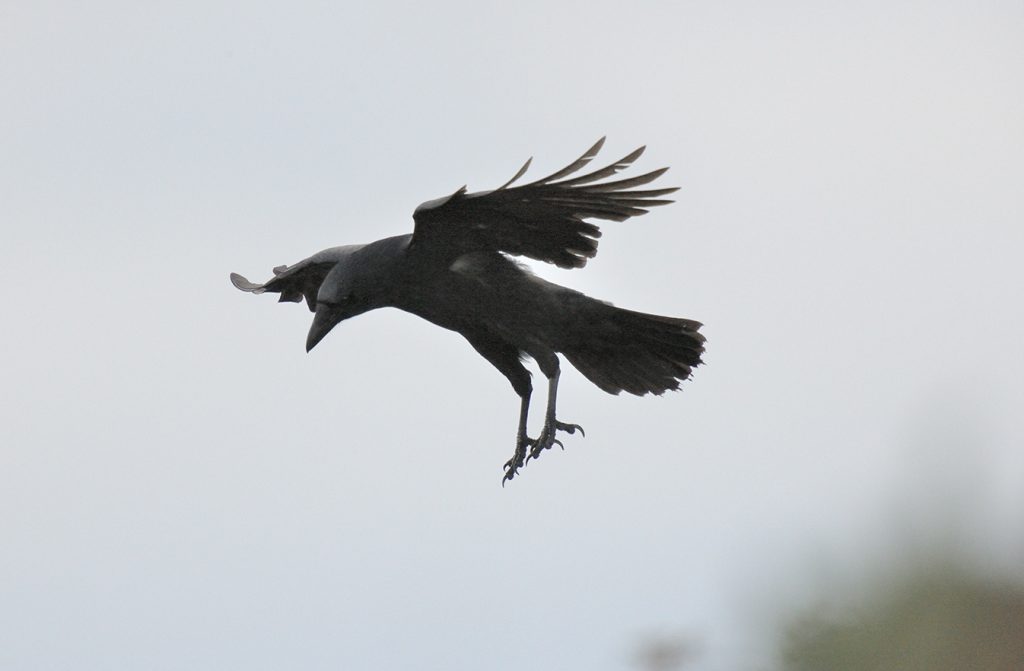
Carrion Crow, Corvus corone, Merkinch (photograph)
That one of the collective nouns for crows is ‘a murder of crows’ completes the picture.
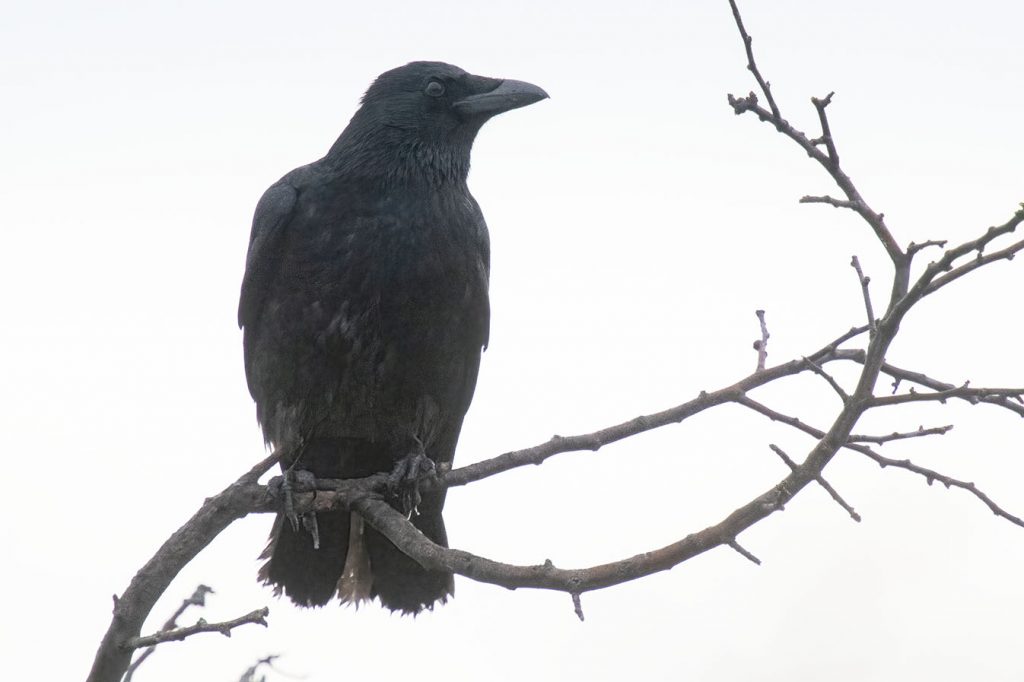
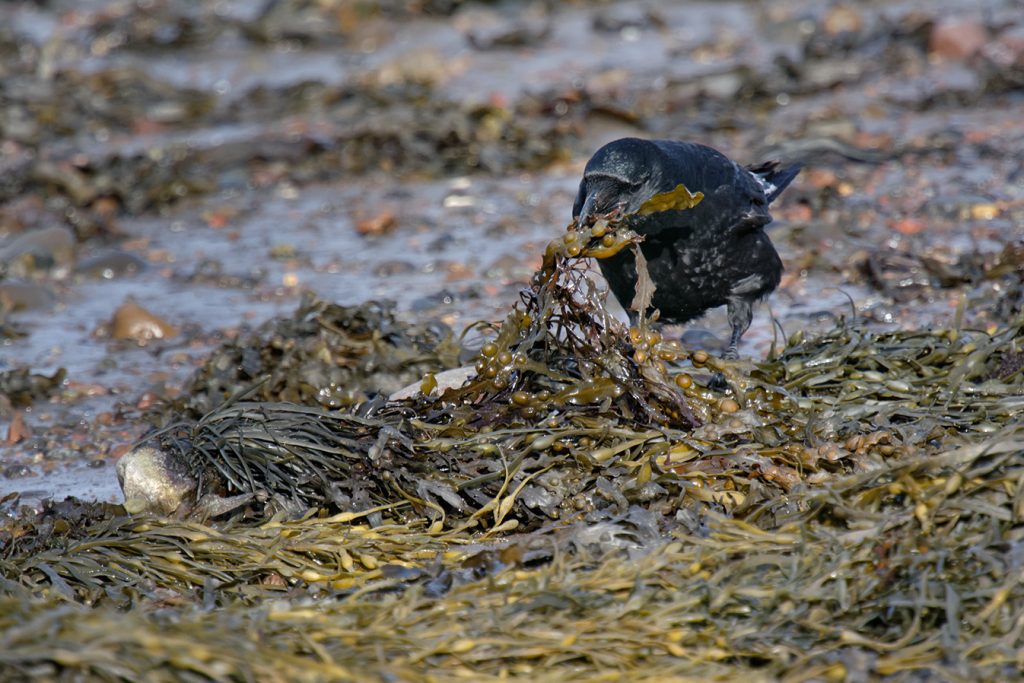
Carrion Crows, Corvus corone, Merkinch (photographs)
Crow, Hooded
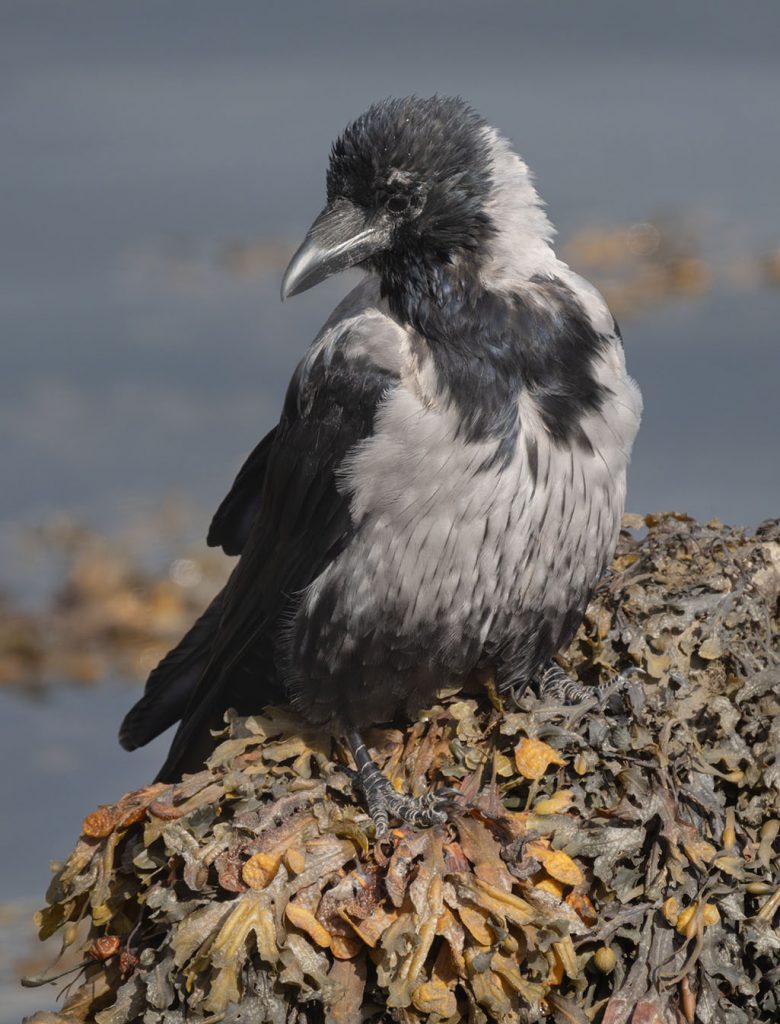
Hooded Crow, Corvus cornix, Merkinch (photograph)
Striking member of the crow family and a close relative of the Carrion Crow, so close that it has been classified as a sub-species. Although this is periodically reviewed, it is not the current accepted approach. The two are also so close that some interbreeding takes place producing hybrids where the lighter plumage of the Hooded Crow is only faintly visible. In Britain, the Hooded Crow is mostly found in Scotland and Ireland. As with Carrion Crows and Ravens, the Hooded Crow is said to be a warning of death. It is thought this connection is based on the genuine ability of crows to detect carrion at long range by smell. In Irish Celtic legend the Hooded Crow was seen as the animal incarnation of Badb Catha, ‘battle crow’, who flew over armies on the battlefield spreading fear and foretelling slaughter.
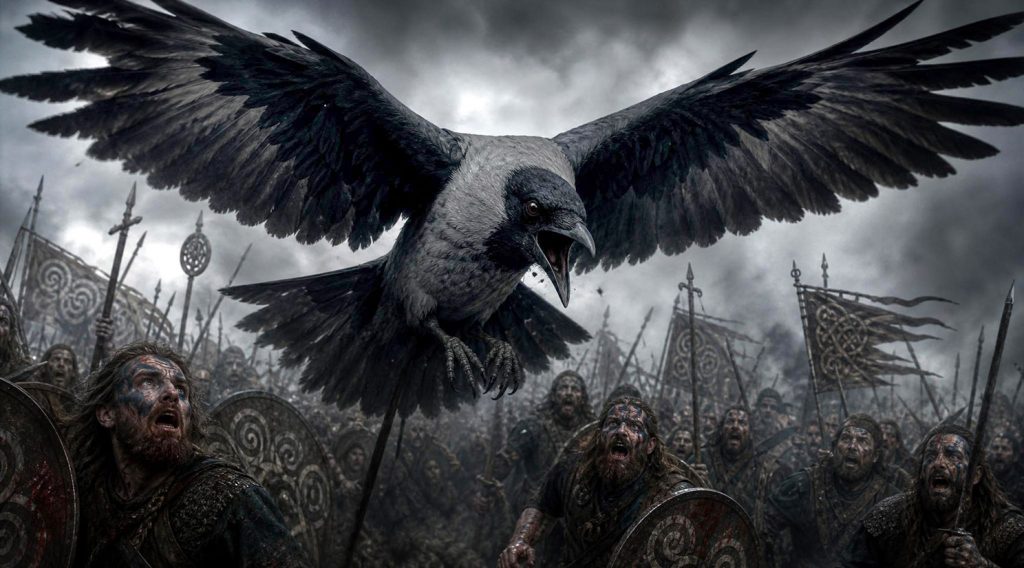
Badb Catha as a Hooded Crow, the ‘Battle Crow’ (digital illustration)
The Hooded Crow was also a form adopted by the goddess The Morrigan who appeared over heroes hovering as a Hooded Crow.
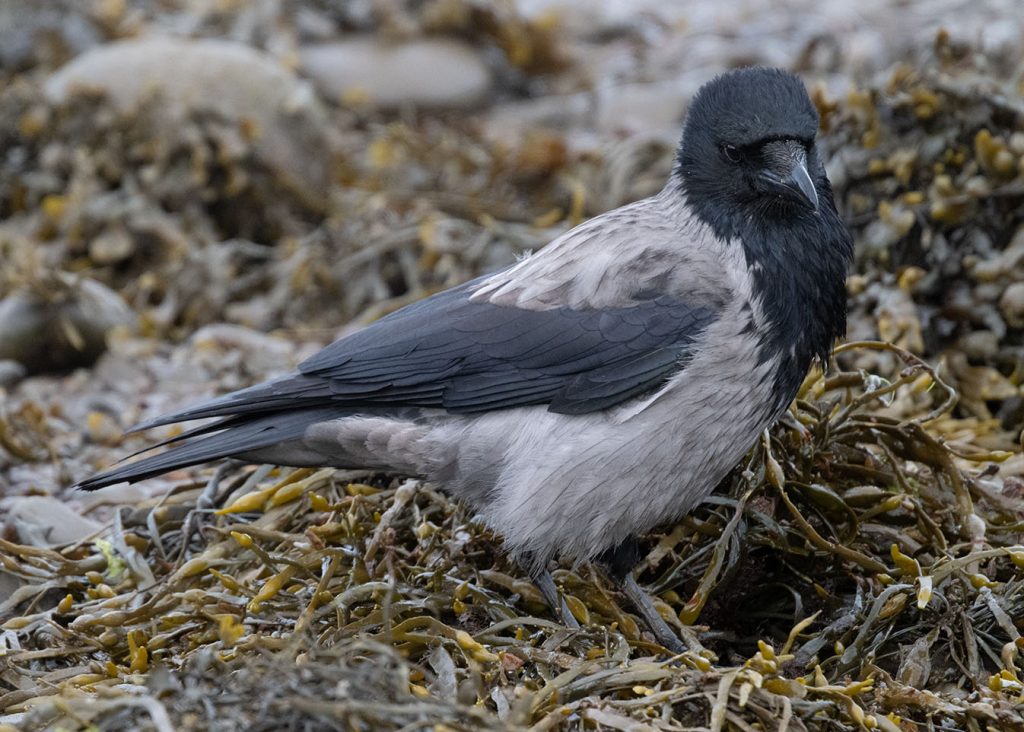
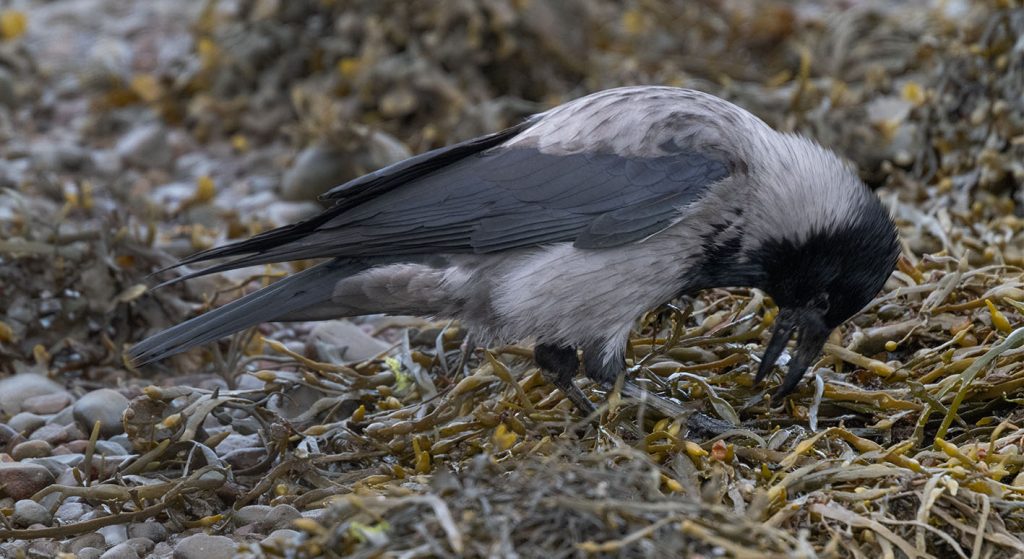
Hooded Crow, Corvus cornix, foraging for food in seaweed, Merkinch Local Nature Reserve, Inverness (photographs)
Curlew, Eurasian

Eurasian Curlew, Numenius arquata, Merkinch, Inverness, Highland Scotland (photograph)
Curlew, celebrated in poetry going back well over 1000 years, ‘I take my gladness in the sound of the curlew instead of the laughter of men’, the Curlew has almost been defined and named by its call. Curlew, as a name from its song, definitely dates back to 1340 CE and this is one of the more recent references. The call can be eerie and is often associated with the supernatural and the song of the Curlew has been described as being from something half spirit and half bird. Curlews are thought to be the origin of ‘The Seven Whistlers’, mysterious birds flying at night whose calls from another world predict disaster.
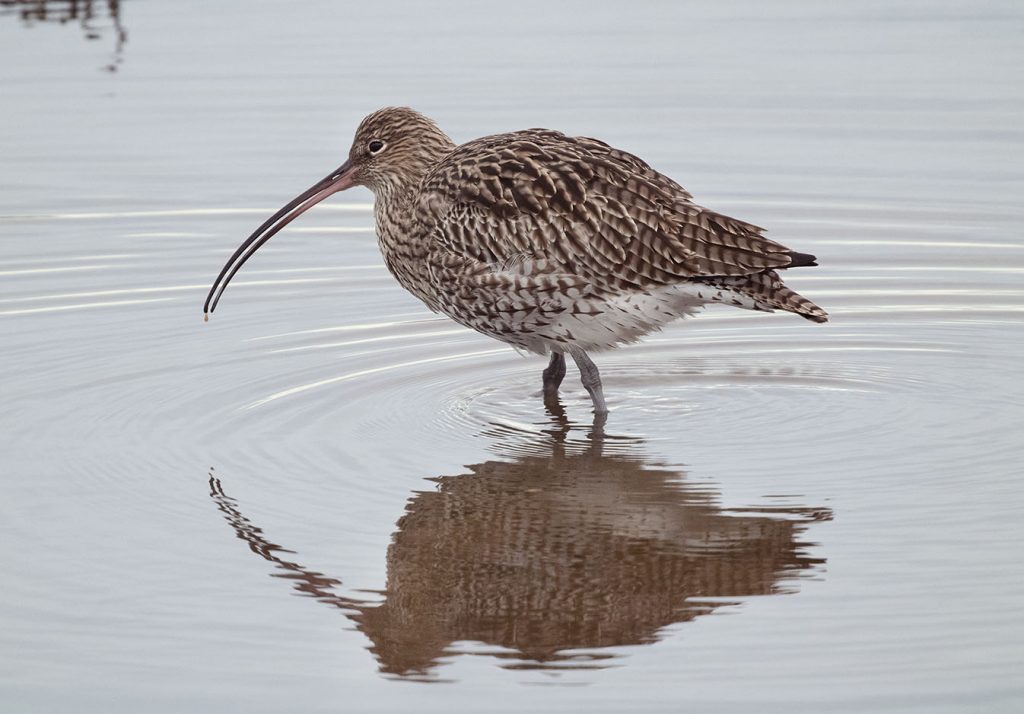
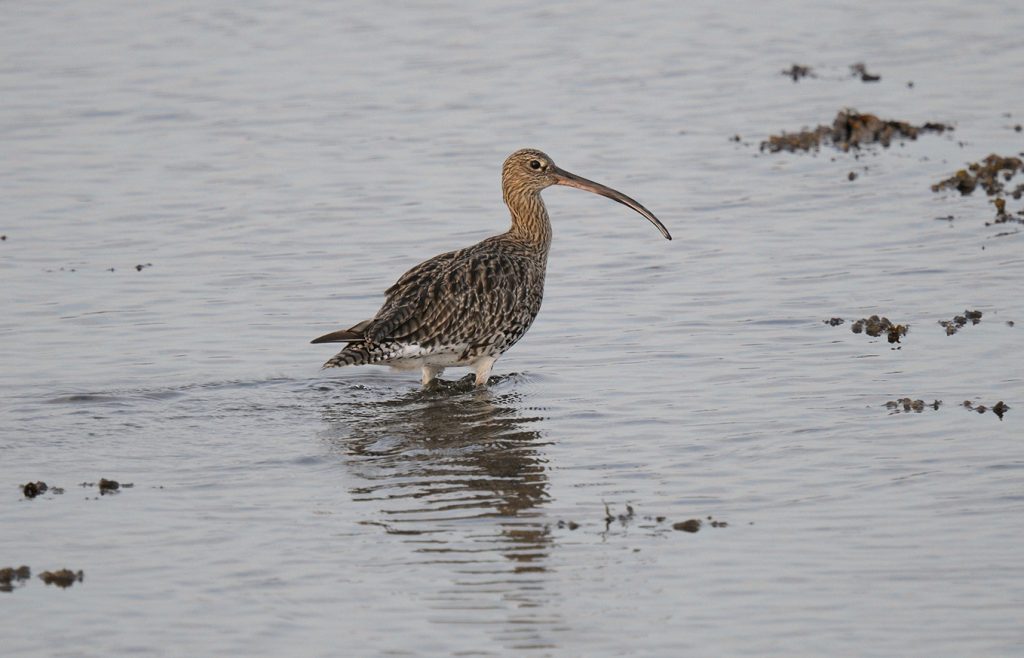
Eurasian Curlew, Numenius arquata, Merkinch, Inverness, Highland (photographs)
Diver, Red-throated
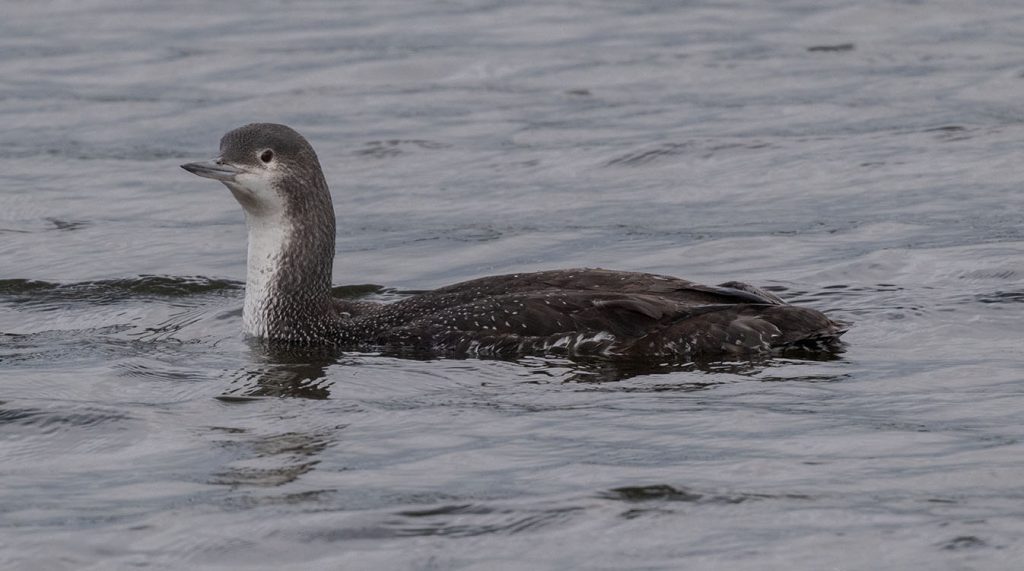
Red-throated Diver, Gavis stellata, Merkinch (photograph)
Nesting on freshwater pools and small lochs, Red-throated Divers are seen on the sea when feeding, diving for small fish and invertebrates and staying underwater for long periods (up to three minutes), only surfacing some distance from the start of the dive. Apart from the small resident breeding population, a large number of Red-throated Divers arrive in Scotland in the winter from Northern Europe. The most northerly in range of the Diver species, their courtship display is a race across the water, part submerged, but with the head and neck raised and pointed forwards resembling a serpent and earning the name ‘the snake ceremony’. Red-throated divers are said to predict rain with their calls and an alternative name for them is ‘the Rain Goose’. They have also featured in creation stories as helping the formation of the world by diving down and bringing up mud. The Earth-Diver creation stories are the oldest in the world and contain variations on a primal ocean covering all, where a Red-throated Diver dives down deep and retrieves mud which expands to form the land. These stories are shared by Native American, Indigenous Arctic and Scandinavian peoples. Frequently the Diver is asked to retrieve the mud by a great shaman hovering over the water. The Red-throated Diver gives the mud to the shaman who scatters it on the surface of the primeval sea where it dries, solidifies, and forms continents.

Digital illustration
Duck, Long-tailed
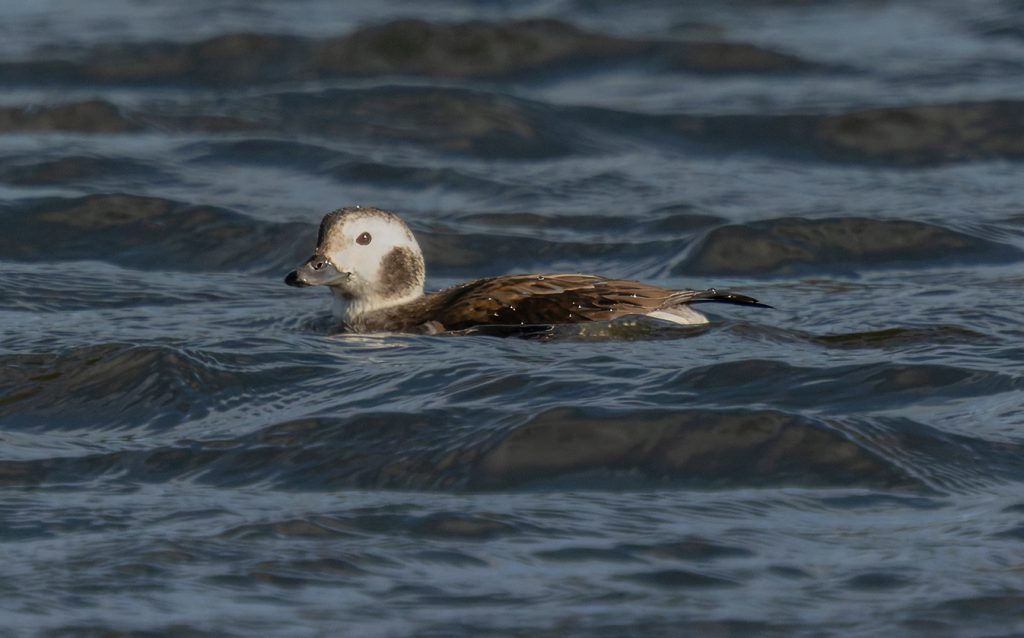
Long-tailed Duck, Clangula hyemalis, Merkinch (photograph)
A sea duck and a scarce winter visitor with the majority of those in the UK being in Scotland. Tend to be localised and consistent year by year suggesting they have fairly specific habitat requirements. Only the male has a long tail but both male and female have exceptional diving abilities
Duck, Tufted
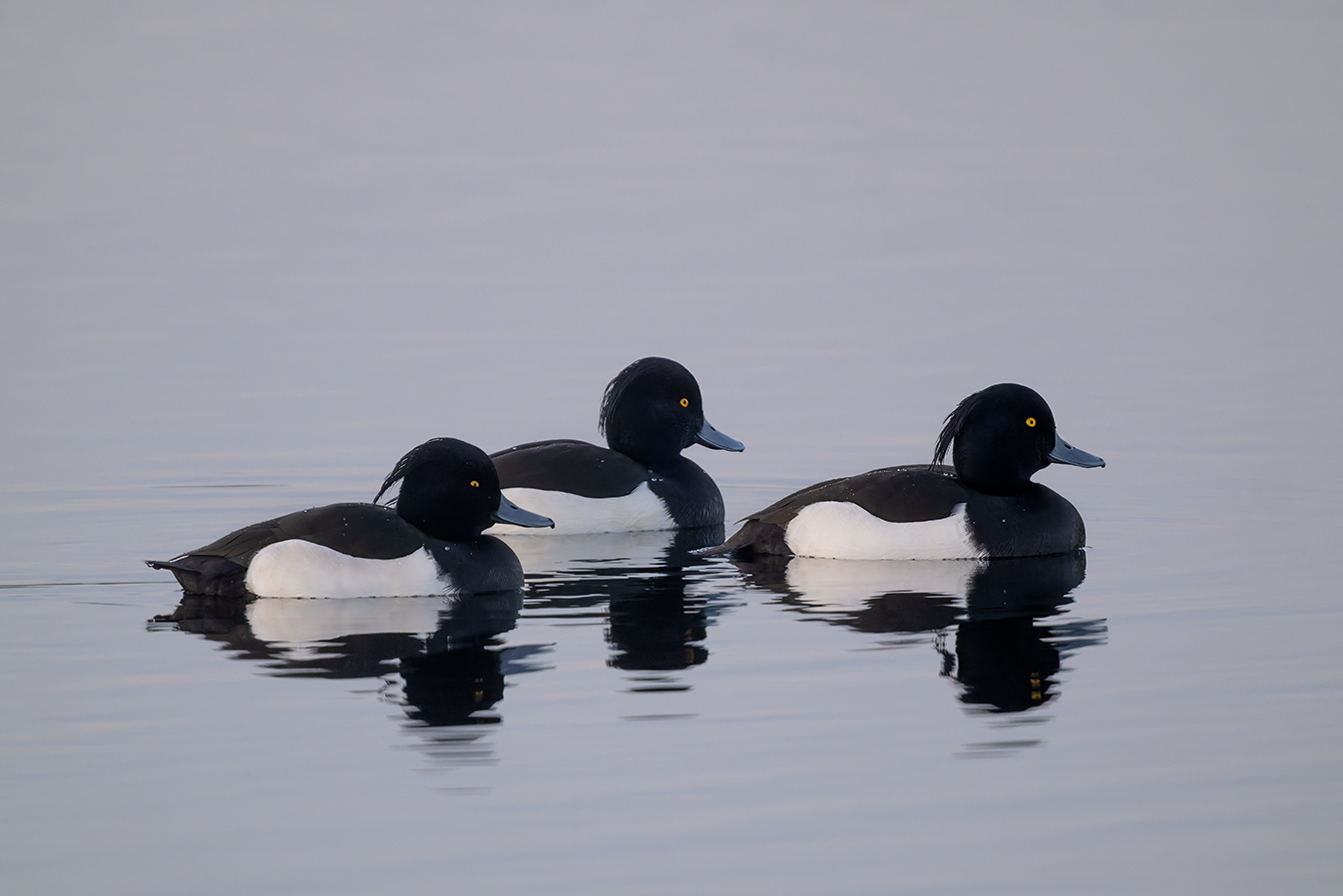
Tufted Ducks, Aythya fuligula, Caledonian Canal, Clachnaharry (photograph)
Resident breeding population with numbers greatly increased by winter migrants, also known as the Magpie Diver and is a freshwater wildfowl. The Tufted Duck is at the centre of the Finnish creation myth. The duck was the only creature on the primordial earth and flew above the dark, empty and endless ocean. The only being in that ocean was the mother goddess, who raised her knee above the waters where it was taken for a tuft of earth and grass by the Tufted Duck, who laid six golden and one iron egg on it taking it to be a nesting site. The Tufted Duck incubated the eggs which became so hot that the goddess flinched and moved her knee. The eggs fell into the ocean and cracked possibly because they were so hot. The pieces of shell and the yolk became the earth, sky, sun, moon and stars. The lower halves of the shells formed the earth, the upper halves the sky. The yolks gave birth to the sun and the whites the moon. The rest and remaining fragments and speckled shells were the genesis of the stars and space.

Tufted Duck with mother goddess (digital illustration)
All this creation was shaped and moulded by the mother goddess, Ilmatar, with her hands. The dark yolk of the iron egg formed thunderclouds.
Dunlin

Dunlin, Calidris alpina, Chanonry Point, Black Isle, Ross and Cromarty, Highland Scotland (photograph)
Dunnock
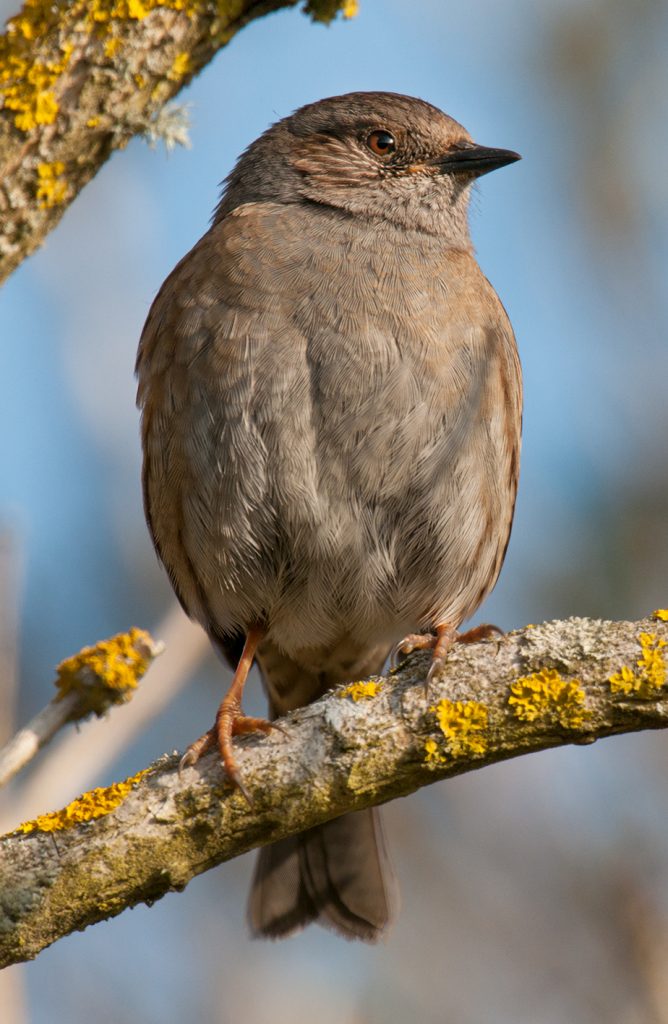
Dunnock, Prunella modularis, Merkinch Local Nature Reserve, Inverness (photograph)
Known for a long time as the Hedge Sparrow, the Dunnock has been noted for its domestic arrangements. Pairs are the exception Dunnock often form a three for the summer, this can be one male and two females but is usually one female and two males. Both males will defend the territory and help feed the chicks, since they will not be sure whose they are, but both males will be bitter rivals.
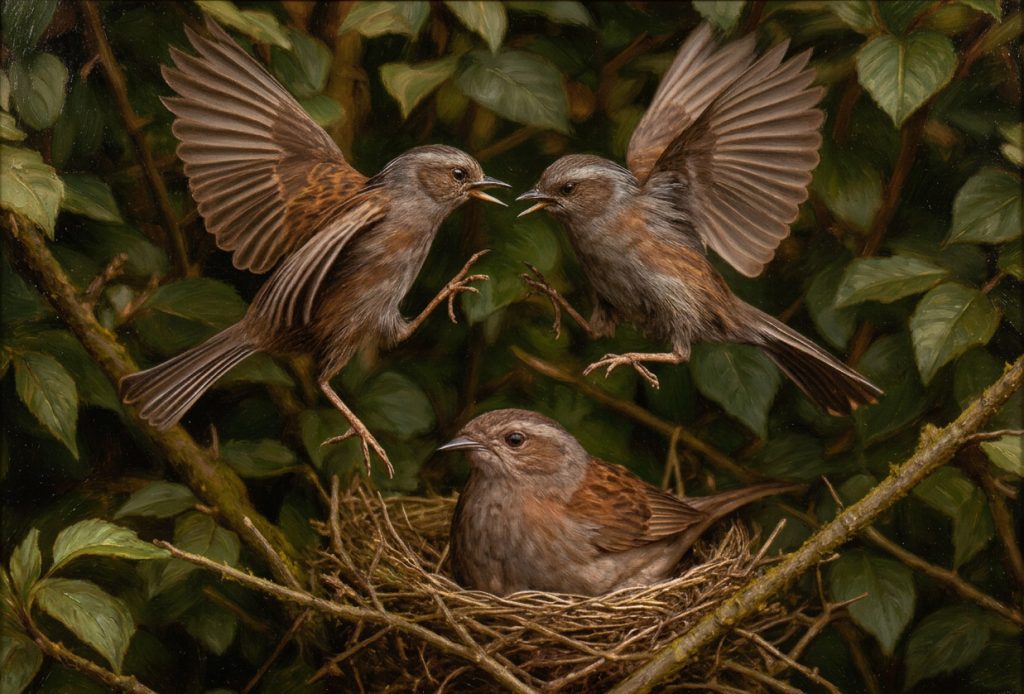
Dunnock, Prunella modularis, one female, two males (digital illustration)
Victorian writers praised the Dunnock for its morality, presumably building on observations of attendance and attention from male to female whilst failing to realise that more than one male was being observed. Their domestic arrangements may leave them vulnerable diverting attention to their own tensions, since the Dunnock has the dubious distinction of being the most frequent nest targeted by a Cuckoo and having their own eggs replaced by the larger bird’s.
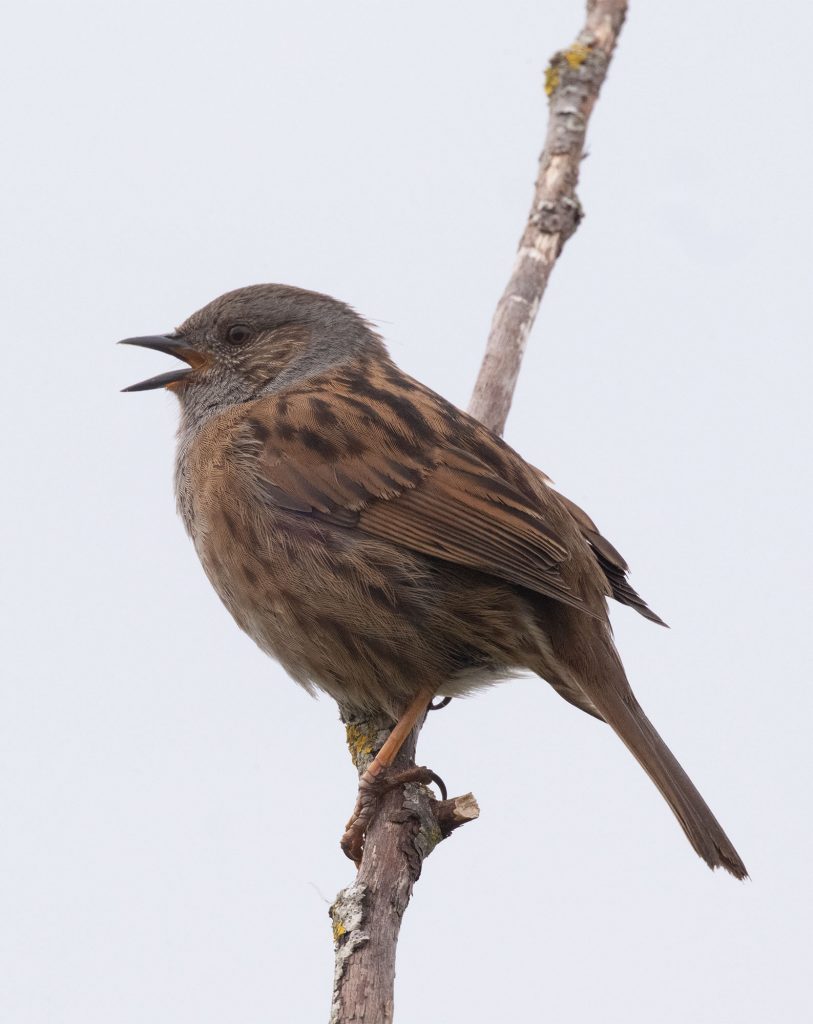
Dunnock, Prunella modularis, displaying. Merkinch Local Nature Reserve, Inverness (photograph)
Eagle, White-tailed

White-tailed Eagle, Haliaeetus albicilla, Skye, Highland Scotland (photograph)
Persecuted and gone from Scotland over 100 years ago, brought back from 1975 and now here to stay. People did both, sometimes they get it right.
Egret, Little
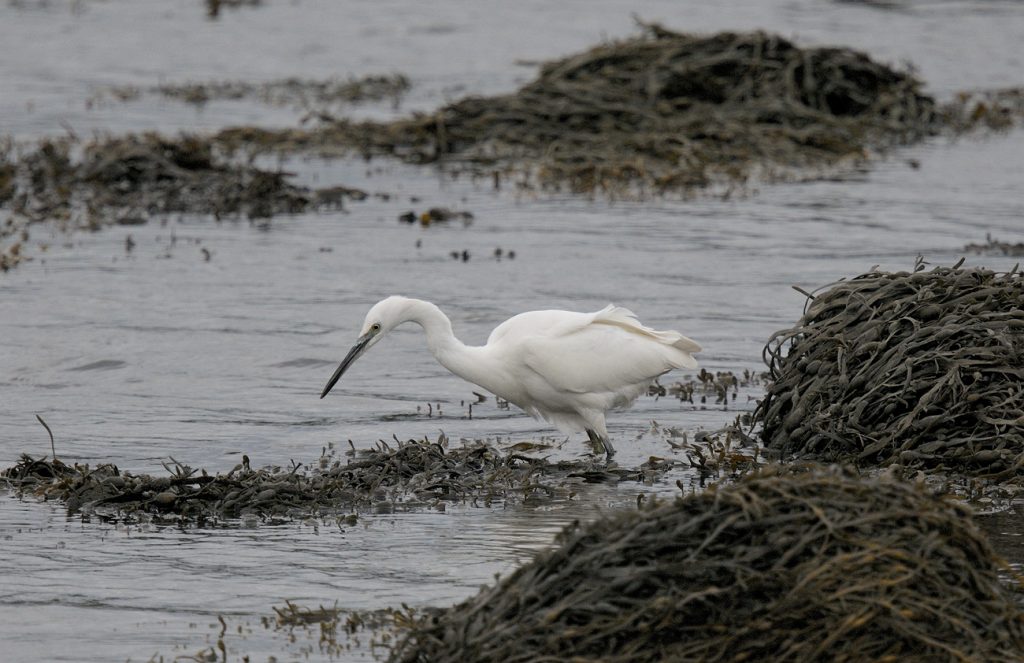
Little Egret, Egretta garzetta, Merkinch, Inverness (photograph)
A small heron which breeds in Asia, Africa and Southern Europe and which, as a migrant, is seen in locations beyond these areas, including Australia and Southern Africa. A well known perfectly straightforward species with no great complications in science or ornithology and a perfectly straightforward bird that really shouldn’t be in Scotland, let alone Merkinch in the Highlands.
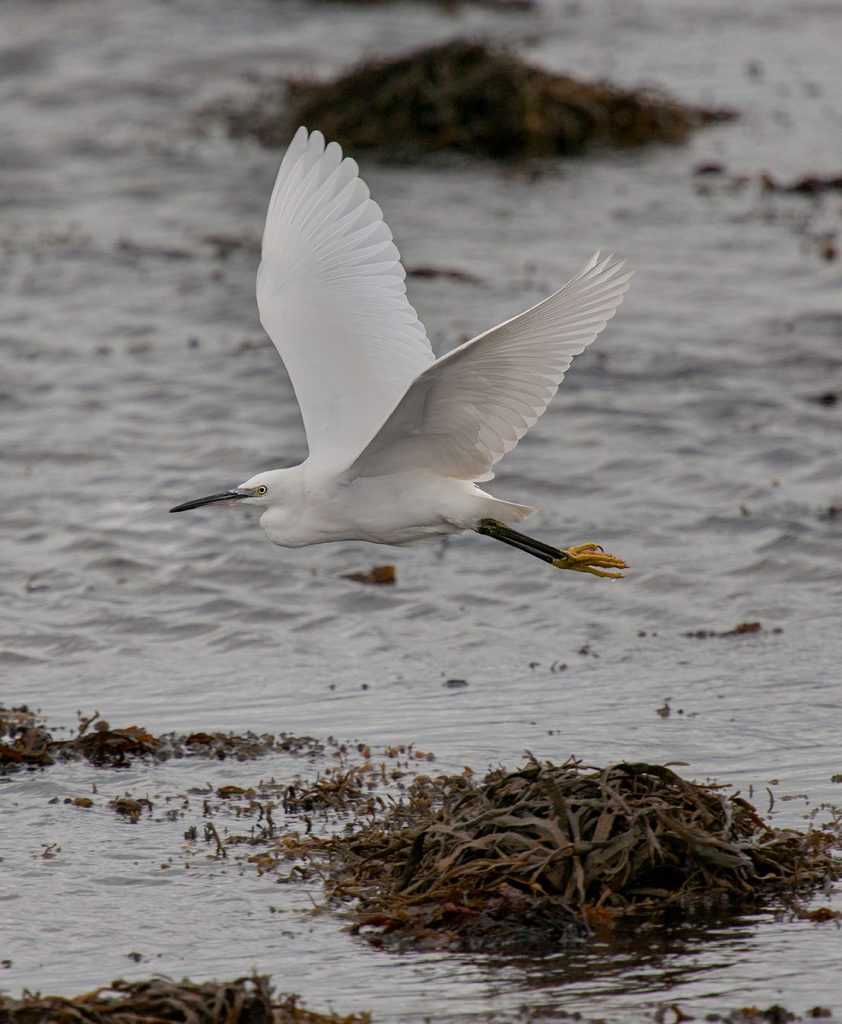
Little Egret, Egretta garzetta, Merkinch, Inverness (photograph)
Since 2000, the range of the Little Egret has increased. Rising winter temperatures and greater legal protections have expanded its distribution North, including to Southern England where there is now a very small breeding population. The Little Egret is however not recognised as a Scottish species and this one in Merkinch is a rare sighting of a bird that has strayed off course.
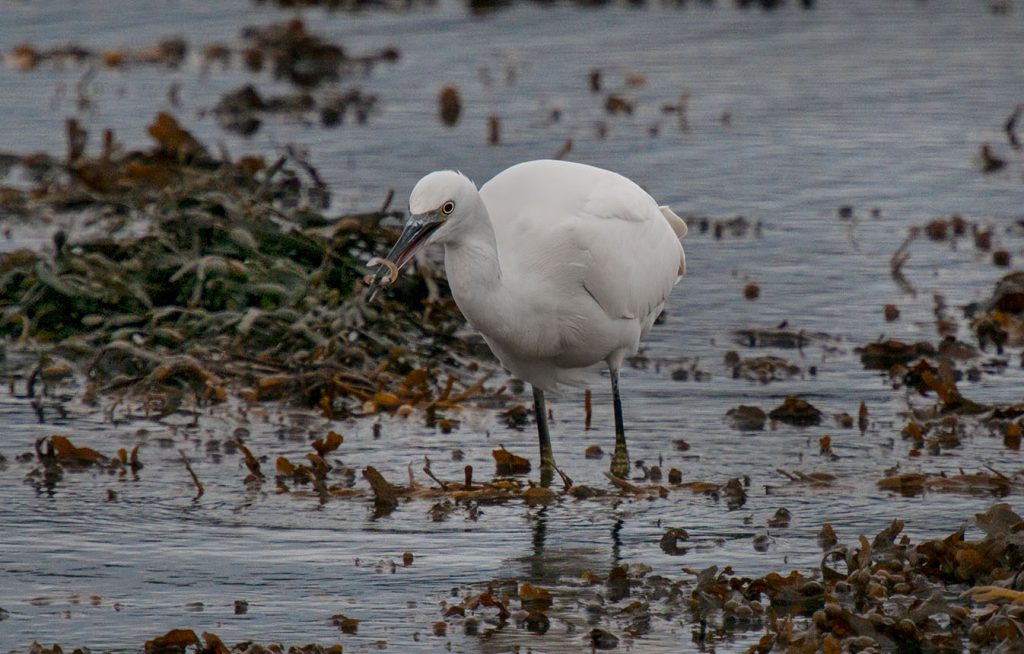
Little Egret, Egretta garzetta, Merkinch, Inverness (photograph)
Sightings however are not unknown, the first Little Egret recorded in Scotland was in 1954 and they have become more frequent since then but remain very few. Over half of records come from May and June and fall sharply in October when any birds there are move South. This individual was seen in Merkinch in October 2010.
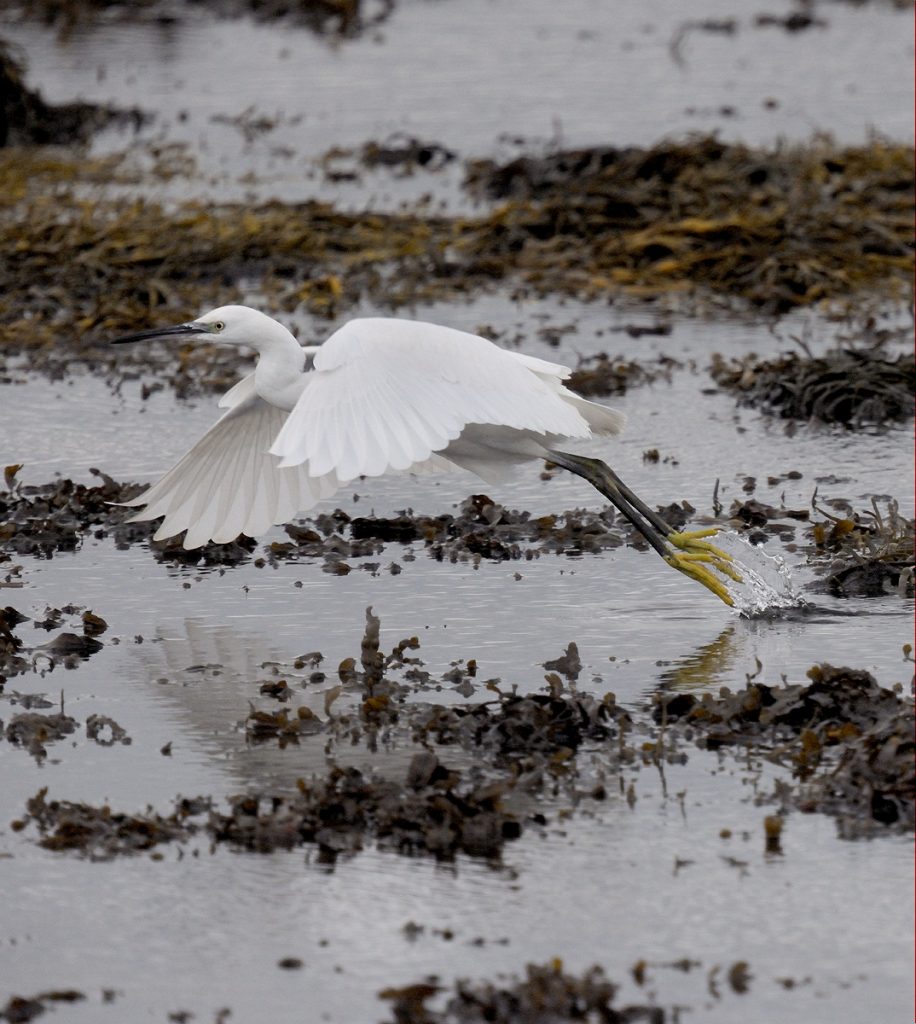
Little Egret, Egretta garzetta, Merkinch, Inverness (photograph)
Godwit, Bar-tailed
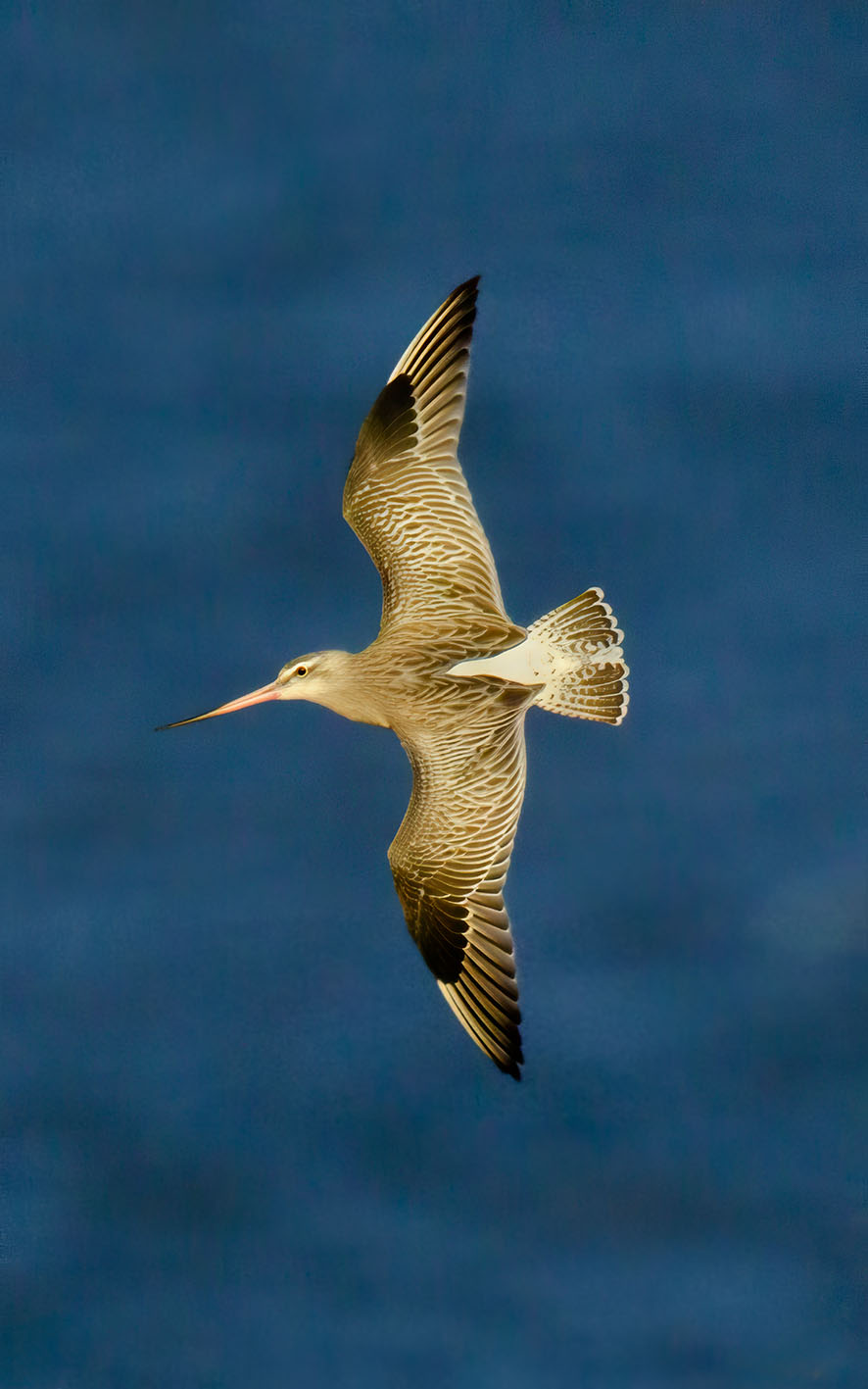
Bar-tailed Godwit, Limosa lapponica, Udale Bay, Black Isle, Highland Scotland (photograph)
In 2022 one of these birds was tracked by satellite flying 8426 miles nonstop from Alaska to Australia in 11 days 1 hour, a world record. So, if you see one don’t disturb them, they might need a rest!
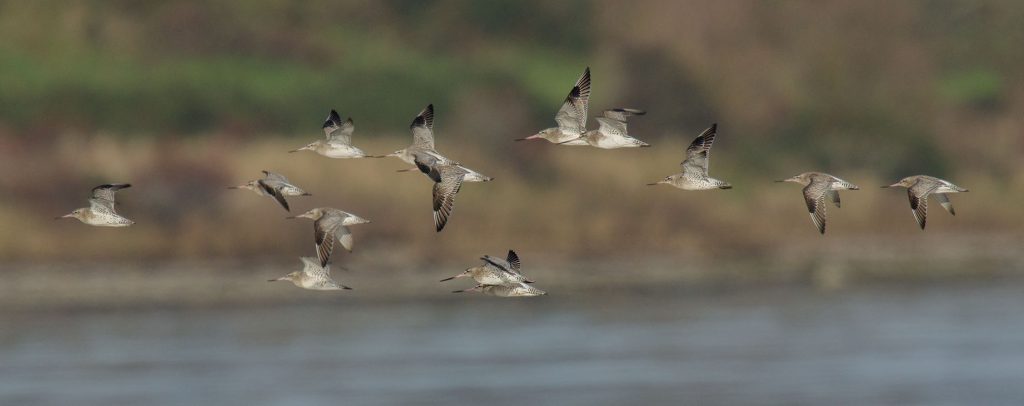
Bar-tailed Godwits, Limosa lapponica, Udale Bay, Black Isle, Highland Scotland (photograph)
Goldeneye, European
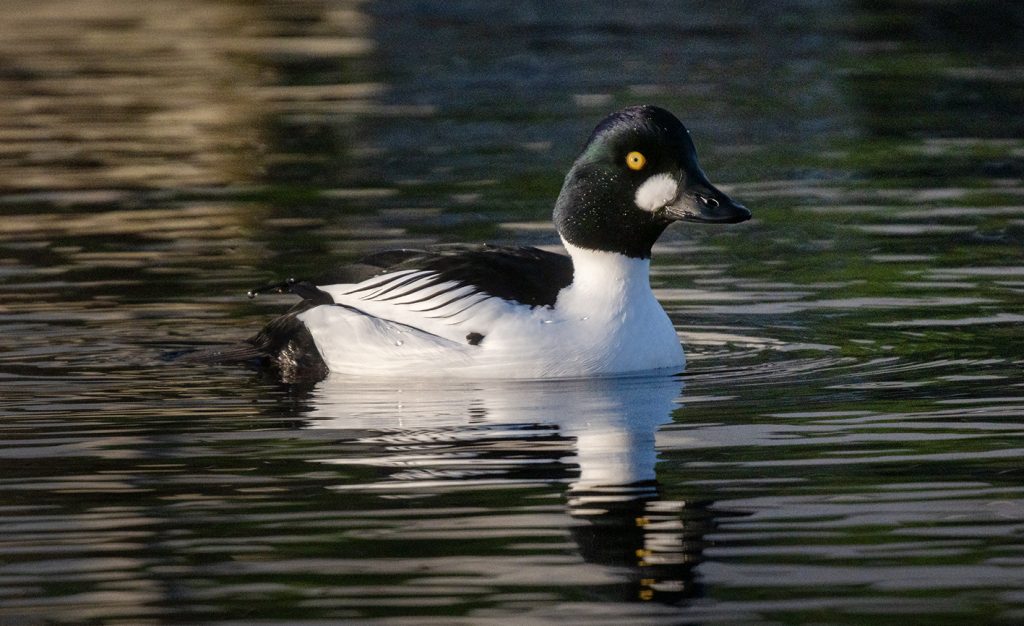
European Goldeneye, Bucephala clangula, Caledonian Canal, Clachnaharry (photograph)
Mostly seen in the UK as a coastal area visitor from Northern Europe in winter, there is also a small inland breeding population estimated at 200 pairs in Highland Scotland. Even as winter migrants, the Goldeneye is not a common British species but an estimated 21,000 reach the UK each winter.

European Goldeneye, Bucephala clangula, catching crabs, Carnac Point (photograph)
Feeds by repeatedly diving from the surface and finding mostly molluscs and crustaceans in winter on the coast and aquatic insects in summer inland when it is breeding.
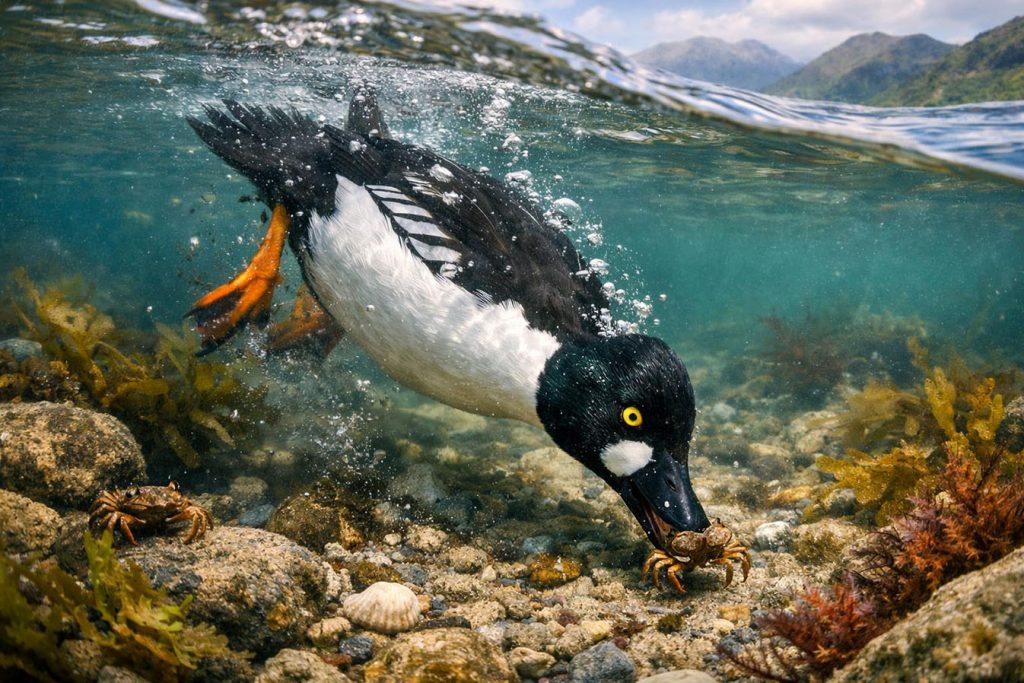
European Goldeneye, Bucephala clangula, foraging for crustaceans (digital illustration)
For an in depth look at the Goldeneye, see the Cùra special feature ‘More Than Just a Duck’
Goldfinch, European
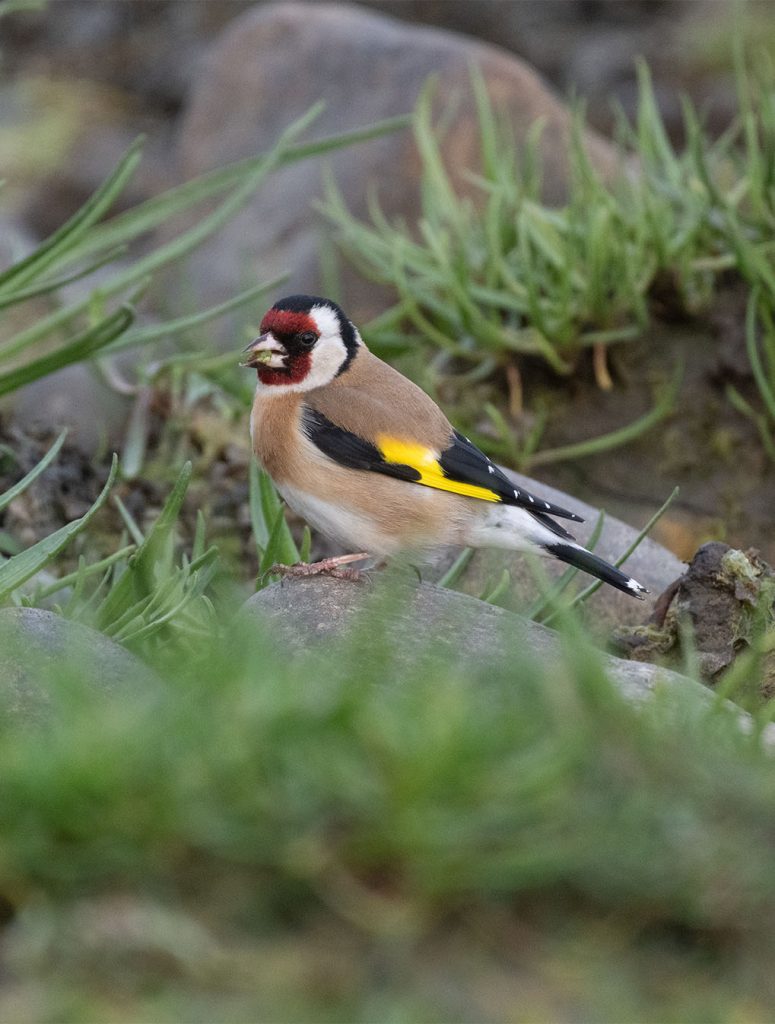
European Goldfinch, Carduelis carduelis, Carnac Point, Merkinch (photograph)
Goosander
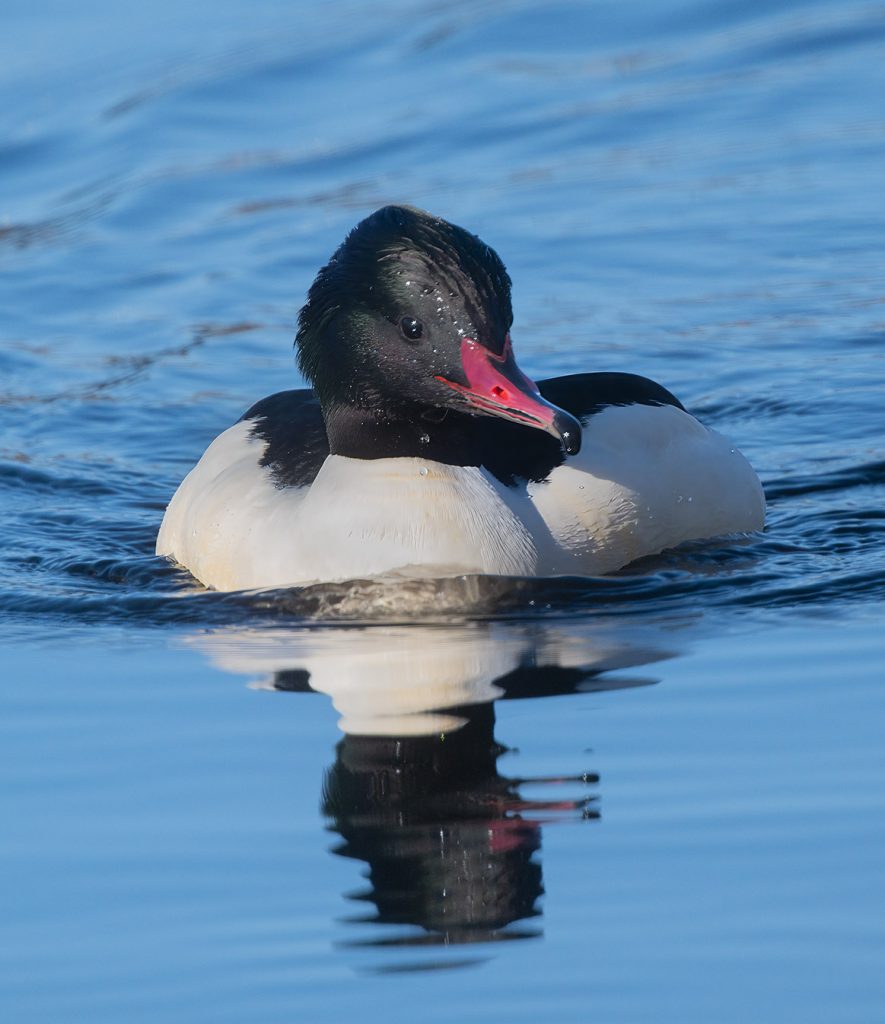
Male Goosander, Mergus merganser, Caledonian Canal, Clachnaharry (photograph)
A resident breeding population swelled by much larger numbers as winter migrants. A very large diving duck with a preference for freshwater, which stays underwater for long periods, one to two minutes, and mostly eats fish which has brought it into conflict with people over the years. Their take of young fish, which have been released as part of a fishery programme, can be considerable, with the threat to commercial interests being raised by the bird’s preference for salmon and trout. To aid in the capture of fish, their bill has a serrated edge increasing grip giving the term ‘sawbill’, which they share with the related Mergansers.
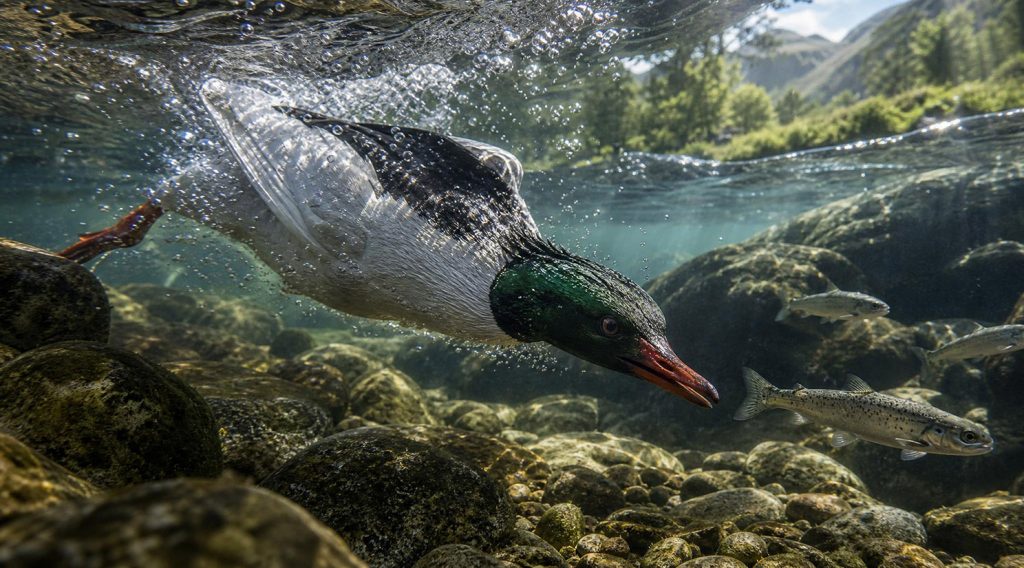
Male Goosander, Mergus merganser, hunting young salmon (digital illustration)
In 1871 literally only one or two breeding pairs were known in Scotland, and these were the first recorded, an absence largely as a result of persecution related to fishing interests. Now there are an estimated 2,500 to 3,000. The birds are still under threat however, and one problem is that there is still no conclusive insight on the Goosander’s effect on salmon fisheries. Undoubtedly, they take young Salmon but what final influence this has on a population is not definitely known, salmon breeding strategies in the wild allow for large numerical losses to be expected. Any given one incident may not lower the final population if that is a level that was going to be reached by one means or another. Also, even in areas where there are no Goosanders, Salmon numbers are falling because of other environmental influences making any definite conclusion more difficult.
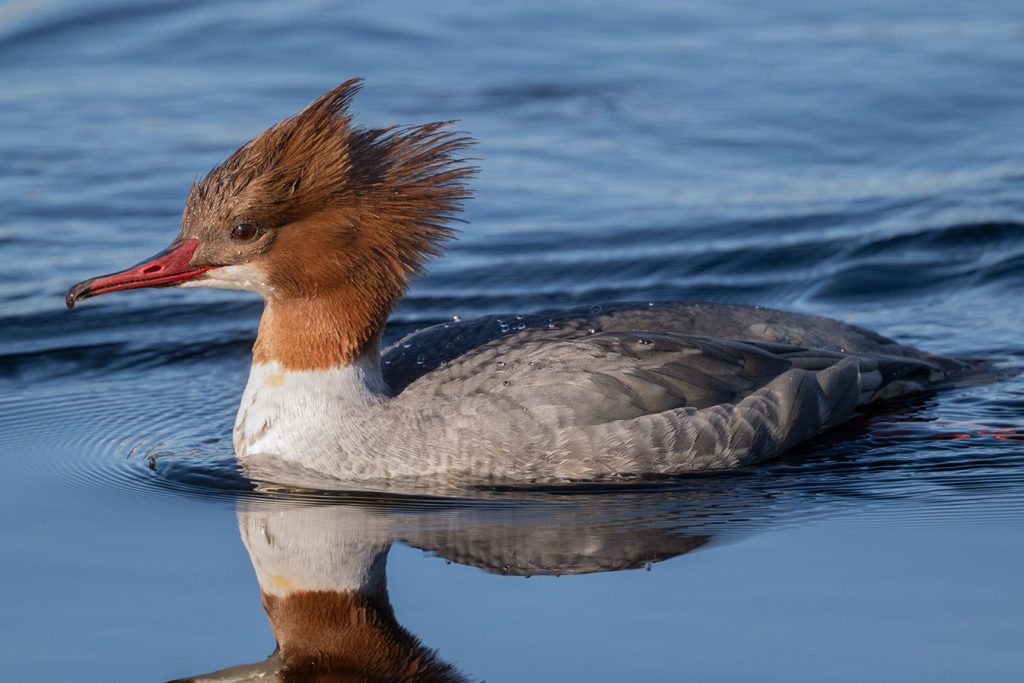
Female Goosander, Mergus merganser, Caledonian Canal, Clachnaharry (photograph)
Goosanders for a long time were at the centre of a mystery, after mating and during the late summer males would almost entirely disappear from Scotland and the UK. It was only comparatively recently that it was discovered that the males move to Scandinavia, mostly Norway, in their thousands to moult the probability being that the location and concentration of numbers increases their safety whilst the replacement of feathers takes place during which they cannot fly. Nesting is in hollow trees and the females lead the ducklings from the nest when it is time by getting them to jump down to the ground below, which can be a significant drop but they are so light and cushioned by downy feathers that they do not get hurt.
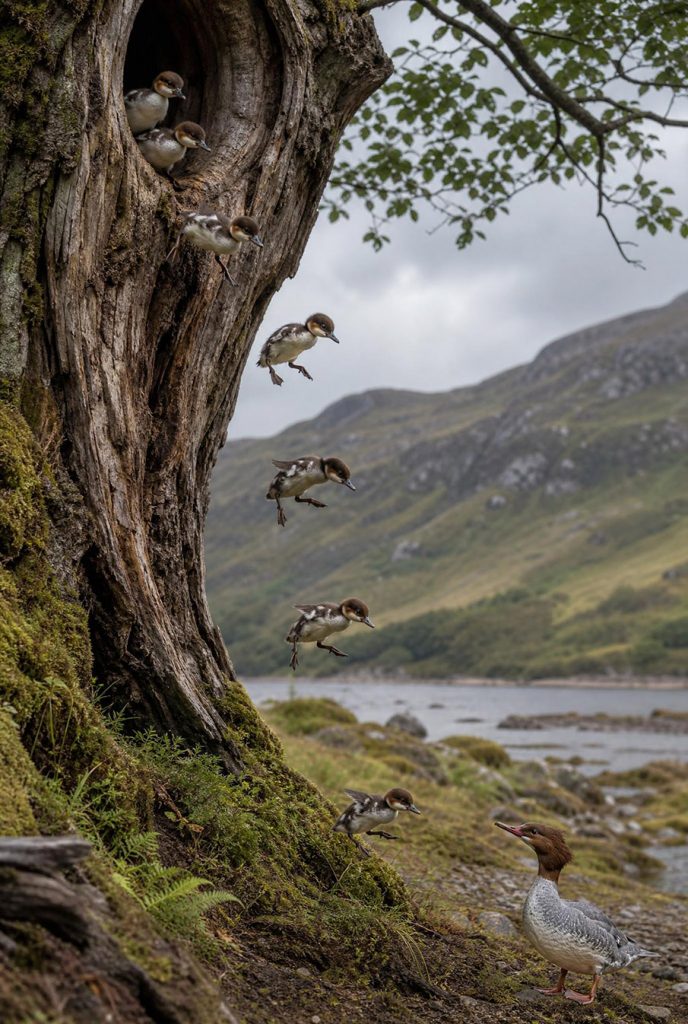
Female Goosander and ducklings, Mergus merganser (digital illustration)
Grebe, Little
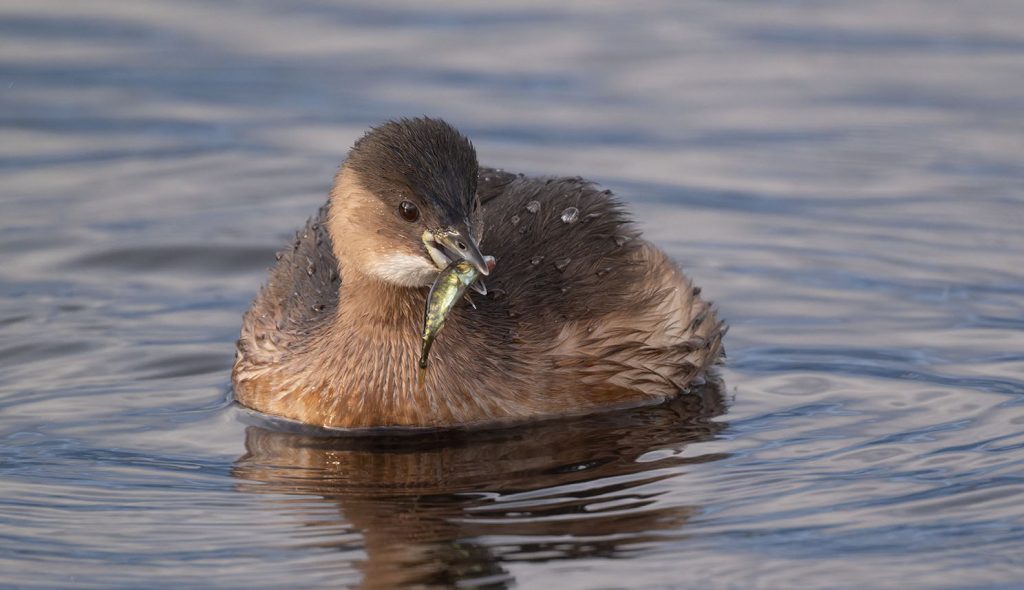
Little Grebe, Tachybaptus ruficollis, Caledonian canal, Clachnaharry, Inverness (photograph)
Found mostly on freshwater but also the shallow sea, Little Grebes feed by diving for small fish, insects and molluscs. At Merkinch, they can be seen on the ponds, on the canal and on the shallow tidal sea area bordering the reserve. They are shy, dive quickly to escape attention and then bob up having swum away underwater. It was this behaviour, which earned them names like ‘water-witch’ and ‘hell diver’ in folklore, a view reinforced by descriptions of the call as sounding like maniacal laughter, they got a negative image which was then built on and reinforced. Their nests are floating structures anchored to vegetation, which look like they would be swept away. When most survived, more accusations of the use of dark magic by the birds followed.
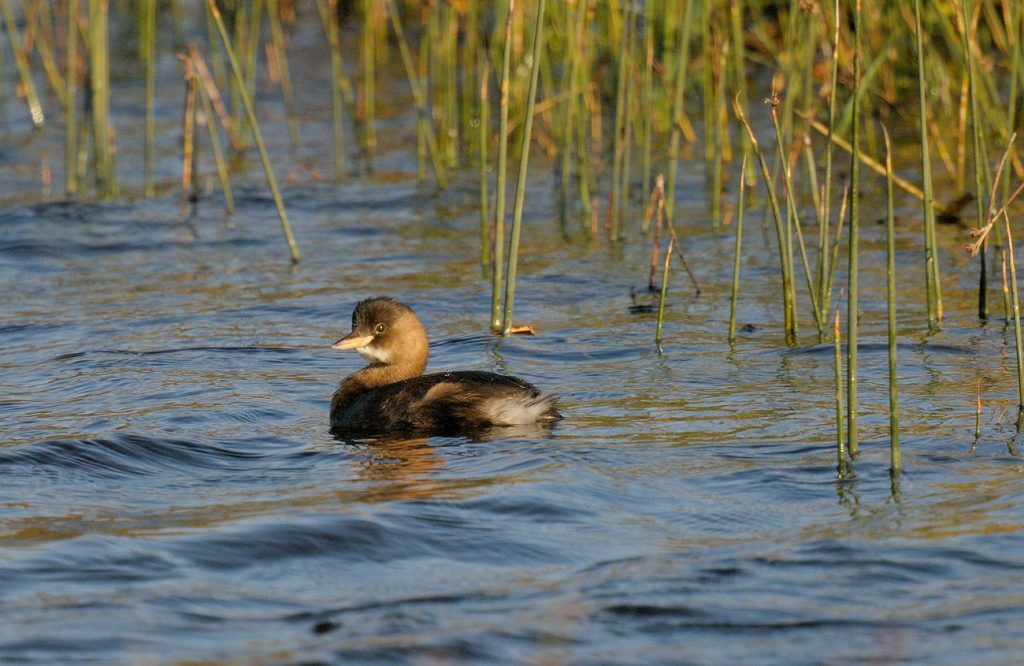
Little Grebe, Tachybaptus ruficollis, Merkinch LNR, Inverness (photograph)
Little Grebes are seen feeding their chicks feathers and adult birds also sometimes eat feathers themselves. There is a very practical reason for this behaviour. The feathers form a protective lining in the bird’s stomachs offering protection from sharp fish bones and spines on the fins of some of the fish they catch. Little Grebes are not sinister, they have been around for 70 million years and have learned one or two things on the way. The birds seen at Merkinch are residents, not migratory and they are adapted to the landscape and very definitely belong.
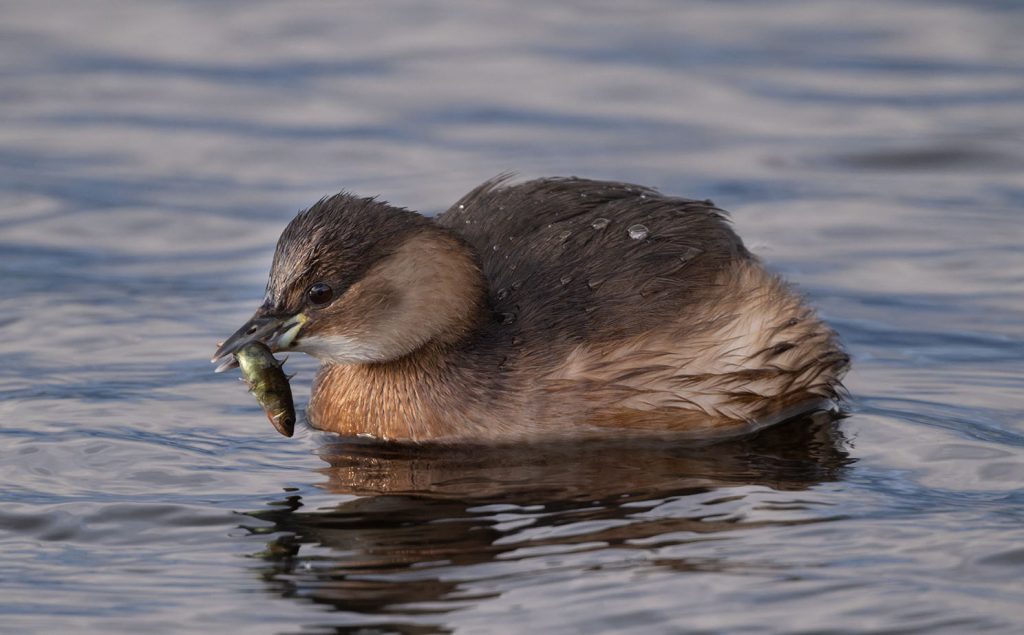
Little Grebe, Tachybaptus ruficollis, Caledonian canal, Clachnaharry, Inverness (photograph)
Greenfinch, European
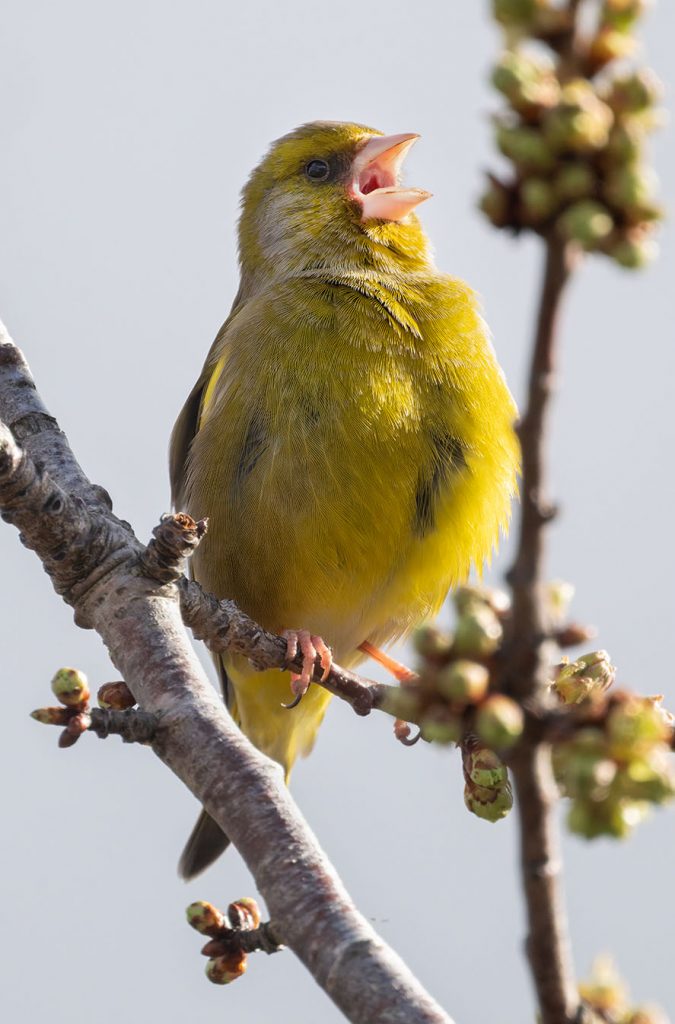
European Greenfinch, Carduelis chloris, Merkinch (photograph)
A large thick set finch, the Greenfinch is under threat from Trichomonosis infection, a single celled parasite. Populations have fallen by 60% and the Greenfinch has been placed on the conservation red list. Greenfinches tend to stay in a territory with a radius of five kilometres making the area 80 square kilometres. The Greenfinch is seen as a harbinger of spring, when its visibility increases as it sings in display from high perches in trees. A number of Greenfinches together in the same place are known as a charm, as are similar gatherings of other finches.
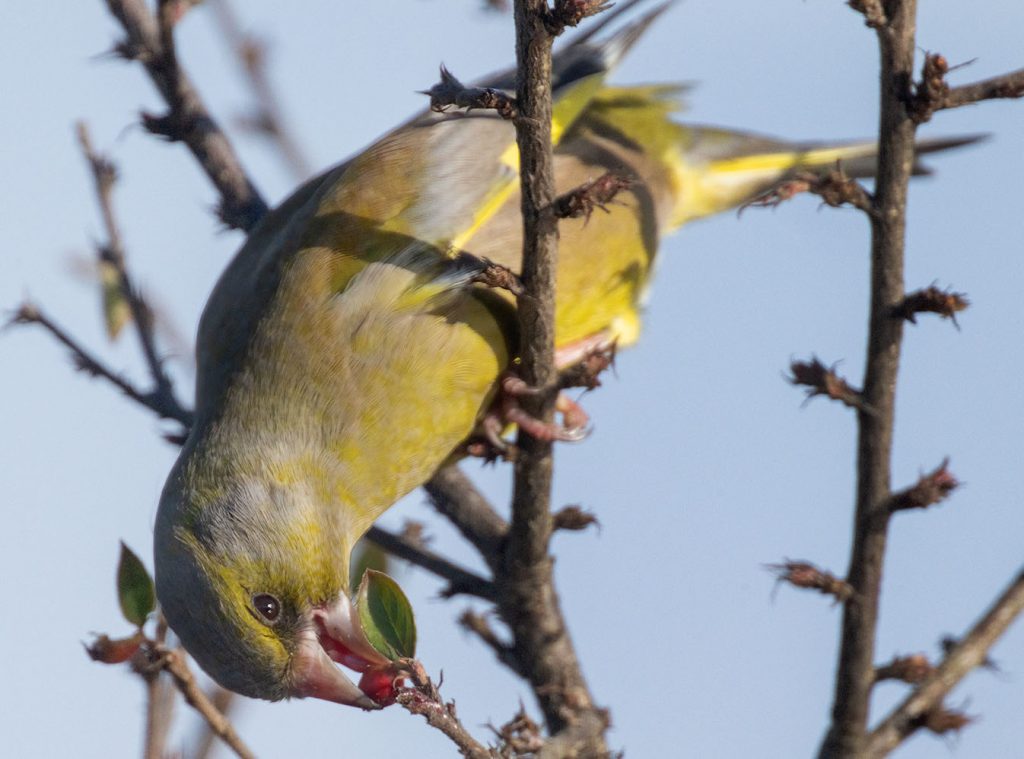
European Greenfinch, Carduelis chloris, Merkinch (photograph)
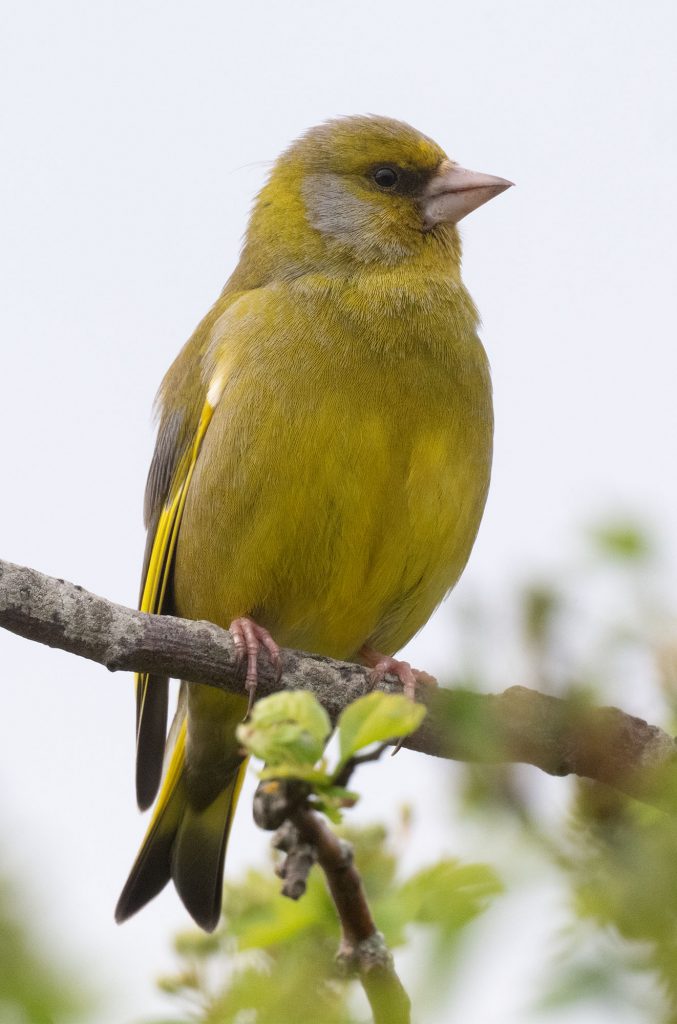
Greenfinch, European, Carduelis chloris, Merkinch Nature Reserve, Inverness (photograph)
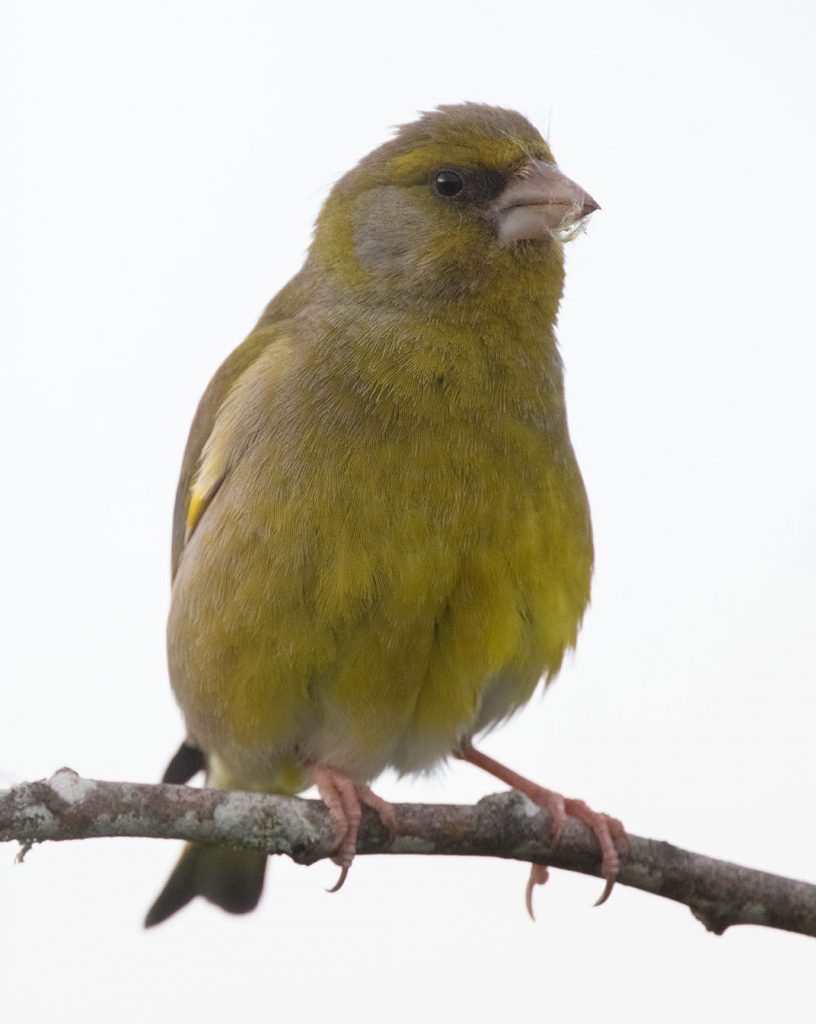
European Greenfinch, Carduelis chlorine, Merkinch Nature Reserve, Inverness (photograph)
Greenshank
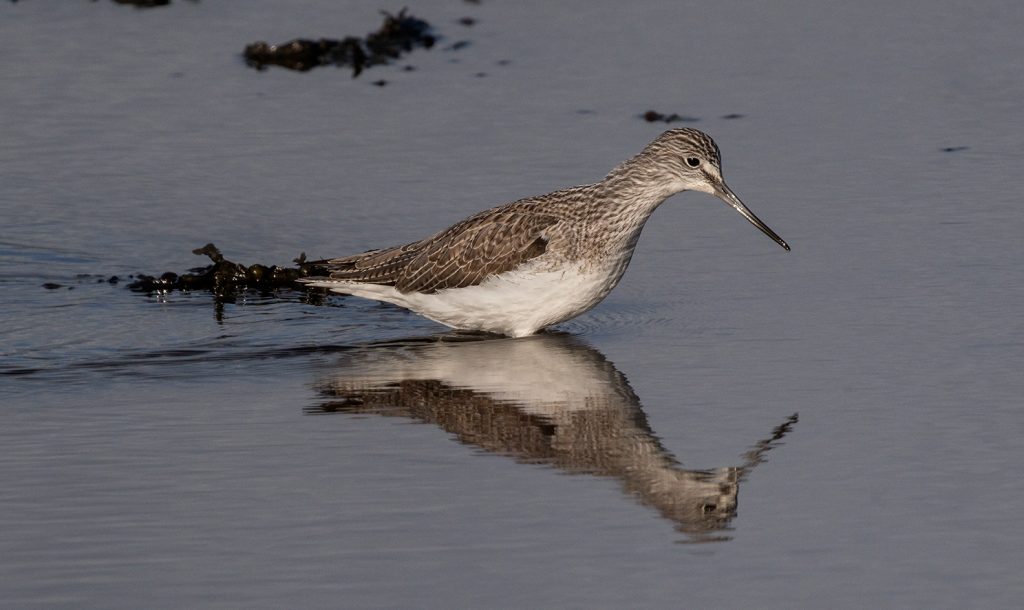
Greenshank, Tringa nebularia, Merkinch, Inverness (photograph)
One of the larger waders in Scotland and, by comparison to other species, not frequently seen, the Greenshank population has elements that both remain in Scotland all year, especially those in the South, or fully migrate even as far as South Africa in Winter. Their nests are extremely difficult to find, which made them a much-prized trophy in the days of egg collecting which did genuinely threaten the Greenshank population. Now the Greenshank is protected by law and disturbing a nest would be a significant offence. The bill of the Greenshank is slightly turned up at the tip which distinguishes it from other waders and is the opposite of the Curlew.
Gull, Black-headed
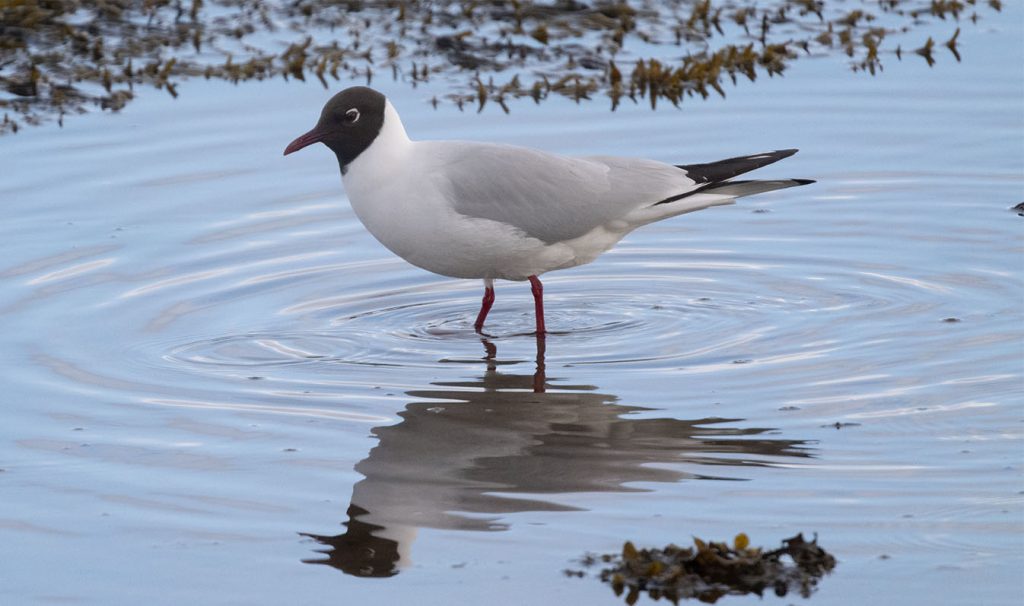
Black-headed Gull, Larus ridibundus, Merkinch Local Nature Reserve, Inverness (photograph)
Despite the name, the Black-headed gull only has a black head (which is actually a dark brown, an issue avoided in one of the Scottish names used, the Brown-headed Gull) as an adult during the breeding cycle from January to July. Juveniles and adults at other times may have a small dark marking behind the eye but will not have the ‘black’ head. Resident numbers are swelled by winter migrants from Scandinavia and Northern Europe. Unusual for a gull in catching insects in flight and when they are doing this, perform rapidly varying acrobatic turns.
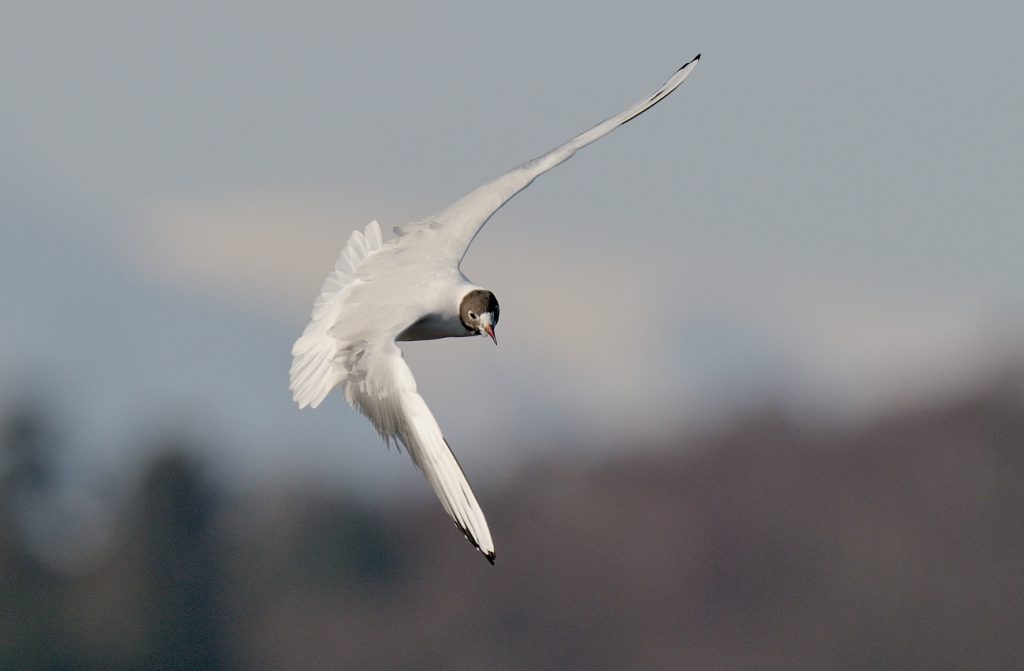
Black-headed Gull, Larus ridibundus, Merkinch Local Nature Reserve, Inverness (photograph)
It is a gull well established inland and not just on the coast. In the Cairngorms, there was a belief that the gull carried the souls of good people and the fading dark head into autumn and winter represented their fading sin. Another virtuous association is found in the Dutch mythology of Black-headed Gulls only acquiring their dark feathers through the heroic act of flying through the smoke and fire of a blazing lighthouse to guide the keepers to safety.
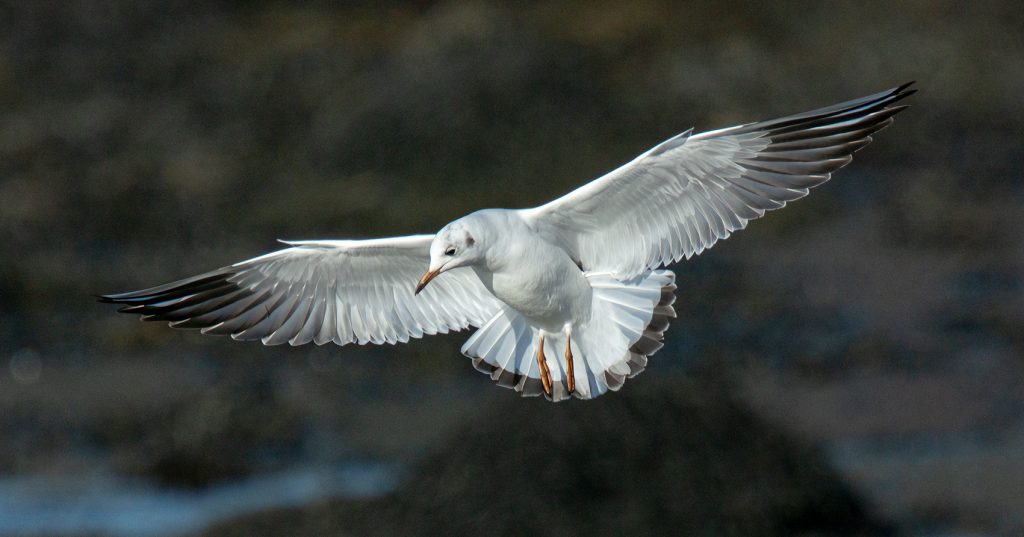
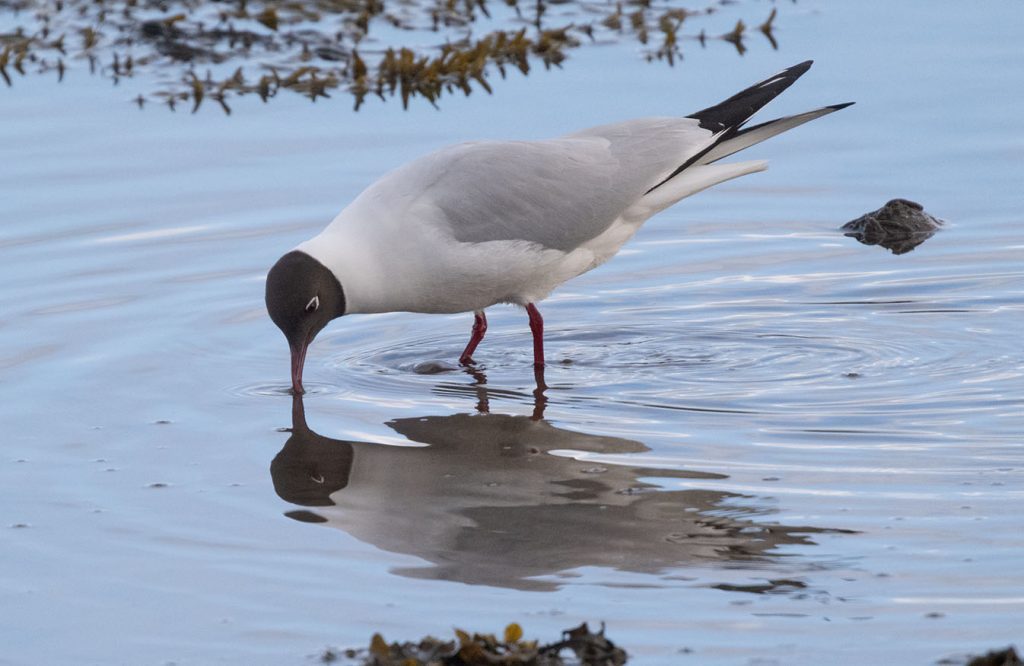
Black-headed Gull, Larus ridibundus, Merkinch, Inverness (photographs)
Gull, Common
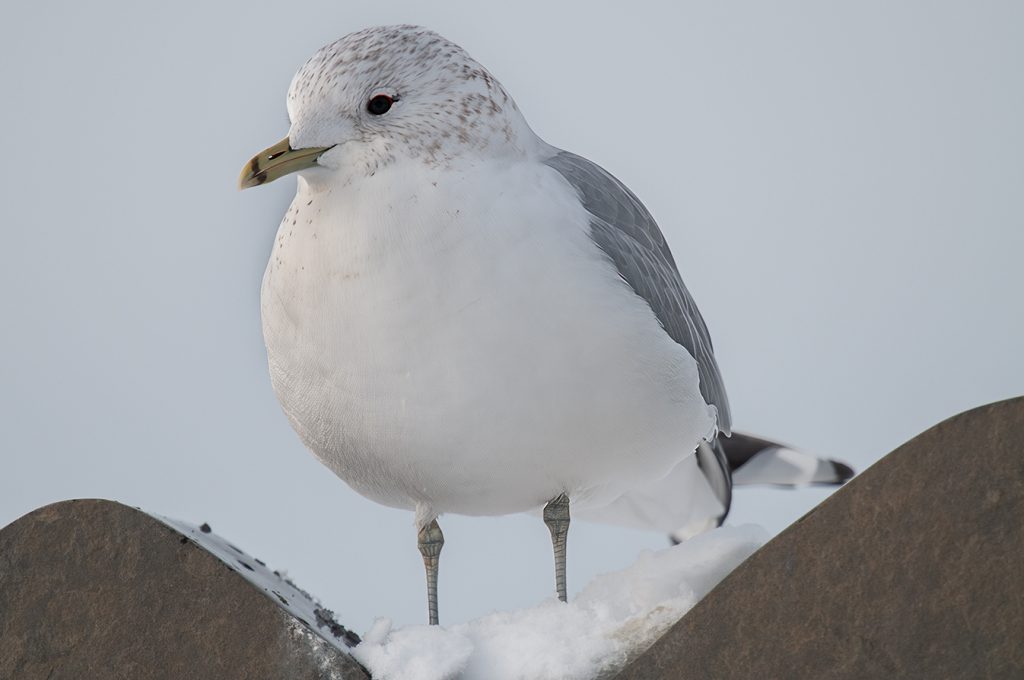
Common Gull, Larus canus, Merkinch, Inverness (photograph)
Seen in summer but with a huge population increase in winter with birds arriving from Iceland, Scandinavia and northern Europe. The name raises a question, even in northern Scotland where numbers are highest, this is not the most numerous, most seen of gulls.
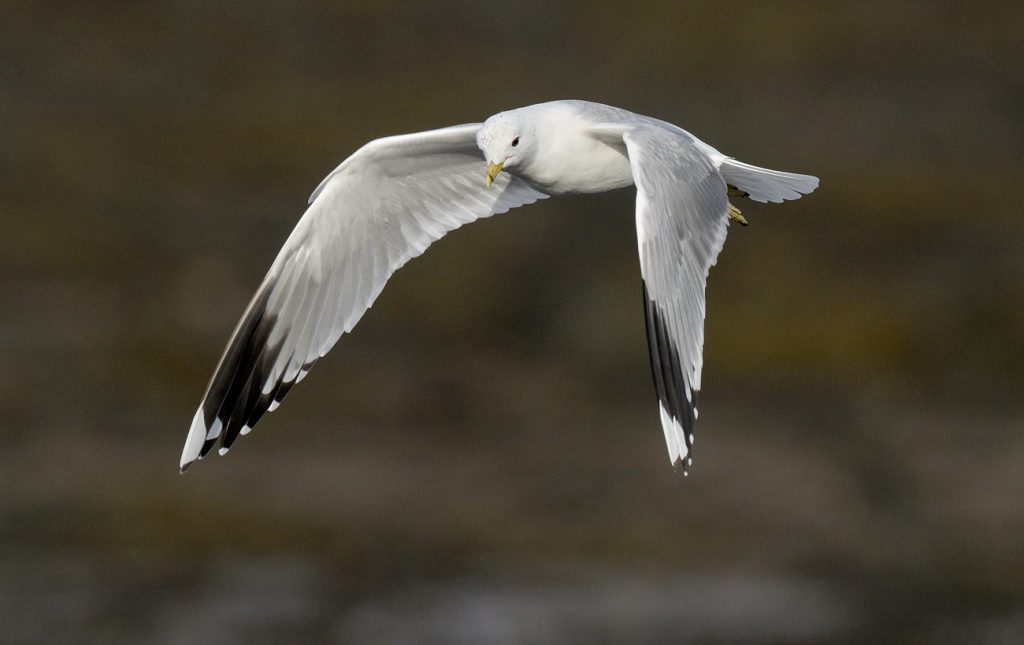
Common Gull, Larus canus, Merkinch, Inverness (photograph)
It is believed that the name ‘Common’ refers to an older application of the word to denote a lack of the exceptional, which is not fair since they are a very attractive bird. It has also been said that ‘Common’ came from them nesting on Common Land, poor often damp grazing. Also known as the Sea Mew and Sea Maw in Scotland
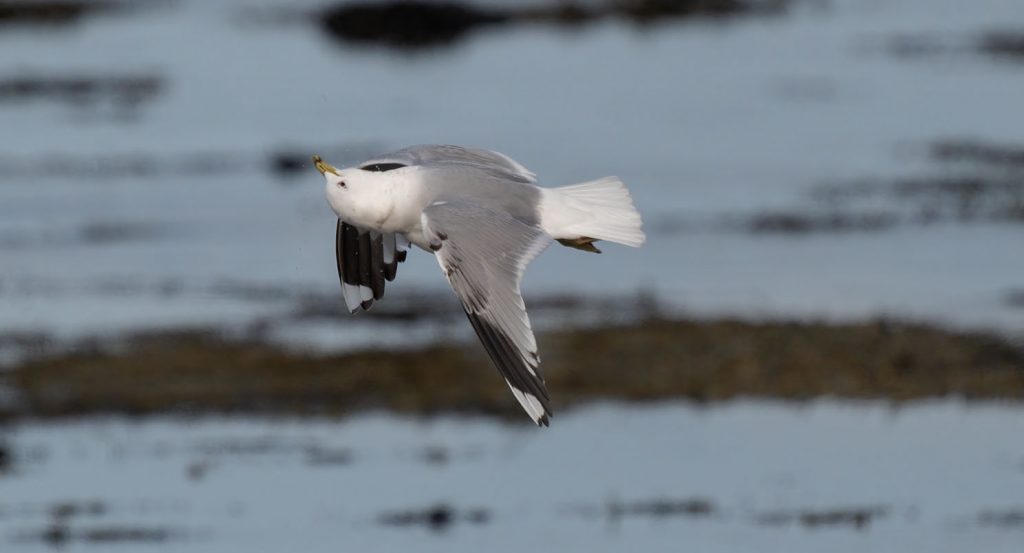
Common Gull, Larus canus, Merkinch, Inverness (photograph)
Gull, Great Black-backed
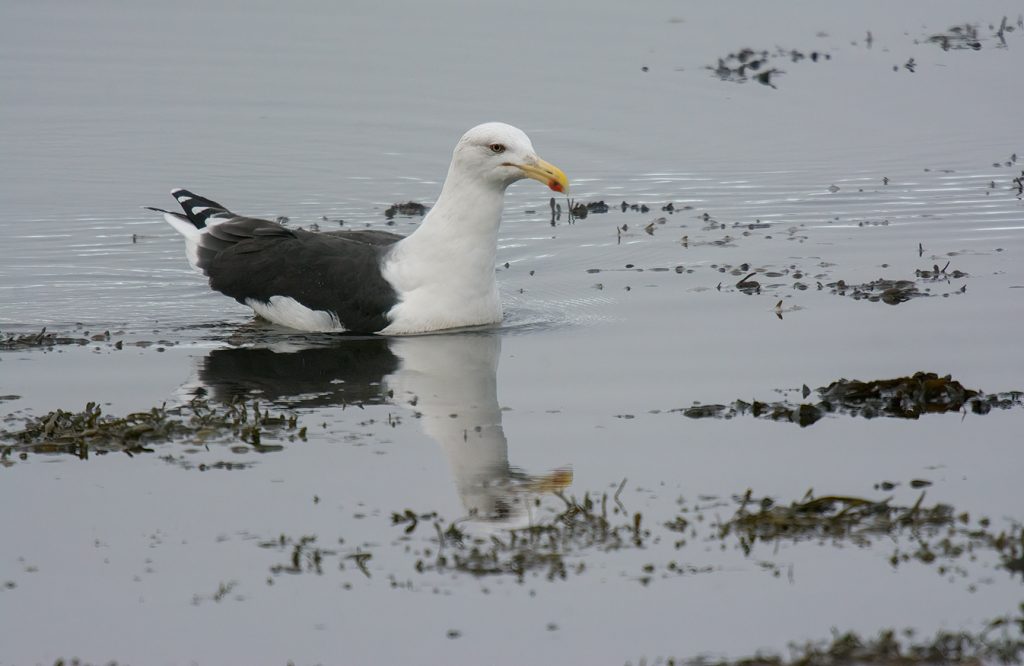
Great Black-backed Gull, Larus marinus, Merkinch (photograph)
The largest gull worldwide and the most aggressive gull predator, there is a resident breeding population with their numbers boosted by migrants from Northern Europe and Iceland in winter. Described as the king of gulls and a merciless tyrant to smaller birds, they were associated along with other gulls as carrying the souls of those lost at sea. This view was only reinforced by the Great Black-backed G
Gull, Herring
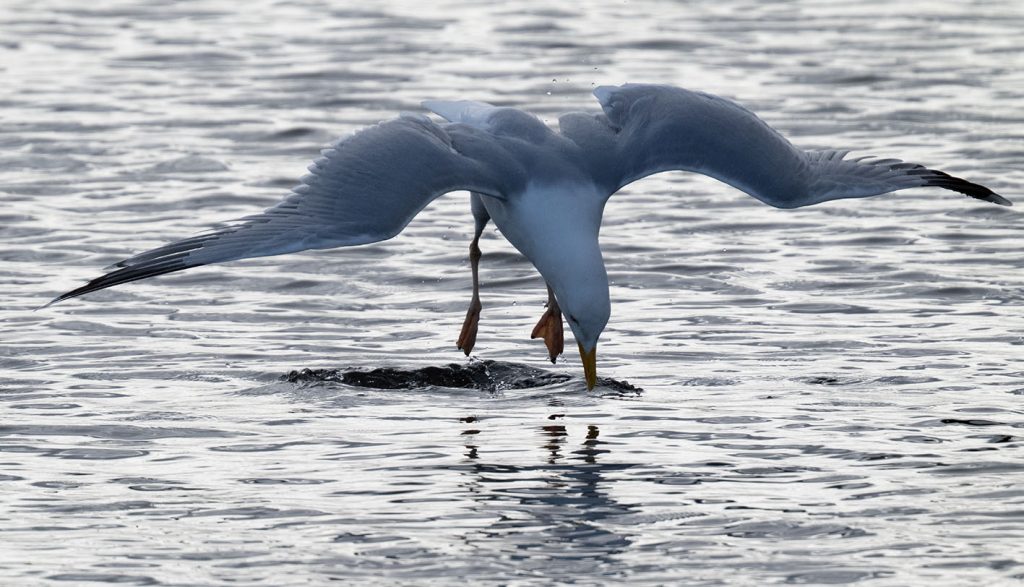
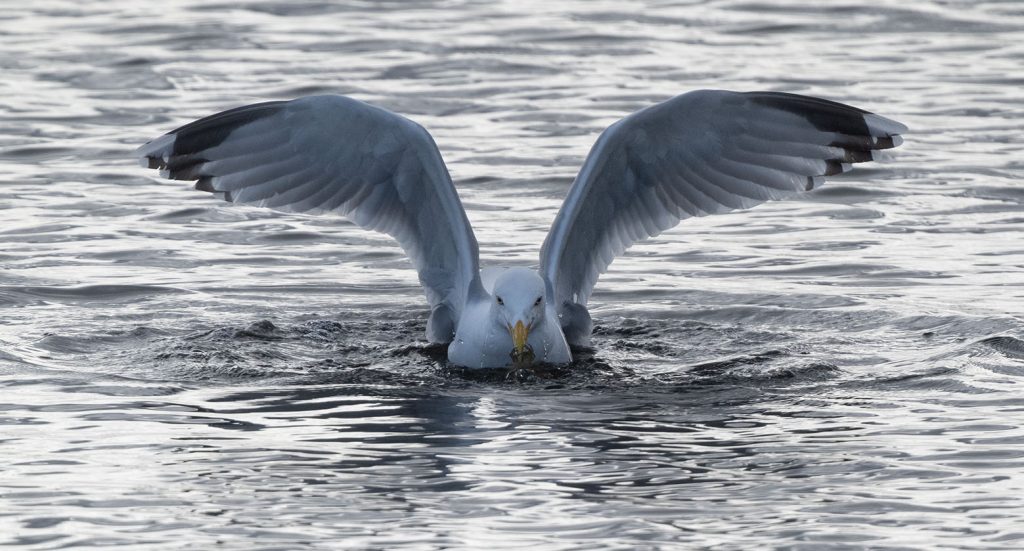
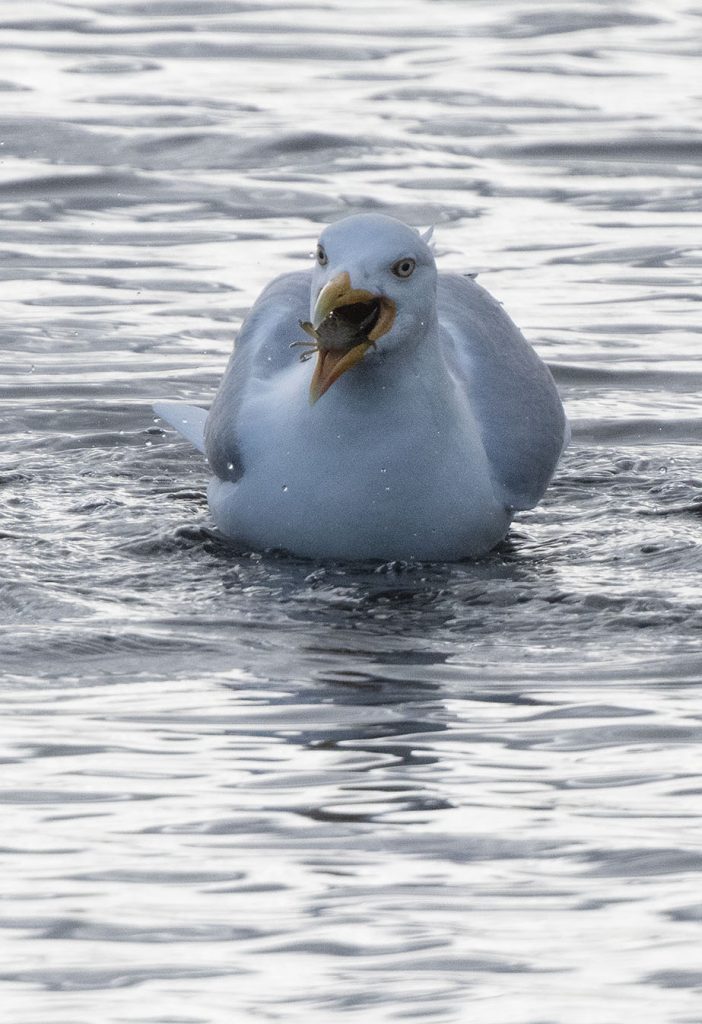
Herring Gull, Larus argentatus catching crabs, Merkinch Local Nature Reserve, Inverness (photographs)
Hawfinch

Hawfinch, Coccothraustes coccothraustes, Glen Convinth, Inverness-shire, Highland Scotland (photograph)
The Hawfinch is the largest of the finches found in Scotland and the rest of Britain. Size though does not mean that it is seen very often, a combination of being rare, unfortunately in significant decline and having a rather shy temperament which has even been described as ‘self-effacing’, all mean that glimpses of them are few and far between and I was very lucky to see this one in an area of Highland Scotland where they are almost never recorded, the last sighting was in 2010 and that was tens of miles South on the other side of Loch Ness. There are local small breeding populations known much further South in Scotland at Scone Palace near Perth.
This individual was almost certainly a migrant on the move. The Gaelic name for the Hawfinch is the Gobach which translates as ‘Beaky’ which, although not exactly romantic or poetic, is highly appropriate not just because the Hawfinch beak is as large as it is but also because studies have shown it can exert huge pressures in excess of 95 lbs (48 kg) in order to crack things like cherry stones which it feeds on. In Yorkshire, the bird is actually known as the Cherry Finch because of its fondness for the fruit but further South in Europe it is also known for its selection of Olives, the stones of which require over 160 lbs pressure to break them as fast as the Hawfinch is on record as doing with apparent ease. Yes, the muscles for the beak are very well developed. Put simply, the Hawfinch can deliver a crushing pressure with its beak well over 1000 times its own weight. If human beings could do that, we would be looking at forces measured in tens of tons. The noise of the stones breaking can sometimes be the way of finding Hawfinches when they are feeding but it was not the case for my encounter. Cherries are a bit thin on the ground here and olives – don’t even ask. I was just lucky enough to see a bird that was not one of the usual I see and then, after a moment’s doubt, realise what I had found.
Thanks to Susan Haysom at Scottish Natural Heritage and the British Trust for Ornithology (BTO) for their information on the status of the Hawfinch and recorded sightings.
If anyone else is fortunate enough to spot a Hawfinch in North Scotland the BTO would be very interested to have the records and these can be reported through their website.
Heron, Grey
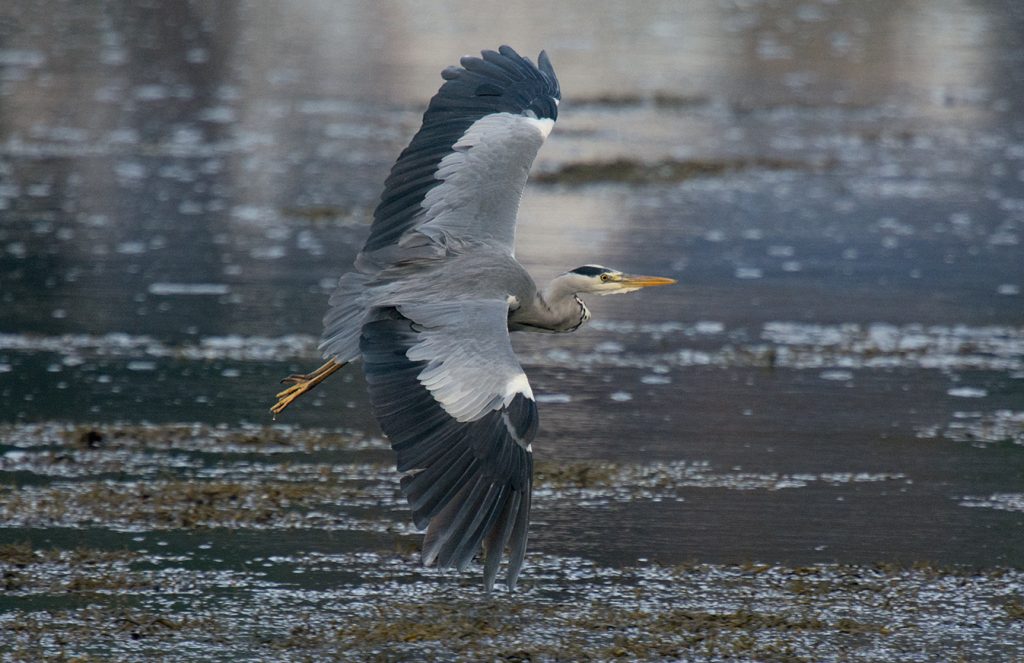
Grey Heron, Ardea cinerea, Merkinch Nature Reserve, Inverness (photograph)
A large bird capable of moving silently and carefully so as not to alert prey, the Grey Heron is found in freshwater and marine habitats feeding primarily on fish but also hunting crustaceans, reptiles, amphibians and small birds and mammals.

Grey Heron, Ardea cinerea (digital illustration)
Numbers drop in very hard winters but recover extremely quickly, they are a resilient population.
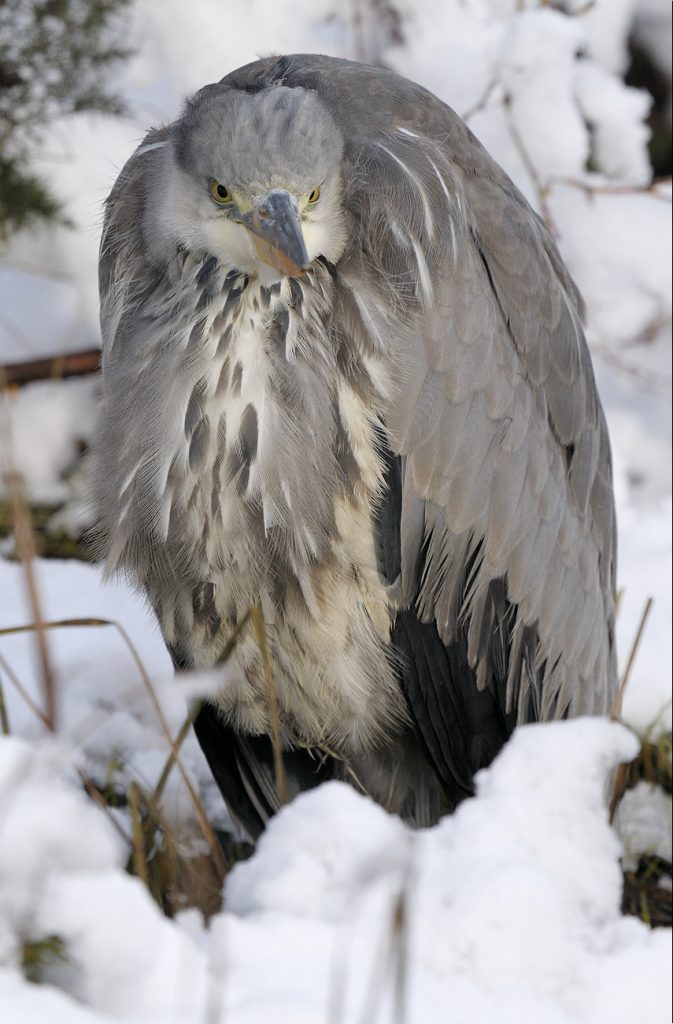
Grey Heron, Ardea cinerea, Merkinch Local Nature Reserve, Inverness (photograph)
The Grey Heron today is a protected bird by law. In the distant past it was subject to royal prerogative being the property of the Crown with severe penalties for anyone who killed one without permission or by using the most effective but banned methods such as the crossbow. What this has meant is that today herons are not eaten, in older history they were only eaten by the nobility and in between they did find themselves onto the dinner table more generally. This and a desire to limit heron numbers to protect fisheries did lead to their being hunted including through falconry which was also employed as a sport by nobles. Especially successful were Peregrines, a surprising outcome given the size difference between the two birds. Grey Herons are typically 1m long and weigh around 2kg. Peregrines are 50cm long and weigh around 1kg.
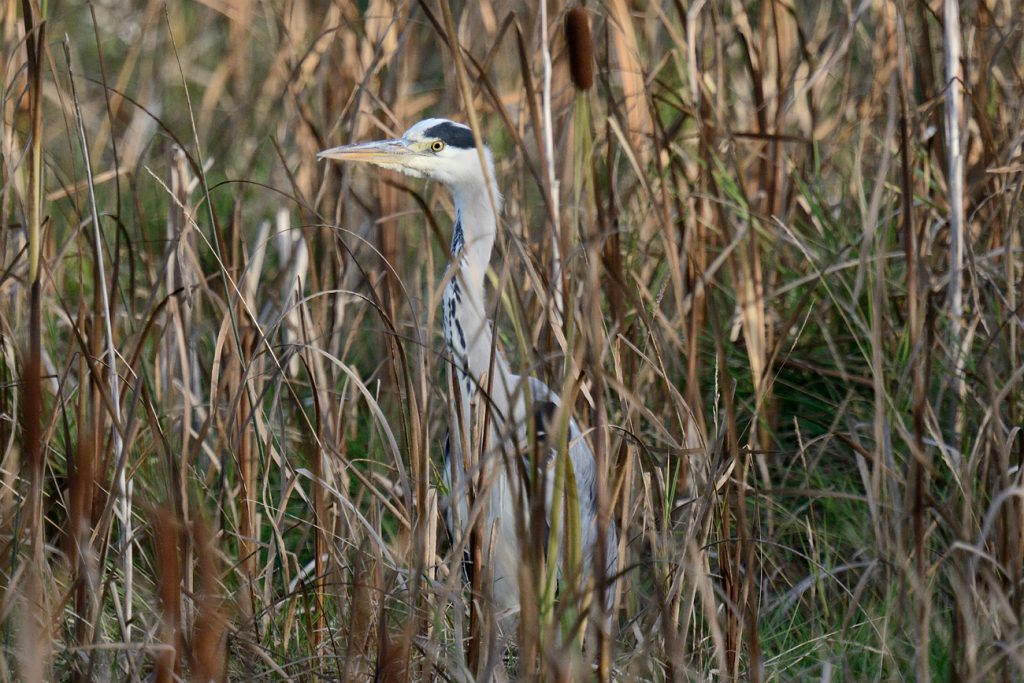
Grey Heron, Ardea cinerea, Merkinch Local Nature Reserve, Inverness (photograph)
There are beliefs that Herons have a particular connection with the moon. In Angus in Scotland this even extended to expecting that herons would wax and wane with the moon being heavier when the moon is full. More generally in Scotland Grey Herons have been seen as symbols of the Otherworld and guardians of the space between land and water. They also appear in faerie law.
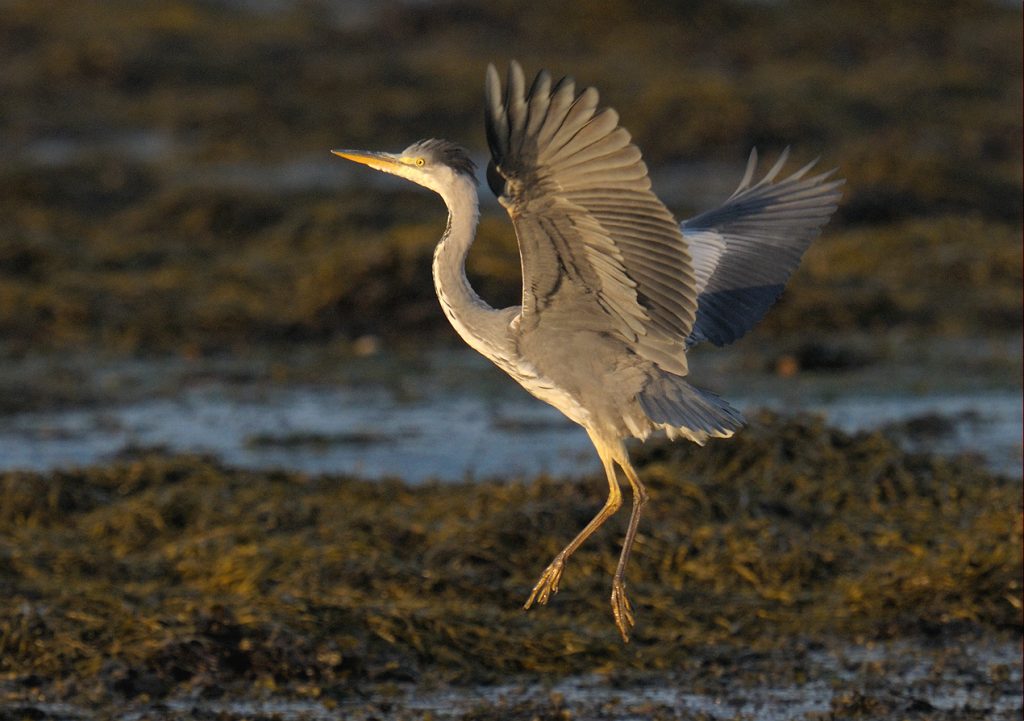
Grey Heron, Ardea cinerea, Merkinch Local Nature Reserve, Inverness (photograph)
Prominent on herons are the thick feathers on the neck, these have been identified as fulfilling vital survival functions. Insulation and warmth are important for a bird that spends long periods almost motionless, often in cold conditions. The chest and neck feathers of a heron are classified as ‘powder down’ plumage which means that the feathers are never shed by moulting. Instead, they grow continuously but eventually break down into a fine powder that the heron distributes to all its feathers through preening. The powder cleans off fish slime and oils and mud.
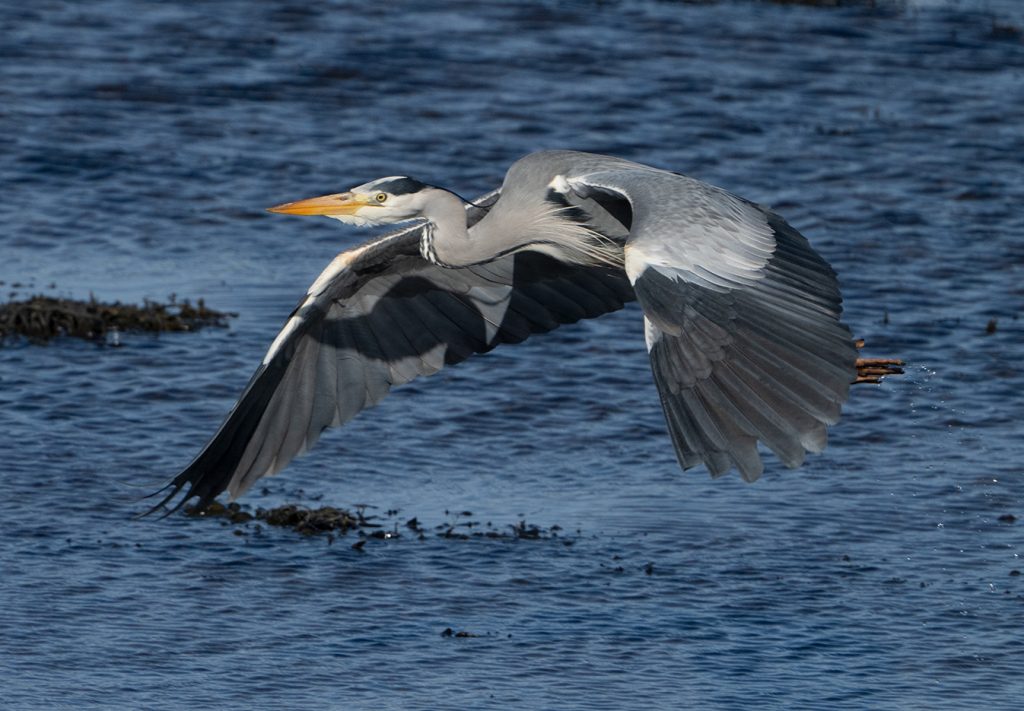
Grey Heron, Ardea cinerea, Merkinch Local Nature Reserve, Inverness (photograph)
This is not just for comfort, the removal of these deposits is necessary to maintain waterproofing on which the heron depends. As with almost all bird feathers the neck feathers of a heron are thought to reinforce visual display but break up the outline and help camouflage when the bird is hunting as well.
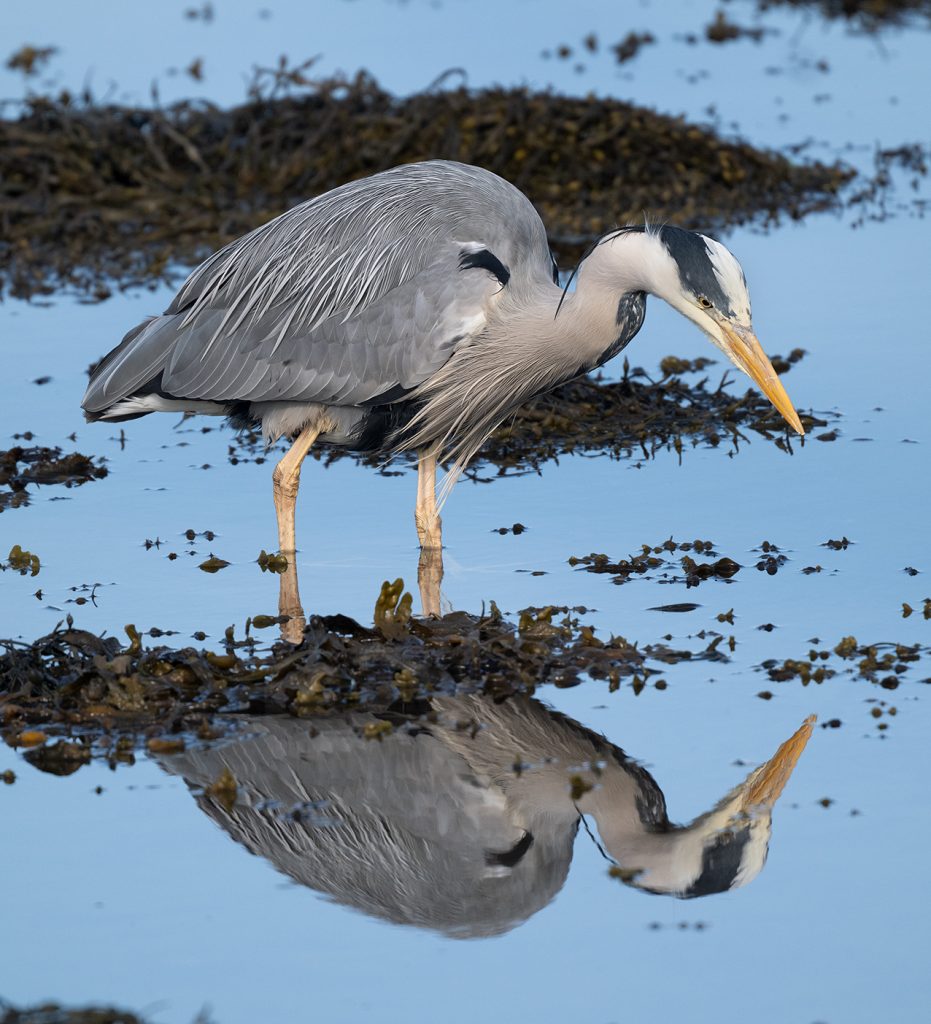
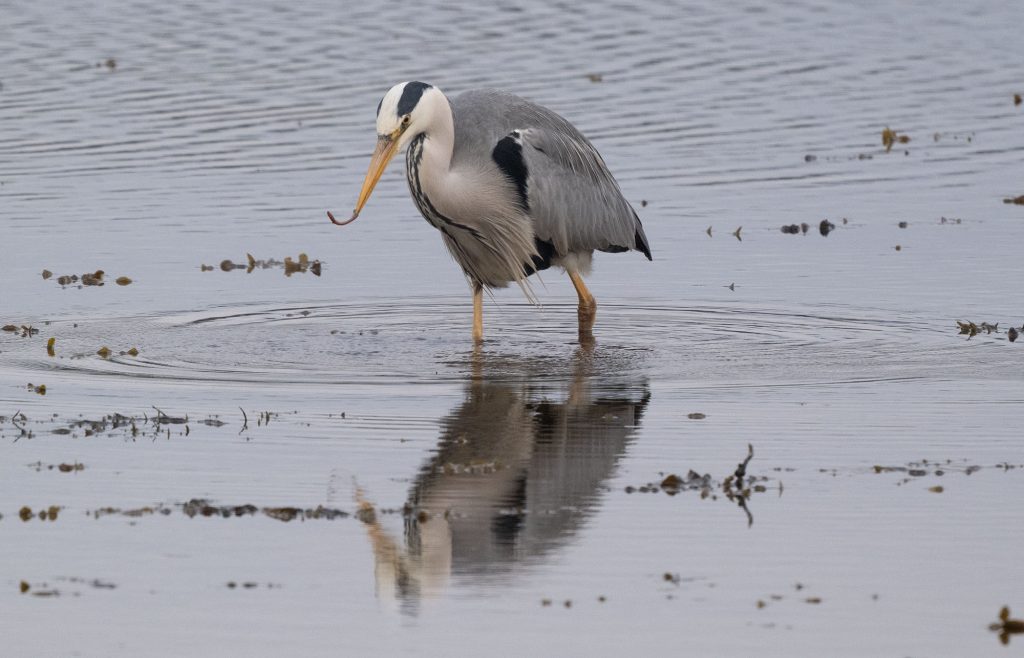
Grey Heron, Ardea cinerea, fishing, Merkinch Local Nature Reserve, Inverness (photographs)

Grey Heron – Ardea cinerea, fishing., Merkinch Nature Reserve, Inverness (photograph)

Grey Heron, Ardea cinerea, fishing., Merkinch Local Nature Reserve, Inverness (photograph)
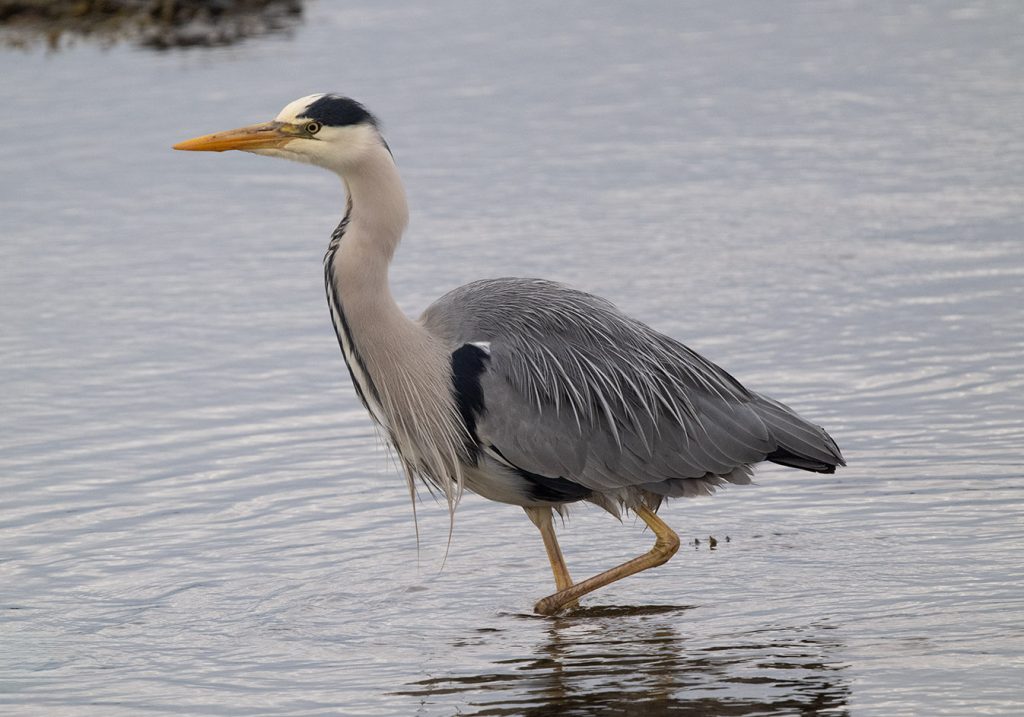
Grey Heron, Ardea cinerea, fishing, Merkinch Local Nature Reserve, Inverness (photograph)
Jackdaw, Eurasian

Eurasian Jackdaw, Corvus monedula, Glen Convinth, Inverness-shire, Highland Scotland (photograph)
Very clever birds and very sociable. A study has shown that if food availability varies with who you show up with, Jackdaws will very quickly ditch even established friends if it is to their advantage. Even if it costs though they will stay with family; offspring, siblings and their partners, they mate for life and mean it. (https://www.nature.com/articles/s41467-023-40808-7) In folklore. a Jackdaw on the roof can mean a birth or a death is imminent so even in prediction which side they are on cannot always be relied on. One collective term for Jackdaws is ‘a train’. Possibly the real question is who is getting on and who is getting off at any one time. At least when they do, you will know about it from all the noise, the other collective name is ‘a clattering’.
Kingfisher, River
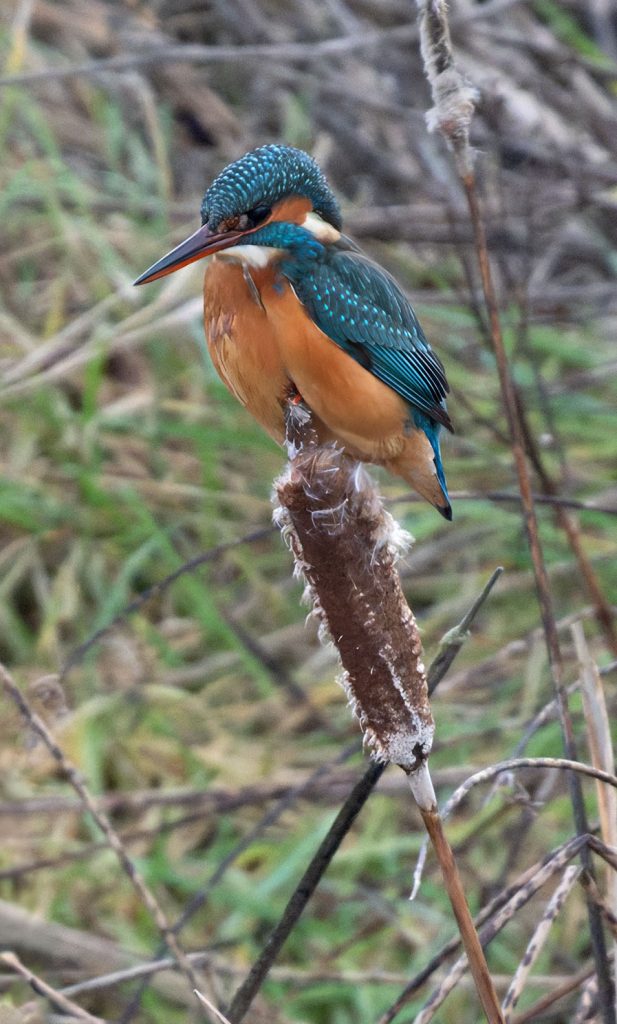
River Kingfisher, Alcedo atthis, Merkinch Local Nature Reserve, Inverness (photograph)
Seen in Celtic belief as symbolic of freedom, courage and adventure, described as a ‘living jewel’ and in Greek mythology ascribed the power, if seen by two lovers together, to bless them with eternal happiness the Kingfisher is a small bird with a great deal to live up to.
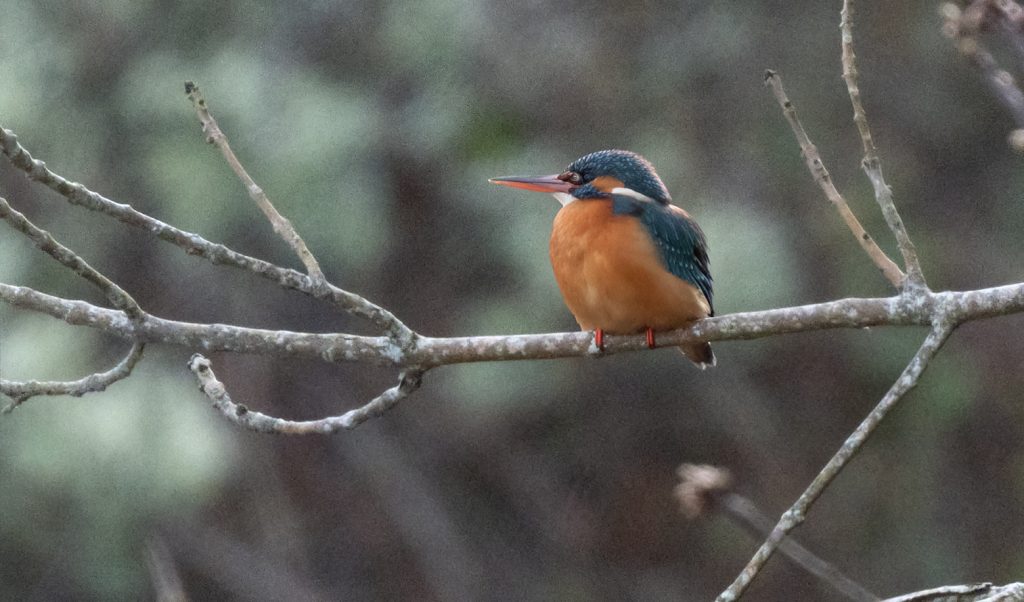
River Kingfisher, Alcedo atthis, Merkinch Local Nature Reserve, Inverness (photograph)
Add to this that they are said to have the ability to calm a stormy sea, are possibly only able to be seen by people who are righteous and back to Celtic belief act as messengers between the mortal world and spiritual realms but since they move between air and water embody tranquillity, balance and patience an adult kingfisher has very real responsibilities carried by its 6 inch (15cm) body. Perhaps that is why so much of their time can be described as ‘gone fishing’
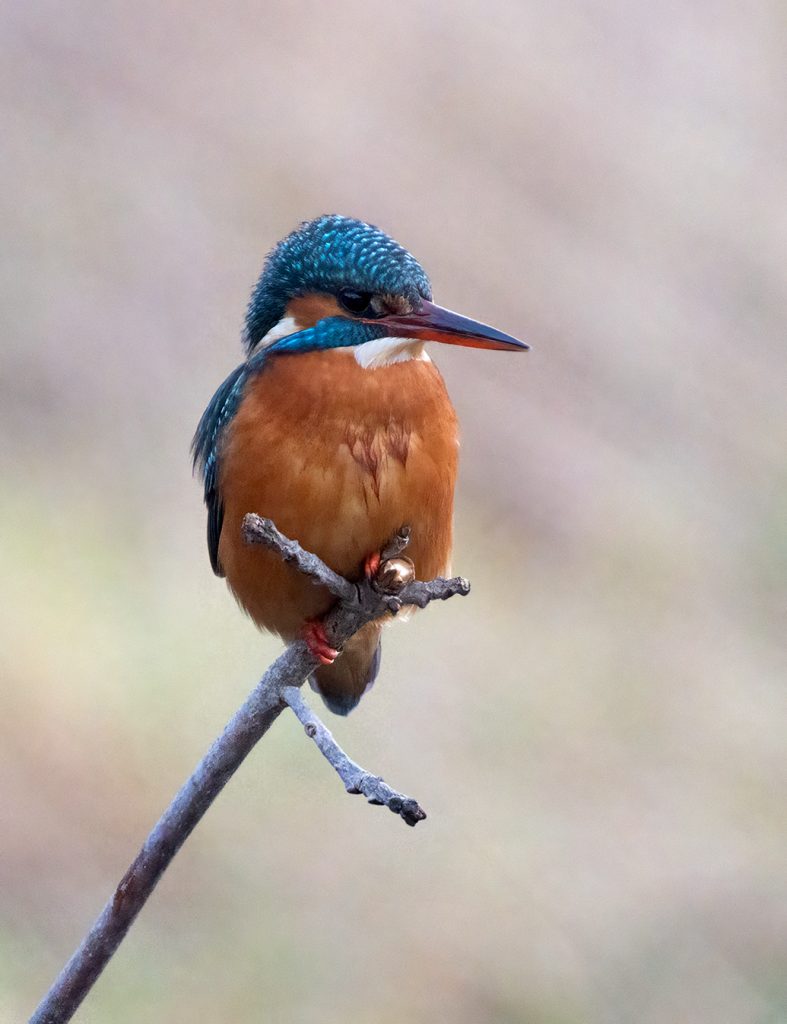
River Kingfisher, Alcedo atthis, Merkinch Local Nature Reserve, Inverness (photograph)
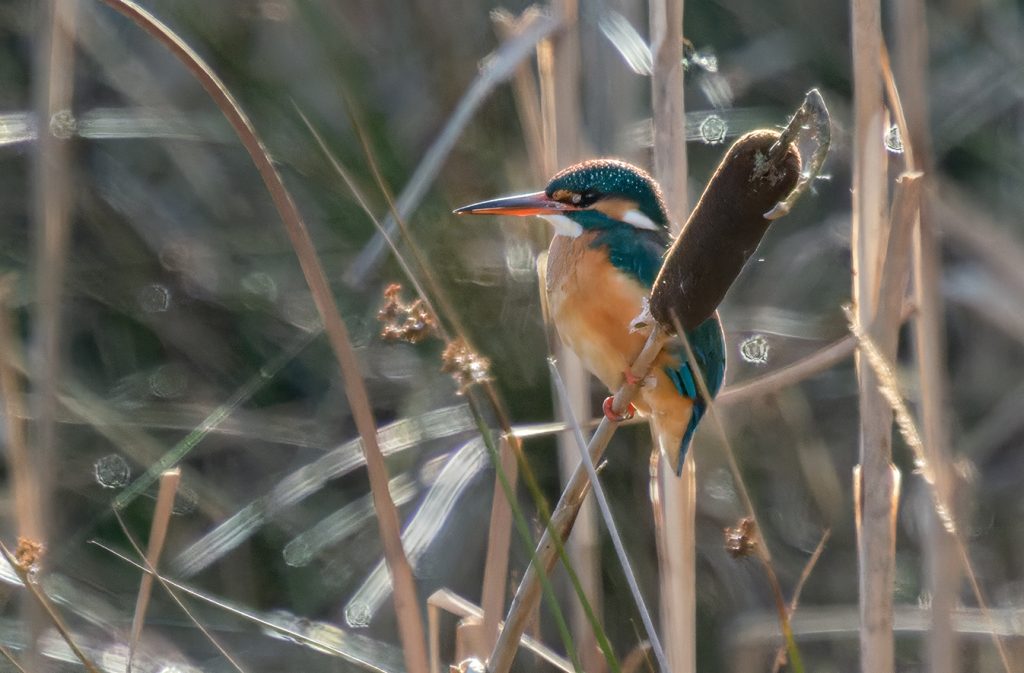
River Kingfisher, Alcedo atthis, Merkinch, Inverness (photograph)
Kite, Red
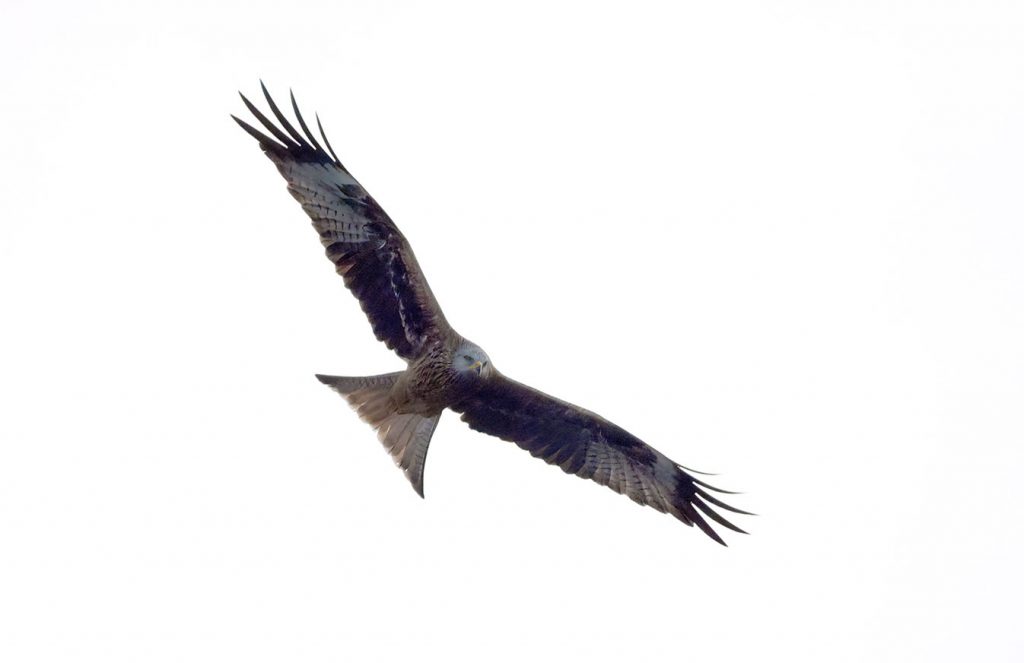
Red kite, Milvus milvus over Merkinch Local Nature Reserve, Inverness (photograph)
The Red Kite is a bird of prey that is almost exclusively a scavenger but does sometimes hunt smaller animals with their upper limit being around the size of rabbits. It is large with a wingspan of up to 6 feet, faithful in that they mate for life and the pair return to the same nest each year and, in Scotland and England, for a time extinct, the last birds known being in the 1800’s. Their decline was mostly through persecution by people, they were not respected, cared for or popular. They had been in medieval times when they were valued for their role in clearing waste from the growing cities, so much so that they were protected by Royal Charter. Their fortunes changed in Scotland in1457 when King James II listed them as vermin to be killed on sight, protection continued for longer in England. Improving sanitation and rubbish handling in cities made them less useful and by Victorian times sporting estates, egg collectors and a demand for stuffed birds to display finally sealed the Red Kite’s fate.
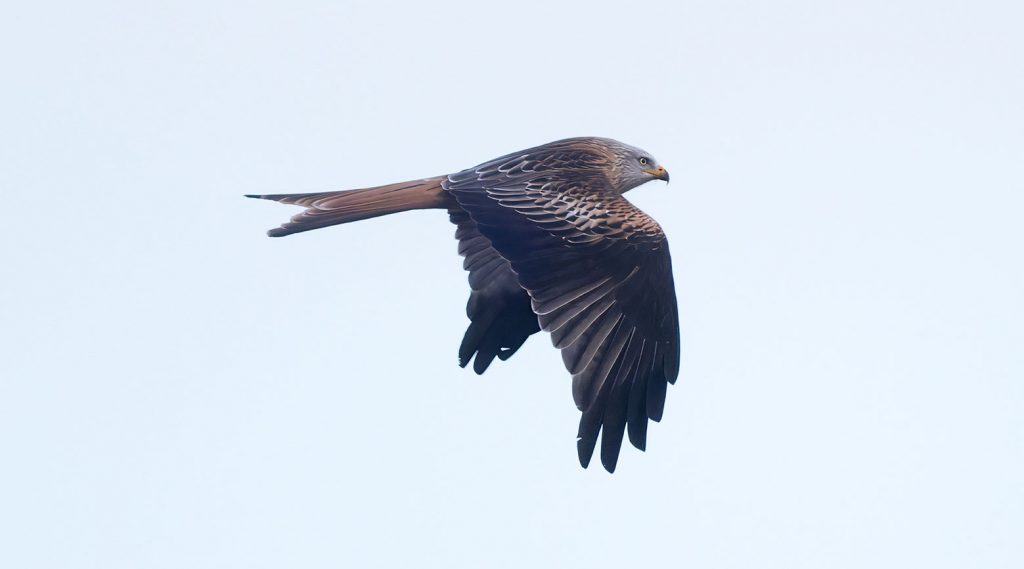
Red kite, Milvus milvus over Merkinch Nature Reserve, Inverness (photograph)
Their extinction is recorded as 1871 in England and 1879 in Scotland with the last birds in Inverness-shire. In Britain, the only remaining foothold for the Red Kite was Wales but the numbers there fell to twenty at their lowest. Only conservation efforts, wildlife legislation and reintroduction programmes have brought them back to Scotland, including on the Black Isle, starting in 1989 with chicks from Wales and Europe. Although not resident on the reserve, for a consummate master of flight like the Red Kite the distance from The Black Isle is easily covered and they are seen occasionally patrolling over Merkinch.
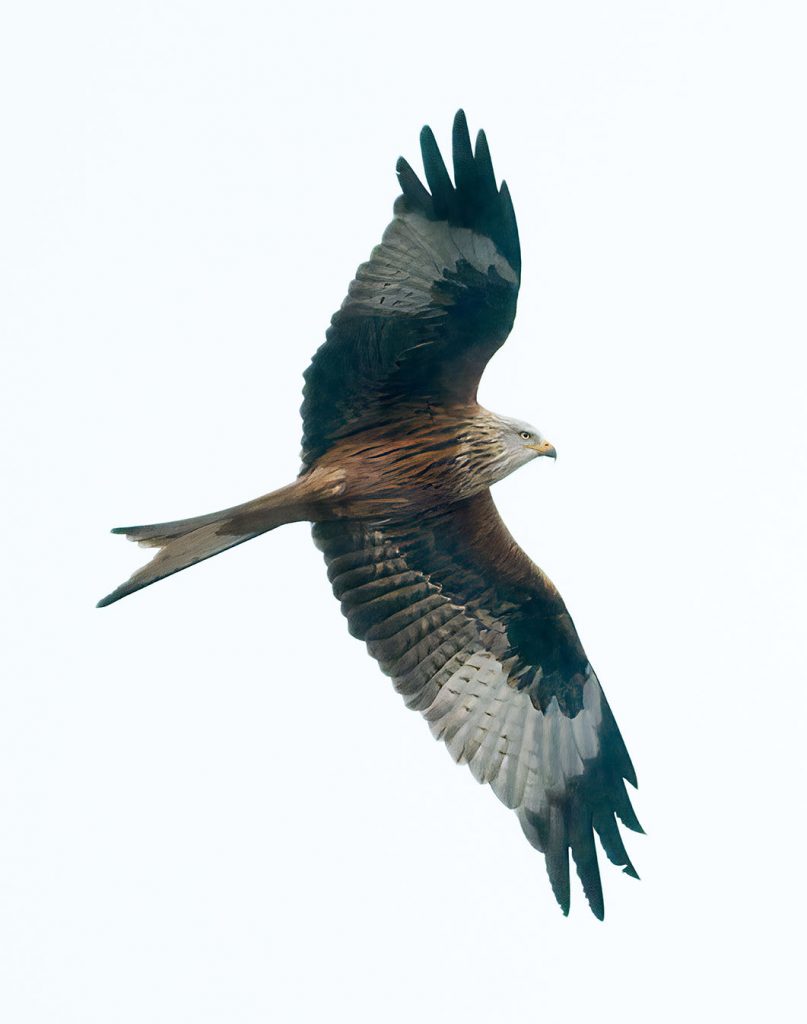
Red kite, Milvus milvus over Merkinch Local Nature Reserve, Inverness (photograph)
Mallard
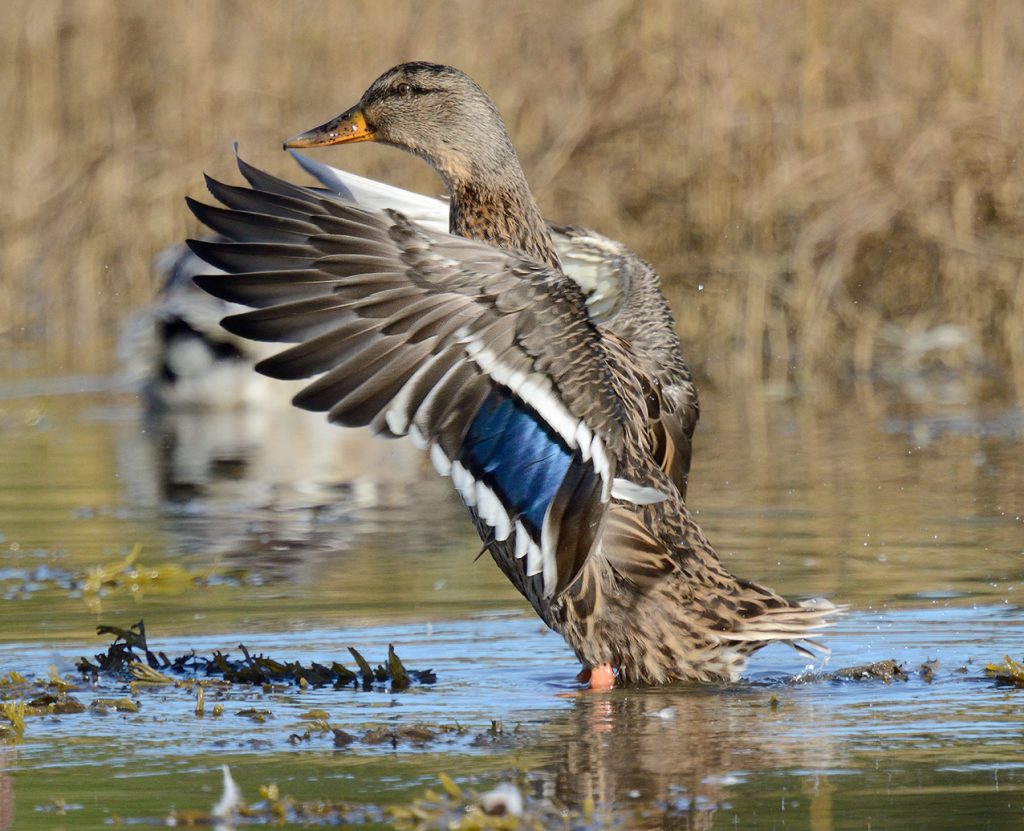
Female Mallard, Anas platyrhynchos, Merkinch (photograph)
One of the most widespread and established wild ducks in the UK and the ancestor of domestic ducks generally. Their blood was referred to in ancient Greece by Pliny as a remedy for poison and witchcraft. In Christian mythology, ducks were credited as having helped Christ by concealing him when pursued. As a result, they were given three joys, the freedom of land, air and water and with this range, even celebrated thunder, resulting in the Gaelic saying which translates as ‘Thou art like a duck expectant of thunder’.
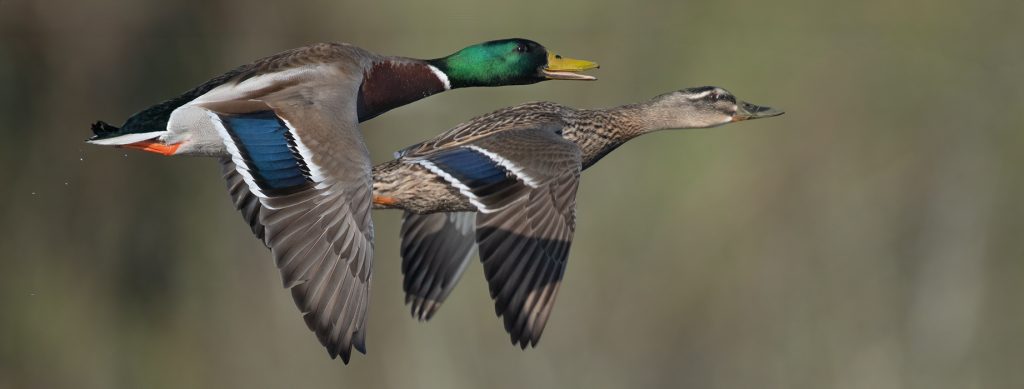
Mallard, Anas platyrhynchos, flying over The Caledonian Canal, Clachnaharry, Inverness (photograph)
Celtic tradition places the Mallard as connecting spiritual worlds and using water as the portal to move between them. Their association is with the goddess Brighid who governs healing, fertility, motherhood, passion and fire as well as serenity and water. A broad portfolio for a goddess and broad connections for the Mallard.
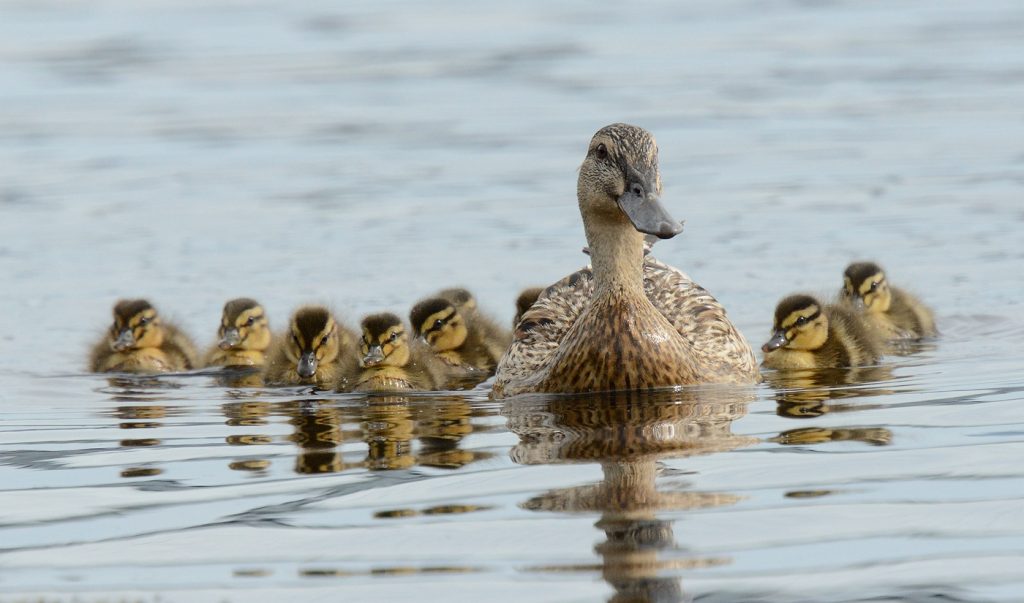
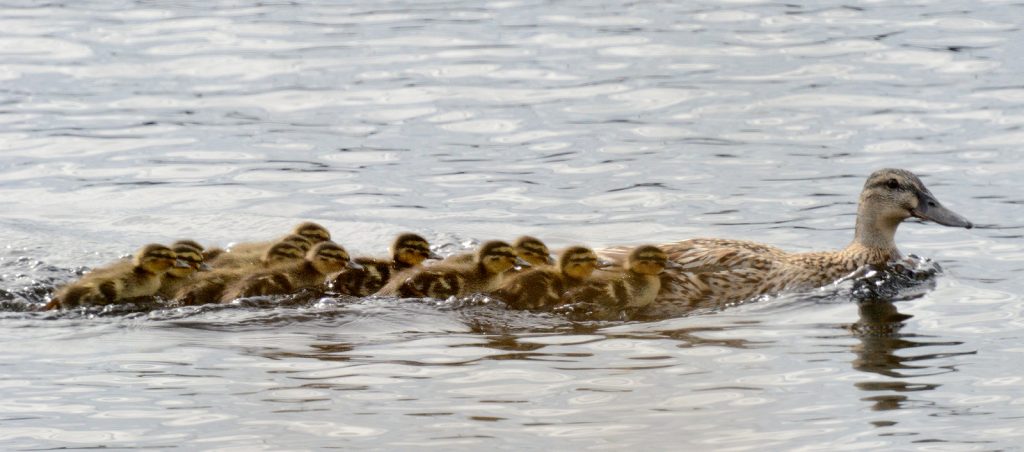
Female Mallard, Anas platyrhynchos, with ducklings. Carnac Point, Merkinch, Inverness (photograph)
Moorhen
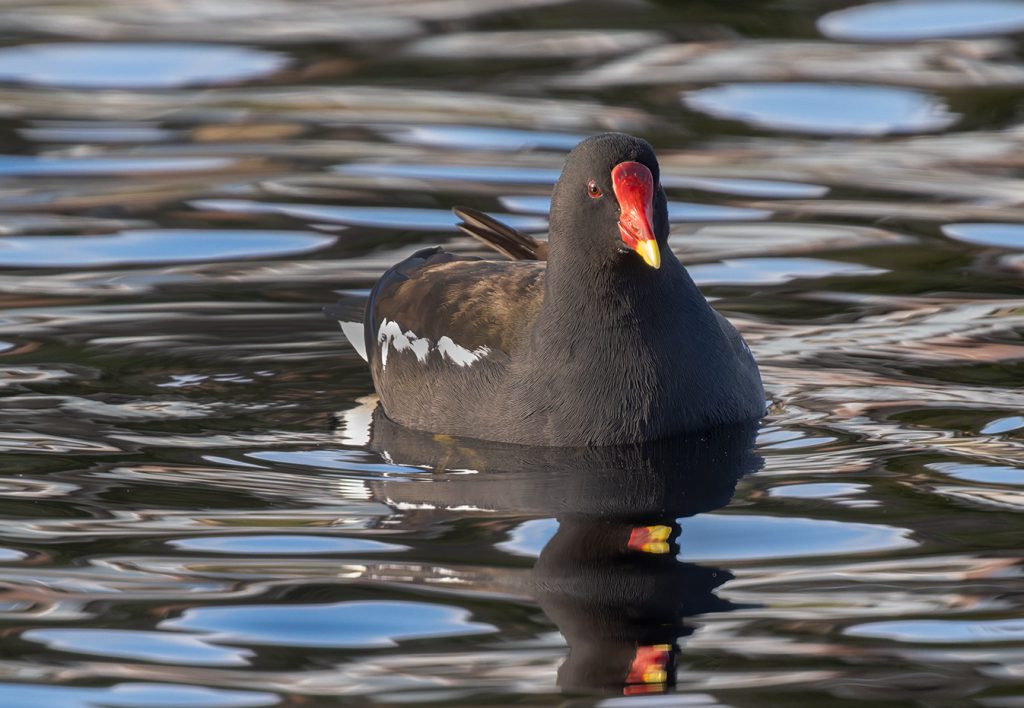
Moorhen, Gallinula chloropus, Caledonian Canal, Clachnaharry, Inverness (photograph)
Definitely associated with wetland, Moorhens are more a bird of marsh conditions and small ponds with cover rather than being seen out on large areas of open water, although they may well be at their banks and edges. As a result, they are often present in larger numbers than is realised. The name ‘Moorhen’ is based on the older use of the term ‘moor’ meaning marsh rather than the modern application of high open land, so they are actually being called ‘Marsh Hens’ which is very appropriate. Marsh Hen has actually been an alternative name in use in Scotland. It is not common in the Highlands but is well represented elsewhere. They are known as a slightly wary and nervous species, readily disappearing into cover or diving underwater for up to a minute if anxious. When they dive, they can even hold on to weeds to keep themselves submerged.
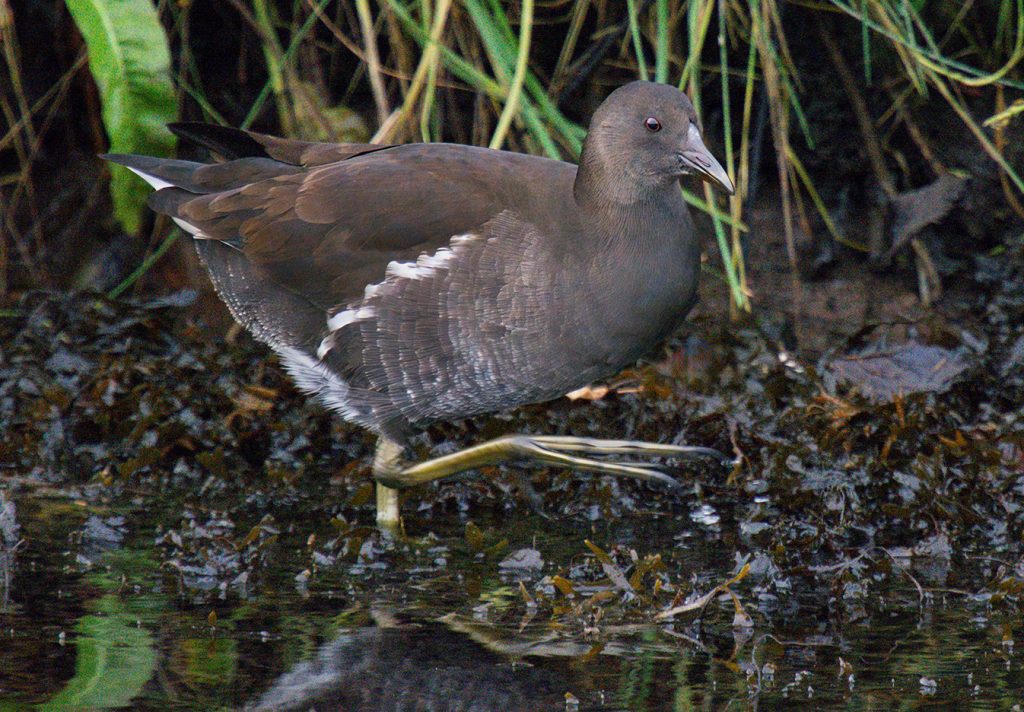
Juvenile Moorhen, Gallinula chloropus, Merkinch, Inverness (photograph)
In Hawaii, Moorhens are thought to have brought fire to people which is why their forehead is red, they stole fire from the God Maui and were branded on the forehead in retribution. The Hawaiian species, known as the Alae Uula or the Hawaiian Common Gallinule is a very close relative to the European birds and has very similar markings. The Common Gallinule, was only recognised as a separate species to the Moorhens of Scotland and Europe in 2011. The hidden shy behaviour of Moorhens has also lead to them to be linked to water spirits.
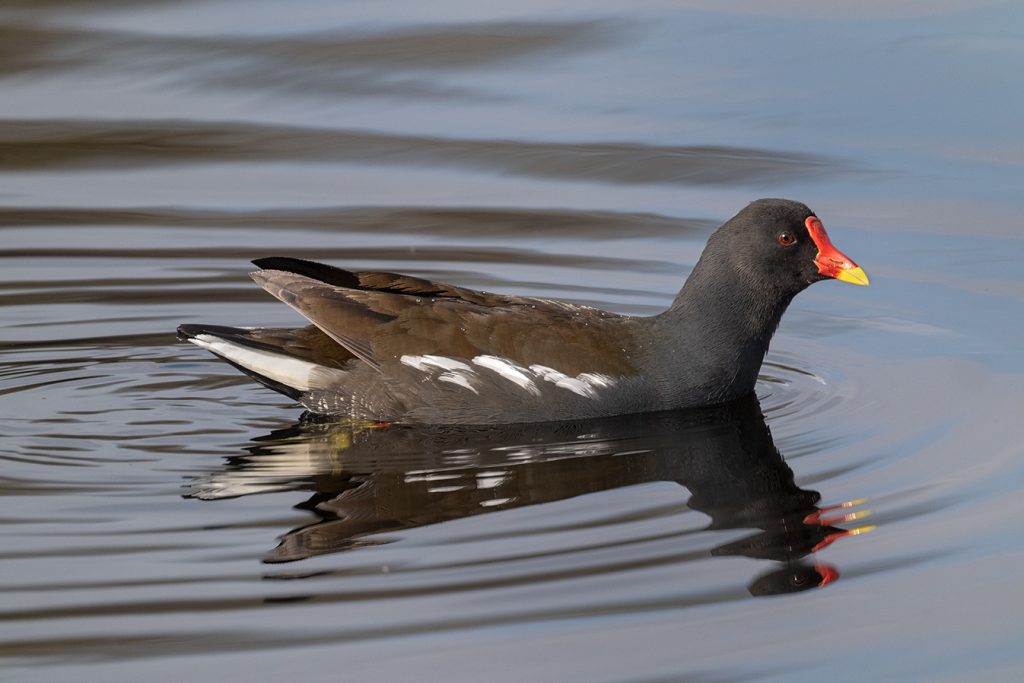
Moorhen, Gallinula chloropus, Caledonian Canal, Clachnaharry, Inverness (photograph)
Osprey

Osprey, Pandion haliaetus, Cairngorms National Park, Highland Scotland (photograph)
Breeding pairs in Britain 1916 to 1953: 0, 1954: 1, 2023: 250-300, mostly in Scotland. Persecuted for taking fish and by egg collectors and for specimens for taxidermy as well as being hit by habitat loss and pollution, the Osprey was nearly lost to Scotland and the UK. A pair from Scandinavia set up a nest in 1954 at Loch Garten. Once this became known a permanent guard had to be set up to protect them ‘Operation Osprey’ Since then they have become more established every year. Still don’t like Scottish winters though, they head South to Africa till it warms up again.
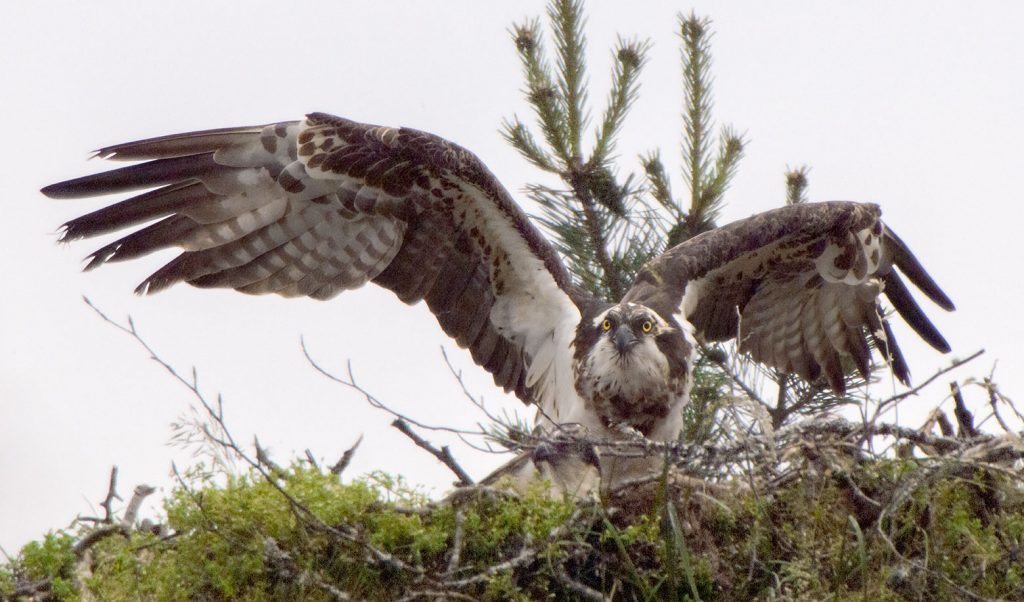
Osprey nest, Pandion haliaetus, Inverness-shire, Highland Scotland
Oystercatcher, Eurasian
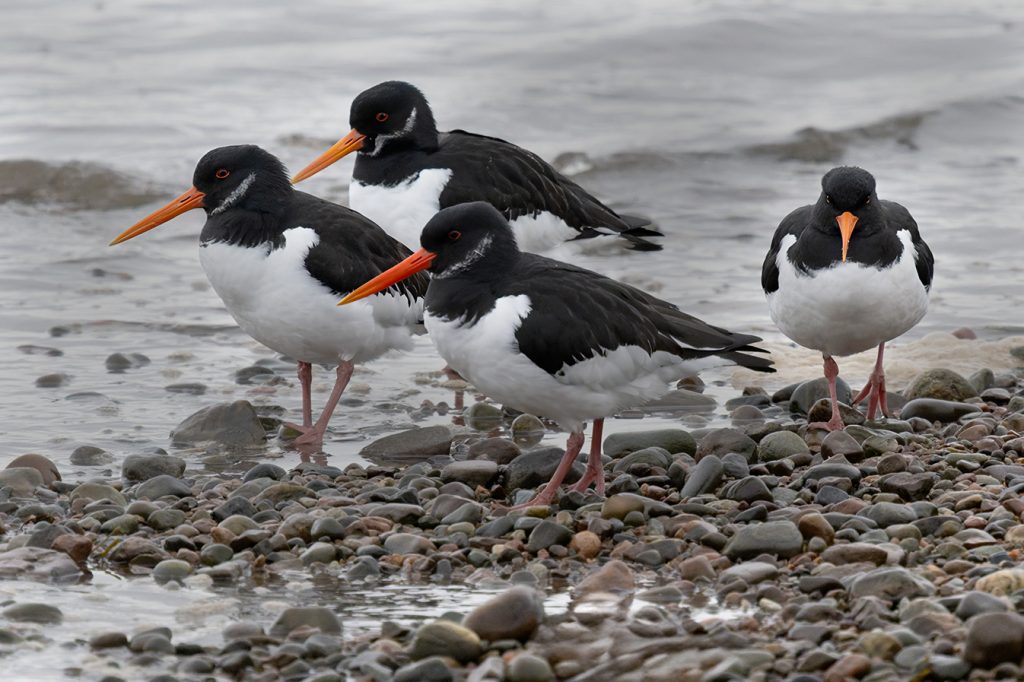
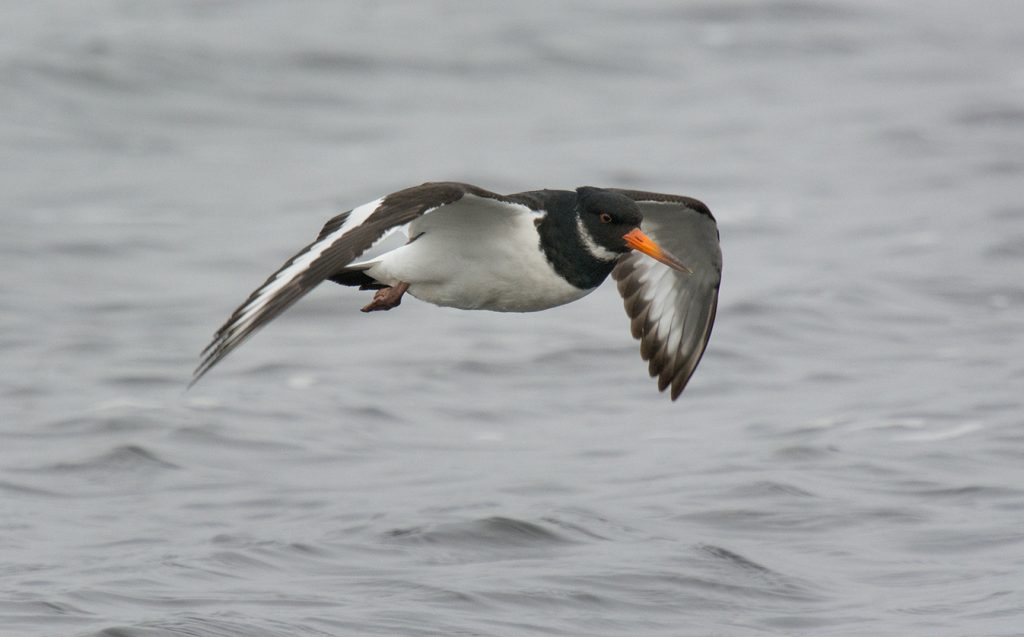
Eurasian Oystercatchers, Haematopus ostralegus, Merkinch Local Nature Reserve, Inverness (photographs)
The Oystercatcher is a bird with a problematic name. Firstly, no predator catches Oysters, find them possibly, catch, no. There are no underwater scenes of Oysters being furiously pursued across the seabed, running for their lives. They are capable of a very limited movement to aid their distribution by expelling water from their shells but this would definitely not serve in a desperate flight from danger. Secondly, Oystercatchers in Britain don’t even really eat Oysters. Shellfish yes, especially Mussels and Limpets but not Oysters. The name came over from North America in the 1700’s and the Oystercatchers in North America do eat Oysters but even there they form a small part of their diet.
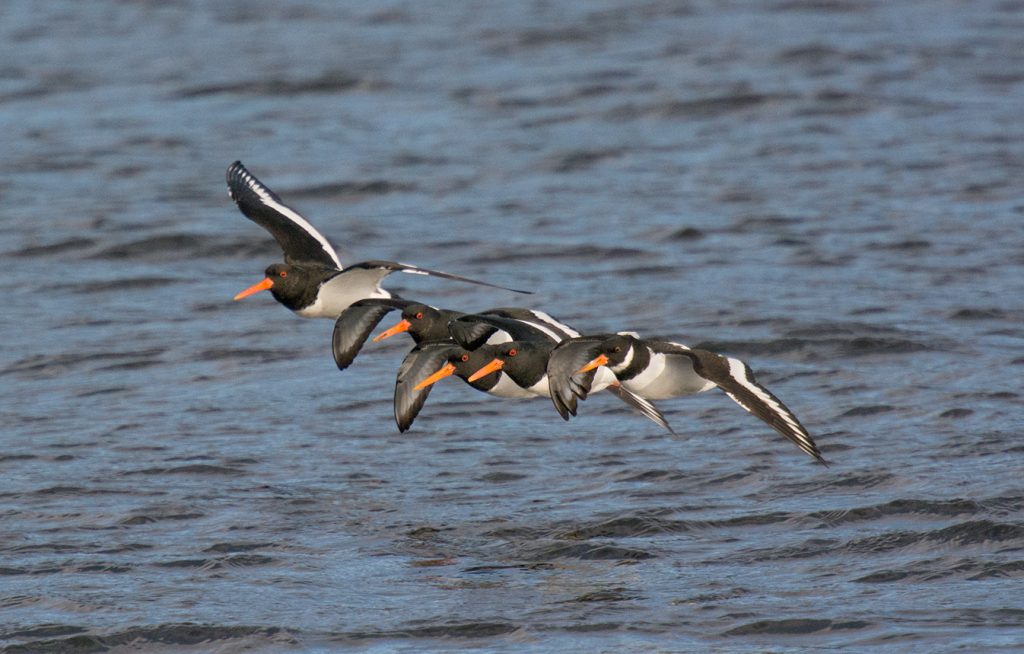
Eurasian Oystercatchers, Haematopus ostralegus, Merkinch, Inverness (photograph)
Oystercatchers have a history in legend of helping the holy using macroalgae. There is an account that they once hid Jesus from pursuers by covering him with seaweed. The same story appears only with them saving St Bride (St Brigid) in the same way. From these acts, they are seen as a force for good and holy. They appear in Christian legend as protectors and serve in the same role by warning seafarers and fishermen of storms.
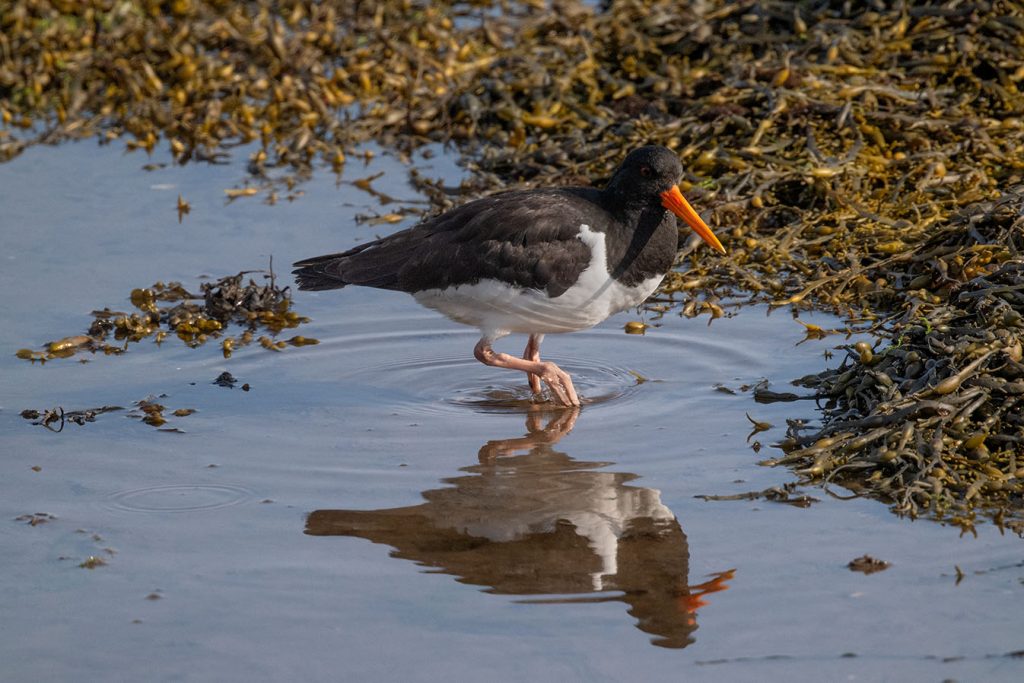
Eurasian Oystercatcher, Haematopus ostralegus, Merkinch, Inverness (photograph)
At the more day to day level, the Oystercatcher is a strikingly marked wader with an unmissable call that in many locations is a defining presence on the coast. They eat marine worms and shellfish and are long lived. Some sources quote a lifespan of up to 15 years. There are records of even longer lives. An Oystercatcher was trapped and released as part of a scientific study on ‘The Wash’ in Eastern England in 1967. The same bird was trapped and released again in Lincolnshire in 2002 meaning it lived at least 35 years, the longest span for any wader recorded in the UK.
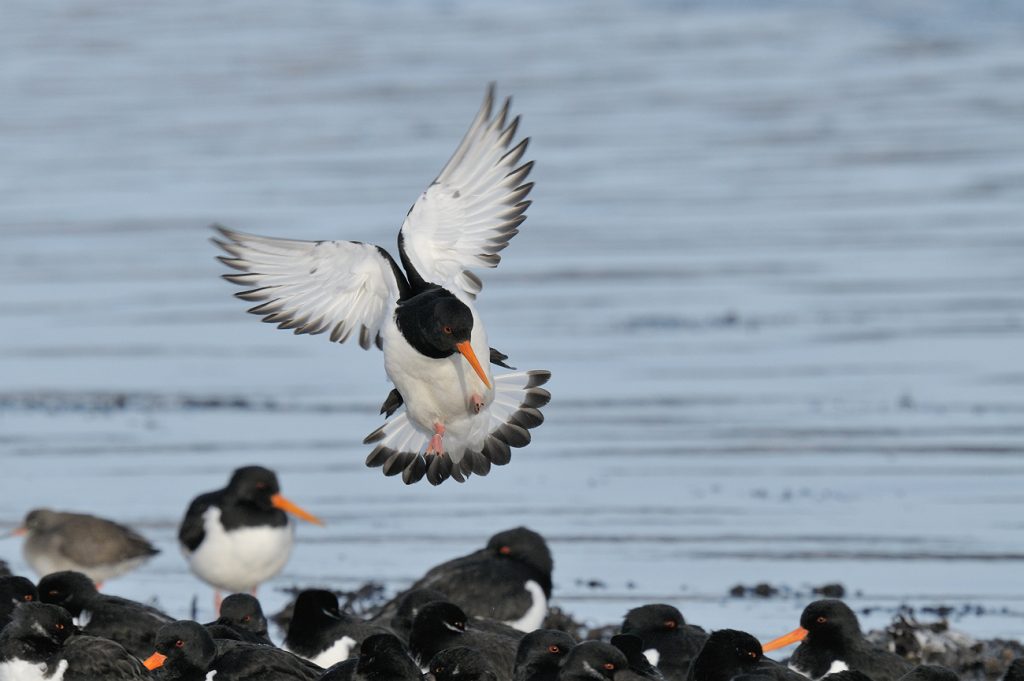
Eurasian Oystercatcher, Haematopus ostralegus, Merkinch, Inverness (photograph)
Returning to names, the British ‘Mussel Picker’ and ‘Mussel Cracker’ are far more accurate but less poetic. ‘Scolder’, from their call, is also perhaps not capturing the image and feeling people have towards them, with the possible exception of Cockle fishers who have clashed with the presence of the birds, who they feel are depleting the stocks significantly. Another old name, ‘Sea Pie’ does not advocate eating them but is a reference to their pied colouration.
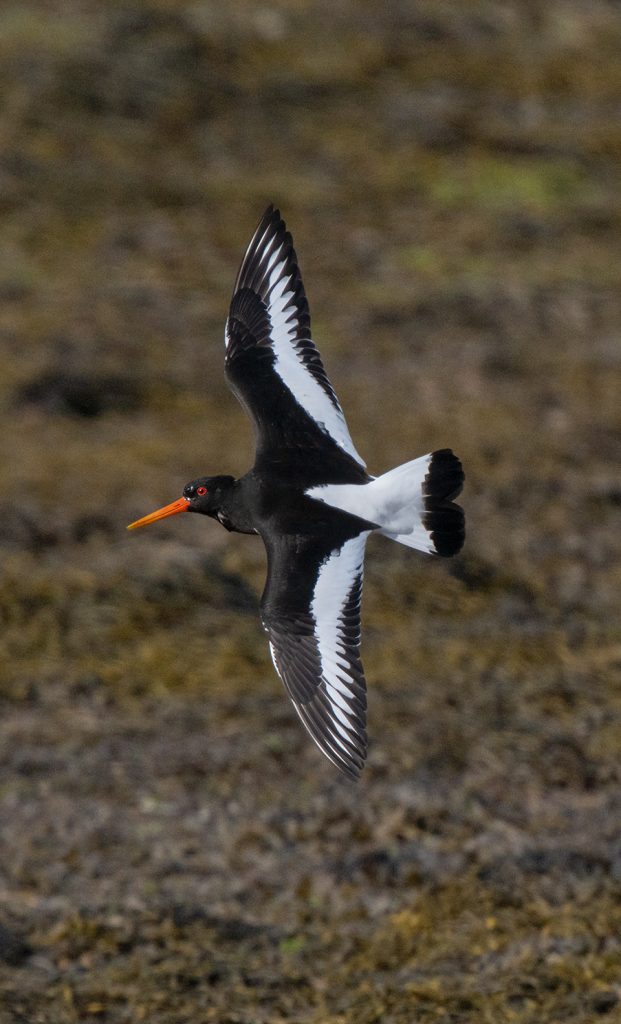
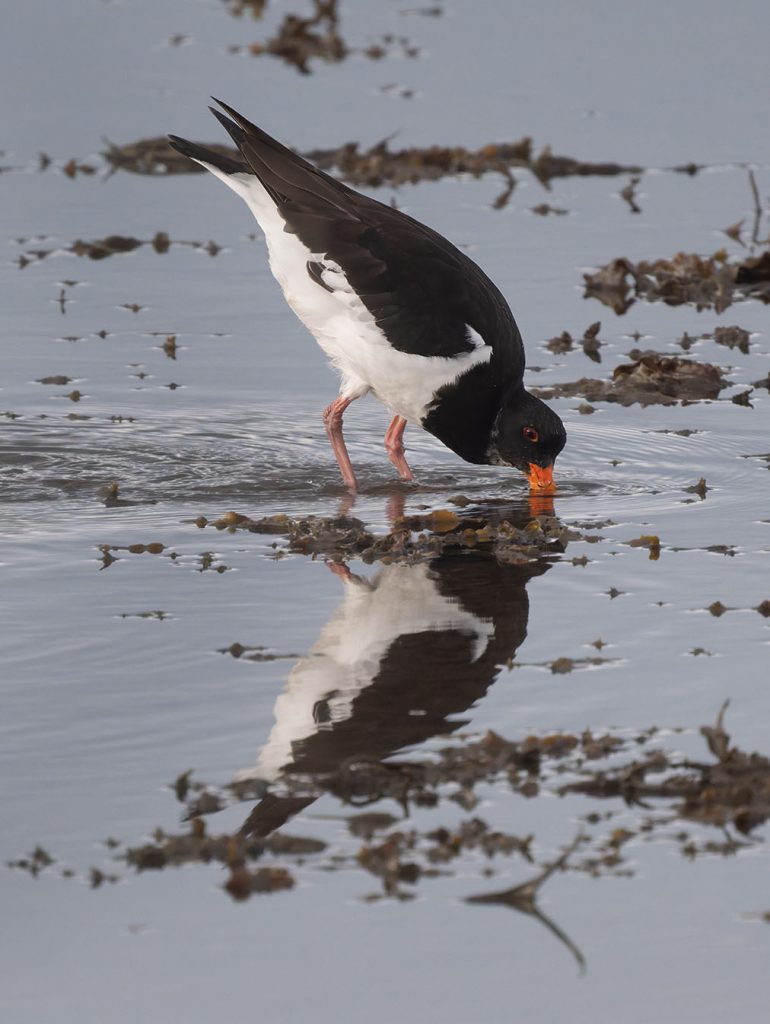
Eurasian Oystercatchers, Haematopus ostralegus, Merkinch Local Nature Reserve, Inverness (photographs)
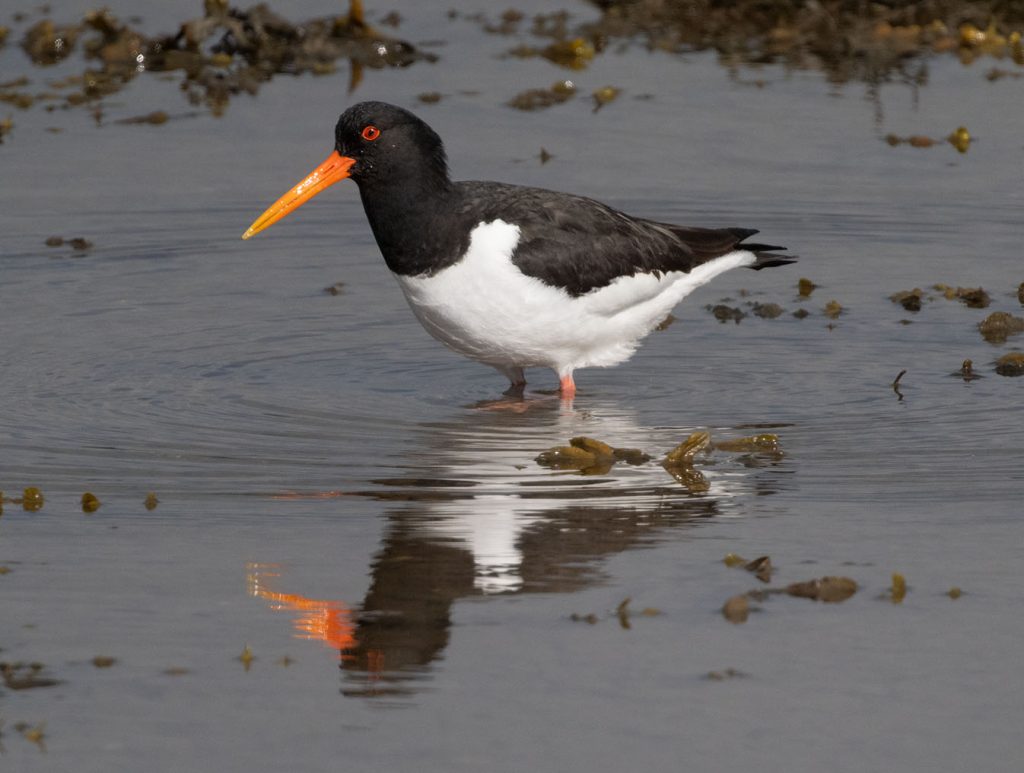
Eurasian Oystercatcher, Haematopus ostralegus, Merkinch Local Nature Reserve, Inverness (photograph)
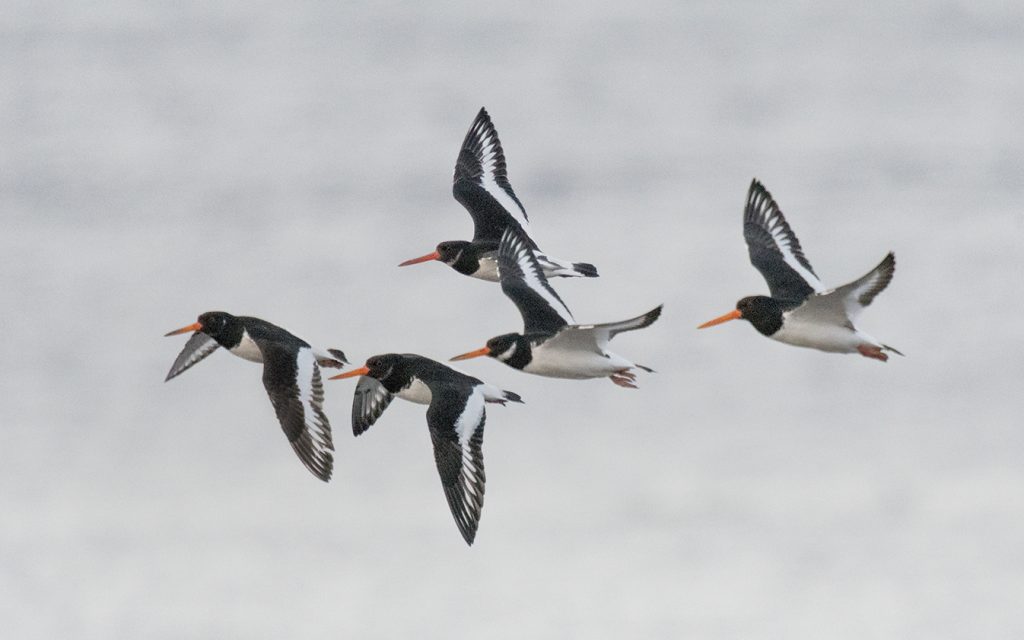
Eurasian Oystercatchers, Haematopus ostralegus, Merkinch Nature Reserve, Inverness (photograph)
Peregrine

Peregrine, Falco peregrinus, Lanarkshire, Scotland (photograph)
Peregrine chicks, Lanarkshire. When they grow up they are going to be the fastest animals on the planet. The Peregrine hunts by taking other birds in flight in a steep dive with a typical speed of around 150 miles per hour. Some estimates put the maximum speed as up to 200 mph.
Pheasant, Ring-necked

Ring-necked Pheasant, Phasianus colchicus, Glen Convinth, Inverness-shire, Highland Scotland (photograph)
Meet the Ring-necked Pheasant, a male displaying to take a territory and try to impress the females. An old name for the Pheasant in Scotland is the Comet, take a look at the tail to know why but there is a difference. We see comets at night and they are silent. He is making quite a lot of noise, it’s part of the show, which is fine unless having been out all night you are trying to get some sleep….. Nocturnal animals may have reservations.
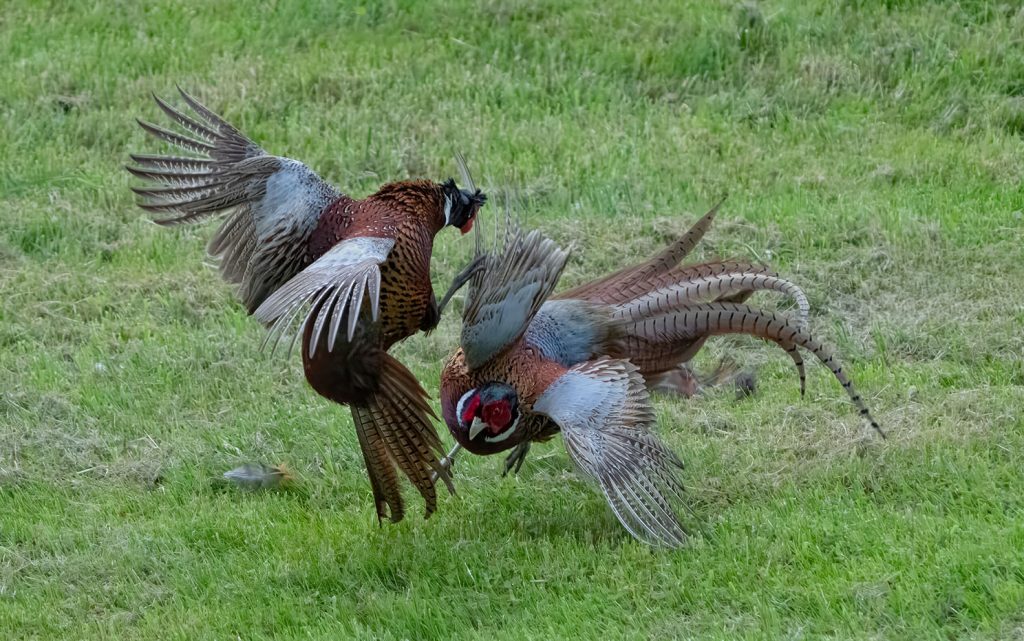
Male Ring-necked Pheasants, Phasianus colchicus, fighting for territory in the spring, Glen Convinth, Highland Scotland
Males compete for territory and females. Often rivalries are settled by threat displays, especially when it becomes clear who is the stronger. If two males are relatively evenly matched, then the threats often escalate into physical combat.
Pheasants keep a cool head during a fight with blood diverted to the core as part of a stress response. When the fight is over blood flow and head temperatures return to normal.
Pigeon, Wood
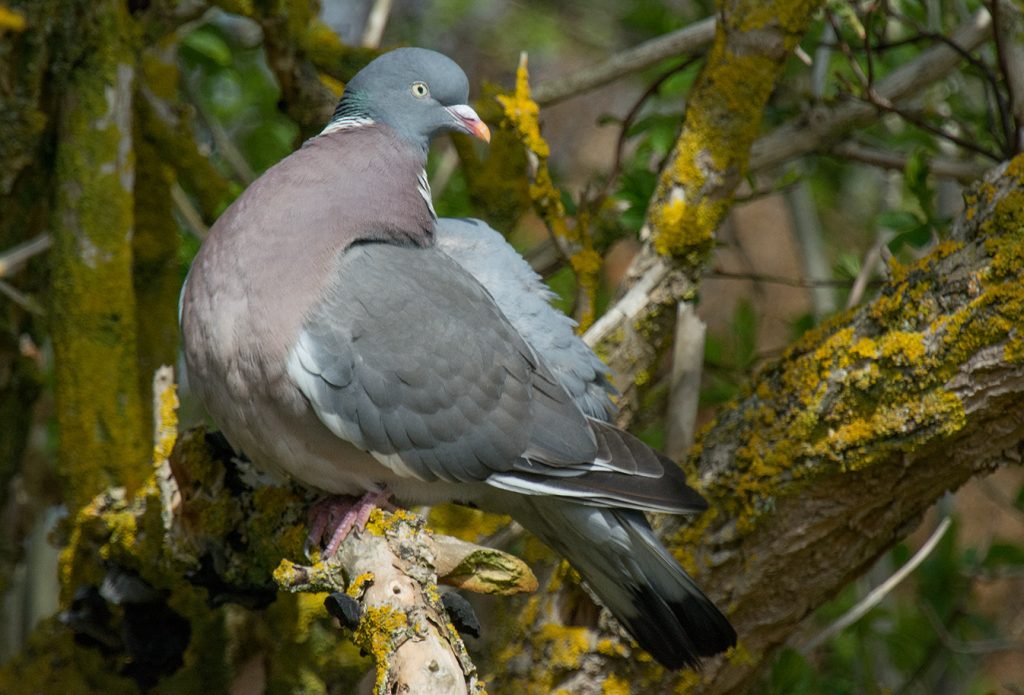
Wood Pigeon, Columba palumbus, Merkinch (photograph)
A very widespread resident and a migrant in the UK. Usually seen as a symbol of peace and tranquillity, they have also been regarded as a portent of death if they called persistently round a particular house. Pieces of a Wood Pigeon were used in Scotland to treat Adder bites by applying them to the site.
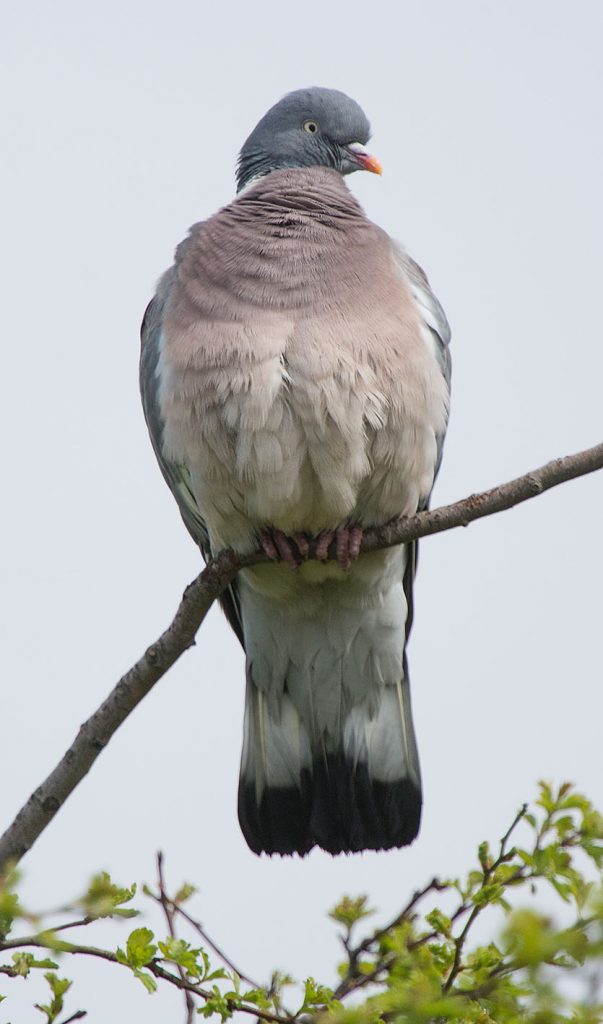
Wood Pigeon, Columba palumbus, Merkinch Local Nature Reserve, Inverness (photograph)
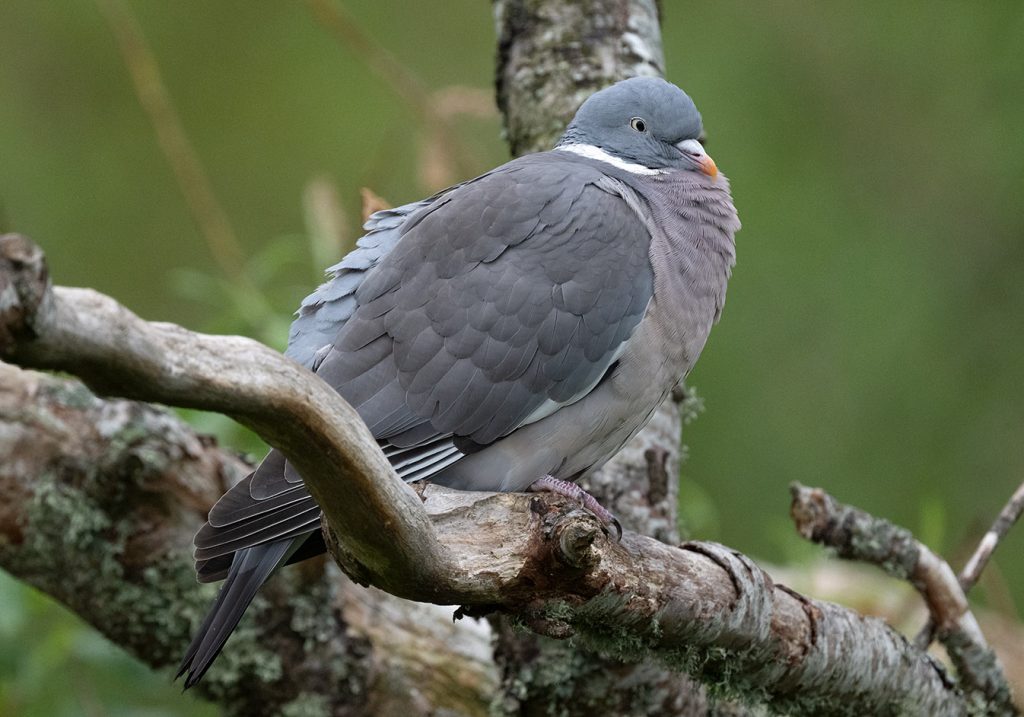
Wood Pigeon, Columba palumbus, Merkinch Local Nature Reserve, Inverness (photograph)
Pipit, Rock
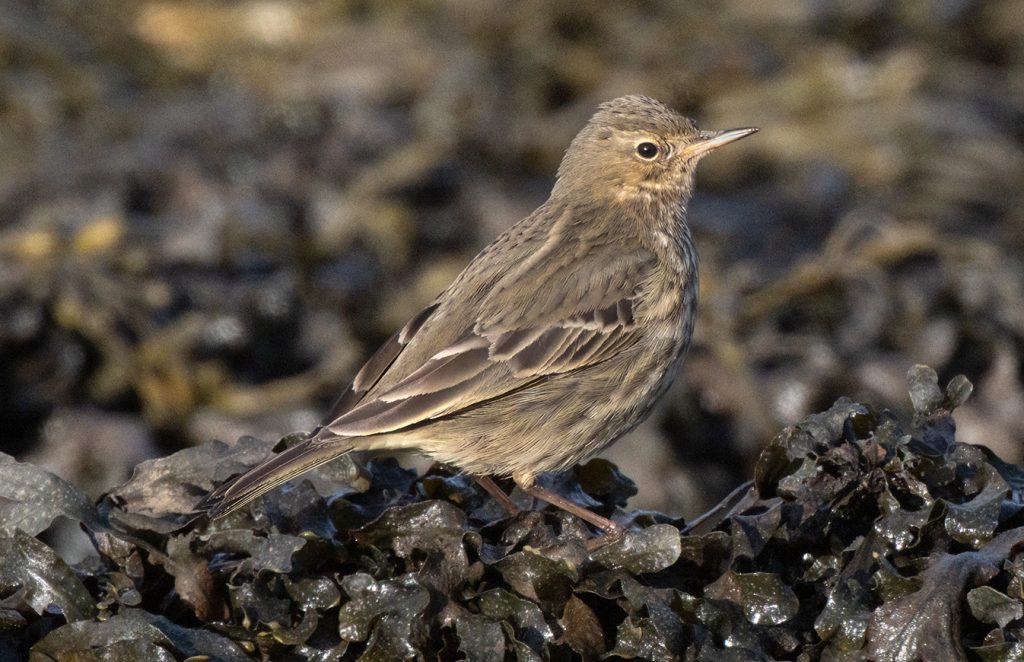
Rock Pipit, Anthus petrosus, Merkinch Local Nature Reserve, Inverness (photograph)
A coastal bird the Rock Pipit is seen throughout the year in the UK but in winter is found more on sand or shingle adjacent to the sea. The resident population is boosted in winter by migrants from Scandinavia. Also known as the Rock or Sea Lintie in Scotland.
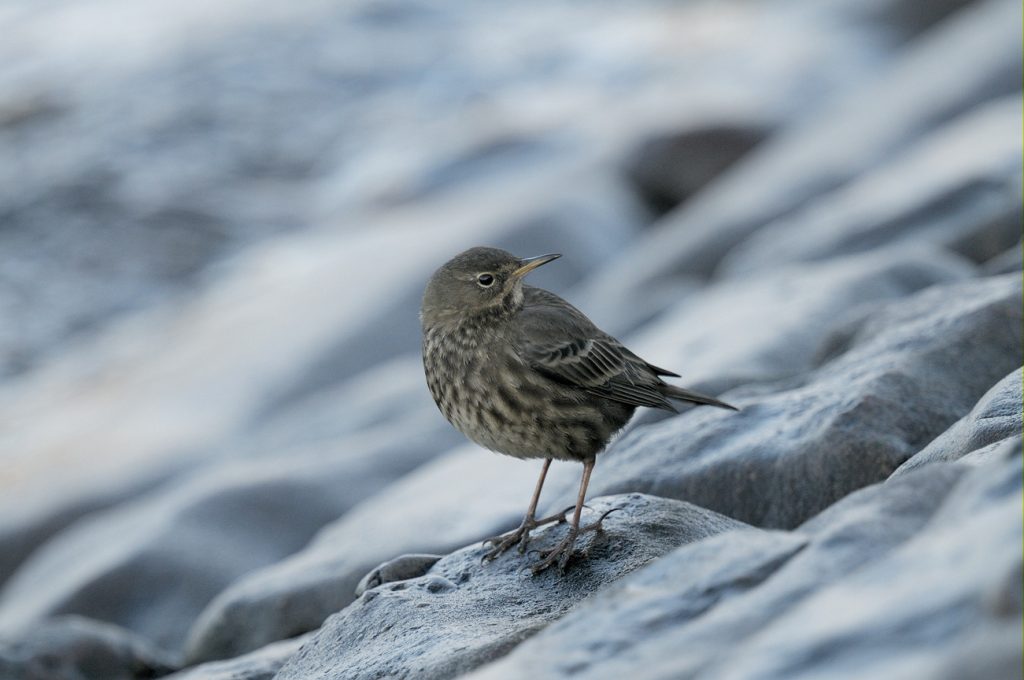
Rock Pipit, Anthus petrosus, Merkinch Local Nature Reserve, Inverness (photograph)
Redshank
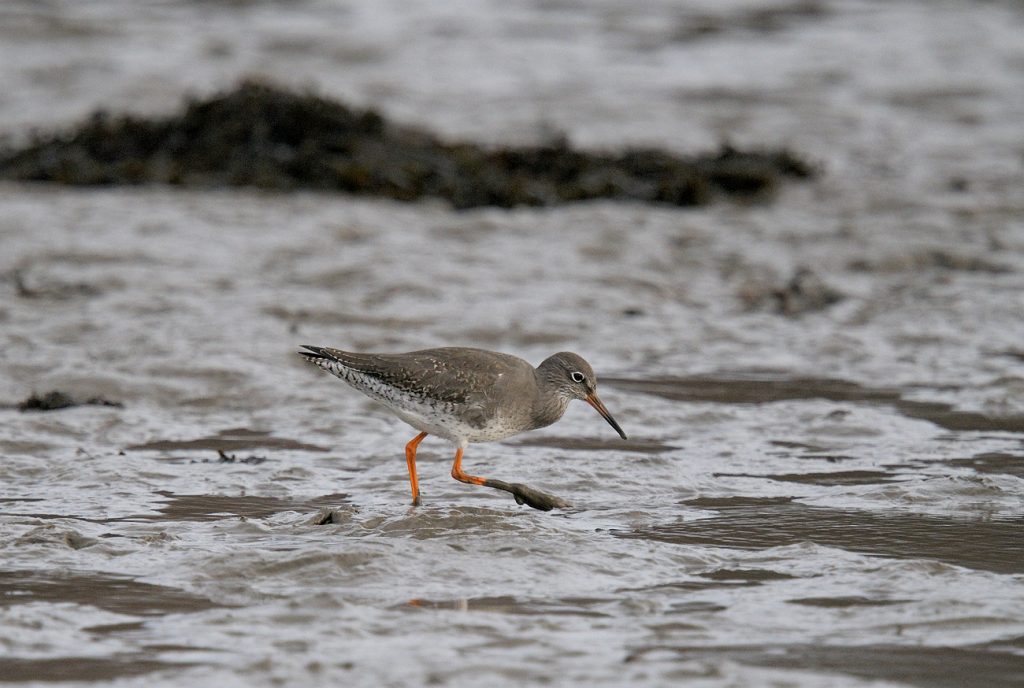
Redshank, Tringa totanus, Merkinch, Inverness (photograph)
Typically seen in groups on the shoreline, Redshank tend not to mix with other waders as they almost patrol the mud and sand readily taking off as a flock and calling repeatedly if disturbed or there is danger. Alternative names for them reflect this presence and behaviour including ‘Sentinel’ and ‘Warden-of-the-Marshes’.
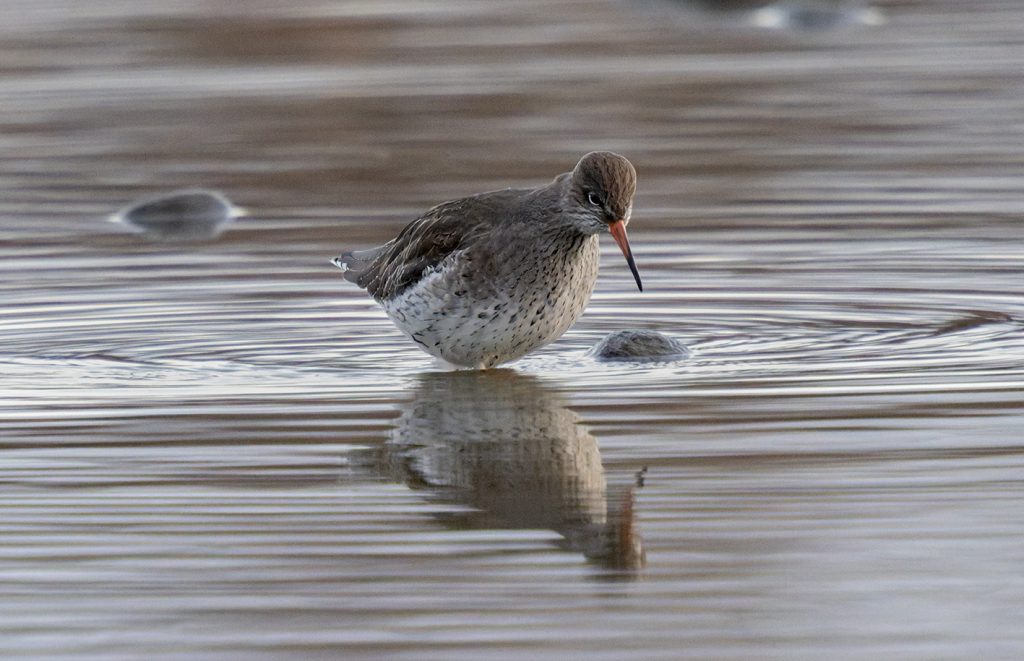
Redshank, Tringa totanus, Merkinch, Inverness (photograph)
Redwing
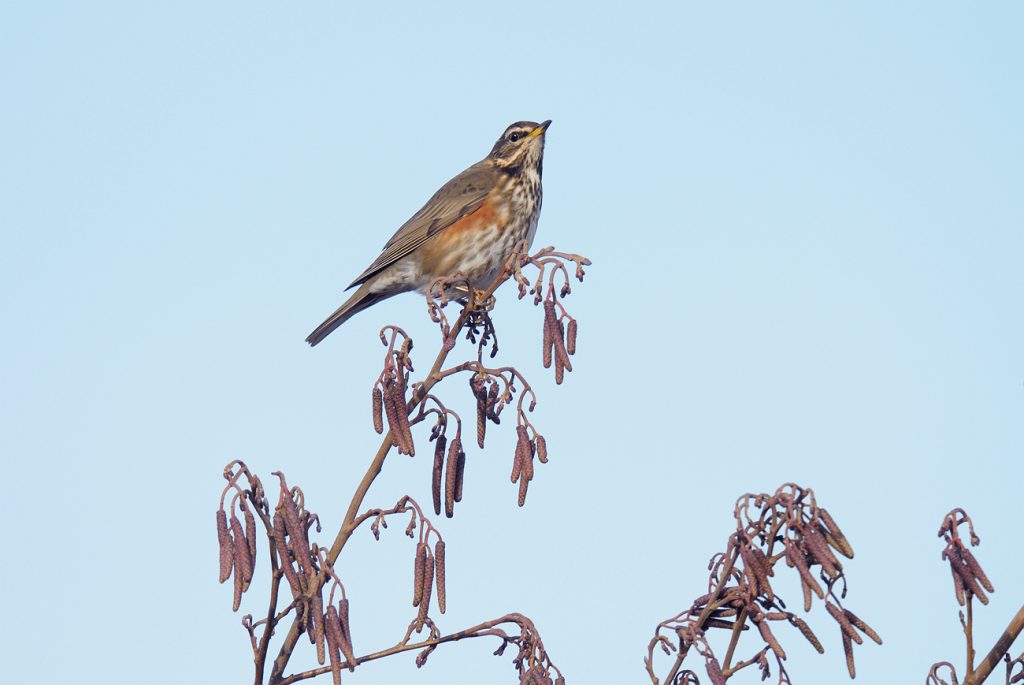
Redwing, Turdus iliacus, Merkinch Local Nature Reserve, Inverness (photograph)
With a very small breeding population resident in Scotland estimated at 5-12 pairs Redwing numbers are boosted hugely in winter by migrants from Eastern Europe. The migrants are known to travel at night as well as by day and the rushing sound made by flocks over the North Sea and English Channel was believed by fishermen to be a promise of good fishing. Although not investigated or scientifically established, there could be truth in the association. It is possible that conditions which made larger fish catches likely were also the ones favoured by Redwings for their over water flights, especially at night.
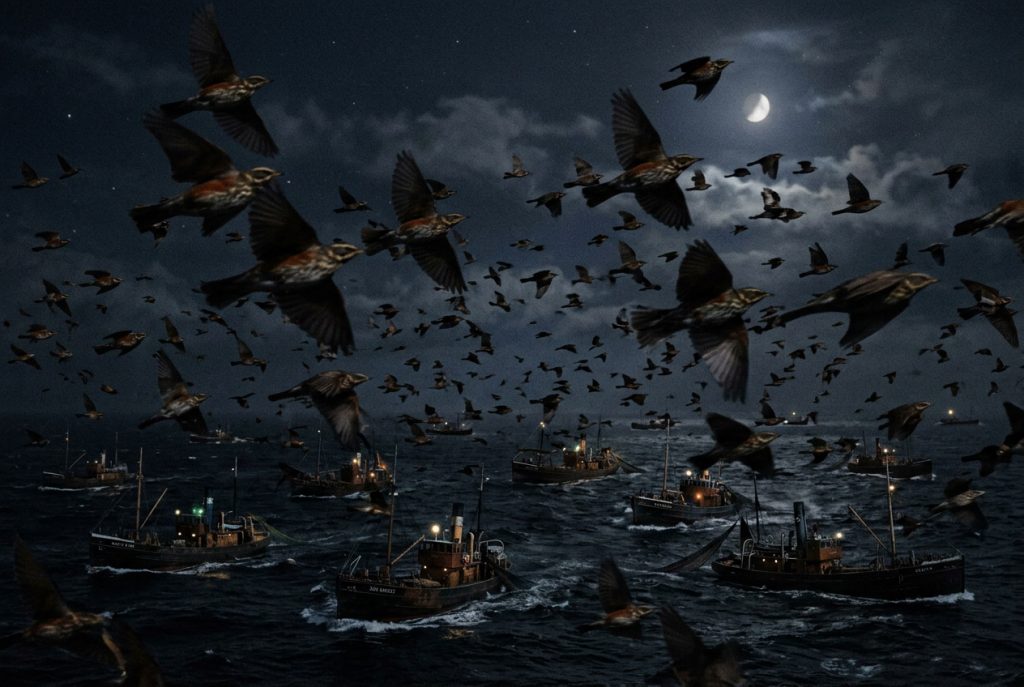
Redwing, Turdus iliacus, migrating over the North Sea at night (digital illustration)
Robin, European
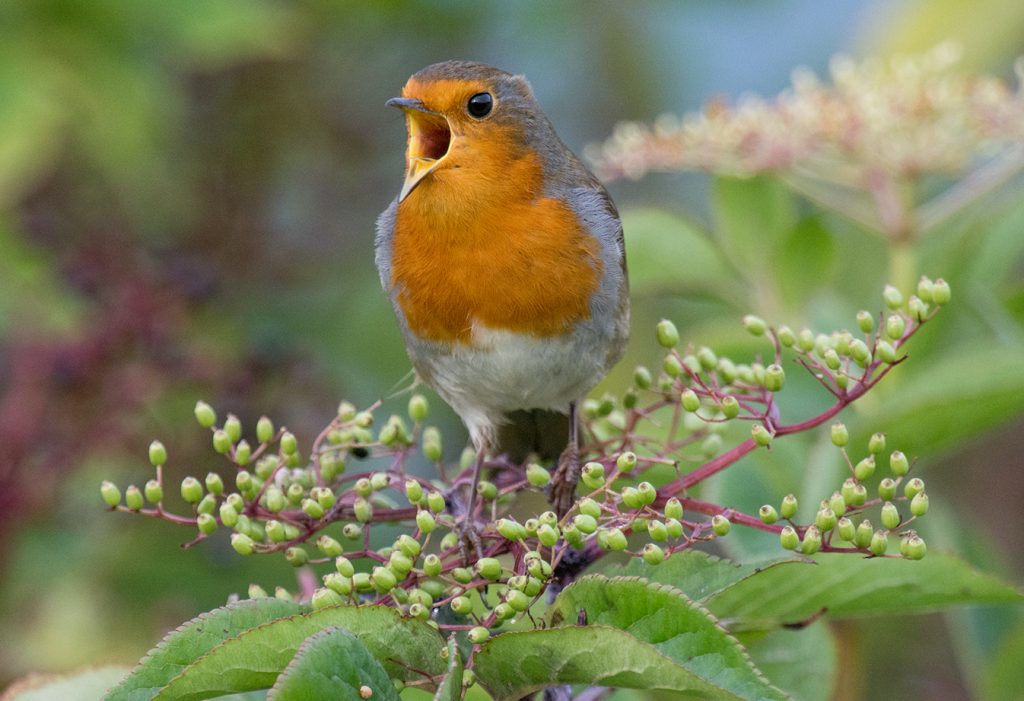
European Robin, Erithacus rubecula, Merkinch, Inverness (photograph)
A species of forest or woodland edge, the Robin is instantly recognised by its bright red chest plumage from which most of the name variations linked to the bird also come, including the Anglo-Saxon Rudduc, related to ruddy. Robins have a positive image and most beliefs are that to harm one will bring misfortune. This included in Medieval Scotland the expectation that anyone who killed a Robin would see the milk from their cows stained with blood. The Robin is credited in some tellings with having worked with the Wren to bring fire to people, the Robin carrying the flame for the last part of the journey and burning his breast in the process and, in others with having helped Christ on the cross from which their red feathers came from a drop of his blood. More directly, there is a tradition that the Robin has a drop of God’s blood in its veins. In Scotland, a visit from a Robin was seen as a visit by a loved one who had died.
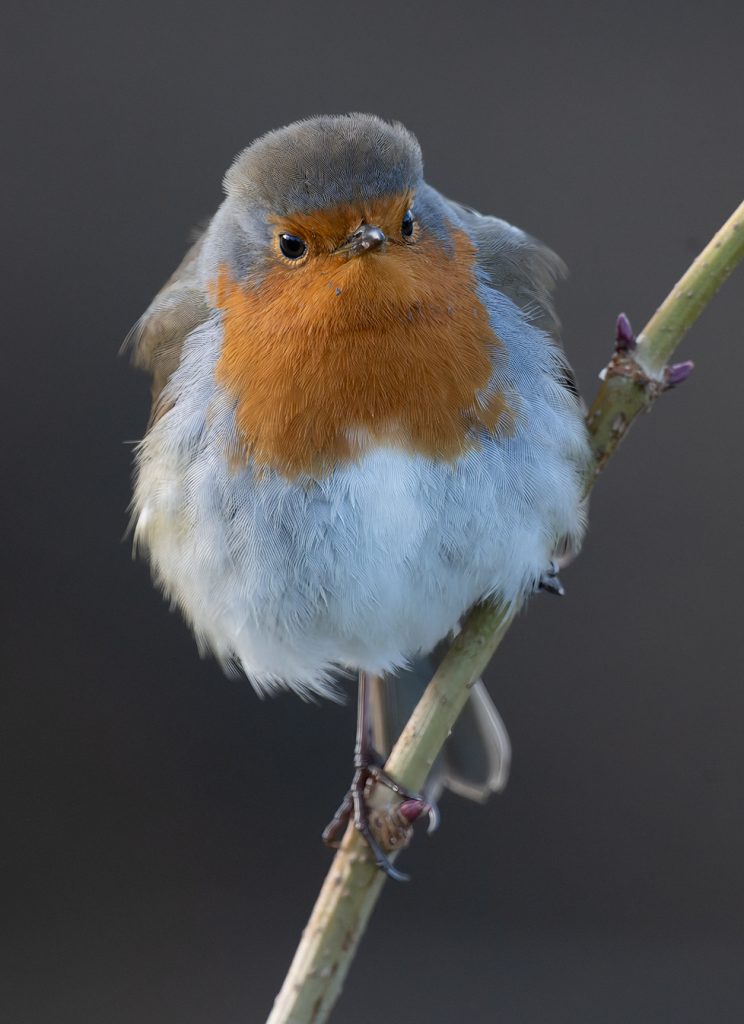
European Robin, Erithacus rubecula, Merkinch, Inverness (photograph)
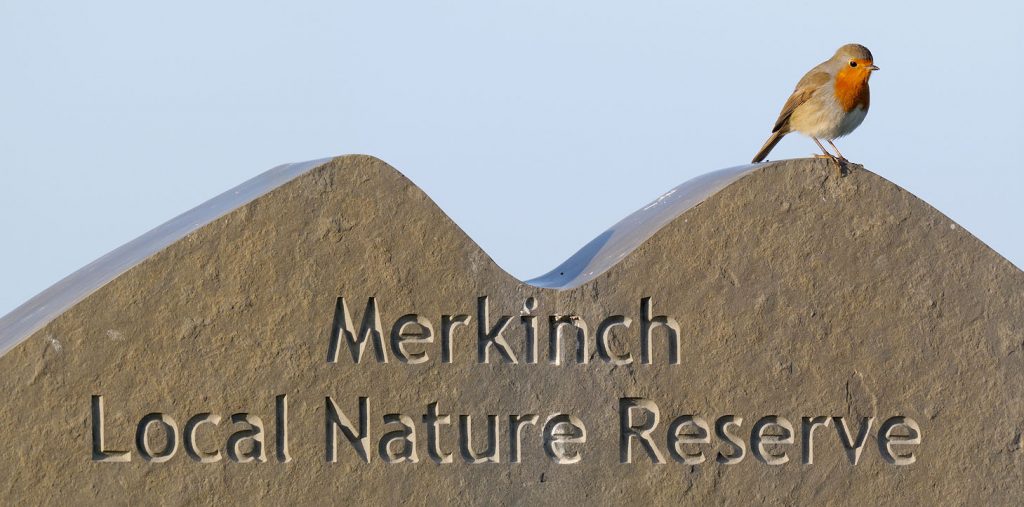
European Robin, Erithacus rubecula, Merkinch, Inverness (photograph)
Shelduck
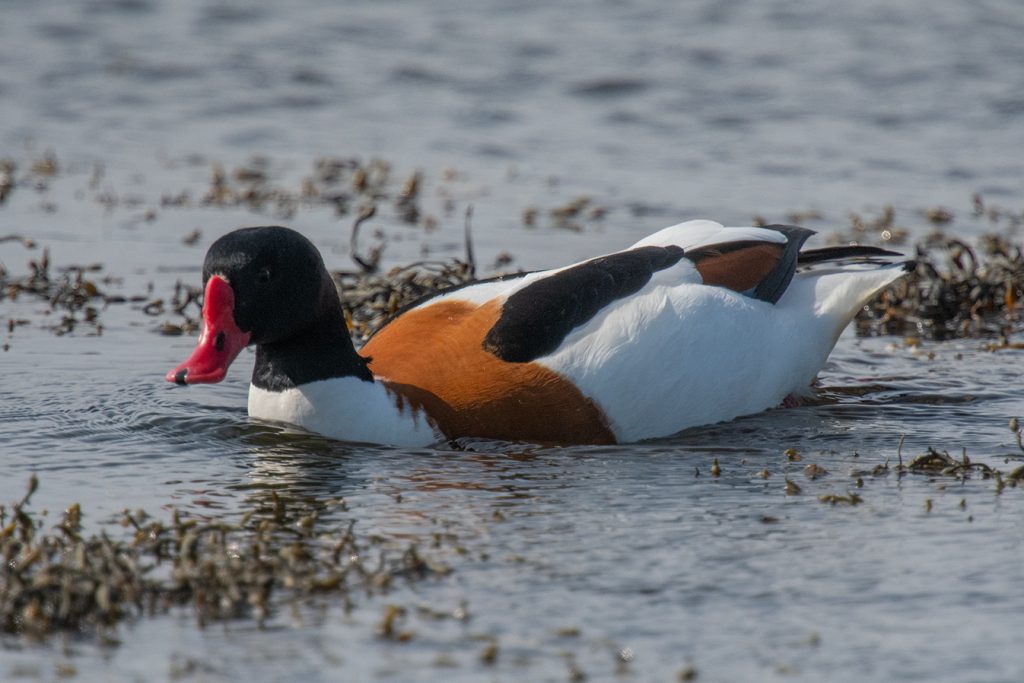
Shelduck, Tadorna tadorna, Merkinch Local Nature Reserve, Inverness (photograph)
Larger than most ducks, Shelduck on average do not actually weigh much more, they just have bigger bodies. Nesting in burrows, frequently taking over rabbit holes, Shelduck often hatch their young some distance from water. Observations exist of ducklings being lead on six mile treks to the sea when they leave the nest.
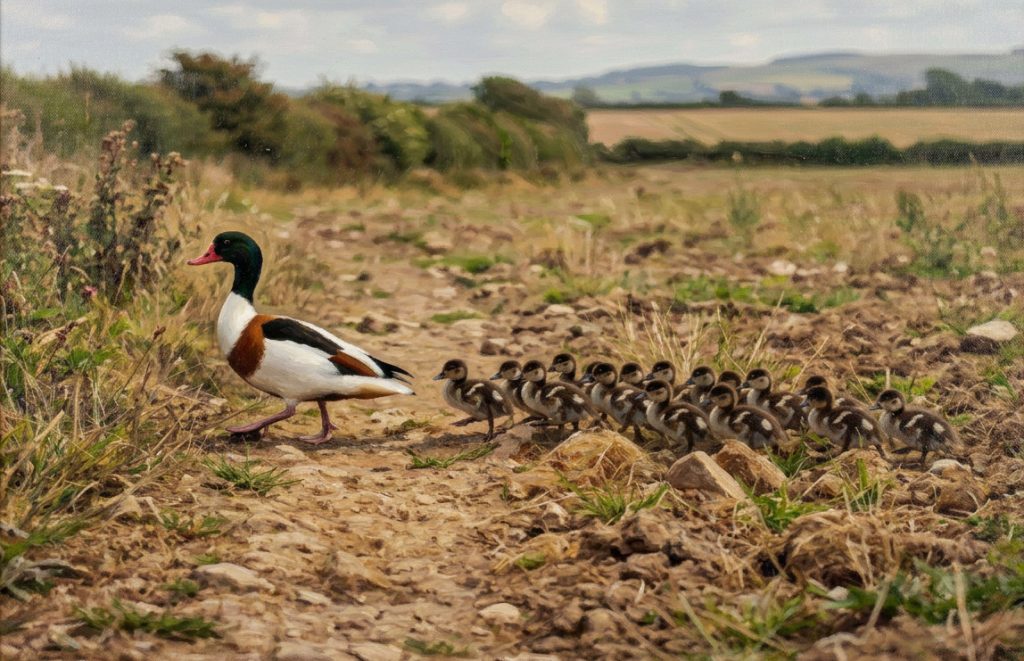
Shelduck brood, Tadorna tadorna (digital illustration)
Shelduck females sometimes lay their eggs in another bird’s nest. If a female, which is ready to lay does not have or has lost her own nest, then the site of another birds with eggs in it may prompt her to lay. Since Shelduck have broods of ten to fifteen young, this can mean a nest with thirty eggs, thirty-two has been recorded. The original owner of the nest will accept the extra eggs and incubate them to hatching and take over care of as a very large brood. Shelduck are a resident breeding population in Scotland whose numbers are raised by winter migrants. The resident birds however do move to Germany once the breeding season is over to moult, returning in the autumn.
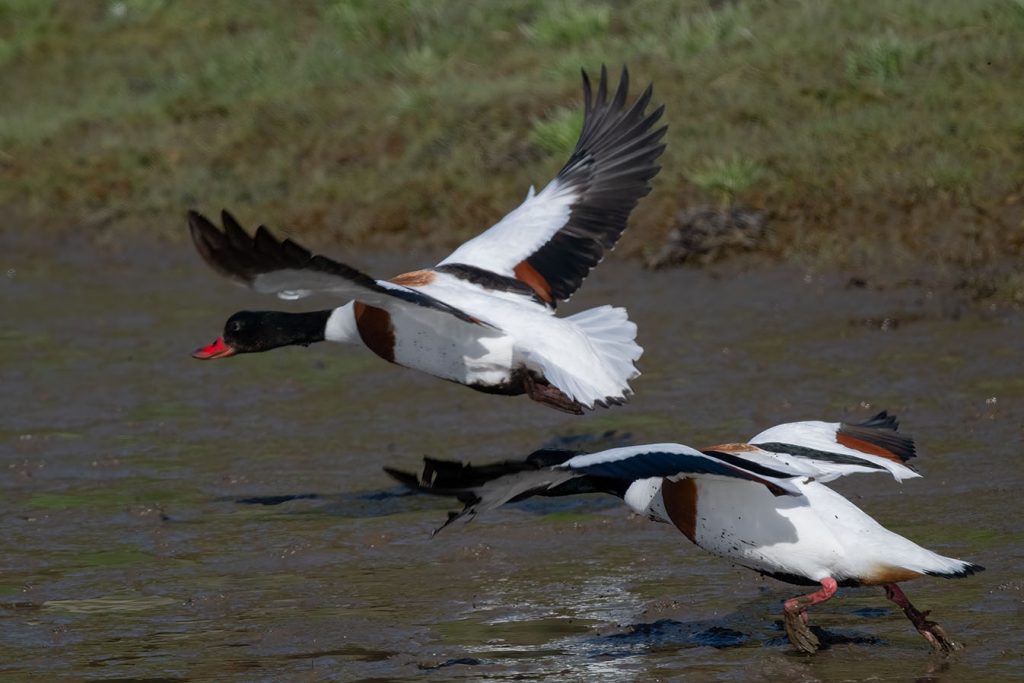
Shelduck, Tadorna tadorna, Merkinch Local Nature Reserve, Inverness (photograph)
Siskin, Eurasian

Eurasian Siskin, Carduelis spinus, Merkinch Local Nature Reserve, Inverness (photograph)
A substantial resident Scottish breeding population is swelled by a large number of migrants arriving for the winter from Northern Europe. Believed in German and Swiss folklore to have the power of invisibility and for their nests through guarding a magic stone in them. This probably arises from Siskins choosing to nest in remote dense conifer forests making actual nests difficult to find, although the birds will be heard all around.
Sparrow, House
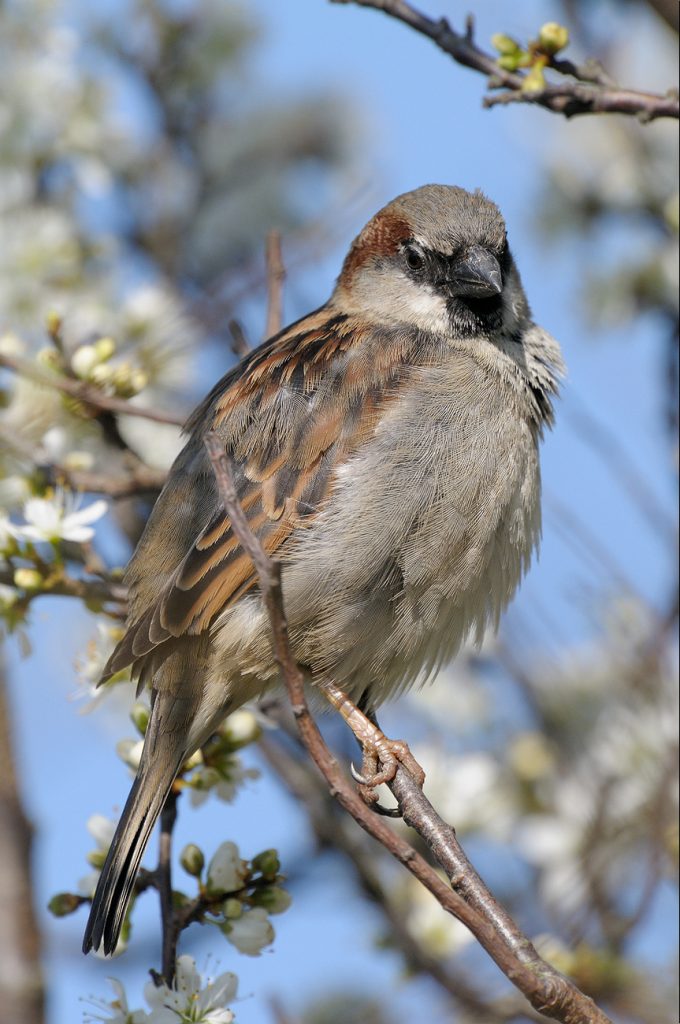
House Sparrow, Passer domesticus, Merkinch (photograph)
For a long time thought of as the most common of UK birds, the numbers of House Sparrows is now significantly decreased and they have been lost from some areas, notably the central part of North Scotland.
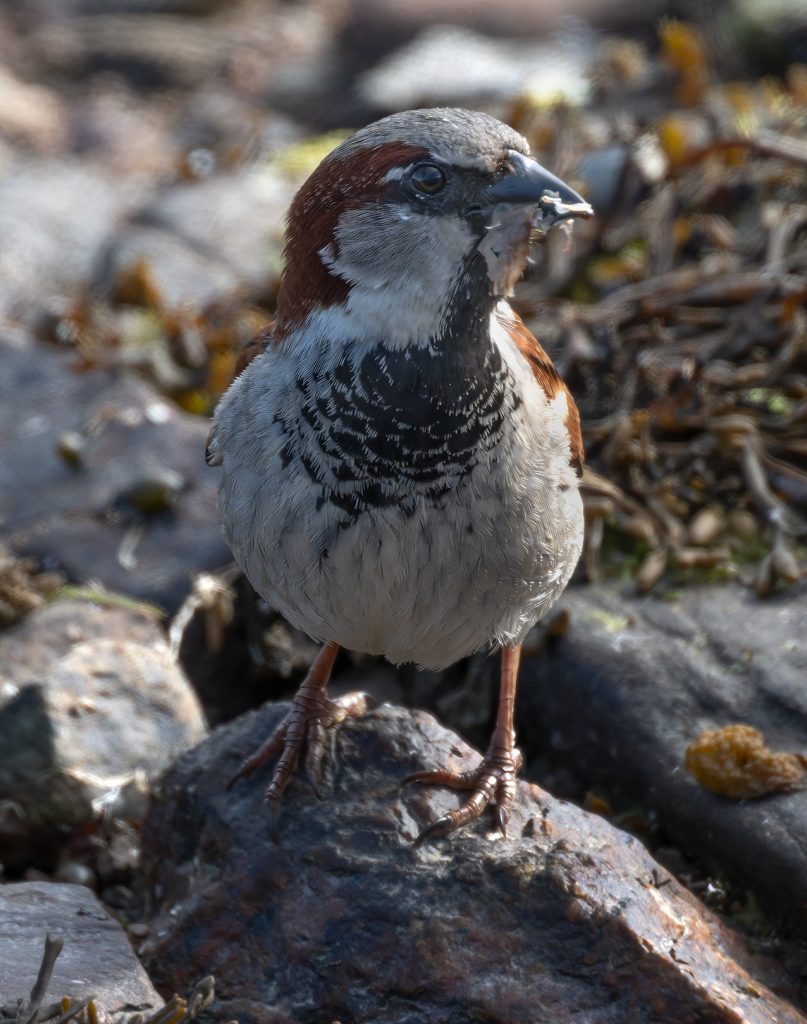
House Sparrow, Passer domesticus, Merkinch (photograph)
Said to be cursed for giving Jesus away in the Garden of Gethsemane and contributing to his torment on the cross, the suggestion is that they have had their legs bound invisibly meaning that they can only hop. Despite this, Sparrows are cited in the New Testament as an example of God’s care in his watching over such a humble bird.
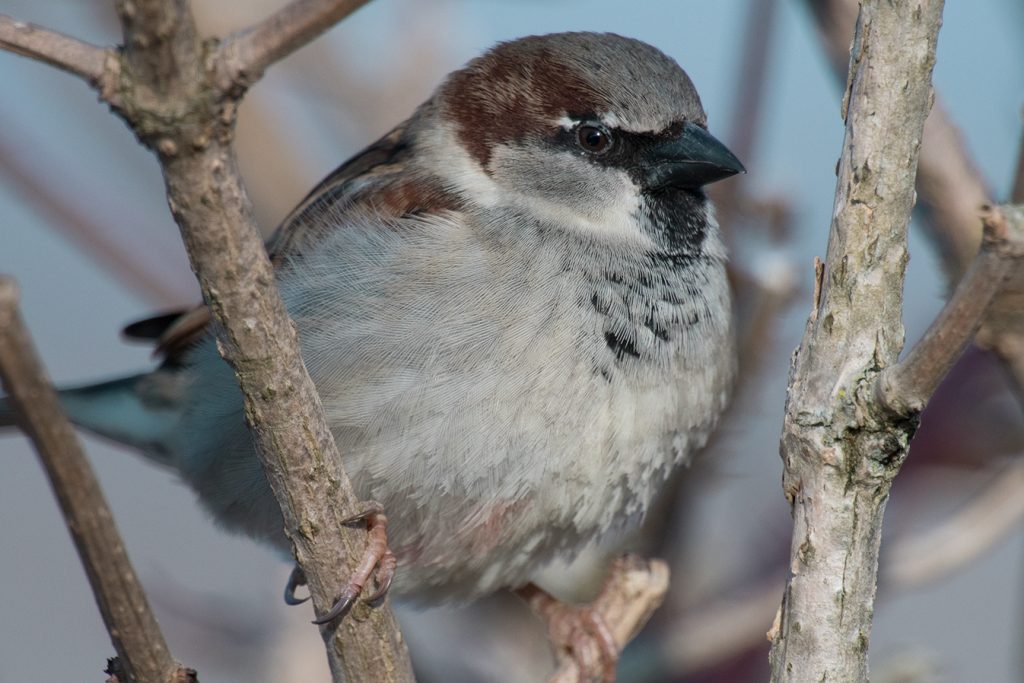
House Sparrow, Passer domestics, Merkinch Local Nature Reserve, Inverness (photograph)
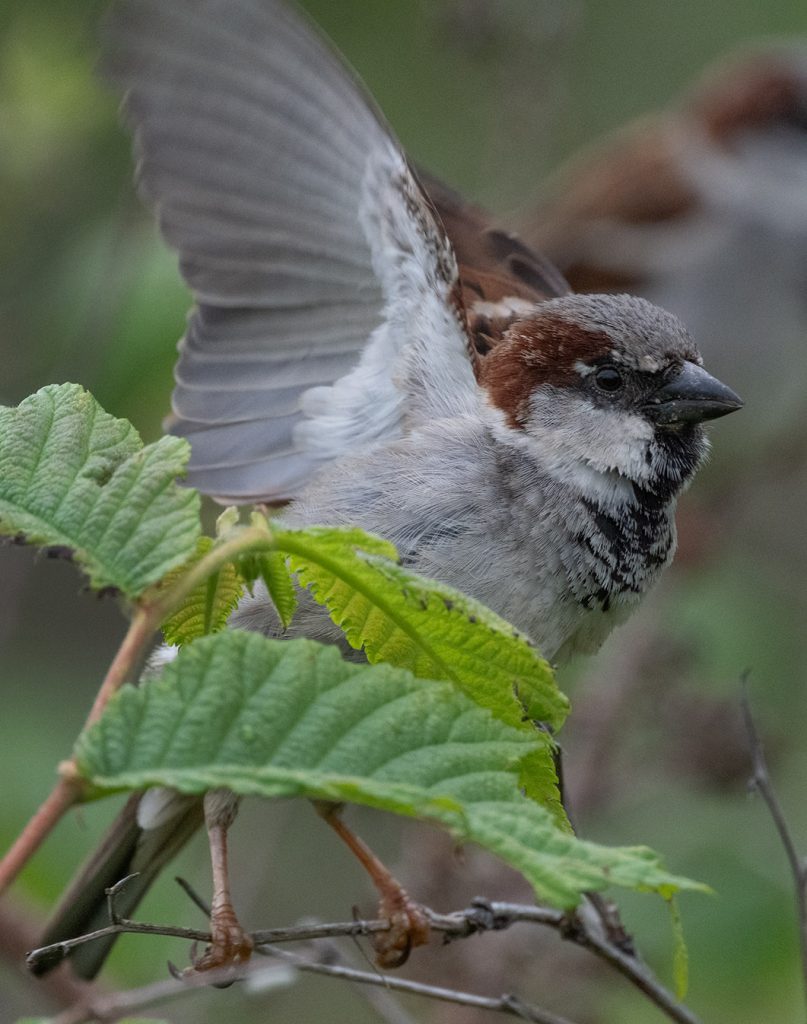
House Sparrow, Passer domestics, Merkinch Local Nature Reserve, Inverness (photograph)
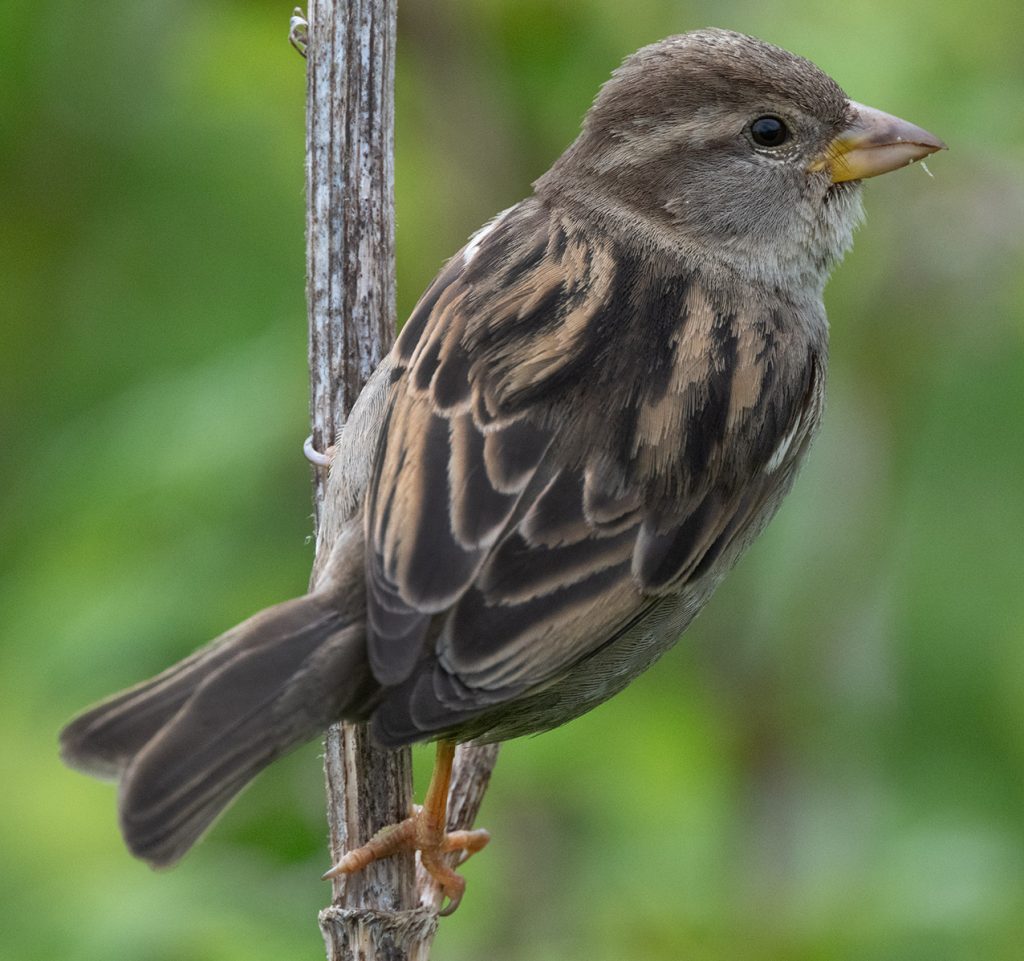
House Sparrow, Passer domestics, Merkinch Local Nature Reserve, Inverness (photograph)
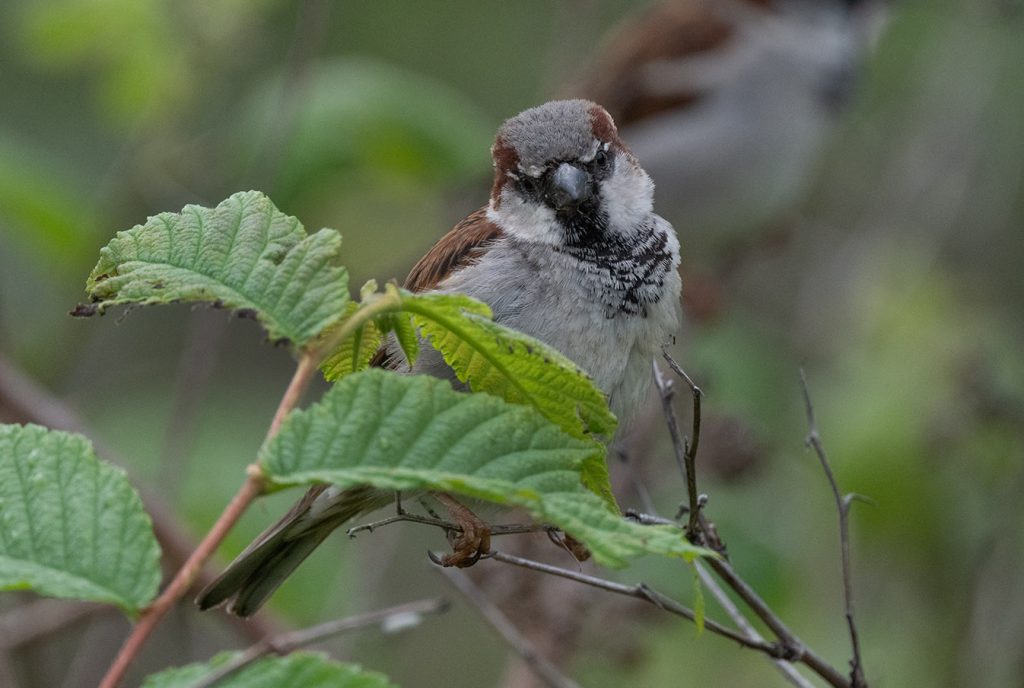
House Sparrow, Passer domestics, Merkinch Local Nature Reserve, Inverness (photograph)
Sparrowhawk, Eurasian
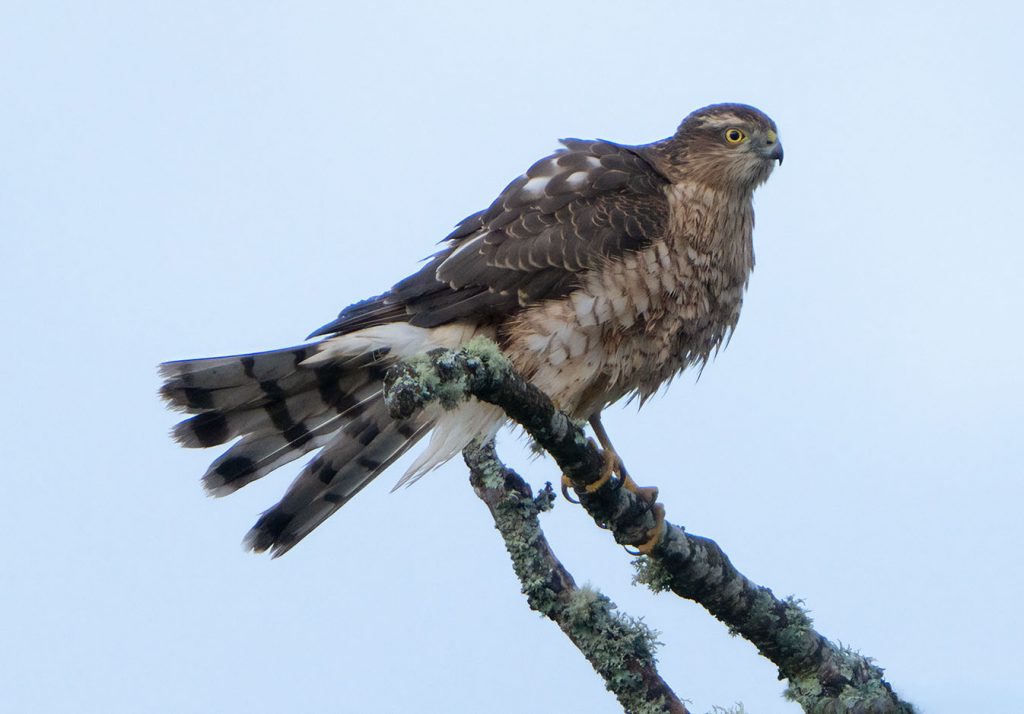
Eurasian Sparrowhawk, Accipiter nisus, Glen Convinth, Highland Scotland (photograph)
The Sparrowhawk is a bird of prey which only eats other, smaller, birds. To do this, it is incredibly adept at hunting amongst trees and in forests and its flying skills for this are perhaps second to none. There is a gender trade-off for this though. The male is smaller and maintains an almost constant weight throughout the year. Its size makes it a better hunter, but it can only survive on its limited fat reserves for 2 or 3 days. The larger female can go without food for twice as long but is less agile and has to hunt more out in the open. The rushing sound of a hunting Sparrowhawk passing close by is unmistakeable and in ancient Egypt, a hieroglyph of a Sparrowhawk with outspread wings represented the wind.
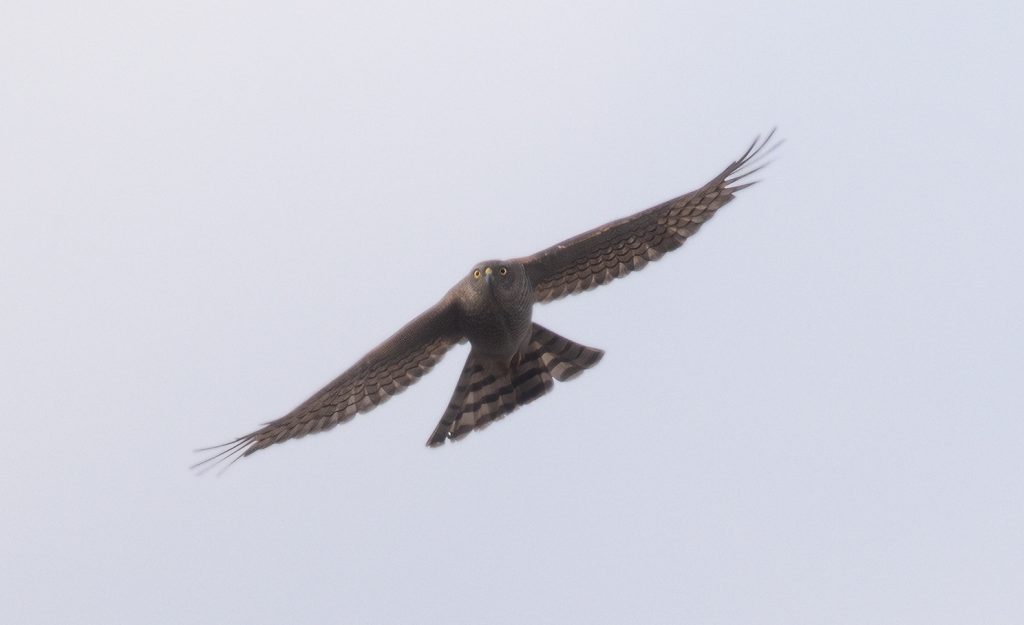
Eurasian Sparrowhawk, Accipter nisus, over Merkinch Reserve, Inverness (photograph)
The Sparrowhawk often hunts along the edges of forests or smaller groups of trees, they are also now seen hunting in some suburban areas with gardens. Although they are very effective hunters of small and songbirds, when Sparrowhawk numbers declined sharply in the 1950’s and 1960’s through persecution and pesticide pollution, there was no parallel rise in small bird populations, suggesting that, however good they are at what they do, Sparrowhawk predation on small birds is sustainable.
The cultural beliefs round Sparrowhawks are founded in its behaviour. It is no surprise that it is linked to the Celtic Goddess of battle, Morrigan, or more generally to the warrior spirit given its tenacity and fierce actions despite a relatively small size. They have also been thought to command the wind. Aboriginal stories from Western Australia have the Sparrowhawk joining forces with a Pigeon to act as a lookout to steal fire from the moon and bring it earth for people to nurture and use.
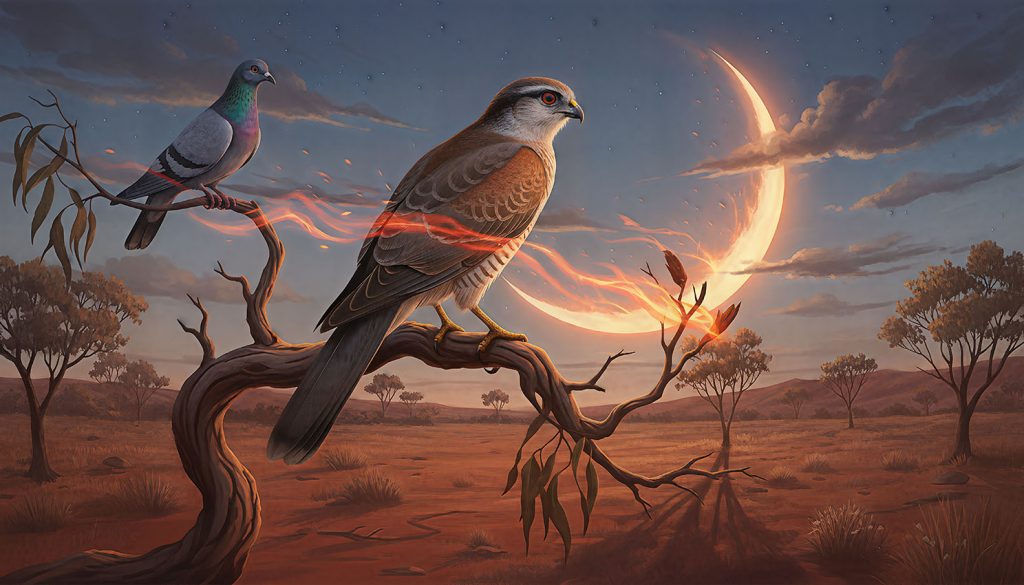
Digital illustration
These stories refer to the Australian relative of the birds seen in Europe, the Collard Sparrowhawk. An ornithological connection is that there is some similarity in the markings of Sparrowhawks and Cuckoos with the suggestion that it benefits the Cuckoo to be mis identified as the hawk, further increasing its intimidation when it arrives at a nest of a smaller bird. This possibly functional similarity was developed into a belief in parts of England that the Cuckoo turned into a Sparrowhawk in winter, explaining the Cuckoos absence at a time when migration was not fully understood.
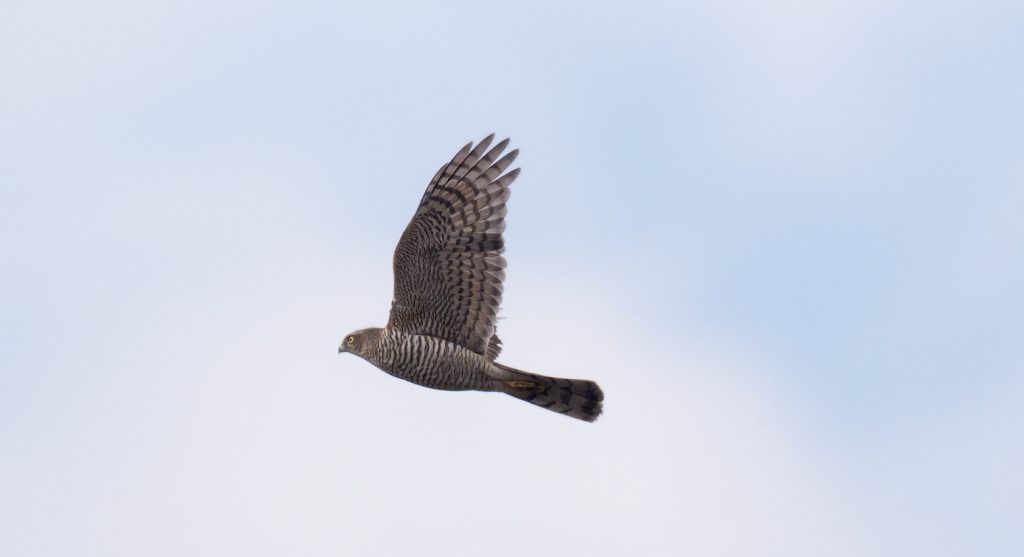
Eurasian Sparrowhawk, Accipter nisus, over Merkinch Reserve, Inverness (photograph)
European Starling
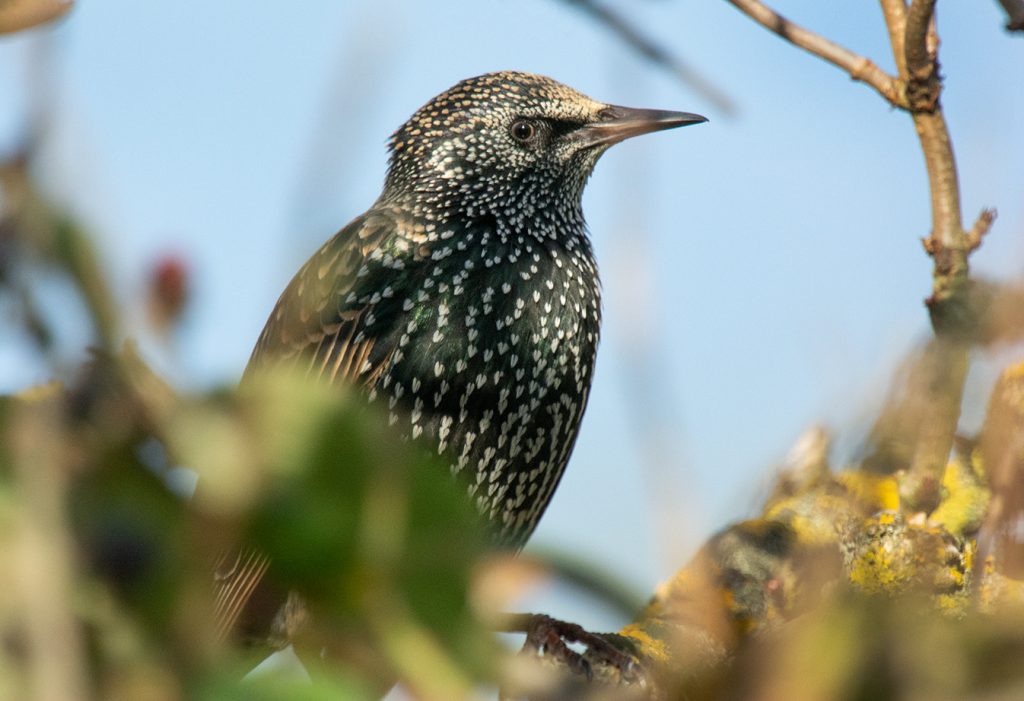
European Starling, Sturnus vulgaris, Merkinch (photograph)
Resident and a significant winter migrant, known in some locations for their large, coordinated flocks flying at dusk before roosting. Both the Celts and the Romans believed in reading patterns in these flights as messages from the gods. Featuring in early epic tales as messengers, these ideas were based on the Starling’s skills as a mimic that can be trained. In Scandinavia, they are welcomed as a sign that spring has arrived as they return from migrating to winter settings including Scotland. In Scotland and the rest of Britain, the number of Starlings is in decline.
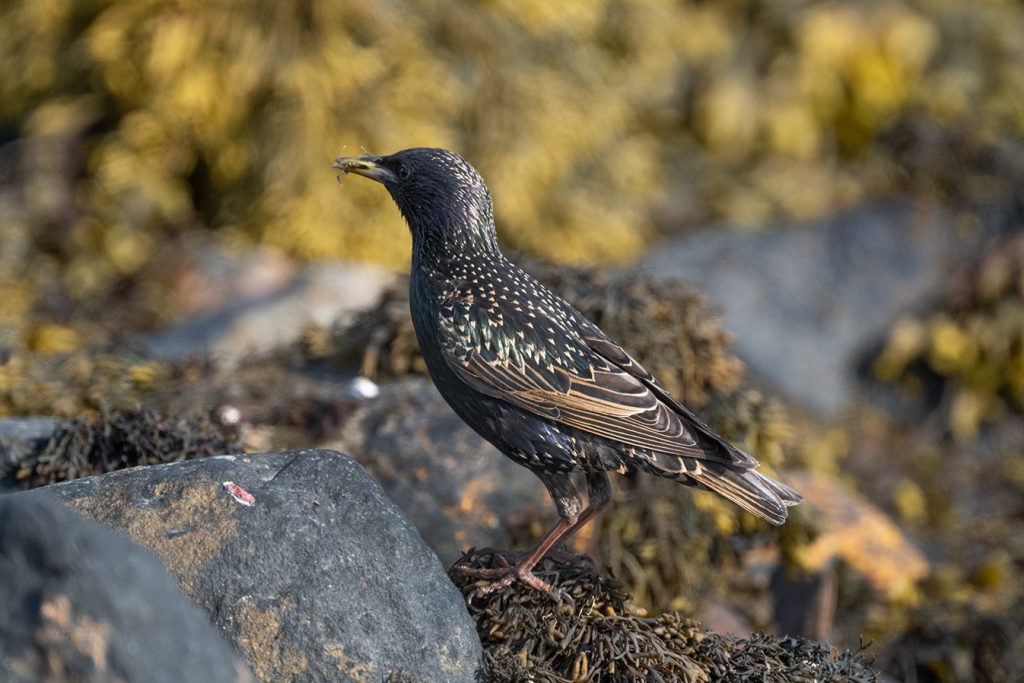
European Starling, Sturnus vulgaris, Merkinch (photograph)
Swallow, Barn
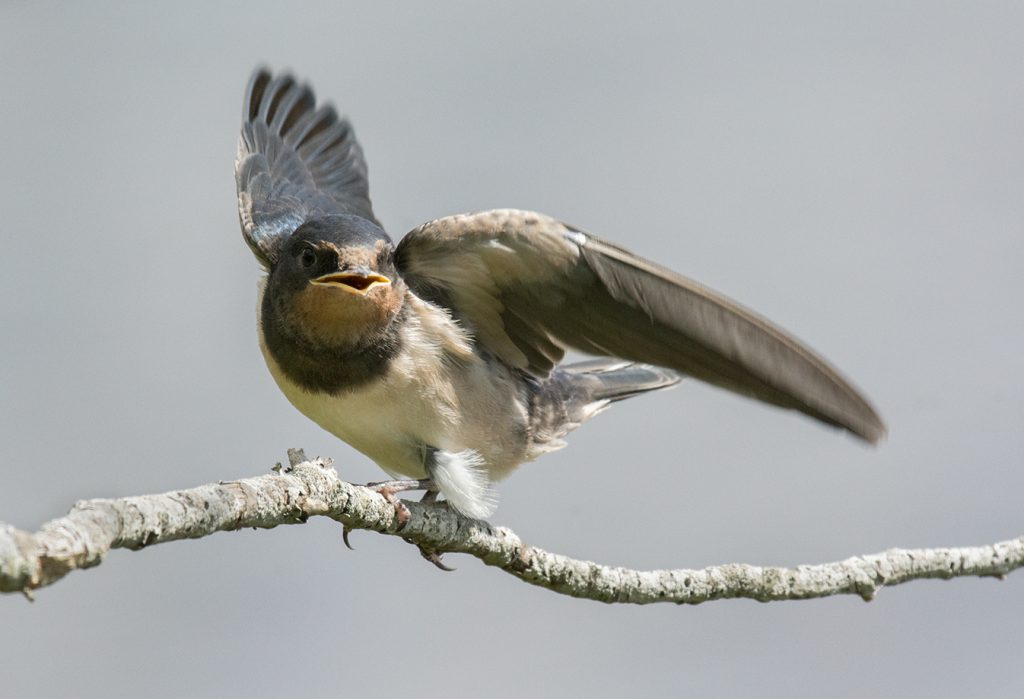
Barn Swallow, Hirundo rustica, Merkinch (photograph)
Famous as a summer visitor arriving in spring from far to the South, including Africa, staying to nest in the summer and then forming up in flocks for the return journey in the autumn. Feeds by catching insects in flight.
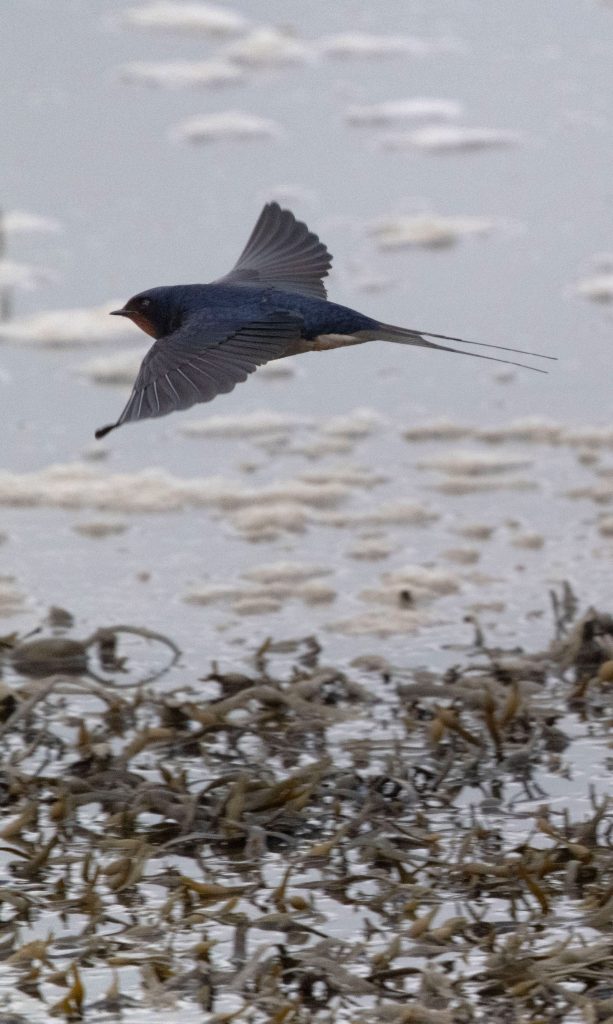
Barn Swallow, Hirundo rustica, Merkinch (photograph)
The Swallow was said to have introduced Adam and Eve by carrying a lock of his hair to her and so founded the human race, even if there were soon complications. Because of this they were allowed to share the dwellings of men and have always done so.
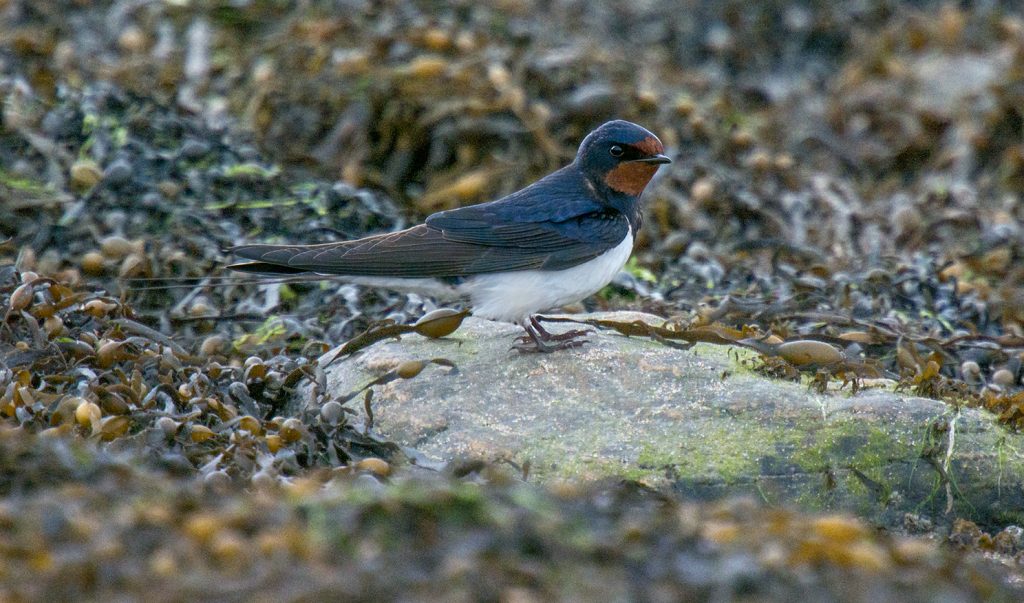
Barn Swallow, Hirundo rustica, Merkinch (photograph)
The Swallow is associated with the Greater Celandine, which is also known as the Swallow-wort. Until migration was understood, it was believed that swallows hibernated at the bottom of ponds, the story was based on observation. Flocks of Swallows formed up round pools in the autumn, could even be seen skimming the surface catching insects and then they suddenly disappeared, it had to be into the water. There were stories of Swallows travelling South from earlier centuries but these were mostly dismissed for the pond hibernation theory.
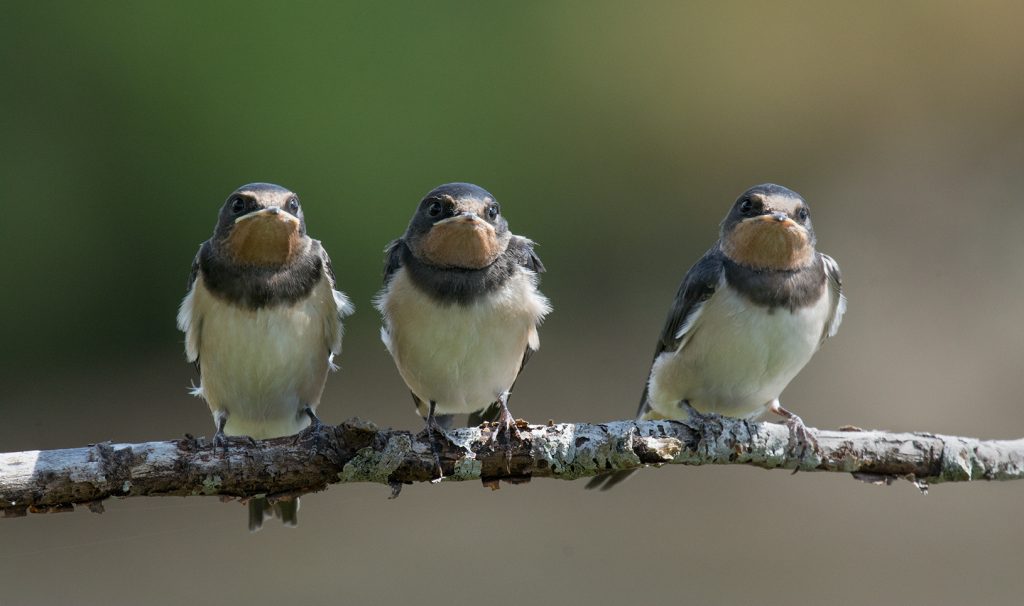
Barn Swallows, Hirundo rustica. Newly fledged chicks waiting to be fed, Merkinch (photograph)
Tern, Common
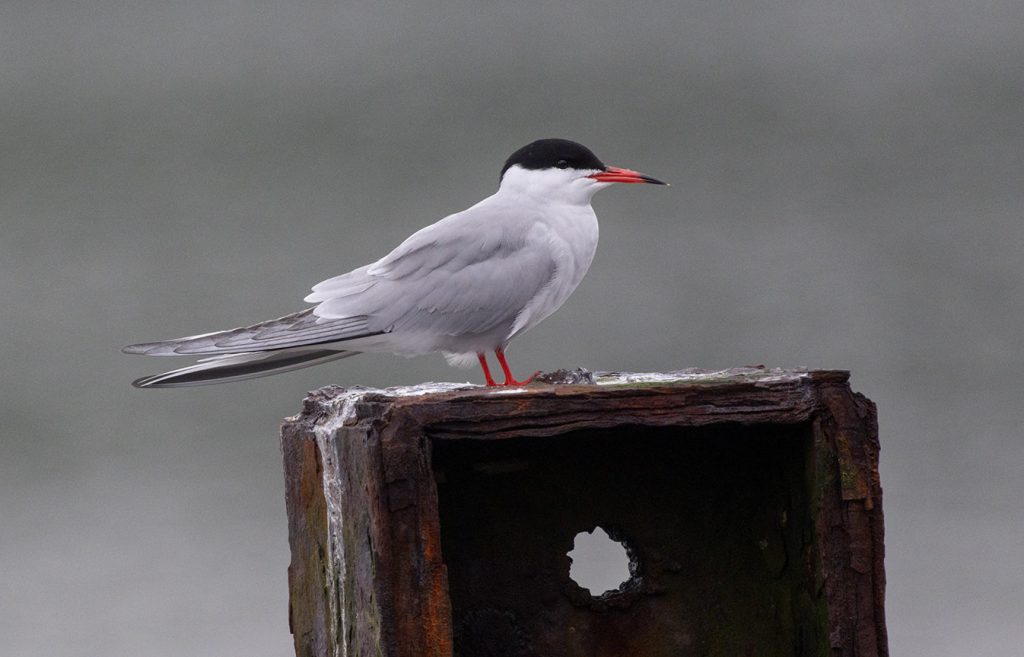
Common Tern, Sterna hirundo, Merkinch Local Nature Reserve, Inverness (photograph)
Tit, Blue
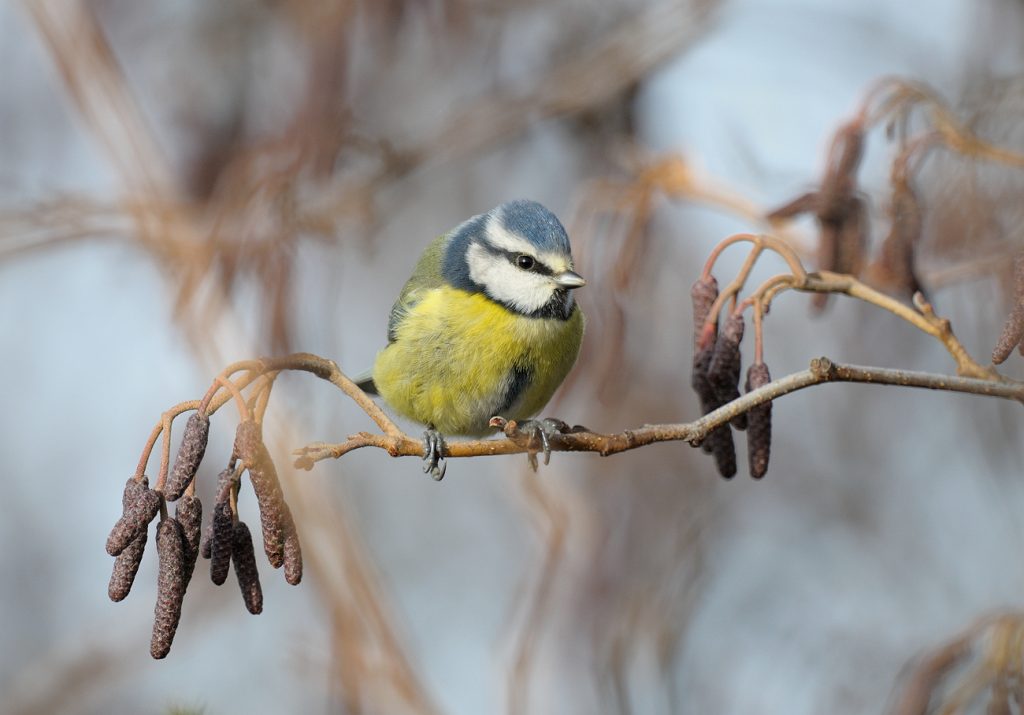
Blue Tit, Parus caeruleus, Merkinch, Inverness (photograph)
Also called the Blue Bonnet or Blue Cap in Scotland, the Blue Tit is most successful when nesting in or close to significant numbers of trees. This is since the chicks need a large scale supply of caterpillars, which is a real challenge for the parents to supply. One observational study recorded a pair of Blue Tits providing 1,500 meals a day to their brood of chicks. The adult birds feed on a variety of seeds and insects throughout the year and are regular visitors at garden feeders where nuts are added to their diet. From the 1920’s Blue Tits also gave away something of how they learn. They became known for pecking through the foil caps on milk bottles left in doorstep deliveries to take the cream at the top. First reported in Southampton in 1921, the behaviour became established in South East and North East England, being widespread by the 1940’s and continuing until milk was not sold that way any more but failed to materialise on any scale in other parts of Britain, including Scotland. The conclusion was that a discovery by one bird was observed and repeated by others but stayed within a population who had contact with each other.
Because of its obvious intelligence, adaptability and generally extrovert and positive character, not surprisingly in Europe the Blue Tit is almost universally seen as positive and a symbol of happiness, resilience and hope, especially in adverse times, so there have been many periods in history when they have been needed, even or especially now.
Turnstone, Ruddy
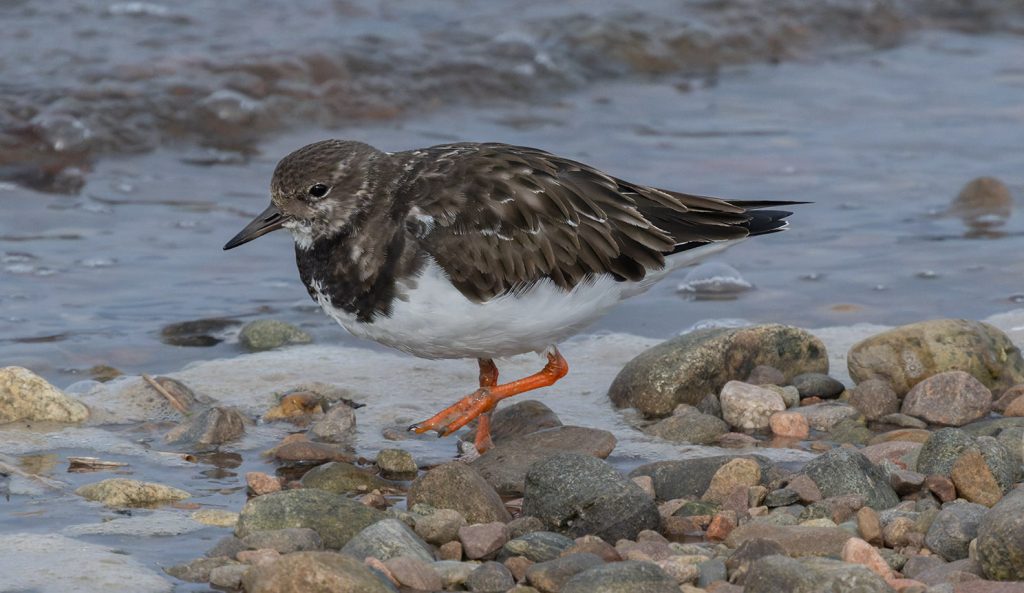
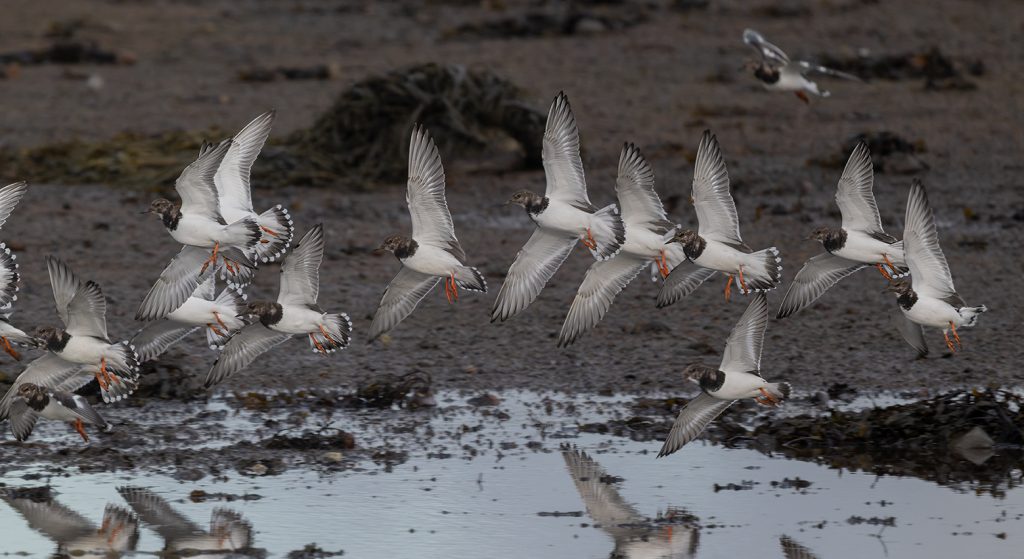
Ruddy Turnstone, Arenaria interpres, Merkinch Local Nature Reserve (photographs)
Almost all waders favour mud or sandy shores, Turnstones, as their name suggests, forage in more rocky conditions by literally using their beaks to tun over stones to reveal invertebrates, they also turn over fronds of seaweed. Larger rocks and weed fronds may be moved by several birds acting together.
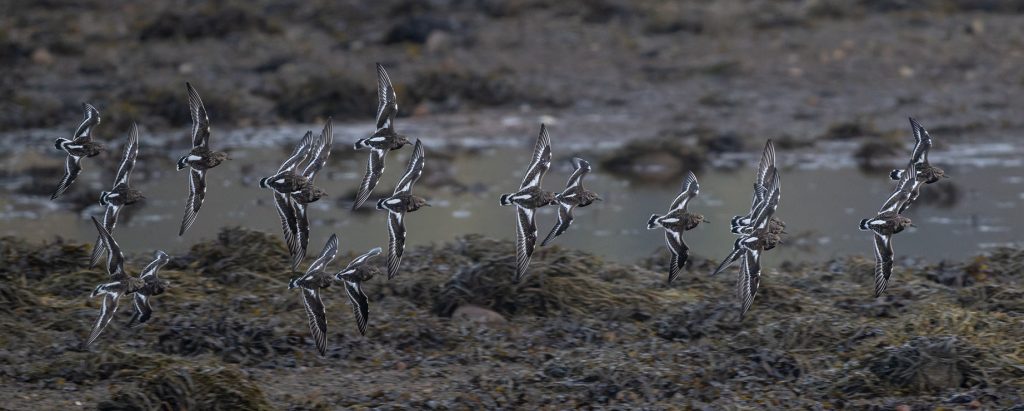
Ruddy Turnstones, Arenaria interpres, Merkinch Local Nature Reserve (photograph)
Their near perfect adaptation and techniques for their methods of finding food made Native Americans conclude that their unique bills were a direct gift from the Creator to equip them for their place in the natural world. The Scottish population are winter migrants arriving in the late autumn.
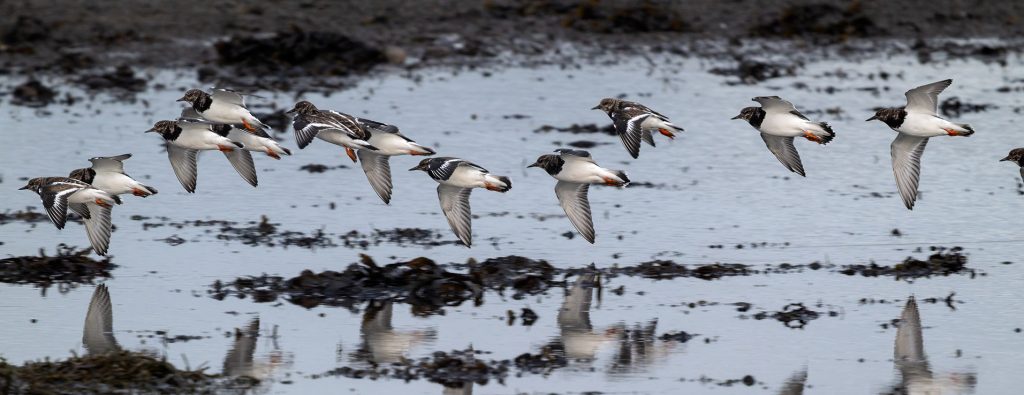
Ruddy Turnstone, Arenaria interpres, Merkinch Local Nature Reserve (photograph)
Wagtails, Pied and White
There are two very closely related black, white and grey types of Wagtail in Scotland, the Pied and the White. The Pied Wagtail only breeds in Britain and is darker, especially in adults on the back which is almost black. The White Wagtail is found across Western Europe but essentially only occurs in Scotland as a migrant in Spring and Autumn with only a very few pairs breeding in Britain each year, most of these are in Scotland. The two types were separated by the rising level of the North Sea after the Ice Age and technically are sub species of the overall type Motacilla alba.
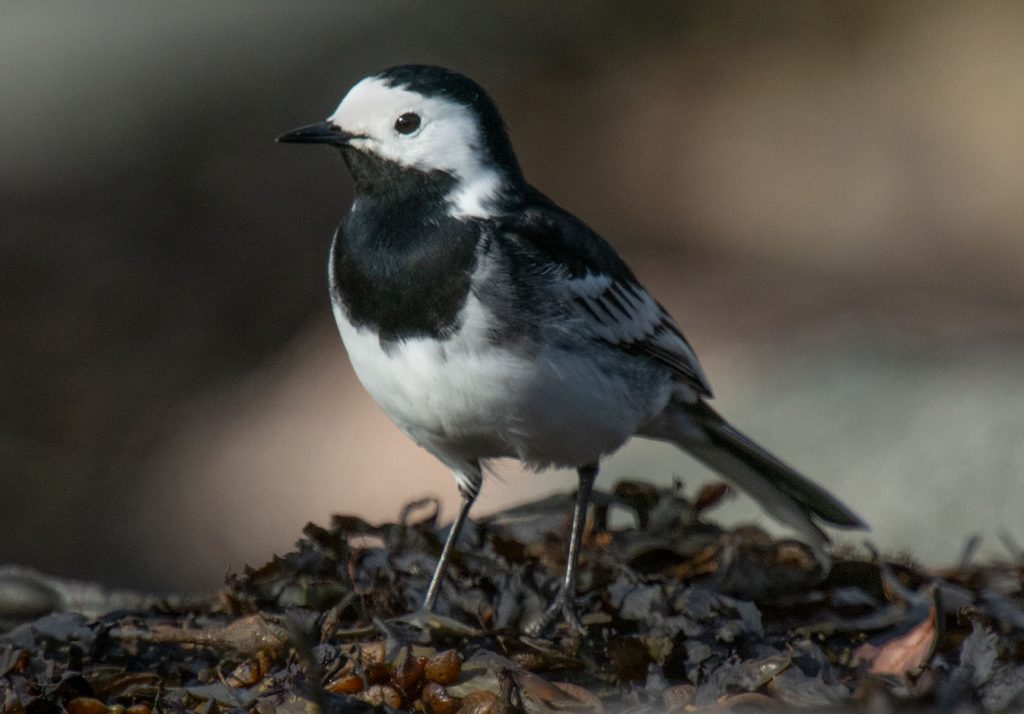
Pied wagtail, Motacilla alba yarrelli, Merkinch Local Nature Reserve Inverness (photograph)
The Pied wagtail is found throughout Scotland and the UK in summer but it is largely absent from the North of Scotland in winter, with Merkinch being an example of the Northern edge of its all-year range. Its arrival as it moves South in the autumn, just when seeds are formed on plants, gave rise to a Scottish alternative name, ‘Seed-lady’. The folklore place of the Pied Wagtail is ambiguous in Britain. It can be seen as bringing harm and has been called ‘The Devil’s Bird’ but can also be viewed as simply a harbinger of a meeting with strangers. On Dartmoor, it was said that no cat would kill a Pied Wagtail suggesting that the bird had supernatural powers to defend itself or, if you think of cats as associated with dark spiritual forces, possibly just an example of professional courtesy. It’s good news bad news for the Wagtails, there is no reason to think they are working for the devil but there is also no reason to believe they are immune to cat predation in Devon.

White Wagtail, Motacilla alba alba, Merkinch Local Nature Reserve (photograph)
The White Wagtail when seen on migration has been associated with many of the same stories as the Pied Wagtail. There is also a reference to the White Wagtail as a candidate for the Caladrius of legend, a white bird that could foretell death or absorb the sickness of someone who was ill. It does not seem a very strong candidate from its relatively small size and a plumage that is far from all white as usually described but the connection has been made.
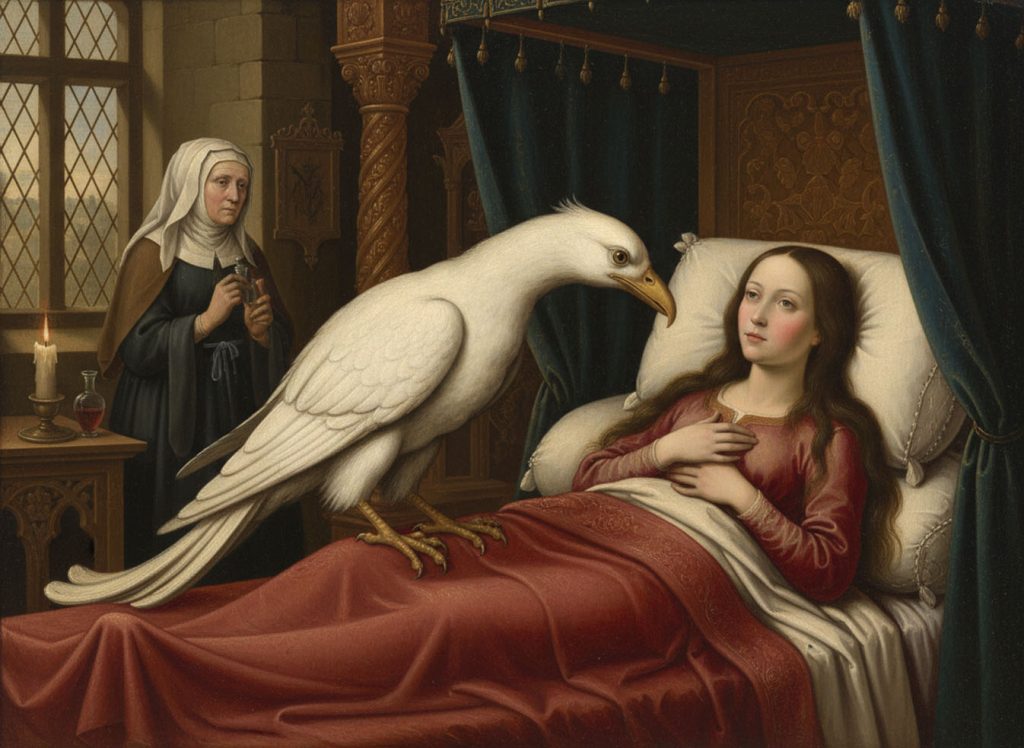
Caladrius at a sickbed, Medieval Period (digital illustration)
Warbler, Willow
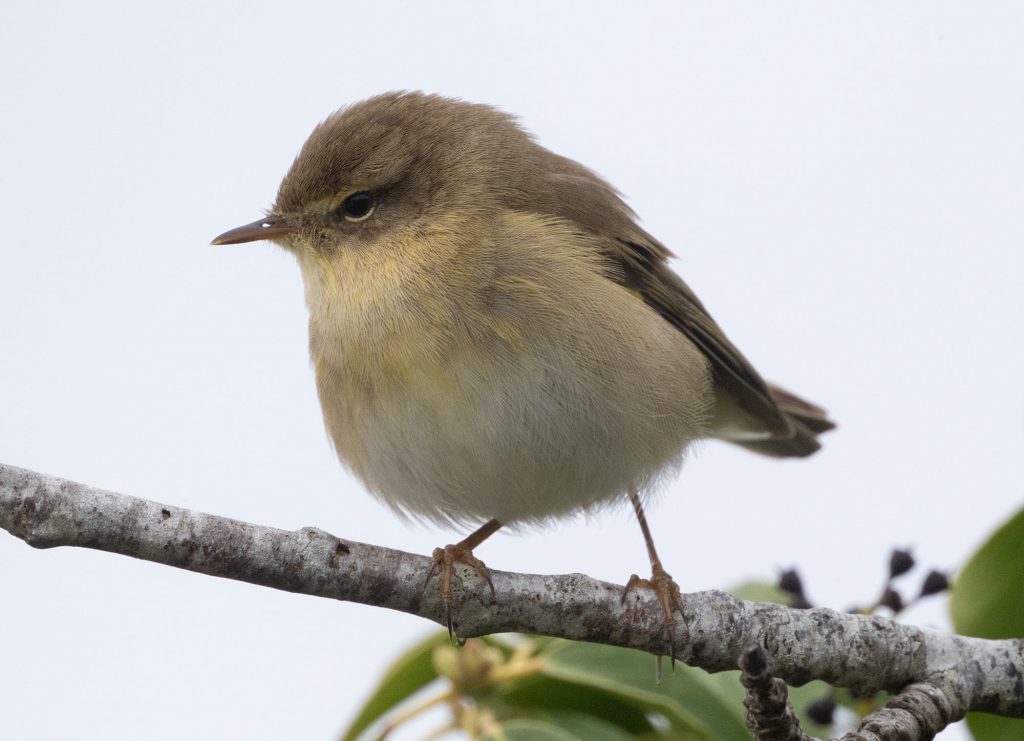
Willow Warbler, Phylloscopus trochilus, Merkinch Local Nature Reserve, Inverness (photograph)
Wheatear, Northern
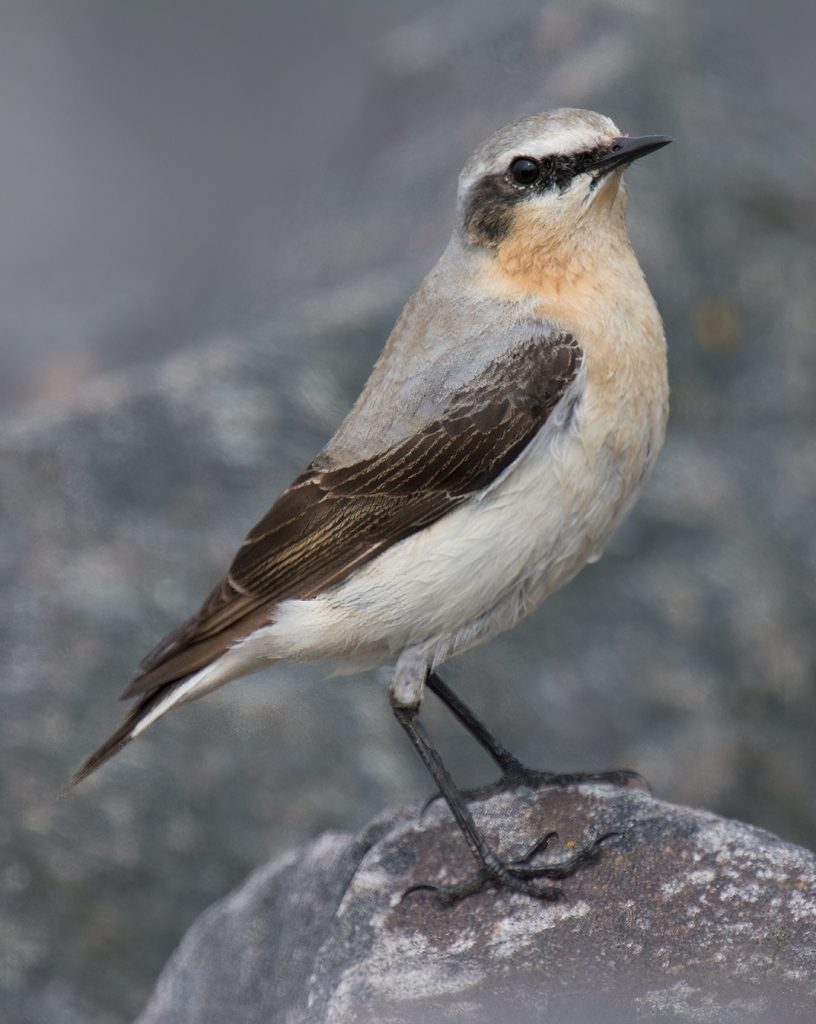
Northern Wheatear, Oenanthe oenanthe, Merkinch, Inverness (photograph)
Arrives as a migrant from Africa in the spring, challenging the Cuckoo to be the first to be heard to signal the end of winter. Considered in past times in Scotland to be unlucky with connections to the devil. Toads were even supposed to hatch their eggs. Before migration was understood, the belief was that they pass the winter in hibernation underground. That there were no accounts of such hibernating birds being found is worrying.
Wigeon, American
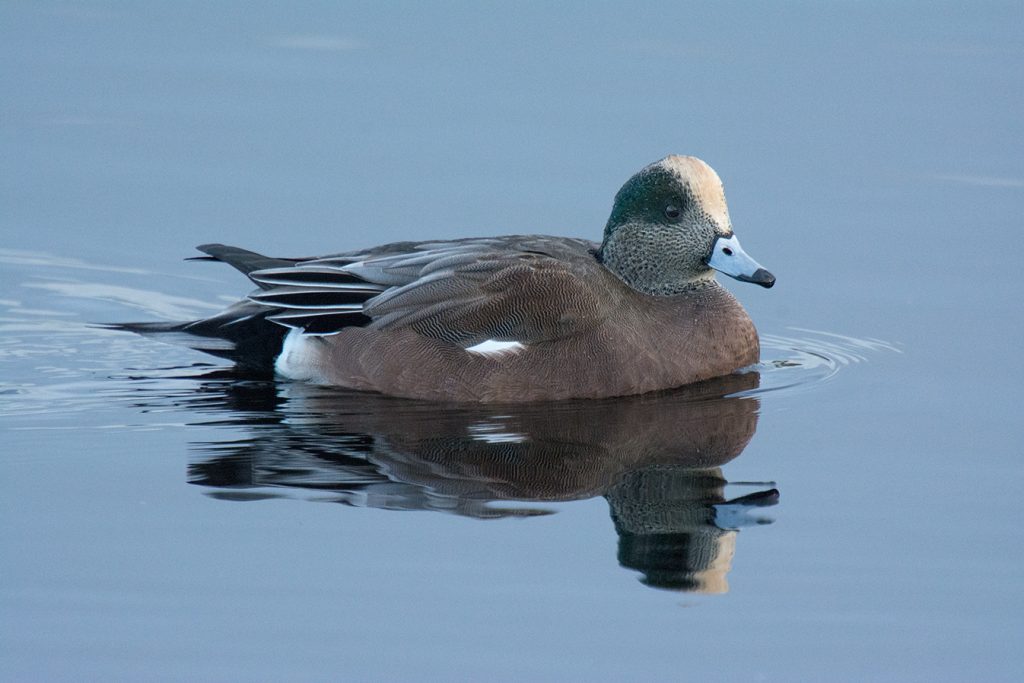
American Wigeon, Anas americana, Caledonian Canal, Clachnaharry, 2016 (photograph)
Wigeon, Eurasian
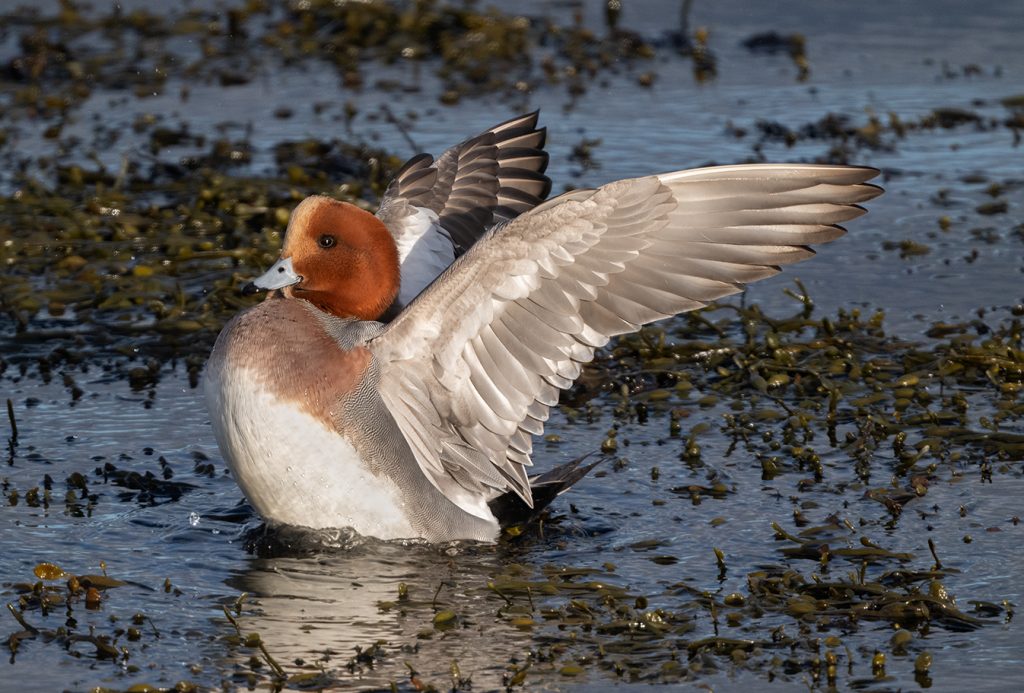
Eurasian Wigeon, Anas Penelope, Merkinch Local Nature Reserve, Inverness (photograph)
Wigeon have been identified from traces back to the mid Pleistocene, about 1.5 million years ago. They have been recorded as first breeding in Scotland in 1834 in Sutherland. Now they are more concentrated on the North East, with a small number of breeding residents, and there is also a winter migration arrival, which is widely dispersed when the British population is estimated to be half of the total for Western Europe.
There is also the very closely related counterpart of the Eurasian Wigeon, the American Wigeon, which is restricted in its range to North and Central America. A few occasionally turn up in Europe, mostly in autumn or winter, lost or blown off course is not certain, probably a mixture of both. A notable event for birdwatchers and scientists, an American Wigeon was seen in Merkinch in November 2016.
In both Europe and America, the whistling sound of the calls of Wigeon has made them regarded as warnings of approaching harsh winter weather. Given that the birds migrate to escape the worst of the cold, this would make sense, colder weather moves in, the birds migrate, their calls are heard where they have arrived, the colder weather moves in after them although mostly it will not be as severe as where they had left. The whistling call has also been regarded as a warning of danger to other ducks but possibly of use to people as well.
Wren, Northern
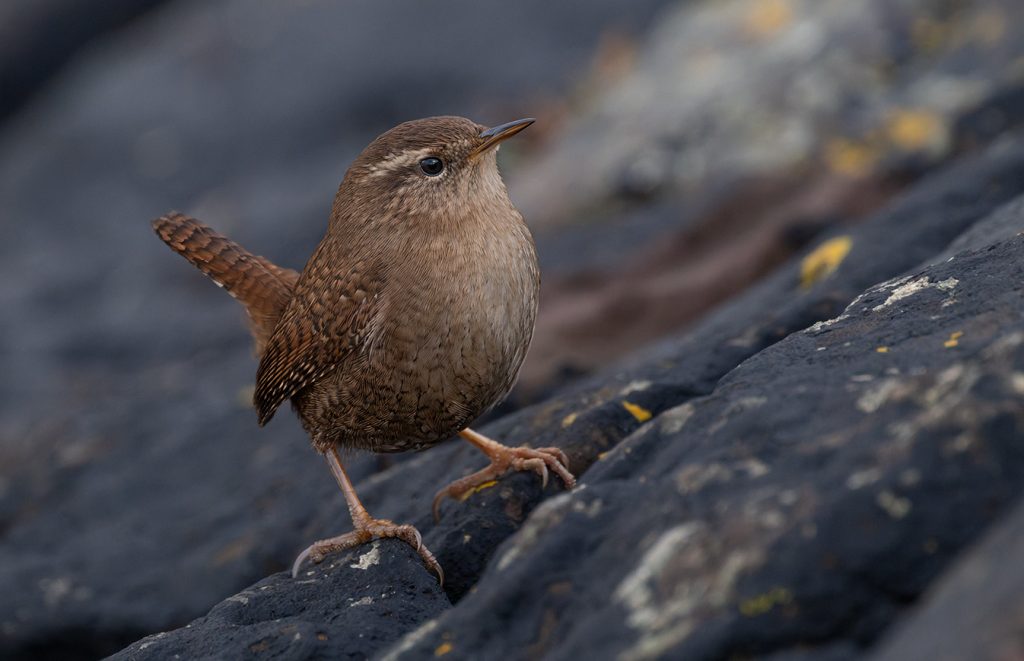
Northern Wren, Troglodytes troglodytes, Merkinch (photograph)
One of Europe’s smallest birds and, in Scotland and the UK, far more common than its sightings suggest.
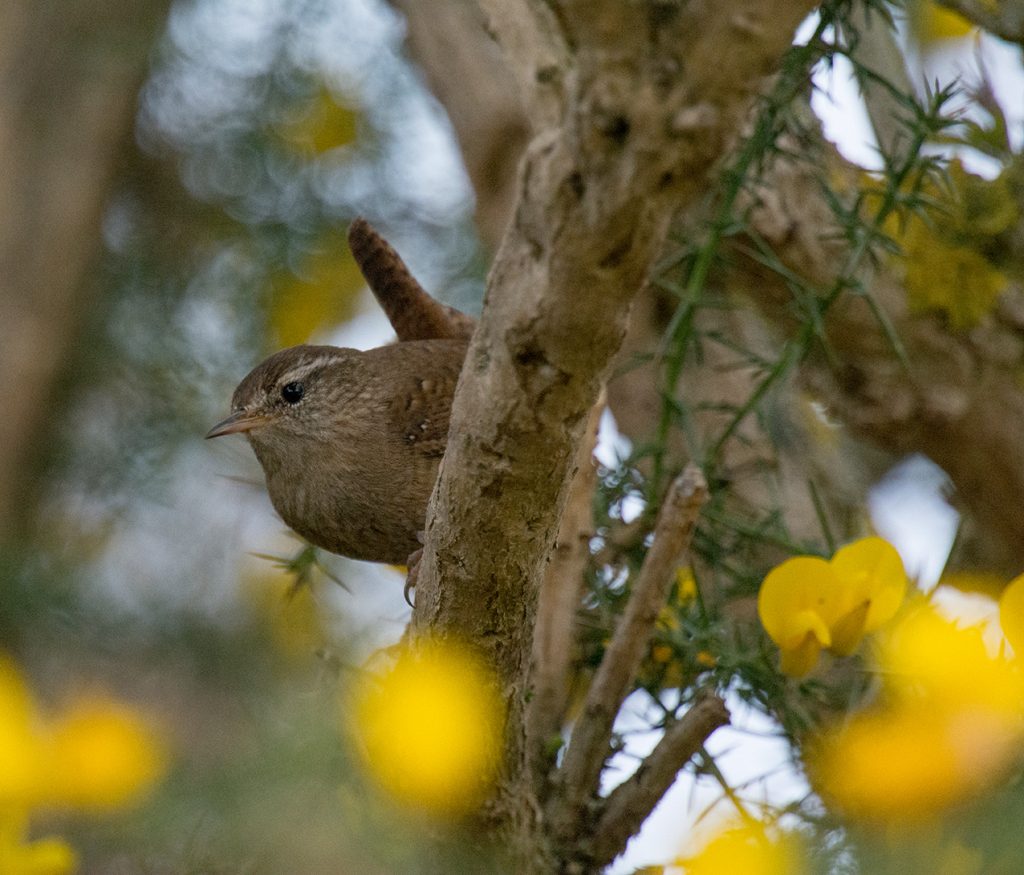
Northern Wren, Troglodytes troglodytes, Merkinch (photograph)
Subject of several and sometimes contradictory beliefs. In Scotland often known as ‘Our Lady’s Hen’ referencing that the Wren brought moss as bedding for the newly born Jesus in Bethlehem.
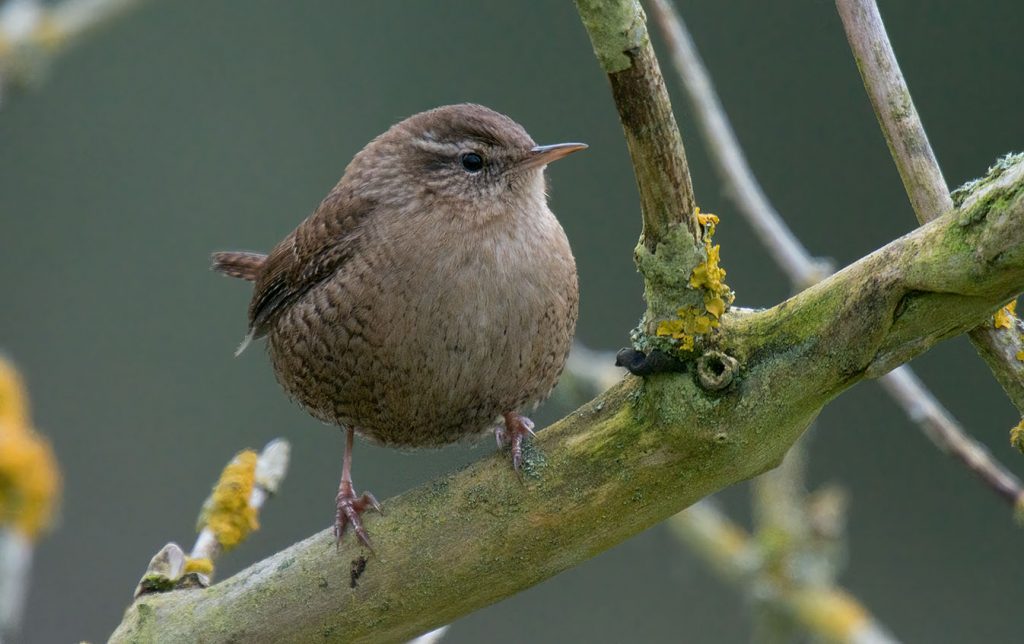
Northern Wren, Troglodytes troglodytes, Merkinch (photograph)
Already though a bird used by Druids in divination and then subject to hunting persecution because of its connection with the death of Saint Stephen, who Wrens are accused of betraying, and on whose day Wrens were stoned to death. It has been suggested that this was a Christian attempt to supress pagan ideas.
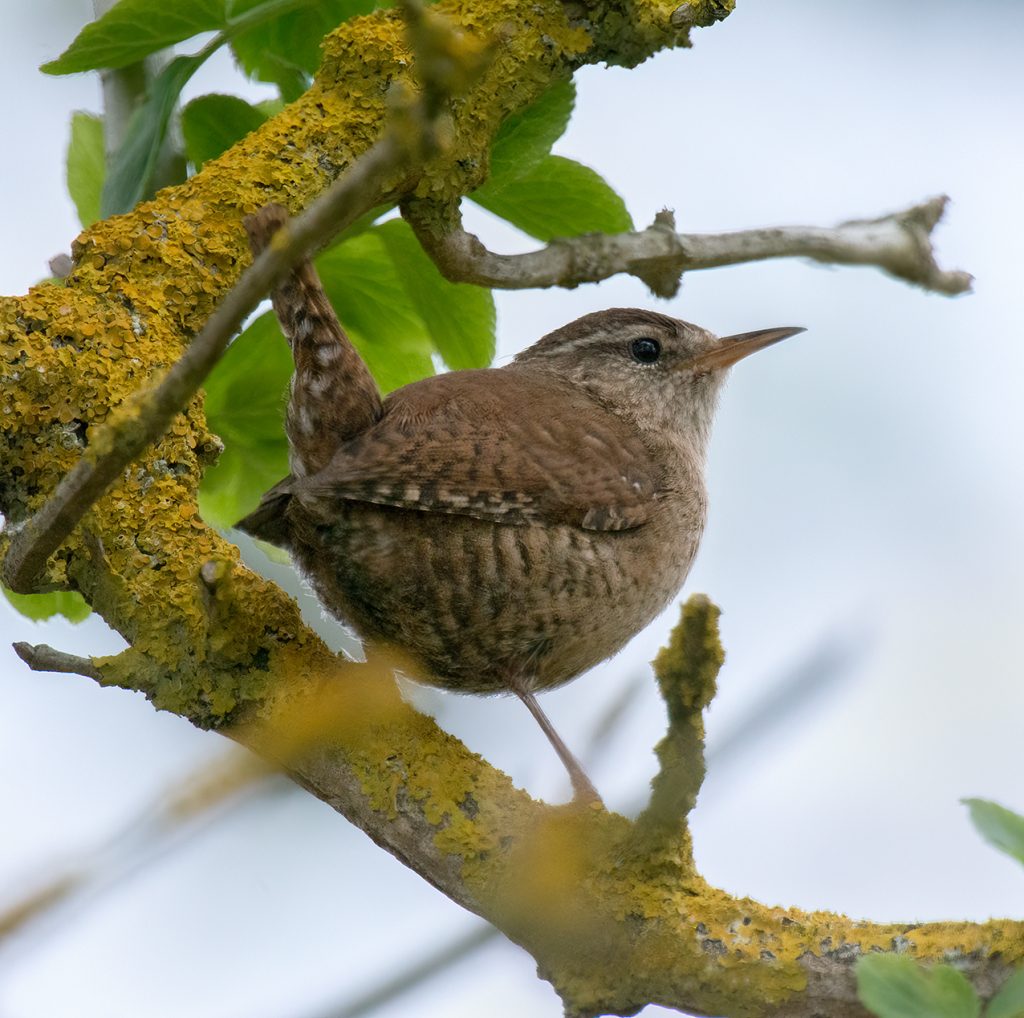
Northern Wren, Troglodytes troglodytes, Merkinch (photograph)
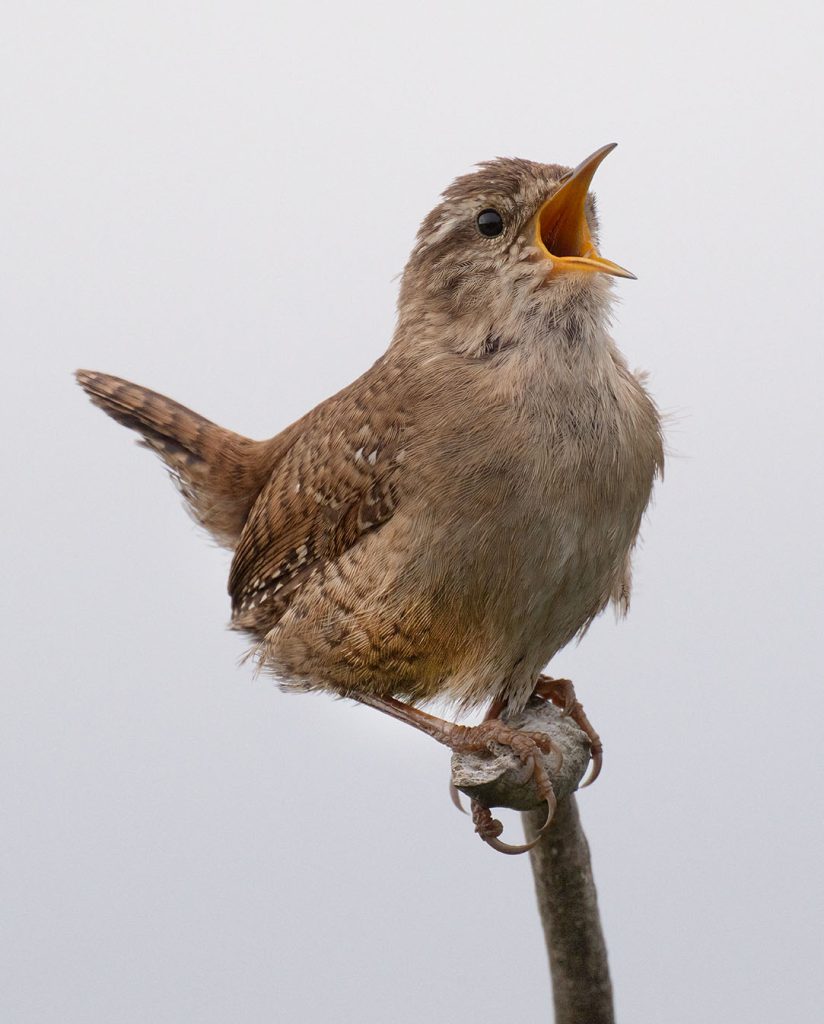
Northern Wren, troglodytes troglodytes, displaying. Merkinch Local Nature Reserve, Inverness (photograph)
Also thought of as the king of birds for having tricked an eagle in a contest to fly highest, as the bringer of fire from the sun to earth for people to use and whose feathers could be carried as a protective charm.
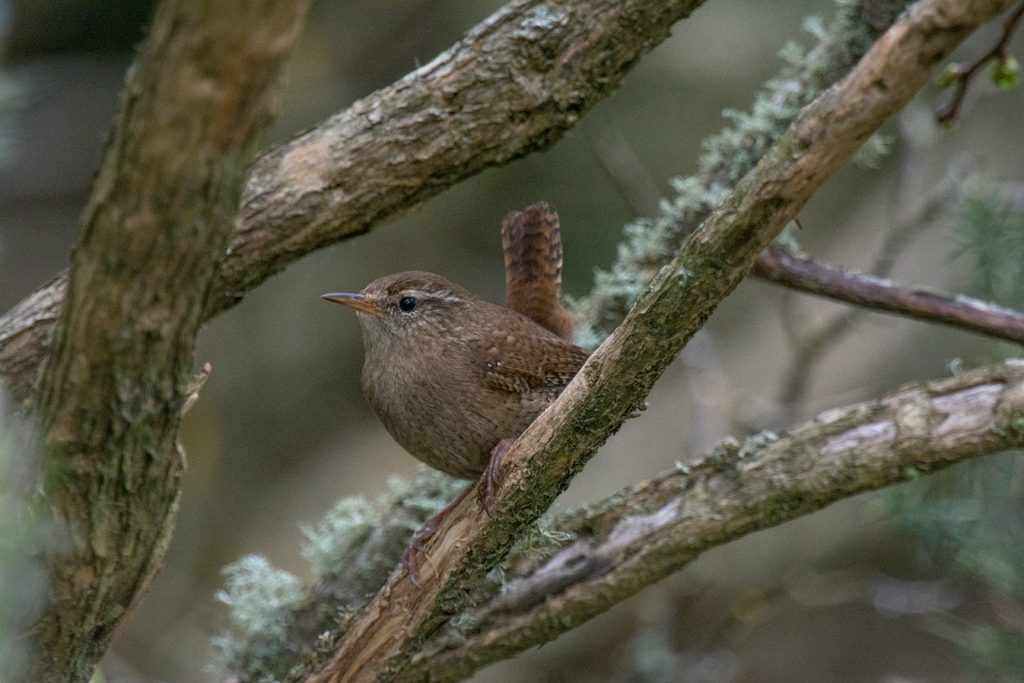
Northern Wren, Troglodytes troglodytes, Merkinch (photograph)
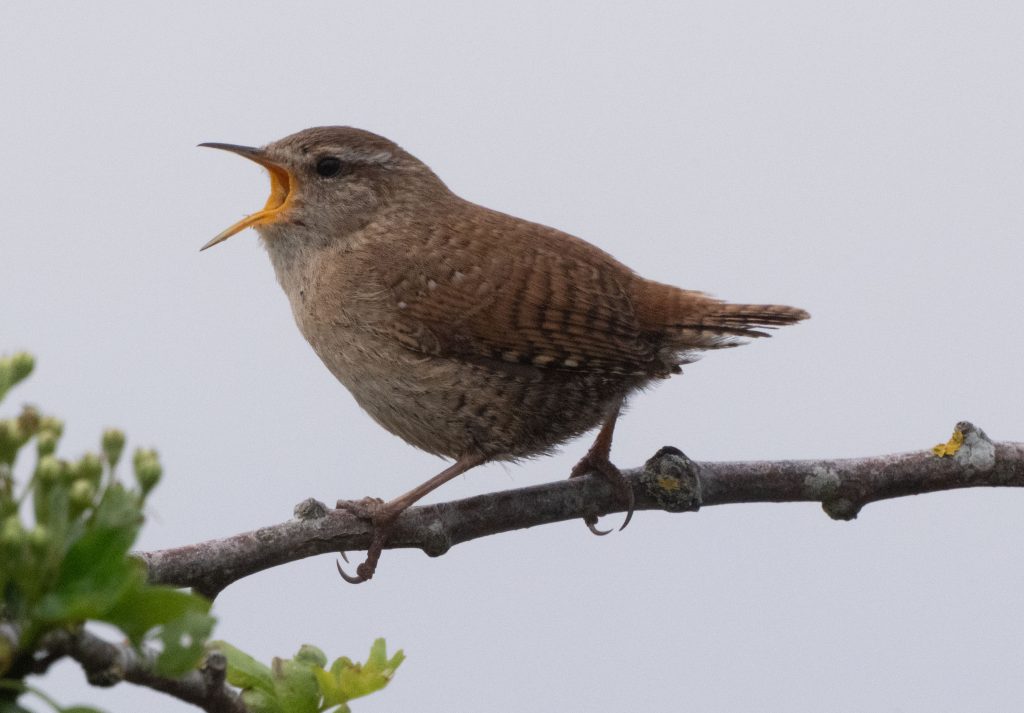
Northern Wren, troglodytes troglodytes, displaying. Merkinch Local Nature Reserve, Inverness (photograph)
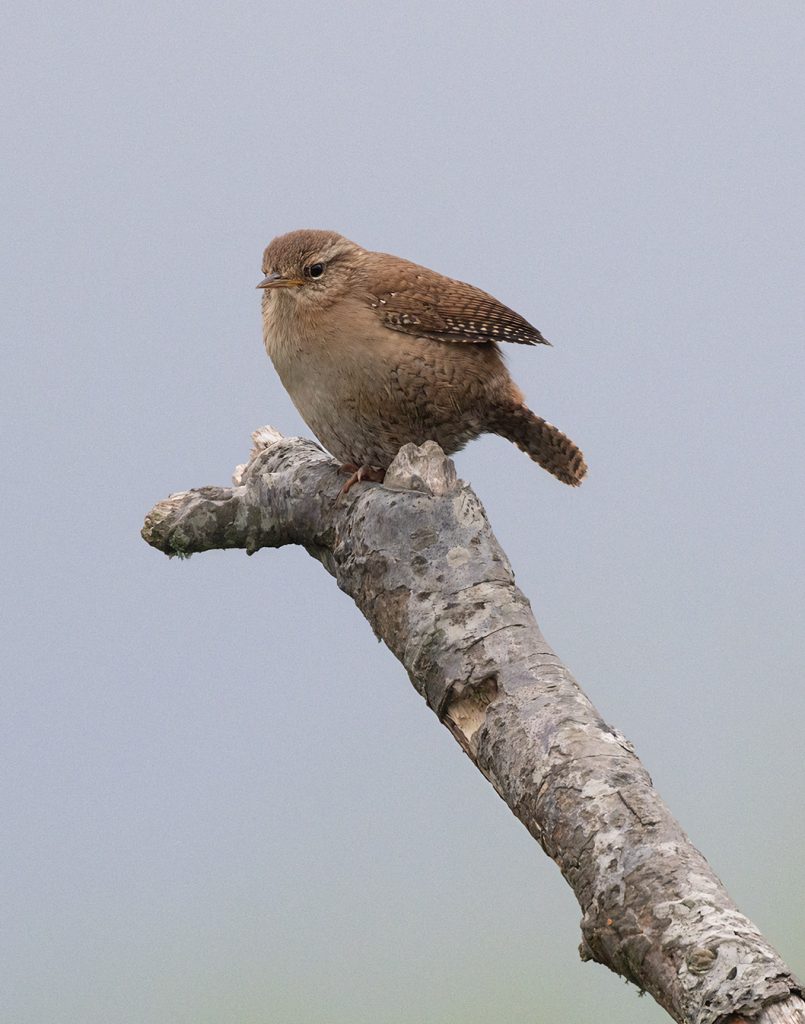
Northern Wren, troglodytes troglodytes, displaying. Merkinch Local Nature Reserve, Inverness (photograph)
Photographs, illustrations and text ©Nick Sidle, all rights reserved