Insights –
Reptiles and Amphibians
Photographs and words Nick Sidle
Adder, European

European Adder, Viper berus, Kinloch Forest, Skye, Highland Scotland (photograph)
The Berithir are the serpent dragons of The Highlands, of these the Nathair are the Adders. Serpent, lightning, thunderbolt are all meanings of Berithir. In Celtic tradition snakes are linked to entrances to the underworld and the power of the earth and healing as well as dangers. Adders treated with respect are a very, very small risk to people. People are a very big risk to adders. They have their own champion in Highland, Cllr Alasdair Christie, they are protected and they do matter in the natural world, in law and in the lore of the land.
Friends of Cùra
“I chose to be species champion for the Adder as it a greatly maligned reptile through being a snake. It plays a role in the hierarchy of our countryside. They are an important indicator species as they are very sensitive to disturbance of our ecosystem so if the adder disappears, we know that something is wrong, and the environment is changing. Adders are endangered through the loss of hibernation sites, destruction of its habitat and disturbance. If you are fortunate enough to see an adder in the wild remember it is more scared of you than you are of it! I am pleased to see the adder feature on the Cura Guardian Website.”
Cllr Alasdair Christie, Highland Council
Frog Common

Common Frog, Rana temporaria, Glen Convinth, Inverness-shire, Highland Scotland (photograph)
Common Frogs only spend part of the year in water and the rest in damp vegetation? They do need the water though and the UK has lost 75% of its wetlands in 300 years, the world 35% from 1970 to 2015. That’s a big problem for all of us.

Common Frog Tadpoles, Rana temporaria, Glen Convinth, Inverness-shire, Highland Scotland (photograph)
Pterosaurs and Storms
October 2025 Highland Scotland has just been battered with one of the most severe storms in recent records and one which has come earlier than typically in the year. The tens of thousands of houses without power have now had their electricity supply restored after a very real reminder of just how dependent we all are on staying powered up and staying connected. Being concerned and vulnerable to the weather is nothing new, it’s something we share with Pterosaurs from millions of years ago and they had more to be frightened of than having to do without the internet for 36 hours.
Travel back to around 150 million years ago in what is now part of Southern Germany and archaeologists have for some time excavated fossils, which have confirmed that the area referred to as The Upper Jurassic Solnhofen Archipelago was a population centre for Pterosaurs, the giant flying reptiles from the age of the dinosaurs. It is also believed to be a time of severe weather and extremely intense storms and the flying reptiles, which varied in size but included species with wingspans up to 10 feet (3 metres), would have had to have coped with the conditions just as wildlife has to manage with bad weather today.
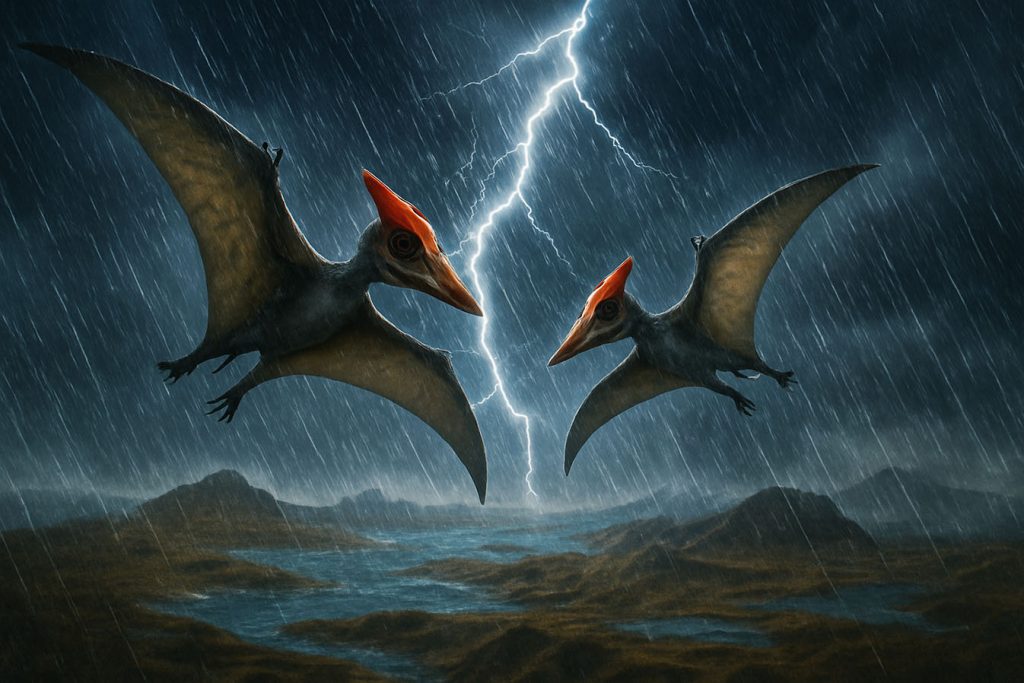
Digital illustration
So, picture the scene, it is 150,000,000 BCE and a storm is coming. Two Pterosaurs spread their massive four inch (10cm) wings and take off, possibly to fly somewhere for shelter. Yes, these are neonates, they are only just hatched and they are that small, their total wingspans are eight inches (20cm) each and yet it is now believed that they could fly even when they were that young, weeks at most. The flight does not go well, there is no sign of impact trauma but both sustained fractures of the humerus, for humans the upper bone in the arm. This is presumed from the absence of trauma and the similarity to known wind strength fractures in birds and bats to be from the wind forces alone and must then be thought to have fallen in to the sea and drowned, where they sank to become rapidly covered by the mud sediments stirred up by the storm meaning they were very well preserved when their fossils were discovered. There is also reason to think small, almost baby, Pterosaurs will be more intact in the fossil record than adults.
The world and the weather can be a threat, something all living creatures have had to contend with from the dawn of time. We have names for the strongest storms, Pterosaurs probably did not. It is just possible though that if our two ill fated youngsters were together when events began that they looked at each other before they took off, and by sounds, movements or simply shared consciousness, exchanged the thought ‘Oh no, not another one of those’, when they saw the clouds gathering on the horizon.
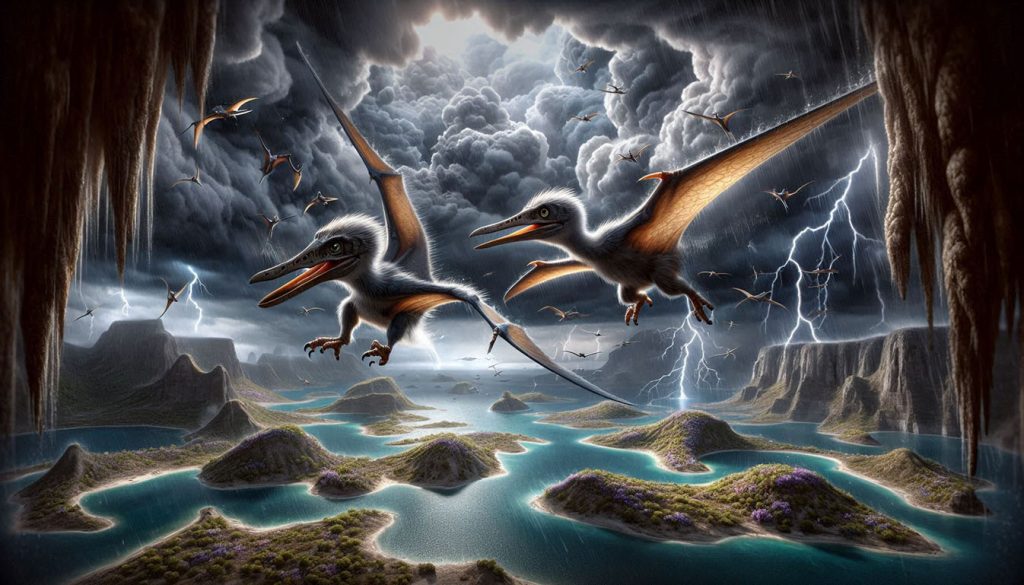
Digital illustration
Salamander, Fire
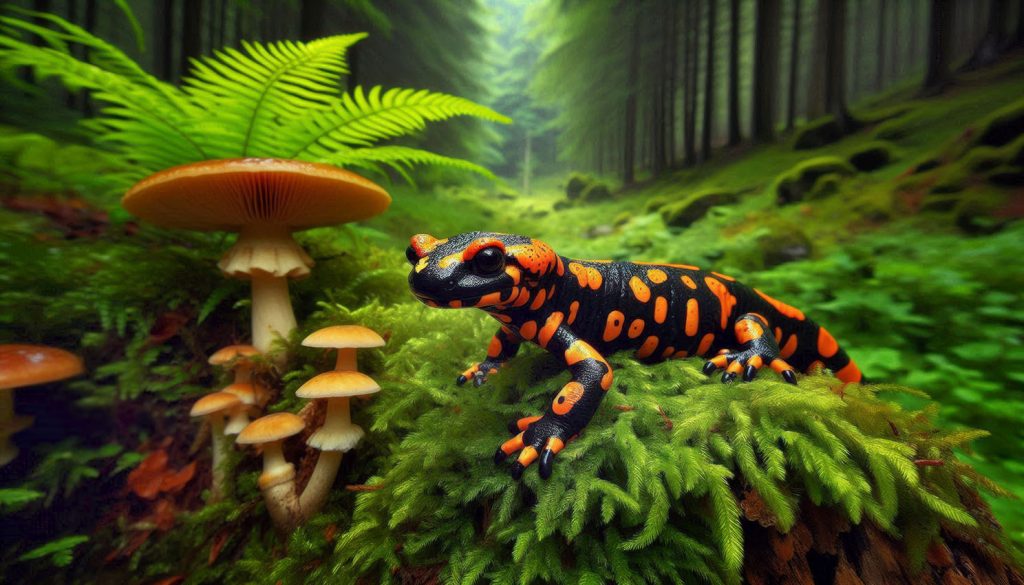
Fire Salamander, Salamandra salamandra (digital illustration)
Toad, European

European Toad, Bufo bufo, Lochan Dubh, Glen Urquhart, Inverness-shire, Highland Scotland (photograph)
Few animals have been as maligned and associated with dark forces as Toads. They do secrete toxins and hallucinogens in their skin but that is for defence so they can be poisonous but the rest, including suggesting that they are bound up in witchcraft, is false. The suggestion in Scotland that they along with Yellowhammers are the ‘things of evil’ is prejudice against them and a rather attractive bird at the same time. It is also not true that they have magical gems in their heads, toadstones, which although produced as artefacts in historical times were in fact fossilised fish teeth from 150 million years ago and thank you to the National Museums of Scotland for being definite on that.
Snakestones, toadstones, and other myths about fossils
Recognition of toads did not get off to a good start. Regarded as the first natural history publication in the UK, Thomas Pennant in ‘British Zoology’ published in 1776 described them as ‘the most deformed and hideous of all animals’, after that it got worse. Now we think of them very differently and in Highland Scotland they have their own species champion, Cllr Jackie Hendry. So, can now have a celebration of their place and their value. Quite right too.
“The reason I chose to be species champion for the Common Toad was because it is not one of the ‘pretty’ species. Mainly brown coloured and covered in warts, I feared it would be left behind on the list. In fact, in the Middle Ages, the toad was associated with the devil. The toad is an important member of the Amphibia class, useful in keeping the numbers steady of woodlice, beetles, slugs, earthworms and caterpillars that it eats. It’s biggest threat is loss of habitat and the drainage of its breeding grounds. For example, due to the increasingly dry climate, numbers of toads have declined in Spain. I am pleased to see the toad feature on the Cura Guardian Website.”
Cllr Jackie Hendry, Highland Council
Photographs and text ©Nick Sidle, credited text ©the authors, all rights reserved