Scotland – Ross and Cromarty
Photographs, words and illustrations Nick Sidle
Beinn Eighe
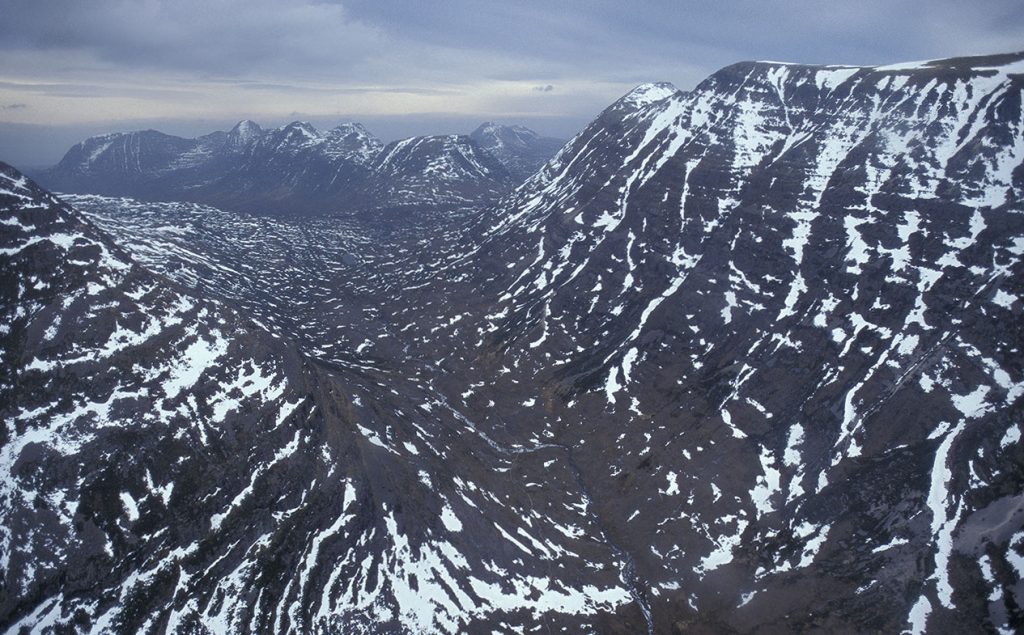
Beinn Eighe (photograph)
3314 foot mountain and National Nature Reserve designated in 1951, the first in Britain. Founding principle the primacy of nature, ‘nature comes first’. Now there are 43 NNR’s in Scotland managed by NatureScot where accommodating visitors and users of the land is also a priority so long as nature is safeguarded. Let’s all say yes to that. Being Eighe is a mountain massif with multiple summits and the name translates from the Gaelic as ‘Mountain File’ file referencing the toothed of serrated edge of some of the ridgelines.

Beinn Eighe from Slioch (photograph)
Not suitable for sheep grazing and used by the privileged for deer stalking and grouse shooting, Beinn Eighe itself suffered less than much of Highland Scotland in the Clearances when thousands were driven from their homes. The neighbouring Torridon Estate however was the centre for one of the most devastating displacements of people, especially after its purchase by Colonel McBarnet in 1831. Perhaps his attitude to people could have been predicted, since he had made the fortune that meant he could buy the estate from exploiting plantation workers and slaves in Jamaica. Interestingly, it was however one of the few locations where something was reversed, Duncan Darroch of Gourock became the owner in 1873 and removed sheep and restored crofting. The Torridon estate is now owned by the National Trust and has just been made a nature reserve. Only a small part of Beinn Eighe on its Southern edge is now owned by The National Trust but the mountain would have been a daily sight for those who lived on the Torridon Estate, those who were driven away and those who returned. It has been a National Nature Reserve itself since 1951, the first in Britain. Torridon and Beinn Eighe should have been a lesson of good and bad for those with responsibility or power in the past and should still be today.
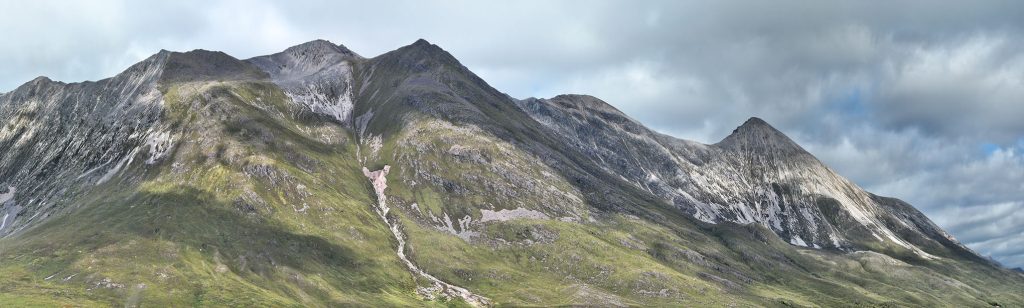
Beinn Eighe, Ross and Cromarty (photograph)
Ben Mor Coigach
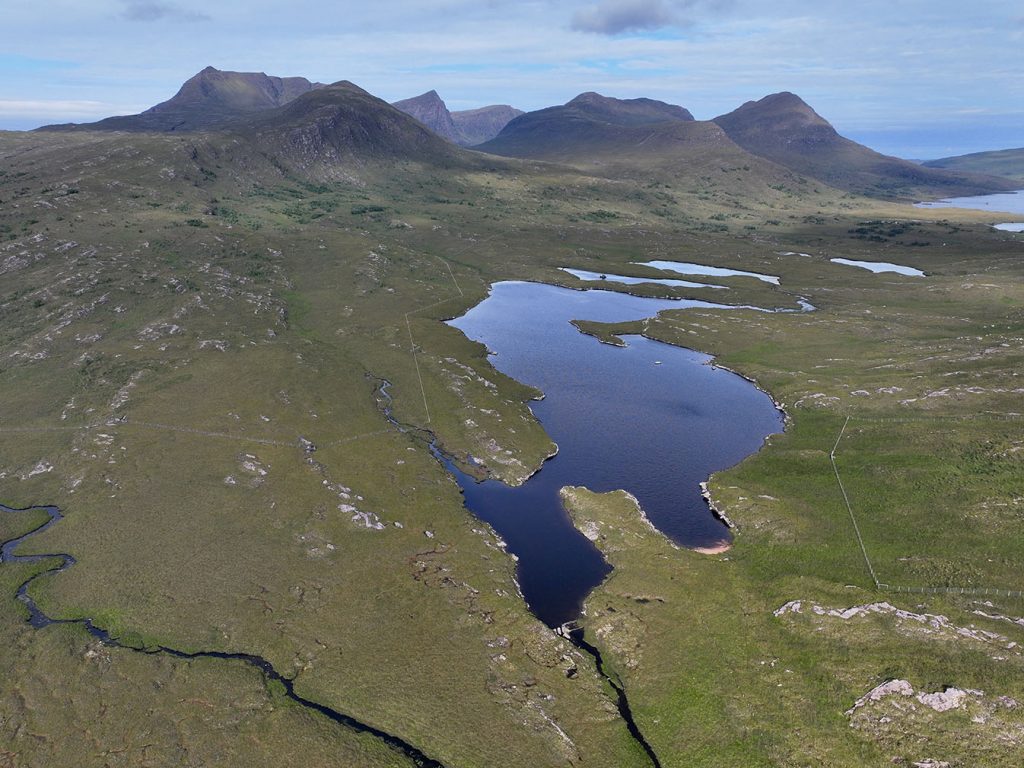
Ben Mor Coigach (photograph)
Ben Mor Coigach, Scottish Gaelic ‘Beinn Mhòr na Còigich’, 2438 feet high peak in the Assynt Coigach National Scenic Area and a nature reserve in its own right, part of the clan lands of Mackenzie. A sobering thought is that the mountain was not pushed up to where it is now, instead the area was a sandstone plateau and water and ice erosion stripped away vast amounts of rock leaving the mountains as they are today, but they are just remnants of what used to be. Remnants can have beauty……
Cùl Beag
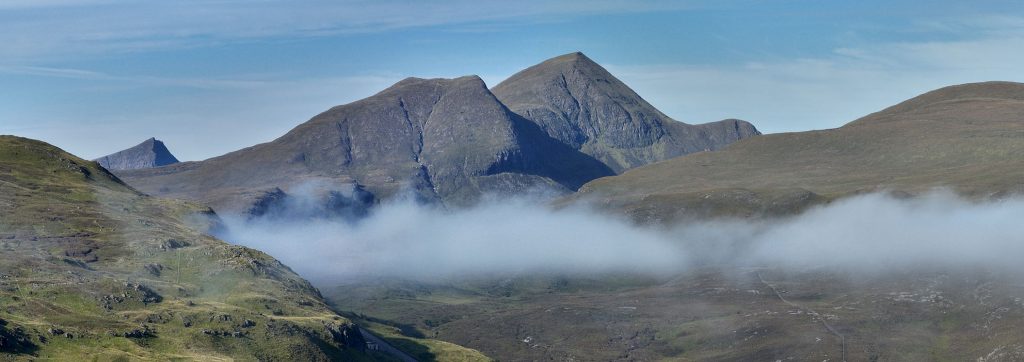
Cul; Beag (photograph)
Cùl Beag, 2523 foot mountain in the Coigach district of Ross and Cromarty, Highland Scotland. The Gaelic name translates as ‘Little Cul’ or ‘Small Back’ which is not a very inspiring label for a relatively low but dramatic peak. Lands linked with the Clan Mackenzie but also associated with the Vikings in older history.
Cùl Mòr
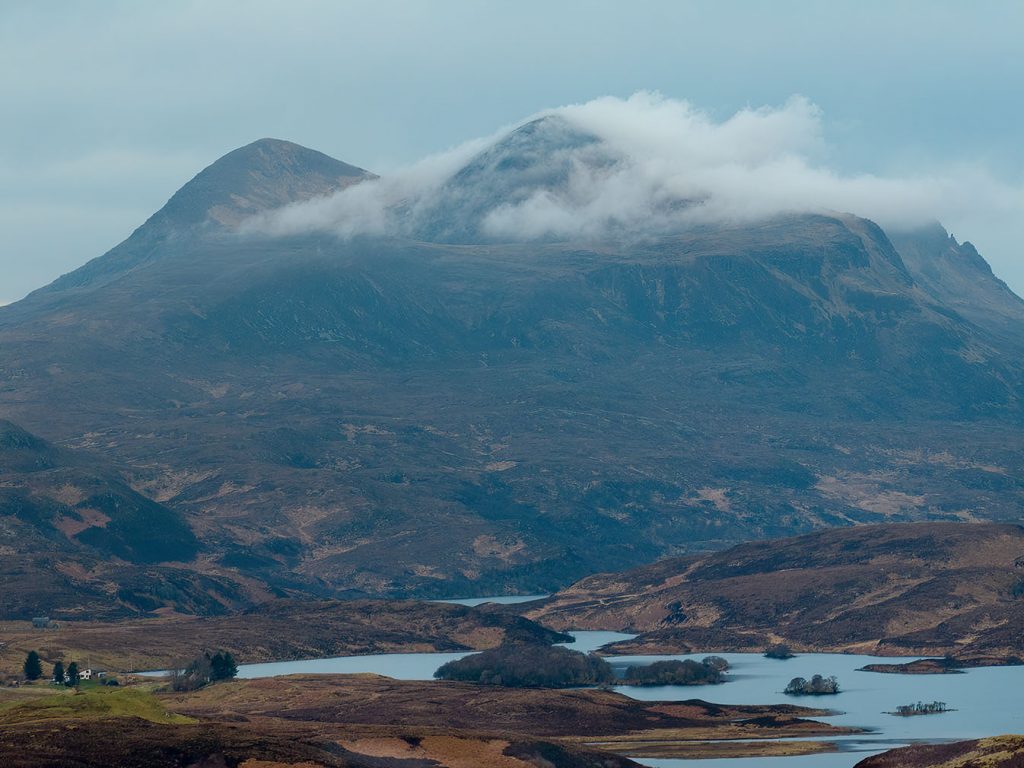
Cùl Mòr (photograph
Inverpolly. Many mountains in Scotland are said to have been made by Beira, Queen of Winter. Assynt Coigach where Cùl Mòr stands was shaped by glaciers so perhaps that’s true.
Five Sisters of Kintail
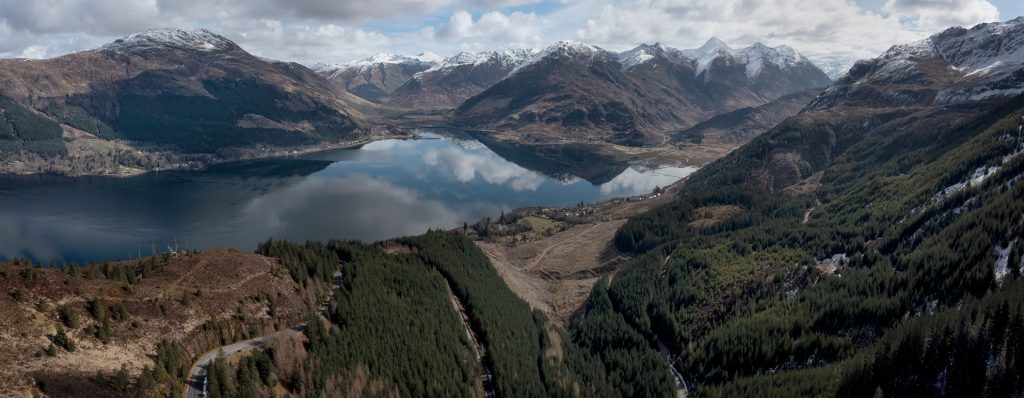
Five Sisters of Pintail (photograph)
Named after five daughters turned to stone the mountains are said to bring gifts for humanity: Individually food, security, healing, histories and the secrets of life and death. Walk in the land today with respect and you will be given all those.
Liathach
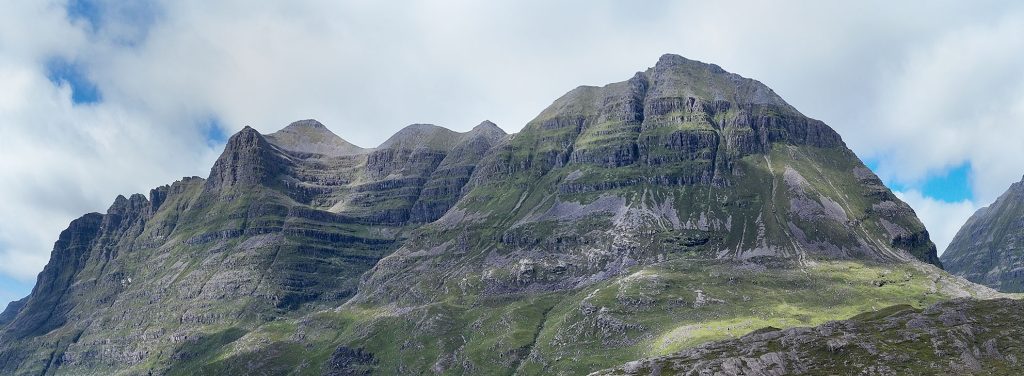
Liathach (photograph)
Part of Glen Torridon and 3359 feet at its highest Liathach has four recognised peaks, all over 3000 feet. Two of them are connected by a ridge containing a series of pinnacles, this ridge is known as ‘The Teeth’ and is regarded as a very ambitious climbing route. The name Liathach means ‘The Hoary Place’ or ‘The Grey One’. Liathach is associated with the Cailleach, Beira, the ‘Bone Mother’ and creator deity of winter.
Slioch
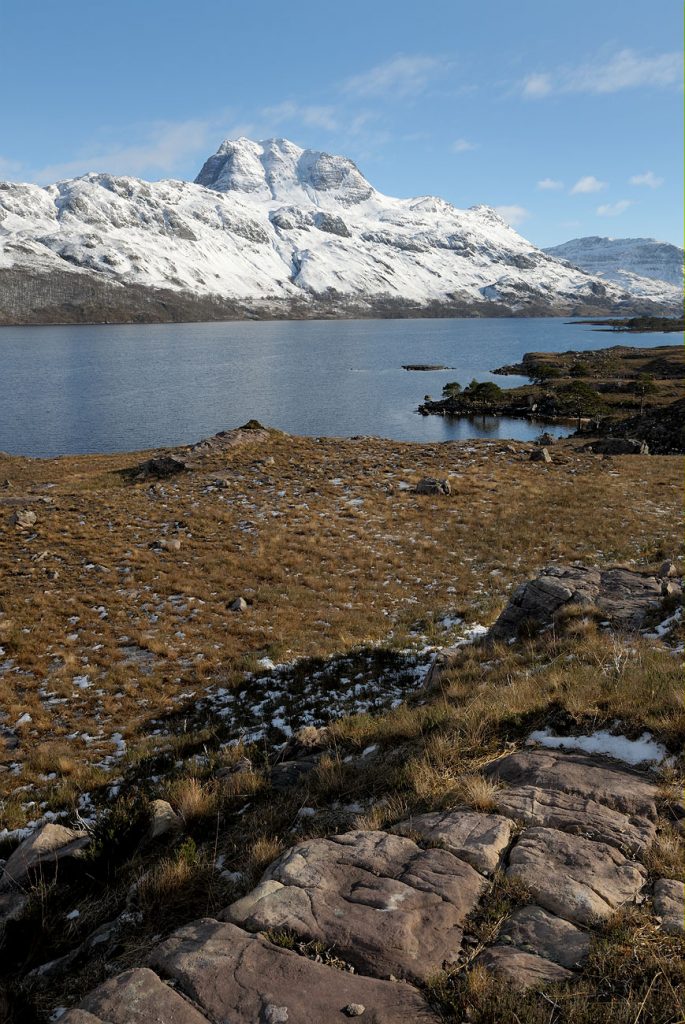
Slioch and Loch Maree (photograph)
From Gaelic Sleaghach, ‘The Spear’, but it only has that appearance from the North East. Loch Maree, home to the sad legend of a Norwegian prince and his bride and to a monster to rival Loch Ness.
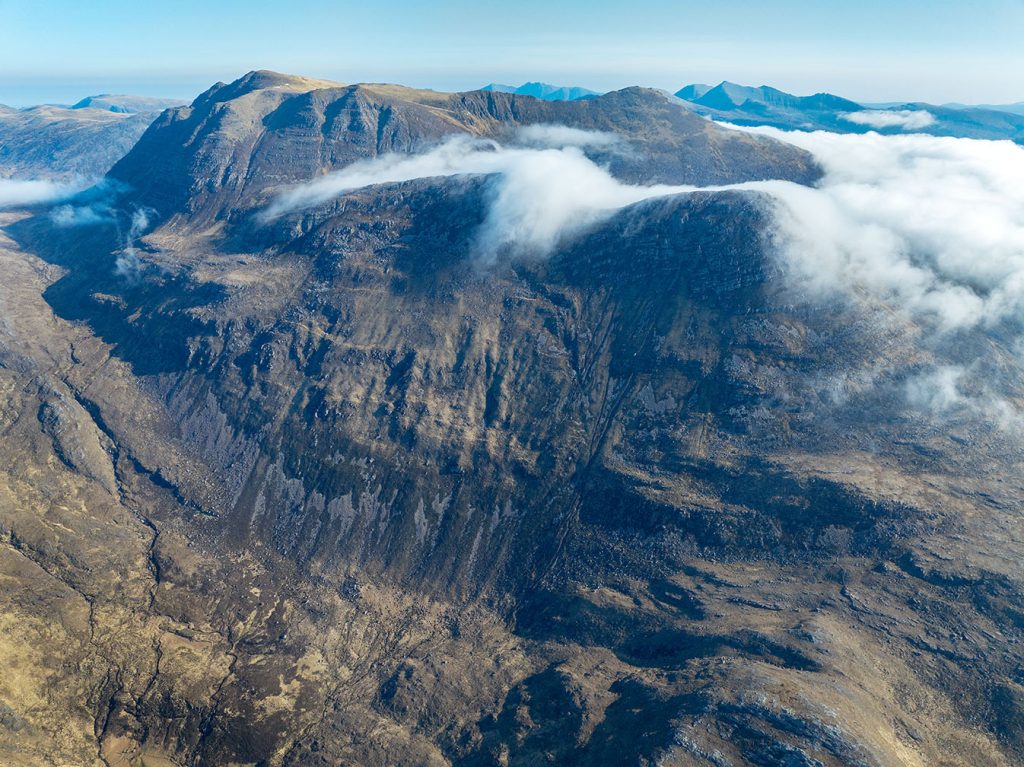
Slioch (photograph)
Slioch, born in the Caledonian Orogeny tectonic event, a geological pile up 450 million years ago, with a foundation of granitic gneiss and a cap of sedimentary sandstone, 3219 feet high (981m).
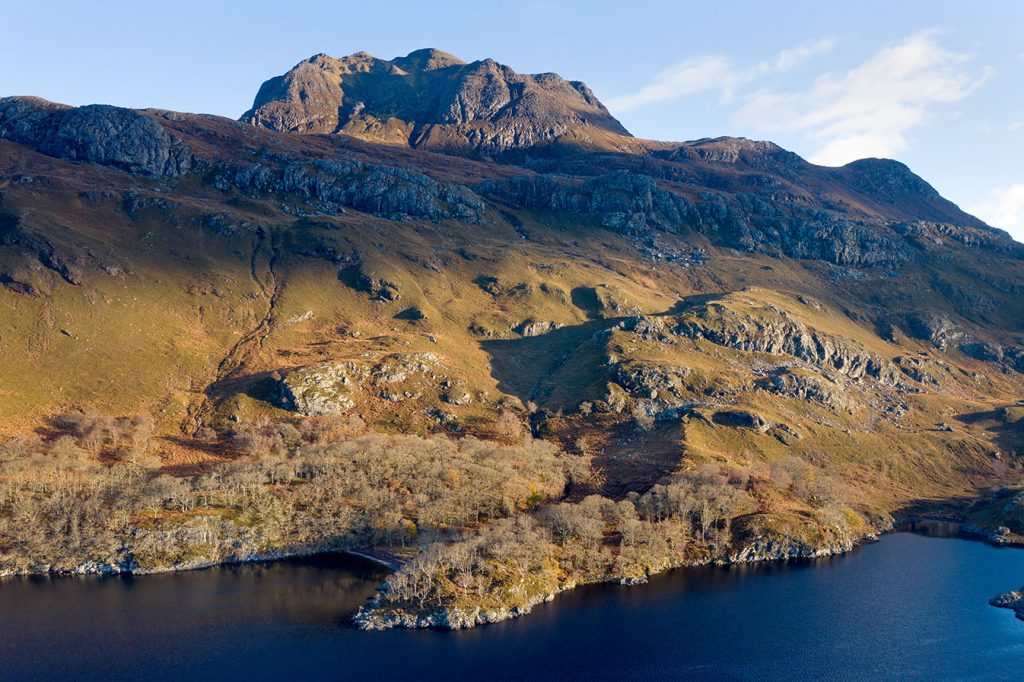
Slioch, Loch Maree (photograph)
Stac Pollaidh
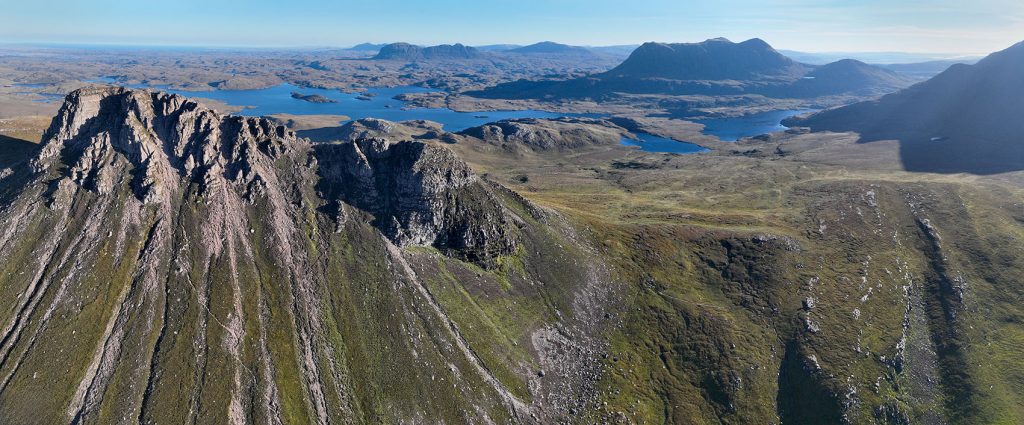
Stac Pollaidh (photograph)
Stac Pollaidh (Scots Gaelic – ‘Peak of the Pools’), 2009 foot (613m) mountain in Assynt, Ross and Cromarty. A peak of Torridon sandstone which would have stood out above the ice sheets moving either side of it during the ice age and which have sculpted the sides of the mountain to leave the slopes seen today. Lands associated with Clan Mackenzie. Cùl Mòr in the background.
Photographs, illustrations and words ©Nick Sidle, all rights reserved