“Plastic pollution is a global problem. Every year 19-23 million tonnes of plastic waste leaks into aquatic ecosystems, polluting lakes, rivers and seas.
Plastic pollution can alter habitats and natural processes, reducing ecosystems’ ability to adapt to climate change, directly affecting millions of people’s livelihoods, food production capabilities and social well-being.”
United Nations Environment Programme, 2025
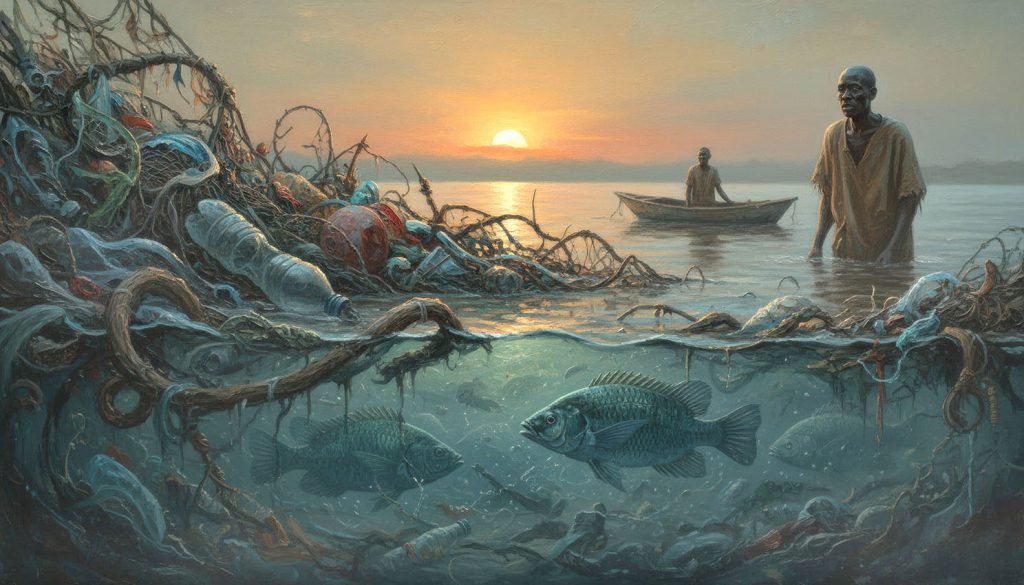
Digital illustration
The Tale of Nam Lolwe: Guardians of Lake Victoria
By Emmanuel Otieno Obwanga and Chelsea Johanes, Illustrations Nick Sidle
Long before plastic found its way into the waters of Lake Victoria, known to many as Nam Lolwe, the lake was not only a source of livelihood, but a living system of signs, rhythms, and relationships.
The birds that moved along its shores were not just part of the landscape. They were part of memory, meaning, and life itself.
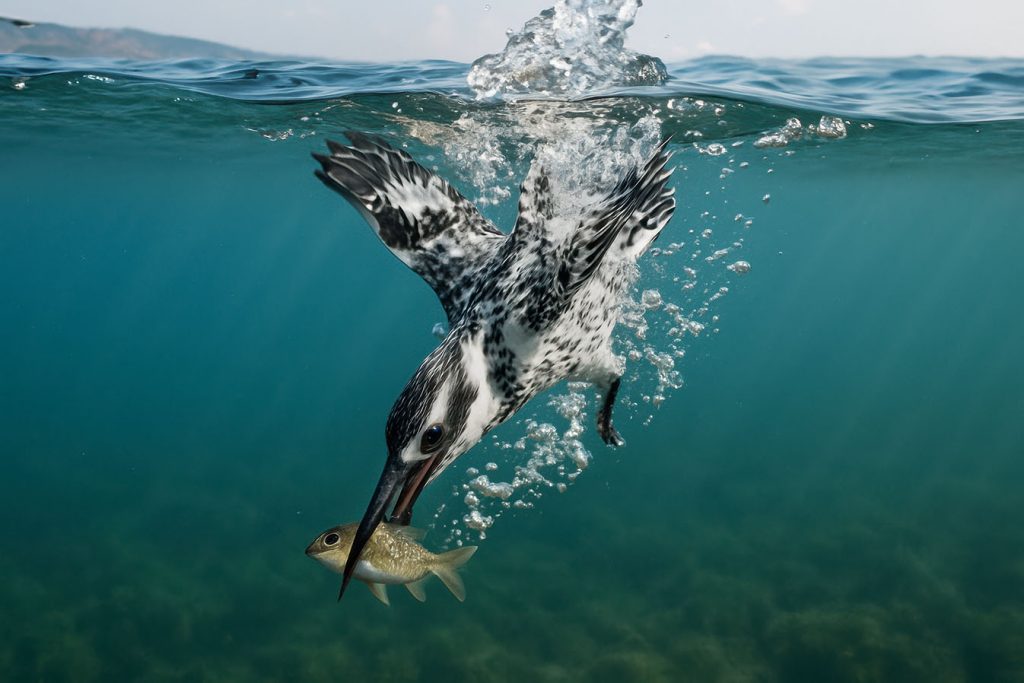
Pied Kingfisher, Ceryle rudis (digital illustration)
The flash of a kingfisher diving into the water was more than a hunt, it was a sign of abundance. Clear waters. Healthy fish. A system in balance. Fishermen read these movements, often without naming it as science, but understanding it as truth. Where the kingfisher thrived, the lake was alive.
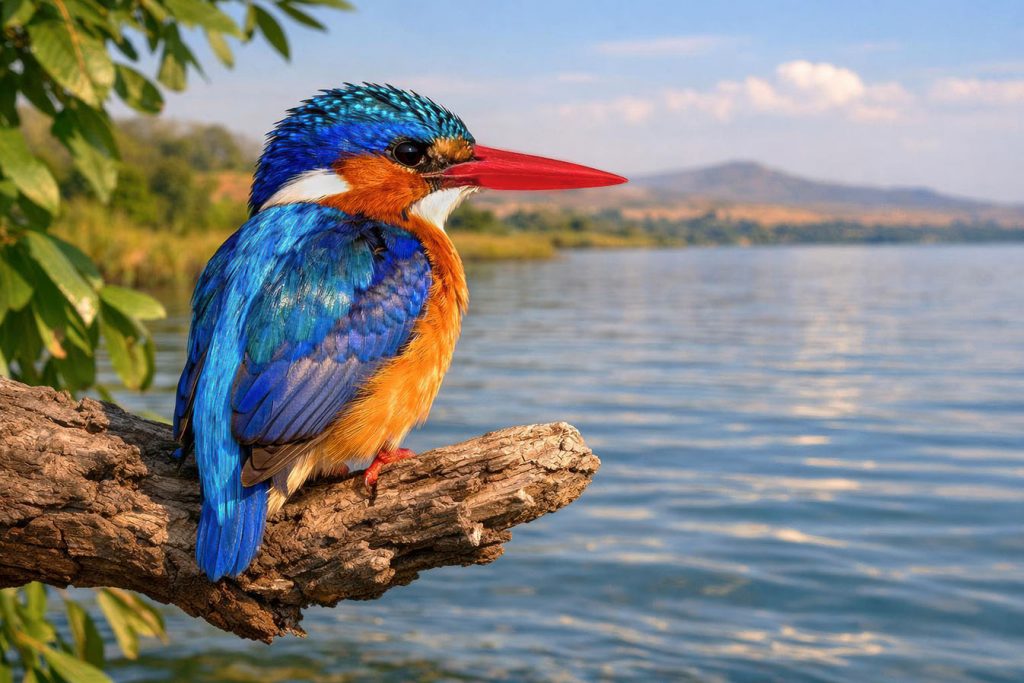
Malachite Kingfisher, Corythornis cristatus (digital illustration)
The weaverbirds, carefully selecting where to build their nests, told another story. Their presence marked places of safety, fertility, and continuity. To see their intricate nests hanging over water or swaying in the trees was to witness a kind of quiet assurance, that life could be sustained here.
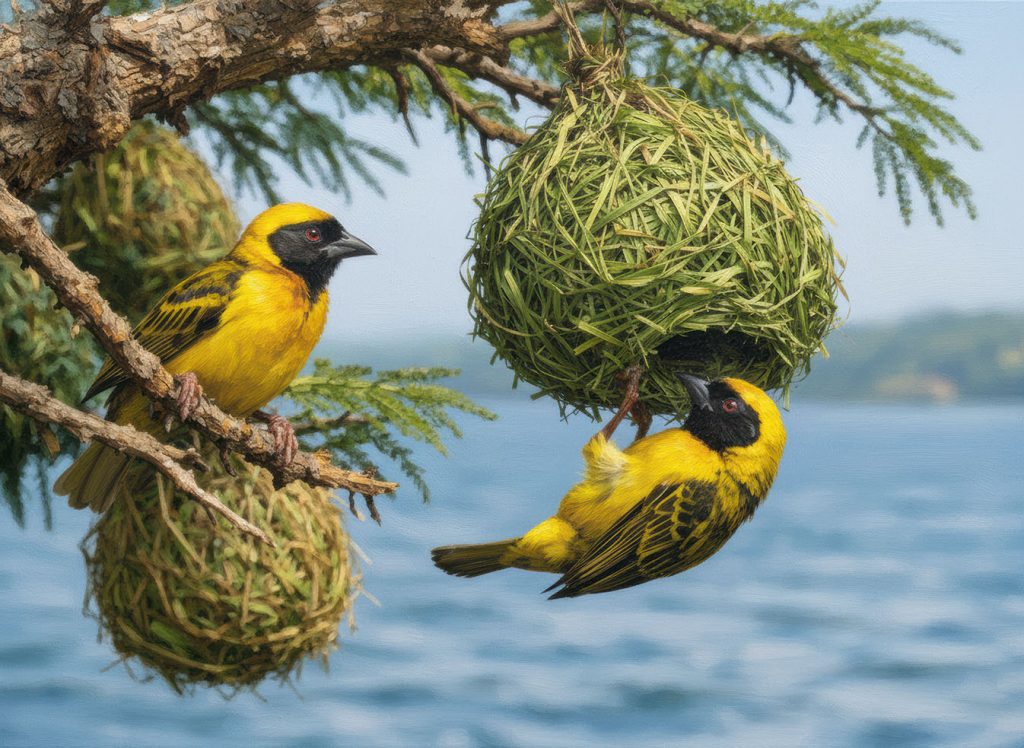
Speke’s Weaver Birds, Ploceus spekei (digital illustration)
Even the quail, small and often unnoticed, played its role in this harmony. Moving through grasses and farmlands, it helped regulate insects and disperse seeds, quietly maintaining the balance between land and water.

Harlequin Quail, Coturnix delegorguel(digital illustration)
Together, these birds formed an unspoken system of knowledge. They were indicators, companions, and, in many ways, guardians of Nam Lolwe.
What Has Changed
Today, that relationship is breaking. Plastic waste, once absent from these waters now moves through the lake in visible and invisible forms. Bottles, bags, and wrappers collect along the shores. But more dangerously, they break down into microplastics, entering the very systems that once sustained life.
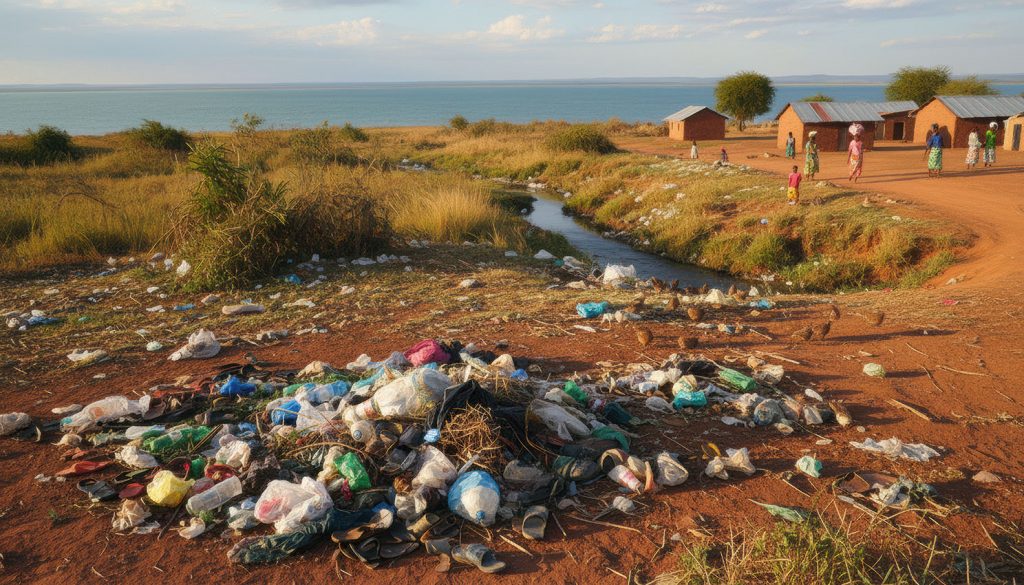
Digital illustration
Fish ingest these particles, mistaking them for food. Toxins accumulate in their bodies. The kingfisher, in turn, feeds on contaminated fish. The chain continues – quietly, invisibly, until the system begins to fail. Where the kingfisher once signalled abundance, its absence now signals decline.
Weaverbirds, feeding on insects affected by polluted water and soil, begin to weaken. Their nesting patterns change. Their numbers reduce. The spaces that once signalled life begin to fall silent.
Quail populations decline as their food sources are poisoned or disrupted, leading to imbalances in pest control and vegetation.
What was once a living, interconnected system is slowly being choked,- not only by visible waste, but by what cannot be seen.
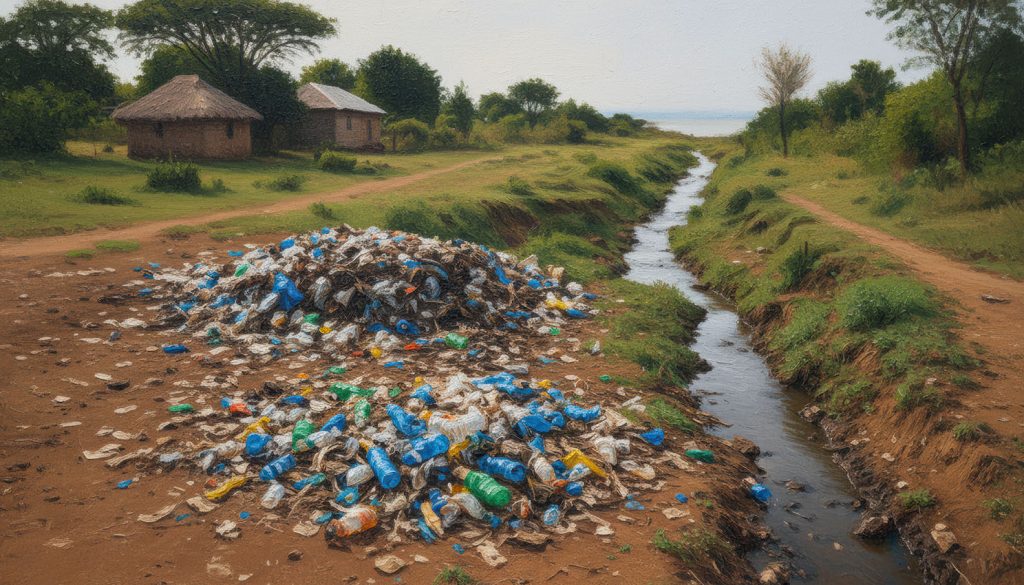
Digital illustration
Loss Beyond Ecology
This is not only an environmental loss.
It is a cultural loss.
Because when these birds disappear, we do not only lose species, we lose:
The signs that guided daily life
The rhythms that connected people to the land and water
The quiet knowledge passed from one generation to another.
The relationship between people and nature becomes distant. Abstract. Forgotten. What was once understood through observation and experience must now be explained through data, if it is remembered at all.
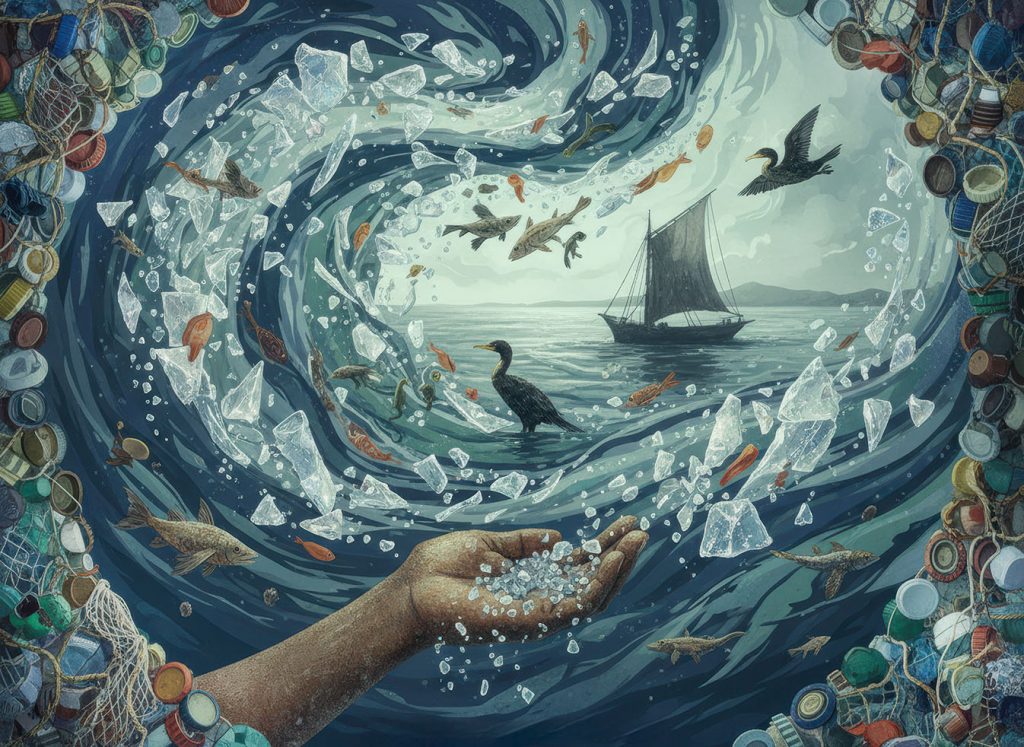
Digital illustration
Text ©Emmanuel Otieno Obwanga and Chelsea Johanes. Illustrations ©Nick Sidle, all rights reserved